
Reviewed · SUMO EXPERIENCES
Tokyo Sumo Morning Practice: Viewing & Exclusive Interaction
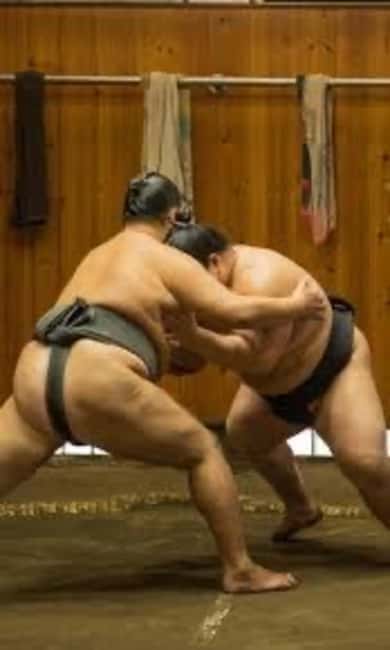
In the quiet morning, you enter an active sumo stable while professional wrestlers train at close range. This is not a staged dinner show. You see warm-ups, repeated clashes, sparring, and the strict focus that makes sumo far more than a colorful sport.
I like the front-row zabuton seating, which brings you close to the action, and the option of stools if sitting on the floor is uncomfortable. I also like the direct Q&A with active wrestlers, followed by photos and, on some occasions, a chance for male audience members to try a brief bout.
The main consideration is that this is a serious training session, not a performance designed around an audience. You must remain quiet, follow seating and photography rules, and accept that the practice can feel intense or even overwhelming. During tournament periods, the schedule changes and viewing time is shorter.
In This Review
- Key Points About This Tokyo Sumo Morning
- Why Morning Practice Feels Different From a Sumo Show
- Meeting at Narihira Park and Getting Ready
- Inside the Stable: Close Viewing of Real Training
- Zabuton or Stool: Choosing Your Seat
- Meeting the Wrestlers After Practice
- The Banzuke Souvenir and Extended Questions
- Is $93 a Fair Price?
- What Changes During Grand Sumo Tournaments
- Who Will Enjoy This Most?
- Practical Advice Before You Go
- Should You Book This Sumo Experience?
- FAQ
- Where does the tour meet?
- How long does the experience last?
- Is transportation to the meeting point included?
- What languages are available?
- Can I sit on a chair?
- Can I take photographs?
- Can I record video or audio?
- Is the tour suitable for young children?
- What happens during Grand Sumo Tournament periods?
- What is included in the price?
- Can I cancel my booking?
Key Points About This Tokyo Sumo Morning
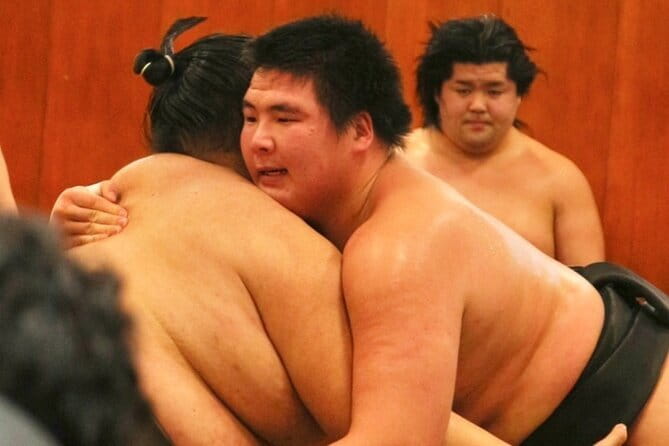
- Watch real training at an active sumo stable, including warm-ups, clashes, and sparring rather than a staged show.
- Ask wrestlers about daily life and training through an organized post-practice Q&A.
- Choose a zabuton or stool, giving you a practical seating option inside the stable.
- Receive an official banzuke ranking sheet in a designed souvenir folder.
- Finish with extended questions for your guide back at Narihira Park.
- End near Tokyo Skytree and Asakusa, with the rest of your morning still free.
Why Morning Practice Feels Different From a Sumo Show
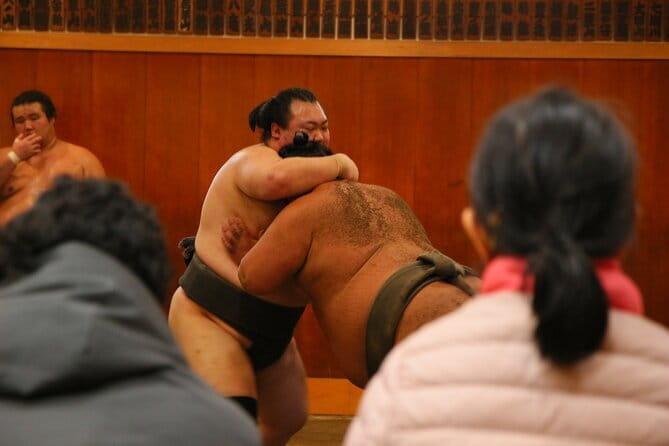
Sumo is often presented to visitors through tournaments, television, or theatrical demonstrations. This experience gives you another side of it: the working day of a professional stable.
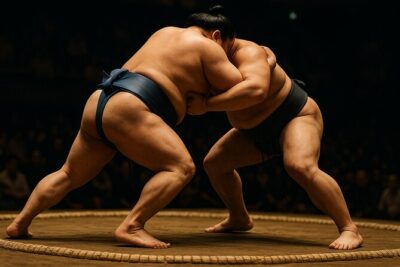
You watch wrestlers repeat the same movements with full force and concentration. The room is quiet except for footsteps, breathing, shouted commands, and the heavy sound of bodies meeting the floor. That sound alone gives you a better sense of the physical demands than a polished explanation ever could.
The setting matters. You are not watching a short demonstration made for cameras. You are observing athletes prepare and train, with the audience expected to adapt to the stable’s rules. That makes the experience feel more respectful and less like entertainment arranged on demand.
I especially value the guide’s introduction before entering. At Narihira Park, you learn basic sumo history, rules, manners, and what to watch for. Without this briefing, the ritual movements can be difficult to read. With it, you can recognize the difference between preparation, pushing exercises, bouts, and moments when silence matters most.
The morning start also works well in a Tokyo itinerary. The tour finishes around 11:00 AM, leaving you time for Tokyo Skytree, nearby Sumida, or Asakusa. You get a focused cultural experience without losing a full day.
A few more Tokyo tours and experiences worth a look
Meeting at Narihira Park and Getting Ready
The meeting point is near the multipurpose restroom at Narihira Park. Your guide checks your name, gives you sumo-related materials, and explains the rules before the short walk to the stable.
Allow yourself enough time to find the park calmly. Transportation to the meeting point is not included, so you handle your own route there. The activity information gives the meeting place clearly, but it does not include a hotel pickup or a transfer from central Tokyo.
This opening briefing is more useful than it may sound. Sumo stables are working spaces with their own customs. You need to know when to stay quiet, where to sit, and how to use a camera without distracting the wrestlers. The guide also gives you context for what you are about to see.
English and Japanese guidance is available. Guides named in participant accounts include Haru, Momo, Sana, Sarah, and Ryoko. The exact guide depends on the date, but the repeated pattern is clear: the guide is an important part of the experience, especially during the explanation before and after practice.
Inside the Stable: Close Viewing of Real Training
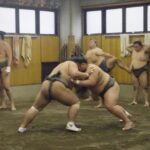
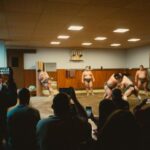
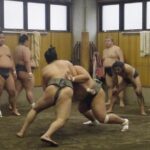
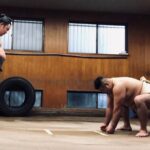
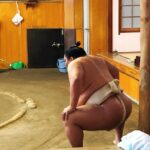
The stable visit is the heart of the morning. You watch active wrestlers train at close range, often beginning with warm-ups before moving into harder practice and sparring.
Do not expect a fixed show with a neat beginning, middle, and finale. The training may include repeated drills, physical contests, and periods when the wrestlers pause or reset. This unscripted rhythm is part of its value, but it also means you need to pay attention rather than wait for a single big moment.
The atmosphere can be surprisingly powerful. The wrestlers are not performing personalities for an audience. They are working, and their concentration is plain to see. The physical contact is intense, yet the surrounding rules and rituals give the session a controlled structure.
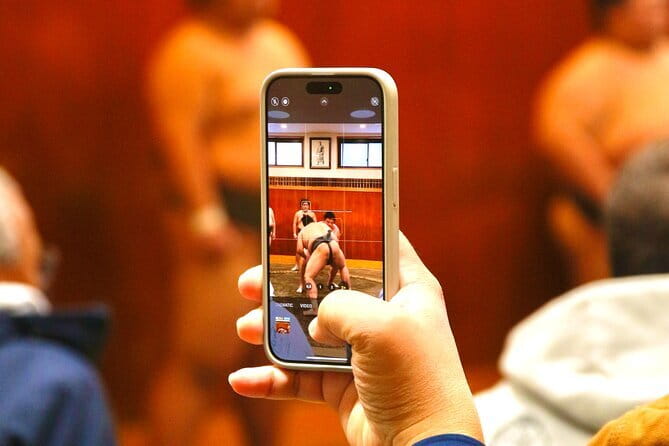
Photography is allowed, but only under the stable’s rules. Flash photography is not allowed. You must stay quiet during practice and respect instructions about where to sit and when to take pictures. Video and audio recording are prohibited, so bring your attention rather than expecting to document the whole session.
That restriction may disappoint anyone hoping to film a short social media clip. I think it improves the experience. You are less likely to spend the morning looking at a screen, and the wrestlers are not turned into background material for constant recording.
Zabuton or Stool: Choosing Your Seat
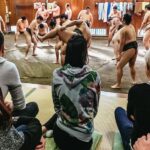
The seating arrangement is a thoughtful practical touch. You may sit on a traditional zabuton floor cushion near the front, or use a stool toward the back if sitting on the floor does not suit you.
The zabuton gives you the most immediate view and a stronger sense of being part of the stable’s space. It is the choice for anyone who wants to feel the force of the training at close range and is comfortable sitting low for part of the morning.
The stools offer a sensible alternative. Sumo may look simple from a distance, but a practice session requires patience and stillness. If your knees or hips make floor seating difficult, a stool can help you focus on the training rather than your posture.
You do not get to treat the stable like a theater where you move around to chase the best angle. Seating and camera position are controlled by the rules of the space. That is a small trade-off for access to a place usually closed to the public.
Children under six are not suitable for this activity. The quiet atmosphere, physical intensity, and requirement to follow stable etiquette make it better suited to older children and adults who can sit still and listen.
Meeting the Wrestlers After Practice
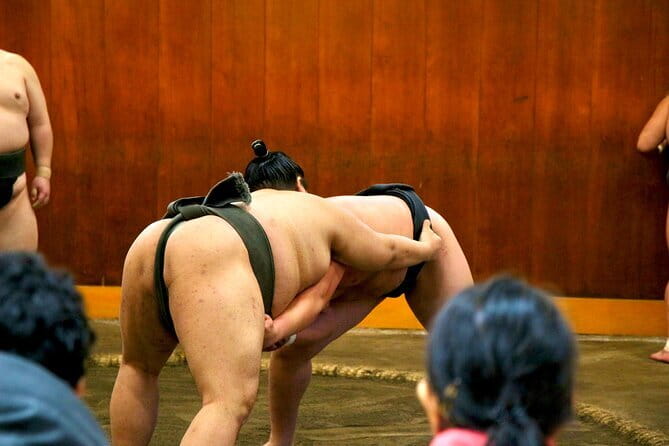
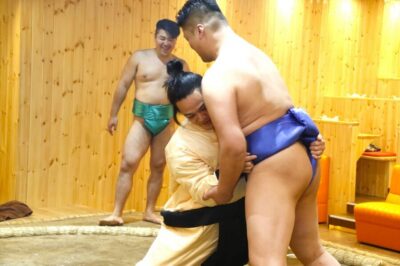
After the training session, the mood changes. You have a chance to speak directly with active wrestlers, ask questions through the guide, and take commemorative photographs.
This is where the morning becomes personal. You can ask about daily life, training, routines, and the mindset required for the sport. The guide helps bridge any language gap and keeps the exchange moving, so you are not left wondering how to begin.
The wrestlers are described as generous with their time, and the Q&A is one of the most praised parts of the experience. It gives you a chance to connect the demanding practice you have just watched with the people doing it.
Photographs are allowed at this stage, subject to the rules. A photo with a professional wrestler is a much stronger souvenir than a distant picture of a stable entrance. It also helps you remember the scale and presence of the athletes you watched.
On some mornings, male audience members have been invited to try a brief wrestle with a professional. This is not presented as a guaranteed part of every tour, so do not book solely for that possibility. If it happens, it can add a playful finish to an otherwise serious session.
The interaction remains respectful. The wrestlers have already completed hard training, and the point is cultural exchange, not turning them into props. Follow the guide’s instructions and keep the questions considerate.
A few more Tokyo tours and experiences worth a look
The Banzuke Souvenir and Extended Questions
After leaving the stable, you return to Narihira Park for the final part of the tour. You receive an official banzuke, the ranking sheet that lists wrestlers and their positions, inside a specially designed souvenir folder.
This is a particularly good memento because it connects directly to what you have just seen. It is not simply a generic Tokyo souvenir. The banzuke helps you understand the hierarchy of professional sumo and gives you a physical reminder of the stable visit.
The closing session is built around an extended Q&A with your guide. Instead of rushing everyone toward a meal, the guide stays at the park to answer further questions about rituals, rules, training, and the wider sport. You can also ask for personalized suggestions for the rest of your Tokyo day.
I like this choice. Sumo has many details that only become clear after you have watched a session. You may leave the stable wondering about a wrestler’s rank, the meaning of a movement, or why certain rules apply. The final conversation gives you room to ask those questions while the experience is still fresh.
The tour wraps up at about 11:00 AM. From there, Tokyo Skytree and Asakusa are natural choices for continuing your day. The activity does not include a meal, so plan lunch separately.
Is $93 a Fair Price?
At $93 per person, this is not a cheap morning walk. The value depends on how much you want access to real sumo rather than a general introduction to Japanese culture.
The price includes the sumo stable visit fee, an English-speaking guide, and the banzuke souvenir. It also covers the explanation at the park, the stable visit, the wrestler Q&A, photographs, and the final question period. You are paying for access to a restricted working environment as much as for the three-hour guiding.
Compared with simply watching sumo on television or visiting a tournament venue from a distant seat, this offers much closer contact with the sport. Compared with a staged show, it provides a more genuine look at training, though with fewer predictable entertainment moments.
I would call it good value for someone who already has an interest in sumo or wants one meaningful cultural activity in Tokyo. It may feel expensive if you only want a quick photo or a basic explanation of the sport.
The reserve now and pay later option can help if your schedule is still moving. Free cancellation is available up to 24 hours in advance for a full refund. Check the starting time when booking, since morning practice schedules can vary.
What Changes During Grand Sumo Tournaments
The experience follows a different timetable during the Grand Sumo Tournament periods, approximately two weeks in January, May, and September.
Practice starts 30 minutes earlier, and viewing lasts about one hour. That means the stable visit is shorter during these periods, even though the overall tour still includes the surrounding explanations and interaction.
This is worth checking before you book. If you are visiting Tokyo during a tournament month and want a longer look at practice, the shortened viewing time may affect your decision. If your main goal is to see active wrestlers up close and ask questions afterward, the experience can still fit well.
The tournament-period schedule also makes an early meeting even more important. Confirm your exact start time and plan your route to Narihira Park in advance.
Who Will Enjoy This Most?
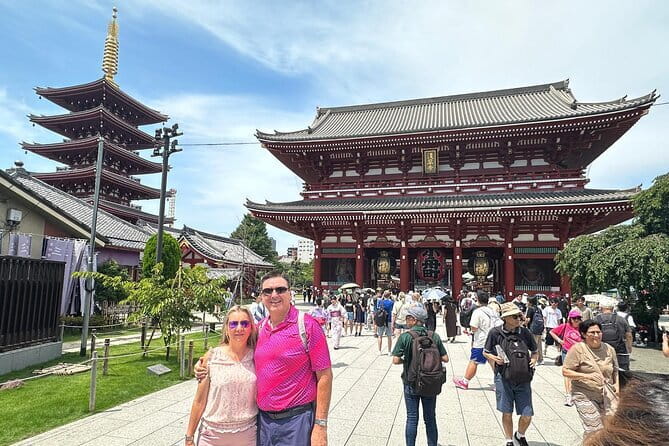
I recommend this tour most strongly to adults, older children, and anyone curious about Japanese customs beyond temples, shopping, and food.
It suits you if:
- You want to watch real athletic training rather than a staged demonstration.
- You enjoy asking questions and learning how a sport fits into daily life.
- You are interested in rituals, etiquette, discipline, and rank.
- You appreciate small group cultural activities with a clear guide.
- You want to combine a morning experience with Skytree or Asakusa afterward.
It may not suit you if you need constant entertainment, want to film everything, or dislike quiet observation. You also need to be comfortable following instructions closely inside a working stable.
The experience is not built around a meal, shopping stop, or long list of city sights. Its focus is narrow and strong: see practice, understand what you are seeing, meet wrestlers, and ask questions.
Practical Advice Before You Go
Wear clothing that allows you to sit comfortably. Even with stool seating available, you may spend a substantial part of the activity sitting still, and the stable is not a place for frequent movement.
Eat before the meeting if you need breakfast. Food is not allowed inside, and no meal is included. Bring only what you need, since the stable’s quiet rules make handling belongings or equipment inconvenient.
Keep your camera ready but use it carefully. Flash, video, and audio recording are not allowed. Photography must never take priority over the instructions from the guide or stable.
Think of the morning as observation first and photography second. The most memorable details are likely to be the rhythm of the training, the silence between bouts, and the short explanations that help you understand what is happening.
Should You Book This Sumo Experience?
Book it if you want an honest look at professional sumo and value personal contact more than polished entertainment. The combination of close training, active-wrestler questions, flexible seating, a banzuke souvenir, and extra time with the guide gives the three hours a clear purpose.
I would be especially keen to book if I had already seen Tokyo’s major sights and wanted something less familiar. Guides such as Haru, Momo, Sana, Sarah, and Ryoko have helped make the experience accessible in English, but the real reason to go is the stable itself.
Skip it if you want a guaranteed wrestling demonstration, a relaxed meal, or permission to record the morning. For everyone else, this is a memorable and respectful way to see the discipline behind one of Japan’s most recognizable traditions.
FAQ
Where does the tour meet?
Meet near the multipurpose restroom at Narihira Park. The guide checks your name, provides sumo materials, and explains the manners and rules before walking to the stable.
How long does the experience last?
The tour lasts three hours and normally finishes around 11:00 AM.
Is transportation to the meeting point included?
No. You are responsible for getting to Narihira Park. Transportation to the meeting point is not included.
What languages are available?
Guidance is available in English and Japanese.
Can I sit on a chair?
Yes. You can choose a traditional zabuton floor cushion near the front or use stools at the back if you prefer not to sit on the floor.
Can I take photographs?
Yes, photography is allowed, but you must follow the stable’s rules. Flash photography is not allowed, and you must remain quiet during practice.
Can I record video or audio?
No. Video recording and audio recording are not allowed.
Is the tour suitable for young children?
Children under six are not suitable for this activity.
What happens during Grand Sumo Tournament periods?
During the tournament periods in approximately January, May, and September, practice begins 30 minutes earlier and viewing lasts about one hour.
What is included in the price?
The price includes the sumo stable visit fee, an English-speaking guide, and a special souvenir containing an official banzuke ranking sheet.
Can I cancel my booking?
You can cancel up to 24 hours in advance for a full refund. Reserve now and pay later is also available.
More Morning in Tokyo
More Sumo Experiences in Tokyo

More tours in Tokyo we've reviewed




Sumo Experiences, compared.
 ★ 4.8Tokyo: Sumo Show Experience with Chicken Hot Pot and a PhotoFrom $1032 hours
 ★ 4.8Tokyo: Sumo Show and Dining ExperienceFrom $7990 minutes - 2 hours
 ★ 5.0the SUMO showFrom $89
 ★ 5.0Tokyo Shinjuku Sumo Show & Experience with PhotoFrom $79
 ★ 4.8Tokyo: Sumo Show and Experience in ShinjukuFrom $691h 30m
 ★ 4.6Tokyo: Sumo Tournament Tour with Chair Seat TicketsFrom $141