
Reviewed · MORNING
Tokyo Morning Small Group Tour
Tokyo’s past and present meet neatly on this three-hour morning walk. You begin amid the steel and traffic of Tokyo Station, then move to the Imperial Palace Outer Gardens before ending at Senso-ji Temple and Nakamise-dori in Asakusa. It is a smart way to cover several major sights without giving up a full day.
I like the small group limit of 15 people, which should make it easier to hear the guide and ask questions. I also like the route’s useful finish: you end in Asakusa, with time to browse Nakamise-dori or continue exploring on your own. The main drawback is the brisk pace. Five stops are allotted about 30 minutes each, and the route includes plenty of walking.
In This Review
- Key points to know before booking
- Why this route works for a short Tokyo visit
- Tokyo Station to the Imperial Palace Outer Gardens
- Nijubashi Bridge and the classic palace view
- Moving on to Asakusa
- Senso-ji Temple in a compact half-hour
- Nakamise-dori, souvenirs, and the tour’s practical finish
- What the guide adds to the experience
- The walking pace and physical demands
- Is $59 a fair price?
- Booking, cancellations, and timing
- Who should book this Tokyo morning tour?
- FAQ
- How long is the Tokyo Morning Small Group Tour?
- What time does the tour start?
- Where does the tour begin?
- Where does the tour end?
- What sights are included?
- Are admission tickets included?
- What is the group size?
- Is a guide included?
- Is the tour suitable for people with limited mobility?
- Can I cancel for a refund?
- What happens if the weather is poor?
- Is a mobile ticket available?
Key points to know before booking
- Five classic Tokyo sights in about three hours: The route connects the Imperial Palace Outer Gardens, Nijubashi Bridge, Asakusa, Senso-ji Temple, and Nakamise-dori.
- A useful 9:00 a.m. start: You see Tokyo before the day is fully underway and still have most of the afternoon free.
- Small group, maximum 15 people: This is more personal than a large coach outing, though the actual group size can vary.
- Two praised guides by name: Seiji is described as friendly and informative, while Aki is noted for explaining Tokyo from a local point of view.
- A walking tour, not a ride between sights: Plan for a moderate level of fitness and comfortable shoes.
- Ends at Senso-ji in Asakusa: You can continue sightseeing, shop for souvenirs, or make your own way elsewhere afterward.
Why this route works for a short Tokyo visit
The best feature here is the route itself. Tokyo can feel too large to grasp during a short stay. This tour gives you three useful pieces of the city in one morning: the national center around the Imperial Palace, the traditional temple district of Asakusa, and the streets linking the two.
You do not spend the morning inside museums or waiting for a long list of admissions. Every listed stop is free to enter, and the guide provides the context that helps the places make sense. At $59 per person, that makes the tour most useful for someone who wants orientation, not an all-day deep study of Tokyo.
The start at Tokyo Station’s Marunouchi North Exit is practical, but you need to get there on time. Tokyo Station is large, and the meeting point is specifically at the Marunouchi-Kitaguchi, or Marunouchi North Exit, at 1 Chome-9 Marunouchi. Give yourself enough time to find the correct exit rather than assuming every station entrance leads to the same place.
The tour begins at 9:00 a.m. and ends at Senso-ji Temple in Asakusa. That finish is a real advantage. You are not returned to the starting point, so the morning naturally opens into more sightseeing. You can stay in Asakusa, explore nearby streets, or use public transportation for your next stop.
A few more Tokyo tours and experiences worth a look


Tokyo Station to the Imperial Palace Outer Gardens
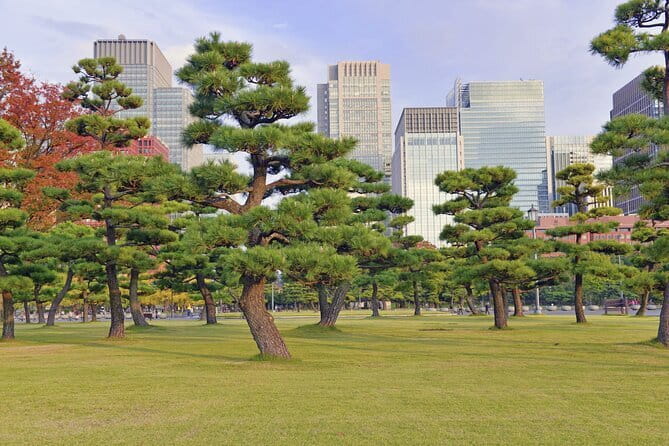
The first stop is the Imperial Palace Outer Gardens, with about 30 minutes set aside. This is a good opening because it gives you a calm contrast to Tokyo Station’s modern city setting.
The palace grounds are tied to Japan’s imperial center, but this portion is an outdoor public area rather than a palace interior tour. You should expect a short guided visit focused on the gardens and the surrounding setting. The listed admission cost is free, so you are paying for the guide and the route rather than entry tickets.
Thirty minutes is enough to see the area and hear an introduction, but not enough for an extended wander. If gardens are your main interest, you may wish you had more time. If you are looking for a quick first look at central Tokyo, the limit keeps the morning moving.
I particularly like this stop for first-time visitors because it places Tokyo’s government and imperial history alongside the city’s modern office district. You get a sense of how the capital uses grand open spaces without leaving the center of town.
Nijubashi Bridge and the classic palace view
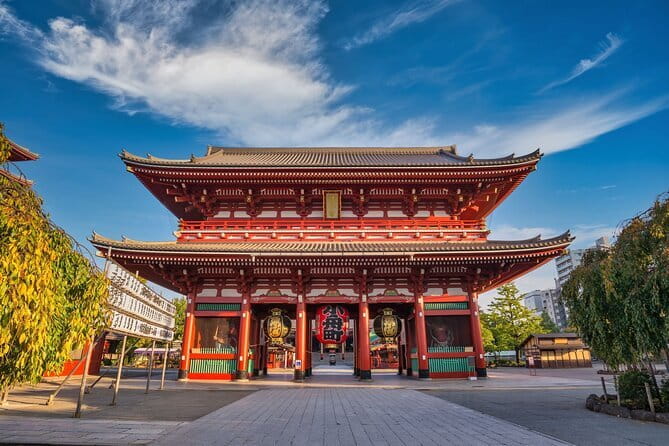
The tour then gives about 30 minutes to Nijubashi Bridge. This is one of the familiar views associated with the Imperial Palace, and it provides a clear visual pause after the garden walk.
The bridge is best treated as a viewpoint and photo stop, not as a lengthy attraction by itself. The guide can explain its place within the palace setting, while you take in the stone bridge, water, and formal approach. Since there is no admission charge, you do not need to budget for another ticket.
The benefit of pairing Nijubashi Bridge with the Outer Gardens is efficiency. Instead of treating the palace area as a vague photo stop, the route gives you two connected locations with different purposes. One introduces the open grounds, and the other focuses your attention on a well-known architectural view.
The limitation is the same as before: 30 minutes passes quickly. If you want quiet time for photographs or a slow look at the surroundings, keep an eye on the clock. This is a guided overview, not a relaxed palace grounds visit.
Moving on to Asakusa
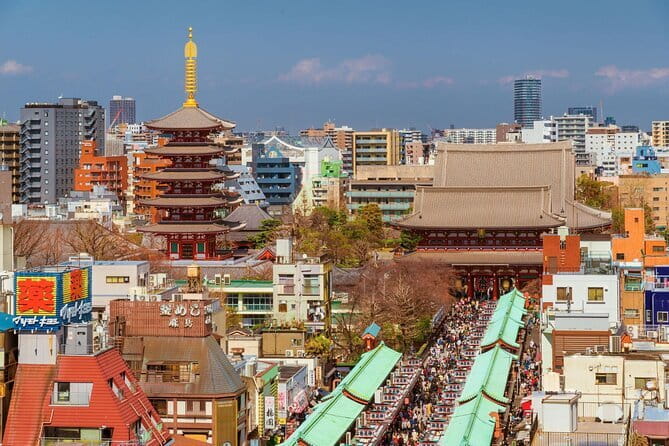
The itinerary next shifts to Asakusa, with another 30-minute stop for the neighborhood. This is where the morning changes character. The palace area feels formal and spacious, while Asakusa is centered on streets, shops, temple approaches, and everyday local movement.
The supplied details do not specify the exact transportation method between the central palace area and Asakusa. You should therefore think of this as a guided half-day route rather than a fully self-directed walk from one stop to the next. Ask the guide about the transfer if you need to plan around a later reservation.
Asakusa is valuable because it gives you a different view of Tokyo. The tour does not present the city as only skyscrapers and major stations. It takes you to one of the capital’s best-known traditional districts, where the streets lead toward Senso-ji and souvenir shops.
Thirty minutes in the neighborhood is enough for an introduction, but it will not cover every corner. You might find yourself wanting more time for side streets, food, or shopping. That is not a serious flaw if you treat this tour as a morning framework and plan to remain in Asakusa after the official end.
Senso-ji Temple in a compact half-hour
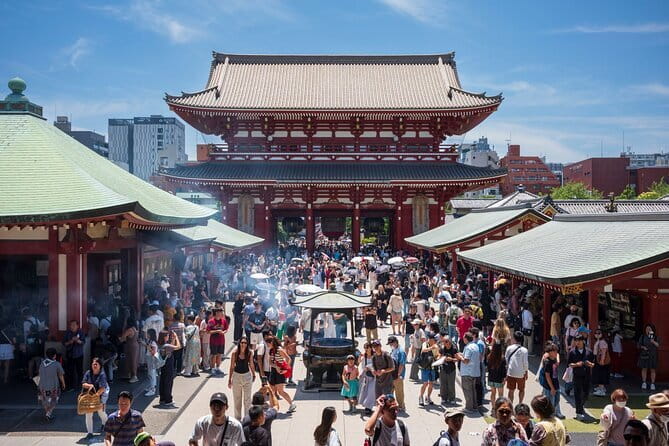
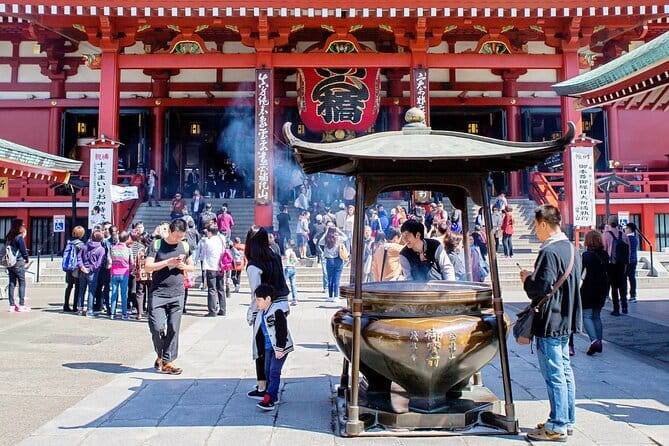
Senso-ji receives its own 30-minute stop. This is the main cultural sight on the route and likely the point many people most want to see.
The temple is a major symbol of Tokyo’s older identity. The tour allows you to visit the grounds with a guide rather than simply arriving, taking a photograph, and moving on. A guide can help explain what you are seeing and point out the parts that are easy to miss during a first visit.
Because the visit is brief, you should not expect a detailed religious or architectural study. The tour is designed to show you the key setting and give you a useful introduction. You can return later if Senso-ji becomes a highlight for you.
The morning start may also help here. A 9:00 a.m. departure gets you to Asakusa during the morning portion of the day, rather than after a long afternoon of sightseeing. The exact feel of the temple area can vary, but the schedule gives you a chance to see it without spending your entire day there.

Nakamise-dori, souvenirs, and the tour’s practical finish

The final stop is Nakamise Shopping Street, also identified with the Kaminarimon area. You have about 30 minutes to browse for souvenirs and walk along the approach to Senso-ji.
This is a useful ending because it gives the tour a relaxed purpose after several guided stops. You can look for small gifts, compare traditional items, and get your bearings in Asakusa. Meals and drinks are not included, so this is also a sensible place to decide what you want to eat next, although the tour itself does not promise a food stop.
The shopping time is short. If you are serious about buying gifts, you will probably want to stay after the tour ends. The end point is Senso-ji at 2 Chome-3-1 Asakusa, not Tokyo Station, so you are free to continue at your own pace.
I like tours that finish in a district worth exploring on its own. You do not lose time going back across town, and the final location gives you a clear choice: keep exploring Asakusa or head to another part of Tokyo.
What the guide adds to the experience

The guide is the main reason to choose this experience instead of following the same route with a map. The tour includes a hand-picked expert guide, and the best accounts highlight Seiji and Aki by name. Seiji is described as friendly and informative. Aki is praised for explaining the places in a way that helps you see Tokyo as locals do.
Guide quality can vary, so I would not assume that every departure will feel identical. One account describes a very poor walking tour and gives a sharp criticism of the guide’s explanations. That matters because this route depends on clear commentary. The sights are free, and much of the value comes from what you learn along the way.
If you book, arrive ready to take part. Ask questions when something interests you. A small group of no more than 15 people gives you a better chance to speak with the guide than a large bus group, but the tour will still need to keep moving.
The walking pace and physical demands
The tour requires a moderate level of physical fitness. The schedule lists five 30-minute stops, but those stop times do not include every step taken between locations. You should plan for a morning on your feet.
Wear comfortable shoes and bring water, since drinks are not included. The experience is not presented as difficult, but Tokyo’s stations and streets can involve a fair amount of walking. If standing or walking for several hours is uncomfortable, this compact itinerary may feel rushed.
Service animals are allowed, and the tour is near public transportation. Those details help, but the supplied information does not give a full accessibility description. If you need specific support, contact the provider before booking rather than relying on the general fitness note.
The group maximum of 15 is a good middle ground. A private tour would offer more control, while a large group could feel impersonal. Here, you get a shared experience with a reasonable chance to hear the guide.
Is $59 a fair price?
At $59, the price is reasonable if you value a local guide and want a structured introduction to central Tokyo. You are not paying for entry tickets, meals, or drinks. All five listed stops have free admission, so the price mainly covers the guide, planning, and the convenience of linking the sights in one morning.
The value depends on how much explanation you want. If you are comfortable navigating Tokyo on your own and prefer long visits at each stop, you could see these areas independently for less. You would also have more time at each place.
I see the strongest value for first-time visitors, solo visitors who want company, and anyone with only a few days in Tokyo. The tour reduces the work of planning a route across different districts. It also gives you a useful starting point for deciding which places deserve a longer return visit.
The tour is less suitable if you want an in-depth history lesson, a food-focused outing, or a slow photography walk. Its purpose is breadth and orientation. You see a lot, but you do not linger long.
Booking, cancellations, and timing
Confirmation is provided at booking, and the experience is offered with a mobile ticket. The tour is booked, on average, 54 days in advance, which suggests that you should not leave it until the last minute if the 9:00 a.m. schedule fits your plans.
Free cancellation is available up to 24 hours before the start time for a full refund. Changes or cancellations made less than 24 hours before the tour are not accepted for a refund. The cut-off follows Tokyo local time, so check the clock carefully if you are changing plans from another time zone.
The tour requires good weather. If poor weather causes cancellation, you will be offered another date or a full refund. It also requires a minimum number of participants. If that minimum is not reached, you will be offered another date or experience, or a full refund.
Who should book this Tokyo morning tour?
I would choose this tour if you want a fast, guided introduction to several major Tokyo sights. It works especially well during a short visit, on your first morning in the city, or when you want to finish in Asakusa and continue independently.
It also suits anyone who likes local commentary but does not want a large group. The positive comments about Seiji and Aki point to the experience being at its best when the guide is engaged and explains the setting clearly.
I would skip it if you want long, quiet visits or plan to spend a full morning at Senso-ji and the Imperial Palace area. The five-stop format is efficient, but the 30-minute blocks leave little room for wandering.
For $59, you are buying structure, orientation, and a guide-led route through some of Tokyo’s best-known public sights. That is a fair deal as long as you understand the trade: less time at each location in exchange for seeing more of the city before lunch.
FAQ
How long is the Tokyo Morning Small Group Tour?
The tour lasts approximately three hours.
What time does the tour start?
The tour starts at 9:00 a.m.
Where does the tour begin?
It begins at Tokyo Station’s Marunouchi-Kitaguchi, also called the Marunouchi North Exit, at 1 Chome-9 Marunouchi, Chiyoda City, Tokyo 100-0005, Japan.
Where does the tour end?
The tour ends at Senso-ji Temple in Asakusa, at 2 Chome-3-1 Asakusa, Taito City, Tokyo 111-0032, Japan.
What sights are included?
The route includes the Imperial Palace Outer Gardens, Nijubashi Bridge, Asakusa, Senso-ji Temple, and Nakamise Shopping Street near Kaminarimon.
Are admission tickets included?
There are no admission fees listed for the stops. The tour includes a guide, but meals, drinks, and personal travel insurance are not included.
What is the group size?
The maximum group size is 15 people.
Is a guide included?
Yes. The experience includes a hand-picked expert tour guide. Guides identified for this experience include Seiji and Aki, although a specific guide is not guaranteed.
Is the tour suitable for people with limited mobility?
The tour requires a moderate level of physical fitness. Service animals are allowed, and the experience is near public transportation. The supplied details do not provide a complete accessibility description.
Can I cancel for a refund?
Yes. You can cancel up to 24 hours before the start time for a full refund. Cancellations or changes made less than 24 hours before the start time are not refunded.
What happens if the weather is poor?
If the experience is canceled because of poor weather, you will be offered a different date or a full refund.
Is a mobile ticket available?
Yes. The experience includes a mobile ticket.
More Morning in Tokyo

More tours in Tokyo we've reviewed






Morning, compared.
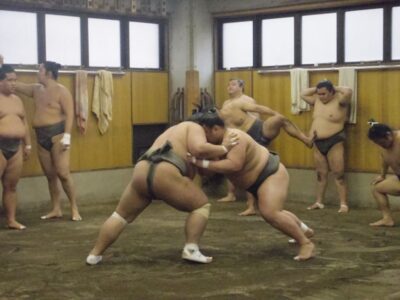 ★ 4.8Tokyo: Sumo Morning Practice Viewing TourFrom $8190 minutes - 2 hours
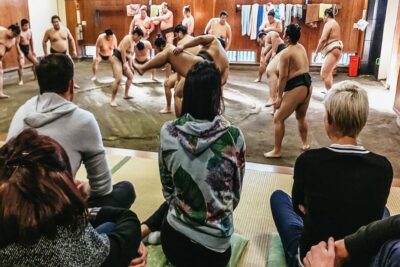 ★ 4.4Tokyo: Sumo Morning Training VisitFrom $771 hour
 ★ 4.8Tokyo: Sumo Morning Practice Tour at Sumida CityFrom $1162 hours
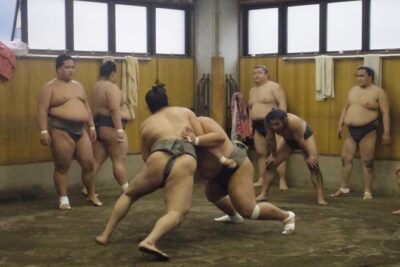 ★ 5.0Tokyo Sumo Morning Practice Tour at StableFrom $83
 ★ 4.5Tokyo Ryogoku Sumo Morning Practice + Photo Shoot with WrestlersFrom $98
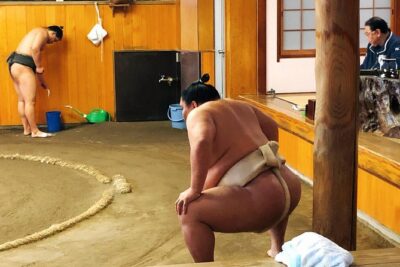 ★ 4.0Watch Sumo Morning Practice at Stable in TokyoFrom $95