
Reviewed · SHINJUKU TOURS
Tokyo: Shinjuku Night Walking Tour with Secret Alley
Kabukicho after dark is not just neon, bars, and big signs. It is a patchwork of postwar markets, tiny drinking lanes, sacred spaces, and new entertainment towers. This 90-minute walk gives you a useful introduction to that mix, with a guide explaining what you are seeing as you move through Shinjuku.
I like the route for two reasons: it joins Kabukicho, Omoide Yokocho, Hanazono Shrine, and Golden Gai in one compact outing, and it reaches corners you could easily pass without noticing. The main thing to consider is pace. Ninety minutes is enough for orientation and stories, but not enough for a slow meal, long shrine visit, or a relaxed drink in every district.
In This Review
- Key points
- Why this Shinjuku walk works so well after dark
- Meeting near Shinjuku Station
- Kabukicho and the story behind the neon
- Kabukicho Tower and new Shinjuku
- Omoide Yokocho and old Tokyo in miniature
- Hanazono Shrine, a needed pause
- Golden Gai and the tiny-bar maze
- What $32 gets you
- Who should book this evening walk
- Final call: a smart first look at Shinjuku
- FAQ
- How long is the Shinjuku Night Walking Tour?
- How much does the tour cost?
- What language is the tour offered in?
- Where is the meeting point?
- Which parts of Shinjuku does the tour visit?
- Are food and drinks included?
- Can I cancel the booking?
Key points
- Four very different sides of Shinjuku: See Kabukicho’s entertainment streets, Omoide Yokocho’s old-style alleyways, Hanazono Shrine, and Golden Gai.
- A quiet shrine amid the city: Hanazono Shrine offers a sharp change of mood between neon streets and high-rise Tokyo.
- History behind the nightlife: Learn how Kabukicho grew from postwar black-market roots into a major entertainment district.
- A useful first-night orientation: Your guide can point out small bars, food streets, and side lanes that are easy to miss alone.
- English-speaking local guidance: Guides named in guest feedback include Haydn, Karen, Yota, Ryota, and Nao.
- Good value at $32: The price is reasonable if you want context and confidence before exploring Shinjuku on your own.
Why this Shinjuku walk works so well after dark
Shinjuku can feel like several cities packed into one district. One block brings giant video screens and themed restaurants. The next gives you a narrow lane of smoky yakitori counters. A few minutes later, you are standing at a Shinto shrine with far less noise.
That contrast is the real point of this tour. You are not simply being led past famous signs. You are being shown how modern Tokyo grew around older streets, customs, and neighborhoods. I find that kind of walking tour far more useful than a checklist of landmarks because it gives you a sense of how to read the city.
The route is also short enough to fit neatly into an evening. At $32 per person, you are paying mainly for interpretation and local orientation, not for a long organized excursion. That makes it a sensible choice if this is your first night in Shinjuku or if you want a better understanding of an area you have already visited.
A few more Tokyo tours and experiences worth a look

Meeting near Shinjuku Station
The meeting point is in front of Happy Lemon, close to Shinjuku Station. That sounds simple, but Shinjuku Station is famously large, with many exits and surrounding buildings. Give yourself extra time to locate the correct spot rather than arriving at the station at the last minute.
The tour is conducted in English with a live guide. Named guides connected with the experience include Haydn, Karen, Yota, Ryota, and Nao. Specific guide assignments can vary, but the feedback provided gives you a useful idea of the personal style: Haydn was praised for behind-the-scenes nightlife stories, Karen for answering questions and explaining small details, and Yota for showing good places to have a drink.
Your guide is especially valuable at the start, when Shinjuku can feel like visual overload. Large signs compete for attention, side streets look similar, and the most interesting details are often easy to miss. A guide helps you get your bearings quickly without wasting the first part of your evening wandering in circles.
Kabukicho and the story behind the neon
The walk begins in Kabukicho, Japan’s best-known entertainment district. It is loud, bright, and packed with restaurants, izakayas, themed venues, and nightlife businesses. The area is famous, but fame alone does not explain it.
The useful part of the introduction is the story of change. Kabukicho grew from the postwar period, when black markets and rebuilding shaped the area, into one of Tokyo’s main centers for entertainment. That background gives the streets more meaning. You begin to see the district not simply as a collection of flashy signs, but as a place repeatedly reshaped by business, popular culture, and city life.
This is also the part of the tour where a guide can add practical value. The streets may look inviting, but nightlife districts deserve a little care. You should listen closely to any advice about venues, pricing, and where to walk. The tour does not promise a food or drink package, so do not assume that meals, tastings, or bar entry are included in the $32 price.
Kabukicho is not a quiet introduction to Tokyo. If you prefer calm neighborhoods and early evenings, the noise and commercial energy may feel tiring. If you want to understand one of the city’s most talked-about districts, though, this is a direct and efficient way to begin.
Kabukicho Tower and new Shinjuku
The route passes Kabukicho Tower, a newer landmark that represents the district’s current direction. The complex brings together cinema, live music, gaming, and nightlife in one tall development.
This stop helps connect old and new Shinjuku. Omoide Yokocho and Golden Gai preserve small-scale streets and long-running nightlife traditions, while Kabukicho Tower shows the city’s appetite for large, polished entertainment projects. Seeing both within one walk makes the changes easier to understand.
Do not expect a long interior visit based on the information provided. Kabukicho Tower functions here as a point of reference and a way to discuss Shinjuku’s transformation. That is still useful, especially if you return later and want to explore the complex on your own.
For photographers, this section offers the big-city visuals that many people associate with Tokyo. For history-minded visitors, its real value is comparison. The tower is most interesting when viewed beside the older lanes that come later.
Omoide Yokocho and old Tokyo in miniature
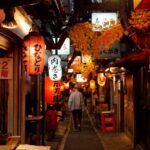
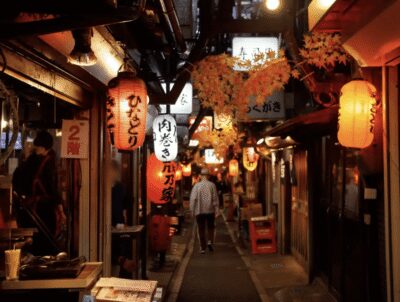
From the large streets, the route turns toward Omoide Yokocho, often translated as Memory Lane. The name fits the mood. Narrow passages, lanterns, tiny yakitori shops, and compact bars create a strong contrast with Kabukicho’s larger signs and newer buildings.
The setting recalls the Showa era, a period of Japanese history often associated with older forms of urban life and postwar development. You can smell grilled skewers, see cooks working in very small spaces, and watch the rhythm of a neighborhood built around quick meals and drinks.
I like this stop because it shows how much Tokyo can change from one street to the next. You do not need a museum display to understand that older city. The alley itself provides the setting. At the same time, remember that Omoide Yokocho is made up of working businesses, not a staged attraction. Keep the group moving, avoid blocking entrances, and follow your guide’s lead around the small counters.
The tour may spark your appetite, but food is not listed among the included items. Some feedback connected with this experience refers to food and drink outings, yet the stated inclusions are the guide and the walking tour. If you want to eat at one of the yakitori shops, plan to pay separately and check with your guide about what is practical during or after the walk.
A few more Tokyo tours and experiences worth a look



Hanazono Shrine, a needed pause
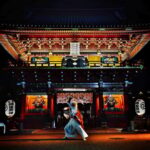
Hanazono Shrine is the quiet turn in the route. The shrine has served Shinjuku for centuries and sits close to the entertainment district and high-rise core. That location is what makes it so memorable.
You move from neon, traffic, and crowded signs into a sacred space with a calmer feel. The contrast is not accidental or artificial. Tokyo has long placed religious sites beside ordinary city life, and Hanazono Shrine makes that pattern easy to see.
This stop is especially valuable if you have limited time in Tokyo. You get a brief look at a Shinto site without spending half a day traveling to a distant temple complex. It also keeps the tour from becoming only a nightlife walk. Shinjuku is not just restaurants and bars, and the shrine makes that clear.
The tradeoff is time. A 90-minute tour cannot provide an extended visit or a detailed religious lesson. Treat Hanazono Shrine as a thoughtful pause and an introduction. If you want a longer visit, you can return independently when the tour ends.
Golden Gai and the tiny-bar maze
The walk finishes in Golden Gai, one of Shinjuku’s most distinctive nightlife areas. Its appeal comes from scale. Many bars are extremely small, sometimes close to the size of a single room, and each has its own theme and character.
Golden Gai has long attracted local regulars, artists, and curious visitors. That mix can make the area feel personal, but it can also make a first visit uncertain. Which door should you open? Is the bar welcoming to newcomers? Is there a cover charge? The tour can give you a basic sense of how the area works, even though it does not include bar entry or drinks.
A guide is useful here because Golden Gai is easy to view from the outside without understanding it. You will see the signs and cramped entrances, but the stories explain why the district matters. Guides named Haydn, Karen, Yota, Ryota, and Nao have been singled out for offering local detail, answering questions, and helping people find places for a drink.
The ending is well chosen. You have just seen the oversized entertainment complex, the old food lanes, and the quiet shrine. Golden Gai brings you back to nightlife, but in a smaller and more intimate form than Kabukicho.
What $32 gets you
At $32, this is a good-value walking tour if you want more than directions. You receive an English-speaking guide and a focused route through four very different parts of Shinjuku. You are paying for local explanation, historical context, and the confidence to explore afterward.
The price is less compelling if you mainly want food, drinks, or extended time inside venues. Those are not listed as included. The tour is also not designed as a full evening out. It gives you a framework, then leaves you free to choose a restaurant or bar after the walk.
That arrangement suits independent visitors. You can learn the area first, then decide where to spend your own money. It also works well for people who want a short activity before dinner or a simple introduction on their first evening in Tokyo.
A full rating of 5 from 35 reviews suggests a strong satisfaction record, and the praise centers on the guides, local detail, nightlife stories, and value. I would place the greatest weight on those points rather than expect a packaged food experience.
Who should book this evening walk
I would recommend this tour to first-time Tokyo visitors who want a clear introduction to Shinjuku without committing to a long night. It also suits repeat visitors who have seen the main station area but never understood how Kabukicho, Omoide Yokocho, Hanazono Shrine, and Golden Gai fit together.
It is a good match for solo visitors and couples who want a little help before exploring small nightlife districts. The English format and live guide make it easier to ask questions as you go. The named guides have been praised for being friendly, accommodating, informative, and able to explain small details.
You may want something else if your main goal is a sit-down meal, a bar crawl, or a long shrine visit. The route is a walking introduction, not a tasting tour or a night of reserved venues. It is also worth remembering that nightlife areas can be crowded and visually intense.
Wear comfortable shoes and arrive early at the Happy Lemon meeting point. Keep your plans flexible after the tour, since Golden Gai and Omoide Yokocho are best enjoyed at a slower pace if you decide to return.
Final call: a smart first look at Shinjuku
Book this tour if you want Shinjuku explained, not merely photographed. The best parts are the sharp changes in mood: Kabukicho’s neon streets, Kabukicho Tower’s new entertainment focus, Omoide Yokocho’s grilled skewers and narrow lanes, Hanazono Shrine’s calm setting, and Golden Gai’s tiny bars.
At $32, the experience earns its price through the guide and the route. I would choose it early in a Tokyo stay, then use what you learn to plan a later evening on your own. Skip it only if you already know Shinjuku well or want food and drinks included. For most first-time visitors, it is a compact, practical way to get under the surface of Tokyo’s most famous nightlife district.
FAQ
How long is the Shinjuku Night Walking Tour?
The tour lasts 90 minutes.
How much does the tour cost?
The listed price is $32 per person.
What language is the tour offered in?
The tour is conducted in English with a live guide.
Where is the meeting point?
The meeting point is in front of Happy Lemon, close to Shinjuku Station.
Which parts of Shinjuku does the tour visit?
The route includes Kabukicho, Kabukicho Tower, Omoide Yokocho, Hanazono Shrine, and Golden Gai.
Are food and drinks included?
The stated inclusions are the guide and the Shinjuku walking tour. Food, drinks, and bar entry are not listed as included.
Can I cancel the booking?
You can cancel up to 24 hours in advance for a full refund. A reserve-now-and-pay-later option is also available.
More Walking Tours in Tokyo



More Night Tours in Tokyo
More Shinjuku Tours in Tokyo

More tours in Tokyo we've reviewed



Shinjuku Tours, compared.
 ★ 5.0Tokyo: Shinjuku Food Tour (13 Dishes at 4 Local Eateries)From $86
 ★ 5.0Tokyo Bar Hopping Tour in Shinjuku (All-You-Can-Drink + Dinner)From $106
 ★ 4.9Tokyo: Shinjuku Food Tour (15 Dishes and 4 Eateries)From $853 hours
 ★ 5.0Best of Shinjuku: Izakaya Food Tour (4 Stops, 14+ Tastings)From $92
 ★ 4.9Tokyo: Shinjuku Local Bar and Izakaya Guided Walking TourFrom $343 hours
 ★ 5.0Tokyo Shinjuku Chopsticks Making ClassFrom $20