
Reviewed · TOKYO FOOD TOURS
Tokyo: Locals´ Secret Food Tour // Eat like a Japanese
Ueno’s best food experiences often sit behind ordinary station doors, and this tour takes you straight into that local evening rhythm. Over several stops, you’ll eat sushi, gyoza, yakitori, and ramen, with drinks along the way and a guide to explain what you’re ordering.
I like the wide range of food packed into one night, and I like the relaxed guide-led format. Kana, Nobu, Tatsuya, Mari, and Suzu have all been praised for being friendly, helpful, and happy to answer questions. The main drawback is clear: this is not suitable for vegetarians, vegans, or anyone needing gluten-free food, and popular stops may mean waiting in line.
In This Review
- Key points
- Why Ueno makes a good food-tour base
- Meeting at JR Ueno Station
- First stop: fresh sushi near the station
- Second stop: gyoza with several flavor choices
- Third stop: yakitori and an izakaya drink
- Final stop: chicken ramen with a carefully made broth
- What the guides add to the meal
- How much food and drink do you receive?
- Who should book, and who should skip it?
- Practical booking advice for Ueno
- Should you book this Ueno food tour?
- FAQ
- Where does the tour begin?
- Where does the tour end?
- What food is included?
- Are alcoholic drinks included?
- Can vegetarians, vegans, or gluten-free diners join?
- Is the tour available in English?
Key points
- Four classic food stops: Try sushi, gyoza, yakitori, and chicken ramen in one Ueno evening.
- A local-style route: The tour focuses on Japanese restaurants away from Tokyo’s main tourist zones.
- Personal guides: Guides including Kana, Nobu, Suzu, Mari, and Tatsuya explain food customs and answer questions.
- Drinks are part of the meal: Choose an alcoholic or soft drink with yakitori, with sake and plum wine available through the Extra Alcohol Package.
- Good for solo diners: The informal setup makes it easier to eat out without booking a table alone.
- Plan for queues: Some restaurants are popular, and waiting is part of the evening.
Why Ueno makes a good food-tour base
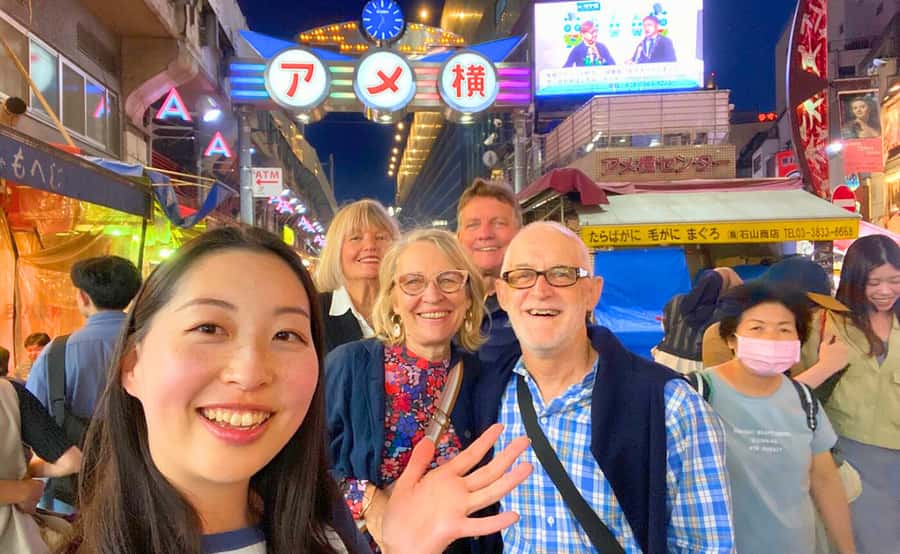
Ueno is one of the more useful parts of Tokyo for a food walk because it mixes station dining, old-style drinking streets, market energy, and everyday restaurants. It does not require you to cross the city in search of a famous food district. You begin and end at JR Ueno Station, which keeps the evening simple.
The route is designed around places where local customers eat and drink, rather than a formal tasting room or a polished sightseeing restaurant. That matters because you get to see how several familiar Japanese foods fit into an ordinary night out. Sushi may start the meal, gyoza brings a casual shared-dish feel, yakitori pairs naturally with a drink, and ramen finishes the evening with something warm and filling.
I also like the way the tour gives you a guide between stops. Ueno can feel confusing around the station, especially after dark, and food customs are not always obvious on a first visit. Your guide can explain what you are eating, how the restaurants work, and why certain dishes are everyday favorites.
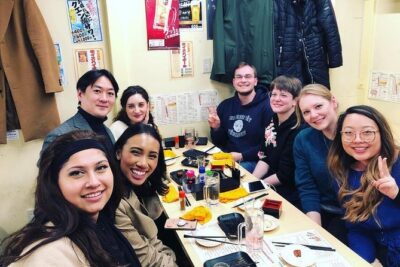
The experience is offered in English and Japanese. The guides named in the feedback include Kana, Nobu, Suzu, Mari, and Tatsuya. The strongest pattern is their personal approach. Kana was described as authentic and helpful, Nobu as friendly and easy to talk with, and Tatsuya as so engaging that he continued spending time with the group after the official portion ended.
A few more Tokyo tours and experiences worth a look
Meeting at JR Ueno Station
The meeting point is inside the JR Ueno Station building, just outside the JR Central Gate. Look for the large area map near the Hard Rock Cafe entrance, across from the ANDERSEN bakery.
This is a practical meeting point, but Ueno Station is large and busy enough that you should allow extra time to find the correct gate. If you get turned around, show a local the supplied Japanese location note, which identifies the area as inside JR Ueno Station near the Hard Rock Cafe entrance and opposite ANDERSEN bakery.
The tour returns to this same meeting point at the end. Transportation is not included, so you pay your own fare to reach Ueno and for any transport used during the evening. The supplied details do not state the tour length or group size, so check the current booking information before you reserve if those details affect your plans.
First stop: fresh sushi near the station
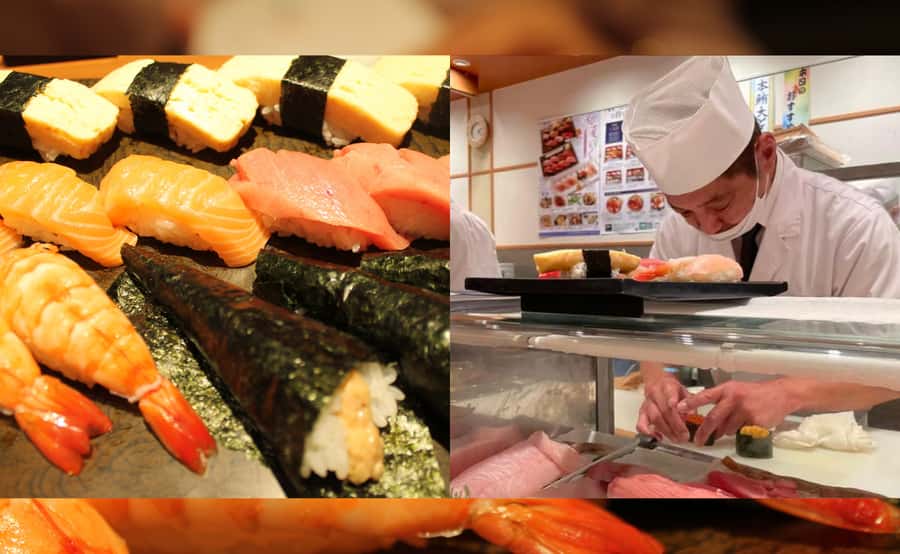
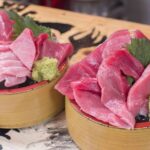
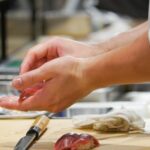
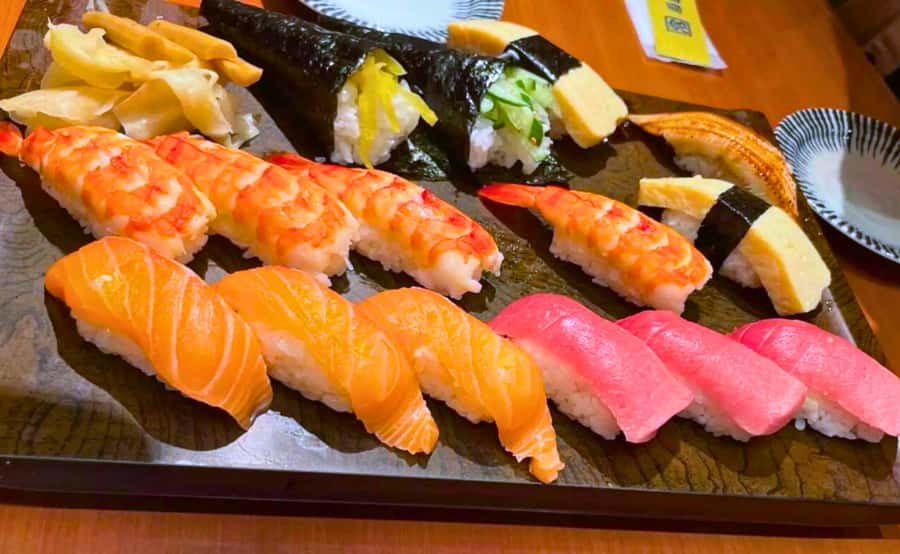
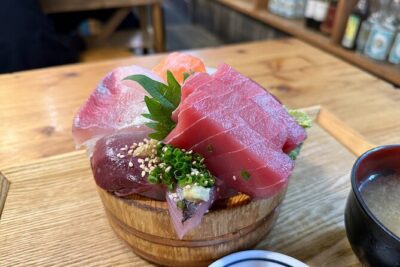
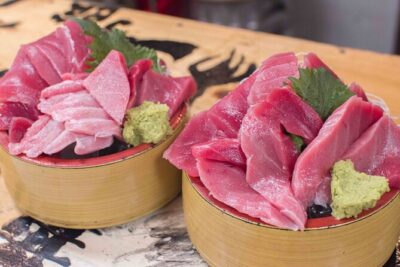
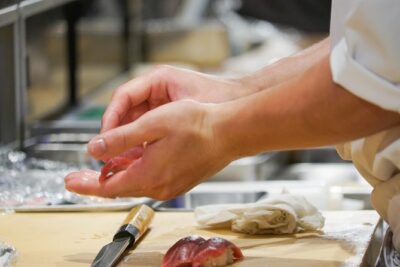
The evening begins at a sushi restaurant inside Ueno Station. The restaurant sources fish from the market each morning, and the tour includes three types of sushi with green tea.
This is a smart opening stop. Sushi is familiar to many visitors, but the guide can help you notice differences in fish, texture, and serving style. Since the meal begins inside the station, you also get an immediate look at how much useful food is built into Tokyo’s transport hubs.
The restaurant is popular, so a line is possible. That can slow the evening, but it also gives you a chance to watch the local rhythm of the place instead of being rushed from one bite to the next. The tour information treats waiting as part of Japanese dining culture, not as a sign that something has gone wrong.
You should arrive ready to eat, but not stuffed. Three sushi pieces alone will not make a full dinner, yet the complete route includes enough food that pacing matters. Green tea is included here, while later stops add water, soft drinks, or alcohol depending on your selections.
Second stop: gyoza with several flavor choices
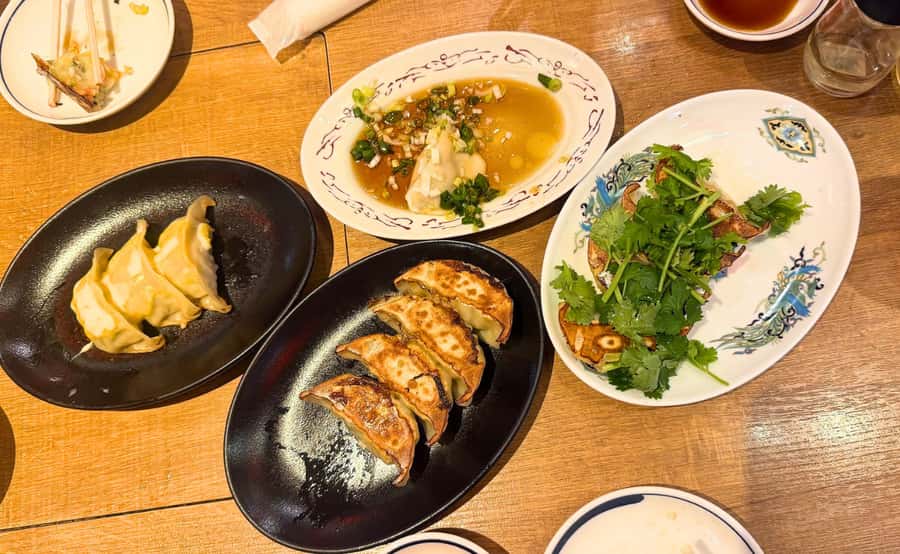
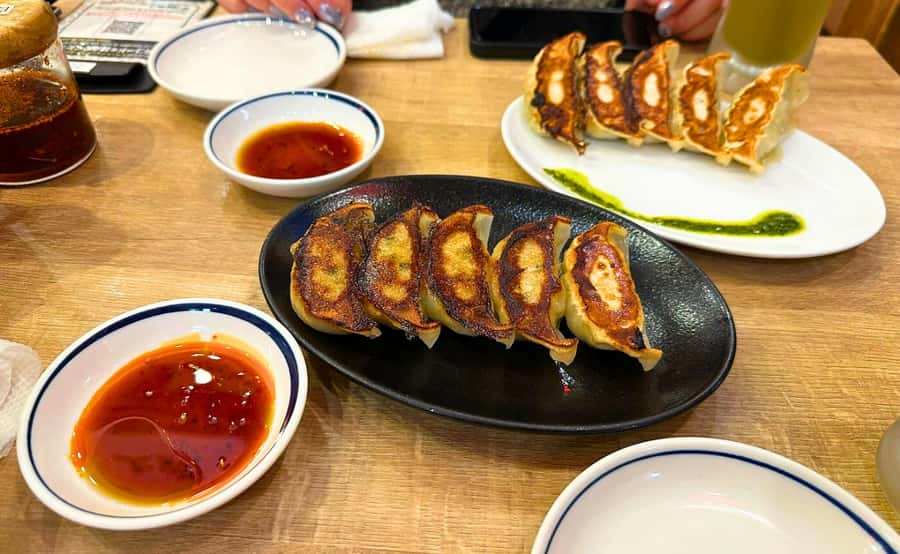
Next comes gyoza, the pan-fried Japanese dumpling that appears in homes, casual restaurants, and after-work meals across Japan. You can choose from one to four flavors, and water is included.
This stop adds a different texture and mood to the meal. Sushi is delicate and precise. Gyoza is warmer, heavier, and more casual, with a lively restaurant atmosphere that helps you feel less like a sightseer and more like someone meeting friends for dinner.
The choice of flavors is useful if you are curious about how one basic dish can change with different fillings or seasonings. Your guide can also help you order and explain what works well with the dumplings.
The phrase best gyoza restaurant in Tokyo is part of the tour’s description, so treat it as promotional language rather than a measurable fact. The better reason to value this stop is its everyday quality. Gyoza is not a rare ceremonial food. It is one of the dishes that helps you understand casual Japanese eating.
Third stop: yakitori and an izakaya drink
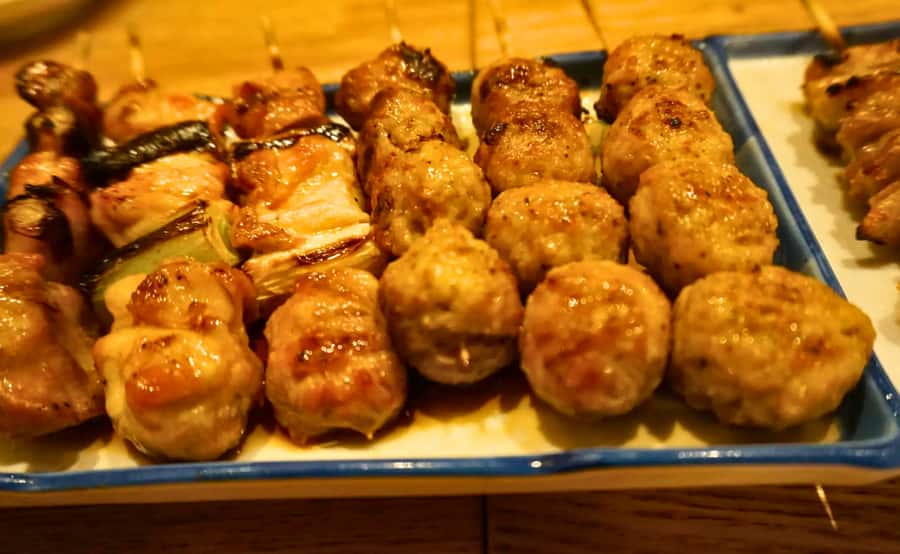
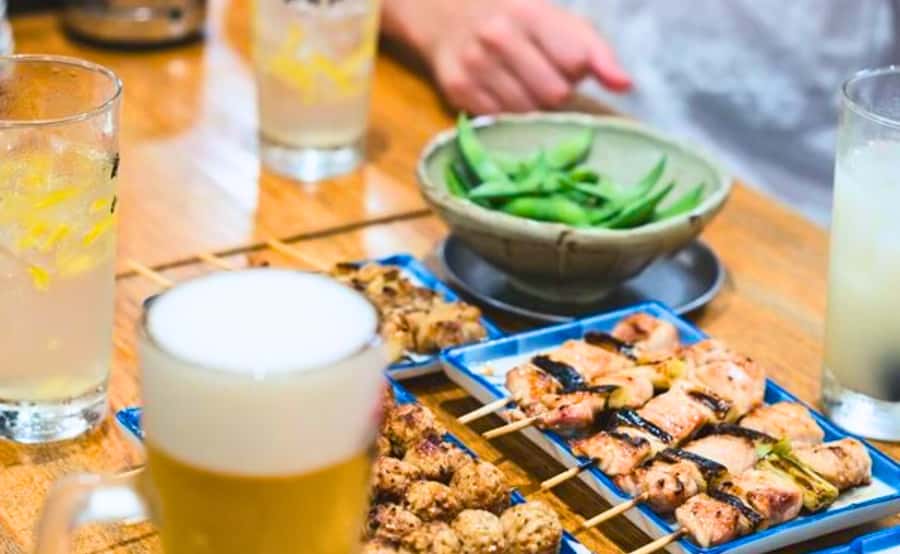
The yakitori stop takes you to an izakaya, a Japanese-style pub built around small dishes, drinks, and conversation. You receive three kinds of chicken skewers and choose an alcoholic or soft drink.
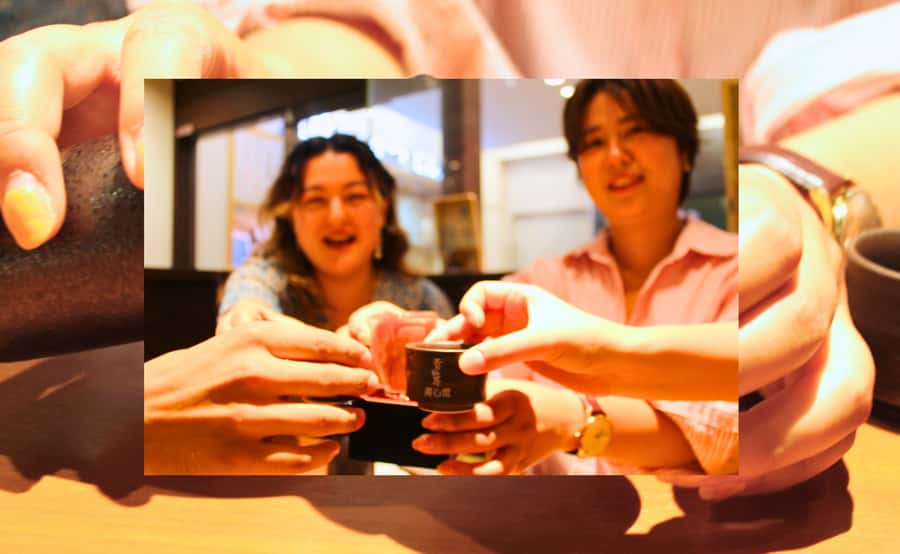
The food here is not just a quick sample. An izakaya is part of the social side of Japanese dining, and the tour gives you a chance to see that setting firsthand. The menu offers more than 50 alcoholic and nonalcoholic drinks, with yuzu sour suggested as one option. It combines yuzu liqueur with sparkling water for a bright, citrusy drink.
You can select a soft drink if you do not drink alcohol. That makes this stop more flexible, although the overall setting is still a drinking district and alcohol is part of the experience for many diners.
An Extra Alcohol Package adds sake and plum wine. Since those drinks are not part of the standard inclusions, check the price difference before booking if trying Japanese drinks is important to you. The regular package already includes a drink with the yakitori, but the extra option gives you more to sample.
This is likely to be the most social stop of the night. The setting brings together local people of different ages, and the guide can explain the informal rules of an izakaya. You may need to wait for a table, especially at a popular place. If you dislike queues or prefer a fixed schedule, that is worth keeping in mind.
A few more Tokyo tours and experiences worth a look
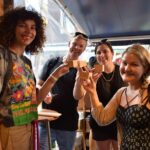

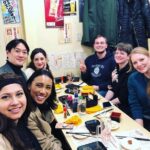

Final stop: chicken ramen with a carefully made broth
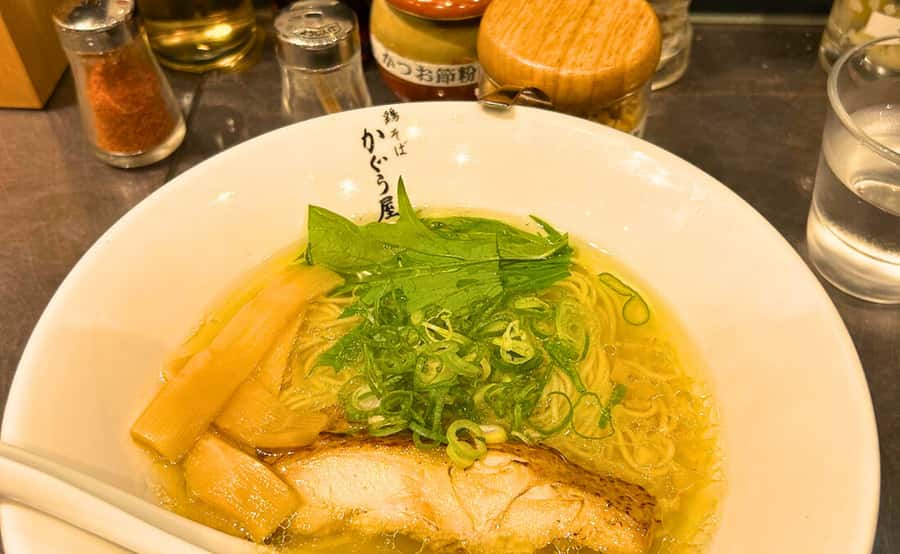
The route ends at a small ramen shop serving chicken soba. The bowl uses Oyama chicken, fresh vegetables, and Hidaka kelp. The broth is slow-cooked and double-strained, giving it a smooth texture and a full flavor.
Ramen is a satisfying final course because it brings the meal together in a single bowl. After sushi, dumplings, and skewers, you get something hot and substantial. The inclusion of high-quality chicken and kelp also gives your guide useful material to explain how broth gets its flavor without relying only on a heavy sauce.
One useful detail is that the route may include mazesoba rather than only soup ramen. Katrina specifically tried mazesoba for the first time and found it became a favorite meal in Japan. Mazesoba is a mixed noodle dish rather than a conventional bowl of broth, so ask your guide what style is being served that night.
You receive water with the ramen. The route description presents this final dish as a hidden ramen stop, but exact restaurant availability can change. Popular Japanese food shops may have lines, and the specific dish may vary. The important point is that the meal finishes with a substantial noodle course rather than a token tasting.
What the guides add to the meal
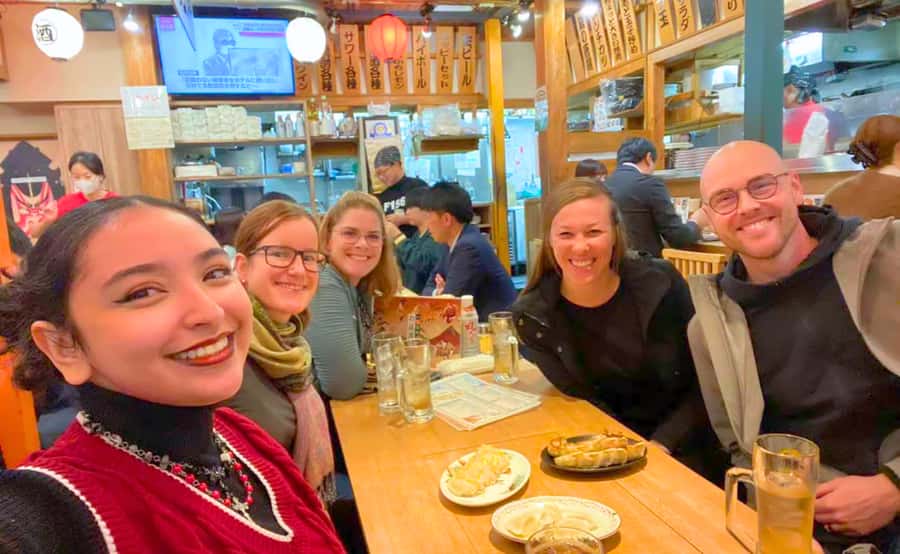
Food tours succeed or fail on the person leading them, and this experience puts a lot of weight on the guide. The feedback gives you several names to look for, though you may not receive a particular guide on your date.
Kana was praised for being professional, authentic, and extremely friendly. She also gave useful information about Japanese culture. Nobu was described as warm, responsive, and willing to answer questions, while Mari spent time explaining food and culture in detail.
Tatsuya brought a more playful tone and was praised for making the route diverse and enjoyable. Suzu also received a short but enthusiastic recommendation. Taken together, these comments suggest that the guide’s role is not limited to leading you between restaurants. You can expect conversation, ordering help, and practical explanations along the way.
The experience is presented as dinner with a friend rather than a formal lecture. I see that as a strength if you want to ask basic questions without feeling awkward. Ask about ingredients, drinking customs, restaurant etiquette, or the difference between dishes. You will get more from the tour if you treat the guide as a local food contact rather than simply following along silently.
How much food and drink do you receive?
The standard inclusions are:
- Three types of sushi with green tea
- Gyoza with a choice of one to four flavors and water
- Three types of yakitori with an alcoholic or soft drink
- Ramen with water
Sake and plum wine are included only if you select the Extra Alcohol Package. Transportation is not included.
Taken together, this is a full dinner, not a light snack crawl. You should come hungry, but the number of stops means you may want to avoid a large meal beforehand. The food also arrives across several restaurants, so the pace depends partly on restaurant queues and seating availability.
The tour price is $91 per person. That is not a cheap casual dinner, but it covers several dishes at four stops, a drink at the yakitori restaurant, and a guide who helps you navigate local dining. You are also paying for access to a planned sequence of restaurants and the convenience of having someone explain the food.
The value is strongest for a first night in Tokyo, a solo diner, or anyone who wants to try several Japanese staples without guessing where to go. It is weaker if you already know Ueno well, speak Japanese comfortably, and would rather order each dish independently.
Who should book, and who should skip it?
I would recommend this tour to first-time visitors who want a clear introduction to Japanese food beyond sushi alone. It also suits solo visitors, couples, and small groups who prefer a friendly evening instead of a large sightseeing party.
It is particularly useful if you are nervous about ordering in Japanese restaurants. You get several chances to ask questions, try familiar and unfamiliar dishes, and learn how a sushi shop, gyoza restaurant, izakaya, and ramen shop each feel different.
The tour is not suitable for children under 18, pregnant women, wheelchair users, vegans, vegetarians, or people requiring gluten-free meals. The food is centered on fish, chicken, wheat-based dumplings and noodles, and restaurant choices cannot accommodate those dietary needs.
You should also be comfortable with walking between food stops and possible lines, although no exact walking distance is provided. If you need a strict timetable, private seating, or full control over every ingredient, this may frustrate you.
Practical booking advice for Ueno
Book this early in your Tokyo plans if you want the guide to help shape your first impressions of Japanese food. The cancellation policy allows a full refund when you cancel at least 24 hours ahead, and the reserve-now, pay-later option gives you some flexibility.
Wear comfortable shoes and bring enough room in your appetite for four courses. Meet inside the station rather than waiting outside, and save the exact meeting instructions on your phone. If you have trouble locating the map near the Hard Rock Cafe and ANDERSEN bakery, ask station staff or show them the Japanese location note.
Do not assume that every stop will run exactly on time. A popular sushi or izakaya restaurant may require patience. That is part of the local dining experience, but it is still wise to avoid scheduling a show, train, or late-night reservation immediately afterward.
Should you book this Ueno food tour?
Book it if you want a complete Japanese dinner with guidance, especially if sushi, gyoza, yakitori, and ramen all appeal to you. The strongest reason to choose it is the combination of varied food and personable guides. Kana, Nobu, Mari, Suzu, and Tatsuya are praised for making the night easy, social, and informative.
Skip it if your diet rules out the main dishes, if you dislike waiting in popular restaurants, or if $91 feels too high for a dinner you could organize yourself. For everyone else, this is a useful way to spend an evening in Ueno, with enough food to leave you full and enough local context to make the meal feel like more than a checklist.
FAQ
Where does the tour begin?
It begins inside JR Ueno Station, just outside the JR Central Gate, near the large area map close to the Hard Rock Cafe and across from the ANDERSEN bakery.
Where does the tour end?
The activity ends back at the same meeting point inside JR Ueno Station.
What food is included?
You receive three types of sushi with green tea, gyoza with one to four flavor choices, three types of yakitori with a drink, and ramen with water.
Are alcoholic drinks included?
An alcoholic or soft drink is included with the yakitori stop. Sake and plum wine are included only if you select the Extra Alcohol Package.
Can vegetarians, vegans, or gluten-free diners join?
No. The tour cannot accommodate vegetarian, vegan, or gluten-free dietary preferences.
Is the tour available in English?
Yes. The tour is offered in English and Japanese.
More Food Experiences in Tokyo
More Tokyo Food Tours in Tokyo
More tours in Tokyo we've reviewed




Tokyo Food Tours, compared.
 ★ 5.0Tokyo: Shinjuku Food Tour (13 Dishes at 4 Local Eateries)From $86
 ★ 4.9Tokyo: Shinjuku Food Tour (15 Dishes and 4 Eateries)From $853 hours
 ★ 5.0Best of Shinjuku: Izakaya Food Tour (4 Stops, 14+ Tastings)From $92
 ★ 5.0Tokyo Night Foodie Tour in Shinjuku – Seasonal Sushi, Wagyu BeefFrom $111
 ★ 5.0Eat and Drink Like a Local: Tokyo Ueno Food Tour-Taverns&RamenFrom $95
 ★ 5.0Tokyo: Shibuya Food Tour (13 dishes and 4 Eateries)From $77