
Reviewed · SHIBUYA TOURS
Tokyo: Akihabara, Shibuya, Karaoke & City Lights Night Tour
Tokyo gets most interesting after sunset, when Akihabara’s signs light up, Shibuya Crossing fills with people, and Shinjuku turns into a giant neon stage. This tour links those very different districts by train and on foot, ending with karaoke in a private room.
I like the smart route between famous sights, and I like having a guide explain the city instead of leaving you to decode Tokyo’s huge stations alone. The English and Spanish options are a real plus, especially for Spanish-speaking visitors. The main drawback is that the tour moves through several busy districts in one evening, so it suits you better if you enjoy walking, trains, and a brisk pace than if you want long, quiet stops.
In This Review
- Key points at a glance
- Why this night tour works for a first Tokyo evening
- Meeting the guide near Ueno Station
- Ueno Park after sunset
- Akihabara: electronics, anime, and free time
- Shibuya Crossing and Tokyo’s moving crowd
- Shinjuku and the bright streets of Kabukichō
- Karaoke in a private room
- Guides and language choices
- What the $79 price really covers
- Who will enjoy this route most
- Practical tips for a smoother evening
- Should you book this Tokyo night tour?
- FAQ
- Where does the tour start?
- How early should I arrive?
- Which languages are available?
- Are train tickets included?
- Is karaoke included in the price?
- Is food included?
- Is the tour suitable for wheelchair users?
Key points at a glance
- Four distinct Tokyo neighborhoods: Walk through Ueno Park, Akihabara, Shibuya, and Shinjuku in one night.
- Train tickets are included: The guide handles transfers between the main parts of the route.
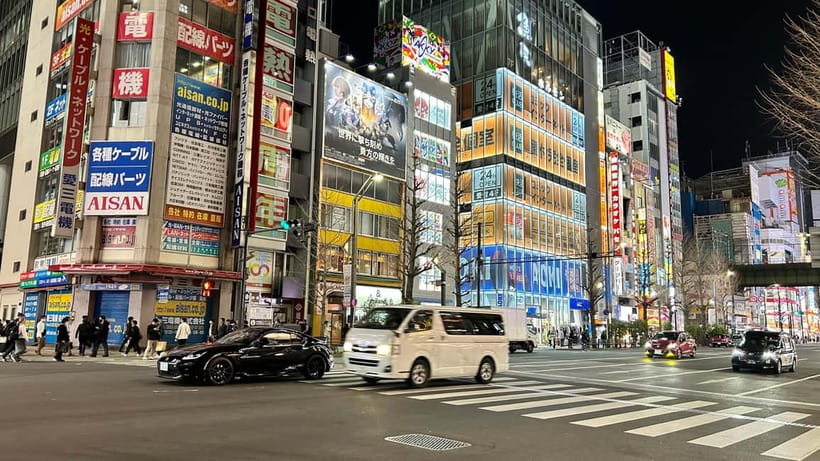
- Akihabara free time: Browse electronics, anime, video game shops, themed cafes, and memorabilia at your own pace.
- A classic Shibuya photo stop: Watch and photograph the famous crossing from the heart of the district.
- Karaoke in Shinjuku: Finish in Kabukichō with a private-room singing session and a large song selection.
- English and Spanish guidance: The tour is offered in both languages, with guides including Hiro, Ethan, Erik, Pastor, and Oliver assigned on different departures.
Why this night tour works for a first Tokyo evening
Tokyo can feel like several cities stitched together by rail. One neighborhood is devoted to electronics and anime, another to fashion and crowds, and another to late-night entertainment. This tour gives you a quick but useful introduction to that contrast.
The route is also practical. You do not spend the whole evening trying to find the right train platform or deciding which district to visit next. Your guide leads the transfers, gives you background at each stop, and lets you explore at selected points.
I would not book this expecting a slow food tour or a detailed museum visit. The appeal is the changing mood of Tokyo after dark. You see major sights, get some free time in Akihabara, walk through Kabukichō, and finish with an activity that encourages the group to relax.
At $79 per person, the price is reasonable if you value the included train tickets, bilingual guide, karaoke entrance, and a ready-made route. It is less compelling if you already know Tokyo’s rail system and only want to photograph Shibuya Crossing. In that case, you could visit the districts independently for less.
A few more Tokyo tours and experiences worth a look

Meeting the guide near Ueno Station
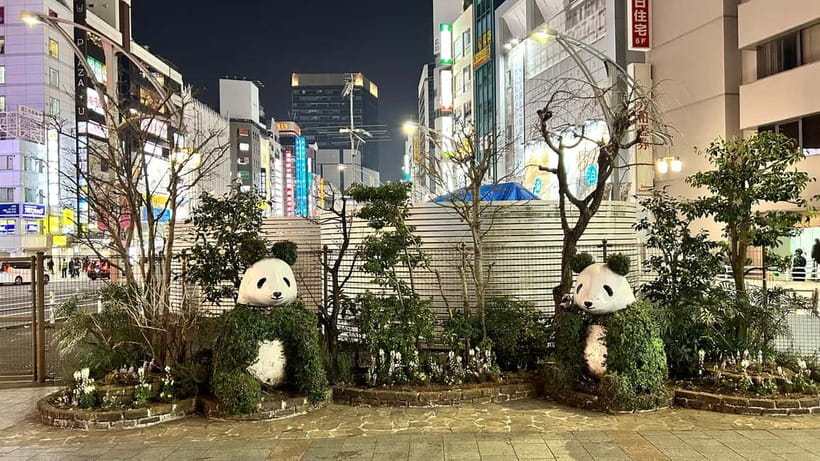
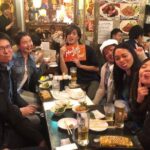
The meeting point is the Seven Eleven next to the pandas, reached from Exit C7 at Ueno Station. Look for the guide holding an Amigo Tours sign, and arrive at least 10 minutes before departure for check-in.
This is an important detail in Tokyo. Ueno Station has multiple exits and several connected areas, so do not wait until the last minute to find Exit C7. A charged smartphone will help with directions, messages, and photos if you are delayed.
The tour begins at Ueno Park, a pleasant place to start before the city reaches its late-night peak. The park is known for its scenery, cultural sites, and cherry blossoms. During blossom season, the trees make the opening walk especially appealing, although the tour does not promise peak flowers on a specific date.
The park stop is a gentle introduction. You can stretch your legs, take photographs, and listen to the guide explain why Ueno matters in Tokyo’s story. It also gives the evening a calmer opening before the bright signs and crowds of Akihabara.
Ueno Park after sunset
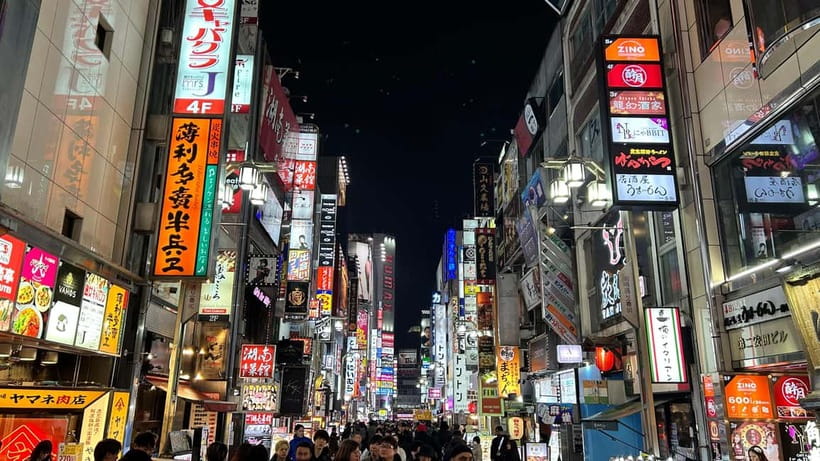
Ueno Park changes character as daylight fades. Its pathways offer a break from traffic and station crowds, and the walk gives you a chance to settle into the group before the main city stops begin.
Do not expect an extended park visit. This is a short walking portion within a larger night route. If cherry blossoms are your main reason for visiting Ueno, you may want to return during the daytime on another day, when you can spend more time in the park.
I like this opening because it avoids throwing you straight into Tokyo’s loudest streets. You begin with scenery, then move gradually into the city’s more intense neighborhoods.
Wear comfortable shoes. You will walk through stations, shopping streets, crossing areas, and Kabukichō, and the route includes several train transfers. Tokyo’s pavements are generally easy to walk on, but a full evening on your feet can still be tiring.
Akihabara: electronics, anime, and free time
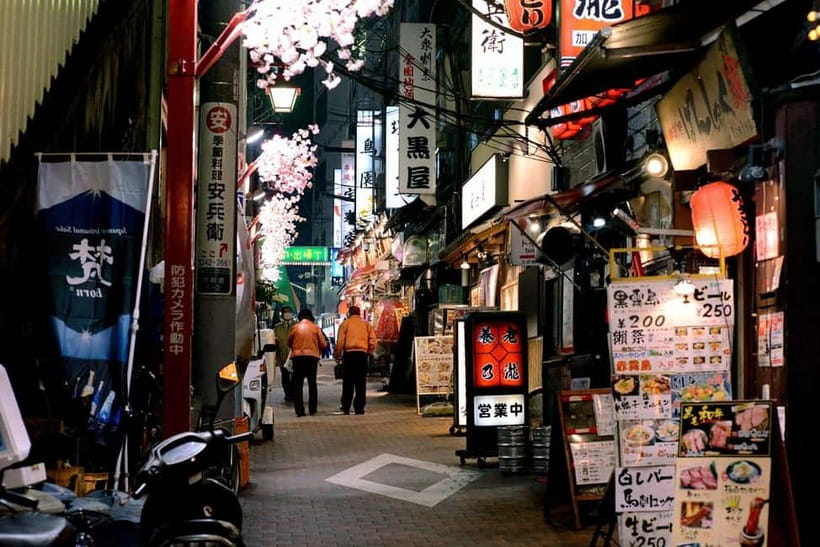
From Ueno, the group takes a train to Akihabara. Train tickets for the transfers between itinerary points are included, which removes one small but annoying cost and lets you focus on the city outside the carriage windows.
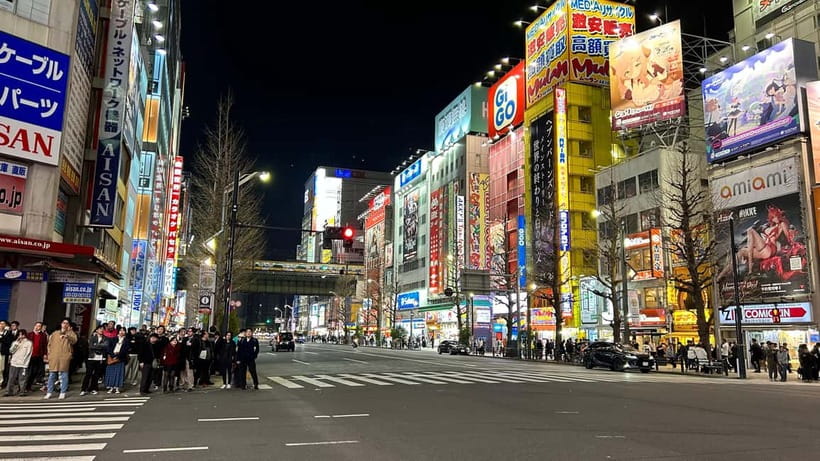
Akihabara is one of the most distinctive stops. It is known for electronics, anime, video games, and otaku culture. The guide gives you an introduction to the district, then allows free time to explore at your own pace.
That free time matters. A guided walk can show you the area, but Akihabara is better when you can choose your own target. You might browse electronic goods, look for anime memorabilia, check out video game shops, or take a closer look at themed cafes.
The tour does not state that shopping purchases, cafe visits, or food are included. Plan to pay separately for anything you buy. If you want a particular item, use the free period carefully, since the group will later meet again to continue to Shibuya.
Akihabara can be visually loud and crowded, with tall signs and shops competing for attention. It is fun, but it is not especially restful. Keep track of the meeting instructions, and avoid wandering so far that you lose time getting back to the group.
This part is especially useful for first-time visitors who are curious about anime and Japanese gaming culture but do not know where to begin. You get a short orientation, then enough independence to follow your own interests.
Shibuya Crossing and Tokyo’s moving crowd
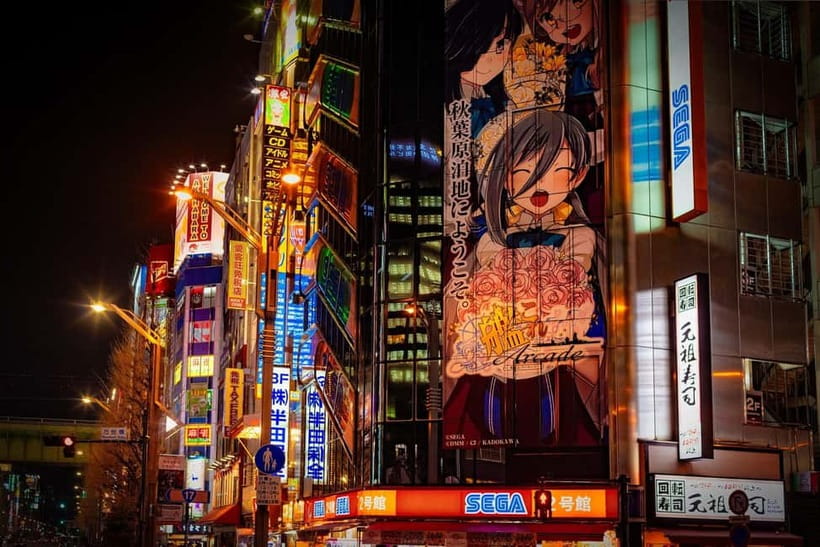
The next major stop is Shibuya, home to the famous crossing. When the signals change, people move across the intersection from several directions at once. It is one of Tokyo’s most recognizable city scenes, and it is a natural place for photographs.
The guide helps you reach the crossing and take in the scene without having to work out the best place to begin. You will have time to take pictures and watch the flow of people, though the exact amount of time can depend on the pace of the group and the evening schedule.
Shibuya is less about a single historical sight and more about the feeling of modern Tokyo. Huge screens, bright storefronts, traffic, and pedestrians create the kind of city image many visitors hope to see at night.
Bring a camera, but your smartphone is enough for most people. A charged phone is particularly useful here because you may want to take several photos, check meeting messages, and use maps during free moments.
The drawback is familiar: Shibuya Crossing is famous because it is crowded and busy. If you dislike dense city crowds, this stop may feel overwhelming. The tour does not offer a quiet overlook or a long pause away from the crossing, so think of it as a lively photo stop rather than a peaceful viewpoint.
A few more Tokyo tours and experiences worth a look





Shinjuku and the bright streets of Kabukichō
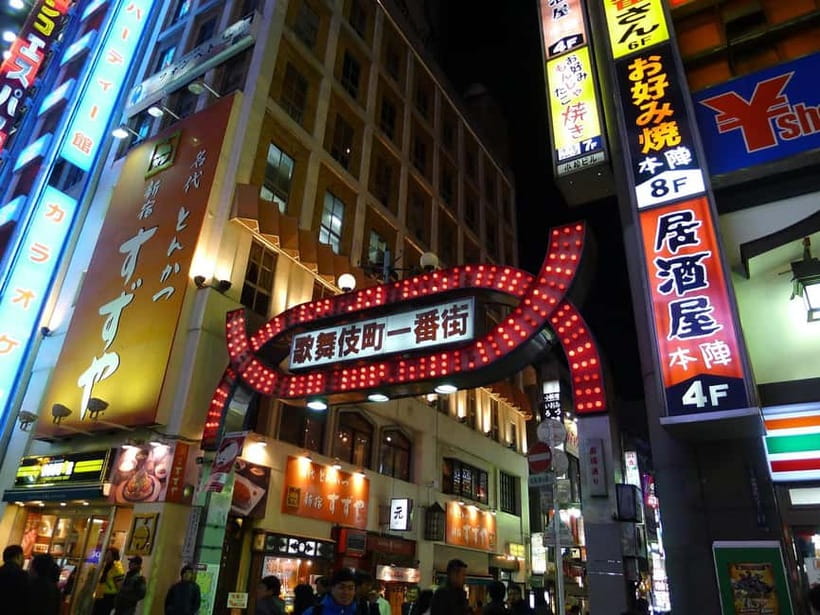
The evening ends in Shinjuku, one of Tokyo’s best-known nightlife districts. The group walks through Kabukichō, where restaurants, bars, entertainment venues, and illuminated streets keep the area active after dark.
A guide is useful here because the district can feel confusing, especially on a first visit. You get a clear route through the area rather than simply arriving at Shinjuku Station and trying to choose a direction.
Kabukichō is a nightlife district, so the atmosphere is more adult and energetic than Ueno Park or Akihabara. Stay with the group, listen to the guide’s directions, and remember that the tour focuses on walking through the district rather than entering a series of bars or clubs.
This portion gives the night a good change of pace. Ueno is quiet, Akihabara is specialized, Shibuya is dominated by the crossing, and Shinjuku feels like a full entertainment zone. The stops are not interchangeable, which is why the route offers more than a simple city-light walk.
Karaoke in a private room
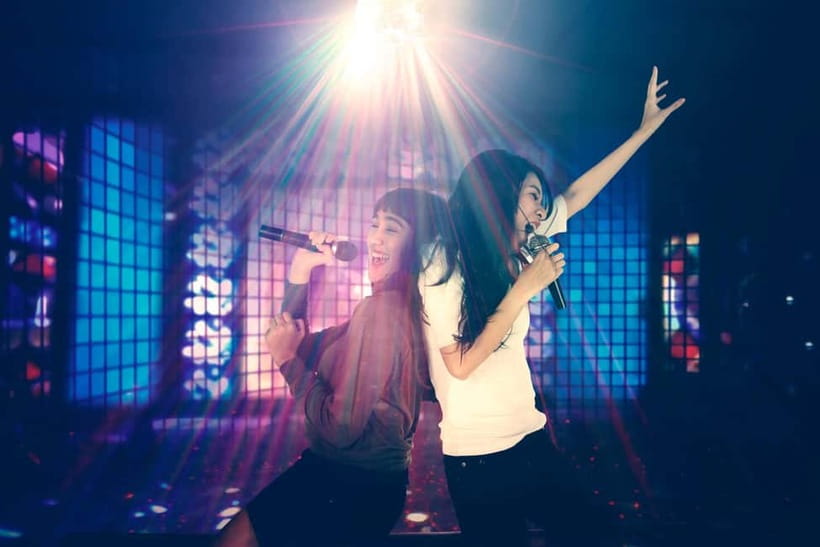
Karaoke is the tour’s social finish. You enter a karaoke venue in Shinjuku and sing in a private room with comfortable seating, lights, drinks in hand, and a large selection of songs. The supplied details describe the room as private, so you are not expected to perform before a bar full of strangers.
That makes a difference. You can sing seriously, badly, or not at all until you feel comfortable. The point is the shared activity, and the format works well for couples, friends, and solo visitors who want an easy way to meet the rest of the group.
The karaoke entrance fee is included. Snacks and drinks are included only if you select the option that contains them. If you choose the basic option, food and drinks are not included, so check the booking choice before paying.
Karaoke also helps the tour finish on a relaxed note. After several stations and crowded streets, sitting down in one room gives the group time to laugh and talk. It is a more personal ending than simply being dropped off at a station.
You do not need to be a singer to enjoy this part. If you are shy, you can join in on familiar songs or simply watch. The private-room setup keeps the pressure low.
Guides and language choices
The experience is offered in English and Spanish. This is more than a minor booking detail. A Spanish-language night tour of Tokyo can be hard to find, and clear explanations make the train transfers, neighborhood introductions, and karaoke arrangements easier.
Several guides have led departures, including Hiro, Ethan, Erik, Pastor, and Oliver. The exact guide depends on the date, but the tour format calls for a bilingual guide who handles the route and explains each district.
Guide style can shape a night tour. The most useful role here is not a long lecture at every stop. You want someone who can give enough context, keep the group together, and make the free time and train transfers feel simple.
Reports from this departure include guides who were helpful, entertaining, and willing to explain places without rushing. That fits the route well. Akihabara and Kabukichō are more enjoyable when someone gives you a little context before letting you look around.
What the $79 price really covers
At $79, you are paying for structure as much as sightseeing. The fee includes the bilingual guide, train tickets between itinerary points, and karaoke entrance. That combination saves you from paying several small costs separately and from planning the route yourself.
The value is strongest for first-time visitors, solo visitors, and anyone who wants company during a night out. You get four neighborhoods, guided transfers, a planned final activity, and the chance to meet other people.
The value is weaker if you already know Ueno, Akihabara, Shibuya, and Shinjuku. Tokyo’s train fares are not usually the largest part of a city budget, and you can visit Shibuya Crossing without a tour. In that case, the main benefit is the group atmosphere and karaoke, not exclusive access.
Snacks and drinks depend on the option you select. Read that choice closely. The tour includes the karaoke fee, but it does not automatically include all food and drinks.
You can reserve now and pay later, which helps if your Tokyo schedule is still changing. Cancellation is allowed up to 24 hours before departure for a full refund. The activity is not suitable for wheelchair users, and the walking and station transfers make comfortable footwear essential.
Who will enjoy this route most
I would recommend it to you if this is your first Tokyo visit and you want a strong first look at the city after dark. It is also a good match if you enjoy pop culture, bright city streets, public transport, photography, and social activities.
Spanish-speaking visitors should pay particular attention to the language option. A guided introduction in Spanish can make a complicated city feel much easier to approach.
The tour also suits solo visitors who would rather not spend their first Tokyo night alone. Karaoke gives you a natural way to talk with the group, and the route provides enough shared activity without requiring constant conversation.
I would hesitate to recommend it if you want a slow evening, a food-focused tour, or long shopping sessions. The itinerary covers a lot of ground, and the free time in Akihabara is limited by the need to reach the later stops.
Families should consider the late-night setting carefully. The information provided does not give a minimum age, but Kabukichō is an adult nightlife district, and karaoke is the final evening activity.
Practical tips for a smoother evening
Meet at the Seven Eleven next to the pandas by Exit C7 at Ueno Station at least 10 minutes early. Give yourself extra time if you are unfamiliar with Ueno Station.
Wear shoes you can walk in for several hours. Bring a camera and a fully charged smartphone. The phone is useful for photos, directions, and staying in touch with the guide if the group is spread out.
If Akihabara interests you most, decide in advance what you want to see. Free time disappears quickly in a district filled with shops, signs, and distractions.
Check if your booking includes snacks and drinks. If not, bring enough money for anything you want during the evening.
Finally, expect Tokyo to be busy. The route includes major nightlife districts, so patience matters at crossings, on platforms, and in crowded streets.
Should you book this Tokyo night tour?
Book it if you want a ready-made introduction to Tokyo’s after-dark personality, especially with English or Spanish guidance. The combination of Ueno Park, Akihabara, Shibuya Crossing, Kabukichō, and private-room karaoke gives you a broad sample of the city in one evening.
Skip it if you prefer to set your own pace or already know these neighborhoods. You can visit the main sights independently, but you will give up the organized transfers, bilingual explanations, and easy social finish.
For most first-time visitors, the strongest reason to book is not any single stop. It is the way the evening moves from a park walk to anime culture, a famous crossing, and karaoke without making you plan every step. At $79, that convenience is fair value, provided you are comfortable walking, using trains, and keeping to a group schedule.
FAQ
Where does the tour start?
Meet the guide at the Seven Eleven next to the pandas near Ueno Station. Use Exit C7, and look for the Amigo Tours sign.
How early should I arrive?
Arrive at least 10 minutes before the departure time for check-in.
Which languages are available?
The tour is available in English and Spanish.
Are train tickets included?
Yes. Train tickets are included for transfers between the itinerary points.
Is karaoke included in the price?
The karaoke entrance fee is included. Snacks and drinks are included only if you select the option that contains them.
Is food included?
Food and drinks are not included if you choose the option without snacks and drinks.
Is the tour suitable for wheelchair users?
No. The activity is listed as unsuitable for wheelchair users.
More Night Tours in Tokyo



More Akihabara & Anime Tours in Tokyo
More Shibuya Tours in Tokyo


More tours in Tokyo we've reviewed




Shibuya Tours, compared.
 ★ 5.0Official Street Go-Kart in ShibuyaFrom $76
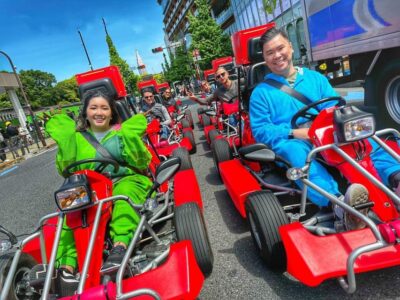 ★ 4.9Tokyo: Street Kart Experience in ShibuyaFrom $741 hour
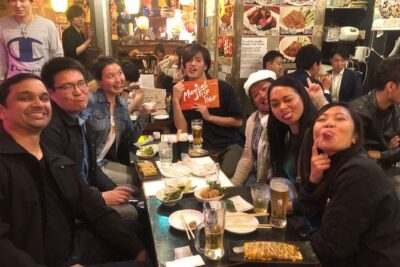 ★ 5.0Shibuya Meltdown Nightlife Tour: All-You-Can-Drink Bar HoppingFrom $106
 ★ 5.0Shibuya Official Street Go-Kart in Shibuya AnnexFrom $69
 ★ 5.0Tokyo: Shibuya Food Tour (13 dishes and 4 Eateries)From $77
 ★ 5.0Best of Shibuya Food TourFrom $217