
Reviewed · SAMURAI & NINJA EXPERIENCES
Samurai Ninja Museum Asakusa: Samurai Sword Lesson & Tour
The best part of this Asakusa experience is that you do not only look at samurai displays. You put on hakama, armor, and a helmet, then learn a short katana routine under an instructor such as Sensei Ryo. It turns a museum visit into an active cultural lesson.
I like the mix of real historical context and playful practice. The guides explain samurai and ninja traditions in English, then give you something physical to do. I also like the family appeal: children and adults can take photos, try ninja weapons, and join supervised foam-sword action. The main drawback is space and time. Two hours passes quickly, and a full group, especially one with several young children, can make the sword lesson feel brief.
In This Review
- Key points to know before booking
- What the Samurai Ninja Museum Asakusa experience is really like
- Dressing as a samurai in hakama and armor
- Learning the katana routine with Sensei Ryo
- The museum tour and its historical value
- Trying ninja weapons and shuriken practice
- Why the two-hour format works, and where it falls short
- Is $63 a fair price?
- Guide quality makes a real difference
- Accessibility, meeting details, and cancellation
- Who will enjoy this most?
- My verdict: book it for the mix, not just the sword
- FAQ
- How long does the Samurai Ninja Museum Asakusa experience last?
- What is included in the samurai workshop?
- Is the experience conducted in English?
- Can children participate?
- Is the venue wheelchair accessible?
- Can I cancel the booking for a refund?
Key points to know before booking
- Katana training with named instructors: Sensei Ryo, Koki, and Kenny are among the instructors praised for clear teaching and humor.
- Armor, hakama, and helmet included: You get the costume and equipment needed for photos and the workshop.
- Museum tour included: The visit covers samurai and ninja history, not just sword handling.
- Ninja weapons add variety: You can try throwing shuriken, often called ninja stars, at a target.
- Family-friendly, but not for toddlers: Children under 6 cannot enter, and the venue accepts a maximum of 16 people.
- Good value at $63: The price covers a two-hour lesson, guided museum visit, costume use, photos, and ninja practice.
What the Samurai Ninja Museum Asakusa experience is really like
This is a compact indoor activity in Tokyo’s Asakusa district, built around the appeal of becoming a samurai for an afternoon. You arrive at the venue, meet an English-speaking guide, and move through several short activities rather than spending two straight hours in a gallery.
That format matters. A standard museum visit can be hard work for children, and even adults may lose focus after a few display cases. Here, the rhythm changes from history talk to dressing up, from sword movements to photos, and then to ninja weapons. You get a taste of several parts of Japanese warrior culture without needing a full day.
The experience is suitable for beginners. You do not need prior martial arts practice or knowledge of Japanese history. The staff guide you through the basics, and the lesson is designed around controlled movements rather than advanced sword fighting.
A few more Tokyo tours and experiences worth a look


Dressing as a samurai in hakama and armor
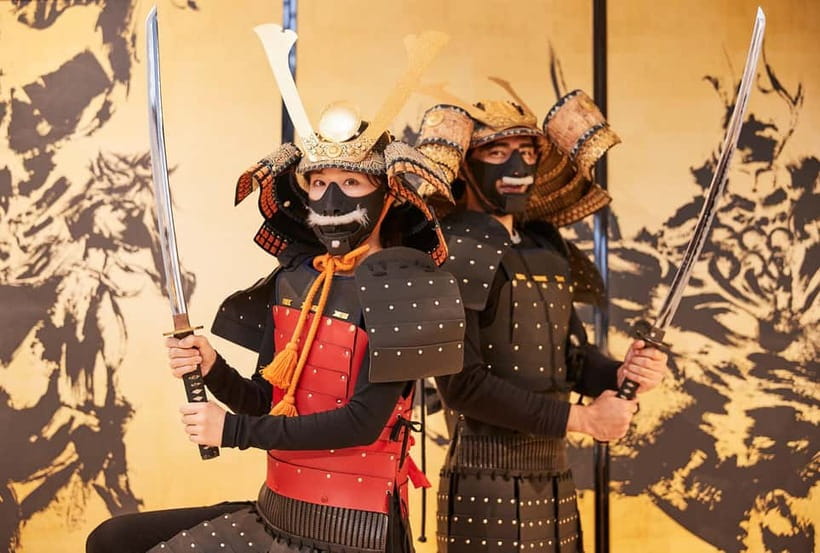
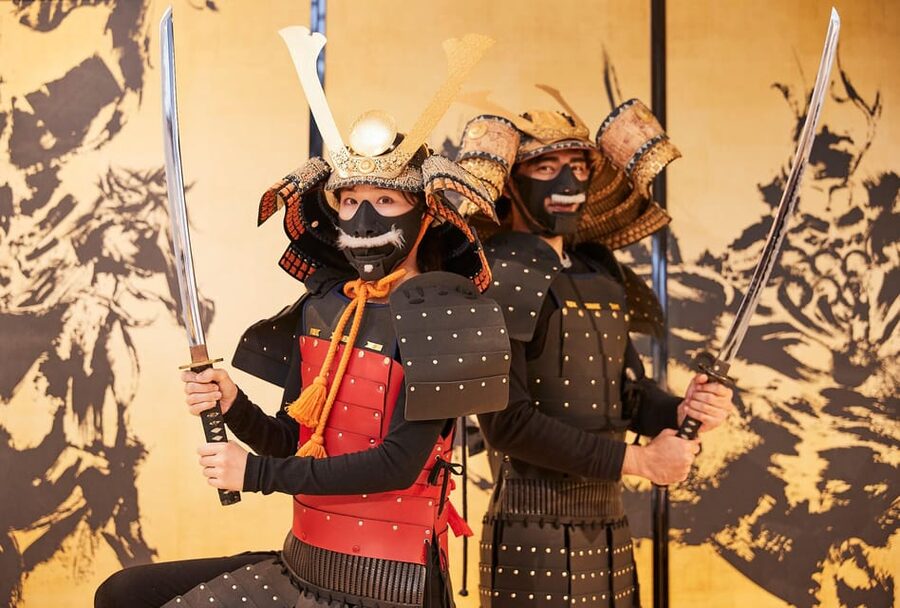
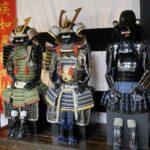
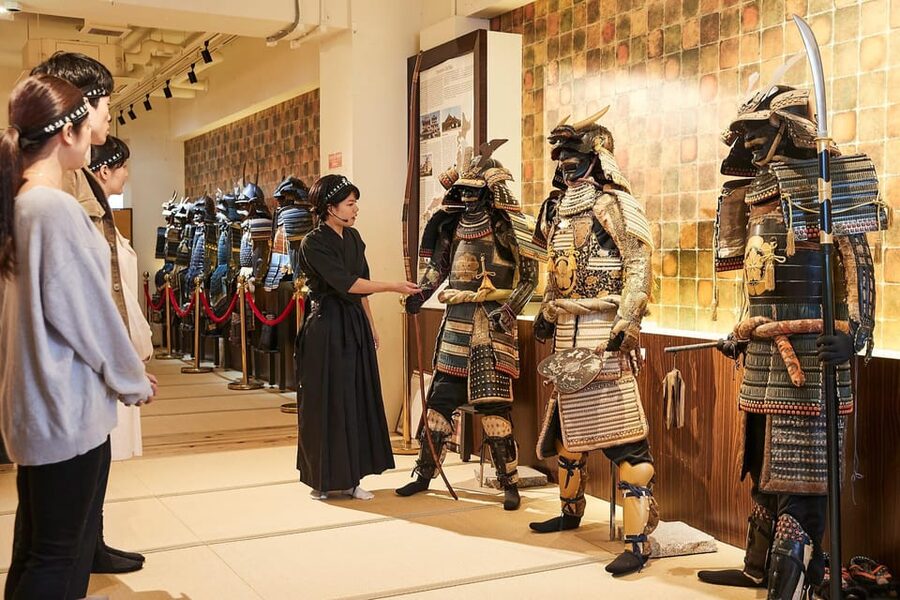
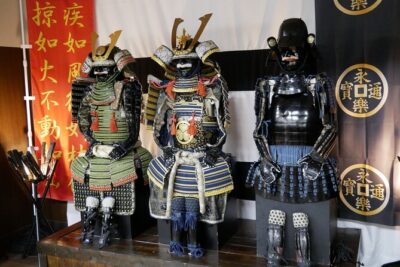
One of the first memorable moments is getting into samurai clothing. The package includes use of a hakama, samurai armor, and a helmet. The costume makes the activity feel more substantial than a quick photo booth stop, although you should think of it as a hands-on cultural costume experience rather than a formal historical reenactment.
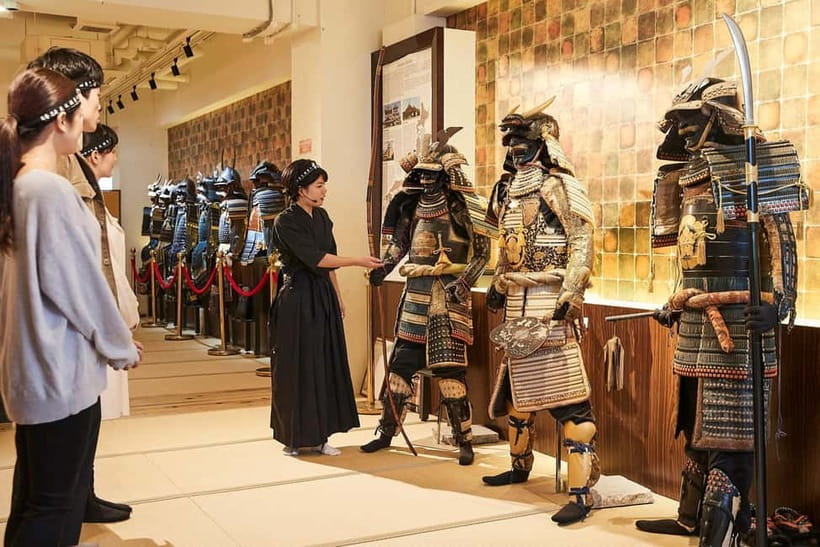
The equipment also gives the guides a useful way to explain how samurai are represented. Once dressed, you are not simply looking at an armor display behind glass. You can see how the helmet and armor change your posture, how a sword is held, and why movement needs care.
This is a strong part of the activity for families. Children often need a reason to listen to a history explanation, and putting on the outfit gives them one. Adults get plenty of photo opportunities too, so you can make the costume session part of your Tokyo photo album rather than treating it as something only for kids.
The venue has several samurai-themed backgrounds for pictures. Since the setting is indoors and arranged for the activity, you can take posed shots without trying to create a dramatic scene in a crowded street. Bring a phone with enough storage and decide in advance who in your group will handle photos.
Learning the katana routine with Sensei Ryo
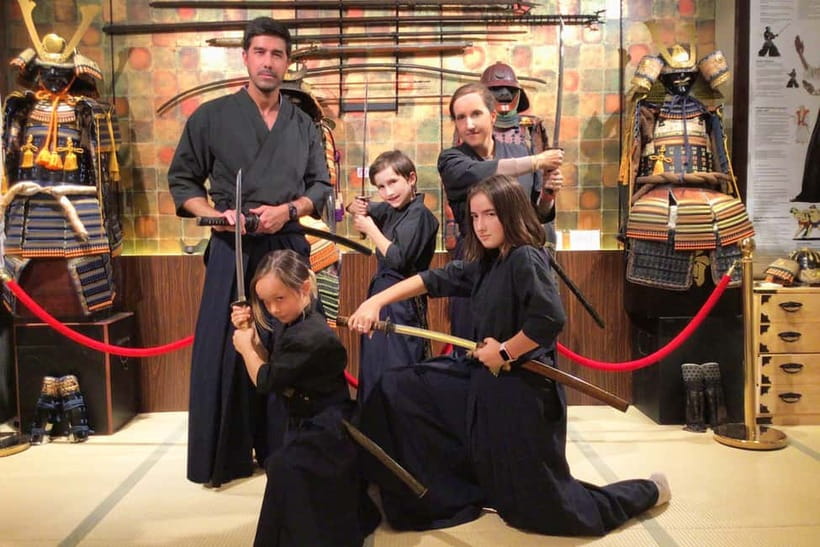
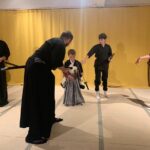
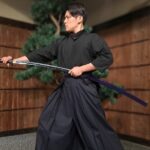
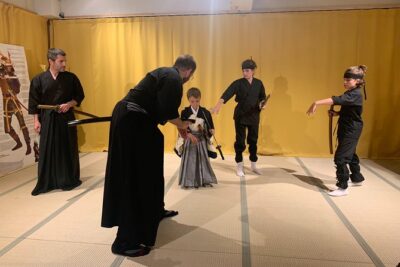
The sword lesson is the heart of the experience. Instructors teach the basic way to hold and move a katana, then build those movements into a short routine. Sensei Ryo receives especially strong praise for his patience, professionalism, politeness, and ability to make complete beginners feel comfortable.
The lesson is not a substitute for serious sword training. You are learning a choreographed sequence during a short workshop, not studying a martial art over many sessions. That said, the structure gives the activity more substance than simply holding a prop sword for a picture.
You may practice movements several times before performing the routine. The satisfaction comes from getting a sequence to look reasonably coordinated after only a few attempts. Some sessions finish with a sword dance or demonstration routine, which gives the lesson a clear finale.
Instructors such as Kenny and Koki have also been praised for keeping the class light and approachable. Good humor helps when a group has mixed ages and very different levels of coordination. If you feel awkward with the movements, that is normal. The class is designed for novices, and the teaching style appears to favor encouragement over technical pressure.
Some versions include supervised partner play with foam swords. This is a family-friendly activity, not a free-for-all. Still, the exact amount of practice can vary with group size and the number of young children. One short review called a five-minute family lesson too brief, while other sessions included a longer routine and a playful tournament. If sword training is your main reason for booking, choose a small-group or private option if available.
The museum tour and its historical value
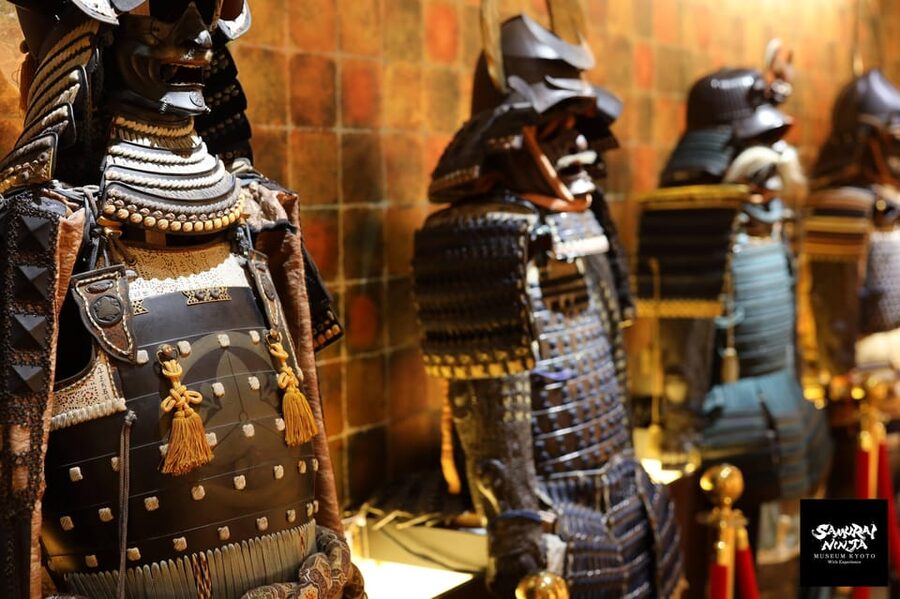
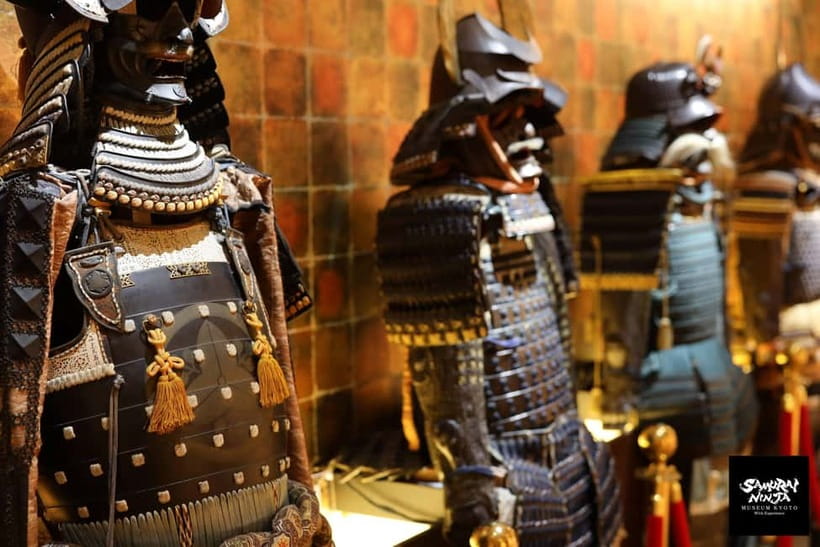
The museum section gives the activity its educational backbone. Guides explain samurai and ninja history, including the origins of these warrior traditions, the samurai era, and their place in modern Japan. The explanations are presented in English, and guides such as Ren and Momo are praised for making the material lively and easy for children to follow.
The collection is small, so do not arrive expecting a major national museum. Its value is in the guided explanation and the close link between the displays and the workshop. You can look at samurai objects, hear how the culture developed, and then handle equipment in a carefully controlled setting.
That combination worked well for families who wanted more than a novelty activity. The museum talk can provide useful context for other Japanese sights, too. After hearing the basics here, you may look at armor, swords, and warrior figures elsewhere in Japan with a better sense of what you are seeing.
The drawback is that the tour may feel rushed. The venue is described as somewhat small, and the two-hour schedule has a lot packed into it. If you prefer to read every label slowly, this will not feel like a leisurely museum visit. Treat it as an introduction with a guide, not as a substitute for a large history museum.
Trying ninja weapons and shuriken practice
The ninja portion adds a welcome change of pace after the katana lesson. You get to try ninja weapons, with shuriken throwing included in the activity. The target practice is simple and playful, but it gives children and adults a clear challenge to work toward.
This section is especially useful for groups with different interests. One person may care about samurai armor, another about sword movements, and someone else may be waiting for the ninja activity. The variety keeps the session moving.
Several guides also use a game or competition near the end. It can be a fun way to involve the whole group, especially after the more structured museum explanation. Do not expect a serious test of ninja skill. The point is to try something unusual, laugh a little, and leave with another memorable part of the session.
A few more Tokyo tours and experiences worth a look
Why the two-hour format works, and where it falls short
Two hours is long enough to cover the main activities without requiring a whole day. You get costume time, photographs, a museum explanation, katana practice, and ninja weapons in one booking. That makes it easy to fit between other Asakusa sights.
The pace is also the main limitation. Every part has to share the same short window. If the group is full, transitions may take longer, and the sword instruction may have less time for repeated practice. The maximum group size is 16, but a private or small-group option should feel more comfortable for anyone who wants personal attention.
Young children can affect the pace too. The activity is suitable for children, and several families with children between 7 and 14 enjoyed it greatly. However, a class with many energetic children may make it harder to complete every movement at the same speed.
Children under 6 cannot enter the samurai venue. That rule is important for family planning, especially if you are visiting Tokyo with several age groups. For older children, the mixture of dressing up, movement, history, and games is likely to work better than a quiet museum-only outing.
Is $63 a fair price?
At $63 per person, the price is reasonable if you want an organized, English-language experience with several included elements. You are paying for a guided museum visit, the sword lesson, use of the hakama, armor and helmet, themed photos, and ninja weapons practice.
The value is strongest for families and first-time visitors to Japan. You do not need to arrange costume rental, find a separate museum, or book a martial arts class. The one booking handles the whole experience, and the guide connects the playful parts to Japanese history.
The value is less clear if you only want a long sword lesson. The workshop is short, and the museum and photo portions take part of the two hours. A serious martial arts student may want a specialist dojo class instead, but that is a different type of activity and is not what this booking promises.
Private and small-group options may improve the value for groups that care about instruction. You are more likely to receive individual correction and enough room for everyone to follow the routine. For a family mainly looking for fun photos and a memorable activity, the standard option may be enough.
Guide quality makes a real difference
The staff are a major part of the experience. Sensei Ryo is repeatedly singled out for clear instruction, patience, and humor. Other instructors, including Koki and Kenny, are praised for making the class enjoyable while explaining the basics in English.
The museum guides matter just as much. Ren, Momo, and Nao are noted for lively explanations of samurai and ninja culture. That is important because a small collection needs a good guide to give it meaning.
You should expect a friendly teaching style rather than a formal academic lecture. The strongest version of the experience seems to come when the guide keeps the history clear, gives everyone a chance to participate, and adjusts the pace for children and adults together.
Accessibility, meeting details, and cancellation
The activity is listed as wheelchair accessible, which is useful when planning a wider Tokyo itinerary. The meeting point can vary according to the option you book, so check your confirmation carefully rather than assuming every package begins at the same place.
English is the listed tour language. The guides named above are described as able to teach and explain the activities in English, which makes the class accessible to visitors who do not speak Japanese.
You can cancel up to 24 hours before the activity for a full refund, and the reservation option allows you to book without paying immediately. Starting times depend on availability. These policies give you some flexibility, but you still need to confirm the exact meeting point and time for your selected option.
Who will enjoy this most?
I would recommend this to families with children old enough to follow simple instructions, couples who want unusual Tokyo photos, and adults who enjoy hands-on cultural activities. It also suits a first visit to Japan because the museum talk offers a basic introduction to samurai and ninja traditions.
It is a good pick for a rainy Tokyo day. Everything happens indoors, and the schedule gives you both learning and activity. The two-hour length also works well before or after sightseeing in Asakusa.
You may want to skip it if you dislike dressing up, staged photos, group games, or short lessons. It is not a quiet museum visit, and it is not a full professional sword course. The experience works best when you arrive ready to participate rather than observe from the side.
My verdict: book it for the mix, not just the sword
I would book the Samurai Ninja Museum Asakusa experience if you want a lively introduction to Japanese warrior culture with plenty of participation. The best value comes from the combination of museum storytelling, costume, katana practice, photos, and shuriken throwing.
Book a small-group or private version if the sword lesson matters most, especially if your group includes adults who want more practice. Choose the standard session if you mainly want family fun, historical background, and memorable photos.
The activity does not offer hours of technical training, and the museum portion can feel quick. But at $63, it gives you a well-packed two hours and a clear sense of what makes samurai culture so compelling. For many visitors to Tokyo, that balance of learning and play is exactly the point.
FAQ
How long does the Samurai Ninja Museum Asakusa experience last?
The activity lasts two hours. Starting times vary, so you need to check availability for the date you want.
What is included in the samurai workshop?
The experience includes a samurai sword lesson, use of a hakama, samurai armor, and a samurai helmet. The package also includes themed photo opportunities and a ninja weapons trial.
Is the experience conducted in English?
Yes. English is the listed tour language, and the activity includes a live English-speaking guide.
Can children participate?
Children can participate, but children under 6 cannot enter the samurai venue. The activity is suitable for families, and the group limit is a maximum of 16 people.
Is the venue wheelchair accessible?
Yes. The activity is listed as wheelchair accessible.
Can I cancel the booking for a refund?
You can cancel up to 24 hours in advance for a full refund. A reserve-now-and-pay-later option is also available.
More Museum Experiences in Tokyo

More Samurai & Ninja Experiences in Tokyo
More Asakusa Tours in Tokyo


More tours in Tokyo we've reviewed











Samurai & Ninja Experiences, compared.
 ★ 4.5Tokyo: Samurai Restaurant Show Ticket with 2 DrinksFrom $551h 30m
 ★ 4.6Tokyo: Samurai Ninja Museum Guided tour and ExperienceFrom $27
 ★ 5.0Tokyo: Samurai Sword & Archery Class from Samurai DescendantFrom $1933 hours
 ★ 5.0Best Samurai Experience in TokyoFrom $65
 ★ 5.0Ninja Experience (Family Friendly) at Samurai Ninja Museum TOKYOFrom $47
 ★ 4.6Tokyo: Samurai Entertainment Night Show in Kanda ShrineFrom $412 - 3 hours