
Reviewed · TEA CEREMONY & MATCHA
Tokyo: Two Types of Japanese Sweets Making and Tea Ceremony
The most appealing part of this Tokyo activity is its three-part mix: you make wasanbon ohigashi, shape two seasonal nerikiri sweets, then whisk matcha in a casual tea ceremony. It gives you something to do with your hands, not just something to watch.
I like the use of bean paste from long-established Kyoto shops, and I like that the sweets change with the season. The instructor also explains the difference between green tea and matcha, with English help provided as much as possible. The main consideration is that nerikiri takes a little finesse, and the class cannot wait for late arrivals.
A 4.6 rating from 26 bookings reflects a very positive experience. At $28 per person, the 125-minute session offers good value if you want a hands-on introduction to Japanese sweets, though extras such as a take-out box, added color, and a completion certificate cost more.
In This Review
- Key details before you book
- Three Japanese sweets skills in 125 minutes
- Starting with wasanbon ohigashi
- Shaping a flower with nerikiri
- Why the nerikiri section needs patience
- A short lesson in Japanese tea and matcha
- Eating, photographs, and the final few minutes
- What the English support is like
- Is $28 good value in Tokyo?
- Who will enjoy this activity most?
- Timing and arrival advice for AN TOKYO
- Should you book the Tokyo sweets and tea class?
- FAQ
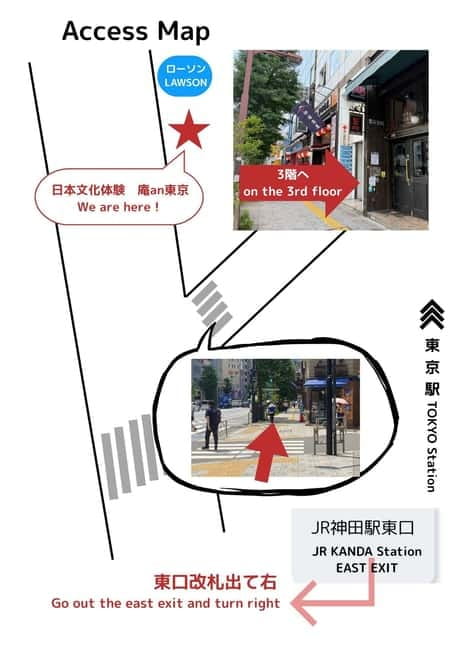
- Where does the experience take place?
- How long does the activity last?
- What are the operating hours?
- What will I make?
- What kind of ingredients are used?
- Is the tea ceremony formal?
- Is the activity available in English?
- Can I take the sweets home?
- Are any other extras available?
- What is the cancellation policy?
Key details before you book
- Three activities in one class: Make ohigashi, two types of nerikiri, and your own matcha.
- Kyoto-made ingredients: The white and red bean paste comes from long-established Kyoto shops.
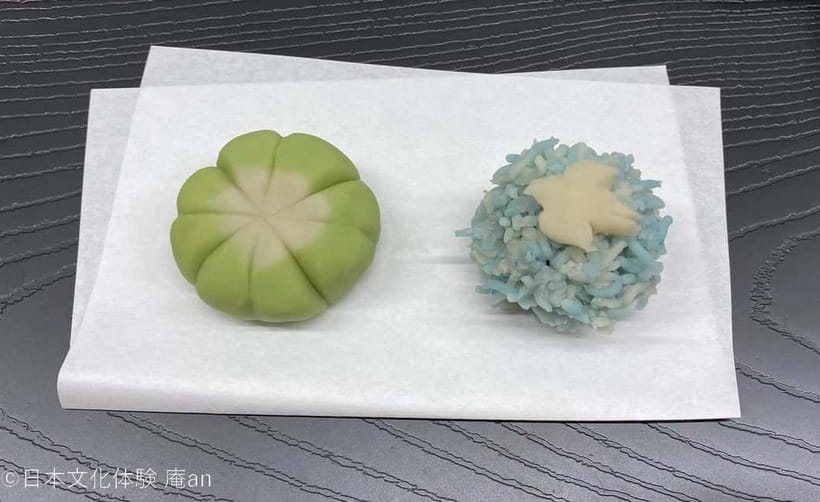
- Seasonal sweet designs: You make a flower-shaped nerikiri and a kinton nerikiri.
- Single-origin matcha: The tea portion includes a grinding demonstration and whisking practice.
- 125 minutes at AN TOKYO: The schedule allows time for instruction, making, tea, photographs, and eating.
- English support is limited but available: The instructor is Japanese, and explanations are given in English as much as possible.
Three Japanese sweets skills in 125 minutes
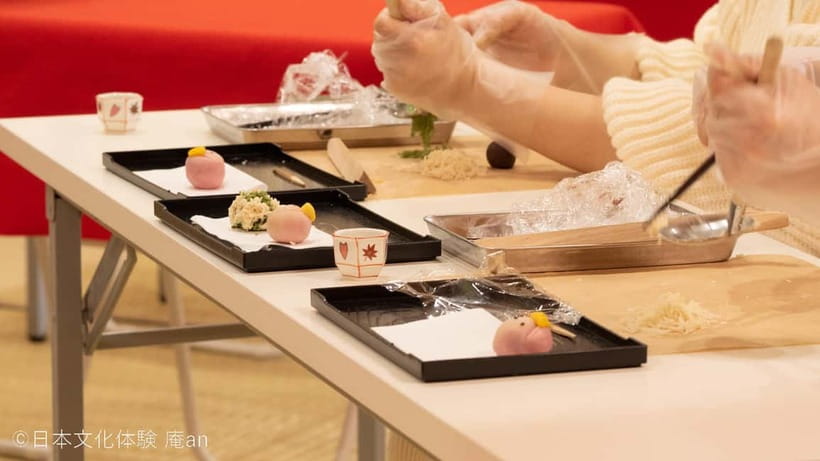
This is not a formal tea ceremony alone. It is a practical culture class built around three connected activities: dry sweets, fresh bean-paste sweets, and matcha.
That structure works well because each part feels different. Ohigashi is neat and fairly simple. Nerikiri asks for more care and hand control. Matcha brings the session back to a calm, easy rhythm. You finish with sweets you helped make and tea you whisked yourself.
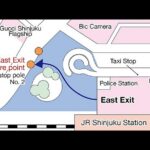
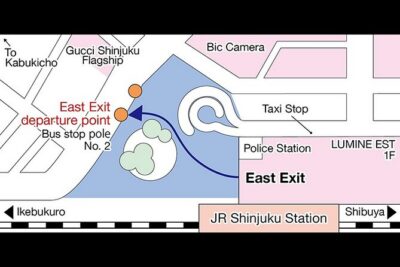
The class takes place at AN TOKYO Japanese Culture Experience in Tokyo. The provided information does not give a group size or a detailed neighborhood description, so check the meeting point carefully when booking and allow enough time to arrive. The operation hours are 10:00 to 17:00, with reservations received after 17:00 handled the next day.
A few more Tokyo tours and experiences worth a look
Starting with wasanbon ohigashi
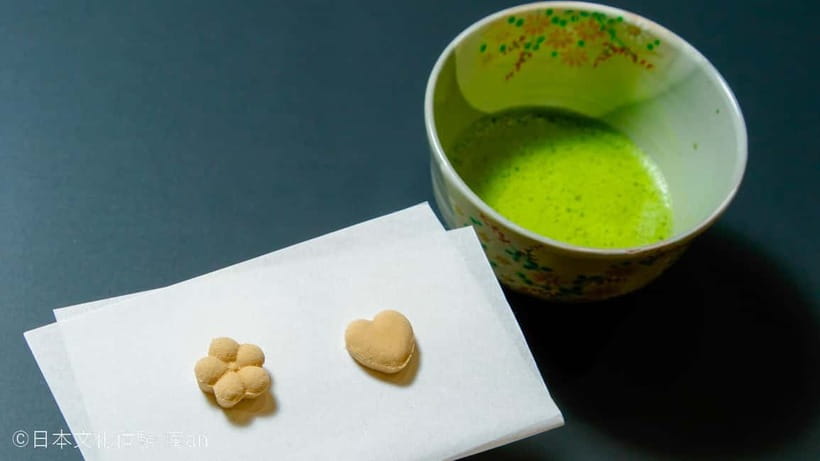
The first hands-on task is ohigashi, a dried Japanese sweet made with wasanbon. Wasanbon is a traditional fine-grained Japanese sugar, prized for its delicate sweetness and smooth texture.
This is a useful place to begin. Ohigashi making is described as simple, so you can get used to the instructor’s method before handling the softer bean paste used for nerikiri. The work also shows an important part of Japanese sweets culture: a small sweet can be designed for appearance, texture, and tea pairing, not only for a strong sugary taste.
The ingredients matter here. The class uses wasanbon and white or red bean paste supplied by long-established Kyoto shops. That gives the activity a clear link to established Japanese confectionery traditions without requiring you to travel to Kyoto.
The schedule places ohigashi making at the start, followed by a short break. The class does not list the exact number of pieces you make, so you should not assume you will leave with a large box of sweets. If you want to carry your creations away, a take-out box costs 100 JPY.
Shaping a flower with nerikiri
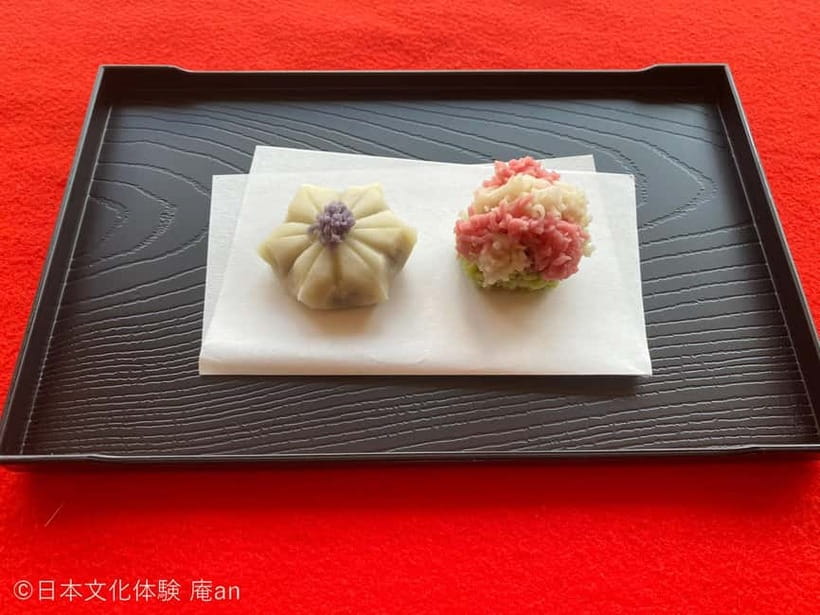
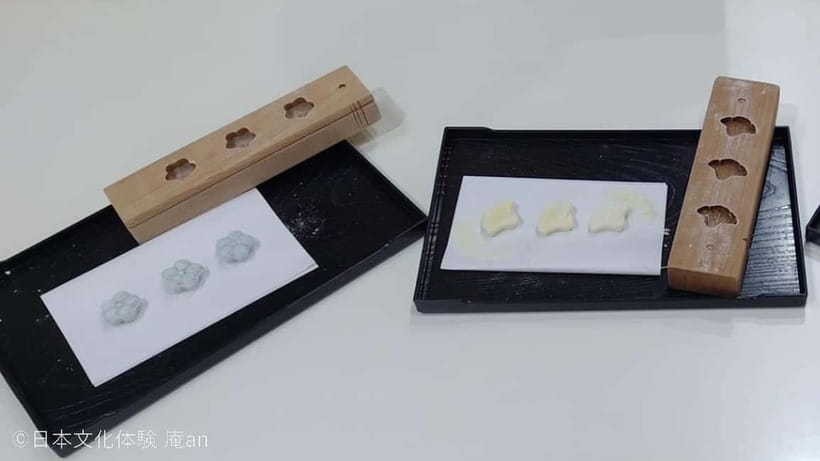
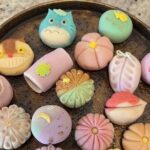
After the first break, you move to nerikiri, the soft, colorful Japanese sweet often shaped to reflect flowers and other seasonal images.
You make two kinds. The first is a flower-shaped nerikiri. This is likely to be the more familiar design for a first-time participant, but the finished look depends on small movements and careful shaping. You work with bean paste, form the outer layer, and use the tools and guidance provided by the instructor.
The second is a kinton nerikiri. Kinton designs have a delicate, thread-like appearance, so this part gives you a different lesson in texture and presentation. The class schedule allows a substantial block of time for both sweets, which is sensible. Nerikiri is not difficult in the way a technical cooking class can be difficult, but it does require a light touch.
One useful tip is to focus on learning the method rather than trying to produce a perfect photograph on your first attempt. The sweets are made to look seasonal and refined, but your finished pieces may show the fact that you made them yourself. That is part of the charm, not a failure.
The seasonal element gives the class more meaning than a fixed craft project. Japanese sweets often reflect flowers, weather, and calendar events. Since the designs change with the season, the same activity may feel different at another time of year.
The class also gives you a taste of two bean-paste styles. White bean paste and red bean paste behave differently and carry different flavors. The use of Kyoto-produced paste makes this a good chance to notice how much a sweet depends on its base ingredient.
Why the nerikiri section needs patience
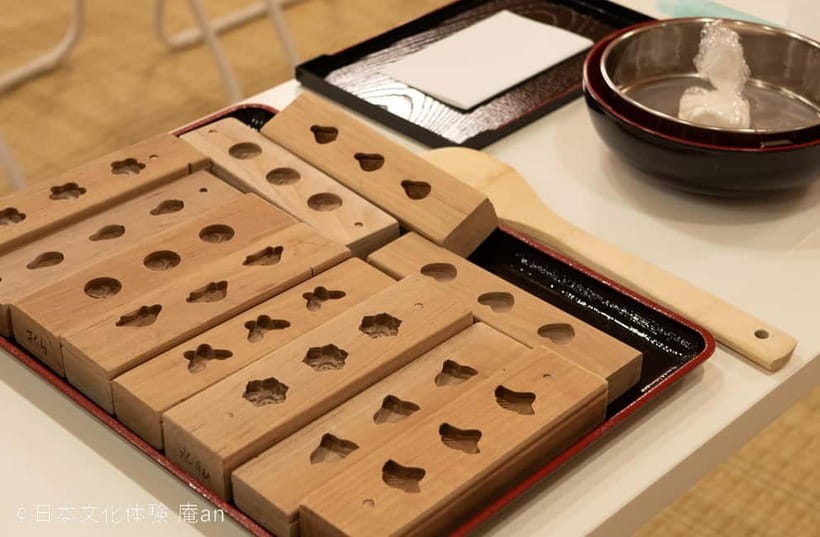
The nerikiri portion is the one part that may test you. A participant specifically found it harder than ohigashi and said it required some finesse. That is useful to know before booking, especially if you prefer a relaxed activity with almost no manual work.
The instructor gives guidance, and the activity is designed for beginners, but you still need to follow the shaping steps carefully. Do not rush the edges or squeeze the paste too firmly. The point is to learn how the sweet is formed, not to race through the steps.
This section also adds value to the $28 price. You are not simply being handed a finished Japanese sweet. You see how a plain bean-paste mixture becomes a seasonal object, then get to eat the result later.
Added color costs 200 JPY. The information does not specify exactly how much additional color this covers, so ask the instructor if color is important to your finished designs. The base activity already includes the three main experiences, but some decorative or souvenir extras are separate.
A short lesson in Japanese tea and matcha
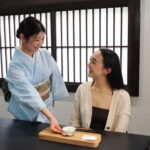
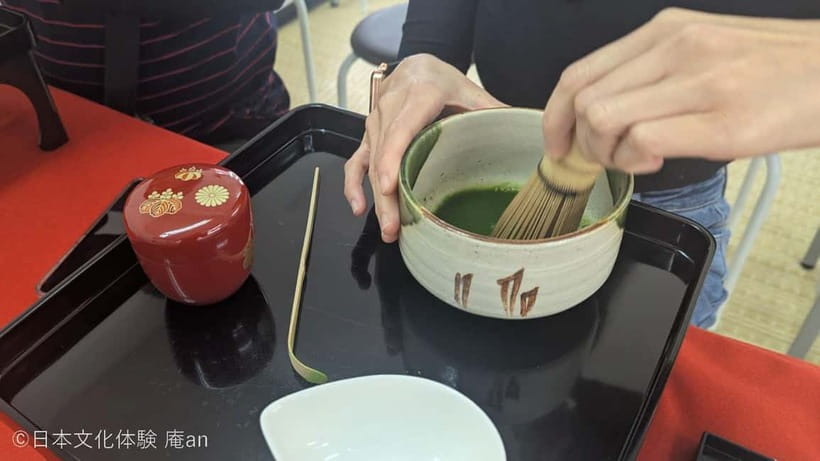
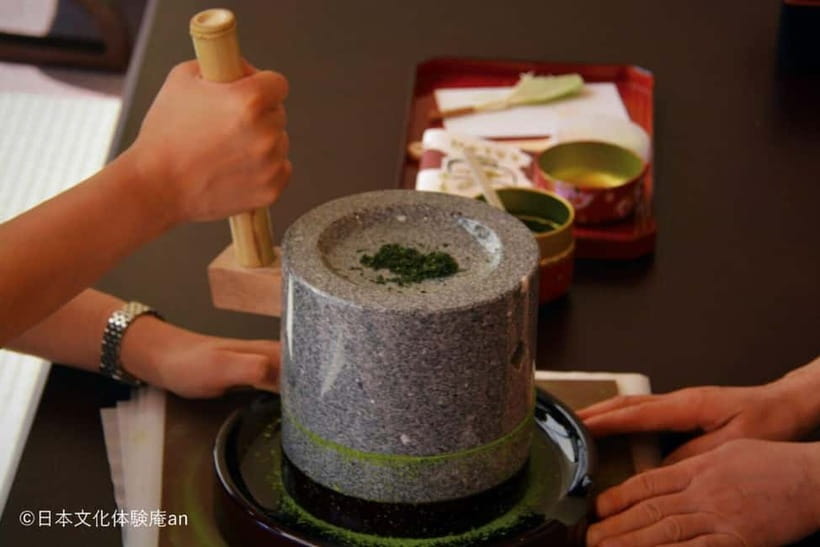
Once the sweets are ready, the class turns to tea. You receive an explanation about tea, watch a matcha grinding demonstration, and then take part in the tea ceremony.
The activity uses single-origin special matcha. That gives the tea section a clear focus, rather than treating matcha as just a green drink at the end of a sweets lesson. You learn how the powder is prepared and then make your own matcha.
The tea ceremony is described as casual, which is important. You do not need to arrive with a detailed understanding of formal tea rules. The instructor introduces the process in an approachable way, and the class is built so you can try it yourself.
Whisking matcha is also the easiest physical task after the nerikiri work. A participant who found the nerikiri demanding described whisking the tea as simple. You will use a bamboo whisk and work the powder into a frothy drink under the instructor’s direction, though the supplied details do not specify the exact utensils or amount of tea.
The explanation also covers the difference between ordinary green tea and matcha. That context helps you understand what you are drinking. Matcha is powdered tea, so you consume the tea leaf itself rather than only drinking water infused with leaves.
A few more Tokyo tours and experiences worth a look

Eating, photographs, and the final few minutes
The schedule reserves time for photographs near the end, followed by eating and drinking before you leave. This gives you a chance to photograph the sweets while they are still arranged for the activity and to enjoy them with the matcha you made.
That timing makes sense. You do the careful work first, then sit back and taste it. The sweets are not merely craft items, and the matcha is not merely a demonstration. The final stage connects the making process with the way Japanese sweets and tea are enjoyed together.
The full program lasts 125 minutes. The listed schedule begins with an explanation and ohigashi, includes a break, moves through the two nerikiri designs, adds another break, then covers tea, photographs, and eating. The session ends at 115 minutes, with room departure at 125 minutes.
A completion certificate costs 300 JPY if you want one. It is an optional souvenir, not part of the core class. The take-out box is also optional at 100 JPY, and you can ask about it if you want to protect your sweets after the activity.
What the English support is like
The instructor is Japanese, and English translation is provided as much as possible. This means you should expect help, but not necessarily a fully English-speaking class with every explanation delivered in polished English.
The strongest practical approach is to watch the demonstration closely, then ask for clarification when needed. The activities are visual and hands-on, so you can follow much of the process by seeing the instructor’s movements. The tea and sweets explanations add cultural context, but the class does not promise full translation into several languages.
The teaching style appears warm and attentive. An instructor gave extra explanations about types of Japanese sweets and the difference between green tea and matcha, which is exactly the sort of detail that makes a short activity more useful. Still, if you need detailed English instruction for every step, contact AN TOKYO before booking.
Is $28 good value in Tokyo?
At $28 per person, this is a fair price for a 125-minute cultural activity with three distinct elements. You make three categories of food or drink, receive instruction, taste the results, and have time for photographs.
The value is strongest if you want participation rather than a quick demonstration. You are paying for ingredients, teaching, a structured session, and the chance to make seasonal sweets that would be difficult to reproduce without guidance.
The price is less attractive if you only want to taste Japanese sweets. A shop or tea counter may be a better choice for a simple snack, though that would not give you the making process or the tea practice.
Keep the small extras in mind. A take-out box is 100 JPY, adding color is 200 JPY, and a completion certificate is 300 JPY. None of these charges changes the basic value, but they do mean the advertised price is not the final cost if you want every option.
Who will enjoy this activity most?
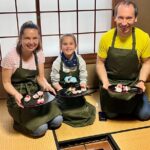
I would recommend this class to you if you want a calm, creative Tokyo activity with a clear Japanese culture focus. It suits couples, friends, solo visitors, and families who are happy to sit and work carefully for part of the session.
It is also a good choice for anyone interested in food traditions but not looking for a full cooking class. The work is focused on shaping and preparation rather than cooking a meal, so the class feels manageable within two hours.
You may want to choose something else if you dislike detailed handwork or expect to leave with a substantial amount of food. Nerikiri takes care, and the activity is built around learning and tasting rather than producing a large edible souvenir.
Children under two who sit on a parent’s lap are free. Anyone who takes part must be included in the booking, and people who are not participating cannot enter the experience.
Timing and arrival advice for AN TOKYO
The class cannot be held for people who arrive late. Build in extra time for reaching AN TOKYO, especially if you are crossing Tokyo from another part of the city.
The provider also does not compensate you for travel expenses if the event is canceled. That is a standard risk worth noting when you arrange transport, particularly if you are making a special trip to the venue.
Free cancellation is available up to 24 hours in advance for a full refund. You can also reserve now and pay later, which helps if your Tokyo schedule is still changing. Reservations made after 17:00 are processed the next day, so do not expect an immediate response during the evening.
Should you book the Tokyo sweets and tea class?
Book it if you want to make seasonal Japanese sweets, learn a little about bean paste and tea, and spend 125 minutes in a hands-on setting. The combination of ohigashi, flower-shaped nerikiri, kinton nerikiri, and matcha gives you more variety than a basic wagashi or tea demonstration.
The best reasons to choose it are the Kyoto-sourced bean paste, seasonal designs, single-origin matcha, and friendly instruction with English help as much as possible. The 4.6 rating from 26 bookings also points to a consistently strong experience.
Skip it if you need guaranteed full English translation, dislike fine motor work, or want a formal tea ceremony with a strict traditional format. For most visitors seeking an accessible introduction to Japanese sweets and matcha, $28 is a sensible spend, especially if you take your time and treat the handmade results as the main souvenir.
FAQ
Where does the experience take place?
The activity takes place at AN TOKYO Japanese Culture Experience in Tokyo, Japan.
How long does the activity last?
The full experience lasts 125 minutes.
What are the operating hours?
The operating hours are from 10:00 to 17:00.
What will I make?
You will make wasanbon ohigashi, a flower-shaped nerikiri, and a kinton nerikiri. You will also make your own matcha.
What kind of ingredients are used?
The activity uses white and red bean paste produced by long-established shops in Kyoto, along with traditional wasanbon sugar and single-origin special matcha.
Is the tea ceremony formal?
The tea ceremony is presented casually, so you can take part without needing prior tea ceremony experience.
Is the activity available in English?
The instructor is Japanese, and English translation will be provided as much as possible. The listed language is Japanese.
Can I take the sweets home?
A sweets take-out box is available for an additional 100 JPY.
Are any other extras available?
Adding color costs 200 JPY, and an experience completion certificate costs 300 JPY.
What is the cancellation policy?
You can cancel up to 24 hours in advance for a full refund. Reserve now and pay later is also available.
More Dessert Tours in Tokyo
More Tea Ceremony & Matcha in Tokyo
More tours in Tokyo we've reviewed



Tea Ceremony & Matcha, compared.
 ★ 5.0Matcha Making Class in Tokyo with Authentic Japanese Sweets SetFrom $21
 ★ 5.0Tokyo: Traditional Tea Ceremony with a Tea MasterFrom $381 hour
 ★ 4.5Dynamic Tokyo: Tokyo Tower, Tea Experience, Bay Cruise Day TourFrom $99
 ★ 4.9Tokyo: Matcha Making Experience with Mochi Sweets in AsakusaFrom $221 hour
 ★ 4.7Tokyo: Matcha and Kimono ExperienceFrom $57
 ★ 5.0Tea Ceremony Workshop in Tokyo by the Experienced InstrucorFrom $38