

Reviewed · IMPERIAL PALACE & SHOGUN TOURS
Tokyo Castle, Imperial Palace, Shogun & Garden Walking Tour
Tokyo’s Imperial Palace is not a grand palace tour in the European sense. The main residence is closed to the public, and much of old Edo Castle disappeared long ago. What remains is more interesting when someone explains it: massive stone foundations, defensive gates, garden design, and the story of how shoguns gave way to emperors. This two-hour walk makes sense of a place that can otherwise feel like a pleasant but puzzling park.
I like the easy meeting point at Starbucks in Wadakura Fountain Park, and I like the small-group format. Guides such as Mika, Natsumi, Lakki, and Nicolas have been praised for clear English, historical detail, family-friendly explanations, and good photo help. The main consideration is simple: at $31.84, you are paying for interpretation, not entry to an ornate palace interior. If you want rooms, artworks, and royal halls, this is not that tour.
In This Review
- Key points at a glance
- What this Tokyo castle walk actually visits
- Passing through Ōtemon Gate
- Reading the Edo Castle ruins
- A slower pause in Ninomaru Garden
- The guides shape the experience
- Why the history is better with help
- Price, pace, and practical value
- Who should book this experience
- My booking advice
- FAQ
- Is this a tour inside the Imperial Palace?
- How long does the tour last?
- Where does the tour begin?
- Where does the tour end?
- What historic sites are included?
- Is admission included?
- How many people can join the group?
- What does the tour cost?
- Is there a dress code?
- What happens if the weather is poor?
Key points at a glance
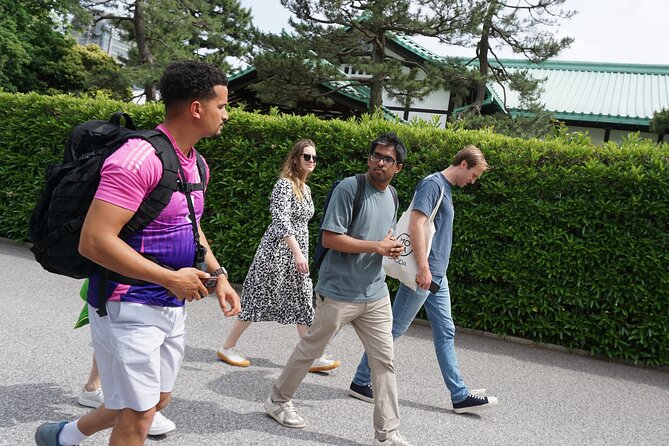
- Ōtemon Gate begins the story: Enter through the old castle’s main gate and learn how its defenses worked.
- Edo Castle is mostly foundations today: Stone bases, walls, and ruins give you the outline, while the guide supplies the missing buildings.
- Ninomaru Garden offers the calmest section: Expect landscaped paths, ponds, greenery, and beautiful koi.
- Guides make the difference: Mika, Natsumi, Lakki, Nicolas, and other local guides have led history-focused walks with time for questions and pictures.
- The Imperial Palace itself is not included: The Inner Palace is closed to the public, so this experience visits the East Gardens and former castle grounds.
- Plan for outdoor conditions: The tour requires good weather, and Tokyo’s heat, cold, or rain can affect comfort.
What this Tokyo castle walk actually visits
This experience focuses on the East Gardens of the Imperial Palace, the former site of Edo Castle. That distinction matters. You are entering part of the palace grounds, but you are not walking through the Emperor’s residence.
The route begins at Starbucks Coffee in Wadakura Fountain Park, at 3-1 Kōkyogaien in Chiyoda City. From there, the guide leads the group toward Ōtemon Gate, the large historic entrance to the East Gardens. The activity ends back at the same meeting point, so you do not need to work out a new pickup location in the middle of your sightseeing day.
The walk lasts about two hours. That is enough time for a useful introduction without turning into an all-day history class. You can stop for photographs, ask questions, and move at a relaxed pace. It is also short enough to fit neatly into a morning or afternoon around central Tokyo.
The group size is described in two different ways, with a limit of 15 in one place and a maximum of 10 in the additional details. I would confirm the exact cap when booking. Either way, this is intended to be a small group rather than a large crowd following a flag.
A few more Tokyo tours and experiences worth a look

Passing through Ōtemon Gate
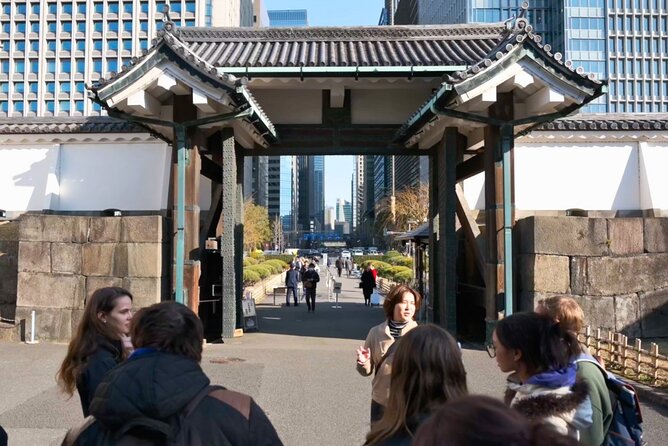
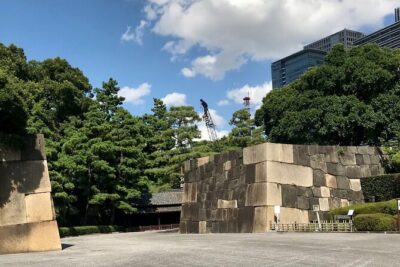
Ōtemon Gate is an excellent place to begin because it gives you a physical sense of how seriously Edo Castle treated security. The gate was not simply an entrance for visitors. It formed part of a system of walls, guards, controlled access, and defensive design.
Your guide points out the gate, nearby guardhouse remains, and details that are easy to pass without noticing. One particularly useful part of the walk is the explanation of castle defenses. You may not be planning for a siege, but the layout becomes far easier to understand once you see how an attacker would have been delayed, watched, or redirected.
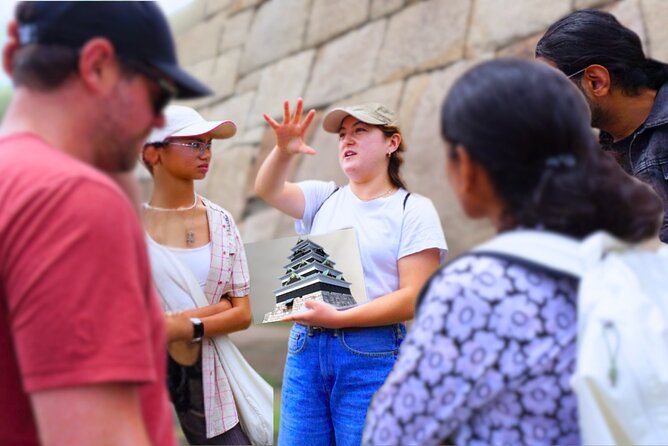
This is also where a guide earns the fee. A free park entrance gives you the scenery, but not necessarily the reason for a sharply angled wall or the purpose of a particular gate area. Guides have used maps and images to help explain what stood here before fires, war, and rebuilding changed the site.
The tour does not turn every stone into a dramatic revelation. Some sections are quiet and fairly open. That is part of the appeal, but it also means you should set your expectations correctly. The site rewards attention and explanation more than spectacle.
Reading the Edo Castle ruins
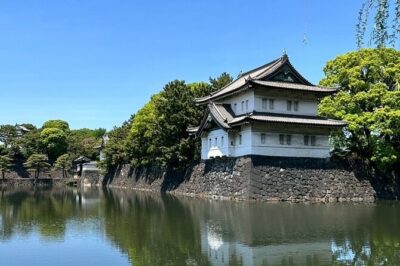
The old castle is the heart of the historical portion. Edo Castle was tied to the Tokugawa shogunate, the military government that ruled Japan for centuries. The East Gardens let you connect the words shogun, emperor, Edo, and Tokyo to an actual place.
The physical remains are limited. Large buildings were destroyed, including the castle structures that once dominated the site. In places, what you see is a stone foundation or base rather than a restored tower. One former palace area was destroyed by fire, and it was not rebuilt in the form many first-time visitors expect.
That absence can disappoint you if you arrive picturing a complete Japanese castle. A visitor hoping to enter a palace with polished rooms, painted screens, or ceremonial halls should choose another attraction. The Inner Palace is not open to the public, and this tour cannot take you inside it.
Still, I find the ruins useful because they leave room for the guide to explain change over time. The walk connects the shogunate’s military rule with the later role of the emperor and the rise of modern Tokyo. Several guides have used clear historical references to show how the site shifted from a center of samurai power to the grounds of Japan’s modern Imperial Palace.
The best experience comes when you treat the foundations as evidence, not as a complete building. You are learning to picture Edo Castle rather than touring a preserved castle interior.
A slower pause in Ninomaru Garden
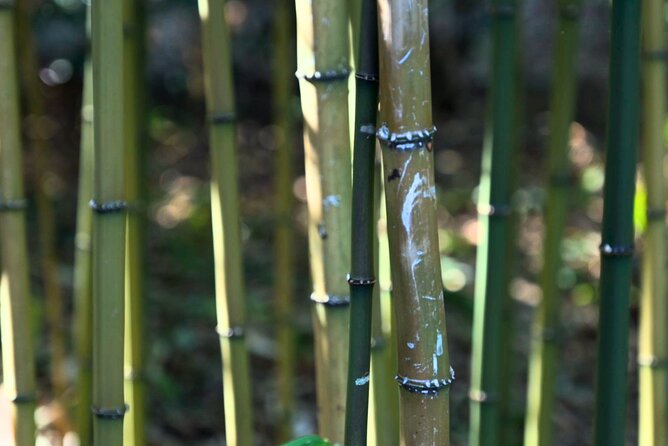
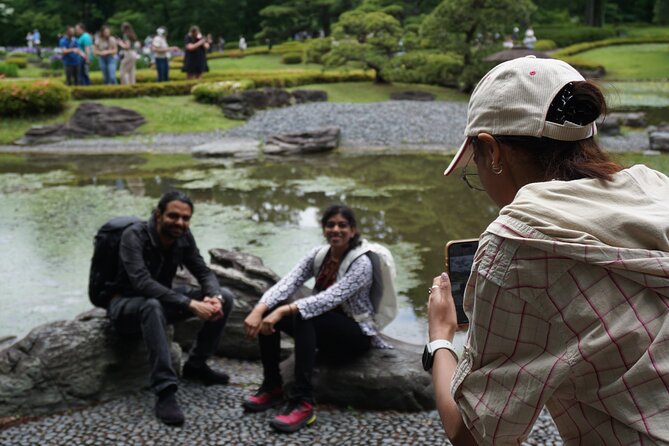
After the gates and stonework, Ninomaru Garden provides a welcome change of pace. This is the soft, quiet section of the route, with greenery, water, carefully arranged planting, and koi. The gardens can feel far removed from Tokyo’s traffic and tall buildings, even though you are in the center of the city.
The garden is more than a pretty pause. Japanese garden design uses placement, scale, water, and borrowed views to shape how you move and look. Your guide can point out details and meanings that are not obvious during a casual stroll. You will also have time to take photographs rather than march from one talking point to the next.
Koi are a small but memorable highlight. The ponds and greenery give the tour visual variety, especially after the heavy stone walls around the castle remains. In spring, cherry blossoms can add a special layer to the walk. In winter, the gardens still offer a calm setting, though the appearance will be less lush.
Weather affects this stop more than any other. On a sunny day, it is an easy stroll. On a rainy day, the gardens can still be attractive, but comfortable shoes and rain protection matter. In summer, the open grounds may feel hot, and one detailed comment about the site made the sensible point that the palace area is large and requires preparation in hot or cold weather.
The guides shape the experience
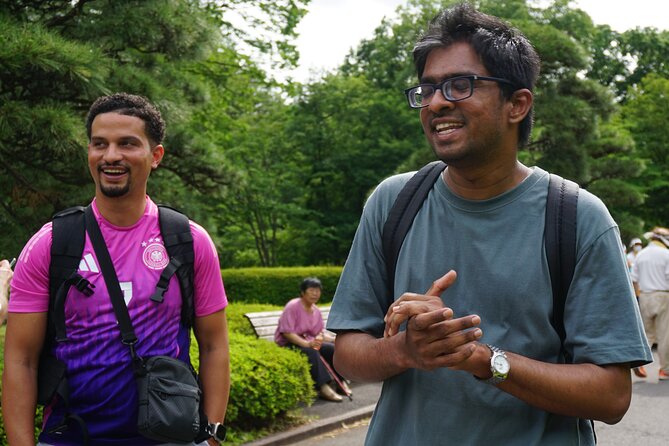
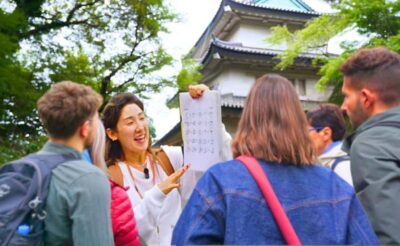
The strongest part of this tour is the human element. Guides have included Mika, Natsumi, Lakki, Nicolas, also called Nico in one account, and Fonz. The most praised qualities are clear English, a warm manner, useful historical context, and a willingness to answer questions.
Mika has been especially effective with families. An account involving children aged 11, 13, and 15 described a guide who kept the boys interested with historical references. That tells you something practical: the tour is not limited to serious history fans. A good guide can make samurai politics and castle defenses understandable for younger visitors.
Natsumi has been praised for explaining the Edo period, the relationship between shoguns and emperors, and the way Tokyo became the center of national leadership. She has also shared suggestions for local restaurants and shrines. That kind of informal local advice can be useful, though it will vary by guide and should not be treated as a guaranteed part of the route.
Lakki has received strong praise for his grasp of shogun history and his lively approach. Nicolas has been noted for bringing meaning to the gardens and helping group members with photographs. These details matter because the route itself is not packed with major buildings. Your guide’s ability to tell the story clearly affects the value more than the number of stops.
There has been at least one less positive experience involving explanations that were hard to understand and did not provide enough detail. That is worth keeping in mind. The overall score is 4.9 from 211 ratings, with 99 percent recommended, but no guided activity is perfectly consistent. English clarity and depth can vary with the individual guide.
Other walking tours we've reviewed in Tokyo



Why the history is better with help
You can walk through the East Gardens on your own, but the site does not always explain itself. A stone platform may look like a low wall. A gate may look like a simple entrance. A garden may look beautiful without telling you why it was arranged that way.
The guide supplies the links. You learn how Edo Castle fit into the shogunate, how the emperor’s role differed from that of the military rulers, and how the old castle site relates to modern Tokyo. Maps and images can help you visualize buildings that no longer exist.
This is also a good setting for questions. You can ask about samurai life, castle defenses, the Edo period, or the transition from shogunate rule to imperial government. The strongest guides appear to enjoy these questions and adjust their explanations to the group.
The tour works best if you arrive curious rather than expecting a museum. You are not being shown a full collection of objects. You are being given a framework for reading a large historic site.
Price, pace, and practical value
At $31.84 per person, the tour is reasonably priced if you want context and a person to lead the way. The East Gardens admission itself is listed as free, so the cost is for the guide, organization, small group, and historical explanation.
That price will feel worthwhile if you would otherwise wander past the ruins without knowing what they were. It is less compelling if you are comfortable researching Edo Castle beforehand and exploring at your own pace. One two-star rating described the tour as too expensive for a two-hour walk with limited detail. That criticism is fair enough to consider.
I see the value this way: you are buying a compact orientation to one of Tokyo’s most important historic sites. You are not buying access to a rare interior or a long list of attractions. If the guide is strong, the experience can make the entire area more meaningful. If the guide is less clear, the free gardens may feel like a costly self-guided stroll.
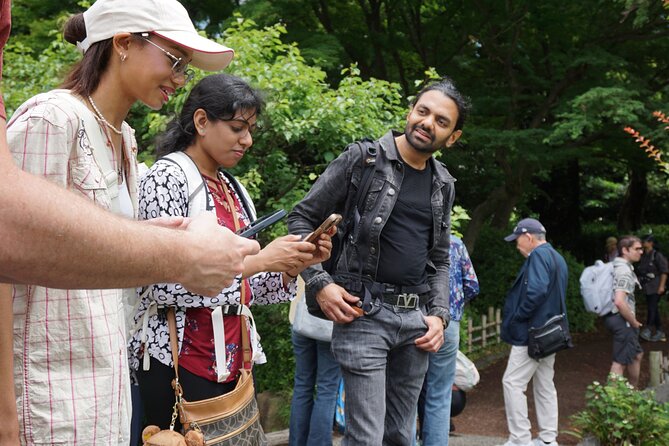
The pace is suited to most people who can manage a normal two-hour outdoor walk. The group pauses for questions and photos, so it is not a forced march. Wear shoes you can walk in comfortably, and prepare for the season. No special dress code applies, and tattoos are welcome.
The mobile ticket is convenient. The meeting point is near public transportation, and the start and finish at Wadakura Fountain Park simplify the rest of your day. Confirmation arrives at booking. Free cancellation is available up to 24 hours before the start time, while cancellations within 24 hours are not refunded. If poor weather causes the operator to cancel, you are offered another date or a full refund.
Who should book this experience
I would recommend this walk to a first-time visitor who wants a clear introduction to Tokyo’s political and military past. It is also a good choice for a second trip, when you have already seen Tokyo’s major modern districts and want a quieter historical morning.
Families can benefit from the short length and conversational format. The experience has worked well for teenagers when the guide keeps the history connected to people, power, and castle design. Couples and solo visitors who prefer a relaxed walk over a formal lecture should also find the format appealing.
This is less suitable if your main goal is to enter the Imperial Palace or see the Emperor’s private residence. You will not do that here. It is also not the best pick for someone who wants a restored castle tower, indoor exhibits, or a large collection of historic objects.
For photographers, the garden paths, koi, stone walls, and gate areas provide plenty of material. Ask your guide about the best photo points. Guides have helped take pictures for people in the group, which is a small but welcome service when you are traveling without someone to hold the camera.
My booking advice
I would book this tour when you want the East Gardens to make historical sense, especially if you have limited time in Tokyo. The combination of Ōtemon Gate, castle foundations, guardhouse remains, and Ninomaru Garden creates a pleasant two-hour route, and a good guide can connect those pieces into a memorable story.
I would not book it under the assumption that you are touring the palace itself. The main buildings are closed, and much of Edo Castle is gone. Go for the setting, the gardens, and the explanation of how shoguns, emperors, and Tokyo’s growth intersected.
At $31.84, the decision rests on how much you value a guide. If you enjoy history and want to ask questions, the fee is sensible. If you mainly want scenery and photographs, you can see much of the same outdoor area without paying for a tour. Check the group-size detail before booking, prepare for the weather, and choose this walk for understanding rather than palace access.
FAQ
Is this a tour inside the Imperial Palace?
No. The tour visits the East Gardens and the historic grounds of Edo Castle. The Inner Palace is not open to the public.
How long does the tour last?
The walk lasts approximately two hours.
Where does the tour begin?
It begins at Starbucks Coffee in Kokyo Gaien Wadakura Fountain Park, at 3-1 Kōkyogaien, Chiyoda City, Tokyo 100-0002, Japan.
Where does the tour end?
The activity ends back at the Starbucks meeting point.
What historic sites are included?
The route includes Ōtemon Gate, guardhouse ruins, the former Edo Castle area, and Ninomaru Garden.
Is admission included?
The guided walk includes access to the Imperial Palace grounds visited on the route. The admission ticket is listed as free. Entry to the Inner Palace is not included and is not available to the public.
How many people can join the group?
The information gives two limits: one section says up to 15 people, while the additional details state a maximum of 10. Confirm the exact group size when booking.
What does the tour cost?
The listed price is $31.84 per person.
Is there a dress code?
No. There is no dress code, and tattoos are welcome.
What happens if the weather is poor?
The activity requires good weather. If the operator cancels because of poor weather, you can choose another date or receive a full refund. Cancellations made at least 24 hours before the start time also qualify for a full refund; cancellations within 24 hours are not refunded.
More Walking Tours in Tokyo
More Imperial Palace & Shogun Tours in Tokyo
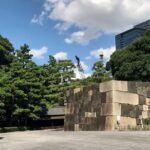

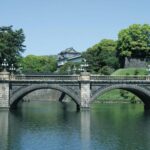
More tours in Tokyo we've reviewed








Imperial Palace & Shogun Tours, compared.
 ★ 5.0Tokyo: Imperial Palace and Shogun Historical Walking TourFrom $22
 ★ 4.9Tokyo: Imperial Palace Japanese History Walking TourFrom $32
 ★ 4.9Tokyo: Imperial Palace and Shogun Walking TourFrom $162 hours
 ★ 5.0Imperial Palace East Garden and Edo Castle Walking Tour in TokyoFrom $25
 ★ 4.8Tokyo: Imperial Palace East Gardens Walking TourFrom $192h 30m
 ★ 4.5Tokyo: Imperial Palace, Sensō-ji Temple, & Tokyo Tower TourFrom $404 hours