
Reviewed · MT FUJI DAY TRIPS
Mt Fuji Top 5 Spots Day Tour: Arakurayama Park,Oshino Hakkai
Mount Fuji is the star, but the best part of this day is seeing how many different faces the mountain has. From the red-roofed Chureito Pagoda to a quiet old street, a spring-fed village, and a very ordinary Lawson store, you get five distinctly Japanese photo settings in one long day.
I like the excellent value at $53, especially because transport, tolls, parking, a driver, and a multilingual guide are included. I also like the mix of major viewpoints and smaller stops such as Hikawa Clock Shop, where Fuji appears at the end of a narrow street. The catch is the long day and the two-and-a-half-hour journey each way from Tokyo, with traffic able to delay the return.
In This Review
- Five useful things to know before you book
- Why this Tokyo to Fuji day trip works
- Arakurayama Sengen Park and the famous 397 steps
- Hikawa Clock Shop and the Stairway to Heaven street
- Oshino Hakkai, eight clear spring pools
- Lawson Kawaguchiko and Japan’s most ordinary photo
- Oishi Park and the seasonal finish
- The road time, coach, and group rhythm
- Is $53 good value for the day?
- Who should choose this Fuji tour?
- FAQ
- Where does the tour start?
- How long does the tour last?
- Is lunch included?
- What languages are available?
- Can I see Mount Fuji in every season?
- What should I bring?
- Should you book it?
Five useful things to know before you book
- The 397-step climb matters: Arakurayama Sengen Park gives you the classic pagoda-and-Fuji view, but comfortable shoes are essential.
- The mountain may disappear: Clouds can cover Fuji at any stop, so the tour offers several viewpoints rather than a guarantee of a clear peak.
- Oshino Hakkai is the calmest stop: Its eight spring pools and village setting provide a welcome break from the photo crowds.
- Lunch is not included: Bring food, buy something at a stop, or follow the guide to a recommended local restaurant.
- Season changes the final stop: Oishi Park is used for lavender and autumn kochia, while the Maple Corridor or cherry blossom area may replace it at the right time of year.
- Guide quality is a major part of the experience: Anna, Sawaki, Peter, Linda, Sia, Tom, and other guides have led recent departures, but your assigned guide is confirmed the night before.
Why this Tokyo to Fuji day trip works
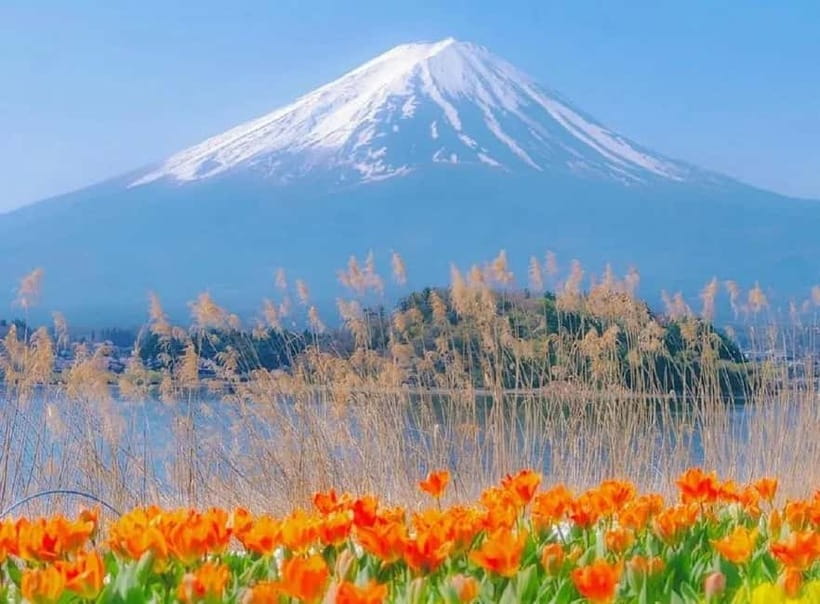
This is a sightseeing circuit built around views, not a mountain-climbing trip. You will not go to the summit of Mount Fuji. Instead, you will look at it from several angles around Fujiyoshida and the Fuji Five Lakes area, with a guide keeping the day moving.
That distinction matters. If you want a quiet hike or a long stay beside Lake Kawaguchi, this is not the right format. If you have limited time in Tokyo and want to see the famous Fuji scenes without arranging several trains and local buses, the coach does the hard work for you.
The experience lasts about 10 hours. Pickup is at 8:00 AM at the Police Box near Tokyo Station, also described as the JR Tokyo Station Marunouchi South Exit, or at 8:30 AM at Tokyo Mode Gakuen. Arrive at least 15 minutes early. This is a strict departure, and there is no refund for arriving late or missing the bus.
The tour has a 4.7 rating from 2,066 published ratings, and the strongest pattern is clear: guides are praised for organization, friendliness, clear explanations, and taking photos for solo visitors and couples. Names such as Anna, Sawaki, Peter, Linda, Sia, and Tom appear among the recent guide teams, but you should not book expecting one specific person.
A few more Tokyo tours and experiences worth a look
Arakurayama Sengen Park and the famous 397 steps
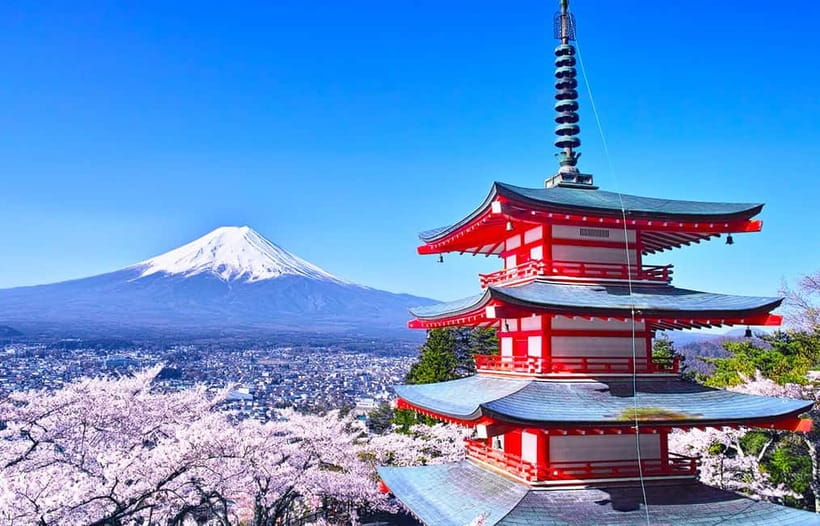
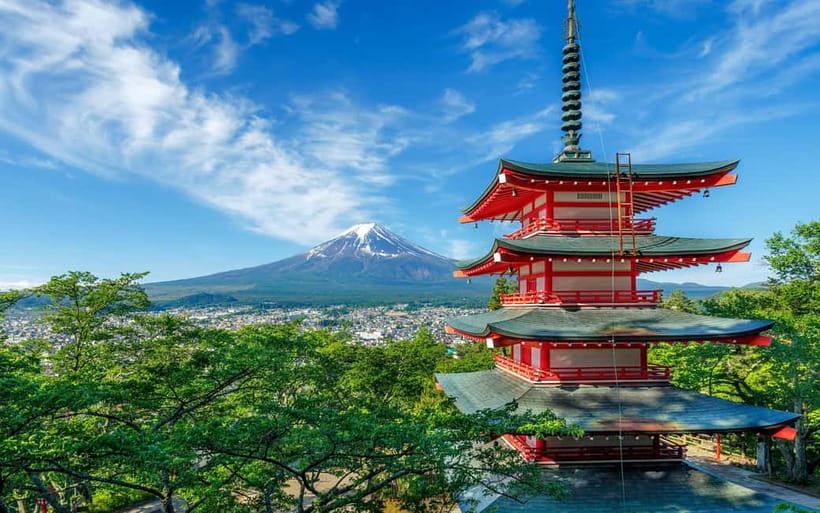
The first major stop is Arakurayama Sengen Park, reached after roughly two and a half hours on the road from Tokyo. The reward is the view that appears on countless Japan postcards: Chureito Pagoda in the foreground, Fujiyoshida below, and Mount Fuji rising behind it.
You should allow about 60 minutes here. The park includes Arakura Fuji Sengen Shrine, a walk, and time near the pagoda. The published schedule breaks this into roughly 40 minutes at the park, 15 minutes at the shrine, and 10 minutes near Chureito Pagoda, though the exact split can change with crowds and traffic.
The stairs are the main physical test of the day. There are 397 steps, and the climb can feel demanding if you are carrying shopping bags or wearing smooth-soled shoes. You do not need special hiking gear, but comfortable footwear and a little patience will make the visit much better.
The scene changes sharply with the season. Cherry blossoms frame the pagoda in spring, autumn leaves add color later in the year, and snow can make the view wonderfully crisp in winter. The popular photograph is also the reason this place can feel crowded, so do not expect solitude at the main lookout.
Your guide may help with photos and point out the best angle. That small service matters on a group day, particularly if you are traveling alone. Guides such as Anna and Sawaki have been especially praised for helping people get pictures while keeping the group together.
Hikawa Clock Shop and the Stairway to Heaven street
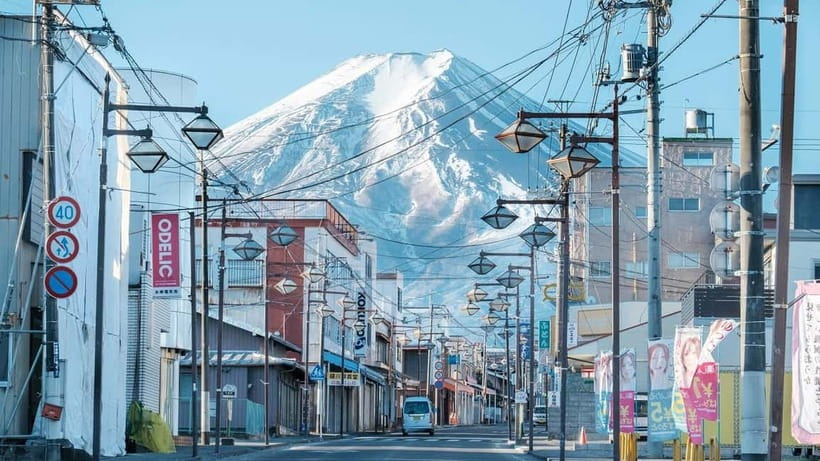
The next stop is shorter and more local in feel. At Hikawa Clock Shop, you walk along a quiet street in Fujiyoshida toward a view of Mount Fuji at the far end.
The appeal is the contrast: traditional shopfronts and a narrow road in the foreground, the huge symmetrical mountain beyond. The shop itself is an Instagram favorite, but the real pleasure is the ordinary town setting. Fuji does not feel separated from daily life here. It appears behind utility lines, rooftops, and storefronts.
You get about 20 minutes, so this is a photo stop rather than a full neighborhood visit. Keep the group’s meeting time in mind, and take care when standing near the road. Visibility depends entirely on the weather, and clouds can block the view.
I like this stop because it breaks up the familiar shrine-and-pagoda pattern. It also gives you a brief look at a town street rather than only formal scenic sites. If Fuji is hidden, though, the stop loses much of its purpose.
Oshino Hakkai, eight clear spring pools
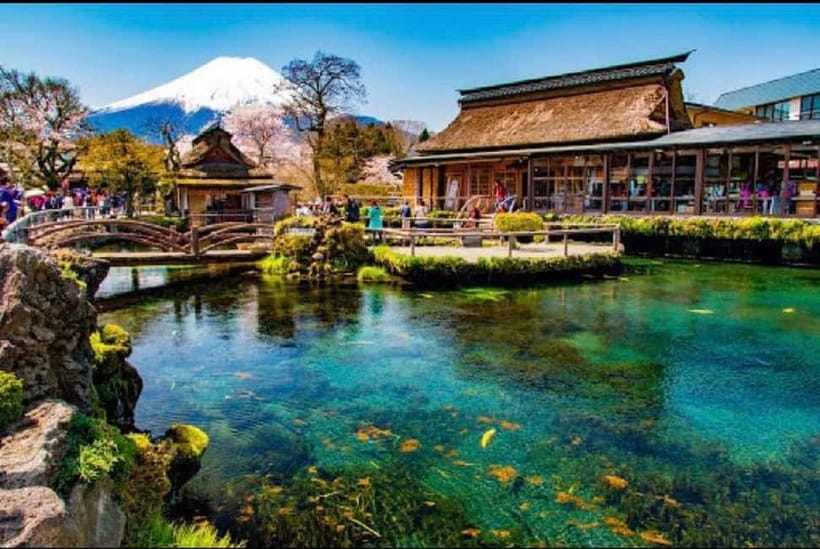
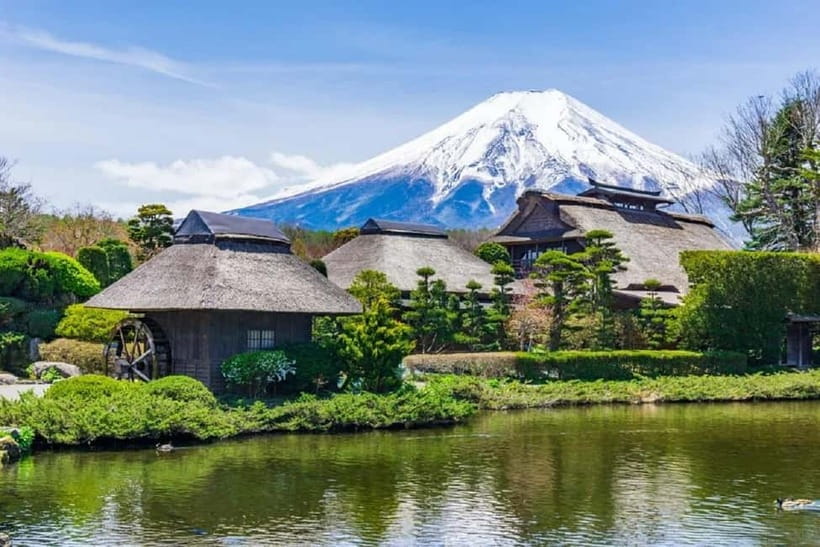
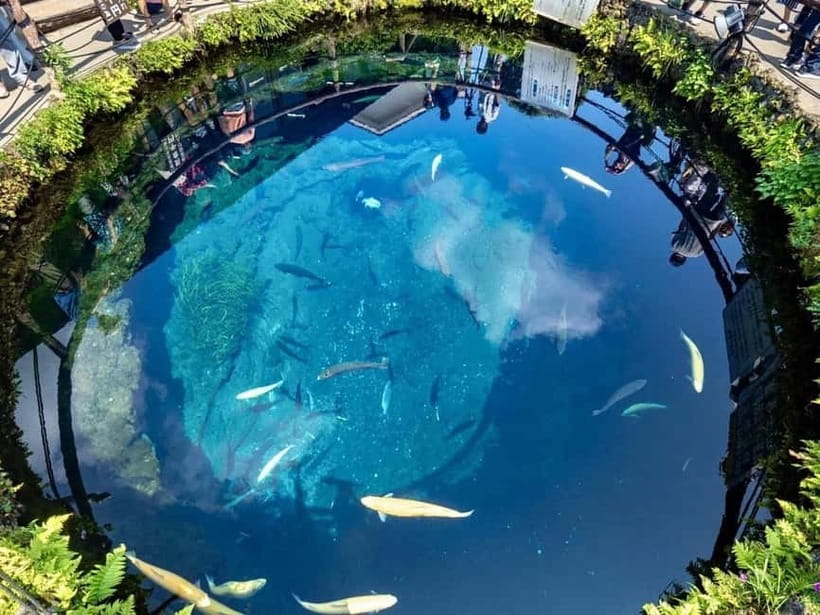
Oshino Hakkai is the most restful stop of the day, with about 90 minutes to walk around. The village is known for eight spring pools formed by snowmelt filtering down from Mount Fuji.
The water is the draw. It is famously clear, and the pools sit among traditional buildings, small bridges, food stalls, souvenir shops, and rural scenery. The result feels calmer than the bigger Fuji photo stops, although the area can still be busy during peak periods.
Use your time here for more than pictures. Look into the spring pools, walk the village lanes, and try a local snack if something catches your eye. The guide can explain the area and direct you toward food or shopping, but personal purchases are your responsibility.
Lunch is the one point that needs careful planning. The main description says lunch is not included, while the schedule allows about 45 minutes at a local restaurant. In practice, you should bring cash and be ready to buy food at an attraction or eat at a restaurant recommended by the guide. Do not assume a meal is covered in the $53 price.
This stop is also a useful pause after the early start and the first photo climb. Families may appreciate the open village setting, though young children could still need supervision around water and crowded paths. One family with a nine-year-old found the full day manageable, but your own pace will depend on energy, weather, and how long you spend on the steps.
Lawson Kawaguchiko and Japan’s most ordinary photo
The Lawson convenience store near Kawaguchiko Station has become famous for a very simple reason: from the right position, Mount Fuji rises behind the store and the street.
This is a wonderfully modern Japanese photo. The shop is not an old shrine or grand viewpoint. It is a normal convenience store made special by its setting, which says a lot about how closely Fuji sits beside everyday life in this region.
You get about 20 minutes. Follow the guide’s instructions, and take care when crossing the road. The warning is not decorative. People often focus on framing the mountain and forget that this remains an active street.
The view is weather dependent, as it is everywhere on this tour. If clouds cover Fuji, you can still see the station area and store, but the classic image will not be possible. This is one reason the tour makes several stops instead of relying on a single viewpoint.


Oishi Park and the seasonal finish
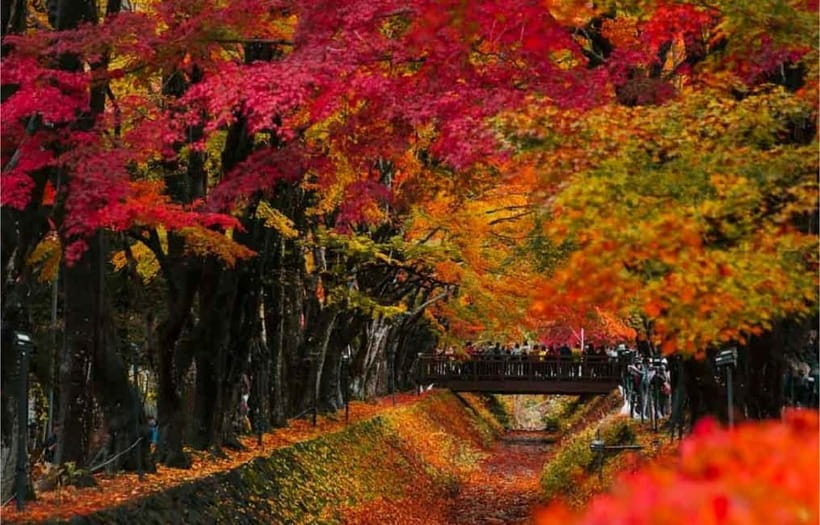
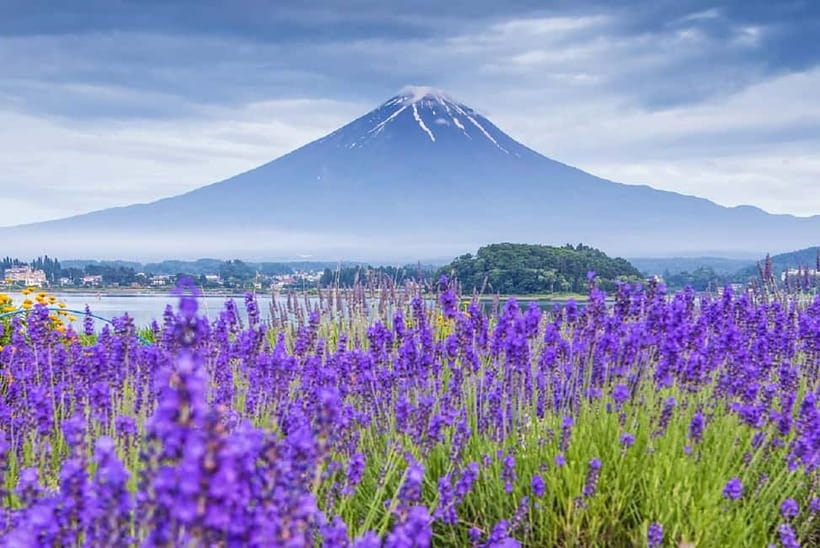
Oishi Park, near Lake Kawaguchi, usually receives about 50 minutes. Its appeal changes through the year.
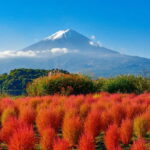
In summer, lavender fields add a purple foreground to the Fuji view, and the Kawaguchiko Herb Festival is listed as running from June into October. In autumn, red kochia plants provide a lower, colorful contrast to the mountain. The park gives you room to slow down after several tightly framed photo stops.
The schedule may change during seasonal periods. Around late October to November 20, the tour may visit the Kawaguchiko Maple Corridor instead of Oishi Park. There, fiery maple leaves frame the lake and snow-capped Fuji. Around April 5 to 14, the cherry blossom area may replace Oishi Park, creating the classic combination of lake, blossoms, and mountain.
These dates are approximate, and the seasonal substitution is not a flaw so much as a practical adjustment. You should check the expected schedule when booking, because the final stop can affect the kind of scenery you see.
Oishi Park also includes shopping and sightseeing. That can be useful for small gifts or snacks, but remember that souvenir shops are independent of the tour operator. The guide may point out good areas, yet you should make your own choices and watch your spending.
The road time, coach, and group rhythm
The air-conditioned tourist vehicle is the backbone of the experience. Highway tolls, fuel, parking, and the professional driver are included, which removes much of the cost and planning that comes with reaching the Fuji area independently.
The tradeoff is road time. The outward transfer is listed at about two and a half hours, and the return drive takes about two hours before Tokyo traffic is added. That makes this a full day, not a relaxed half-day outing.
Bring water, cash, and something to eat. A small snack is sensible because the timing of lunch can depend on the group and traffic. You will also want layers, since the temperature around Mount Fuji can feel different from Tokyo, especially in cooler seasons.
This is a shared group tour with people from several countries. Explanations are provided in Chinese, English, and Japanese, so the day may include repeated information in different languages. That can lengthen some briefings, but it also makes the tour accessible to a broad mix of visitors.
The guides receive unusually strong praise for practical help. Several are described as keeping late people on schedule without losing patience, giving photo assistance, explaining meeting points clearly, and using games or jokes during the longer bus ride. One guide even helped pre-order food for the group. Those details matter more than a polished speech when you are managing five stops in one day.
Your driver is also important. The supplied vehicle, safe driving, and smooth transfers are repeatedly highlighted as reasons the day feels easy despite its length. Still, traffic can delay the return to Tokyo, especially on weekends, bad-weather days, and during peak seasons.
Do not schedule a train, flight, restaurant reservation, or evening show immediately after the stated 6:30 PM return. The schedule can shorten at a stop, change order, or face cancellation in difficult conditions. Build in spare time.
Is $53 good value for the day?
At $53 per person, the price is strong for a 10-hour trip from Tokyo. You are paying for the vehicle, driver, multilingual guide, fuel, tolls, parking, and designated pickup and drop-off. Doing all five areas alone would require several separate transport decisions and careful timing.
The value is highest if you want convenience and photographs. You can sit back during the long transfers, get help at the stops, and see several famous Fuji angles in one day. Solo visitors also gain a practical advantage because the guide may take photos.
The price is less appealing if you prefer slow travel. You have limited time at each place, and the bus schedule controls your day. Food, drinks, shopping, and other personal costs are extra, so the advertised price is not the final spend.
Free cancellation is available up to 24 hours before departure, and you can reserve now and pay later. Details such as the meeting point can vary with the option you book, so check your confirmation carefully.
Who should choose this Fuji tour?
I would recommend it to first-time visitors with only a few days in Tokyo, couples wanting the classic photographs, solo visitors who appreciate help with pictures, and families comfortable with a long coach day.
It also suits people who want variety. You see a shrine, pagoda, town street, spring village, convenience store, lake-area park, and seasonal foliage or flowers. That range gives you a better feel for the Fuji region than one isolated lookout.
I would think twice if you dislike early starts, stairs, group schedules, or long drives. It is also a poor choice if seeing the mountain clearly is your only goal, because no tour can control clouds. The many viewpoints improve your odds, but they do not guarantee a view.
FAQ
Where does the tour start?
You can meet at the Police Box near Tokyo Station, also identified as the JR Tokyo Station Marunouchi South Exit, at 8:00 AM, or at Tokyo Mode Gakuen at 8:30 AM. Arrive 15 minutes early.
How long does the tour last?
The advertised duration is 10 hours. The planned return to Tokyo is around 6:30 PM, but traffic, weather, weekends, and peak seasons can cause delays.
Is lunch included?
No. You should bring food, buy lunch at one of the attractions, or eat at a restaurant recommended by the guide. Bring cash because some places accept cash only.
What languages are available?
Live guiding is available in Chinese, English, and Japanese. The tour is shared with people from several countries.
Can I see Mount Fuji in every season?
The tour runs through all seasons, but Fuji visibility depends on weather. Seasonal stops may include lavender at Oishi Park, red kochia in autumn, the Maple Corridor from around October 26 to November 20, or cherry blossoms around April 5 to 14.
What should I bring?
Bring comfortable shoes, water, and cash. Comfortable shoes are especially useful for the 397 steps at Arakurayama Sengen Park.
Should you book it?
Book this tour if you want maximum Fuji scenery with minimum transport planning. At $53, it is a practical way to cover the region’s most recognizable viewpoints, and the guides add real value by handling directions, timing, explanations, and photographs.
Skip it if you want a quiet, flexible day or plan to linger in one village. For most first-time visitors based in Tokyo, though, the combination of Arakurayama, Oshino Hakkai, Lawson, Hikawa Clock Shop, and the seasonal lake-area stop makes this a well-priced and efficient Fuji day. Just pack a snack, wear good shoes, and leave your evening schedule open.
More Mt Fuji Day Trips in Tokyo
More tours in Tokyo we've reviewed











Mt Fuji Day Trips, compared.
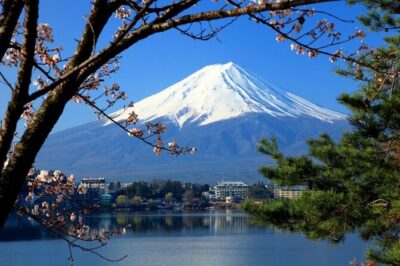 ★ 5.0Mt Fuji and Hakone 1-Day Bus Tour Return by Bullet TrainFrom $163
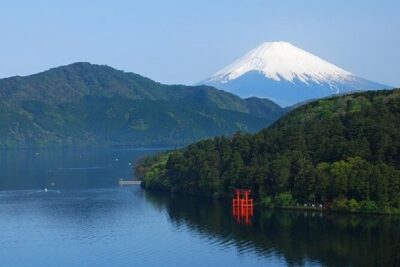 ★ 4.0Mt Fuji & Hakone Cruise, Drum Show Bullet Train 1 Day from TokyoFrom $149
 ★ 4.4Tokyo Mt Fuji 5th St & Hakone Cruise Bus Tour w/Bullet TrainFrom $15410 hours
 ★ 4.5From Tokyo: Mount Fuji Full-Day Sightseeing TripFrom $6810 hours
 ★ 4.7Tokyo: Mt. Fuji Tour, Hakone Ropeway, Owakudani, Lake AshiFrom $5410 hours
 ★ 4.4Tokyo:Mt.Fuji,Kawaguchiko Oishi Park,Arakurayama Sengen ParkFrom $5410 hours