
Reviewed · COOKING CLASSES
Tokyo Haneda: Bento & Ramen Gyoza Cooking Class in a Local home
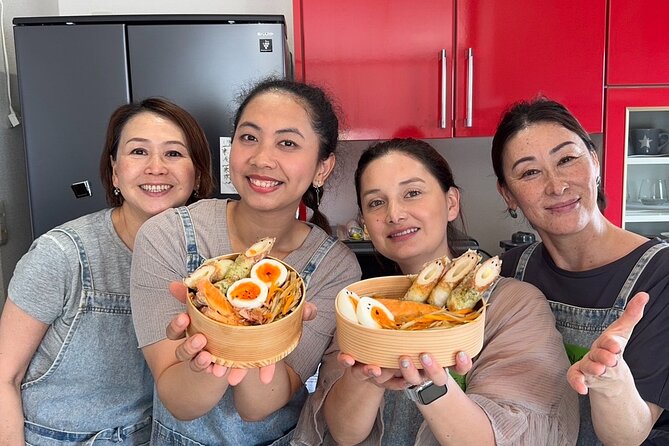
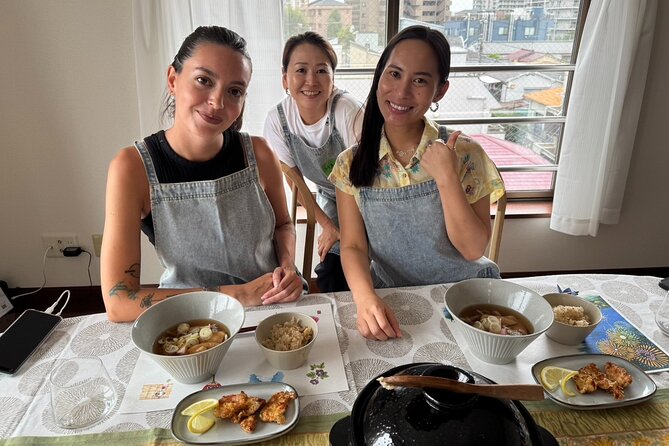
The best part of this three-hour class is that you do not just watch someone prepare Japanese food. You make your own bento box from start to finish, then sit down to eat what you cooked in a real Tokyo home near Haneda Airport. The relaxed setting feels closer to visiting a friend than attending a polished cooking school.
I like the private format, since only your group takes part, and I like the generous drinks package, which includes Japanese tea, coffee, soft drinks, beer, wine, and sake. The main consideration is location: Nishirokugo is a local neighborhood in Ota City, not central Tokyo, so you will need to plan your train ride carefully.
In This Review
- Key points at a glance
- A Japanese cooking class in a real neighborhood
- What happens during the three-hour class
- Why the bento lesson is the strongest choice
- The home kitchen makes the lesson personal
- Free-flow drinks add real value
- A useful stop near Haneda Airport
- Souvenirs with a practical purpose
- Who will enjoy this most
- Is $60 a fair price?
- Should you book the Nishirokugo cooking class?
- FAQ
- Where does the cooking class take place?
- What time does the class start?
- Is the class private?
- What drinks are included?
- What souvenirs do I take home?
- Can I cancel for a full refund?
Key points at a glance
- Make your own bento: Prepare a Japanese lunch box rather than simply watching a demonstration.
- Cook in a local home: The class takes place in a friendly home kitchen in Nishirokugo, Ota-ku.
- Try several Japanese dishes: Depending on the class menu, you may prepare bento, ramen, gyoza, mochi, udon, or tempura.
- Enjoy free-flow drinks: Tea, coffee, soft drinks, beer, wine, and sake are included.
- Take home Japanese tableware: You receive chopsticks and a Japanese chopstick rest.
- Easy Haneda connection: The neighborhood is near public transportation and convenient for an airport-area stay.
A Japanese cooking class in a real neighborhood
Tokyo can feel like a city of famous crossings, department stores, and packed sightseeing districts. This class takes you somewhere different: Nishirokugo in Ota-ku, a local part of the city near Haneda Airport and the Tama River.
That change of setting matters. You are not cooking in a tourist attraction or a rented studio designed to look Japanese. You enter a home kitchen and learn in a more personal setting. The hosts aim to show you everyday Japanese food culture, not only the dishes that appear on restaurant menus.
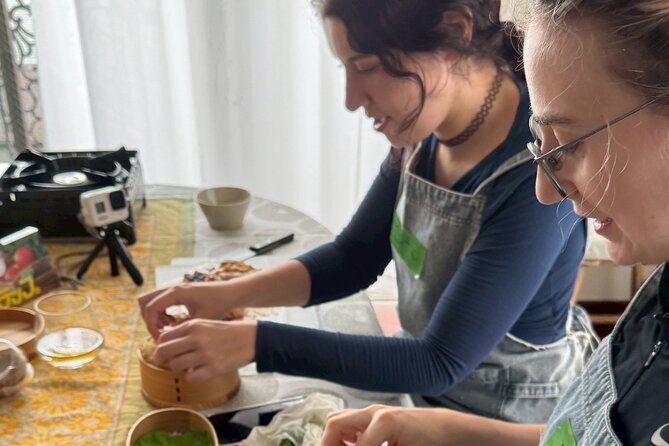
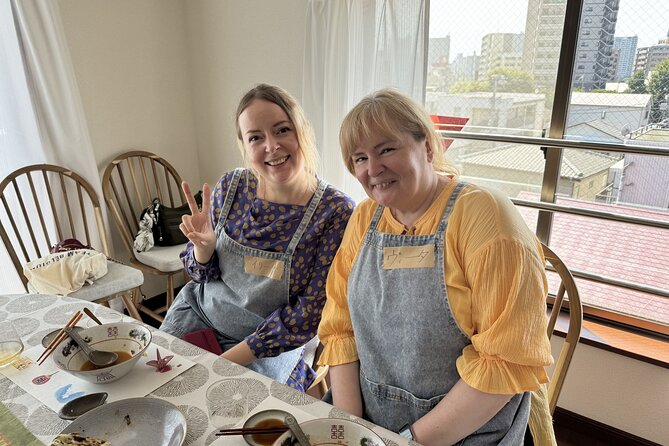
The class is private, so your group gets the attention of the instructors. That makes a real difference when you are folding gyoza, shaping ingredients for a bento, or trying to follow several steps at once. You can ask questions without worrying about slowing down a large class.
The experience is offered by Cooking Trip, with instructors including Machiko, Nao, and Yoko. English instruction is available, and the teaching style is practical. You can expect clear guidance, patient help, and explanations designed for people who may be cooking Japanese food for the first time.
Other cooking classes in Tokyo
What happens during the three-hour class
The advertised start time is 11 a.m., and the activity lasts about three hours. The exact menu can vary, since the information describes several cooking themes rather than one fixed sequence for every booking.
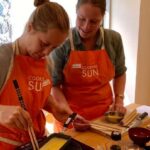
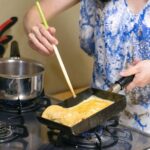
The main focus is the bento class. You prepare a Japanese lunch box yourself, working through the components from beginning to end. This is more useful than learning one complicated restaurant dish because bento cooking teaches balance: rice, savory items, small side dishes, color, shape, and careful arrangement.
You will likely spend time preparing ingredients, following demonstrations, and assembling the finished box. The point is not to create a perfect professional display. It is to understand how Japanese home cooks turn several modest dishes into a complete meal.
Ramen and gyoza are also part of the experience offered through this cooking program. Making ramen gives you a chance to learn how the broth and other parts come together. Gyoza adds a hands-on task that is easy to enjoy with friends or children, especially when you can compare how everyone folds and fills their dumplings.
Other classes or menus may include mochi, udon, and tempura. One class includes making udon broth from scratch and gluten-free udon noodles. That detail is useful if you have dietary concerns or simply want to learn how noodles are made rather than opening a packet.
At the end, you eat the food you prepared. That shared meal is an important part of the experience. You are not rushing off after the final cooking step, and you do not have to judge the result in an empty kitchen. The meal gives you time to talk with the hosts, ask follow-up questions, and enjoy the dishes while they are fresh.
Why the bento lesson is the strongest choice
If you are choosing among cooking activities, I would pay special attention to the bento option. Ramen and gyoza are familiar Japanese restaurant foods, but bento teaches you something you can use after returning home.
A bento is also a small lesson in Japanese daily life. It shows how meals are packed, portioned, and arranged for work, school, picnics, or train journeys. You learn that Japanese cooking is not only about dramatic flavors. Texture, neatness, seasonal color, and variety matter too.
One useful feature is that you leave with a method rather than only a memory. A recipe learned in a home kitchen can be repeated for lunch, and the dishes do not require a restaurant-sized setup. The class also suits people who already know how to cook. One experienced home cook found that the instructors offered new shortcuts and practical tips, which is a reminder that beginners are not the only ones who can benefit.
The bento option may be less exciting for someone who wants a single showpiece dish. If your main goal is to learn restaurant-style ramen technique, ask about the exact menu before booking. The activity information covers several dishes, so you should not assume every class includes every item.
The home kitchen makes the lesson personal
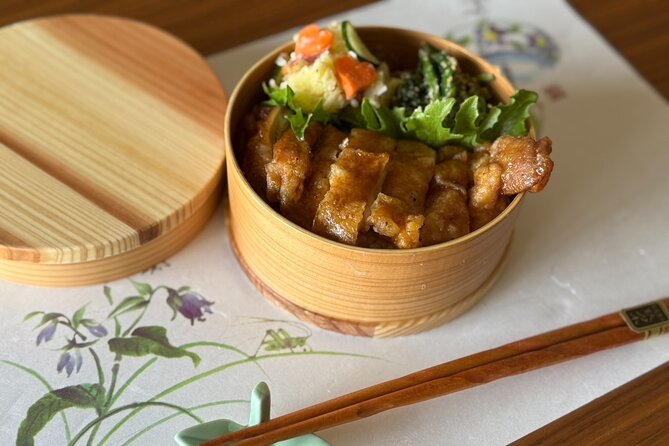
A rental kitchen can be clean and efficient, but it can also feel anonymous. Here, the home setting is part of the lesson. You see Japanese food being prepared in a space intended for ordinary life, and the atmosphere is meant to be friendly and relaxed.
That does not mean the class is unstructured. The instructors guide each step, and the teaching is designed to be easy to follow. Children can take part, making this a good choice for a family looking for an activity that is more engaging than sightseeing in a crowded district.
The private format is another plus for families and small groups. You can work at your own pace, ask for clarification, and enjoy the meal together without being mixed into a large class. If your group has different cooking abilities, this setup should feel less intimidating than a fast-moving public workshop.
Food allergies must be reported in advance. This is especially important in Japanese cooking, where soy sauce, wheat, seafood, and other ingredients may appear in sauces, noodles, fillings, or side dishes. Do not wait until the class begins to explain a serious allergy.
Free-flow drinks add real value
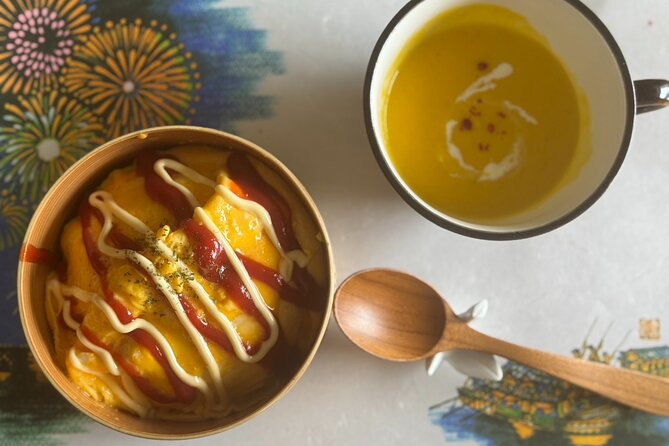
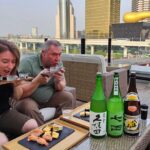
The $60 price includes the meal, the cooking instruction, alcoholic drinks, and nonalcoholic drinks. The drink selection includes Japanese tea, coffee, tea, soft drinks, beer, wine, and sake.
This is more than a minor extra. A three-hour cooking class with food and drinks can become an expensive outing in Tokyo once you add a separate lunch and a few beverages. Here, your meal is part of the lesson, and you can sample drinks while talking with the hosts.
The alcohol inclusion suits adults who want to try sake or enjoy a beer with ramen and gyoza. It is not essential to the experience, and you can stick with Japanese tea, coffee, or soft drinks if you prefer. Families should find enough nonalcoholic choices for children, though the available details do not specify a separate children’s menu.
The drink package also supports the home-style mood. You are not being rushed through a formal tasting. You cook, sit down, drink what you like, and spend time with the people teaching you.
Other cooking classes in Tokyo
A useful stop near Haneda Airport
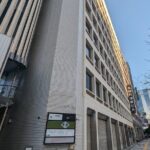
The meeting point is at Grace Mansion Harada, 4-chome 10-9, Nishirokugo, Ota City, Tokyo 144-0056. The class begins at 11 a.m. and ends back at the same meeting point.
Nishirokugo is near public transportation and offers a practical alternative to crossing Tokyo for a cooking activity. If you are staying near Haneda, this can fit neatly into an airport-area day. It may also work well near the beginning or end of a Japan trip, provided your flight schedule gives you plenty of time.
Do not treat this as an airport terminal activity. You still need to reach the residential meeting point, and private transportation is not included. Use the full address when planning your route, and allow time to find the building. The neighborhood itself is part of the appeal, but it will not offer the same concentration of attractions as Shibuya or Shinjuku.
The Tama River is nearby, giving you the option of a quiet walk before or after the class. The activity does not include a river excursion, so consider that an independent add-on rather than part of the tour.
Souvenirs with a practical purpose
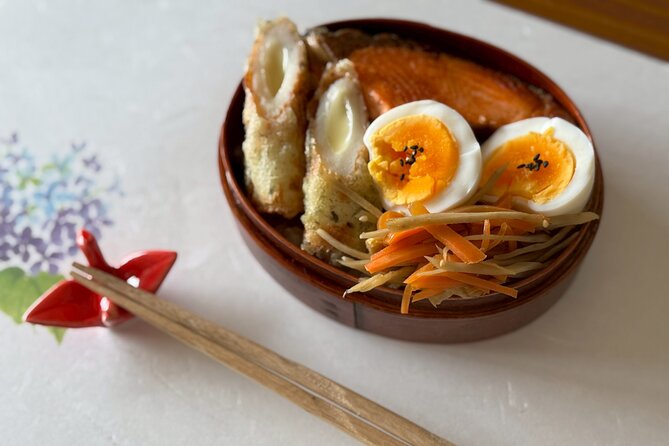
You take home chopsticks and a Japanese chopstick rest. These are small gifts, but they are better than a generic souvenir because they connect directly to the meal you prepared.
The chopsticks can remind you to repeat the recipes at home, while the chopstick rest is a simple detail that helps explain Japanese table manners. It also solves a common problem at home: where to place chopsticks between bites without setting them directly on the table.
One class also included a cute Japanese lunch box as a gift, but the standard inclusions specifically promise chopsticks and a chopstick rest. I would not book expecting a lunch box unless the provider confirms it for your date and menu.
Who will enjoy this most
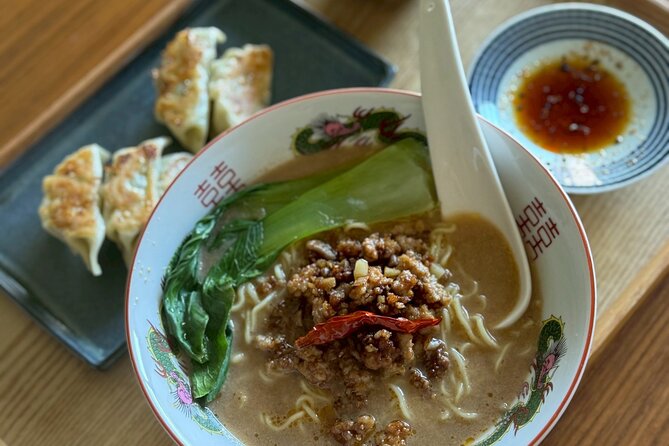
This class is a strong match for:
- Families who want a shared activity during a short Tokyo visit
- Couples and friends who enjoy cooking together
- First-time visitors who want contact with daily Japanese food culture
- People staying near Haneda Airport
- Cooks who want practical Japanese recipes and shortcuts
- Anyone who prefers a small, private setting to a large group workshop
It is less suitable if you want a central Tokyo activity surrounded by major sights. It may also disappoint you if you expect a fixed menu with every dish listed in the title. The experience includes bento, ramen, and gyoza themes, but other classes feature udon, tempura, or mochi, so confirm what you will make.
You should also be comfortable spending about three hours in a cooking and dining setting. This is not a quick lesson squeezed between two attractions. The time is part of the value, since you cook, eat, drink, and talk rather than simply collect a recipe.
Is $60 a fair price?
At $60 per person, the value is solid if you use the full experience. Your fee covers roughly three hours, a prepared meal, instruction in a private home, free-flow alcoholic and nonalcoholic drinks, and two Japanese tableware souvenirs.
The strongest value comes from the personal format. A standard restaurant meal may cost less, but it will not teach you how the dishes are prepared or give you time with local hosts. A larger cooking school may offer a more polished setting, but the home kitchen and private group can make this feel more relaxed.
The price is less attractive if you are mainly looking for lunch. You will pay for the instruction and cultural exchange, not just the food. That is a fair trade for someone who wants to learn, but it is worth recognizing before you book.
Free cancellation is available when you cancel at least 24 hours before the 11 a.m. start time. Changes or cancellations made inside that window are not refunded, and the activity requires a minimum number of participants. If the provider cancels because that minimum is not met, you are offered another date or experience, or a full refund.
Should you book the Nishirokugo cooking class?
I would book this if you want a personal Japanese food experience and you are happy to leave central Tokyo for a local neighborhood near Haneda. The private home setting, patient English guidance, included drinks, and practical bento lesson give it more substance than a simple tourist meal.
Choose the bento class if you want recipes you can repeat at home. Choose a ramen, gyoza, udon, tempura, or mochi session if the provider confirms that menu and those dishes are your priority.
I would skip it if your schedule is tight, your hotel is far from Ota City, or you want a sightseeing activity in the heart of Tokyo. For families, food lovers, and airport-area visitors, though, this is a warm, useful way to spend a morning and take a piece of Japanese home cooking with you.
FAQ
Where does the cooking class take place?
The meeting point is Grace Mansion Harada, 4-chome 10-9, Nishirokugo, Ota City, Tokyo 144-0056, Japan.
What time does the class start?
The class starts at 11 a.m. and lasts about three hours.
Is the class private?
Yes. Only your group participates in the activity.
What drinks are included?
Free-flow drinks include sake, beer, wine, coffee, tea, Japanese tea, and soft drinks.
What souvenirs do I take home?
The included souvenirs are chopsticks and a Japanese chopstick rest.
Can I cancel for a full refund?
Yes, if you cancel at least 24 hours before the local start time. Cancellations or changes made less than 24 hours before the activity are not refunded.
More Workshops & Classes in Tokyo


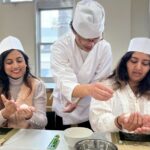
More Cooking Classes in Tokyo
More Cooking Classes in Tokyo
More tours in Tokyo we've reviewed










Cooking Classes, compared.
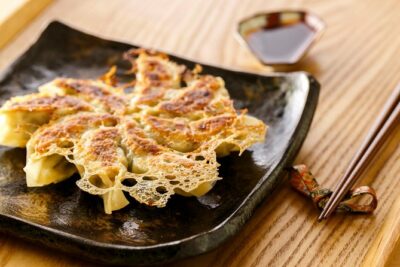 ★ 5.0Ramen & Gyoza Cooking Class in Tokyo with Local Supermarket VisitFrom $122
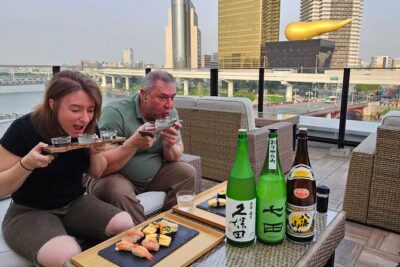 ★ 5.0Ramen and Sushi Cooking Class with Sake Pairing Set in TokyoFrom $79
 ★ 4.9Tokyo: Wagyu and 7 Japanese Dishes Cooking ClassFrom $673 hours
 ★ 5.0Tokyo Washoku 4-hour Cooking Class: From Market to TableFrom $79
 ★ 5.0Professional Ramen & Gyoza with Ramen Chef in a restaurant!From $159
 ★ 5.0Small-Group Wagyu Beef and 7 Japanese Dishes Tokyo Cooking ClassFrom $72