
Reviewed · IMPERIAL PALACE & SHOGUN TOURS
Tokyo: Edo Castle and Imperial Palace Guided Walking Tour
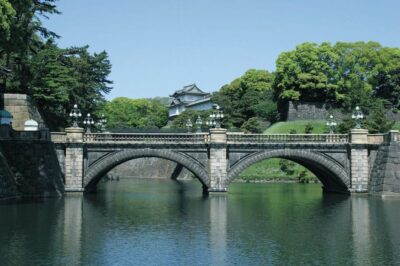
Tokyo’s Imperial Palace hides a vanished city beneath its lawns, gates, moats, and massive stone walls. This 150-minute walk helps you picture Edo Castle as the working center of Japan for 260 years, not simply as a grand palace viewed from behind a fence.
I like the 1650s Edo map, which gives the walk a clear sense of time and place. I also like the small group, limited to eight people, since that gives you a better chance to ask about the Tokugawa Shogunate, the Meiji Restoration, castle defenses, and daily life inside the compound.
The main drawback is simple: this is a walking tour, not an interior palace visit. You see the Imperial Palace area and the remains of Edo Castle, but the itinerary focuses on gates, ruins, walls, moats, and open sites. Wear good shoes, and expect several hours outside.
In This Review
- Key points to know before you book
- Why Edo Castle is the real subject of this palace walk
- Meeting at Tokyo Station’s yellow dome
- Sakurada-mon and the outer defenses
- Towers, gates, and the language of stone
- The main-hall site and the political heart of Edo
- Kita-Hanebashi and the route toward Hirakawa Gate
- What the small group changes
- Is $3.22 a good value?
- Who should choose this Edo Castle walk?
- Should you book it?
- FAQ
- Where does the tour begin?
- Where does the tour finish?
- How long does the tour last?
- What language is the tour conducted in?
- How large is the group?
- Is transportation included?
- Is the tour wheelchair accessible?
- What should I wear?
Key points to know before you book
- The route begins at Tokyo Station’s Marunouchi South Gate, marked by a historic yellow western-style dome.
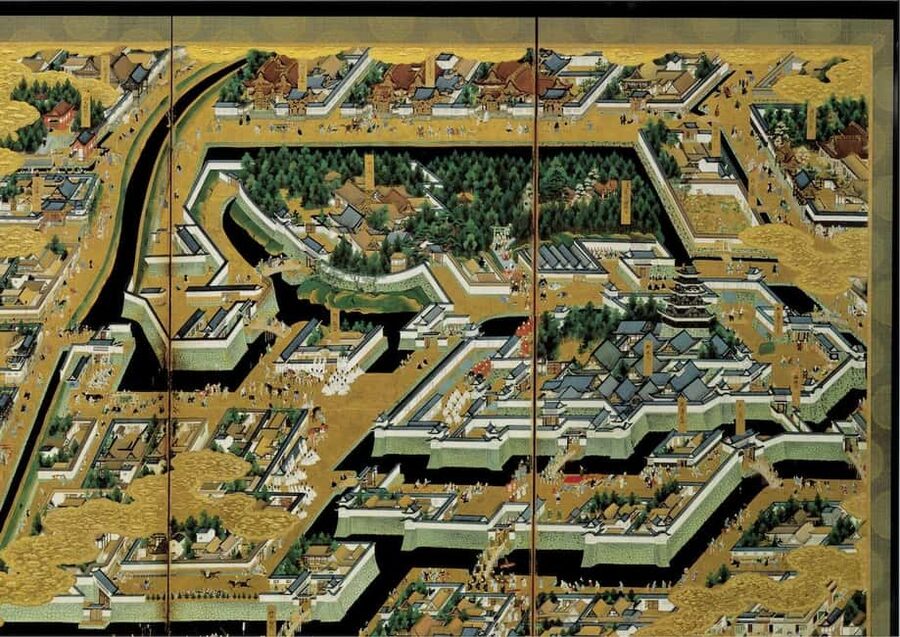
- The Edo Castle site is explained through a map of Edo in the 1650s, making the vanished castle town easier to understand.
- You visit major gates and defenses, including Sakurada-mon, Kikyo-mon, Ote-mon, Kita-Hanebashi, and Hirakawa Bridge.
- The former main hall site receives the longest stop, with about 30 minutes for history and interpretation.
- The group is limited to eight people, with an English-speaking guide and a small gift included.
- The listed price is $3.22 per person, which makes the experience unusually inexpensive if that rate is available for your date.
Why Edo Castle is the real subject of this palace walk
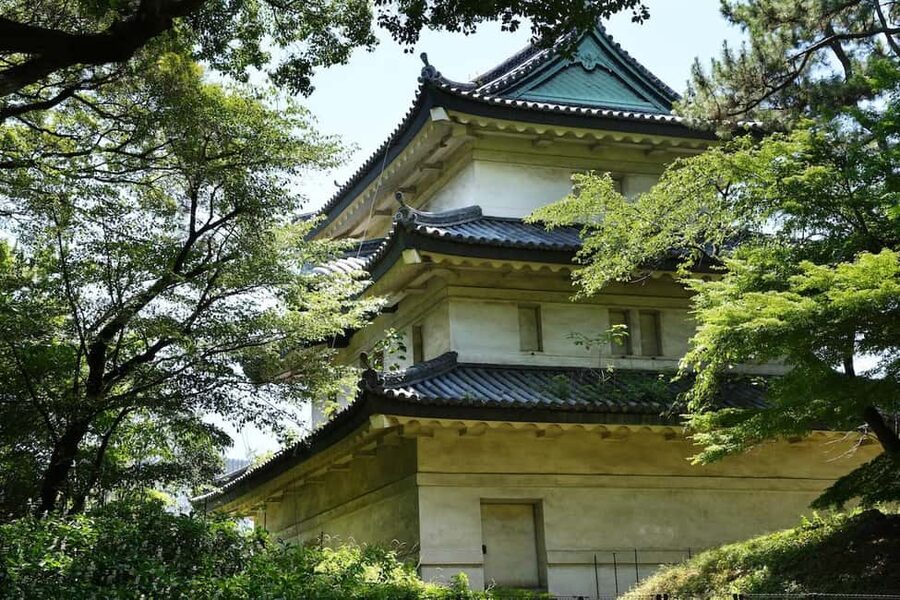
The name Imperial Palace can make you expect ornate rooms, ceremonial halls, and grand indoor exhibits. This experience offers something different. It follows the footprint of Edo Castle, the seat of the Tokugawa Shogunate and the center of Japan’s government for 260 years.
That change in name tells the story. After the Meiji Restoration, the castle became the Imperial Palace, and the Emperor now resides there. You are walking through one site with two major chapters: the military government of the shoguns and the modern imperial state that followed.
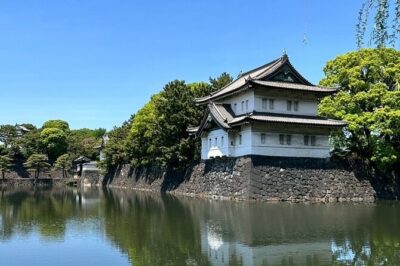
I like this approach because the physical remains do much of the work. The castle buildings are not presented as a complete old fortress. Instead, you read the place through stone walls, moats, gates, guard posts, towers, and open ground where major structures once stood.
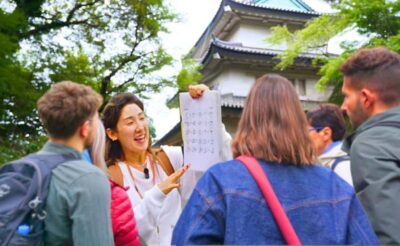
A guide matters here. Without one, you might see a handsome wall and move on. With a map showing Edo in the 1650s, you can start to understand how the castle controlled the city around it, how people moved through its gates, and how the shogun’s residence worked as a seat of power.
A few more Tokyo tours and experiences worth a look

Meeting at Tokyo Station’s yellow dome
The walk starts at the ground floor of the Marunouchi South Exit of Tokyo Station. Look for the western-style historic yellow-colored dome. The stated coordinates are 35.68048457383692, 139.76571024138642.
This is a useful meeting point because Tokyo Station is a major transport hub, but it is also a place where a first-time visitor can lose a few minutes. Give yourself enough time to reach the Marunouchi South Exit rather than relying on a last-second arrival.
From the station, you walk about five minutes to the Mitsubishi Ichigokan Museum. The museum itself receives a short guided stop of about 10 minutes. The tour then continues toward the castle grounds, so treat this as part of the historical setting rather than a full museum visit.
The early route helps connect modern Marunouchi with old Edo. Today, the area is known for offices, shops, and polished streets. The tour’s purpose is to show you how this part of Tokyo fits into the older political center.
Sakurada-mon and the outer defenses
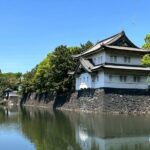
After another walk of about seven minutes, you reach Sakurada-mon Gate. The guide spends roughly 10 minutes here, enough time to introduce the gate and the defensive logic of Edo Castle.
Sakurada-mon is one of the route’s useful early stops because it shows that access to the castle was controlled in layers. A gate was not just an entrance. It was part of a system of walls, moats, checkpoints, and guarded approaches.
The next stop, listed at MQH4+V6 in Chiyoda City, receives about five minutes of explanation. The location label is not very helpful to a visitor, but the short stop gives the guide another point to explain the castle’s layout and nearby defenses.
You then pass the Sakashita Gate security police box, followed by a five-minute stop at Kikyo-mon Gate. These brief pauses may feel short, but they keep the walk moving. The benefit is a broad view of the castle zone rather than one long lecture at a single monument.
Towers, gates, and the language of stone
At Sakurada Tatsumi Yagura, the guide gives about six minutes of explanation. This is a good place to pay attention to the castle’s stonework and defensive towers. The route does not treat the walls as background decoration. Their form, construction, and position are part of the story.
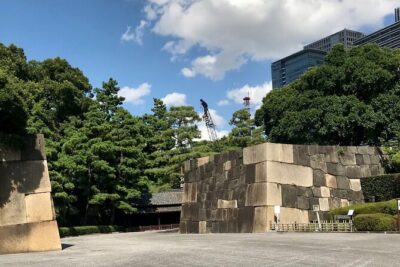
The experience becomes especially interesting when you look closely at the masonry. A detailed account of the walk points out that Edo Castle was built through tenka fushin, a system in which regional lords contributed to large public construction projects. The stones can show different cutting and fitting methods, with subtle variations linked to the groups that supplied them.
That is the sort of detail you are unlikely to notice on a quick solo walk. The walls begin to feel less like one uniform barrier and more like a record of the political system that built them.
At Ote-mon Gate, the guide gives another five-minute explanation. Ote-mon was a major approach to the castle, and the name is worth remembering because the route later continues through the Ote-San’no Gate ruins and the Hyakunin Bansho Guardhouse.
The Ote-San’no Gate ruins receive a short stop, followed by seven minutes at the Hyakunin Bansho Guardhouse. This guardhouse helps you picture the people who watched the approaches and controlled movement into the inner castle.
The castle was not only a residence for the shogun and his household. It was also a workplace filled with guards, officials, messengers, servants, and people whose duties kept the government running. That human side is one of the tour’s strongest features.
The main-hall site and the political heart of Edo
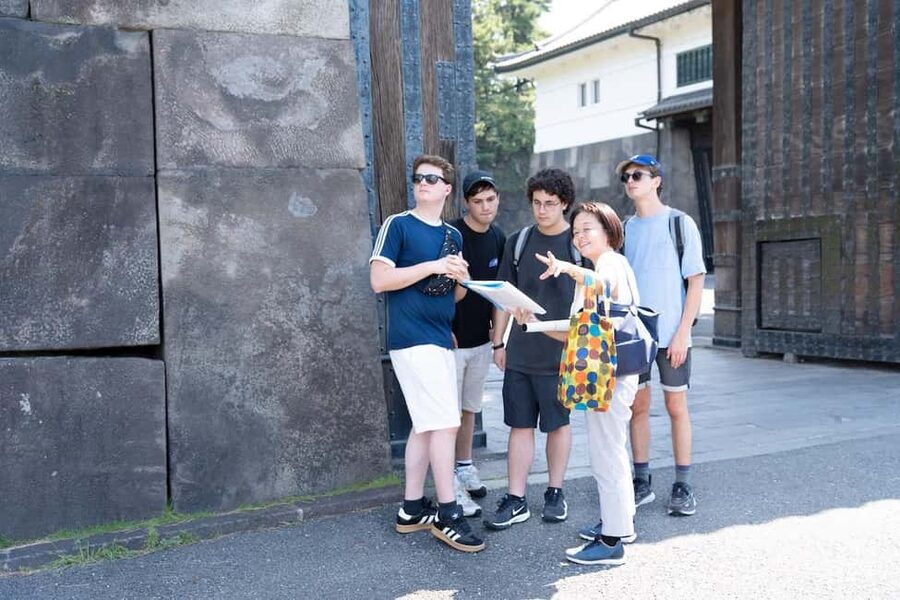
The longest stop comes at the site of Edo Castle’s Honmaru, or main hall. You have about 30 minutes here, which gives the guide room to explain the castle’s central buildings, government, and the people who lived and worked inside.
This is the point where the map should become most useful. You can compare the open grounds in front of you with the much larger castle complex shown on paper. The gap between the present site and the old plan is the point. Much of the architecture is gone, but the shape of the former power center remains readable.
One especially memorable historical detail concerns the Meireki Fire, often called the Great Fire of Meireki. After the fire, the castle’s foundation for a new keep was completed, but the keep itself was not rebuilt. The decision was to put resources into restoring Edo rather than spend more on reconstructing the tower.
That choice tells you something about priorities in the shogunate. A castle’s tallest building could symbolize authority, but a damaged city needed homes, roads, and services. The story gives the open Honmaru site a practical human meaning.
The guide also covers the political side of the inner palace, including the role of the Ooku, the women’s quarters. This is useful because castle life was not only about battles and male officials. The inner household had its own rules, relationships, and political influence.
You may also hear about the Fijo Gate, sometimes described as an impure gate, and the Obikuruwa area. These details point to the castle’s strict divisions and less glamorous service routes. They help you picture how movement, rank, ritual, and privacy shaped everyday life.
If you enjoy political history, this half-hour stop is likely the core of the experience. If you prefer architectural interiors, you may find the open grounds less satisfying. The value comes from explanation and imagination, not from entering preserved rooms.
Other walking tours we've reviewed in Tokyo



Kita-Hanebashi and the route toward Hirakawa Gate
After the main-hall site, the route continues to Kita-Hanebashi Gate for about five minutes of guided explanation. This keeps the focus on entrances and controlled movement through the castle complex.
You then walk roughly five minutes to Takebashi, where the guide gives another short talk. The route is not a single straight path from one famous view to the next. It moves through a chain of gates, ruins, walls, and approaches, which mirrors the layered design of Edo Castle.
The final major stop is Hirakawa Bridge, with about seven minutes of explanation. The tour finishes at Hirakawa Gate, or Hirakawa-mon.
Ending here makes practical sense. You finish on the edge of the former castle grounds rather than returning to Tokyo Station, so plan your next move from Hirakawa Gate. The supplied details do not state a specific return transfer or nearby attraction plan, so you should check your own map before booking if you need to connect to a timed reservation.
The walking portions are mostly short, generally four to seven minutes between stops. Still, the entire experience lasts 150 minutes, and you spend much of it outdoors. Comfortable shoes are not a minor suggestion. They are the sensible choice.
What the small group changes
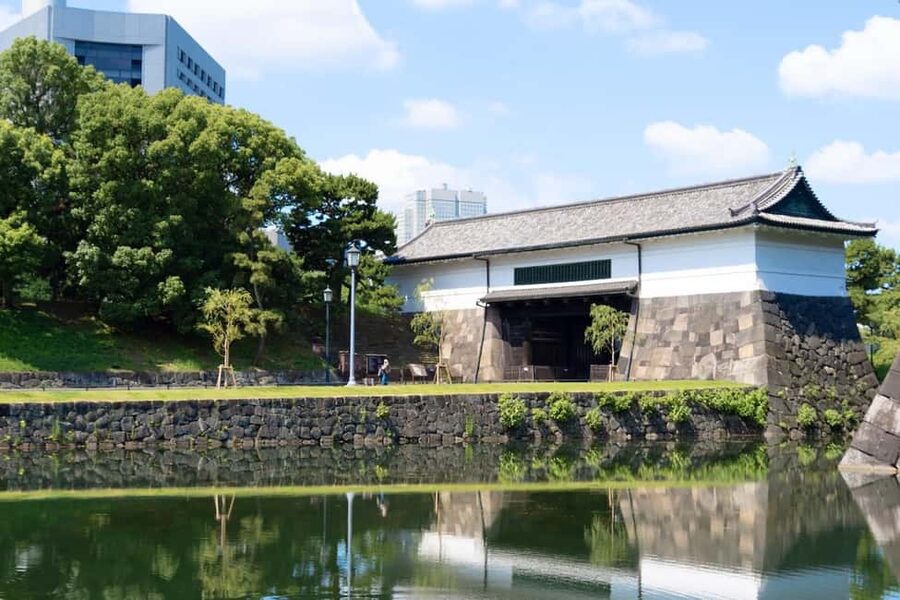
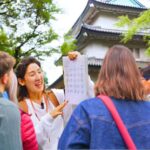
The group is limited to eight people. That is a good size for a site where the guide may point out small details in stonework or answer questions about shogun rule, the Meiji Restoration, and castle customs.
A small group also helps with the map-based format. You can ask the guide to orient you to a vanished building or explain how one gate related to another. In a large crowd, that kind of conversation becomes harder.
The guide speaks English, and a small gift is included. No guide name is provided, so you cannot select a particular historian or request a named leader. The important point is that the tour is designed around live explanation rather than an audio device or a printed route alone.
A perfect rating from six recorded bookings suggests strong satisfaction, but the sample is small. I would treat that as encouraging rather than conclusive. The detailed feedback highlights clear explanations of Edo’s development, Tokugawa government, cultural growth, the Great Fire of Meireki, the Ooku, and the castle’s stone walls.
That focus tells you who will get the most from the walk: someone who enjoys asking why a place developed as it did, not someone looking only for a quick photo stop.
Is $3.22 a good value?
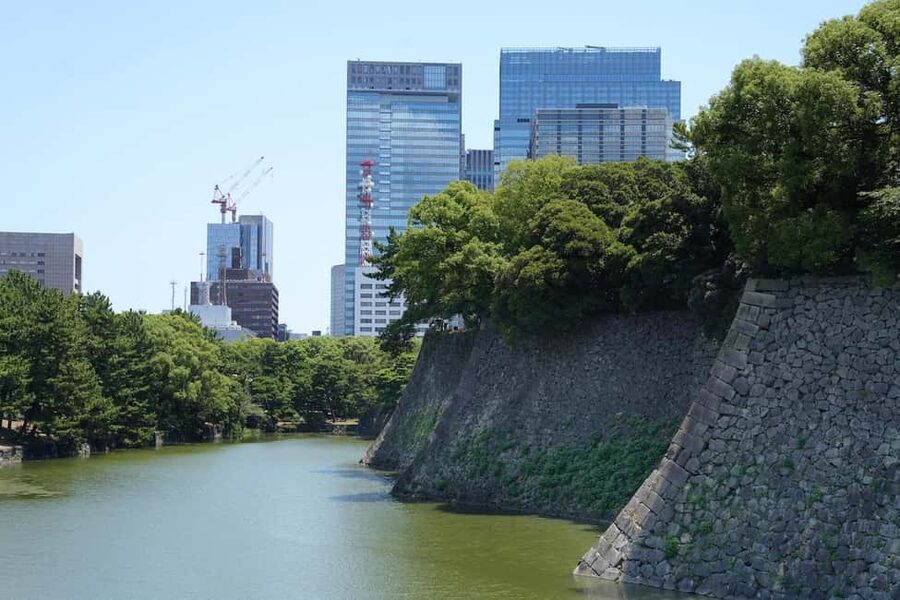
At the listed price of $3.22 per person, the value is striking. You receive 150 minutes with an English-speaking guide, a small group capped at eight, and a route through one of Tokyo’s most important historic sites. Even a short guided explanation at several stops would make that price low.
The price is so low that you should confirm the amount and available departure time when booking. Rates can vary by date, currency display, or promotion. Based on the stated figure alone, this is one of the least expensive guided history walks you are likely to find in Tokyo.
Meals, drinks, and transportation to the meeting point are not included. That is normal for a walking tour, but it matters if you are planning a tight morning. You need to reach Tokyo Station on your own, and you need to arrange your onward travel after finishing at Hirakawa Gate.
The activity is wheelchair accessible according to the supplied details. If you use a wheelchair or have limited mobility, it is still sensible to confirm the exact route conditions before booking, since the walk includes castle grounds, gates, stone walls, and outdoor paths. The stated accessibility is helpful, but the tour remains a long outdoor walk.
Free cancellation is available up to 24 hours before the start for a full refund. You can also reserve now and pay later, which is useful when your Tokyo schedule is still shifting.
Who should choose this Edo Castle walk?
I would choose this tour if you want historical context without committing to a full-day excursion. The 150-minute length fits well into a Tokyo sightseeing plan, and the start at Tokyo Station makes it easy to pair with other central Tokyo stops.
It suits you especially well if you like:
- Political history and the Tokugawa Shogunate
- Castle design, stone walls, moats, and defensive gates
- Stories about the people who lived and worked inside the castle
- The transition from shogun rule to the Imperial Palace
- Small groups and the chance to ask questions
- Outdoor sightseeing at a steady walking pace
You may want another activity if your priority is entering palace rooms, seeing a reconstructed keep, or spending most of the time inside a museum. The experience is about reading the site itself. It does not promise access to private imperial rooms or a complete castle building.
The route also works best for curious visitors who are willing to use their imagination. You will see foundations, gates, walls, moats, and open spaces. The guide supplies the missing buildings and explains how the site functioned.
Should you book it?
Book this walk if you want to understand why Tokyo’s Imperial Palace occupies such a powerful place in Japan’s story. The 1650s map, the castle gates, the stonework, the Honmaru site, and the explanations of Tokugawa rule make the former Edo Castle easier to read.
I especially like the focus on the Great Fire of Meireki and the decision not to rebuild the keep, along with the attention given to the Ooku and castle workers. Those details move the experience beyond famous names and give you a better sense of how power operated day by day.
Skip it if you need an indoor palace tour or dislike a long outdoor walk. For everyone else, the small group, English guide, flexible booking terms, and very low listed price make this a sensible history lesson in the center of Tokyo.
FAQ
Where does the tour begin?
It begins at the ground floor of the Marunouchi South Exit of Tokyo Station, near the historic yellow western-style dome.
Where does the tour finish?
The walk finishes at Hirakawa Gate, written as 平川門 in the supplied details.
How long does the tour last?
The tour lasts 150 minutes, or two and a half hours.
What language is the tour conducted in?
The tour is conducted in English by a live English-speaking guide.
How large is the group?
The group is limited to eight participants.
Is transportation included?
No. Transportation to the starting point is not included. Meals and drinks are also not included.
Is the tour wheelchair accessible?
Yes. The activity is listed as wheelchair accessible.
What should I wear?
Wear comfortable shoes because the experience involves a substantial amount of walking around the castle grounds, gates, walls, and moats.
More Guided Tours in Tokyo



More Walking Tours in Tokyo
More Imperial Palace & Shogun Tours in Tokyo

More tours in Tokyo we've reviewed








Imperial Palace & Shogun Tours, compared.
 ★ 5.0Tokyo: Imperial Palace and Shogun Historical Walking TourFrom $22
 ★ 4.9Tokyo: Imperial Palace Japanese History Walking TourFrom $32
 ★ 4.9Tokyo: Imperial Palace and Shogun Walking TourFrom $162 hours
 ★ 5.0Imperial Palace East Garden and Edo Castle Walking Tour in TokyoFrom $25
 ★ 4.8Tokyo: Imperial Palace East Gardens Walking TourFrom $192h 30m
 ★ 4.5Tokyo: Imperial Palace, Sensō-ji Temple, & Tokyo Tower TourFrom $404 hours