
Reviewed · ASAKUSA TOURS
Tokyo Asakusa Temple & Shrine Walking Tour with Local Guide
Asakusa is easiest to understand on foot, and this tour gives you a tidy route through its biggest sights, from the Sumida River and Kaminarimon Gate to Sensoji Temple and Asakusa Shrine. The useful part is not just finding the landmarks. Your guide explains what to do at the water basin, how prayer works, and what those fortune slips mean.
I like the small group of no more than eight, which should make it easier to hear explanations and ask questions in crowded temple grounds. I also like the price, $19.82 for two hours, especially if you want a quick cultural introduction before exploring Asakusa on your own. The tradeoff is that two hours goes quickly, so this is an overview rather than a slow, detailed study of every temple building and side street.
In This Review
- Key points at a glance
- Why this short Asakusa walk works
- Starting beside Azumabashi Bridge and the Sumida River
- Kaminarimon and the 700-kilogram lantern
- Nakamise Street, snacks, crafts, and temple traffic
- Hozomon Gate and the approach to Sensoji
- Sensoji Temple, Tokyo’s best-known Buddhist stop
- Temizu, prayer, and omikuji fortune-telling
- Asakusa Shrine and the meeting of two traditions
- What $19.82 buys you
- Meeting point, timing, and who should book
- Should you book the Asakusa walking tour?
- FAQ
- How much does the Tokyo Asakusa walking tour cost?
- How long does the tour last?
- Where does the tour start?
- Where does the tour end?
- What places are included?
- Is admission to Sensoji included?
- What rituals will I learn about?
- How large is the group?
- Can I cancel for a full refund?
Key points at a glance
- Sensoji and Asakusa Shrine in one walk: See Tokyo’s oldest and best-known Buddhist temple alongside an important Shinto shrine.
- A practical introduction to Japanese rituals: Learn hand cleansing, prayer customs, and omikuji fortune-telling rather than simply looking at buildings.
- Kaminarimon’s 700-kilogram lantern: Hear why the Thunder Gate has been rebuilt many times after fires.
- Nakamise Street included: Walk the traditional shopping lane for snacks, crafts, and souvenirs.
- Eight-person maximum: The group size suits anyone who prefers a more personal walk than a large coach tour.
- Simple two-hour format: A useful first taste of Asakusa, with free cancellation up to 24 hours before the start time.
Why this short Asakusa walk works
Asakusa can feel confusing at first. Temple gates, shrine buildings, food stalls, souvenir shops, river views, and modern Tokyo architecture all crowd into a fairly compact area. You can certainly walk it alone, but a first visit can become a hunt for names and directions instead of a look at how the place functions.
This tour solves that problem with a guide, a set route, and explanations at the main stops. You are not paying for admission to a paid attraction. Admission to Sensoji is free, so the value rests in the guide’s local explanations, navigation, and help with customs.
The small group matters here. Sensoji draws heavy foot traffic, particularly around Kaminarimon and Nakamise Street. A group capped at eight is still large enough to have a social feel, but far easier to manage than a large walking party. You should have a better chance of hearing the guide and getting a direct answer when you are unsure how to use the cleansing fountain or interpret an omikuji slip.
The format also suits a tight Tokyo schedule. At about two hours, it can fit into a morning or afternoon without taking over your day. You finish back at the meeting point, so you can continue around Asakusa afterward.
A few more Tokyo tours and experiences worth a look


Starting beside Azumabashi Bridge and the Sumida River
The meeting point is Burger King Asakusa Azumabashi, at Kaminarimon 2-chome in Taito City. The tour begins with a stop near Azumabashi Bridge, where you can look across the Sumida River toward Tokyo’s changing skyline.
This is a sensible opening. Before you enter the temple district, the guide sets up Asakusa as a meeting point of old Tokyo and modern city life. The river was important to the area’s development, and the bridge provides a wider view than the narrow streets around Sensoji.
A separate stop also allows you to admire modern architecture while hearing about Asakusa’s cultural background. The supplied details do not identify the exact building, so do not book this expecting a dedicated architecture tour. Think of it as a brief visual contrast before the walk turns toward gates, shops, and religious sites.
Wear comfortable shoes. The tour is only two hours, but it is a walking experience on busy streets and temple grounds, with time spent standing while the guide talks.
Kaminarimon and the 700-kilogram lantern
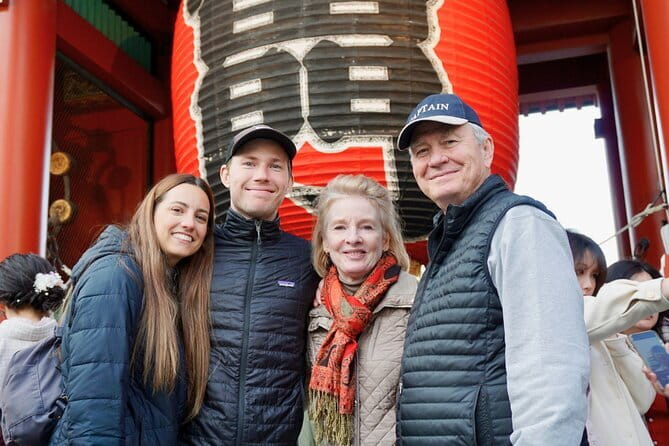
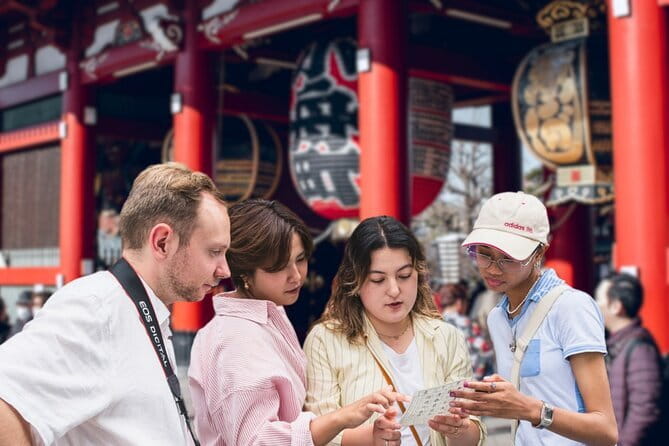
The red Thunder Gate, Kaminarimon, is one of Asakusa’s most recognizable sights. Its giant lantern weighs about 700 kilograms, making it more than a bright photo prop. The guide explains the gate’s name, its place in Japanese culture, and why the structure has needed repeated rebuilding after fires.
This is where a guide adds real value. Without context, you may take a photograph, pass beneath the gate, and move on. With an explanation, the gate becomes an introduction to the religious precinct ahead and to the risks faced by historic wooden structures in Tokyo.
Expect a crowded area around the lantern. It is a popular meeting and photo spot, so you may need to stay close to the guide. The small group helps, but you should still keep an eye on where the group is moving.
Kaminarimon also marks the start of Nakamise Shopping Street. The transition is immediate: a grand gate gives way to a long line of traditional shops selling snacks, crafts, and souvenirs.
Nakamise Street, snacks, crafts, and temple traffic
Nakamise is not simply a shopping lane. It grew around the flow of people visiting Sensoji, and the guide explains how the street developed its role in temple visits.
You will pass shops selling local treats, small gifts, and traditional crafts. Personal purchases are not included, so bring money only if you want to buy something. The tour does not promise a tasting package, and you should treat snacks as optional rather than part of the price.
I like having Nakamise built into the walk because it gives you a useful way to read the area. The shops are tied to the temple approach, not placed randomly beside it. That connection between worship, food, and small souvenirs is part of the everyday character of Asakusa.
The drawback is pace. Nakamise can be crowded, and two hours does not leave much room for browsing. You will get an introduction to the street, not a dedicated shopping session. If you want to return for gifts or snacks, the end of the tour gives you a good chance to do so.
Hozomon Gate and the approach to Sensoji
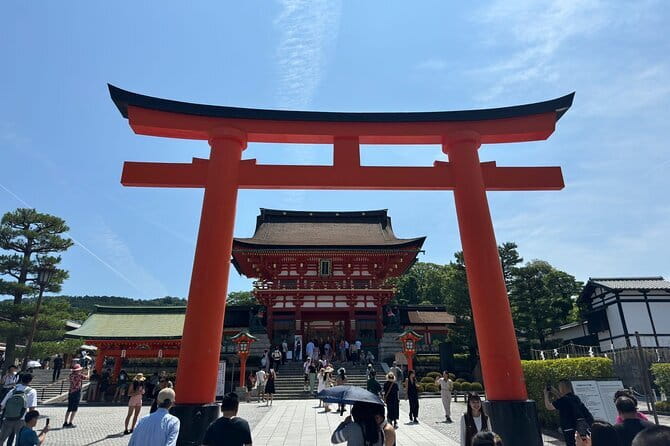
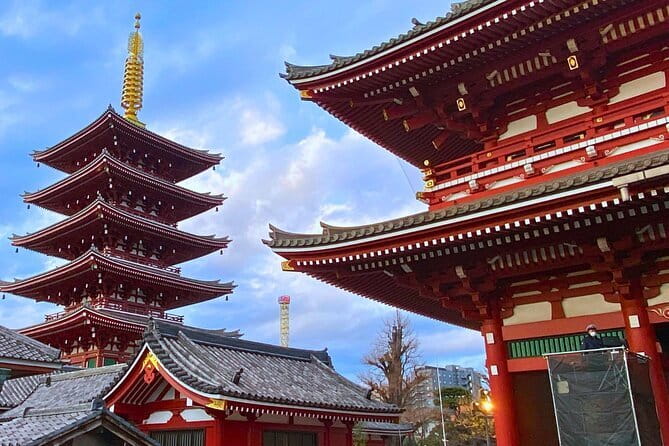
After Nakamise Street, the route reaches Hozomon Gate. This impressive gate protects the temple grounds and is treated as an important cultural property. The guide points out its architectural features and explains the meaning behind them.
Hozomon is a good pause before Sensoji itself. The gates create a sequence, and that sequence is easy to miss when you are focused on reaching the main hall. You move from the outer entrance, through the shopping approach, and then into the more formal temple grounds.
The walk does not appear to include a paid admission area, and Sensoji has free admission. That keeps the price low, but it also means the tour’s strength depends on the quality of the explanations. A guide who simply points at buildings would not add much. The advertised focus on architecture, rituals, and the relationship between Buddhism and Shinto is therefore important.
A few more Tokyo tours and experiences worth a look
Sensoji Temple, Tokyo’s best-known Buddhist stop
Sensoji is the center of the walk. It is Tokyo’s oldest and most famous Buddhist temple, and the guide explains its cultural importance and the stories connected with its major landmarks.
You should expect the main temple area to be active and visually imposing. The tour is not designed as a quiet spiritual retreat. It is a practical orientation through one of Tokyo’s most visited religious sites, with time to understand what you are seeing and how people use the space.
The guide also discusses the way Buddhist and Shinto traditions appear side by side in Asakusa. That is one of the most useful parts of the experience. You are not just collecting famous names. You are learning that a temple and a shrine have different traditions, entrances, and rituals, even when they are close together.
Because the schedule is short, the guide will need to keep moving. You may not get long periods for photography or private reflection at every point. If Sensoji is a major personal interest, plan to return later and explore at your own speed.
Temizu, prayer, and omikuji fortune-telling
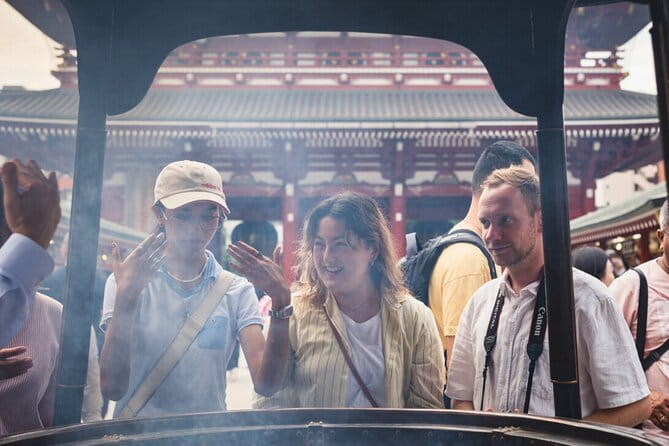
The hands-on customs are the tour’s most practical feature. You learn about temizu, the hand cleansing ritual performed before approaching a sacred site. The guide can explain the proper sequence and why cleansing is part of the visit.
You also learn how to pray and how omikuji fortune-telling works. These are the details many independent visitors notice but do not fully understand. A slip of paper may look like a simple souvenir until someone explains what it represents and what you do if the fortune is unfavorable.
The information provided does not confirm that an omikuji fee is included, so budget separately if you decide to draw one. Personal expenses, including snacks and souvenirs, are not part of the tour price.
This part should appeal to first-time visitors who want cultural context without signing up for a full-day class. It is also useful for families and couples, since the rituals give everyone something specific to do. Still, treat the activity as an introduction. A two-hour walk cannot cover every rule or regional difference in Japanese religious practice.
Asakusa Shrine and the meeting of two traditions
The route includes Asakusa Shrine, giving you a chance to compare a Shinto shrine with the nearby Buddhist temple. The guide explains the cultural blending that makes this district so interesting.
For many visitors, this is the point when the area makes more sense. Sensoji and Asakusa Shrine are not interchangeable stops. The tour helps you notice differences in ritual and setting while also showing how closely they sit within the same historic district.
That comparison is a strong reason to choose this experience over a simple sightseeing walk. You get more than a list of landmarks. You get a basic framework for understanding why Japanese sacred places look and operate as they do.
The supplied route repeats Sensoji several times in its stop details, so do not read that as a promise of multiple separate temple visits. It is best understood as one guided visit to the Sensoji grounds, with explanations at different points along the approach and temple area.
What $19.82 buys you
At $19.82 per person, this is priced as an accessible introduction rather than a premium private tour. Since temple admission is free, the question is whether the guide saves you enough time and confusion to justify the fee.
For a first visit, I think the answer can be yes. You receive a planned route, explanations of local rituals, a look at the district’s major sights, and a small group capped at eight. If you would otherwise spend an hour sorting out the difference between a temple and shrine, or miss the meaning of the cleansing and prayer customs, the cost is reasonable.
The value is weaker if you already know Asakusa well or prefer to wander alone. You may find the two-hour structure too brisk, and you will still need to pay for anything you buy along Nakamise Street or any optional fortune slip.
The tour had a 4.9 rating from 52 reviews, with 98 percent recommended. One especially useful detail is that a highly praised guide was a young man from the United Kingdom spending a gap year in Japan, rather than a Japanese local. He was still described as very well informed and able to lead effectively through the crowds. That is a good reminder to judge the actual guide on communication and preparation, not only on nationality.
There were 5 or more bookings in the previous month, which suggests ongoing interest, though it is not a reason by itself to book. The stronger signals are the small group, the clear route, and the practical cultural content.
Meeting point, timing, and who should book
You meet at Burger King Asakusa Azumabashi, near Azumabashi Bridge, in Tokyo’s Taito City. The tour ends at the same meeting point, and the location is near public transportation.
Confirmation is provided when you book, and a mobile ticket is available. Most people can participate, according to the supplied information, but the experience still requires walking and standing for about two hours.
I would choose this tour if you:
- Have limited time in Tokyo and want a focused Asakusa introduction
- Prefer a guide to explain temple and shrine customs
- Like small groups rather than large organized walks
- Want Sensoji, Asakusa Shrine, Kaminarimon, Nakamise Street, and the river area in one outing
- Are happy to browse shops later rather than shop throughout the tour
I would skip it if you want a private guide, a slow photography walk, or a long food tour. The experience includes a route through the shopping street, but personal snacks and purchases are not included.
Free cancellation is available if you cancel at least 24 hours before the start time. Cancellations or changes made within 24 hours are not accepted for a refund, and the cut-off follows Tokyo local time.
Should you book the Asakusa walking tour?
Book it if you want a low-cost, well-organized first look at Asakusa and would benefit from help with the rituals. The eight-person limit and two-hour length are the best parts of the format: enough structure to make the district understandable, without consuming half a day.
The tour is less suitable for someone who already knows Sensoji or wants extended time inside each site. For most first-time visitors, though, the price is modest, the route covers the essential sights, and the guide’s explanations turn a crowded walk into a more meaningful introduction to old Tokyo.
FAQ
How much does the Tokyo Asakusa walking tour cost?
The price is $19.82 per person.
How long does the tour last?
The guided walk lasts approximately two hours.
Where does the tour start?
It starts at Burger King Asakusa Azumabashi, at Kaminarimon 2-chome in Taito City, Tokyo.
Where does the tour end?
The activity ends back at the meeting point.
What places are included?
The route includes Azumabashi Bridge, Kaminarimon, Nakamise Shopping Street, Hozomon Gate, Sensoji Temple, and Asakusa Shrine.
Is admission to Sensoji included?
Sensoji admission is free, and the tour includes the guided visit.
What rituals will I learn about?
You learn about temizu hand cleansing, prayer, and omikuji fortune-telling.
How large is the group?
The group is limited to a maximum of eight people.
Can I cancel for a full refund?
Yes. You can cancel at least 24 hours before the start time for a full refund. Cancellations or changes made less than 24 hours before the start time are not accepted for a refund.
More Walking Tours in Tokyo



More Temples & Meditation in Tokyo
More Asakusa Tours in Tokyo
More tours in Tokyo we've reviewed

Asakusa Tours, compared.
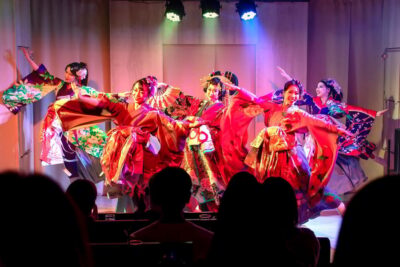 ★ 4.8Tokyo: Japanese Dance Cabaret Theater Asakusa-Kaguwa TicketFrom $492 hours
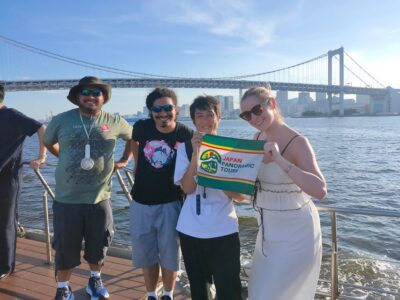 ★ 4.7Tokyo: Meiji Shrine, Asakusa, Skytree Bus Tour and CruiseFrom $12210 hours
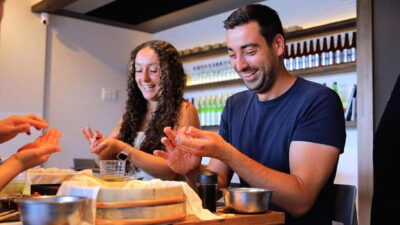 ★ 4.9Tokyo: Roll and Authentic Sushi Making Class in AsakusaFrom $581h 40m
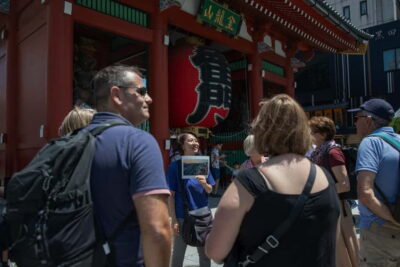 ★ 4.8Tokyo: Asakusa Walking Tour with Sensoji Temple VisitFrom $222 hours
 ★ 5.0Tokyo Asakusa Rickshaw TourFrom $42
 ★ 4.5Tokyo Panoramic 1 Day: Meiji Shrine, Asakusa, Odaiba and SKYTREE®From $85