
Reviewed · ASAKUSA TOURS
Asakusa Kimono Photography Tour
The best part of this Asakusa tour is that you do not simply rent a kimono and wander around hoping someone takes a decent picture. You get a local guide, a photographer, hairstyle and accessories for women, plus a planned walk through famous sights and quieter streets. I especially like the personal photo direction and the chance to learn about Asakusa while you pose.
I also like the convenient meeting point beside Tobu Asakusa Station and the choice of a private or small group. The main point to check before booking is the start time: the description refers to an early visit for quieter streets, but it also gives a 1:30 PM start. Confirm the exact time when you reserve.
In This Review
- Key points at a glance
- Why a kimono walk makes sense in Asakusa
- Meeting near Tobu Asakusa Station
- Choosing the right kimono and getting ready
- Walking Asakusa with a camera in hand
- Famous views and quieter corners
- What the photographer adds
- Is $122 a fair price?
- Who will enjoy this most
- Useful booking and timing advice
- Should you book the Asakusa kimono photo tour?
- FAQ
- Where does the Asakusa kimono photography tour meet?
- How long does the experience last?
- Is the tour conducted in English?
- Are kimono rentals included in the price?
- Can children join the tour?
- What happens if I need to cancel?
Key points at a glance
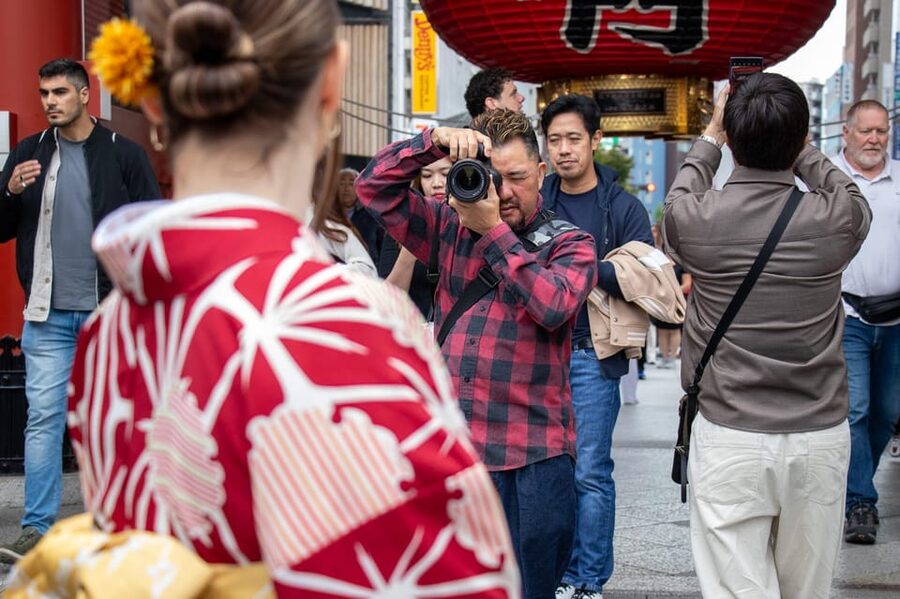
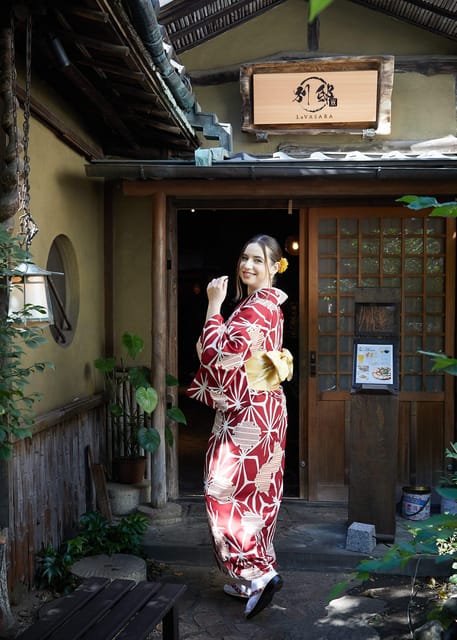
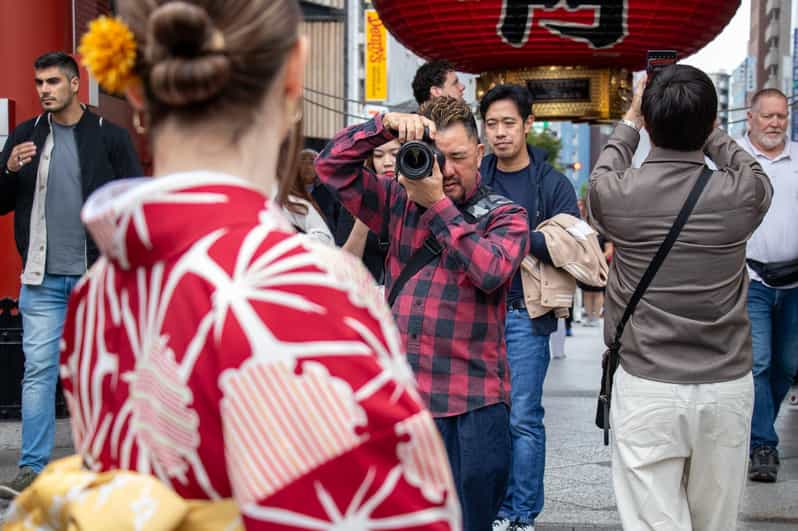
- Gota Murakami’s photography: Several bookings single out Gota for kind guidance, creative poses, and strong work with children and shy participants.
- Kimono or summer yukata: Choose traditional clothing, with professional help getting dressed and accessories included.
- Asakusa beyond the obvious: The walk includes major sights as well as less familiar corners of the district.
- 150 minutes on foot: You have enough time for dressing, sightseeing, posing, and a relaxed return to the starting point.
- Photos to keep: Raw and edited images are included, which makes the $122 cost more than a simple clothing rental.
- Good for mixed groups: Couples, families, friends, and solo visitors can all join, with children’s kimonos available from ages 3 to 10.
Why a kimono walk makes sense in Asakusa
Asakusa is one of Tokyo’s best areas for this kind of outing. Traditional temples, old-style streets, local shops, and modern city buildings sit close together. A kimono gives the walk a clear purpose, and the photos preserve more than a quick snapshot in front of a landmark.
You are also not left to work out the clothing by yourself. Staff assist with putting on the kimono and making sure it feels comfortable. Women receive hairstyle and accessory help, while the guide explains basic kimono manners so you can walk and pose with more confidence.
That practical help matters. A kimono is not everyday clothing for most visitors, and the fit can feel unfamiliar at first. Having someone nearby who understands the clothing lets you focus on the neighborhood instead of tugging at sleeves or wondering how to stand.
In summer, the outfit changes to a yukata. This lighter garment suits warm weather and still gives you the traditional Japanese look that makes the photographs special.
A few more Tokyo tours and experiences worth a look


Meeting near Tobu Asakusa Station
The meeting point is in front of the Seven-Eleven Tobu Asakusa Station-mae store. It is about one minute from the Tobu Line Asakusa Station main ticket gate and two minutes from Exit A5 of the Ginza Line Asakusa Station.
Your guide carries a red or orange MagicalTrip sign. That is a useful detail in a busy station area, especially if you are arriving with children, luggage, or a group that tends to spread out.
I would arrive a little early. You need to find the correct station exit, locate the convenience store, and meet the guide without beginning the session in a rush. The tour returns to the same spot, so you have a simple place to continue your day afterward.
The location also makes this an easy add-on to other Asakusa plans. You can arrange lunch, shopping, or another Tokyo visit around the station without needing a long transfer to a distant dressing shop.
Choosing the right kimono and getting ready
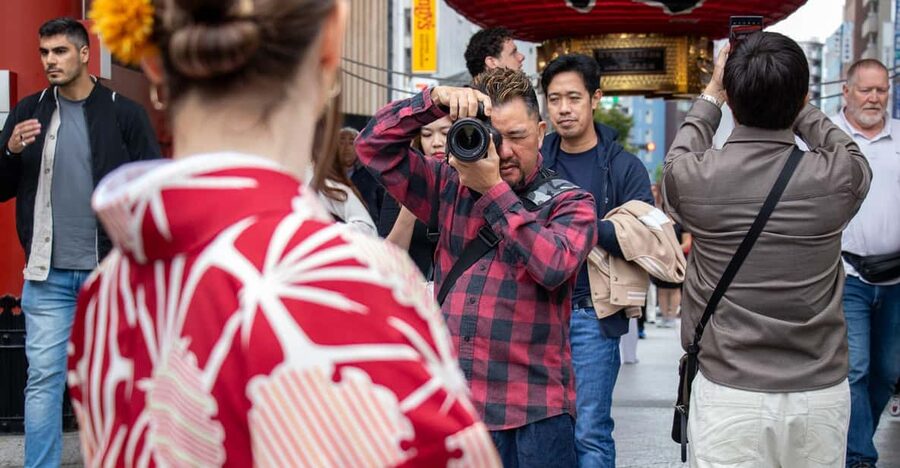
The clothing choice is part of the fun, but it can also take some time. You select your preferred kimono, or a yukata during summer, then receive professional help with dressing. Women also receive a hairstyle and accessories, giving the finished look more polish than a quick rental alone.
The supplied details do not list the exact number of garments, colors, or patterns available. If you have a particular style in mind, ask about the selection before booking. The clothing quality has been praised, so this is not just a costume added for a few minutes.
Children between 3 and 10 can receive a child-sized kimono. Anyone older than 10 is charged as an adult, so families should keep that age rule in mind when checking the total price.
A practical tip: wear comfortable clothing underneath and avoid planning a strenuous activity immediately afterward. The tour lasts 150 minutes, and the walk is done in traditional dress. The supplied information does not state whether luggage storage is available, so keep your belongings manageable.
Walking Asakusa with a camera in hand
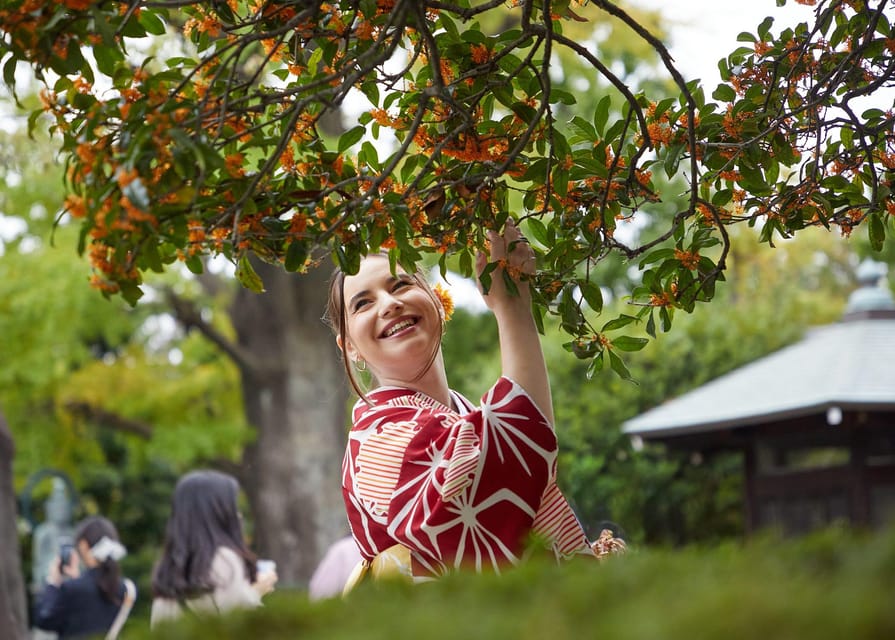
Once dressed, you walk through Asakusa for about two and a half hours, stopping for photographs and short explanations. The route combines well-known locations with quieter places, so you get both the postcard view and a better sense of how the district fits together.
The guide is not only there to press the shutter. You learn about Asakusa’s past and its connection to present-day Tokyo as you move between stops. That makes the photographs feel tied to a place rather than taken in a rental studio.
The exact photo stops are not fixed in the information provided. That can be a benefit. Your guide can choose locations that suit your clothing, group size, weather, and the light at that time of day. It also means you should not book this expecting a guaranteed list of named landmarks in a set order.
The walking pace appears designed for photographs rather than a fast sightseeing march. You can expect pauses for poses, adjustments, and several attempts at a shot. If you are shy in front of a camera, tell the guide early. Gota Murakami has been particularly effective at helping nervous participants feel at ease and at drawing children into the session.
His work with boys is worth noting for families. One booking specifically praised his ability to engage two children who might otherwise have lost interest. That suggests the experience is not limited to adults who already enjoy posing.
Famous views and quieter corners
The appeal of the route is the mix. Asakusa’s major sights give you instantly recognizable backgrounds, while the less familiar streets add variety and make the session feel less like a standard landmark checklist.
At the main stops, your guide can help arrange the group and suggest poses that suit the setting. With a couple, the photographs can focus on interaction. With friends, the clothing and different poses create a more playful set. Solo participants receive direct attention from the photographer, which can be a real advantage.
The quieter portions are just as useful. They give you photographs with less visual clutter and a chance to hear about the area without stopping in the middle of a crowd. They also show how Asakusa is more than its biggest temple approach.
The early timing is presented as a way to avoid the heaviest crowds and get softer, cleaner photographs. Yet the activity information also states a 1:30 PM start. Since these details do not match, check the actual departure time before you pay or arrange the rest of your day.
If your session is in the afternoon, you should expect more people around Asakusa’s major sights. That does not ruin the experience, but it may affect how long the guide waits for a clear background. A private booking gives you more control than a shared group if quiet photographs are your top priority.
Other photography tours in Tokyo




What the photographer adds
A self-taken kimono photograph usually captures the outfit but not the full experience. Here, the photographer can suggest where to stand, how to hold your sleeves, and how to vary the poses. Those small instructions are valuable if you do not normally appear in photographs.
The best comments about the experience focus on the photographer’s manner as much as the images. Gota Murakami is described as kind, encouraging, and good at offering pose ideas. A shy participant felt comfortable during the session, while another praised the choice of photo locations.
You receive both raw and edited photos. The supplied information does not state how many images you receive or how they are delivered, so ask that question before booking if the files are important to you. Still, including both versions gives you more than a handful of social media snapshots.
For solo visitors, the photographer solves the biggest problem: getting photographs that show you properly in the setting. You can join alone, receive direct guidance, and still have a social experience if the departure is shared with a small group.
Is $122 a fair price?
At $122 per person, this is not the cheapest way to wear a kimono in Tokyo. You are paying for more than the garment, though. The price includes the rental, an English-speaking local guide, photography, raw and edited images, and instructions on wearing the outfit.
I see the value most clearly for couples, families, and solo visitors who would otherwise need to arrange several separate services. A kimono rental alone does not guarantee good photographs. A friend taking pictures may miss the best angle, and a public photo booth cannot explain Asakusa as you walk.
The price is less compelling if you mainly want to borrow clothing for a short stroll or if you already have a photographer in your group. In that case, much of what makes the tour worthwhile is duplicated.
Private and small-group formats also affect the value. A private session should give you more say over the pace and more direct attention, while a small group can cost less per person depending on the booking option. The supplied details do not give separate prices, so compare the available choices carefully.
The current score is 5.0 from eight verified bookings, with especially strong praise for the clothing, guide’s kindness, photo quality, and ability to work with children. That is a small sample, but the praise is consistent in the areas that matter most for this activity.
Who will enjoy this most
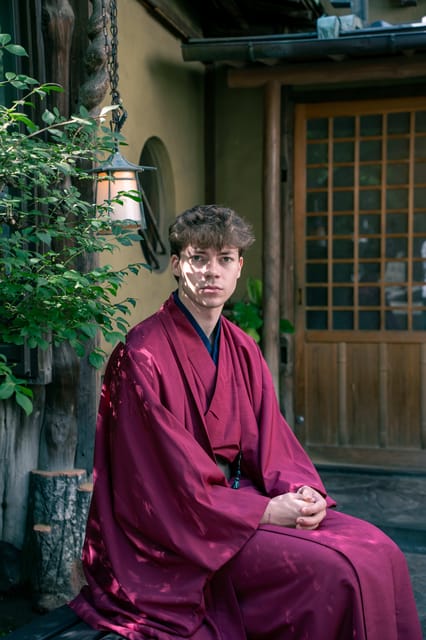
I would recommend this for anyone who wants a polished cultural memory of Tokyo rather than a simple rental. Couples get a ready-made date activity, friends can make the posing light and funny, and families receive help keeping children involved.
It is also a strong choice for solo visitors. You do not need to find a companion willing to photograph you, and the guide can adjust the session around your comfort level. If you are camera-shy, the friendly approach described for Gota is an important reason to consider it.
Families should confirm the clothing arrangements for every child. Kimonos are available for ages 3 to 10, while children older than 10 are treated as adults. The tour is a walking activity, so consider how comfortably young children will manage the full 150 minutes in traditional clothing.
This is less suitable if you want a fast, highly structured sightseeing tour. The point is to stop often, pose, adjust clothing, and take photographs. It is also not a food tour, since food and drinks are not included.
Useful booking and timing advice
The activity allows free cancellation up to 24 hours before departure for a full refund. You can also reserve now and pay later, which helps if your Tokyo schedule is still shifting.
Confirm the start time, especially because the description refers both to an early visit and to a 1:30 PM start. Ask how many photos are included, how the edited files are delivered, and which kimono choices are available if color or pattern matters to you.
English is the listed tour language. Private and small-group options are available, but the exact group size is not specified. If your priority is quiet photographs or a flexible pace, choose private if the price works for your group.
Remember that food, drinks, and extra purchases are not included. The meeting and return point are the same, at the Seven-Eleven near Tobu Asakusa Station.
Should you book the Asakusa kimono photo tour?
Book it if you want three things in one outing: traditional clothing, a guided Asakusa walk, and photographs that look planned rather than accidental. The strongest reason to choose this experience is the combination of patient photo direction and local storytelling, especially if you are shy, traveling alone, or bringing children.
Skip it if your budget is tight and you only want to rent a kimono for a quick stroll. At $122, the value depends on using the guide and photography service. Before booking, settle the start time and photo delivery details. If those fit your plans, this is a thoughtful way to see Asakusa and take home images that carry a real sense of place.
FAQ
Where does the Asakusa kimono photography tour meet?
Meet in front of the Seven-Eleven Tobu Asakusa Station-mae store. It is one minute from the Tobu Line Asakusa Station main ticket gate and two minutes from Ginza Line Asakusa Station Exit A5.
How long does the experience last?
The tour lasts 150 minutes, or two and a half hours. It begins and ends at the same Seven-Eleven meeting point.
Is the tour conducted in English?
Yes. The experience includes an English-speaking local guide.
Are kimono rentals included in the price?
Yes. Kimono rental is included, and a yukata is available in summer. Women also receive hairstyle and accessory assistance.
Can children join the tour?
Yes. Children from ages 3 to 10 have access to children’s kimonos. Children above age 10 are treated as adults for the activity.
What happens if I need to cancel?
You can cancel up to 24 hours before the activity for a full refund. A reserve-now, pay-later option is also available.
More Photography Tours in Tokyo
More Asakusa Tours in Tokyo

More tours in Tokyo we've reviewed











Asakusa Tours, compared.
 ★ 4.8Tokyo: Japanese Dance Cabaret Theater Asakusa-Kaguwa TicketFrom $492 hours
 ★ 4.7Tokyo: Meiji Shrine, Asakusa, Skytree Bus Tour and CruiseFrom $12210 hours
 ★ 4.9Tokyo: Roll and Authentic Sushi Making Class in AsakusaFrom $581h 40m
 ★ 4.8Tokyo: Asakusa Walking Tour with Sensoji Temple VisitFrom $222 hours
 ★ 5.0Tokyo Asakusa Rickshaw TourFrom $42
 ★ 4.5Tokyo Panoramic 1 Day: Meiji Shrine, Asakusa, Odaiba and SKYTREE®From $85