
Reviewed · ASAKUSA TOURS
Tokyo: Asakusa Photogenic Night Walk with 1 drink
Asakusa changes character after sunset. The crowds thin, Senso-ji glows against the dark, and a glass of Denki Brandy connects the evening to an old Asakusa drinking tradition. The tour also takes you to photo spots that are easy to miss on your own.
I like the small group of no more than eight, which makes it easier to ask questions and keep the walk relaxed. I also like the mix of culture and local nightlife: you get temple grounds, Nakamise Street, Hanayashiki, and a final stroll through Hoppy Street in one compact evening.
The main limitation is timing. Senso-ji’s main hall closes at 6pm, so you may see the illuminated temple grounds without entering the hall. The tour also involves walking and is not suitable for wheelchair users.
In This Review
- Key points to know before booking
- Why Asakusa is better after sunset
- Meeting at the Asakusa Culture Tourist Information Center
- Starting with Denki Brandy in an old Asakusa bar
- Kaminarimon and the first photo opportunities
- Walking Nakamise Street toward Senso-ji
- Senso-ji after the main hall closes
- Hanayashiki and Asakusa’s playful side
- Finishing on Hoppy Street
- What the $46 price gets you
- Who will enjoy this evening walk
- Practical details for a smooth evening
- Should you book the Asakusa night walk?
- FAQ
- Where does the Asakusa night walk begin?
- How long does the tour last?
- What language is the tour conducted in?
- How many people are in the group?
- Is a drink included?
- Can I enter Senso-ji’s main hall?
- Is the tour suitable for wheelchair users?
- Can I cancel the booking?
Key points to know before booking
- Denki Brandy gives the evening a local Asakusa flavor: You receive one drink at a historic bar, with a non-alcoholic option available.
- Senso-ji is the star after dark: The grounds are calmer and easier to appreciate once daytime crowds have gone.
- The group is capped at eight people: That helps the guide manage photo stops and personal questions.
- The route ends on Hoppy Street: You finish among old-school drinking spots rather than at a formal sightseeing stop.
- Guides bring different strengths: Hiro has been noted for cultural and historical detail, while Inok connected well with children.
- The tour costs $46 and lasts two hours: That is fair if you want a guided introduction to Asakusa at night, but less attractive if you only want a short temple visit.
Why Asakusa is better after sunset
Asakusa is one of Tokyo’s easiest districts to visit on foot, but its daytime crowds can make the major sights feel hurried. Nakamise Street fills with people heading toward Senso-ji, cameras gather around Kaminarimon, and the approach to the temple can become a steady stream of visitors.
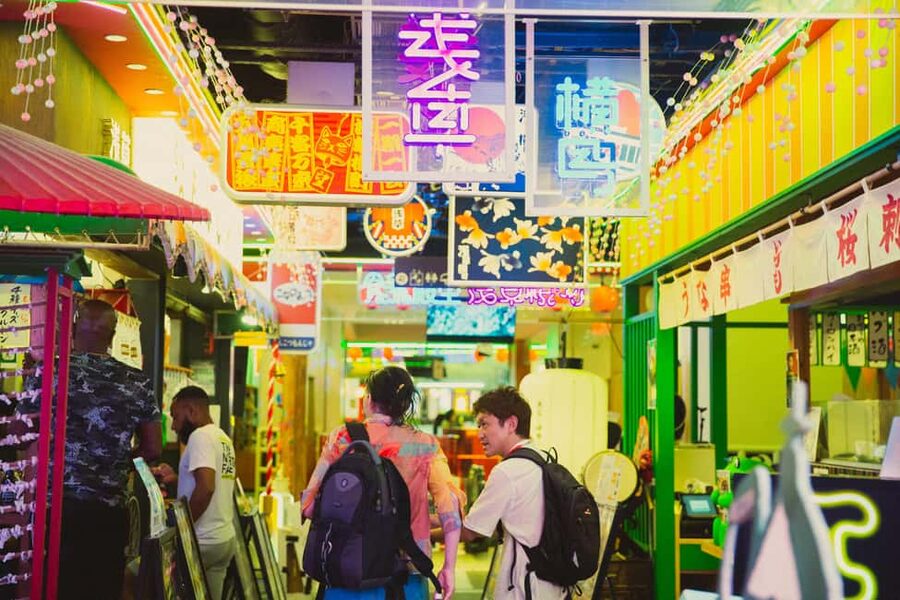
At night, you get a different view. The shopping street quiets down, the temple buildings take on a stronger shape under artificial light, and the neighborhood’s older drinking culture becomes easier to notice. This two-hour walk is designed around that change of mood.
You are not simply ticking off Asakusa’s famous sights. The guide explains the cultural stories behind them, points out places chosen for photographs, and links the temples to the local streets where people still eat and drink. That balance is the main reason to choose this experience instead of walking the same route alone.
The small group matters here. With eight people or fewer, you should have a better chance of hearing the guide near busy streets and asking for help with photographs. It also keeps the walk from feeling like a large procession through narrow lanes.
A few more Tokyo tours and experiences worth a look

Meeting at the Asakusa Culture Tourist Information Center
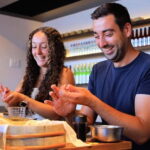
The tour begins in front of the Asakusa Culture Tourist Information Center, where you should arrive 10 minutes before departure. Look for a green Japan Wonder Travel sign.
This is a practical meeting point near the district’s major sights, but punctuality matters. The group leaves on time and the guide cannot wait for late arrivals. Build in enough time to find the center, especially if Asakusa is new to you.
Your guide speaks English. Past guides have included Hiro and Inok. Hiro was praised for detailed cultural and historical explanations, while Inok was especially good at adjusting to children and showing them things they wanted to see. You cannot count on receiving a particular guide, but these comments suggest that the experience can work for both adults seeking context and families wanting an interactive walk.
Starting with Denki Brandy in an old Asakusa bar
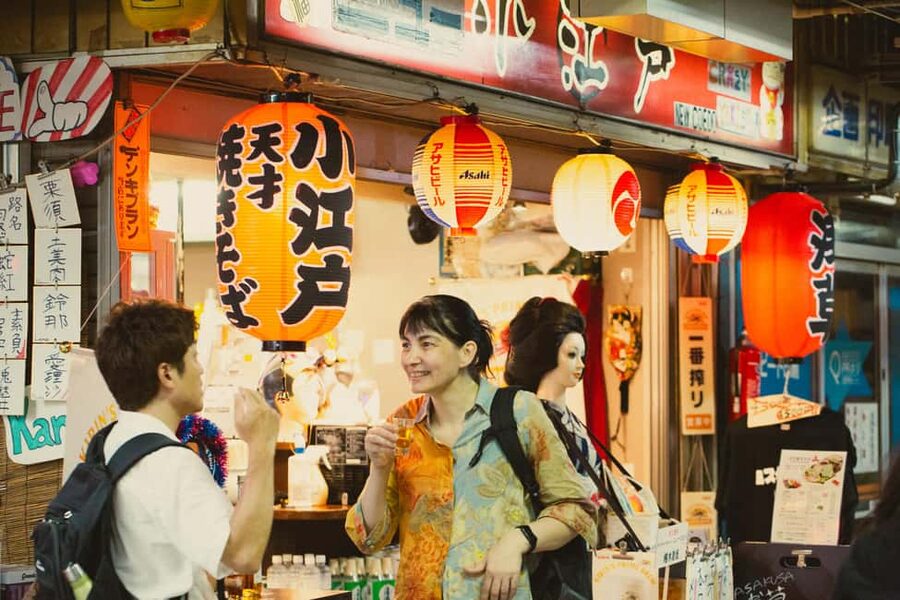
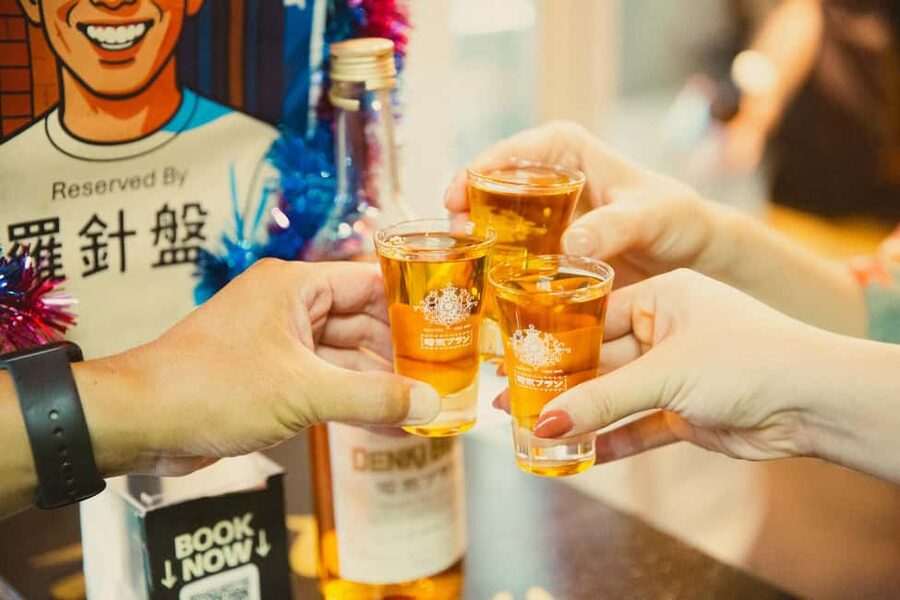
The first major stop is a historic bar, where one drink is included. The featured choice is Denki Brandy, described as a blended whisky born in Asakusa during the Meiji era.
That drink gives the tour a useful local angle. It is not just a generic refreshment handed over at the start. It connects the evening to Asakusa’s retro bar culture and offers a small taste of something associated with the neighborhood.
You do not need to be a drinker to take part. A non-alcoholic drink is available, which makes this stop practical for people avoiding alcohol. On Wednesdays and on store holidays, a different drink may be offered, so do not book this solely on the assumption that Denki Brandy will always be served.
The included drink also affects the value of the $46 price. You are paying for more than two hours of walking, since the guide, the drink, and access to local photo stops are part of the package. Still, the drink is only one glass. If you are comparing this with a longer food tour or a bar-hopping evening, the price is moderate rather than a bargain.
Kaminarimon and the first photo opportunities
Kaminarimon, or the Thunder Gate, is one of Asakusa’s most recognizable landmarks. The tour includes a 15-minute photo stop here, giving you time to take pictures and hear about the entrance to the Senso-ji area.
At this point, the guide can help you see the gate as more than a familiar Tokyo image. The route places it within the wider story of Asakusa, where religious sites, shopping streets, amusement culture, and old drinking lanes sit close together.
Night lighting changes the photographic challenge. Bright lamps and dark streets can create strong contrasts, but your results will depend on your camera and the conditions on the evening. The benefit of having a guide is not a promise of professional photography. It is knowing where to pause and what nearby details deserve attention.
The 15-minute stop is long enough for a few photographs and a short explanation, but not enough for a slow, technical photo session. If you want to set up a tripod or work carefully with manual camera settings, this may feel quick.
Walking Nakamise Street toward Senso-ji
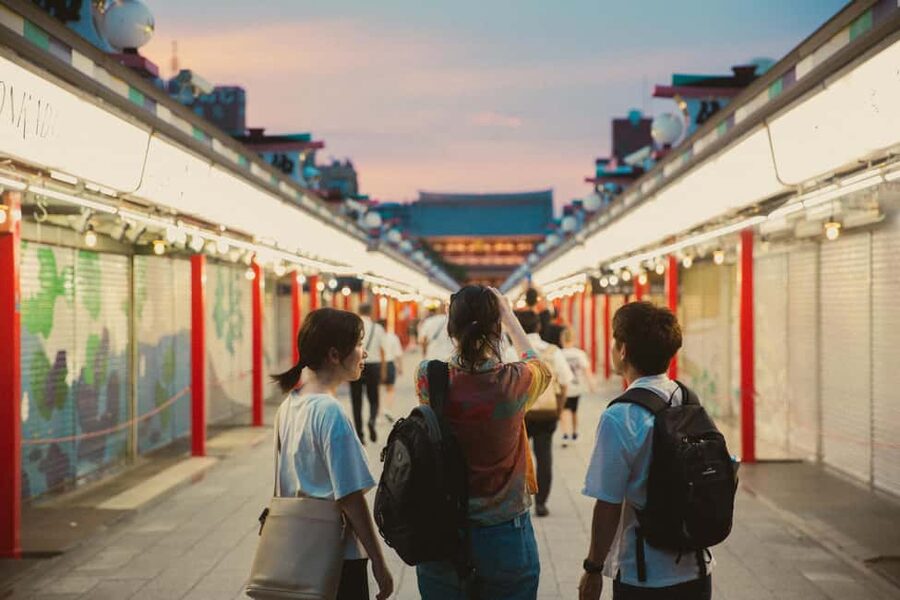
Nakamise Street leads toward Senso-ji and is one of the best-known paths in Asakusa. During the day, it is lined with shops and packed with people. At night, the quieter pace lets you pay more attention to the street itself and to the relationship between the shops, gates, and temple buildings.
The guide shares stories about Asakusa’s cultural past as you walk. This is where the tour’s local focus becomes most useful. A map can show you the route, but it cannot explain why the street matters or connect its landmarks to the district’s older customs.
Do keep your expectations in check. A nighttime walk does not mean every shop will be open, and the emphasis is on atmosphere, photography, and explanation rather than shopping. You also have only two hours for the full route, so the stop is part of a moving walk rather than a long browsing session.
For first-time visitors, this section helps place Senso-ji in context. For repeat visitors, the quieter conditions may be the main appeal. You can concentrate on architecture and light instead of simply following the crowd toward the temple.
A few more Tokyo tours and experiences worth a look



Senso-ji after the main hall closes
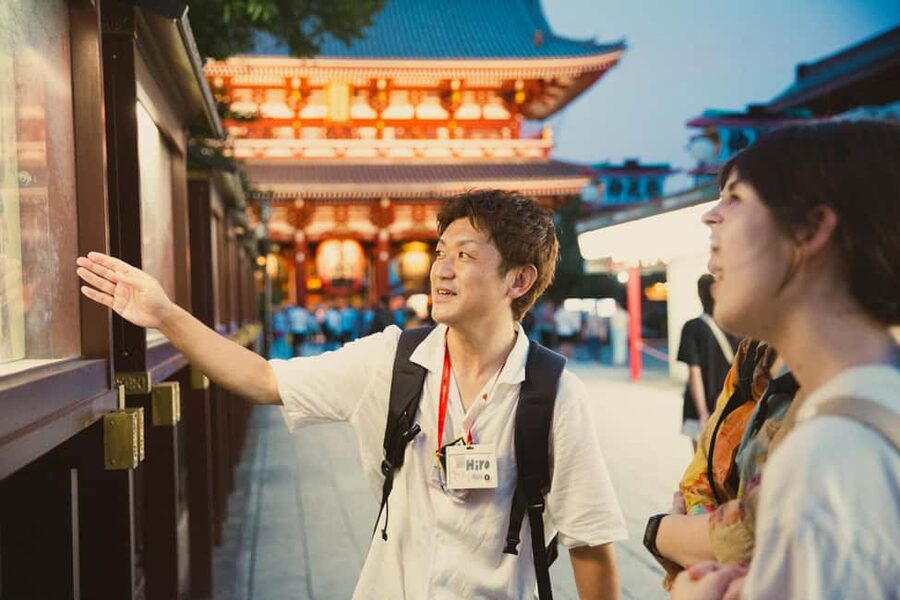
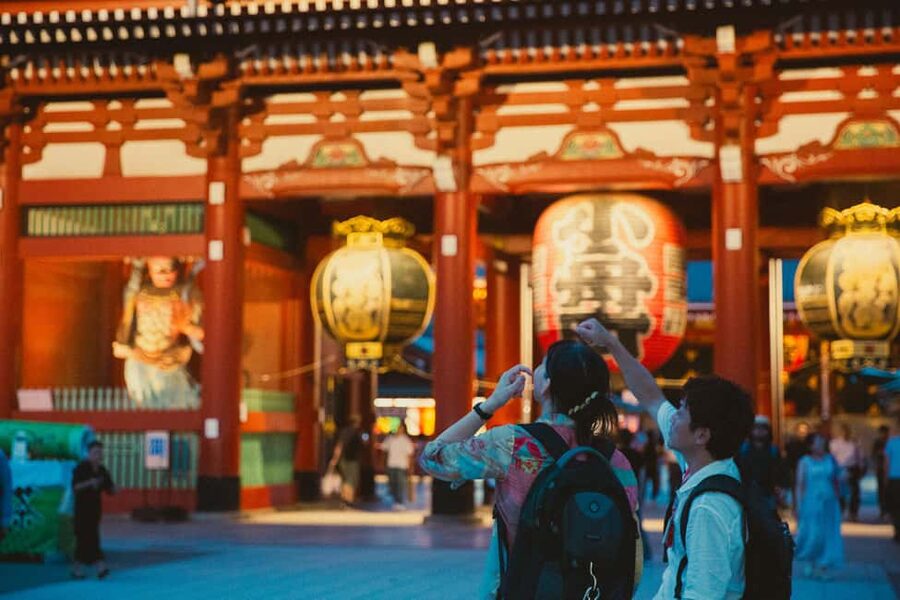
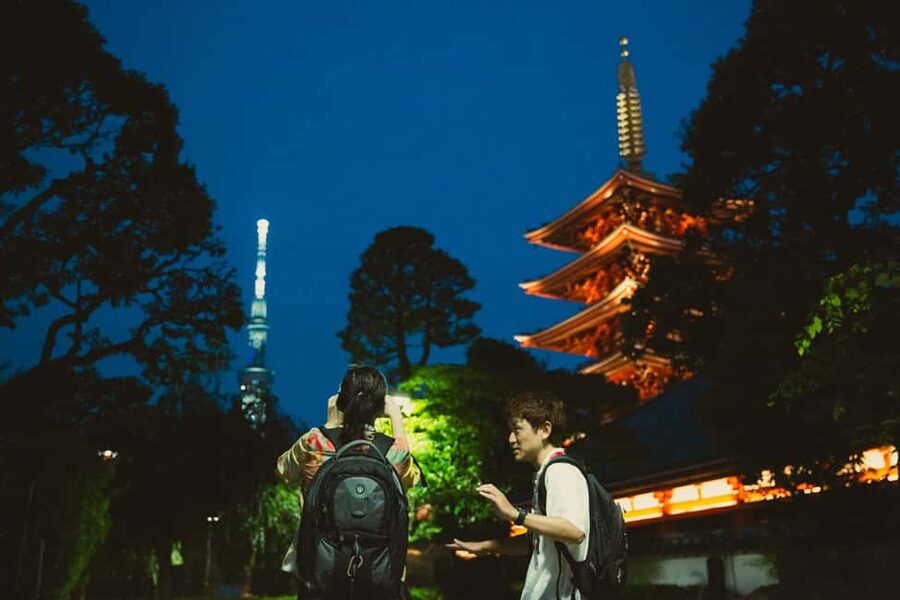
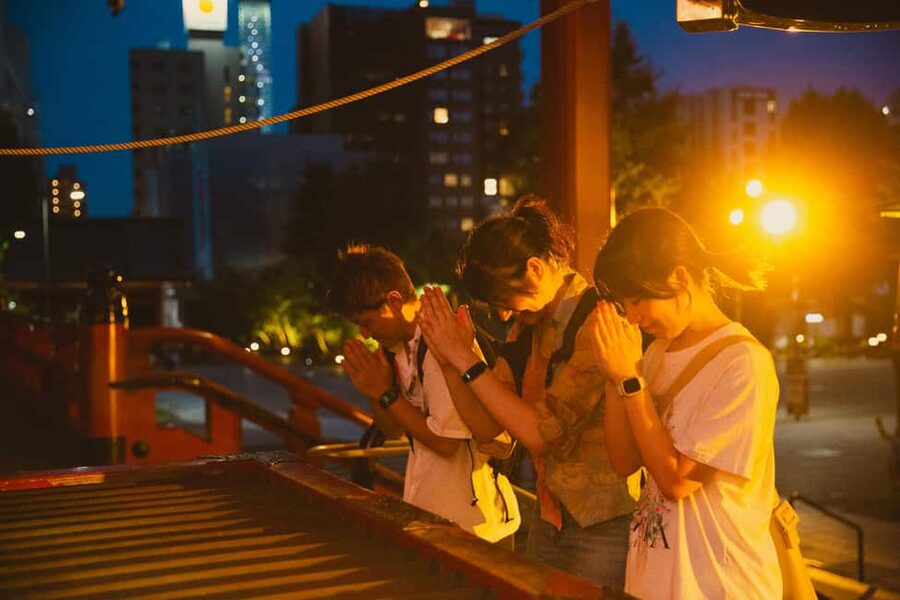
Senso-ji is the centerpiece of the evening. The guided visit lasts about 30 minutes, the longest stop on the route, and focuses on the illuminated grounds and the temple’s importance.
The main hall closes at 6pm, so you may not be able to enter it. That point deserves attention before you book. This is an evening atmosphere tour, not an interior temple visit. You will still see the grounds and learn about the site, but you should not expect access to every building.
That limitation is also part of the appeal. With fewer people around, the temple can feel calmer and more spacious. The lights pick out the rooflines, gates, and surfaces in a way that differs from daylight. Your guide can direct you toward good angles and explain what you are seeing while you walk through the grounds.
The 30-minute visit is enough for a proper introduction, especially when combined with the earlier approach along Nakamise Street. It is not enough to study every corner or linger for a long private photography session. The tour works best if you want a clear, guided look at Senso-ji rather than total freedom to wander.
Hanayashiki and Asakusa’s playful side
The route continues to Hanayashiki Amusement Park for about 15 minutes of guided sightseeing. This stop adds a different note to the evening.
Asakusa is not only temples and traditional streets. Hanayashiki brings in the district’s amusement side and helps explain why the neighborhood has long attracted people looking for entertainment as well as worship. The contrast makes the route more interesting than a temple-only walk.
You should treat this as an exterior area and guided stop, not as an amusement-park admission. The supplied details do not include rides or entry tickets. The value here comes from seeing how Hanayashiki fits into the character of Asakusa and from taking photographs as part of the wider night route.
Families may find this section especially useful. Inok, one of the guides named in the feedback, was praised for interacting with children and showing them things they were interested in. That does not guarantee a particular style from every guide, but the route has enough variety to hold a child’s attention better than a long, lecture-heavy temple walk.
Finishing on Hoppy Street
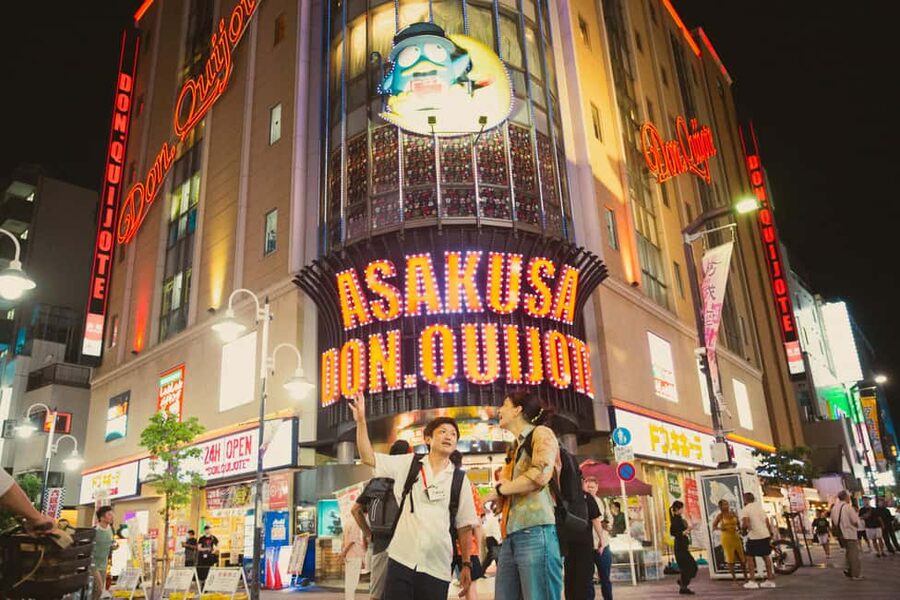
The walk ends at Hoppy Street, a lively lane known for its nostalgic local drinking atmosphere. This is a fitting finish after starting with Denki Brandy at a historic bar.
The tour does not include additional personal expenses, so any food or further drinks on Hoppy Street are your responsibility. That arrangement gives you freedom, but it also means the $46 price does not cover a final meal or a second round.
Ending here is useful because it leaves you in an active part of Asakusa rather than sending you straight back to the meeting point. You can continue your evening on your own, find food, or simply take a final look at the local nightlife. The guide’s role ends at Hoppy Street, so any plans after that should be made independently.
If you prefer a quiet conclusion, this last stop may feel less restful than the temple grounds. If you want to see Asakusa shift from sightseeing district to neighborhood nightlife, it is one of the better parts of the route.
What the $46 price gets you
At $46 per person, the experience sits in the middle range for a short Tokyo walking tour. The fee covers a professional English-speaking guide, one drink, the small group format, and the selection of photo stops.
I think the price is reasonable for a first evening in Asakusa, especially if you value explanation and do not know which streets or viewpoints to choose. The two-hour length also fits neatly into a busy Tokyo schedule. You can take the tour before dinner or use Hoppy Street as the starting point for the rest of your night.
The value is weaker if you already know Asakusa well, prefer to explore alone, or mainly want to photograph Senso-ji. The temple grounds can be visited without a tour, and the included drink is modest. You are paying for local interpretation and a planned route, not for a long meal or extensive admissions.
The 4.8 rating from nine reviews is encouraging, though the sample is small. The strongest praise centers on guides who explain the neighborhood well, interact warmly, and adapt to families. One three-star assessment described the experience simply as average, so it is sensible to view the tour as a solid introduction rather than a guaranteed highlight for every person.
Who will enjoy this evening walk
I would recommend this experience to you if you want:
- A short introduction to Asakusa after the main daytime crowds fade
- Help finding good night photography locations
- Cultural and historical explanations in English
- A small group rather than a large guided procession
- A gentle mix of temples, streets, local drinking culture, and amusement history
- A planned evening that ends in an area where you can continue independently
Families may appreciate the manageable two-hour length and the route’s variety. The feedback about Inok’s interaction with children is a good sign, although guide assignments can vary.
Photography-minded visitors should also consider it, but with realistic expectations. You get scenic locations and guidance, not a dedicated professional photography workshop. Anyone wanting long exposures or detailed camera coaching may prefer to explore independently afterward.
The walk is not suitable for wheelchair users, and people with altitude sickness are listed as unsuitable. The route also requires walking for two hours, so comfortable footwear is sensible even though the distance is not specified.
Practical details for a smooth evening
Arrive 10 minutes early at the Asakusa Culture Tourist Information Center. The green sign is the key detail, and missing the departure is a real risk because the group leaves on time.
The tour is offered at different starting times depending on availability. Check the schedule when booking, since the exact start time affects how dark the route will be and whether the early portion feels like dusk or full night.
One drink is included, but other personal spending is not. If you want to eat or order something on Hoppy Street, bring money for that separately. Non-alcoholic drinks are available at the first bar, though the exact substitute can vary on Wednesdays and store holidays.
You can cancel up to 24 hours before departure for a full refund, and the reserve-now, pay-later option keeps you from paying at the time of booking. Those policies are useful if your Tokyo plans are still changing.
Should you book the Asakusa night walk?
Book it if you want an easy, well-paced way to see Asakusa at night, with a local guide connecting Senso-ji, Nakamise Street, Hanayashiki, and Hoppy Street. The small group, included drink, and quieter temple views make the $46 reasonable for a first visit.
Skip it if your priority is entering Senso-ji’s main hall, spending a long time taking photographs, or keeping every minute unstructured. You may not enter the hall after 6pm, and the final street stop does not include food or extra drinks.
For most first-time visitors, this is a practical evening sampler rather than a major Tokyo event. It gives you local context, a few good photo moments, and a clear sense of Asakusa’s after-dark character without taking up the whole night.
FAQ
Where does the Asakusa night walk begin?
Meet in front of the Asakusa Culture Tourist Information Center 10 minutes before departure. Your guide will hold a green Japan Wonder Travel sign.
How long does the tour last?
The walk lasts two hours.
What language is the tour conducted in?
The tour is conducted in English with a live local guide.
How many people are in the group?
The group is limited to eight participants.
Is a drink included?
Yes. One drink is included, usually Denki Brandy, a blended whisky associated with Asakusa. A non-alcoholic option is available, and a different drink may be served on Wednesdays and store holidays.
Can I enter Senso-ji’s main hall?
The main hall closes at 6pm, so entry may not be possible. The tour still visits the illuminated temple grounds and provides a guided explanation of Senso-ji.
Is the tour suitable for wheelchair users?
No. The activity is listed as unsuitable for wheelchair users. People with altitude sickness are also listed as unsuitable.
Can I cancel the booking?
You can cancel up to 24 hours in advance for a full refund. A reserve-now, pay-later option is also available.
More Walking Tours in Tokyo



More Night Tours in Tokyo
More Asakusa Tours in Tokyo
More tours in Tokyo we've reviewed





Asakusa Tours, compared.
 ★ 4.8Tokyo: Japanese Dance Cabaret Theater Asakusa-Kaguwa TicketFrom $492 hours
 ★ 4.7Tokyo: Meiji Shrine, Asakusa, Skytree Bus Tour and CruiseFrom $12210 hours
 ★ 4.9Tokyo: Roll and Authentic Sushi Making Class in AsakusaFrom $581h 40m
 ★ 4.8Tokyo: Asakusa Walking Tour with Sensoji Temple VisitFrom $222 hours
 ★ 5.0Tokyo Asakusa Rickshaw TourFrom $42
 ★ 4.5Tokyo Panoramic 1 Day: Meiji Shrine, Asakusa, Odaiba and SKYTREE®From $85