
Reviewed · SUSHI MAKING CLASSES
Sushi Making with Interactive Samurai Experience at JIN-ASAKUSA
At JIN-ASAKUSA, sushi-making comes with samurai armor, a Japanese sword show, food games, and a Sengoku-era setting. You do not simply sit down to eat. You make sushi, take photos in feudal-style dress, and compete for the title of SHOGUN.
I like the private group format, which keeps the two-hour session personal and makes the quiz battles and sushi challenges more fun. I also like the wide food selection, from salmon, crab, caviar, and Wagyu beef to Japanese omelet and several kinds of sushi.
The main consideration is that this is as much an entertainment experience as a traditional sushi class. If you want a quiet, highly technical lesson focused only on knife work and rice preparation, the sword show, costumes, and games may feel like a distraction.
In This Review
- Key points to know before you book
- Samurai armor, swords, and sushi in Asakusa
- What happens during the two-hour session
- Making five nigiri pieces by hand
- Futomaki, sushi donut, and Japanese omelet
- The sword show and food quiz battle
- The private format and language support
- Is $49.27 a fair price?
- Which package should you choose?
- Who will enjoy JIN-ASAKUSA most?
- Getting there and planning your visit
- Should you book this sushi and samurai experience?
- FAQ
- How long does the Sushi Making with Interactive Samurai Experience last?
- Where does the experience take place?
- Is the activity private?
- What food is included?
- Are drinks included?
- Can I cancel or change my booking?
Key points to know before you book
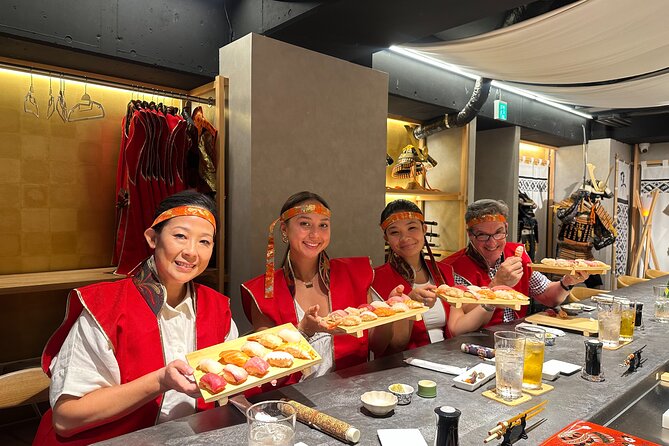
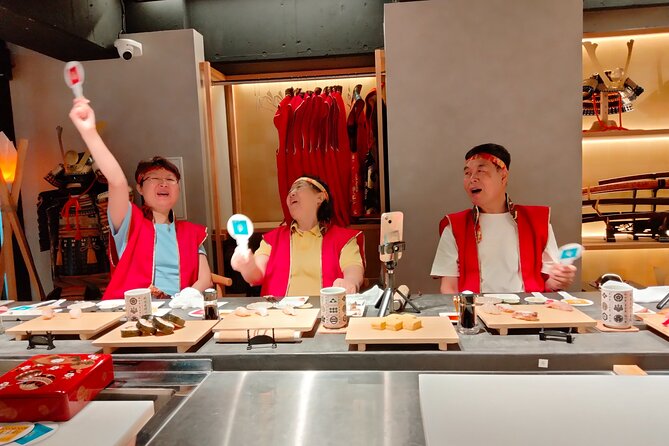
- Samurai dress-up comes first: Put on feudal-style warrior clothing and take photos among armor, swords, and gold screens.
- A Japanese sushi chef leads the class: You learn hands-on techniques rather than simply watching a demonstration.
- The food is part of the lesson: Expect appetizers, five nigiri pieces, futomaki, sushi donut, Japanese omelet, and premium ingredients such as Wagyu.
- The experience is private: Only your personal group takes part, which suits families, couples, and friends.
- The show includes more than sushi: A sword performance, futomaki demonstration, dashimaki demonstration, and food quiz add a theatrical edge.
- Choose your package carefully: Options vary between the SHOGUN and Trio Experience formats, with standard and dessert versions available.
Samurai armor, swords, and sushi in Asakusa
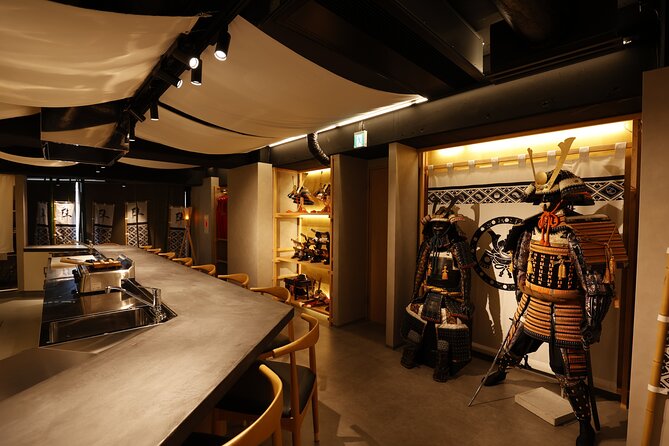
JIN-ASAKUSA is in Tokyo’s Taito City, near public transportation and within the Asakusa area. The venue is on the fourth floor of the CREAL Asakusa Skyview Square building at 1 Chome 10-14 Hanakawado.
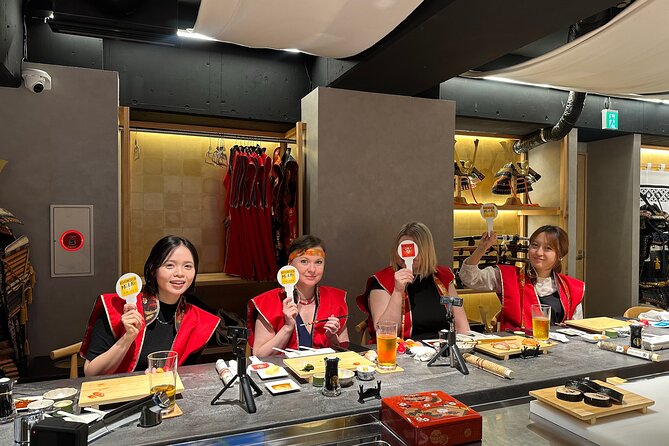
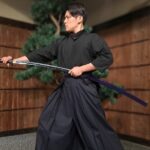
The setting is designed around Japan’s Sengoku period. Inside, you may find armor, swords, and gold screens that give the room a stage-set quality. That atmosphere matters because the visit is built for participation and photographs, not just eating at a counter.
The first memorable feature is the samurai outfit. You can dress as a feudal lord or warrior and pose with the Japanese-style props. For families and groups of friends, this is a useful icebreaker. You have something to do before the food lesson begins, and the photos give the afternoon a clear story.
I would bring a phone with enough storage and battery. The experience includes several photo opportunities, and it would be easy to spend more time recording the sword demonstration and quiz than expected.
The theatrical setting may not suit everyone. Some people want the plain, focused feel of a sushi bar. JIN-ASAKUSA takes a different path, mixing food with costumes, performance, and playful competition.
A few more Tokyo tours and experiences worth a look

What happens during the two-hour session
The activity lasts about two hours and ends where it begins. The exact order can vary by selected option, but the main elements are consistent: samurai presentation, sushi instruction, demonstrations, food, and interactive games.
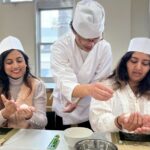
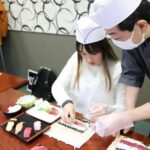
You begin with the atmosphere and costume element, then move into the food portion. A professional Japanese sushi chef explains how to shape and assemble the sushi. The instructions are intended for beginners, so you do not need prior cooking experience to take part.
The class is not only about putting fish on rice. You learn techniques and small tips used by sushi chefs while making several different pieces. The hands-on part gives you a better feel for sushi than a standard tasting menu does. You see the ingredients, handle the rice, and eat what you prepare.
The supplied details describe the broader experience as teaching up to 10 different types of sushi. The more specific course breakdown lists five types of nigiri, one futomaki, and one sushi donut. Since the package names and contents differ, check the exact option at booking if the number of sushi styles matters to you.
Making five nigiri pieces by hand
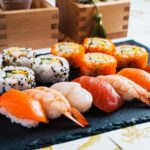
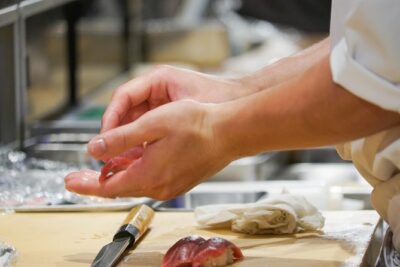
The Trio Experience Chef Live course lists five types of nigiri, five pieces in total. This is a manageable amount for a first sushi lesson. You get enough practice to understand the basic motion without spending the entire session repeating one task.
Nigiri looks simple, but the shape, pressure, and balance between rice and topping affect how it eats. The chef demonstrates the process and gives you a chance to copy it. You then taste your own work, which is the most satisfying part of any cooking class.
The ingredients named for the wider experience include salmon, crab, caviar, and Wagyu beef. The menu details also mention three appetizers. This gives the meal more range than a class built around one inexpensive fish.
You should not expect every package to contain every premium ingredient in the same form. The advertised food list and the specific course menu use different levels of detail, so confirm the selected package if crab, caviar, or Wagyu is a deciding factor.
Futomaki, sushi donut, and Japanese omelet
After nigiri, the listed menu includes one futomaki, a thick sushi roll, and one sushi donut. These offer a change in shape and technique. Futomaki is familiar to many people, while the sushi donut adds a playful presentation that fits the venue’s entertainment-first approach.
The chef also demonstrates futomaki preparation. This is useful because rolling a thick sushi roll can be awkward on a first attempt. Watching the correct method before trying it yourself saves some guesswork.
Dashimaki, or Japanese rolled omelet, is another featured demonstration. Japanese omelet requires a controlled folding technique, and it looks more difficult than its simple ingredient list suggests. You may not prepare it yourself, but the demonstration adds a traditional cooking element to the show.
The meal also includes the sushi you make. That makes the class feel like a complete lunch or dinner rather than a short craft activity followed by a separate meal. Water and green tea are included, while additional drinks cost extra.
The sword show and food quiz battle
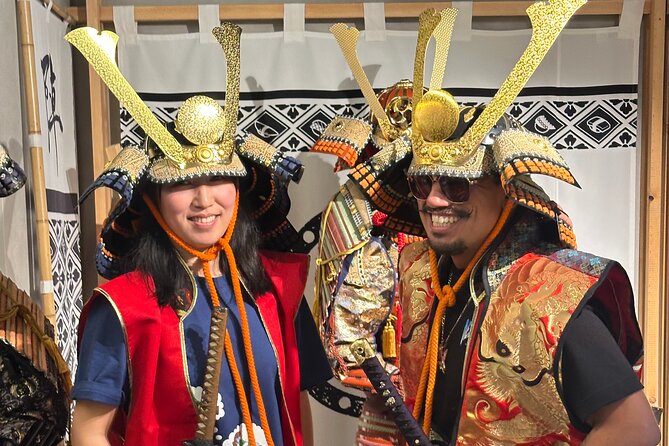
The chef’s futomaki demonstration is paired with a Japanese sword show. This is the moment when the class shifts fully into performance. It gives the session a visual centerpiece and helps explain why the experience is called interactive rather than simply educational.
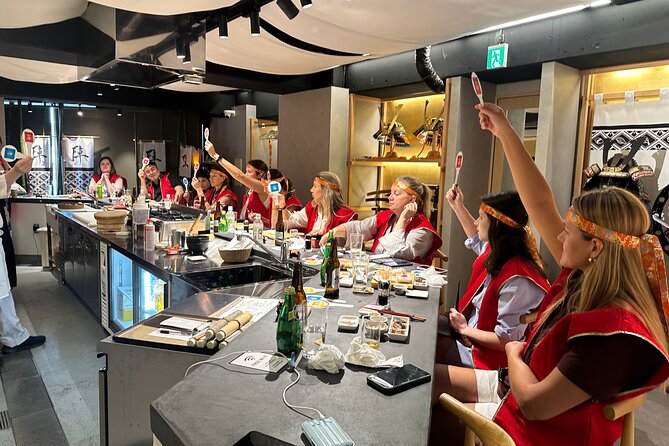
There is also a food quiz battle. Your group can compete to aim for SHOGUN, and one account describes winning a battle and receiving sushi made by the chef. The contest gives you a reason to pay attention to the information about sushi and Japanese food.
This feature works best with people who enjoy a little friendly rivalry. Couples can play against each other, and families can split into teams. A solo visitor may find the private-group format less useful unless joining with companions, since the activity is designed around your own group’s interaction.
The quiz also adds cultural context without turning the session into a lecture. You learn through short questions, demonstrations, and tasting. That approach should suit you if you want facts in small, memorable pieces.
A few more Tokyo tours and experiences worth a look

The private format and language support
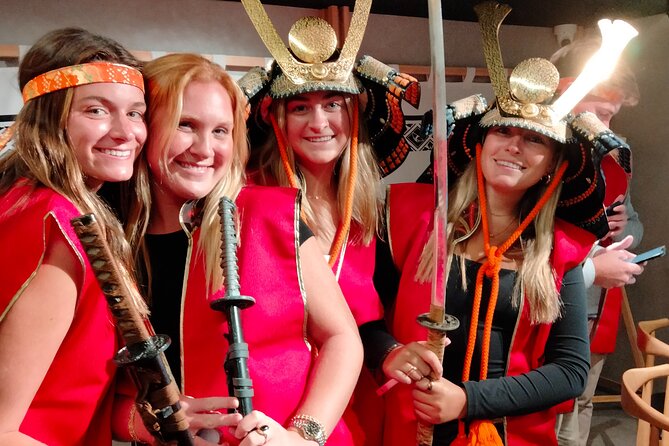
Only your group participates in the activity. Private booking is valuable here because the costumes, quiz, and sushi race can feel awkward in a large mixed group. With friends or family, you can take photos and compete without worrying about strangers at the table.
English-speaking staff are available, according to the experience details. That is important for a cooking class. You need to understand the chef’s instructions, especially when handling rice and forming sushi. The English support also helps with the quiz and explanations of Japanese food.
No guide names are provided, so you should not book expecting a specific chef or host. The information promises tuition from a Japanese sushi chef and a live chef demonstration, but the individual instructor may vary.
The private arrangement does not mean you get a totally quiet meal. The experience is active, with food games and demonstrations built into the schedule. I would choose it for a group celebration, family outing, or unusual date rather than for a calm meal between temple visits.
Is $49.27 a fair price?
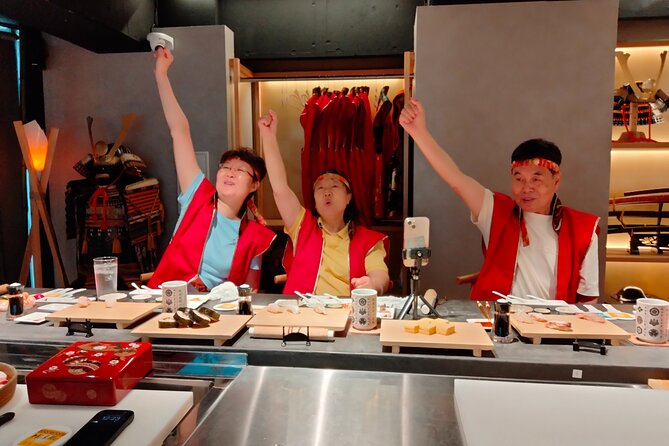
At about $49.27 per person, the value depends on what you compare it with. You are paying for a two-hour private activity, a sushi lesson, a meal, a sword performance, costumes, and entertainment. The service charge and consumption tax are included.
A regular sushi meal may cost less, especially if you choose simple counter sushi. But that comparison misses the hands-on lesson and the private setting. A cooking class plus a separate cultural show would likely cost more and take longer.
The food list also helps the value. You are not making only plain vegetable rolls. The experience includes premium ingredients in the wider menu description, along with appetizers, nigiri, futomaki, sushi donut, and Japanese omelet. Dessert versions are available for some packages.
Additional drinks are not included apart from water and green tea. Keep that small extra cost in mind if you want beer, sake, or another beverage, though no specific drink prices are provided.
The price is strongest when you want an activity with plenty of structure and photo moments. It is less compelling if your main goal is an expert-level sushi education or a long, traditional omakase meal.
Which package should you choose?
Four package choices are listed:
- Premium Int. Ent. SHOGUN, standard course
- Premium Int. Ent. SHOGUN, with dessert
- Trio Experience Chef Live, standard course
- Trio Experience Chef Live, with dessert
The SHOGUN options include sushi nigiri instruction, the sword show, futomaki and dashimaki demonstrations, and the food quiz battle. The Trio Experience Chef Live options specify five nigiri pieces, three appetizers, one futomaki, one sushi donut, and chef demonstrations.
The names suggest different formats, but the supplied details do not fully explain every difference between them. I would read the final menu carefully before paying, especially if you want dessert or a particular number of sushi pieces.
Choose a dessert option if you want the meal to feel fully finished. Choose the standard course if you prefer to keep the price down and the focus on sushi and the show.
Who will enjoy JIN-ASAKUSA most?
I would recommend this experience to:
- First-time visitors who want an easy introduction to sushi
- Families looking for a hands-on Tokyo activity
- Couples who prefer a playful date to a formal dinner
- Friend groups who enjoy quizzes, races, and photographs
- Anyone interested in samurai-style costumes and Japanese food
It may be less suitable for a serious sushi enthusiast who already knows the basic techniques. The class gives you practical instruction, but the entertainment is just as important as the cooking.
It is also not the best choice if you need a flexible booking. The activity is non-refundable and cannot be changed after booking. Since confirmation is sent within 48 hours and depends on availability, check your Tokyo schedule before committing.
Getting there and planning your visit
The meeting point is JIN-ASAKUSA, on the fourth floor of CREAL Asakusa Skyview Square in Hanakawado, Taito City. The activity starts and ends at that address, and the venue is near public transportation.
Allow enough time to find the building and reach the fourth floor. A mobile ticket is provided, so keep your booking available on your phone. The details do not state a required arrival time, so check your confirmation for the exact meeting instructions.
Asakusa is a sensible place to pair with this activity because it is already known for traditional Japanese sights and atmosphere. You can plan this as part of an Asakusa day, but avoid scheduling another fixed activity too tightly afterward. The session lasts about two hours, and photo-taking, changing, food, and demonstrations all take time.
Should you book this sushi and samurai experience?
Book it if you want sushi instruction with a show attached. The private format, English support, samurai clothing, sword performance, quiz battle, and hands-on meal make this more memorable than a standard restaurant visit.
Think twice if you want a quiet sushi counter, a highly technical chef’s course, or a fully flexible reservation. For everyone else, especially a small group visiting Tokyo together, JIN-ASAKUSA offers a well-priced mix of food, play, and Japanese cultural touches. Confirm the exact menu and dessert choice before booking, then arrive ready to make a little sushi and compete for SHOGUN.
FAQ
How long does the Sushi Making with Interactive Samurai Experience last?
The activity lasts approximately two hours and ends back at the JIN-ASAKUSA meeting point.
Where does the experience take place?
It takes place at JIN-ASAKUSA, located at CREAL Asakusa Skyview Square 4F, 1 Chome 10-14 Hanakawado, Taito City, Tokyo 111-0033, Japan.
Is the activity private?
Yes. Only your personal group participates in the activity.
What food is included?
The listed menu includes three appetizers, five types of nigiri sushi totaling five pieces, one futomaki, and one sushi donut. The wider experience also features ingredients such as crab, salmon, caviar, and Wagyu beef, plus Japanese omelet and Kobe beef.
Are drinks included?
Water and green tea are included. Additional drink orders are not included.
Can I cancel or change my booking?
No. The experience is non-refundable and cannot be changed for any reason after booking.
More Samurai & Ninja Experiences in Tokyo
More Sushi Making Classes in Tokyo
More Asakusa Tours in Tokyo


More tours in Tokyo we've reviewed






Sushi Making Classes, compared.
 ★ 5.0Sushi Making Tokyo Roll and Authentic Japanese Sushi ClassFrom $59
 ★ 4.9Tokyo: Roll and Authentic Sushi Making Class in AsakusaFrom $581h 40m
 ★ 5.0Make Sushi and Create Unforgettable Memories in TokyoFrom $79
 ★ 4.9Tokyo: Sushi Making Class in a Happi Coat near a Famous SpotFrom $421h 30m
 ★ 5.0Tokyo Sushi Making Class in Tsukiji with Professional ChefFrom $49
 ★ 5.0Tokyo Night Foodie Tour in Shinjuku – Seasonal Sushi, Wagyu BeefFrom $111