
Reviewed · FULL-DAY
Private Full-day Tokyo Walking Subway Tour by Japan Gray Line
Tokyo’s subway is the key to seeing this much of the city in one day. With a private guide at your side, you move from the quiet grounds of Meiji Jingu to Shibuya Crossing, Tokyo Tower, Tsukiji, and Asakusa without spending half your day lost in stations. The mix of old Tokyo and modern Tokyo is the real attraction.
I like the hotel pickup and the fact that your guide handles the subway. I also like the private format: guides such as Yuki, Yuko, Yoshi, and Reiko have adjusted the pace, helped families, found suitable lunch spots, and even written directions for travelers heading to a baseball game afterward.
The catch is simple: this is a walking tour in a city built for walking. You will spend about seven hours outdoors, changing trains, crossing large stations, and moving between sights. Comfortable shoes, water, and rain gear are not optional extras here, especially in hot or wet weather.
In This Review
- Key points at a glance
- Why this private Tokyo route works
- Meiji Jingu begins the day in the trees
- Shibuya Crossing shows Tokyo at full volume
- Tokyo Tower adds a clear view over the city
- Tsukiji Outer Market is the best stop for food
- Asakusa brings back old Tokyo
- Senso-ji closes the route with centuries of tradition
- The subway lesson may be the tour’s biggest value
- What to bring for a seven-hour day
- Who should book this Tokyo day tour
- Should you book it?
- FAQ
- How long does the tour last?
- What time does the tour start?
- Is hotel pickup included?
- Is transportation included?
- Is Tokyo Tower admission included?
- Is lunch included?
- How much walking is involved?
- Can the itinerary change because of weather?
Key points at a glance
- Six major Tokyo stops: Visit Meiji Jingu, Shibuya Crossing, Tokyo Tower, Tsukiji Outer Market, Asakusa, and Senso-ji in one day.
- A private guide from your hotel: Your guide meets you at the start and helps with the city’s public transport system.
- Tokyo Tower admission included: The ticket covers the 150-meter Main Deck.
- A useful first-day lesson: You learn how to ride Tokyo’s subway, which can make independent sightseeing easier afterward.
- A full day on foot: Expect a moderate level of physical activity, outdoor walking, stairs, platforms, and station corridors.
- A flexible private pace: Guides have adapted routes and timing when a group wanted to skip one location or needed help with lunch.
Why this private Tokyo route works
At $203.63 per person, this is not a cheap way to tick off Tokyo sights. It can be a sensible buy, though, if you are new to Japan and want one person to handle the navigation, explain what you are seeing, and keep the day moving.
The price includes the English-speaking guide, a one-day Metro Pass, Tokyo Tower’s Main Deck admission, and hotel pickup and drop-off. Lunch is not included, and gratuity is optional. For a couple or small family, the cost is easiest to justify on your first day, when a wrong train or a missed station can eat up valuable sightseeing time.
The private setup matters more than it would on a standard bus trip. You are not waiting for a large group at every corner, and your guide can respond to your interests. A family guide named Yoshi helped children learn the train system, while another guide adjusted the day for a group that wanted to leave out one stop. Yuki also helped one couple find lunch suited to a specific need.
This is not a slow, scholarly visit to each site. It is a broad introduction to Tokyo, with enough explanation to give the places meaning and enough movement to cover ground. Think of it as a practical first look, not a deep study of every temple or neighborhood.
Other walking tours we've reviewed in Tokyo

Meiji Jingu begins the day in the trees
The day starts at 9:30 a.m., with pickup from your hotel and a subway ride to Meiji Jingu. The shrine was completed in 1920 and honors Emperor Meiji, an important figure in Japan’s move into the modern era during the 19th century.
The first impression is a welcome change from Tokyo’s traffic and tall buildings. The shrine grounds offer a quiet, sacred setting, and the 40-minute visit gives your guide time to explain basic shrine customs and the meaning of what you see. You may learn how to behave at the entrance, where to pause, and how Shinto worship differs from a Buddhist temple visit later in the day.
I especially like beginning here because it gives you a calm introduction to Japan before the noise of Shibuya and Tsukiji. One guide helped visitors appreciate the peaceful mood of the shrine, and that is exactly the point of this stop.
Forty minutes is enough for an introduction, but not enough for a long, unhurried walk through every part of the grounds. If quiet religious sites are your main interest, you may wish the schedule allowed more time. The benefit is that the short visit protects the rest of the route.
Shibuya Crossing shows Tokyo at full volume
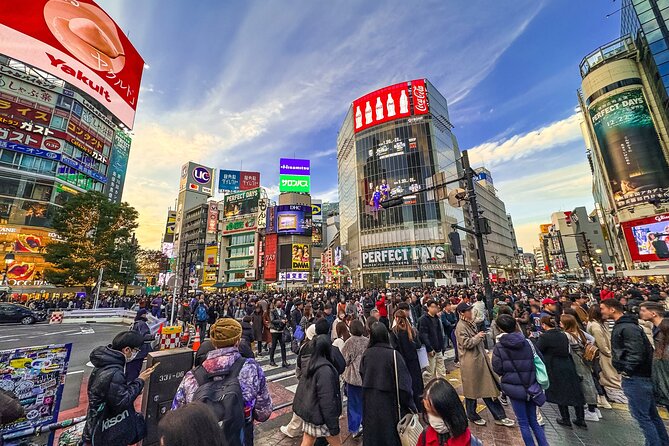
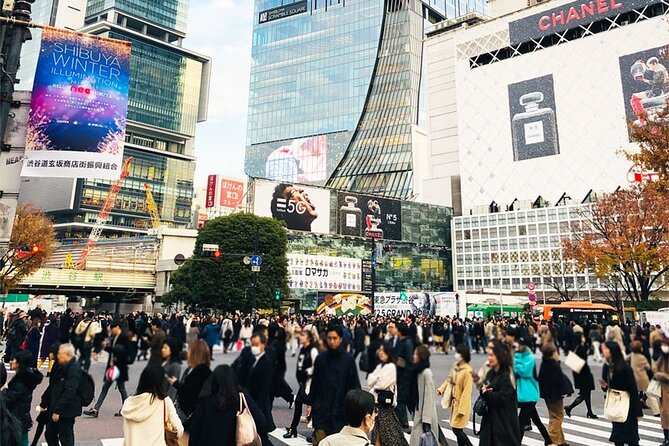
From Meiji Jingu, the subway ride to Shibuya Station takes only a few minutes. The stop itself lasts about 20 minutes, so this is a quick look rather than a full exploration of Shibuya’s shops and side streets.
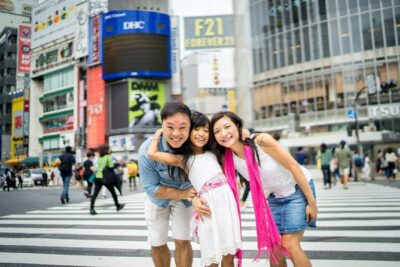
Shibuya Crossing is famous for the rush of people moving across the intersection in every direction. Your guide can help you find the best place to understand the scene, explain why the district matters, and get you oriented around one of Tokyo’s best-known stations.
The short visit makes sense in a six-stop day. Shibuya is a visual moment, while Meiji Jingu and Senso-ji call for more cultural explanation. Still, if you want time for shopping, cafés, or the surrounding streets, you will need to return on your own.
This is also where the subway lesson starts to feel useful. Tokyo stations can seem like underground cities, with several operators, exits, and long connecting passages. Having your guide show you how to move through the system is worth more than simply being driven from one attraction to another.
Tokyo Tower adds a clear view over the city
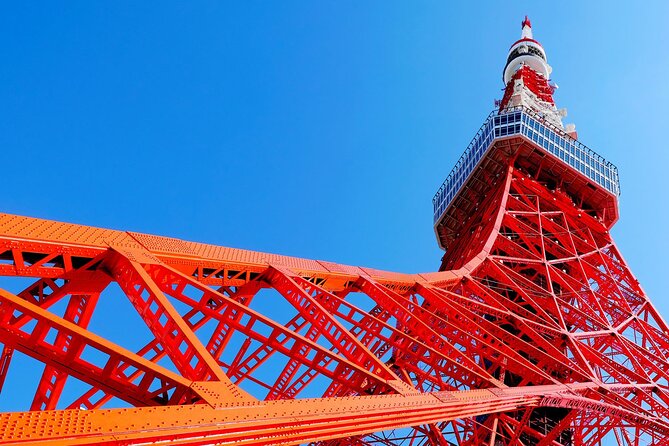
Tokyo Tower was built in 1958 and once held the title of the world’s tallest structure. The tour includes admission to the 150-meter Main Deck, reached by a high-speed elevator.
The deck gives you a chance to pause and look across Tokyo after the busy street-level stops. The view helps make sense of the city’s enormous scale, though the tour information does not promise access to any higher observation level. Your guide can also provide context about the tower’s place in postwar Tokyo.
The scheduled visit is about 40 minutes. That is enough for the elevator, the deck, and a look around, but it may feel brief if you enjoy observation decks or want plenty of time for photos. Since admission is already covered, you do not have to weigh an extra ticket cost at the door.
The tower is a useful middle point in the day. It gives your feet a short break from street walking, while the elevated view connects the separate districts you have already visited and those still ahead.
Tsukiji Outer Market is the best stop for food
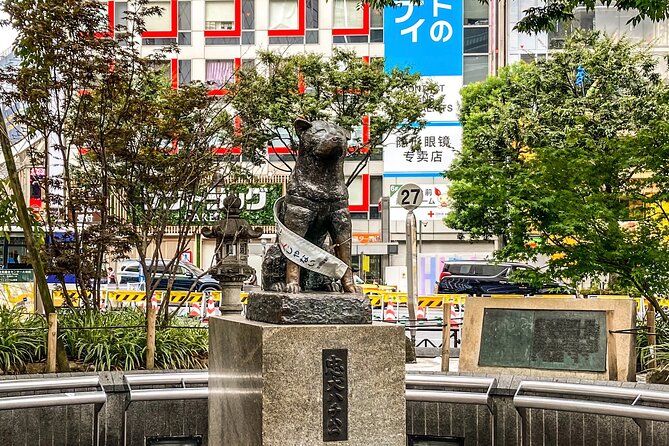
The wholesale fish market moved from Tsukiji to Toyosu in 2018, but the Tsukiji Outer Market remains in its original area. This distinction matters. You are visiting a lively market district with seafood, sushi, prepared food, and traditional shops, not the former wholesale auction floor.
The tour allows about 50 minutes here, making Tsukiji one of the longer stops. You can look at food stalls and market goods, and you might find street food or sushi that becomes the most memorable bite of the day. Lunch is not included, so budget separately if you want to eat.
This is a good place to ask your guide for help. One guide found a lunch venue for a traveler with specific dietary needs, and another family enjoyed lunch with their guide. Those arrangements are not guaranteed as part of the tour, but the private format gives you someone to ask rather than leaving you to decode every menu alone.
Tsukiji can be crowded, and the walking surface may be uneven in places. Keep your group together and watch your belongings around busy stalls. The market is also an active commercial area, so treat vendors and customers with care rather than viewing every counter as a photo display.
Other private tours in Tokyo



Asakusa brings back old Tokyo
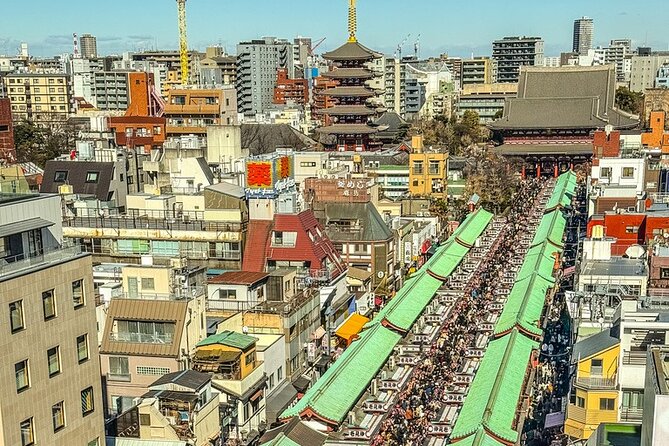
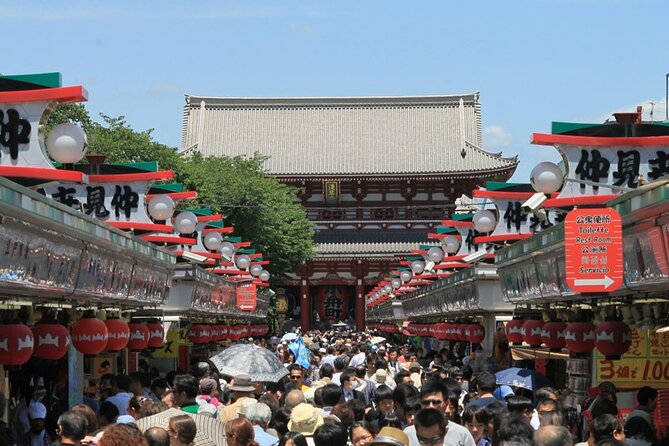
After the food market, the route moves to Asakusa for about 20 minutes. This district is known for traditional crafts, souvenirs, street food, and shops with a distinctly older feel than Shibuya.
The short Asakusa stop works as a bridge to Senso-ji. You get a quick look at the neighborhood, then move toward its major temple. If you want to shop for crafts or sample several snacks, twenty minutes will pass quickly. The tour is designed to introduce the area, not give you a full afternoon there.
I like the contrast. In one day you go from a modern pedestrian crossing to a shrine, a landmark tower, a food market, and a traditional temple district. That range is the reason this route feels useful for a first visit.
Senso-ji closes the route with centuries of tradition
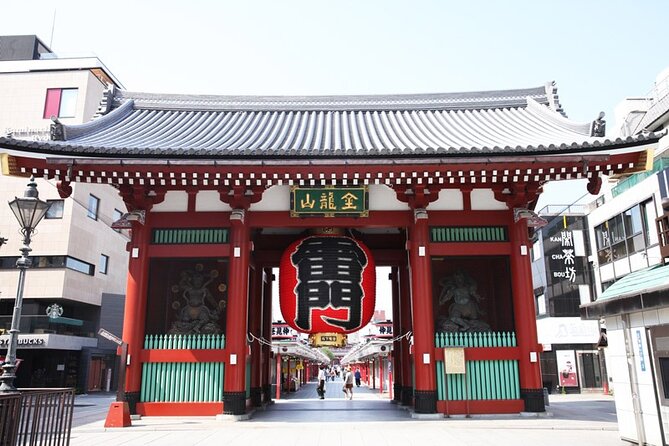
Senso-ji is one of Tokyo’s oldest and largest Buddhist temples, with origins dating to 628. The planned visit lasts about 40 minutes, giving you time to see the temple precinct and hear about its religious and cultural importance.
This is a good final major stop because it rewards a slower pace after the quick look at Shibuya and the short Asakusa visit. Your guide can point out details you might otherwise pass without understanding, from temple customs to the difference between this Buddhist site and the Shinto shrine at Meiji Jingu.
You should not expect a private, silent temple experience. Senso-ji is a major Tokyo sight, and the surrounding streets can be busy. The value comes from having someone explain the setting and help you move through it, not from escaping the crowds.
The tour then allows time for transport and hotel drop-off. The exact finish can vary because the published seven hours includes pickup and travel between attractions.
The subway lesson may be the tour’s biggest value
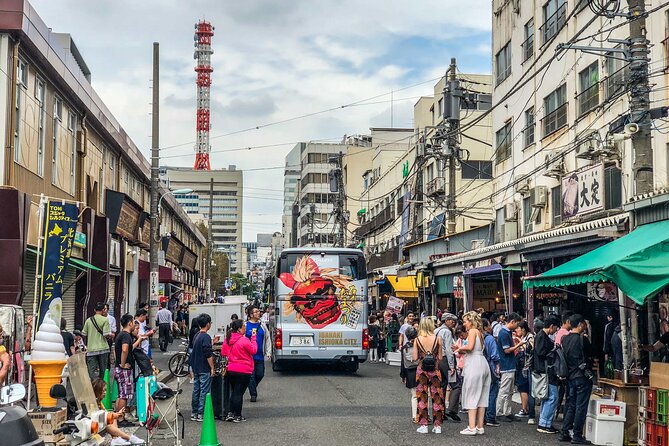
Tokyo’s trains are fast and practical, but the system can be intimidating at first. This tour includes a one-day Metro Pass and uses public transport rather than a private vehicle, so you learn the system while using it for real sightseeing.
Your guide will lead you through the stations and streets, helping you get from one district to the next. Several guides have also helped people plan the next part of their day. One wrote directions to a baseball stadium, and others showed families how to continue using the trains independently after the tour.
That practical skill can pay off for the rest of your trip. A guide does more than point toward the correct platform. You can ask questions about transfers, exits, and the basic rhythm of getting around Tokyo.
The tradeoff is that you must keep pace with the city. Large stations involve plenty of walking, even when the train ride itself is short. If you have limited mobility or dislike long days on foot, ask about suitability before booking. The stated requirement is a moderate fitness level.
What to bring for a seven-hour day
Wear sneakers or another pair of shoes you already trust. You will walk outdoors between sights, through neighborhoods, and inside stations, and Tokyo’s heat can make the same distance feel much harder.
Bring water and rain gear. The tour can be affected by weather or other operating problems, and some visits may be changed, omitted, or replaced. The experience is not automatically canceled in every such case, and the fare is not refunded for those itinerary changes.
Plan money and time for lunch. Food is not included, though your guide may help you choose a place. A private guide can also help with special needs, but you should explain those needs in advance rather than waiting until the market stop.
Pickup is offered from your hotel, but it is limited to a designated range. If your hotel is outside that range and a subway alternative is not practical, you are responsible for the guide’s transportation costs to the first attraction and back from the final stop.
Who should book this Tokyo day tour
I would choose this tour for a first visit, especially if you want to see many headline sights but do not feel ready to tackle Tokyo’s train system alone. It also suits families, active couples, and small private groups that prefer to ask questions and adjust the pace.
It is a strong choice if you value local explanation over free time. You will learn about shrine and temple customs, Tokyo’s past and present, and the practical details of moving around the city.
I would hesitate if you want long visits at each stop, an included meal, extensive shopping time, or a relaxed schedule. The route covers a lot, and the cost is high compared with sightseeing independently. The tour earns its price through the guide, transport help, and time saved.
The current rating is 5 out of 5 from 19 ratings, with every rating recommending the experience. That is a small sample, so I would not treat it as proof that every day will be perfect. Still, the repeated praise for patient guides, subway help, flexibility, and local explanations points to the parts of the tour most likely to matter.
Should you book it?
Book it if Tokyo is new to you and you want one well-organized day that teaches you how the city works. Meiji Jingu, Shibuya Crossing, Tokyo Tower, Tsukiji, and Senso-ji give you a broad first look, while a private guide keeps the route understandable.
Skip it if you are already comfortable with Tokyo’s subway or prefer to explore at your own speed. At $203.63 per person, the tour makes the most sense when the guidance and saved planning time are worth more to you than the freedom of an independent day.
FAQ
How long does the tour last?
The tour lasts approximately seven hours, including hotel pickup, travel between attractions, and time for drop-off.
What time does the tour start?
The scheduled start time is 9:30 a.m.
Is hotel pickup included?
Yes. Hotel pickup and drop-off are included within the designated pickup range.
Is transportation included?
Yes. The tour includes transportation fees through a one-day Metro Pass. The experience uses Tokyo’s public subway system.
Is Tokyo Tower admission included?
Yes. Admission to Tokyo Tower’s 150-meter Main Deck is included.
Is lunch included?
No. Lunch is not included in the tour price. You should plan to pay separately for your meal.
How much walking is involved?
The tour includes a good amount of outdoor walking and movement through subway stations. A moderate level of physical fitness is recommended, and comfortable shoes are advised.
Can the itinerary change because of weather?
Yes. Weather or other operating conditions may cause visits to be changed, omitted, or replaced. If the experience is canceled because of poor weather, you can receive a different date or a full refund.
More Full-Day in Tokyo
More Private Tours in Tokyo
More Walking Tours in Tokyo


More tours in Tokyo we've reviewed




Full-Day, compared.
 ★ 4.5From Tokyo: Mount Fuji Full-Day Sightseeing TripFrom $6810 hours
 ★ 4.9Mount Fuji Full-Day Private Tour from Tokyo (Customizable)From $393
 ★ 5.0Tokyo Private Full-Day Tour by Car or VanFrom $321
 ★ 4.7From Tokyo: Must-Visit Mount Fuji Highlight Full-Day TourFrom $6911 hours
 ★ 4.5Mt. Fuji, Hakone Full-Day Private Tour with English Driver GuideFrom $495
 ★ 4.8From Tokyo: Mount Fuji Full-Day Customizable Private TourFrom $48310 hours