
Reviewed · SAMURAI & NINJA EXPERIENCES
Samurai Guide Sho’s Mt. Takao Hike, Temple & Onsen from Shinjuku
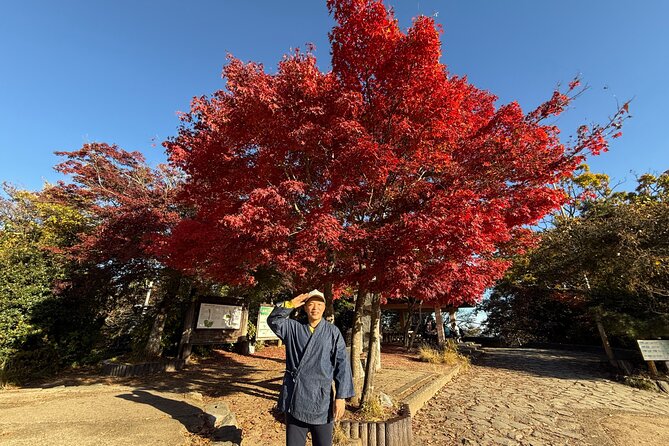
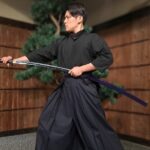
Mt. Takao gives you a remarkably easy escape from Tokyo. In about an hour, you trade Shinjuku’s maze of platforms for forest trails, a mountain temple, and a possible view of Mt. Fuji. Samurai Guide Sho leads the way, wearing an indigo haori and bringing more than 20 years of railway and mountaineering experience to the day.
I especially like the railway help, since Shinjuku Station can rattle even confident navigators. I also like the thoughtful finish: a tattoo-friendly hot spring with two towels supplied, plus the option to eat or have craft beer if you do not want to bathe.
The main consideration is physical effort. The uphill section takes about 1.5 hours, followed by more walking, and the mountain route can change with weather and crowds. The advertised $117.27 price also excludes train fares, the lift, the onsen, and your food and drinks.
In This Review
- Five useful things to know before booking
- Why Mt. Takao works so well as a Tokyo day trip
- Meeting Sho at the Suica Penguin statue
- Walking the waterfall training path for 90 minutes
- Reaching Ōmiharashidai and looking toward Mt. Fuji
- Visiting Yakuo-in Temple and its mountain customs
- Taking the chairlift down from Yamagami Station
- Ending at TAKAO36SAUNA with an onsen or a meal
- Returning to Shinjuku by 5 p.m.
- What the $117.27 price really covers
- Who will enjoy this experience most
- Practical preparation for a smoother day
- Should you book Samurai Guide Sho’s Mt. Takao day?
- FAQ
- Where does the tour begin?
- Where does the tour end?
- How long does the experience last?
- Is the train fare included?
- Is the Mt. Fuji view guaranteed?
- How difficult is the hike?
- Is the hot spring visit required?
- Can people with tattoos use the hot spring?
Five useful things to know before booking
- Sho handles the Shinjuku maze: He helps with Suica use, tickets, transfers, and rerouting if train service changes.
- The hike uses a quieter training path: You may walk the waterfall route associated with monk training rather than simply following the busiest road.
- Mt. Fuji is a bonus, not a promise: Clear weather can reveal Fuji from the summit viewpoint, but clouds may block it.
- The group is capped at five people: That makes pace changes and personal questions much easier than on a large bus outing.
- The day finishes back at Shinjuku around 5 p.m.: You can plan dinner or evening activities without sacrificing a full Tokyo day.
Why Mt. Takao works so well as a Tokyo day trip
Mt. Takao is close enough to visit without giving up your Tokyo evening. The train ride from Shinjuku to Takaosanguchi takes about 1 hour and 10 minutes, including the journey into the mountain area. That short transfer is part of the appeal, especially if you want nature without arranging a full rural excursion.
This is not a sightseeing bus ride with a quick photo stop. You walk uphill for roughly 90 minutes, visit a living temple, and spend time in a hot spring afterward. The day has a clear rhythm: city, train, forest, summit, temple, lift, bath, city again.
Sho’s background matters most at the beginning and end. Shinjuku Station is a huge interchange, and the meeting point is the Suica Penguin statue before the New South Gate at JR Shinjuku Station. You do not need to puzzle out which platform or transfer to use on your own. Sho supports ticket buying, Suica use, and route choices, then helps with the return journey as well.
The small group size, no more than five people, is another practical advantage. A guide can adjust the pace more easily for the group, and the atmosphere is likely to feel more like a shared walk than a scheduled procession.
A few more Tokyo tours and experiences worth a look

Meeting Sho at the Suica Penguin statue
The day begins at 9:30 a.m. at the Suica Penguin statue near the JR Shinjuku Station New South Gate. Search Suica Penguin Statue on Google Maps before leaving your hotel, and allow extra time to reach the station area. Shinjuku is not difficult once you know the correct exit, but it is easy to lose minutes underground.
Sho’s railway experience is one of the strongest reasons to choose this tour instead of making the trip alone. He can assist with the approximately ¥1,000 round-trip train fare between Shinjuku and Takaosanguchi. That fare is not included in the tour price, so plan to pay it separately.
The train ride gives Sho a chance to explain railway customs, ticket use, and the route toward western Tokyo. If a delay or service suspension affects the trip, the tour includes support with alternative routes. That help is less important on a perfectly normal morning, but it can save the day when Tokyo rail service does not cooperate.
Walking the waterfall training path for 90 minutes
From Takaosanguchi Station, you begin the mountain portion. The planned hike takes about 1.5 hours and follows an old trail connected with monk training. The route passes a waterfall, giving the walk a quiet spiritual thread rather than making it only a workout.
The samurai theme is understated. Sho is not offering a staged sword show or a costume performance. Instead, he frames the walk as modern training, with time for reflection, steady movement, and conversation. That approach will suit you if you enjoy a guide who adds meaning to a place without turning every moment into a performance.
Sho can adjust the route and pace according to the weather, the group’s condition, and the number of people on the mountain. On busy days, he may use less crowded paths. This is useful on popular weekends and during autumn leaf or cherry blossom periods, when Mt. Takao can feel much less private.
You should still take the fitness warning seriously. The hike is uphill, and the day includes additional walking before and after it. Sneakers are acceptable, and no specialist hiking gear is required, but comfortable shoes are essential. Carry water and a light snack. Rain gear is sensible, and winter visitors need proper cold-weather clothing.
Reaching Ōmiharashidai and looking toward Mt. Fuji
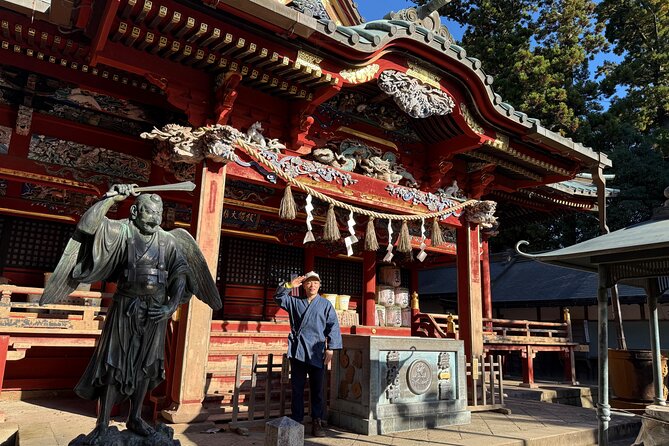
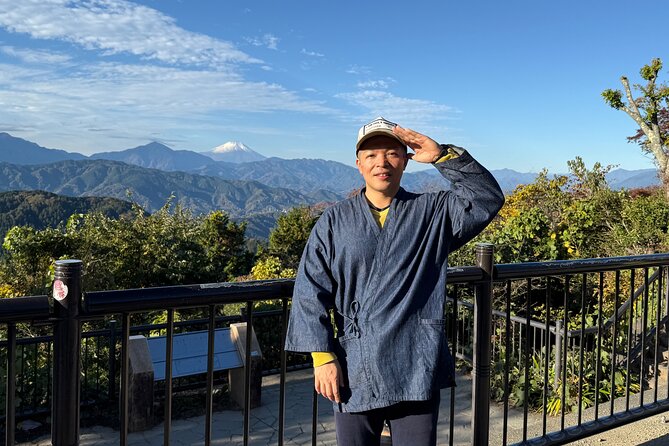
The summit section includes about 30 minutes at Ōmiharashidai Viewpoint. On a clear day, Mt. Fuji may appear in the distance. This is one of the day’s best possible rewards, but you should treat it as weather-dependent rather than part of the guarantee.
The viewpoint also gives you a natural pause after the climb. Depending on crowds and conditions, Sho may guide you toward mountain food or a local snack. The exact choice can change because shops may be busy or closed, particularly in light rain.
Do not judge the experience only by the Fuji view. Clouds are common, and a clear summit does not always mean a perfectly visible mountain. The forest walk, the change from city to mountain, and the temple visit remain worthwhile even when Fuji stays hidden.
Visiting Yakuo-in Temple and its mountain customs
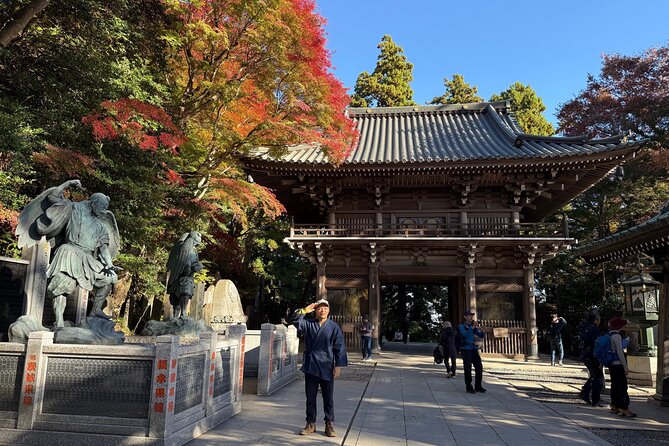
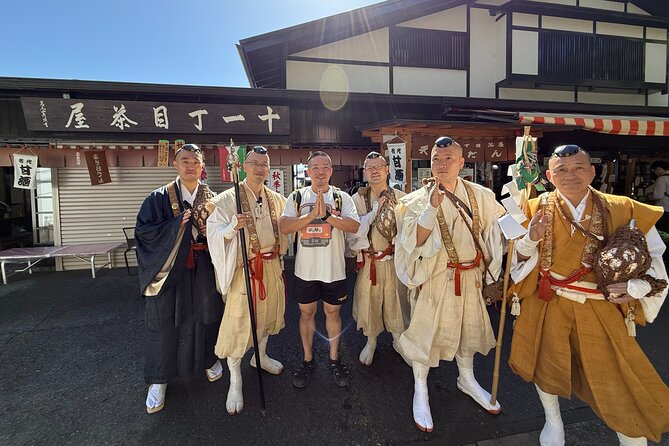
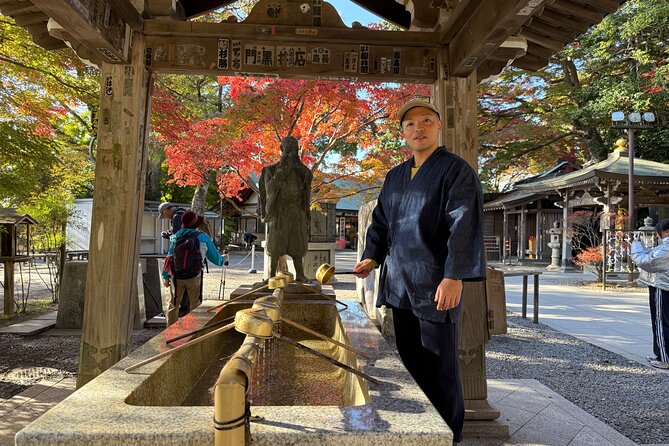
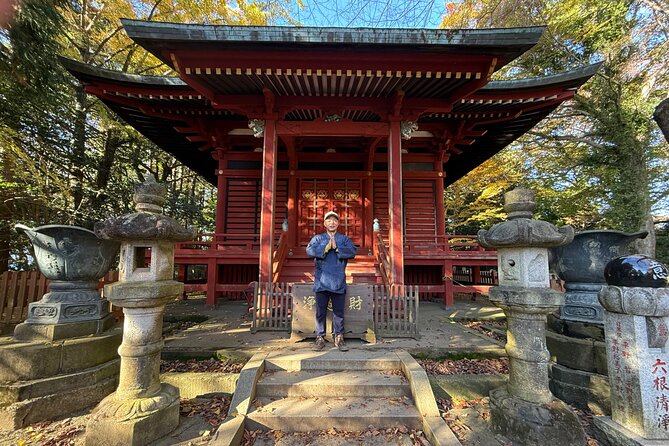
Yakuo-in Temple adds cultural depth to the hike. You spend about 30 minutes here, with time to offer thanks and learn about prayer customs. Sho’s samurai-style presentation fits the setting, but the experience is described as respectful rather than theatrical.
Yakuo-in is also a pleasant place to pause for local treats. You might find dango or matcha ice cream around the temple grounds. Some shops there may accept cash only, so bring some yen even if you normally rely on a credit card or Suica.
This stop is valuable because it slows the day down. You have just climbed the mountain, and the temple gives you a chance to notice the religious side of Mt. Takao instead of treating the summit as the only goal. If you want charms or snacks, keep small cash ready.
A few more Tokyo tours and experiences worth a look
Taking the chairlift down from Yamagami Station
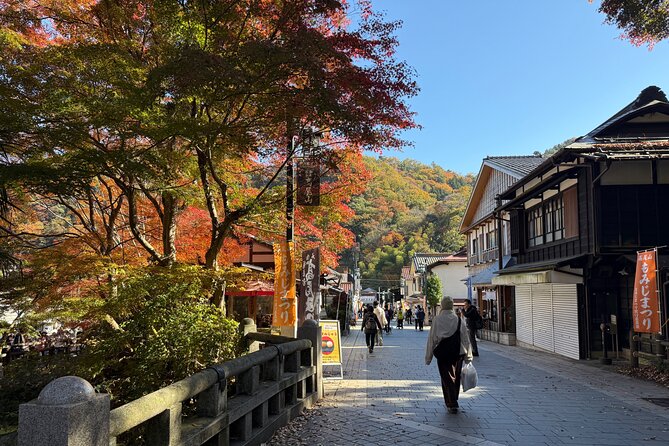
After the temple, the usual plan is a chairlift descent from Yamagami Station. The ride takes about 20 minutes and gives your legs a break. The advertised lift fee is ¥490 per person and is not part of the tour price.
The chairlift is weather and crowd dependent. During peak periods, the line may be too long to make the ride practical. In that case, you walk down Trail No. 1 at a relaxed pace, usually 30 to 40 minutes. That alternative still offers a pleasant descent, but it adds more time on your feet.
This is a good example of why the published duration is approximate. The complete outing lasts about seven to eight hours, but the route order and descent method can shift. Sho makes those decisions based on safety, crowds, and the day’s conditions.
Ending at TAKAO36SAUNA with an onsen or a meal
The final major stop is TAKAO36SAUNA, where you have about 1.5 hours for recovery. The facility offers a tattoo-friendly hot spring, which is an important point for anyone who has previously found Japanese bathhouse rules restrictive.
Onsen entry costs ¥1,800 per person and is paid separately. Two towels are included with the hot spring visit, so you do not need to pack a bath towel. I would still bring a change of clothes, since fresh clothes after a hike and bath are much more comfortable.
Bathing is optional. You can skip the hot spring and relax or eat at the facility instead. The tour also points you toward local dishes and draft craft beer from the on-site brewery, including seasonal selections. Beer is available only to people aged 20 or older under Japanese law.
This finish gives the day more value than a simple mountain walk. You can wash off the climb, sit down with food, and let the day settle before returning to the city. It also makes the tour workable for a mixed group, since not everyone has to enter the bath.
If the hot spring is closed, the plan may change to a nature-focused museum, although that replacement can also be closed. In severe weather, the hike is canceled and the day may include a round-trip cable car ride, Yakuo-in Temple, the nature-focused museum, and the hot spring if open.
Returning to Shinjuku by 5 p.m.
The journey back takes about an hour, and the activity ends at the original Suica Penguin meeting point around 5 p.m. That timing is useful. You can make an evening reservation, meet friends for dinner, or continue exploring Shinjuku without guessing when the excursion will finish.
Sho’s return support is especially helpful if you are tired or if train conditions have changed during the day. You finish with the same railway guidance that made the morning less stressful.
The schedule is not designed for a late start or a slow, independent mountain day. You need to meet at 9:30 a.m., and the group must move together. In exchange, you get a complete outing with transport, hiking, temple time, and a choice of bath or meal.
What the $117.27 price really covers
At $117.27 per person, the tour is not a cheap way to reach Mt. Takao. You also pay about ¥1,000 for the round-trip train, ¥490 for the lift when used, and ¥1,800 for the onsen. Food, drinks, and personal purchases are extra.
That means you should think of the price as payment for Sho’s guiding and problem-solving rather than admission to a series of attractions. The tour covers railway navigation, delay support, route selection, hiking guidance, temple customs, mountain food advice, and onsen etiquette.
For a confident Tokyo visitor who already knows how to use Japanese trains and wants a self-guided hike, the cost may feel high. For someone uneasy about Shinjuku Station, train transfers, Japanese bathhouse customs, or changing mountain routes, the value is easier to see.
The cap of five people also changes the calculation. You are paying for a personal-scale experience, not a large group with a fixed pace. The strongest value comes if you want conversation, cultural explanation, and practical help throughout the day.
Who will enjoy this experience most
I would recommend this tour to adults who want active time outdoors but do not want to plan every transfer and decision themselves. It suits you especially well if you are staying in central Tokyo, have moderate fitness, and like the idea of pairing a mountain walk with a temple and bath.
It is also a good fit if you have tattoos and want a clear, stated path to a tattoo-friendly hot spring. The bath remains optional, so you can still take part if you prefer food and relaxation.
The tour is less suitable for anyone seeking a strenuous full-day mountain climb. The hike is manageable with moderate fitness, but it is still uphill and followed by further walking. It is also not ideal if you need a fully fixed itinerary, since weather and crowd levels can change the route.
The minimum age is 18 because of the hot spring policies. People under 20 cannot have the craft beer, even though they meet the tour’s age requirement.
Practical preparation for a smoother day
Wear sneakers or other comfortable shoes. You do not need technical hiking equipment, but poor footwear will make the climb and descent harder.
Bring water, a light snack, rain gear, and some cash. Carry a change of clothes for after the onsen, and dress warmly in winter. The facility supplies two towels for the bath, but packing a small personal towel can still be useful during the walking portion.
The experience operates in light rain, though mountain food facilities may close. Severe weather can cancel the hike, with a replacement plan offered. If poor weather forces cancellation before the tour, you can accept another date or receive a full refund. Standard cancellation allows a full refund when you cancel at least 24 hours before the start time.
Should you book Samurai Guide Sho’s Mt. Takao day?
Book it if you want Mt. Takao wrapped into one calm, well-managed day from Shinjuku. The best reasons are Sho’s railway support, the small five-person maximum, the flexible hiking route, and the rare convenience of a tattoo-friendly onsen at the end.
Skip it if you are happy to manage the train, trail, temple, and bathhouse yourself, or if you want a highly athletic hike with no scheduled recovery stop. Remember to budget for the train, lift, onsen, and food beyond the tour price.
For most suitable participants, the appeal is the combination: city navigation handled for you, a steady mountain climb, a possible Fuji view, Yakuo-in Temple, and a warm place to recover. It is a practical way to see a quieter side of Tokyo without spending the whole day arranging the details yourself.
FAQ
Where does the tour begin?
Meet at 9:30 a.m. at the Suica Penguin statue before the New South Gate of JR Shinjuku Station. Searching Suica Penguin Statue on Google Maps is recommended.
Where does the tour end?
The activity returns to the same Suica Penguin meeting point in Shinjuku. The planned finish is around 5 p.m.
How long does the experience last?
The outing takes approximately seven to eight hours, from the morning meeting in Shinjuku until the return in the afternoon.
Is the train fare included?
No. The round-trip train fare between Shinjuku and Takaosanguchi is about ¥1,000 per person and is paid separately.
Is the Mt. Fuji view guaranteed?
No. Mt. Fuji may be visible from Ōmiharashidai Viewpoint when the weather is clear, but visibility depends on conditions.
How difficult is the hike?
The uphill hike takes about 1.5 hours, with additional walking during the day. Moderate physical fitness is required, and comfortable shoes are recommended.
Is the hot spring visit required?
No. Entering the hot spring is optional. If you do not bathe, you may relax or enjoy food at the facility instead.
Can people with tattoos use the hot spring?
The planned hot spring is tattoo-friendly. If it is closed, the activity may be replaced with a visit to a nature-focused museum, depending on availability.
More Temples & Meditation in Tokyo

More Samurai & Ninja Experiences in Tokyo
More Shinjuku Tours in Tokyo

More tours in Tokyo we've reviewed





Samurai & Ninja Experiences, compared.
 ★ 4.5Tokyo: Samurai Restaurant Show Ticket with 2 DrinksFrom $551h 30m
 ★ 4.6Tokyo: Samurai Ninja Museum Guided tour and ExperienceFrom $27
 ★ 5.0Tokyo: Samurai Sword & Archery Class from Samurai DescendantFrom $1933 hours
 ★ 5.0Best Samurai Experience in TokyoFrom $65
 ★ 5.0Ninja Experience (Family Friendly) at Samurai Ninja Museum TOKYOFrom $47
 ★ 4.6Tokyo: Samurai Entertainment Night Show in Kanda ShrineFrom $412 - 3 hours