
Reviewed · THEME PARKS & DIGITAL ART
Experience TeamLab Planets in Tokyo
At teamLab Planets Tokyo, you do not simply look at art from a safe distance. You walk through it, get your feet wet, stand inside changing light, and watch flowers shift as you move. I especially like the barefoot water rooms and the Floating Flower Garden, two very different spaces that make the visit feel physical rather than passive.
The pre-booked ticket keeps entry simple, and the locker for shoes and personal belongings is useful. The main caution is that the experience may feel more like a playful sensory attraction than a serious art museum, and photos can make the rooms look more dramatic than they feel in person.
In This Review
- Key points to know before you go
- What teamLab Planets actually asks you to do
- The Water Area: start with your feet
- Infinite Crystal Universe and the power of a good photograph
- The Floating Flower Garden: real plants, changing distance
- Transforming Space: playful floors and moving bodies
- Light, mirror, and other rooms
- How the full visit fits together
- Clothing, comfort, and practical details
- Is the ticket good value?
- Who should book teamLab Planets?
- Should you book teamLab Planets Tokyo?
- FAQ
- Where is teamLab Planets located?
- How long does the experience take?
- What does the admission ticket include?
- Is a locker included?
- Do I need to remove my shoes?
- Will I get wet?
- What should I wear?
- Can most people participate?
- Is transportation provided?
- Can I cancel or change my booking?
Key points to know before you go
- Bare feet are part of the experience: You will remove your shoes and socks, and your feet and lower legs may get wet.
- The ticket covers all listed rooms: Expect the Water Area, Infinite Crystal Universe, Floating Flower Garden, Transforming Space, and light and mirror installations.
- Plan for about four hours: The venue is not a quick photo stop if you want time to move through each space without rushing.
- Wear practical clothing: Roll-up trousers or shorts are useful because some water reaches the shins.
- This is highly interactive art: Your movement affects projections, lights, flowers, and parts of the floor.
- The appeal is broad but not universal: Families and photo-minded visitors may love it, while traditional art lovers may find it thin.
What teamLab Planets actually asks you to do
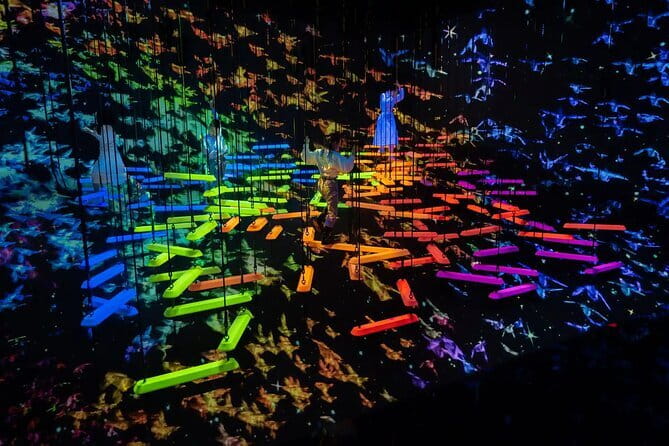
The basic idea is simple: you enter a series of large rooms where digital projections, sound, water, mirrors, flowers, and responsive surfaces create the artwork around you. Instead of following a guide or listening to a long explanation, you learn by moving.
That physical element matters. You may walk slowly through shallow water, change the direction of projected koi by stepping near them, or stand still while a room reacts to your presence. The art is not just on the walls. It is under your feet, around your body, and sometimes altered by what you do.
You should allow about four hours for the full visit. That does not mean every person will need four hours, but the attraction is better when you take your time. Rushing from room to room turns it into a checklist of photographs. Slowing down gives you a better sense of how each space changes.
There is no guide named for this experience, and the ticket is designed for independent exploration. You are free to focus on the rooms that interest you most, though the physical route and changing conditions mean you should arrive ready to participate rather than simply observe.
A few more Tokyo tours and experiences worth a look


The Water Area: start with your feet
The Water Area is often the most memorable room because it changes the rules at once. You remove your shoes, step into shallow water, and move through projections of koi fish. The fish respond to your movement, making your body part of the visual effect.
This room is playful, but it is not only for children. Adults who enjoy watching a digital image react to their own actions can find it surprisingly absorbing. The water also gives the room a cool, sensory quality that a standard projection show cannot provide.
Come prepared to get your feet and shins wet. Clothing that rolls above the knees is the sensible choice. The floor may feel uneven in places, so you need reasonable balance and mobility. Most people can participate, but this is not the right attraction if wet surfaces or unstable footing will make you uneasy.
The locker included with admission is especially helpful here. You can store your shoes and personal belongings before entering the rooms, leaving you less to carry while walking through the installation.
Infinite Crystal Universe and the power of a good photograph
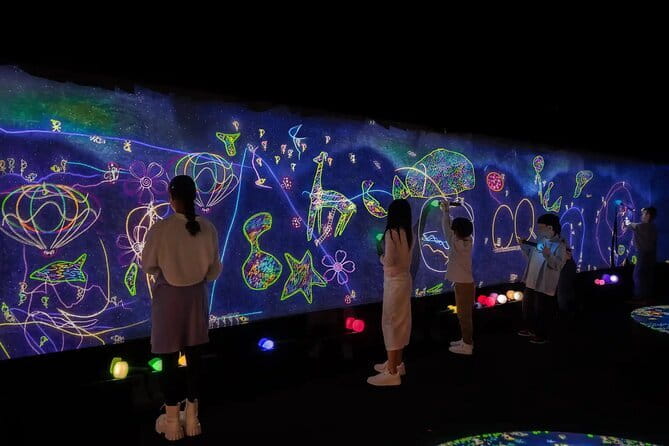
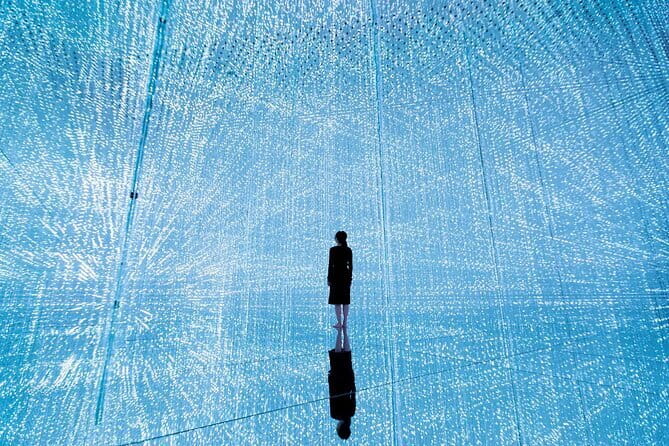
The Infinite Crystal Universe surrounds you with countless LED lights arranged to suggest a galaxy. It is one of the attraction’s strongest photo spaces, with points of light stretching into darkness and mirrors adding to the sense of endless distance.
The room is not entirely passive. Patterns can be influenced through an app, allowing you to affect how the lights appear. That detail gives the installation a modest interactive layer, though the visual effect remains the main attraction.
You will probably want to take photographs here, but keep your expectations in check. Camera settings, crowd movement, and the position of the person taking the picture can change the result. The images may look more intense online than the experience feels when you are standing in the room.
I would treat the photographs as a pleasant record, not the whole reason to visit. The best part is watching the light field shift around you, then stepping aside to let someone else experience the same space. If you spend the whole time posing, you can miss the slow changes that make the room work.
The Floating Flower Garden: real plants, changing distance
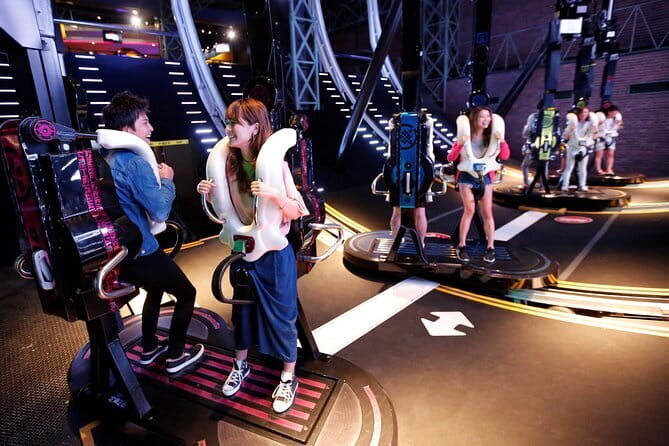
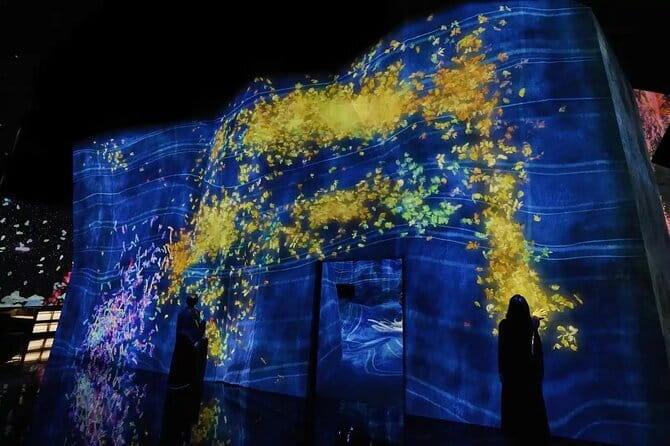
The Floating Flower Garden uses real, fragrant flowers suspended in the space. As you approach, the flowers move in harmony with your presence, creating a room that feels different from the LED installations.
This is a useful change of pace. After the hard light and mirrors, the flowers add scent and a natural element. The room asks you to notice distance, motion, and the way a physical object can become part of a digital-style artwork.
The installation may not match every visitor’s idea of a garden. Flowers hanging from wires can look artificial, and the condition of the plants may vary. If you expect a traditional botanical display, this room could feel more like a technical installation using flowers as its material.
I like it best when you approach slowly and watch the flowers rise or shift rather than treating the room as a quick backdrop. The contrast between the living plants and the controlled movement is the point. It is also one of the quieter spaces to appreciate if you are tired of bright lights.
Transforming Space: playful floors and moving bodies
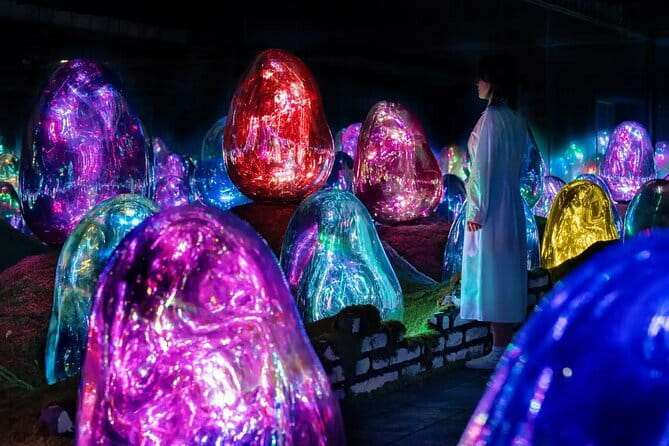
The Transforming Space features a bouncy, interactive floor that changes the room as you move. Your steps and body position help reshape the environment, making the floor feel less like a surface and more like a responsive object.
This is another section that can feel childlike. That is not necessarily a flaw. The attraction works best when you accept the invitation to play instead of standing back and searching for a traditional visual composition.
You should pay attention to your footing. Uneven and springy surfaces can be awkward for anyone with balance or mobility concerns. The experience information says most people can participate, but the individual rooms are not all equally easy to walk through.
Families may find this part especially entertaining, while adults seeking quiet contemplation may find it less satisfying. I would not judge the room by museum standards alone. Its value comes from showing you how an ordinary action, such as taking a step, can alter the artwork.





Light, mirror, and other rooms

The light and mirror rooms create the most obviously surreal moments. Mirrors multiply points of light, making a small space feel much larger, while glowing installations blur the line between the room and the image reflected in it.
These spaces are built for visual impact. You will find many places to stop for photographs, but the effect depends on where you stand and how long you look. A quick pass may leave you with a pretty picture but little sense of the room’s design.
I recommend taking one photograph, then putting your phone away for a few minutes. Watch the reflections, notice how your position changes the view, and give your eyes time to adjust. The installation is more interesting when you see it as a changing environment rather than a collection of backgrounds.
Because the rooms use light and mirrors, the experience can feel intense for some people. The provided information does not specify special restrictions for light sensitivity, so you should use your own judgment before booking if strong visual effects are a concern.
How the full visit fits together
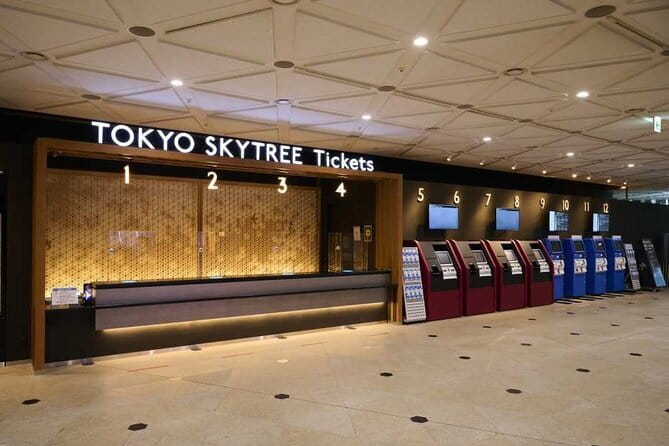
The attraction has a clear rhythm. You begin by changing into a barefoot visitor, then move between water, light, mirrors, flowers, and responsive surfaces. Each section uses different materials, so the visit does not rely on one trick repeated from room to room.
The route also shifts between active and more reflective moments. Water and the bouncy floor ask you to move carefully. The crystal and mirror rooms invite you to stop and look. The flower garden adds scent and living material. This variety helps explain why many people find the visit memorable even though there is no conventional story to follow.
Still, the experience has limits. There are no historic objects, paintings, or named artists to study in the way you would at a traditional museum. If you want context, labels, and a clear argument about art, you may find the rooms too dependent on spectacle.
On the other hand, if you want a break from Tokyo’s streets and a place where everyone in your group can participate together, the format works well. Solo visitors can move at their own pace. Friends can compare how the rooms respond to them. Families can treat it as a shared activity rather than a quiet gallery visit.
Clothing, comfort, and practical details
Wear clothing that allows easy movement. You will remove your shoes and socks, and water may reach your shins. Trousers that roll above the knees are a practical choice, while loose or delicate clothing may be less convenient around water and uneven surfaces.
A locker for shoes and personal belongings is included with admission. That small detail makes the barefoot route easier, since you do not need to carry shoes from room to room.
The venue is near public transportation, so you can reach it without a private vehicle. An air-conditioned vehicle is not included, but that matters little for an independent attraction where you make your own way to the entrance.
Your reserved start time matters. One booking was moved from 9:00 to 9:30 even though opening time had not changed, so check your email before setting out. Build a little flexibility into your morning rather than arranging another fixed appointment immediately afterward.
The experience is listed as non-refundable and cannot be changed for any reason. I would book only after confirming your date, time, clothing needs, and interest in interactive art.
Is the ticket good value?
The supplied price is shown as $0.00, which may be a display or booking issue rather than the final amount you will pay. Check the actual price at checkout before making your decision. The ticket includes admission to all the listed exhibits and the locker, so you are not paying separately for the individual rooms.
Value depends heavily on what you want from a museum visit. For a family, a group of friends, or anyone who enjoys photography and hands-on installations, one ticket covers several distinct environments over roughly four hours. That can make the cost reasonable compared with buying several short activities.
For a traditional art lover, the value is less certain. One strong criticism is that the work can feel derivative, over-promoted, or closer to a play facility than an art museum. That response is fair if your priority is original objects, formal technique, or historical context.
I would also account for the price of your time. Tokyo offers many museums and neighborhoods, so a four-hour commitment is worthwhile only if the digital, sensory format interests you. Do not book simply because the photographs look spectacular online.
Who should book teamLab Planets?
I would recommend it to families with children who can manage the barefoot and wet sections, couples looking for an unusual shared activity, and friends who enjoy taking photographs together. It also suits solo visitors who like moving at their own pace and testing how interactive art responds to them.
Adults should not assume the attraction is only for children. The light, mirrors, sound, flowers, and changing projections can be engaging at any age. But you do need to be willing to act a little silly and participate. Standing with your arms folded may leave you wondering what the fuss is about.
I would be more cautious if you have limited mobility, poor balance, or a strong dislike of wet floors. The route includes uneven surfaces and a bouncy floor, and practical comfort is part of the experience. If you are seeking a serious art museum with detailed interpretation, choose with care.
Should you book teamLab Planets Tokyo?
Book it if you want art that responds to your body and you like the idea of walking through water, light, mirrors, flowers, and changing floors. The Water Area, Infinite Crystal Universe, and Floating Flower Garden offer enough variety to make the visit more than a single photo opportunity.
Skip it if you want quiet galleries, historic collections, or a firm distinction between art and entertainment. The attraction is polished and visually bold, but its playful design will not suit every taste.
My practical verdict is to go with the right expectations. Wear roll-up clothing, leave time for the full route, check your start time, and put the camera down now and then. If you do that, teamLab Planets can be one of Tokyo’s most unusual shared experiences, even if it is not the traditional museum visit its name may suggest.
FAQ
Where is teamLab Planets located?
It is located in Tokyo, Japan, and the venue is near public transportation.
How long does the experience take?
The visit lasts approximately four hours.
What does the admission ticket include?
The ticket includes admission to teamLab Planets Tokyo and access to all listed exhibits, including the Water Area, Infinite Crystal Universe, Floating Flower Garden, Transforming Space, and light and mirror rooms.
Is a locker included?
Yes. A locker for storing shoes and personal belongings is included.
Do I need to remove my shoes?
Yes. You will remove your shoes and socks before entering the barefoot sections.
Will I get wet?
Yes. The Water Area involves walking through shallow water, and your feet and shins may get wet.
What should I wear?
Wear comfortable clothing that allows movement. Trousers you can roll up to your knees are recommended because of the water.
Can most people participate?
The experience information states that most people can participate. Some surfaces are uneven, and the activity includes water and a bouncy floor, so balance and mobility are important.
Is transportation provided?
No air-conditioned vehicle is included. The venue is near public transportation.
Can I cancel or change my booking?
No. The experience is non-refundable and cannot be changed for any reason. If you cancel or request an amendment, the amount paid will not be refunded.
More Theme Parks & Digital Art in Tokyo



More tours in Tokyo we've reviewed











Theme Parks & Digital Art, compared.
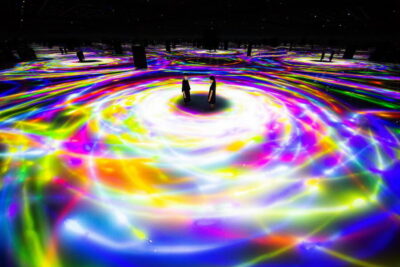 ★ 4.6Tokyo: teamLab Planets TOKYO Digital Art Museum Entry TicketFrom $251 day
 ★ 4.5Tokyo: DisneySea 1-Day PassportFrom $571 day
 ★ 4.6Tokyo Disneyland 1-Day PassportFrom $571 day
 ★ 4.1Tokyo: ‘Red Tokyo Tower’ Digital Amusement Park TicketFrom $37
 ★ 4.3Tokyo Disneyland or DisneySea Ticket & Door to Door TransferFrom $1431 day
 ★ 4.4Tokyo Disneyland: 1-Day Entry Ticket and Private TransferFrom $1531 day - 10 hours