
Reviewed · KAMAKURA & ENOSHIMA DAY TRIPS
One Day Private Tour to Kamakura with English Speaking Driver
Kamakura’s 13th-century Great Buddha is the headline, but the day works best as a broad look at Japan’s old capital, sacred gardens, samurai-era sites, and coastal scenery. With a private car and an English-speaking driver, you can move between five major stops without piecing together local transport.
I like the flexible private format, which gives your group room to linger at a temple or adjust the pace. I also like the mix of quiet bamboo, major religious sites, and Enoshima’s sea views. The drawback is the price: at $391.22 for up to three people, this makes more sense for a small group than for a solo visitor.
In This Review
- Key points at a glance
- Why Kamakura makes a strong day trip from Tokyo
- Hokoku-ji and its tall bamboo grove
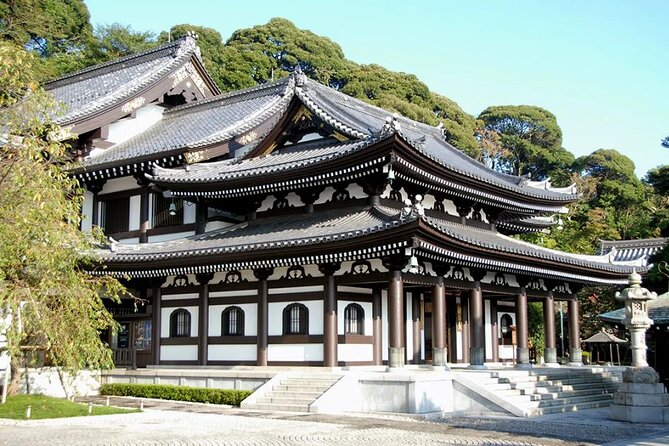
- Hase-dera brings gardens, incense, and hillside steps
- Kotoku-in and the Great Buddha
- Tsurugaoka Hachimangu and samurai-era Kamakura
- Enoshima shifts the day to the coast
- What the private car adds to the day
- How much time and energy should you plan for
- Who will get the most from this Kamakura tour
- Booking, cancellation, and final value
- Should you book this tour?
- FAQ
- How long does the Kamakura and Enoshima tour last?
- What time does the tour start?
- How many people can join the private tour?
- Is hotel pickup offered?
- Are admission fees included?
- Is food included?
- What happens if bad weather cancels the tour?
Key points at a glance
- Hokoku-ji’s bamboo grove: A peaceful first stop with a strong visual payoff, though admission costs extra.
- Hase-dera’s hillside setting: Stone steps, gardens, incense, and sacred art make this more than a quick photo stop.
- The Great Buddha of Kamakura: A bronze statue over 13 meters tall and one of the day’s essential sights.
- Private transportation: Toll, petrol, air conditioning, and private driving are included, with Wi-Fi available in the vehicle when available.
- Enoshima finish: Add beaches, small shops, shrines, gardens, and possible Mount Fuji views to a day centered on temples.
- Driver Hridoy: His enthusiastic and entertaining style can add energy between the quieter cultural stops.
Why Kamakura makes a strong day trip from Tokyo
Kamakura gives you a very different side of Japan. Tokyo is modern, dense, and fast. Kamakura brings you Buddhist temples, Shinto worship, old religious traditions, and the sea, all within one long day.
The appeal is not just one famous statue. You get a sequence of places with different moods. Hokoku-ji is hushed and green. Hase-dera combines gardens and devotion. Kotoku-in delivers the big visual moment. Tsurugaoka Hachimangu links the city to samurai culture, while Enoshima shifts the day toward the coast.
A private tour matters here because the stops are spread around Kamakura and nearby Enoshima. You do not have to work out each transfer, watch a train timetable, or carry your plans through five separate visits. Your driver handles the road connections, leaving you to focus on the sites.
The day begins at 8:00 a.m. and lasts about 10 hours. That is a full outing, not a quick sampler. Plan to spend much of the day walking, standing, and going up temple or shrine steps, even though the private vehicle reduces the strain between stops.
A few more Tokyo tours and experiences worth a look
Hokoku-ji and its tall bamboo grove
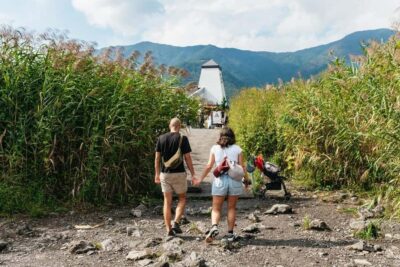
Hokoku-ji is a gentle way to begin. Its bamboo forest creates a narrow, quiet world where the sound and movement of the stalks take over. The setting encourages you to slow down before the larger sights arrive.
You have about two hours here, although the temple admission is not included. The bamboo grove is the main draw, so this stop suits anyone who prefers atmosphere over a long list of buildings or exhibits.
I would treat Hokoku-ji as a place to walk carefully and look around rather than rush through with a camera. The grove gives you one of the day’s clearest changes in mood, from city travel to a more reflective temple setting.
The main consideration is timing. Two hours may feel generous for a compact temple and bamboo area, especially if you are not interested in lingering. On the other hand, the extra time helps the visit feel calm instead of squeezed between vehicle transfers.
Hase-dera brings gardens, incense, and hillside steps
Hase-dera adds more variety. You ascend stone steps into a temple setting filled with lush gardens, fragrant incense, and centuries of religious practice. It is a place where the route itself matters, since moving upward changes the views and the pace.
The planned stop is about two hours, and admission is extra. Wear shoes that are comfortable for walking and steps. The tour data does not promise any special mobility arrangements, so anyone concerned about stairs should ask the provider before booking.
I like this stop because it gives you more than a single object to see. You can take in the garden spaces, notice the incense, and consider how the temple works as a living place of worship rather than only a sightseeing site.
Hase-dera also helps balance the Great Buddha later. The statue is direct and monumental. Hase-dera is more layered, asking you to pay attention to the setting, the climb, and the quiet details.
Kotoku-in and the Great Buddha
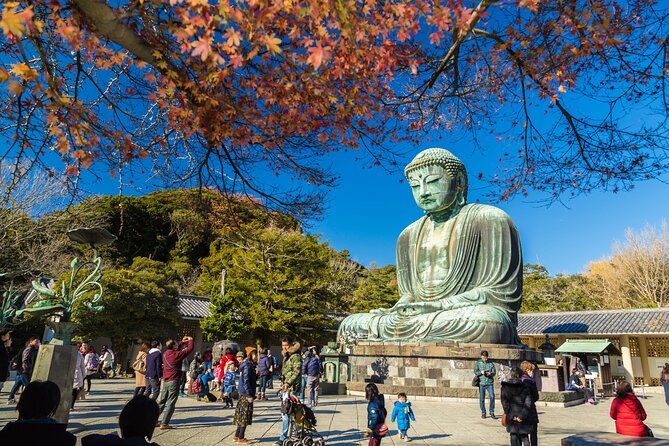
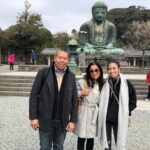
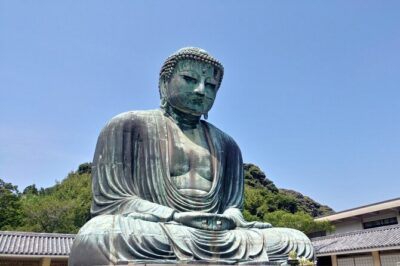
Kotoku-in contains the sight most closely tied to Kamakura: the Great Buddha. This bronze figure rises more than 13 meters and dates to the 13th century, giving the day its clearest link to medieval Japan.
You have about two hours here, with entry not included in the tour price. That time allows you to see the statue without treating it as a five-minute roadside stop. The scale is the point, but give yourself time to notice the calm expression and the way the statue sits in the surrounding temple grounds.
The Great Buddha is also a useful reminder that Kamakura’s importance is not only architectural. The statue represents Buddhist devotion and the city’s place in Japan’s religious and political past. Your English-speaking driver can add context during the journey, though the exact depth of guiding may depend on the person assigned.
This is one area where expectations matter. The tour description promises an English-speaking driver, not a specialist art historian or a dedicated temple guide. If you want a detailed lecture at every site, confirm the guiding arrangement before paying. If you want transport, orientation, and friendly explanations, the format should be a better fit.
Tsurugaoka Hachimangu and samurai-era Kamakura
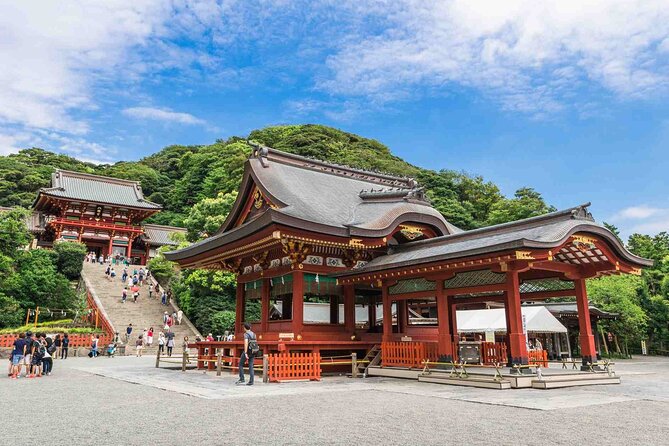
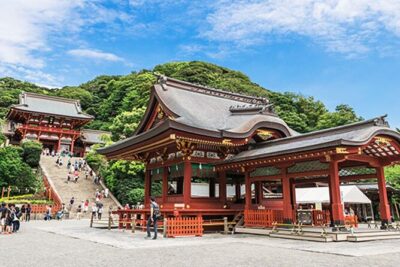
Tsurugaoka Hachimangu is the day’s major Shinto stop. The shrine is dedicated to Hachiman, a Shinto deity associated with war and regarded as a patron of the samurai. That connection makes the site especially useful for understanding Kamakura’s role in Japan’s medieval era.
Admission is free, and the visit is scheduled for about two hours. The shrine’s broad approach and formal religious setting offer a contrast to the enclosed bamboo grove and the Buddhist temple sites.
I would use this stop to think about the difference between Buddhist and Shinto traditions. The day does not present them as an abstract lesson. Instead, you encounter distinct places of worship one after another, which makes the contrast easier to grasp.
The shrine is also a good place to avoid rushing. Take time to notice the layout, the approach, and the sense of ceremony. Since admission is free, this stop adds cultural value without increasing your entry costs.
Other private tours in Tokyo


Enoshima shifts the day to the coast
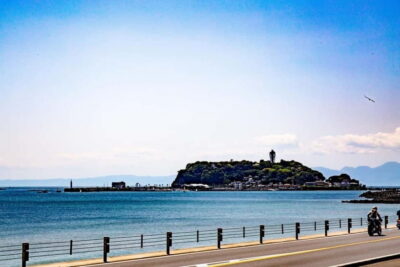
Enoshima changes the tone again. The island is known for beaches, gardens, historic shrines and temples, small shops, cafés, and views toward Mount Fuji. After several temple and shrine visits, the sea air and coastal setting can make the final part of the day feel lighter.
The stop is planned for about two hours and admission is free. That is enough for a taste of the island, but not enough to explore every corner at a leisurely pace. You will need to choose your priorities, perhaps favoring the streets and shops, the religious sites, or the views.
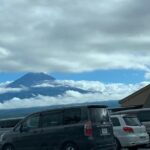
Do not assume Mount Fuji will be visible. The experience description highlights the views, but visibility depends on conditions. The same is true of the wider coastal experience, since this tour requires good weather and may be rescheduled or refunded if poor weather causes cancellation.
Enoshima is a useful finish because it keeps the tour from becoming five versions of the same temple visit. You get a coastal town feel, room for food or a café stop, and a final chance to enjoy Japan outside the central Tokyo setting. Food and drinks are not included, so budget separately for seafood, sweets, or refreshments.
What the private car adds to the day
The private vehicle is the main practical advantage. Your group has private transportation in an air-conditioned car, with tolls and petrol included. Pickup is offered, and the meeting time is 8:00 a.m.
The tour is for up to three people per group. At $391.22, the cost works out to about $130.41 per person for three people, before admission fees and food. For two people, it is about $195.61 each. A solo booking pays the full group rate, so this is not the most economical choice if you are alone.
The value comes from convenience and control rather than low cost. You are paying to avoid arranging several connections and to have a driver available for the full day. A private group can also discuss the pace, although the listed schedule gives each stop roughly two hours, so do not assume every change is possible.
Wi-Fi is available in the vehicle when available. That wording matters: it is a useful extra, not something to rely on as a guaranteed connection. Mobile tickets and pickup make the start simpler, while the tour’s proximity to public transportation gives you another practical option around the meeting area.
Driver Hridoy is described as enthusiastic and entertaining, which may be welcome during a long day on the road. The driver’s personality can shape the experience, especially during the stretches between Kamakura’s sites. Still, the provider is Yujin Group Co., Ltd., and a specific driver may not be guaranteed unless confirmed at booking.
How much time and energy should you plan for
Ten hours is enough to make Kamakura and Enoshima feel worthwhile, but it is also a demanding day. Five stops at about two hours each leave little room for a slow lunch, unexpected traffic, or extended shopping.
You should expect walking at every cultural site. Hokoku-ji involves walking through the bamboo grove. Hase-dera includes stone steps. Tsurugaoka Hachimangu requires movement through a large shrine setting, and Enoshima may tempt you to keep walking farther than the schedule allows.
Food is not included, so plan to buy lunch or snacks along the way. Kamakura and Enoshima are associated with seafood and traditional Japanese sweets, but the tour does not specify a restaurant or meal arrangement. That gives you freedom, though you should not expect a reserved culinary experience.
The flexible schedule is one of the tour’s strongest features. You can spend more time at a place that catches your interest instead of being tied to a large coach group. Just remember that flexibility works within a 10-hour day and five planned stops.
Who will get the most from this Kamakura tour
I would recommend this outing to a small group that wants to see a lot in one day without handling the transport. Families, couples, and friends traveling in groups of two or three can get the best value from the fixed price.
It also suits first-time visitors who want a clear introduction to Kamakura’s main sights. You get Buddhist temples, a major Shinto shrine, the Great Buddha, and Enoshima without having to decide which area to leave out.
The tour is less suitable for someone who wants a slow, single-neighborhood visit. It is also a weaker match for a solo visitor focused on saving money, since the group price does not drop below $391.22.
Anyone needing specific accessibility support should contact the provider before booking. The tour is described as suitable for most participants, but no detailed accessibility information is supplied, and Hase-dera’s stone steps are a practical point to consider.
Booking, cancellation, and final value
Confirmation is received at booking, and free cancellation is available until 24 hours before the 8:00 a.m. start time. Changes or cancellations inside that 24-hour window are not accepted for a refund.
Because the tour depends on good weather, the provider may offer another date or a full refund if conditions force cancellation. That policy is useful for a coastal day with outdoor temple grounds and island views.
The strongest case for booking is simple: you want Kamakura’s major sights in one day, you value a private car, and you have two or three people to share the cost. The weaker case is a solo booking or a visitor who wants a specialist guide at every site rather than an English-speaking driver.
Should you book this tour?
Book it if you want an efficient, private introduction to Kamakura and Enoshima, especially with two friends or family members. The Great Buddha, bamboo grove, temples, shrine, and coast create a well-rounded day, and the flexible pace is more comfortable than a large group tour.
Think twice if you prefer public transport, long meals, or hours at one temple. For the right small group, the $391.22 price buys a straightforward day with private transport, included road costs, and five memorable stops. Just add admission fees, food, and comfortable shoes to the plan.
FAQ
How long does the Kamakura and Enoshima tour last?
The tour lasts approximately 10 hours.
What time does the tour start?
The scheduled start time is 8:00 a.m.
How many people can join the private tour?
The price covers one private group of up to three people.
Is hotel pickup offered?
Pickup is offered, though the supplied details do not specify which hotels or pickup locations are included.
Are admission fees included?
Admission is not included for Hokoku-ji Temple, Hase-dera Temple, or Kotoku-in Temple. Admission at Tsurugaoka Hachimangu Shrine and Enoshima is listed as free.
Is food included?
No. Food and drinks are not included in the tour price.
What happens if bad weather cancels the tour?
If poor weather causes cancellation, you will be offered a different date or a full refund.
More 1-Day Tours in Tokyo

More Private Tours in Tokyo
More Kamakura & Enoshima Day Trips in Tokyo
More tours in Tokyo we've reviewed



Kamakura & Enoshima Day Trips, compared.
 ★ 4.5Tokyo: Kamakura & Enoshima Day Trip including Temple TicketsFrom $589 hours - 570 minutes
 ★ 4.5Tokyo: Mt. Fuji, Kamakura, Big Buddha, & Lake Ashi Day TripFrom $4910 - 11 hours
 ★ 4.5From Tokyo: Kamakura & Enoshima 1-Day Bus TourFrom $66
 ★ 5.0Kamakura Historical Walking Tour with the Great BuddhaFrom $98
 ★ 5.0Kamakura Private Tour: Temples, Nature, and the Great BuddhaFrom $98
 ★ 5.0Kamakura Walking Tour – The City of ShogunFrom $35