
Reviewed · SUMO EXPERIENCES
Morning Sumo Practice Viewing in Tokyo
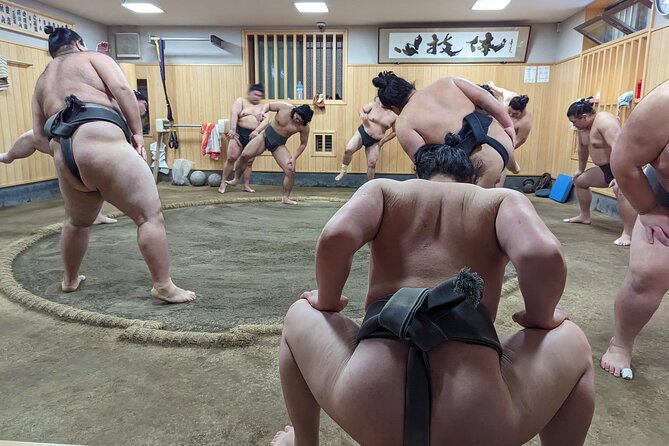
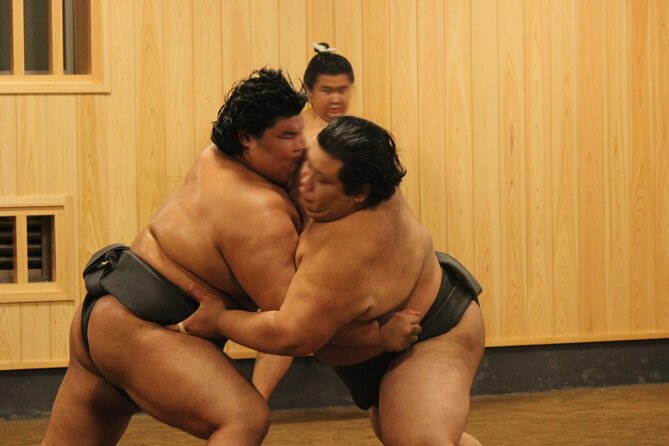
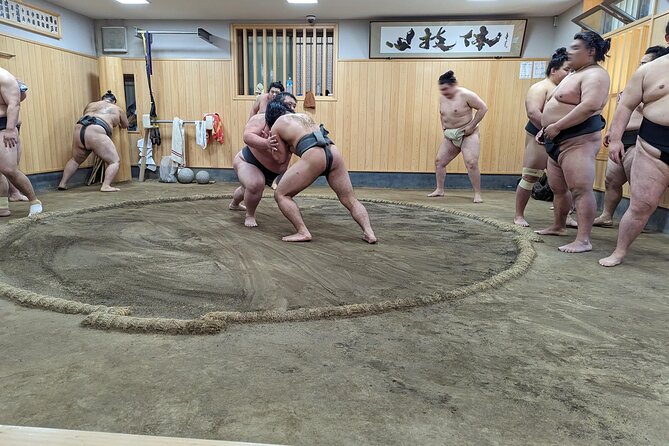
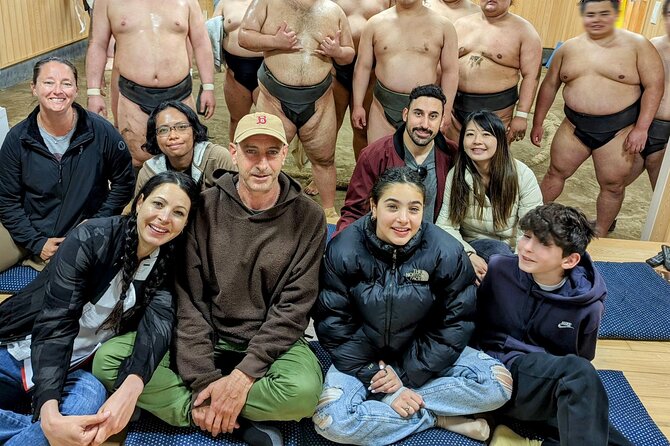
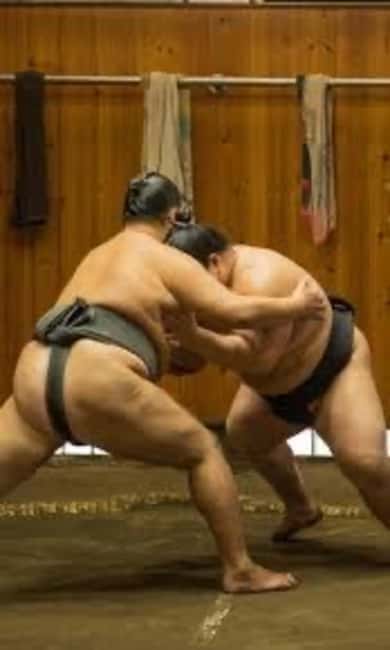
Sumo practice is not a staged show. At Naruto-beya in Sumida, you sit quietly on the floor while wrestlers warm up, bow, grapple, and repeat the hard daily work behind Japan’s national sport. The stable is difficult to enter on your own, so this small-group visit gives you access that independent sightseeing rarely provides.
I like the close view and the careful briefing before you enter. Guides such as Joji, Dawn, Jeff, and Aki have explained the rules, rituals, wrestler profiles, and basic moves in clear English. I also like that part of your fee goes to the stable, rather than treating the practice as a free photo opportunity.
The main drawback is physical: you sit on a cushion on a flat floor for about two hours, with no chairs available. The early start means meeting at 7:30 am, and the photo session and chanko nabe lunch are not guaranteed details of every visit.
In This Review
- Key points to know before you book
- Why morning sumo practice feels different from a tournament
- Meeting at Tokyo Skytree at 7:30 am
- Inside Naruto-beya for two hours of practice
- Learning the moves, rituals, and people behind the sport
- Photos, chanko nabe, and the limits of the promise
- Who will get the most from this Tokyo morning
- Is $99.08 a fair price?
- Practical details that can make the morning easier
- Should you book this sumo experience?
- FAQ
- What time does the sumo practice tour start?
- Where do I meet the guide?
- Where does the tour end?
- How long does the experience last?
- Will I sit on a chair during practice?
- Is hotel transportation included?
- Is a photo with the wrestlers guaranteed?
- Can I cancel for a full refund?
Key points to know before you book
- Morning practice is the main event: Watch wrestlers warm up and take part in practice bouts at close range.
- The stable visit is hard to arrange alone: Your guide handles access and explains the rules before you enter.
- You sit on the floor: Bring patience for a cushion and roughly two hours without a chair.
- The group is small: The maximum is 10 people, which allows room for questions and personal attention.
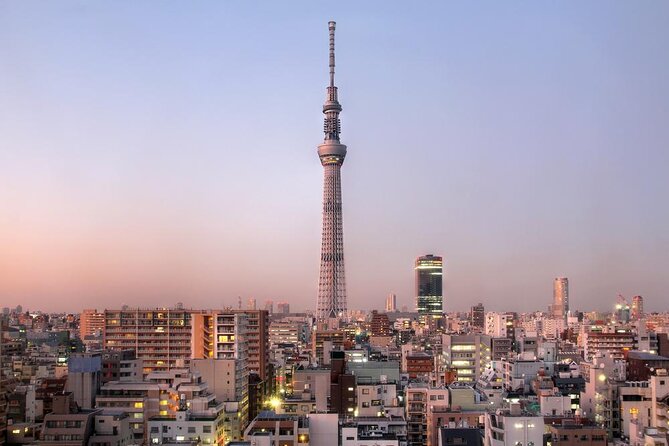
- The 7:30 am meeting matters: You meet at Tokyo Skytree Station, then continue to the stable in Sumida.
- Photos and lunch may vary: You will most probably have a photo session, and chanko nabe may be available, but neither should be treated as certain.
Why morning sumo practice feels different from a tournament
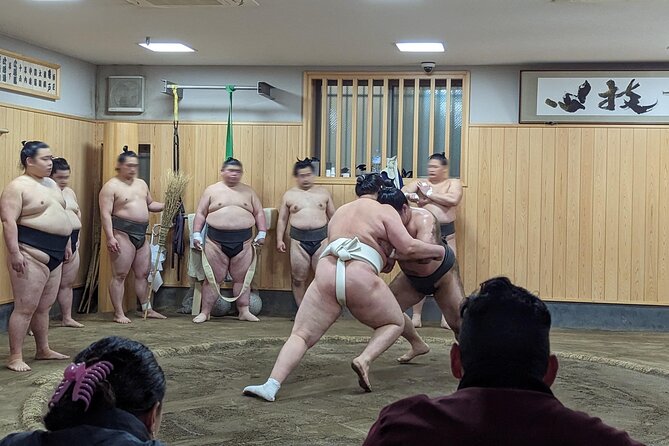
A tournament gives you lights, packed stands, formal announcements, and bouts that count toward a wrestler’s record. This experience gives you the working side of sumo. You watch training at a stable, where wrestlers prepare their bodies, test technique, and follow the customs that shape the sport.
That difference matters. Practice can feel quieter and more serious than a public match. You are not watching a polished performance designed for an audience. You are watching athletes repeat movements, face one another in bouts, and receive instruction. The appeal comes from being close enough to notice the effort and ritual.
Before entering, your guide gives a short lesson on how to follow sumo and what behavior is expected inside the stable. This briefing is more useful than it may sound. Without it, you could easily miss the meaning of a bow, misunderstand a practice bout, or wonder why everyone is expected to remain so quiet.
You also learn about sumo’s Shinto roots. The sport is tied to purification, ritual, respect, and the sacred space of the ring. That cultural background gives the physical action more meaning. Sumo is not simply two large men trying to push one another out of a circle.
A few more Tokyo tours and experiences worth a look
Meeting at Tokyo Skytree at 7:30 am
The tour begins at Tokyo Skytree Station at 7:30 am, at 1-chōme-1-4 Oshiage in Sumida City. The location is near public transportation, and the Skytree gives you an easy landmark for finding the meeting point.
The first stop lasts about 30 minutes. Here, your guide explains the basic rules and the conduct required during practice. You should treat this time as part of the experience, not merely a wait before the real activity begins. It prepares you to watch with some understanding.
The early hour has two sides. On one hand, you need to plan your morning carefully and allow enough time to reach Oshiage. On the other, starting at dawn places you in the same early rhythm as the stable. Several people have found the sunrise start memorable, but you should not book this outing if a slow hotel breakfast is a priority.
The listed price is $99.08 per person. That is not a cheap morning activity, but the value depends on access. You are paying for a local certified English-speaking guide, a small group capped at 10, the stable donation, and the chance to enter a place that is difficult to visit independently.
The donation is an important part of the price. A sumo stable is a working institution, not a museum built for sightseeing. Paying toward its operation makes this a more respectful arrangement than simply turning up with a camera and expecting free access.
Inside Naruto-beya for two hours of practice
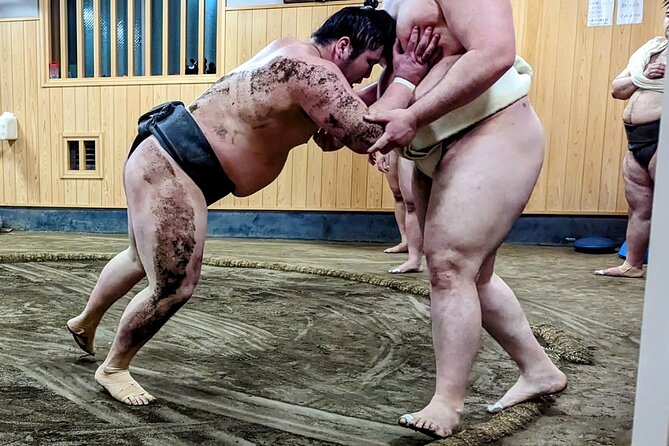
After the briefing, you continue to Naruto-beya Sumo Stable at 1-chōme-22-16 Mukōjima. The tour ends at the stable, so do not expect a return to Tokyo Skytree or hotel transportation. You arrange your own way back after the session.
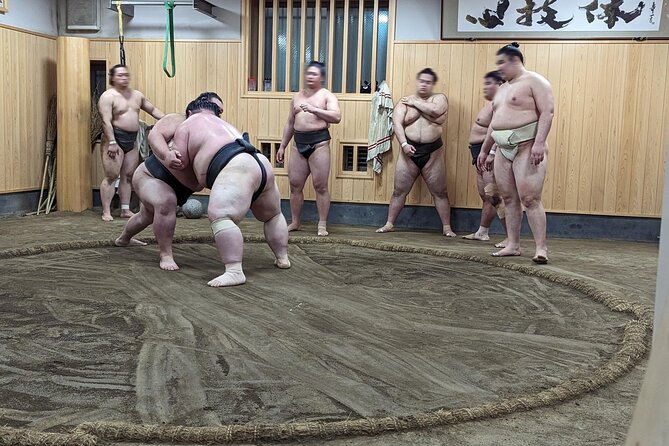
Inside, you sit on a cushion on a flat floor. There are no chairs. Plan on roughly two hours in this position, and take the warning seriously if you have knee, hip, or back problems. The experience is most rewarding when you can remain still and attentive, rather than spending the morning worrying about discomfort.
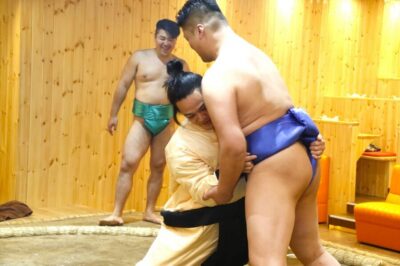
The close distance is the biggest strength. You see wrestlers warming up and engaging in practice bouts from inside the stable. This is far more intimate than watching from the upper levels of a tournament arena, but it also means you must follow the rules carefully. Your guide explains what is acceptable before you enter.
The atmosphere calls for quiet attention. You are entering a place where wrestlers train, so the visit is not built around constant narration or audience participation. Your guide may answer questions and point out what is happening, but the practice itself should remain the focus.
You might see different wrestlers working at different stages of training. The supplied details do not promise a fixed schedule, a set number of bouts, or the appearance of a particular champion. That uncertainty is part of watching a real practice session, but it is also why you should not arrive expecting a tournament-style program.
Learning the moves, rituals, and people behind the sport
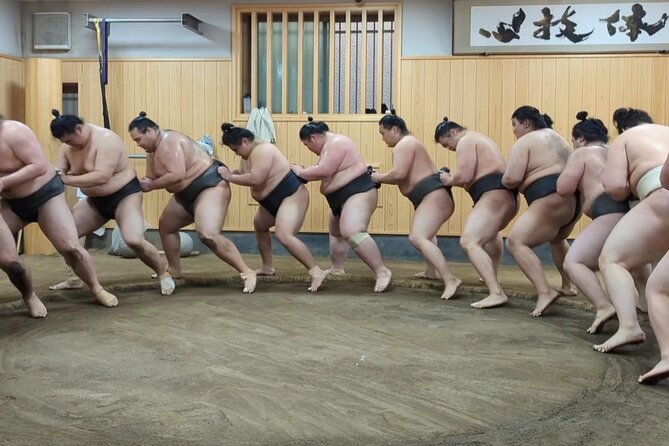
A good guide changes the whole morning. Sumo has rules that are simple to state but easier to understand when someone points out the details as they happen. You learn the basic moves, the purpose of the warm-up, and the customs that surround the ring.
Guides named Joji, Dawn, Jeff, and Aki have led sessions associated with this experience. Their approach has included short lectures, printed information, wrestler profiles, and explanations of the sport’s background. The guide you receive may be different, but the tour includes guiding in English by a local certified expert.
That written material can be especially helpful. Sumo bouts may be short, and it is easy to lose track of what you are seeing while trying to remember several Japanese terms. Having profiles and simple explanations gives you something to refer to during the practice.
The small group also helps. With a maximum of 10 people, you are less likely to feel lost in a crowd, and you can ask questions during the briefing. The experience is described as a private tour, though the stated maximum means you should understand it as a small-group activity unless your booking confirms private use.
Photos, chanko nabe, and the limits of the promise
A photo session with the wrestlers will most probably take place after practice. That can be a memorable finish, but the wording matters: it is not presented as an absolute guarantee. The timing and willingness of the wrestlers can affect what is possible.
You may also have a chance to refuel with chanko nabe, the traditional hot-pot food associated with sumo wrestlers. The tour description presents this as part of the possible experience, yet the included items specifically confirm the stable donation and English guiding rather than a guaranteed meal. I would treat lunch as a pleasant possibility, not the reason to book.
That distinction protects you from disappointment. Book this for access to morning practice and cultural explanation. Consider the photo and food as welcome extras.
The stable itself is a working space, and the tour ends there. No hotel pickup or drop-off is included. You should also note that the experience requires good weather. If poor weather causes cancellation, you are offered another date or a full refund.
A few more Tokyo tours and experiences worth a look

Who will get the most from this Tokyo morning
I would recommend this to anyone curious about Japanese culture, traditional sport, or the daily discipline behind public competition. It also suits families and mixed-interest groups because the guide supplies context for people who do not already know sumo.
It is especially useful if you are not visiting Tokyo during a tournament. You still get to see wrestlers in action, and the stable visit offers a side of sumo that a formal match cannot provide.
The outing may be less suitable for very young children who cannot sit quietly for two hours. It is also a poor match for anyone who cannot sit on a cushion on the floor. Most people can participate, but the floor arrangement is the key practical issue.
Photography-minded visitors should keep expectations sensible. You will probably get a photo session, but you are entering a training space first. The respectful approach is to watch, listen, and follow instructions rather than treating every moment as a photo opportunity.
Is $99.08 a fair price?
At $99.08, this is a mid-priced Tokyo cultural activity. You can find cheaper ways to learn about sumo, including watching online videos or visiting a tournament when tickets are available. Those options do not give you the same access to a stable or the same close view of practice.
The price makes more sense when you count what is included. You receive an English-speaking local guide, a briefing at Tokyo Skytree, assistance entering the stable, a small group, and a donation to the stable. You also avoid the uncertainty of trying to arrange access on your own.
I see the strongest value in the guide and access, not in the possible lunch. If you are deeply interested in sumo, the cost is easier to justify. If you only want a quick look at a famous Japanese sport, the two-hour floor session may feel like more commitment than you want.
Group discounts are available, and the experience is commonly booked about 19 days ahead. That booking pattern suggests you should not leave it until the last morning of your trip if the date matters to you.
Practical details that can make the morning easier
Arrive ready for an early start. Your meeting point is Tokyo Skytree Station, not the stable, and the tour ends at Naruto-beya. Check your route before 7:30 am so you are not trying to navigate Sumida City while the group is already moving.
Wear clothing that lets you sit comfortably. The tour does not provide chairs, and you will remain on a cushion on a flat floor for about two hours. If floor sitting is difficult, this should be your first booking question.
Keep the schedule open for about three hours in total. The stated plan includes 30 minutes at Tokyo Skytree and two hours at the stable, with additional movement between the meeting point and the stable.
Confirmation arrives at booking, and the experience is near public transportation. Free cancellation is available until 24 hours before the start time. Within 24 hours, changes and refunds are not accepted, based on local time.
Should you book this sumo experience?
Book it if you want access rather than spectacle. The close stable setting, the English briefing, and the chance to watch real practice make this one of the more personal ways to meet sumo in Tokyo.
Skip it if you need a chair, dislike early mornings, or mainly want a guaranteed meal and photo session. Those are possible additions, not the firm heart of the outing.
For the right person, $99.08 buys a rare look at the daily work behind sumo, with the added comfort of a guide who explains what you are seeing. I would place it high on a Tokyo list for anyone willing to sit quietly, wake early, and let the practice speak for itself.
FAQ
What time does the sumo practice tour start?
The tour starts at 7:30 am.
Where do I meet the guide?
You meet at Tokyo Skytree Station, at 1-chōme-1-4 Oshiage, Sumida City, Tokyo 131-0045, Japan.
Where does the tour end?
The tour ends at Naruto-beya Sumo Stable, at 1-chōme-22-16 Mukōjima, Sumida City, Tokyo 131-0033, Japan.
How long does the experience last?
The experience lasts about three hours. The stated schedule includes 30 minutes at Tokyo Skytree and two hours inside the sumo stable.
Will I sit on a chair during practice?
No. All participants sit on a cushion on a flat floor, and chairs are not available.
Is hotel transportation included?
No. Hotel pickup and drop-off are not included.
Is a photo with the wrestlers guaranteed?
The experience states that you will most probably have a photo session with the wrestlers, but it is not presented as a guaranteed feature.
Can I cancel for a full refund?
Yes. You can cancel at least 24 hours before the experience start time for a full refund. Cancellations or changes made less than 24 hours before the start time are not accepted.
More Morning in Tokyo
More Sumo Experiences in Tokyo

More tours in Tokyo we've reviewed




Sumo Experiences, compared.
 ★ 4.8Tokyo: Sumo Show Experience with Chicken Hot Pot and a PhotoFrom $1032 hours
 ★ 4.8Tokyo: Sumo Show and Dining ExperienceFrom $7990 minutes - 2 hours
 ★ 5.0the SUMO showFrom $89
 ★ 5.0Tokyo Shinjuku Sumo Show & Experience with PhotoFrom $79
 ★ 4.8Tokyo: Sumo Show and Experience in ShinjukuFrom $691h 30m
 ★ 4.6Tokyo: Sumo Tournament Tour with Chair Seat TicketsFrom $141