
Reviewed · MT FUJI DAY TRIPS
Mount Fuji Full Day Sightseeing Tour from Tokyo
Mount Fuji is the star, but the best part of this day is the number of chances you get to see it. From Lake Kawaguchi, from a hilltop pagoda, and from the mountain itself, the route gives you several different angles instead of betting the whole trip on one viewpoint. Oishi Park and Arakurayama Sengen Park are especially strong photo stops when the sky is clear.
I like that transportation is handled from two central Tokyo pickup points, and I like the price: $66.05 for about 10 hours is fair for a long-distance day out with an air-conditioned vehicle. Guides such as Sophie, Zoe, and Justin have earned praise for being warm, helpful, and good with practical tips. The catch is the pace. This is a packed group tour, with up to 40 people, and traffic or a slow departure can make the day feel rushed.
In This Review
- The quick facts you need before booking
- Why this tour works as a Tokyo day trip
- Oishi Park gives you the classic Fuji view
- Arakurayama Sengen Park is worth the stairs
- The Mount Fuji 5th Station reaches 2,300 meters
- Oshino Hakkai adds ponds, food, and shopping
- Guides can make or break the day
- The bus ride is the hidden cost in time
- What to pack for this particular route
- Who gets the best value from the $66.05 price
- Should you book this Mount Fuji day tour?
- FAQ
- How long is the Mount Fuji sightseeing tour from Tokyo?
- Which places does the tour visit?
- Is lunch included?
- Does the tour include WiFi?
- How difficult is the walk at Arakurayama Sengen Park?
- What happens if bad weather cancels the tour?
The quick facts you need before booking
- Four major stops: Oishi Park, Arakurayama Sengen Park, Mount Fuji 5th Station, and Oshino Hakkai.
- About 10 hours from Tokyo: The advertised start is 8:00 a.m., with the return sometimes reaching around 7:30 p.m.
- Best photo odds: The route uses several viewpoints, which helps when clouds cover Fuji at one stop.
- A real stair climb: Arakurayama’s pagoda viewpoint requires roughly 398 steps uphill.
- Bring food money: Lunch is not included, and one available restaurant accepts cash only.
- Weather matters: If poor weather forces cancellation, you can choose another date or receive a full refund.
Why this tour works as a Tokyo day trip
Getting from Tokyo to the Fuji Five Lakes area on your own takes planning. You need to choose between trains and buses, work out connections, watch departure times, and then find your way between scattered sights. This tour trades that freedom for a simple bus route and a guide who keeps the day moving.
That trade makes sense if you have only a few days in Tokyo. You can sit back during the long ride, listen to commentary when it is provided, and reach several well-known spots without changing transport. The onboard WiFi is advertised as a useful extra, although it has not always worked. Treat it as a bonus rather than something you need for the day.
The price is attractive for a 10-hour outing. You are paying for transport, a driver, a guide, and the convenience of a set route. Admissions are free at the listed stops, so there are no major entrance fees waiting at each viewpoint. Lunch, snacks, and shopping are on your own.
The group size can reach 40 people. That keeps the cost down, but it also explains the firm schedule. You need to return to the bus on time, even if you have not finished exploring. This is not the right choice if you want a quiet, flexible day beside Lake Kawaguchi.
A few more Tokyo tours and experiences worth a look
Oishi Park gives you the classic Fuji view
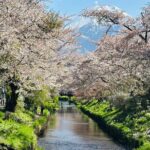
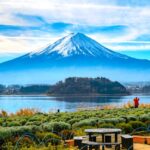
Oishi Park sits on the north shore of Lake Kawaguchi, where the lake and Mount Fuji can appear together in one wide view. A lakeside promenade runs beside seasonal flowers, giving you more than one place to frame a photograph.
You have about 30 minutes here. That is enough for photos, a short walk, and perhaps an ice cream or small snack, but not enough for a slow visit. On a clear day, this may be the strongest stop of the entire route because the mountain rises beyond the lake in a classic Japanese scene.
The weather can change the experience completely. If clouds gather around Fuji, the park still gives you a pleasant lakeside stop, but the main reason for being there is reduced. The guide may point out food and photo spots, though you should not count on time for a full meal here.
I would keep your camera ready as soon as you leave the bus. The schedule is short, and the best view may be close to the arrival area rather than at the end of the promenade.
Arakurayama Sengen Park is worth the stairs
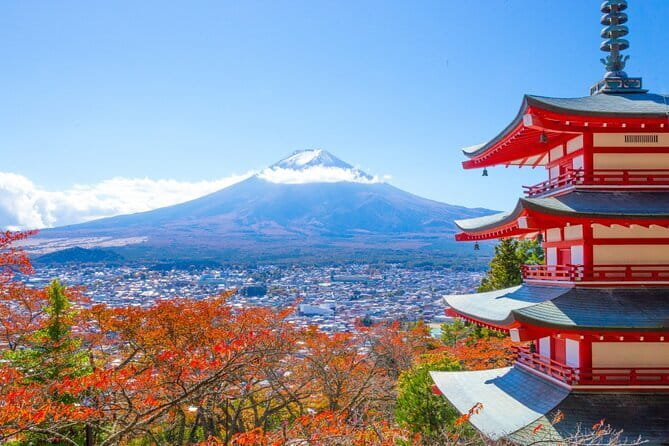
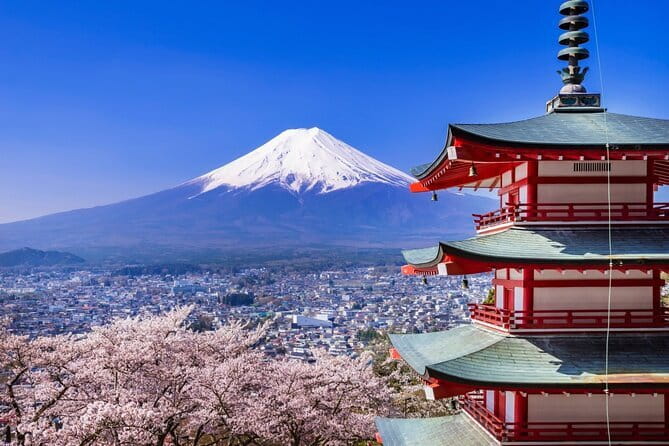
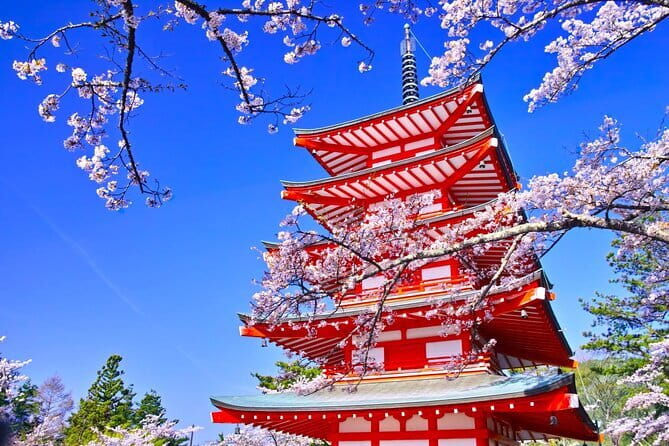
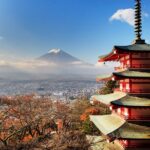
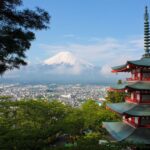
Arakurayama Sengen Park is the stop most associated with the famous red pagoda and Mount Fuji photo. The park begins below Mount Arakurayama and rises toward an observation deck overlooking Fujiyoshida City, with Fuji behind it when visibility cooperates.
The climb is the main issue. You will go up about 398 steps, and the route requires moderate physical fitness. The effort is manageable for many people, but it is not a flat photo stop. Give yourself time, wear sensible shoes, and do not assume you can reach the top, take pictures, and browse slowly within the one-hour visit.
This stop can feel crowded, especially during popular seasons and clear weather. You may need patience at the observation area, and the famous composition will not feel private. Still, the combination of pagoda, city, and mountain is distinctive enough to justify the climb if Fuji is visible.
If stairs are difficult for you, this is the stop to plan around. You may choose to remain lower in the park, but the signature view is at the top. The tour does not offer a long rest period afterward, so pace yourself rather than racing up the hill.
The Mount Fuji 5th Station reaches 2,300 meters
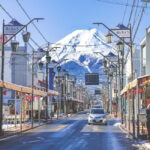
The Fuji Subaru Line 5th Station is the highest point on this route, at about 2,300 meters above sea level. It sits partway up Mount Fuji and gives you a different experience from the lake and city viewpoints.
You have about 1 hour and 15 minutes here. At this height, conditions can be cooler, windier, and more clouded than in Tokyo or around the lake. Bring warm layers even if the morning in Tokyo feels mild. Several people found the upper mountain covered by cloud after seeing Fuji clearly earlier in the day, so do not save all your photography for this stop.
The 5th Station has the feel of a mountain access point rather than a peaceful wilderness visit. You can look around, take pictures, browse for souvenirs, and find food. It is also a useful place to understand the scale of Fuji, since you are physically on the mountain rather than viewing it from a distance.
One practical point matters here: the route is weather-dependent. If conditions are poor enough, the operator may cancel the experience and offer a new date or full refund. A normal cloudy day, however, does not guarantee a cancellation. You may still visit the 5th Station and see very little of the summit.
Oshino Hakkai adds ponds, food, and shopping
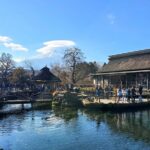
Oshino Hakkai is a village area built around eight clear ponds in the Fuji Five Lakes region. The ponds sit between Lake Kawaguchi and Lake Yamanakako, on the site of a former lake that dried up.
You have about 45 minutes. The stop is touristy, with food stalls, souvenirs, and busy paths. That is not necessarily a flaw. It gives you a chance to try local snacks, pick up gifts, and see a traditional-looking village setting after the large views at the earlier stops.
Lunch is not included. Plan ahead because the meal arrangements can be limited, and at least one restaurant used by the group accepts cash rather than cards. Vegetarian and vegan choices may also be limited, with only one vegan or vegetarian option reported at the available restaurant. If your diet is important, bring something from Tokyo or carry a backup snack.
The ponds themselves are attractive, but 45 minutes goes quickly. You will want to choose between eating, shopping, and looking closely at the water. Trying to do all three may leave you hurrying back to the bus.
A few more Tokyo tours and experiences worth a look

Guides can make or break the day
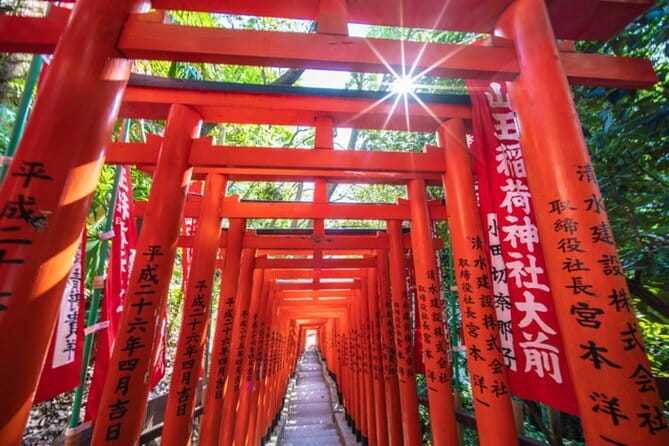
The strongest experiences on this route depend heavily on the guide. Sophie, Zoe, and Justin are names associated with particularly warm and useful guiding. Zoe has helped people find the bus when they were struggling with the meeting point, while Sophie has been praised for food suggestions and a cheerful manner. Justin has been noted for combining local information with practical help.
That said, the level of commentary may vary. Some departures have offered useful explanations about Japanese culture, local customs, and each stop. Others have had little commentary, or a guide who mainly handled timing and transport. If you want a detailed history lesson at every site, this tour may not always deliver it.
The guide’s judgment also matters when clouds shift. Mount Fuji can appear for only a moment between stops, and a flexible guide who alerts the group early can help you get a photograph. Keep your phone or camera ready on the approach to each viewpoint instead of waiting for an announcement.
The bus ride is the hidden cost in time
The advertised duration is about 10 hours, but much of that is driving. The trip from Tokyo to the Fuji area can take around two and a half hours, and the return can be slow when traffic builds. A clear-weather day has still reached Tokyo around 7:30 p.m.
The vehicle is air-conditioned, but comfort has varied. Some buses have been described as comfortable, while others felt cramped, with limited legroom for taller passengers. A bus toilet was also unavailable on one departure. Hydrate sensibly, use facilities at the stops, and be prepared for a long ride home.
WiFi is listed as included, yet it has not always been available. If you need internet access for navigation or messages, download what you need before leaving Tokyo and keep your mobile data available.
The strict timing deserves attention. The bus leaves at the stated departure time, not simply at a loose meeting time. Meeting point instructions have caused confusion, including locations below street level or in large transport areas. Check the exact pickup details carefully and arrive early. A missed departure may not qualify for a refund.
What to pack for this particular route
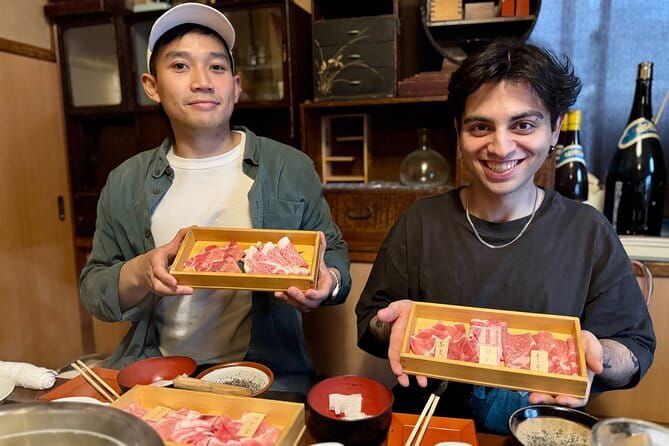
The day crosses several settings and elevations, so a small amount of preparation helps.
- Warm layers for the 5th Station, even in otherwise pleasant weather.
- Comfortable shoes for the Arakurayama stairs.
- Cash for lunch, drinks, and snacks.
- Water and a small snack if you have dietary restrictions.
- A portable battery, since you may take many photos.
- Offline directions and booking details in case WiFi does not work.
- A compact rain layer for the Fuji area.
You will want both wide-angle photos at Oishi Park and quick snapshots from the bus approaches. Weather is the largest variable. A sunny forecast gives you the best chance, but even clear mornings can turn cloudy at 2,300 meters.
Who gets the best value from the $66.05 price
At $66.05 per person, I see this as a strong transport-and-sightseeing package rather than a premium guided experience. You cover four major places, avoid arranging regional buses, and get a full day outside Tokyo. For a first visit, that convenience is worth a lot.
The value drops if you need long visits, a guaranteed Fuji view, or personal attention. You could spend most of the day in transit, rush through the stops, and still see only a glimpse of the mountain if clouds arrive. The tour cannot control traffic or weather, but the fixed route gives you little room to adjust.
I would book it if you want a broad introduction to the Fuji area and accept a busy schedule. It suits solo visitors, couples, and families who prefer organized transport over independent planning. It is less suited to photographers who need time to wait for changing light, people with difficulty climbing stairs, or anyone hoping for a relaxed lakeside day.
Free cancellation is available up to 24 hours before the 8:00 a.m. start. If the operator cancels because of poor weather, you can select another date or receive a full refund.
Should you book this Mount Fuji day tour?
Book this tour if your priority is seeing several famous Fuji-area sights in one day without working out regional transport. The route is well chosen, the price is reasonable, and a clear day can produce excellent views from more than one location.
Skip it if you want a slow, deeply detailed visit or cannot manage a long bus journey and the Arakurayama stairs. My best advice is to choose the clearest-looking day in your Tokyo schedule, arrive early at the meeting point, bring warm clothes and cash, and treat Mount Fuji visibility as a bonus rather than a promise.
FAQ
How long is the Mount Fuji sightseeing tour from Tokyo?
The experience lasts about 10 hours. The listed start time is 8:00 a.m., and the return to Tokyo can be as late as around 7:30 p.m. depending on traffic.
Which places does the tour visit?
The route includes Oishi Park, Arakurayama Sengen Park, Mount Fuji 5th Station, and Oshino Hakkai.
Is lunch included?
No. Lunch is not included in the tour price. You should bring money for food, and one restaurant used during the day accepts cash only.
Does the tour include WiFi?
WiFi is listed as included on the vehicle, but it may not always be working. Download important information before departure and keep another way to access the internet if needed.
How difficult is the walk at Arakurayama Sengen Park?
The main observation deck requires an uphill climb of about 398 stairs. A moderate level of physical fitness is recommended.
What happens if bad weather cancels the tour?
If the experience is canceled because of poor weather, you can choose a different date or receive a full refund. You can also cancel for a full refund if you do so at least 24 hours before the scheduled start time.
More Full-Day in Tokyo
More Mt Fuji Day Trips in Tokyo
More tours in Tokyo we've reviewed






Mt Fuji Day Trips, compared.
 ★ 5.0Mt Fuji and Hakone 1-Day Bus Tour Return by Bullet TrainFrom $163
 ★ 4.0Mt Fuji & Hakone Cruise, Drum Show Bullet Train 1 Day from TokyoFrom $149
 ★ 4.4Tokyo Mt Fuji 5th St & Hakone Cruise Bus Tour w/Bullet TrainFrom $15410 hours
 ★ 4.5From Tokyo: Mount Fuji Full-Day Sightseeing TripFrom $6810 hours
 ★ 4.7Tokyo: Mt. Fuji Tour, Hakone Ropeway, Owakudani, Lake AshiFrom $5410 hours
 ★ 4.4Tokyo:Mt.Fuji,Kawaguchiko Oishi Park,Arakurayama Sengen ParkFrom $5410 hours