
Reviewed · KAMAKURA & ENOSHIMA DAY TRIPS
Kamakura Historical and Cultural Day Trip with Local Cuisine
Kamakura packs centuries of Japan’s religious and political story into a compact seaside town. This private day trip lets you reach it from Tokyo without wrestling with train connections, then brings you to Hokoku-ji’s bamboo grove, Tsurugaoka Hachimangu, Hasedera, and the Great Buddha.
I like the door-to-door pickup and the small-group setup, which make this a strong choice for families or friends. I also like the human touch: guides such as Seiko, Yosuke, and Riley have handled both driving and guiding, helped find nearby parking, and even located a quiet restaurant for lunch. The main drawback is price. At $767.36 per group, it is good value for nine people, but costly for one or two.
In This Review
- Key points at a glance
- Why Kamakura makes a smart day out from Tokyo
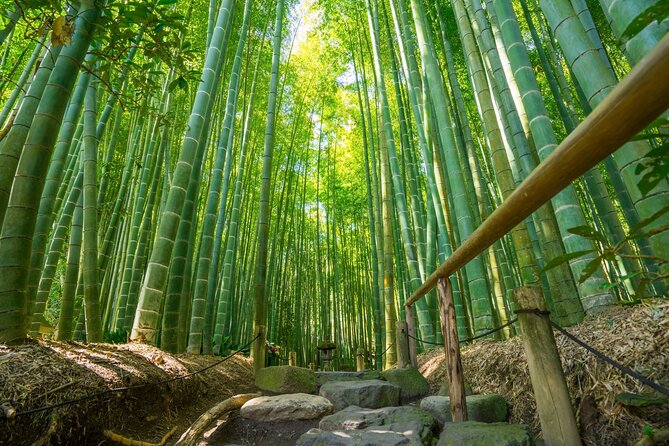
- Hokoku-ji and its 2,000 bamboo plants
- Tsurugaoka Hachimangu, Kamakura’s central shrine
- Hasedera, flowers and a sea-facing temple
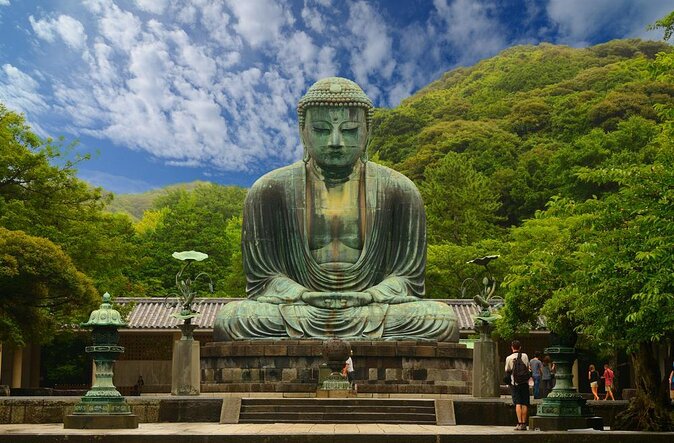
- The Great Buddha at Kotoku-in
- What the private vehicle changes
- Lunch, snacks, and the local cuisine promise
- Is $767.36 a fair price?
- Timing, group fit, and practical details
- Who will get the most from this Kamakura day trip?
- Should you book this private Kamakura tour?
- FAQ
- Where does the tour begin?
- How long does the experience last?
- How many people can join the private tour?
- Is transportation from Tokyo included?
- Which places are included?
- Are entrance fees included?
- Are food and drinks included?
- Can I request a specific guide?
- Can most people take part?
- What is the cancellation policy?
Key points at a glance
- Private Tokyo pickup: Start between 7:00 and 9:00 AM, with air-conditioned transport to Kamakura.
- Four worthwhile sights: See Hokoku-ji, Tsurugaoka Hachimangu, Hasedera, and Kotoku-in’s Great Buddha.
- A flexible human guide: Seiko, Yosuke, or Riley may be part of the operating team, though a specific guide is not promised.
- Good for groups: The quoted price covers up to nine people, so the per-person cost drops sharply with a full party.
- Extra costs to plan for: Admission is not included at Hokoku-ji, Hasedera, or Kotoku-in. Tsurugaoka Hachimangu is free.
- A long but manageable day: Expect about six to eight hours, plus bottled water and snacks along the way.
Why Kamakura makes a smart day out from Tokyo
Tokyo can fill several days on its own, but Kamakura gives you a useful change of pace. This former capital has temple grounds, shrine approaches, a famous bronze Buddha, and a connection to the first shogunal government in Japan.
The practical challenge is getting around once you arrive. Kamakura’s sights are spread across different parts of town, and public transport requires some planning. A private vehicle removes that work. You can leave Tokyo with pickup arranged, keep your group together, and spend your energy looking at the sights instead of checking timetables.
The day runs for roughly six to eight hours. That is enough time for the four listed stops, transport, walking, and a meal break, though the exact pace will depend on traffic and how long you spend at each place. The early pickup window, from 7:00 to 9:00 AM, is useful because an early start gives you more room before the day gets crowded.
This is not the cheapest way to see Kamakura. It is a convenience-focused option. If you are comfortable using trains and local buses, you can explore independently for less. If you value a vehicle, pickup, a private group, and help from someone who knows the area, the price makes more sense.
A few more Tokyo tours and experiences worth a look
Hokoku-ji and its 2,000 bamboo plants
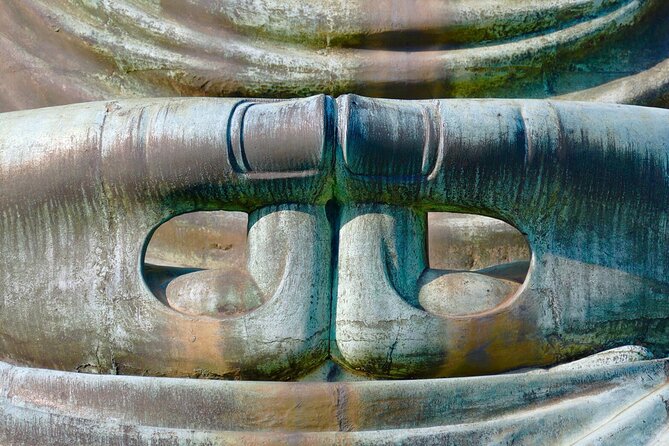
Hokoku-ji is the quiet opener. Built in 1334 and linked to the Rinzai Zen tradition, the temple is known for its bamboo grove, with about 2,000 plants creating a narrow green corridor.
The stop is scheduled for about 40 minutes. That gives you time to walk through the bamboo, take in the temple grounds, and pause without turning the visit into a long morning. The grove is the reason to come, but the appeal also lies in its smaller scale. It offers a calmer start than Kamakura’s grander religious sites.
Admission is not included, so you should expect to pay separately at the entrance. The tour information does not give the admission price, so check the current fee when you book or arrive.
I would pay attention to the time here. Forty minutes is enough for a focused visit, but not for a slow, extended temple exploration. If bamboo is high on your list, tell your guide early. The private format may make it easier to discuss pacing, although no fixed customization is promised.
Tsurugaoka Hachimangu, Kamakura’s central shrine
Tsurugaoka Hachimangu is the largest-feeling stop on this route. The shrine is dedicated to Emperor Ojin, along with his wife and mother, and later became the principal shrine of Minamoto Yoritomo, founder of the Kamakura government and its first shogun.
That connection gives the visit more weight than a quick photo stop. You are seeing a place tied to the political power that made Kamakura one of medieval Japan’s key centers. The 40-minute visit should let you walk through the main shrine area and get a sense of its ceremonial scale.
Admission is free, which helps balance the extra fees at the other religious sites. The shrine’s open grounds also give the day some variety. After the enclosed bamboo grove at Hokoku-ji, you get a broader setting and a clearer link to Kamakura’s role in Japanese government.
The stop is still fairly short. If you want time for every side path, shrine building, and shopping street near the approach, you may need to choose your priorities. The guide can help you focus, but this is not designed as a full-day study of Tsurugaoka Hachimangu alone.
Hasedera, flowers and a sea-facing temple
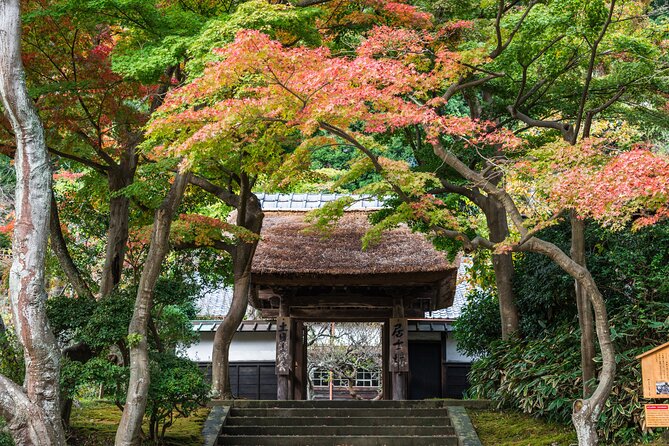
Hasedera is one of the route’s most scenic temple stops. It is described as the only Kamakura temple facing the sea and is known for seasonal flowers. A large carved-wood statue is enshrined here, adding a major religious artwork to the visit.
The planned stop is 30 minutes, so you will need to move with purpose. Hasedera has enough visual interest to reward a slower visit, especially if flowers are in season. The short time means this stop works best as an introduction rather than a complete exploration.
Admission is not included. As with Hokoku-ji, the current cost is not provided in the tour details, so allow for a separate payment.
I like the contrast Hasedera brings to the route. Hokoku-ji is about bamboo and quiet Zen space. Tsurugaoka Hachimangu is about shrine tradition and political history. Hasedera adds flowers, a sea-facing setting, and a major carved statue. Those changes keep the day from feeling like four versions of the same temple visit.
If you have mobility concerns, ask about the walking involved before departure. The information confirms that most people can take part, but it does not give a detailed accessibility description for every temple path or stairway.
The Great Buddha at Kotoku-in
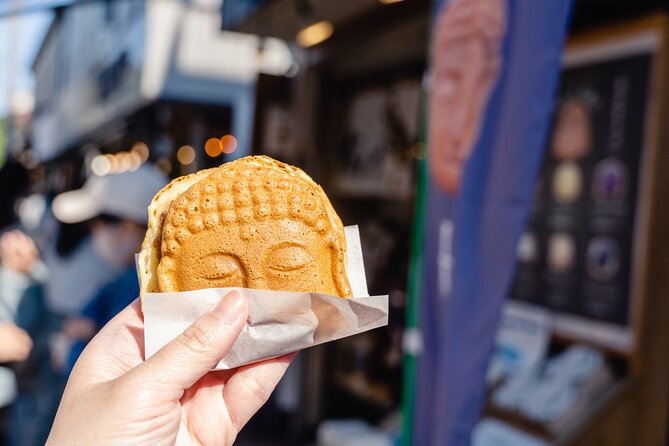
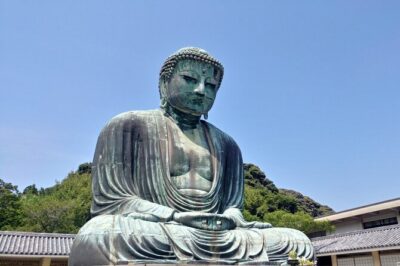
The Great Buddha of Kamakura is the headline sight. The bronze Amida Buddha was cast in 1252 and sits on the grounds of Kotoku-in Temple. Its age is striking: the statue predates the arrival of Europeans in Japan by roughly three centuries.
You get about 30 minutes at Kotoku-in. That is enough to see the statue, take photographs, and appreciate its size and calm expression. The statue is the kind of sight that works even if you have already visited several temples that day because it has a clear visual focus.
Admission is not included. The supplied details do not state the current entrance fee, so plan to pay separately.
One useful point from the guiding experience is that the Buddha may receive more time and explanation than a simple drive-by stop. Seiko has been praised for thoughtful guidance here, and the statue made a particularly strong impression during one visit. That does not guarantee Seiko will lead your tour, but it shows the value of having a guide who can add context rather than only point out the monument.
Kotoku-in is also a good place to keep the group together. With up to nine people, a private vehicle can save time between stops, but everyone still needs to agree on a meeting point and return time. A guide who also drives can help keep that process simple.
Other historical tours in Tokyo

What the private vehicle changes

The air-conditioned vehicle is the core convenience. You are picked up in Tokyo, driven to Kamakura, moved between the main stops, and returned as part of a private experience. You do not need to work out which train or bus connects each temple.
That convenience matters most for families, older relatives, and groups with limited time in Tokyo. It also helps if you want to keep shopping bags, snacks, or day packs with you rather than carrying everything through stations.
The private format means only your group participates. That gives you more room to ask questions and discuss the pace. It does not automatically mean every stop can be extended, since traffic, opening conditions, and the six to eight-hour schedule still matter.
Past guiding assignments have included drivers who also took on the guide role. Riley, for example, handled a short Kamakura tour as both driver and guide, while another visit involved finding parking close to the sights and walking back through a local shopping street. Those details point to a useful strength: the experience can feel more personal than a large coach tour.
Still, you should confirm what guiding level is included when booking. The available information names several excellent staff members but does not promise a particular person or state that a licensed guide will always accompany the vehicle.
Lunch, snacks, and the local cuisine promise
The experience includes bottled water and snacks. That is a small benefit, but it is useful on a long day with several walking stops.
The title highlights local cuisine, and the guiding experience includes time spent eating lunch. Riley helped find a quiet restaurant on one occasion, and another response refers to shopping, eating, walking, and a pleasant lunch under the open sky. These details suggest that food can be part of the day’s local feel.
You should treat lunch as part of the flexible experience rather than a clearly specified included meal. The supplied information does not name a restaurant, set a menu, or say that lunch is included in the $767.36 price. Ask before booking if a particular food stop matters to you.
This is also a good place to use the private format well. Tell the guide about your food interests and any needs at the start of the day. The information confirms snacks and water, but it does not confirm dietary arrangements, so do not assume a special menu is available.
Is $767.36 a fair price?
The price is $767.36 per group of up to nine people. For nine people, that works out to about $85.26 each. For four people, it is about $191.84 each. For two, it is $383.68 each.
That math tells you who should book. A full family group or a party of friends can receive solid value from private pickup, a vehicle for the day, and a guide or driver who knows Kamakura. A solo visitor or couple will pay a steep premium for the same service.
Three admissions are extra: Hokoku-ji, Hasedera, and Kotoku-in. Tsurugaoka Hachimangu is free. Bottled water and snacks are provided, but lunch and the entrance fees are not clearly included, so budget for them separately.
The price is easiest to defend if you place a high value on time. A self-guided Kamakura day can cost less, but you will need to plan transport, find each site, manage station changes, and make your own decisions about timing. This tour packages those tasks into one private day.
The price is harder to defend if you enjoy independent train travel or have several days in Tokyo. In that case, paying for a private vehicle may not add enough value. The tour works best when convenience is a priority, not when low cost is the main goal.
Timing, group fit, and practical details
Pickup is offered in Tokyo, with a start window between 7:00 and 9:00 AM. The early schedule is helpful, but you should confirm the exact pickup time and location after booking.
Confirmation is sent within 48 hours, subject to availability. The experience is near public transportation, though the main benefit is that you do not need to rely on it between the sights.
Most people can participate. The details do not promise full wheelchair access or describe every surface, stairway, and temple approach, so ask specific questions if your group has mobility needs.
The tour is offered seven days a week during the published operating periods. The dates shown cover the current period through November 29, 2026, with a separate holiday period from December 24, 2025 through January 4, 2026. Check your exact travel date because availability still applies.
You can cancel for a full refund up to 24 hours before the start time. Changes made within 24 hours are not accepted, and the cut-off uses local time. That policy gives you useful breathing room, but late changes will cost you.
Who will get the most from this Kamakura day trip?
I would recommend it to a group that wants Kamakura without the transport homework. Families with children, multigenerational parties, and friends sharing the vehicle are the best match because the per-person price improves as the group grows.
It also suits anyone who wants a local person to help shape the day. Staff members such as Seiko, Yosuke, and Riley have been described as friendly, thoughtful, and willing to help with meals, shopping streets, parking, and cultural questions. Since the assigned guide is not guaranteed, regard those names as examples of the operating team rather than a promise.
I would be more cautious about booking for two people unless you have limited time, dislike public transport, or strongly prefer private service. The cost is substantial, and the scheduled time at some sights is brief.
This is also not the ideal choice if you want a slow temple day. The four stops are varied and well chosen, but Hasedera and the Great Buddha each receive about 30 minutes, while Hokoku-ji and Tsurugaoka Hachimangu receive about 40 minutes. You will see the main points, not every corner.
Should you book this private Kamakura tour?
Book it if you are traveling with a larger group and want a simple, comfortable day from Tokyo. The best features are the private vehicle, Tokyo pickup, four strong Kamakura sights, and the possibility of a driver-guide who can help with food and local logistics.
Think twice if you are a couple on a tight budget or prefer to set your own pace. The admissions are extra, lunch is not clearly included, and the short visits may feel rushed if you want detailed temple exploration.
For a group of six to nine, I see a fair convenience bargain. For one or two people, it is a premium service whose value rests almost entirely on saving time and avoiding transport planning.
FAQ
Where does the tour begin?
The tour offers pickup in Tokyo. The available start window is between 7:00 and 9:00 AM, and the exact pickup details are confirmed after booking.
How long does the experience last?
The experience lasts approximately six to eight hours.
How many people can join the private tour?
The price covers a private group of up to nine people. Only your group participates.
Is transportation from Tokyo included?
Yes. The experience includes air-conditioned transportation from Tokyo to Kamakura and between the listed stops.
Which places are included?
The route includes Hokoku-ji, Tsurugaoka Hachimangu Shrine, Hasedera Temple, and Kotoku-in, home of the Great Buddha of Kamakura.
Are entrance fees included?
Admission is not included at Hokoku-ji, Hasedera Temple, or Kotoku-in. Tsurugaoka Hachimangu Shrine has free admission.
Are food and drinks included?
Bottled water and snacks are provided. The available details do not confirm that lunch or a set local cuisine meal is included.
Can I request a specific guide?
Several guides associated with past tours include Seiko, Yosuke, and Riley, but a specific guide is not guaranteed in the supplied information.
Can most people take part?
Yes. Most people can participate. Detailed accessibility information for each temple and shrine is not provided, so ask the operator about your specific needs.
What is the cancellation policy?
You can cancel at least 24 hours before the start time for a full refund. Cancellations or changes made less than 24 hours before the start time are not accepted for a refund.
More 1-Day Tours in Tokyo


More Historical Tours in Tokyo
More Kamakura & Enoshima Day Trips in Tokyo
More tours in Tokyo we've reviewed

Kamakura & Enoshima Day Trips, compared.
 ★ 4.5Tokyo: Kamakura & Enoshima Day Trip including Temple TicketsFrom $589 hours - 570 minutes
 ★ 4.5Tokyo: Mt. Fuji, Kamakura, Big Buddha, & Lake Ashi Day TripFrom $4910 - 11 hours
 ★ 4.5From Tokyo: Kamakura & Enoshima 1-Day Bus TourFrom $66
 ★ 5.0Kamakura Historical Walking Tour with the Great BuddhaFrom $98
 ★ 5.0Kamakura Private Tour: Temples, Nature, and the Great BuddhaFrom $98
 ★ 5.0Kamakura Walking Tour – The City of ShogunFrom $35