
Reviewed · TEA CEREMONY & MATCHA
Hands-On Japanese Craft in Tokyo with Mochi Wagashi & Matcha
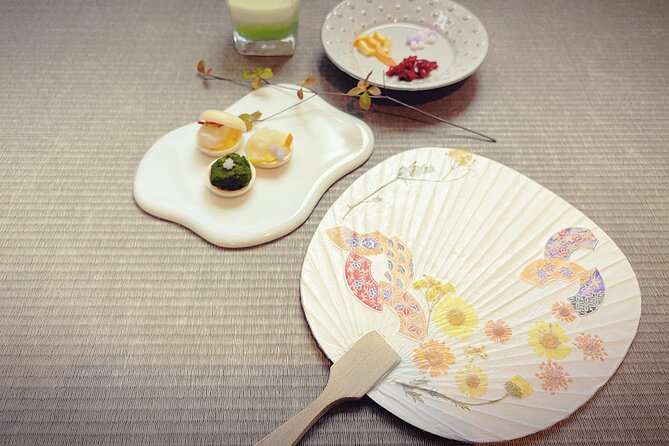
The most appealing part of this Tokyo experience is that you do not simply look at Japanese culture, you make something you can carry home. You decorate a round uchiwa fan with pressed flowers and origami, then prepare a matcha latte and sample two unusual wagashi.
I like the personal souvenir and the gentle introduction to matcha. The fan-making is creative without demanding artistic skill, while milk softens matcha’s bitter edge. The main consideration is price: at $78.69 per person for about 90 minutes, this is best for visitors who value guided participation more than a long meal or sightseeing route.
In This Review
- Key points at a glance
- Making an uchiwa you can actually use
- Why the fan is more than a simple craft
- Preparing a mild matcha latte
- Two wagashi with very different personalities
- A 90-minute break from Tokyo sightseeing
- How the price compares with the experience
- Who will get the most from this workshop
- Booking details worth knowing
- Should you book the uchiwa and matcha experience?
- FAQ
- How long does the experience last?
- What do I make during the workshop?
- What food and drink are included?
- Is the matcha served plain?
- How many people can join the activity?
- What is the cancellation policy?
Key points at a glance
- Pressed-flower uchiwa: Design a traditional round Japanese fan with flowers and patterned origami, then take it home.
- Matcha for beginners: Prepare powdered green tea with milk for a smooth, mild drink.
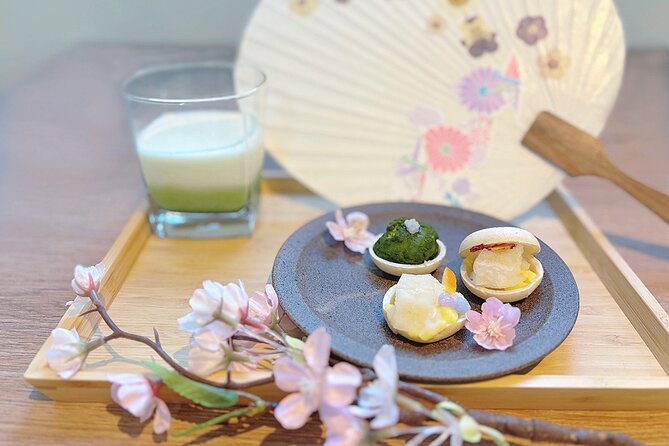
- Two distinctive sweets: Try modern monaka with custard, mochi, and dried fruit, plus a dessert shaped like a moss ball.
- Small-group format: The session accepts a maximum of 15 people, allowing room for help during the craft and tea preparation.
- Short Tokyo activity: The 90-minute program fits neatly into a busy day of sightseeing.
- Practical booking terms: You receive a mobile ticket, meet in Tokyo, and return to the same meeting point.
Making an uchiwa you can actually use
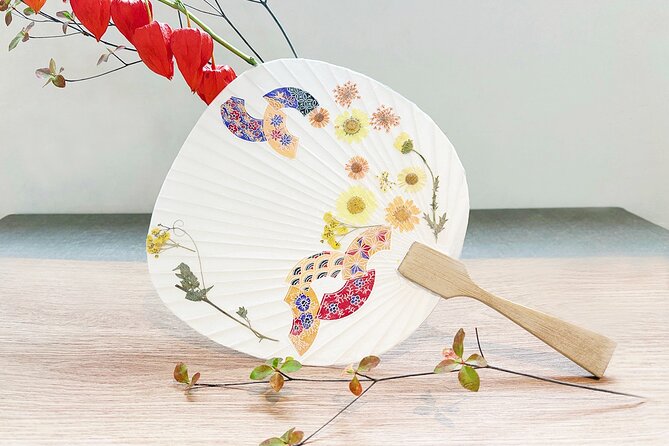
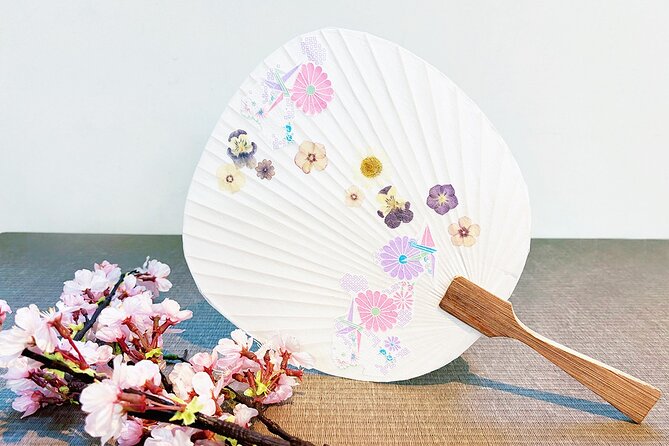
The workshop begins with the fan, and this is the strongest reason to book. An uchiwa is a traditional Japanese round fan, used for creating a little breeze on warm days. It is not a folding fan. Its broad, simple shape gives you a generous surface for decoration.
You use pressed flowers and Japanese-patterned origami paper to build your design. The materials make the activity approachable. You do not need to draw, paint, or arrive with a plan. Instead, you arrange ready-to-use decorative pieces and turn them into a pattern that reflects your taste.
I like this kind of souvenir because it has a story. A shop-bought fan can be pretty, but your own uchiwa reminds you of the hour you spent making it. Each one comes out differently, even when everyone starts with similar materials.
The process also connects the craft with a Japanese appreciation of nature. Pressed flowers preserve small bits of plant life, while the fan itself is a useful summer object rather than a purely decorative trinket. The result has both visual charm and a clear connection to everyday Japanese culture.
One detail adds interest: the flower designs are fixed onto the fan and imprinted with an iron. You should expect guidance during this step. It is hands-on, but it is not a free-for-all with tools and materials. Support is available as you work through the design.
If you are not naturally artistic, do not let that stop you. The activity is designed so that you can make something attractive without special training. You may find the hardest part is choosing how to arrange the flowers and patterned paper.
A few more Tokyo tours and experiences worth a look


Why the fan is more than a simple craft
A short craft class can sometimes feel like a children’s activity added to a sightseeing schedule. This one has a stronger cultural link because the finished object is an uchiwa, an item associated with Japanese summer and cooling breezes.
That does not mean the session is a formal lesson in Japanese craft history. The information provided focuses on making and enjoying rather than a long lecture. You get a friendly introduction, a practical task, and a finished object in your hands.
The fan also makes this activity useful for families and mixed-age groups. Children can take part in arranging the decorations, while adults get a quiet creative break from Tokyo’s crowded streets. The program has been described as easy to enjoy even for people who do not consider themselves creative.
You should keep your expectations realistic. This is a guided souvenir-making session, not an advanced artisan course. If you already practice traditional Japanese paper crafts, you may find the technique fairly simple. For most visitors, that simplicity is a benefit because it keeps the experience relaxed.
Preparing a mild matcha latte
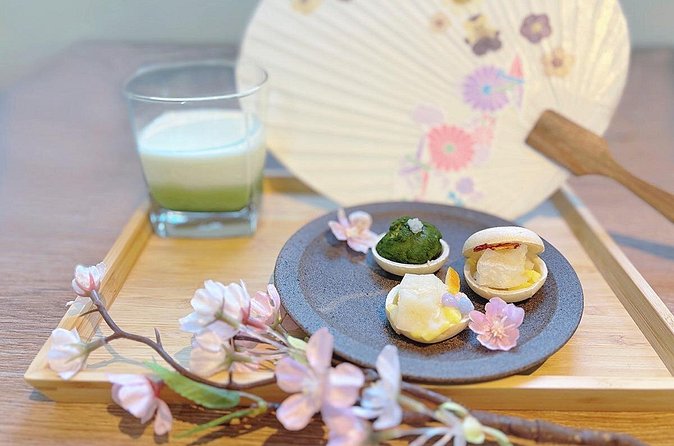
After the craft, you make and drink matcha latte. Matcha is powdered Japanese green tea, rather than tea leaves steeped in hot water and removed. Mixing it with milk gives the drink a creamy texture and softer flavor.
This is a smart format for first-time matcha drinkers. Plain matcha can taste grassy, bitter, or intense if you are used to coffee or black tea. The milk makes the drink gentler, and the activity lets you take part in preparing it rather than receiving an unfamiliar beverage without explanation.
You receive help with each step. That matters because matcha preparation has its own rhythm, and a little guidance makes it easier to produce a pleasant drink. Even people who do not usually choose matcha can enjoy the preparation as a cultural activity.
I would not book this solely for a serious tea ceremony. The description is for a matcha latte, not a formal tea gathering with an extended focus on ceremony, utensils, or traditional etiquette. Think of it as an approachable introduction to matcha in a social workshop.
The matcha portion also works well for families because the milk-based drink is milder than straight matcha. Still, the information does not promise a separate child’s recipe or alternative beverage, so anyone with a strong dislike of green tea should keep that in mind.
Two wagashi with very different personalities
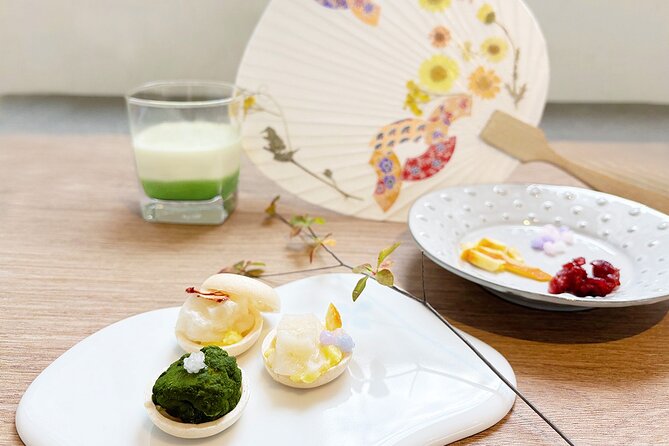
The tasting includes two Japanese sweets. They are not simply standard pieces of red bean paste confectionery. Both are presented in modern, playful ways.
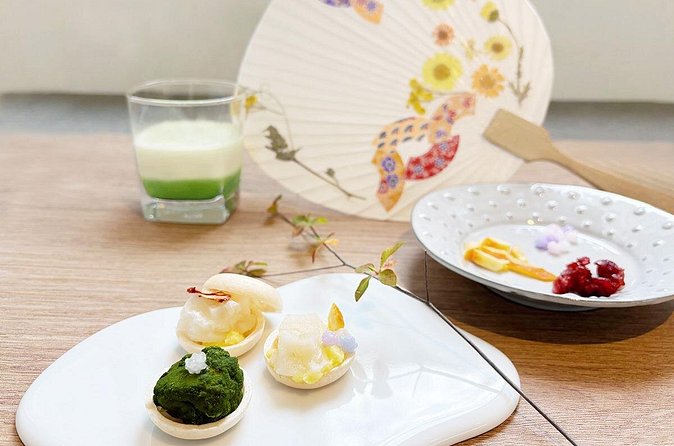
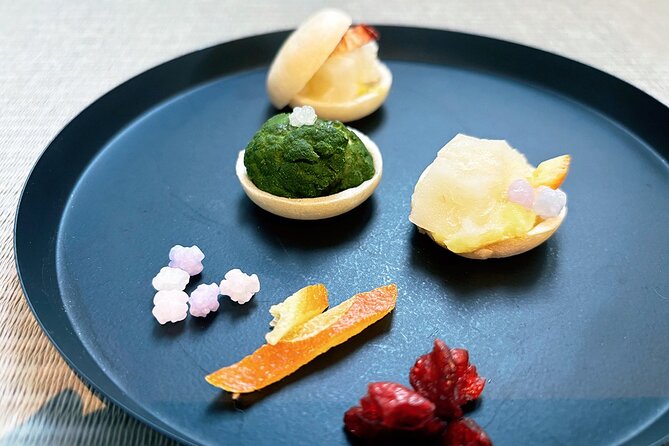
The first is a contemporary monaka. Traditional monaka uses crisp wafer shells, but this version adds custard cream, mochi, and dried fruit. The combination gives you several textures in one bite: a light crunch from the wafer, softness from the mochi, creaminess from the custard, and a fruity finish.
This is particularly useful if you are unsure about classic wagashi. Red bean paste is common in Japanese sweets, but this preparation is designed to be enjoyable even if you do not like it. The filling and toppings make the dessert feel familiar to anyone who likes cream, fruit, and chewy mochi.
You may have some choice of dried fruit toppings. The exact selection is not specified, so the available options can vary. The important point is that you take part in arranging or finishing a modern Japanese sweet rather than simply tasting a pre-plated dessert.
The second sweet is shaped like a kokedama. Kokedama is a Japanese gardening style in which a plant grows from a ball of soil covered with moss. Here, that rounded plant form becomes a cute dessert.
The kokedama-inspired sweet is likely to be the most photogenic part of the tasting. It links food with Japanese gardening and gives the dessert a clear visual identity. You get a small lesson in a familiar Japanese design idea without needing a separate garden visit.
The supplied details do not specify every ingredient in the kokedama sweet. If you have allergies or strict dietary needs, ask before booking or contact the provider. The included food is clearly stated as a matcha latte and two wagashi, but no special diet information is provided.
A 90-minute break from Tokyo sightseeing
The activity lasts about one hour and 30 minutes and begins and ends at the meeting point in Tokyo. There is no hotel pickup or drop-off, so you need to make your own way there and back.
That short duration is useful. You can place the workshop between major sights, use it as a rainy-day alternative only if the provider confirms it is operating, or schedule it during a lighter part of your day. You will not lose half a day of sightseeing for a craft and snack session.
The trade-off is that the program does not include a walking tour, neighborhood exploration, or transport between attractions. Its value is concentrated in the workshop itself. If you want an activity that shows you several parts of Tokyo, this is not the right choice.
A mobile ticket keeps the booking simple. Confirmation is provided when you book, so you can keep the ticket on your phone. Even so, give yourself enough time to reach the meeting point. The exact meeting address is not included in the supplied details, so check the booking information carefully before setting out.
The group can include up to 15 people. That is small enough to allow personal help during the fan decoration and matcha preparation, though it is not a private class. If you want one-on-one instruction throughout, ask about the group arrangement before paying.
A few more Tokyo tours and experiences worth a look


How the price compares with the experience
The cost is $78.69 per person. That is a significant price for 90 minutes, especially when the session does not include transportation or a full meal.
The value improves if you care about three things: a guided activity, a take-home souvenir, and a tasting that goes beyond an ordinary café stop. You are paying for materials, instruction, food, and the chance to create something yourself. The uchiwa gives the experience a lasting physical result.
The price is harder to justify if you mainly want a cheap matcha drink or a quick dessert. Tokyo has many cafés and shops where you can sample sweets for less. You should book this for the participation, not for the food quantity.
I also think the price makes more sense for a special occasion, a first visit to Japan, or a family activity where everyone wants to do the same thing together. The personal fan helps separate it from a standard food tasting.
The program has received a 5 rating from 11 reviews, with 100 percent recommending it. The most consistent strengths are the kind staff, patient step-by-step help, enjoyable fan decoration, and good matcha. One useful point is that even someone who did not particularly like matcha still found the preparation enjoyable.
Who will get the most from this workshop
I would recommend this experience to:
- First-time visitors who want an easy introduction to Japanese culture.
- Families looking for a hands-on activity with a clear finished result.
- Couples or friends who enjoy making something together.
- Matcha beginners who prefer a creamy latte to plain green tea.
- Anyone who wants a light souvenir with a personal connection.
- Visitors with a free 90-minute slot in a Tokyo itinerary.
It is less suited to someone seeking a formal tea ceremony, an advanced craft lesson, or a filling culinary class. The session is friendly and accessible in spirit, but it is still a short introduction rather than a serious apprenticeship.
The workshop also suits people who like taking photos. The floral fan, patterned paper, matcha, and moss-ball dessert all give you attractive subjects. Just remember that the real reward is the activity and the finished fan, not a large meal.
Booking details worth knowing
The experience requires good weather. If poor weather causes a cancellation, you are offered another date or a full refund. The minimum number of participants also matters. If that minimum is not reached, you are offered another date or experience, or a full refund.
For your own flexibility, cancel at least 24 hours before the start time to receive a full refund. Cancellations or changes made less than 24 hours in advance are not accepted for a refund. Cut-off times follow Tokyo local time.
The activity ends back at the meeting point. Since hotel transfers are not included, plan your route on both sides of the class. The provider is Patia’s Japanese Cooking Class, and the booking includes snacks described as the matcha latte and two types of wagashi.
Should you book the uchiwa and matcha experience?
Book it if you want a compact, friendly activity where you make a souvenir, prepare a mild matcha drink, and taste imaginative Japanese sweets. The uchiwa is the best feature because it gives you something personal to take home, and the step-by-step help makes the craft approachable even if you lack confidence.
Think twice if $78.69 feels high for a 90-minute session or if you want a full meal, a formal tea ceremony, or a longer cultural tour. For the right visitor, though, this is a pleasant way to slow down, use your hands, and leave Tokyo with more than another photograph.
FAQ
How long does the experience last?
The activity lasts approximately 1 hour and 30 minutes.
What do I make during the workshop?
You decorate your own round uchiwa Japanese fan using pressed flowers and origami paper. You can take the finished fan home.
What food and drink are included?
The experience includes a matcha latte and two types of wagashi. The sweets are a modern monaka with custard cream, mochi, and dried fruit, plus a kokedama-inspired sweet shaped like a moss ball.
Is the matcha served plain?
No. The included drink is a matcha latte made by mixing powdered matcha with milk.
How many people can join the activity?
The group has a maximum of 15 participants.
What is the cancellation policy?
You can cancel at least 24 hours before the start time for a full refund. Changes or cancellations made less than 24 hours before the start time are not accepted for a refund. If the activity is canceled because of poor weather or because the minimum number of participants is not met, you are offered another date or experience, or a full refund.
More Workshops & Classes in Tokyo


More Craft Workshops in Tokyo
More Tea Ceremony & Matcha in Tokyo

More tours in Tokyo we've reviewed











Tea Ceremony & Matcha, compared.
 ★ 5.0Matcha Making Class in Tokyo with Authentic Japanese Sweets SetFrom $21
 ★ 5.0Tokyo: Traditional Tea Ceremony with a Tea MasterFrom $381 hour
 ★ 4.5Dynamic Tokyo: Tokyo Tower, Tea Experience, Bay Cruise Day TourFrom $99
 ★ 4.9Tokyo: Matcha Making Experience with Mochi Sweets in AsakusaFrom $221 hour
 ★ 4.7Tokyo: Matcha and Kimono ExperienceFrom $57
 ★ 5.0Tea Ceremony Workshop in Tokyo by the Experienced InstrucorFrom $38