
Reviewed · ASAKUSA TOURS
Asakusa: 3.5-hour Big-picture History Walk
Asakusa is often treated as a quick temple stop. This 3.5-hour history walk gives the district a much larger role, using Sensō-ji, the riverfront, shopping streets, shrines, and old entertainment lanes to explain how Japan changed from an isolated feudal society into the country you see today.
I like the clear connection between Shinto and Buddhism, since you see both at the same temple complex and learn why ordinary Japanese worshipers have long used both. I also like the route’s unusual balance: sacred gates and incense give way to theaters, pubs, snacks, and streets that recall old Tokyo.
The main drawback is the amount of walking. The tour runs in all weather, and its historical focus may suit adults better than very young children. You will also spend time around busy shopping streets, so this is not a quiet temple meditation walk.
In This Review
- Key points to know before booking
- Why Asakusa works as a history classroom
- Starting beside Asakusa Station and the Sumida River
- The information center and Japan’s changing skyline
- Kaminarimon and the first lesson in symbols
- Nakamise Shopping Street and the long life of local commerce
- Hōzōmon Gate and Sensō-ji’s Buddhist world
- Asakusa Shrine and Yōgō-dō Pavilion
- Nishi-sandō and the Edo-period mood
- Mokubakan and Asakusa’s entertainment past
- Hoppy Street and the working-class spirit of old Tokyo
- Japan’s isolation, the Netherlands, and the opening of the country
- Is $88 a fair price?
- Who should book this Asakusa walk?
- Should you book it?
- FAQ
- How long does the Asakusa history walk last?
- How much does the tour cost?
- Where is the meeting point?
- Is hotel pickup included?
- What language is the tour conducted in?
- How large is the group?
- Are headsets provided?
- Are snacks included?
- What should I bring?
- Does the tour operate in bad weather?
- Can children join the tour?
- Can I cancel my booking?
Key points to know before booking
- Japan’s opening to the world: Learn why Japan restricted foreign contact, why the Netherlands remained its trading link, and how the country later reopened.
- Two religions, one daily life: See how Buddhism and Shinto share space, rituals, and worshipers in Asakusa.
- A small group of up to eight: The size allows room for questions and makes it easier to hear your guide in crowded streets.
- Sacred sites beside old entertainment lanes: The walk moves from Sensō-ji and Asakusa Shrine to pubs, theaters, and postwar working-class streets.
- A rooftop view with useful context: The Asakusa Culture Tourist Information Center adds architecture, orientation, and views toward Tokyo Skytree.
- Snacks are part of the lesson: Fresh Japanese traditional sweets and snacks give you a small taste of local food culture along the way.
Why Asakusa works as a history classroom
Asakusa compresses several versions of Tokyo into a walkable area. You begin near the Sumida River, pass through the famous Kaminarimon Gate and Nakamise Shopping Street, reach one of Japan’s best-known Buddhist temples, and then move into streets shaped by theater, drinking, and popular entertainment.
That contrast is the point. Japanese life has never been only solemn temples or only neon nightlife. People pray, shop, eat, work, watch performances, and meet friends within a few minutes of the same sacred grounds.
I find this approach more useful than a simple parade of landmarks. Instead of collecting photographs, you get a framework for understanding what you see. A gate becomes part of a religious system. A shopping street becomes evidence of changing commerce. A pub lane helps explain the energy of postwar Tokyo.
The group is limited to eight people, and headsets are supplied for groups of three or more. That matters in Asakusa, where crowds and traffic can quickly swallow a soft-spoken guide. Past tours have been led by guides including Ai, Yasu, Taka, Jun, Yoko, Akiko, and Satchi, with special praise for clear explanations, patience, and attention to individual interests.
A few more Tokyo tours and experiences worth a look


Starting beside Asakusa Station and the Sumida River
Meet in front of the Burger King beside Exit 4 of Asakusa subway station on the Ginza Line. This is a practical meeting point, but step outside the station at Exit 4 rather than waiting underground.
The walk begins with the Tokyo Cruise Asakusa Pier. You spend about 15 minutes here with your guide, using the riverfront to understand Asakusa’s position within Tokyo. The water helps explain why this area developed as a major point of movement and public life.
You may also hear how older and newer Tokyo connect across the river. The view toward Tokyo Skytree becomes part of the conversation later, and one guide pointed out the Japanese wordplay behind its 634-meter height: mu-san-yon or roku-san-yon style number readings can be used to echo the digits. The exact pun is a small detail, but it shows how language and numbers often carry extra meaning in Japan.
The information center and Japan’s changing skyline
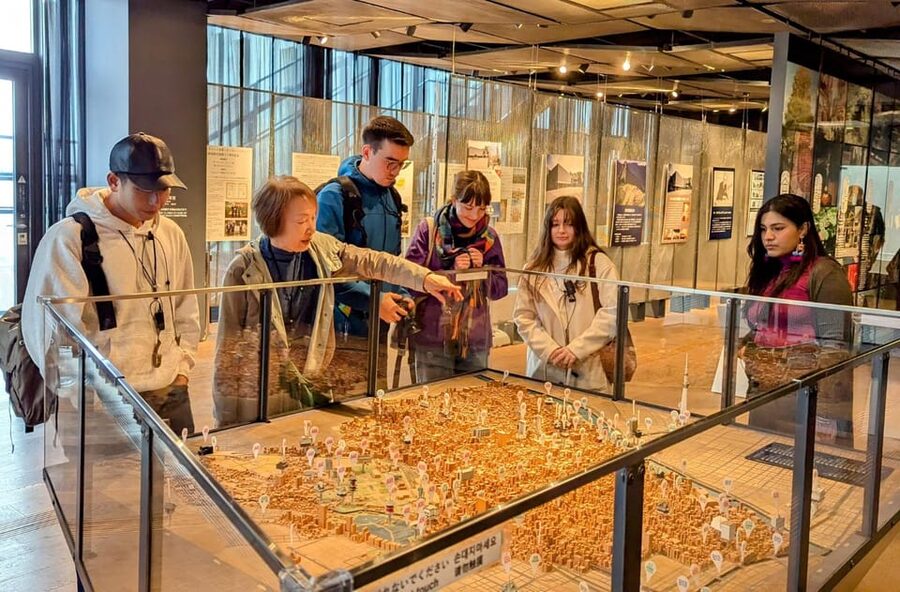
The Asakusa Culture Tourist Information Center receives about 30 minutes of guided attention. This is more than a place to pick up maps. Its modern design gives you an early example of how contemporary Japan can sit beside older religious architecture without replacing it.
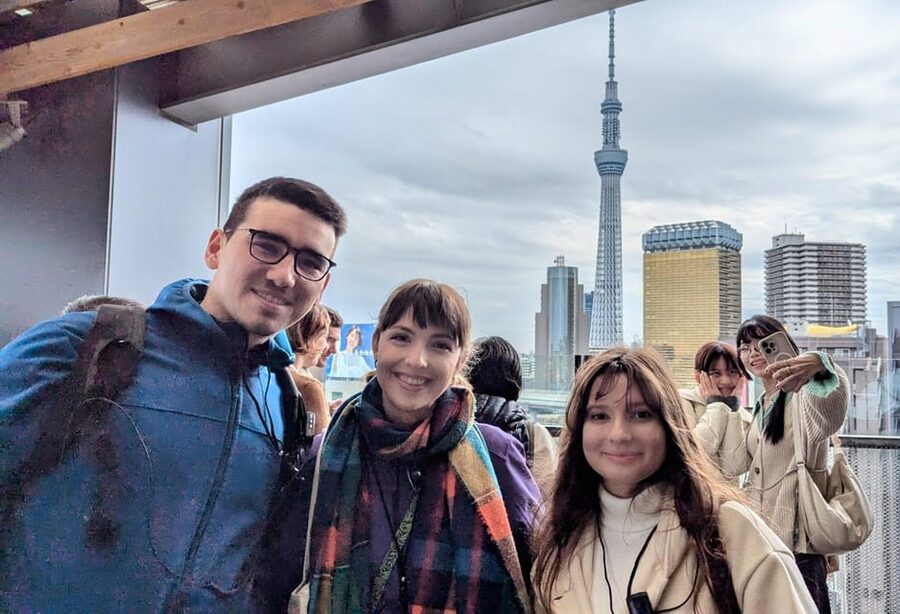
The building also provides a useful high viewpoint. You can look over the district and toward Tokyo Skytree, then see how the temples, shops, roads, and river fit together. A rooftop view is particularly helpful at the start of a walking tour because it gives you a mental map before the streets become crowded.
This stop also sets up the tour’s East-meets-West theme. Asakusa is full of modern forms, imported ideas, and old Japanese practices sharing the same few blocks. The guide uses the area to explain how Japan absorbed outside influence while retaining its own customs.
Kaminarimon and the first lesson in symbols
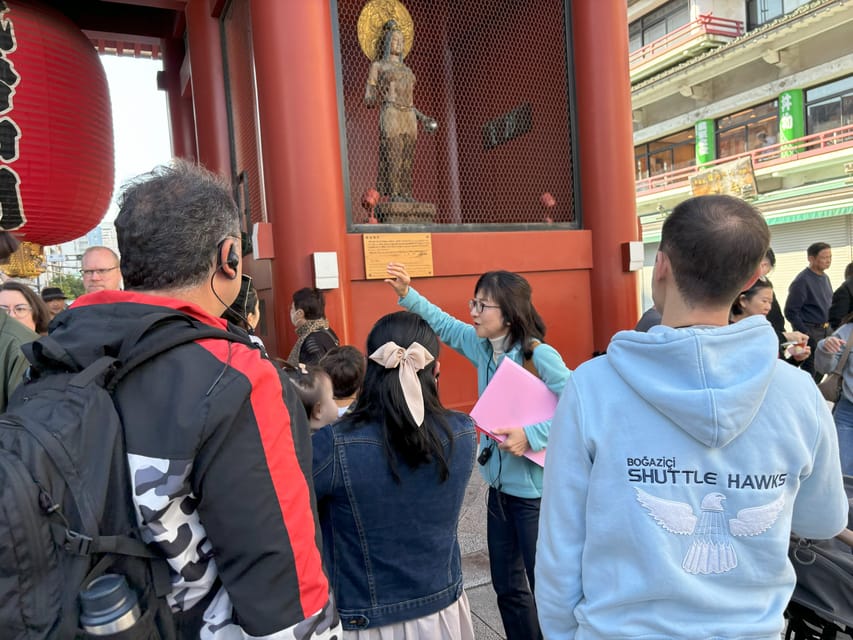
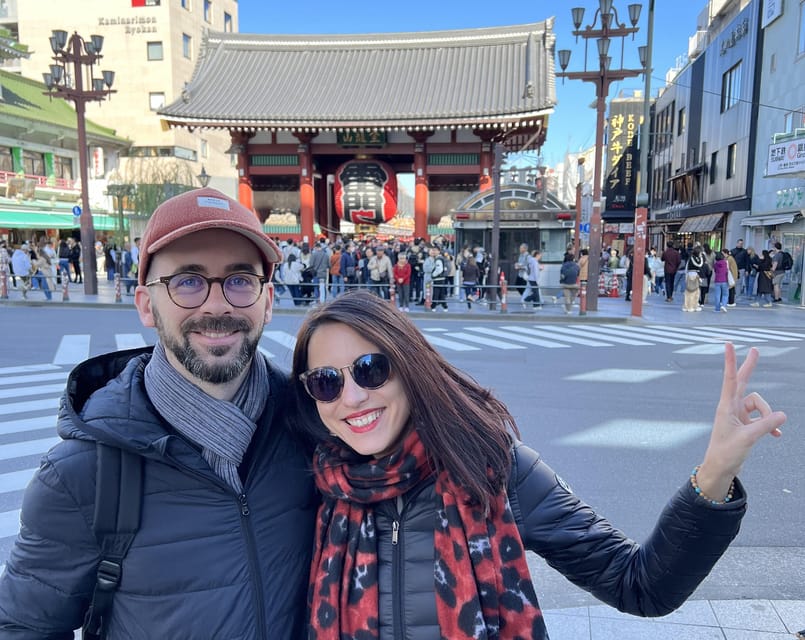
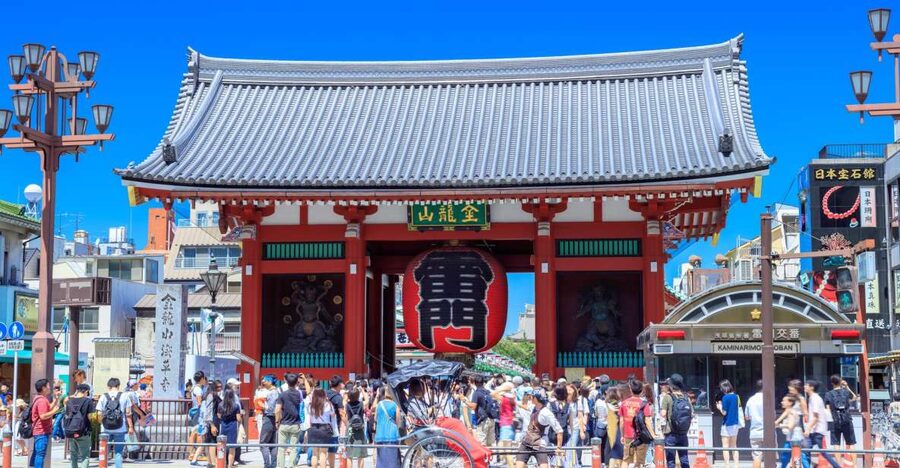
Kaminarimon, or the Thunder Gate, receives about 15 minutes. Its giant lantern and guardian figures make it one of Tokyo’s easiest landmarks to recognize, but the useful part is learning how to read the symbols rather than simply photographing them.
The gate introduces the relationship between public display and religious meaning. It is both an entrance used by huge numbers of people and a sign that you are approaching sacred ground.
This is also a good place to ask questions. The small group format helps here, since you are not competing with dozens of other people for the guide’s attention. Expect crowds, especially around the gate, and keep your belongings close while the group gathers.
Nakamise Shopping Street and the long life of local commerce
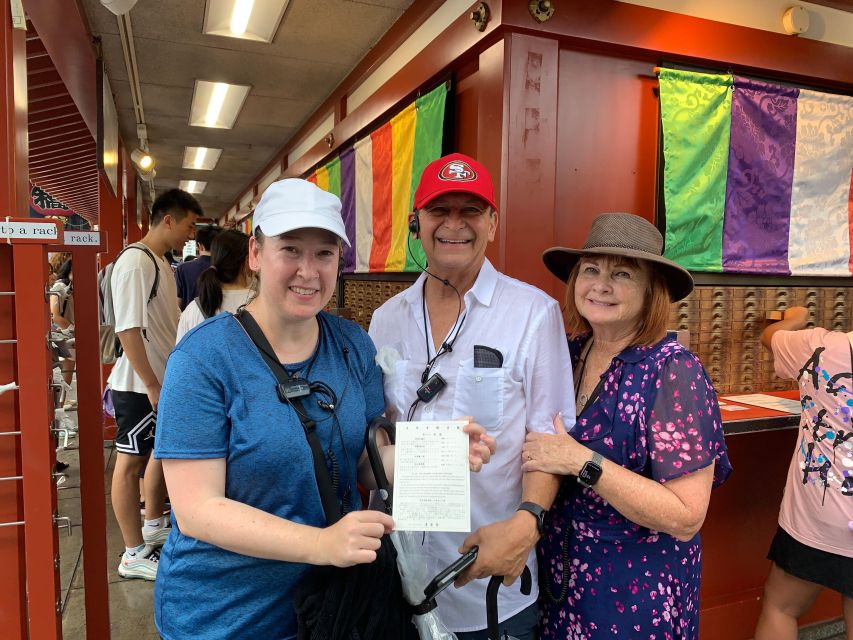
Nakamise Shopping Street takes about 30 minutes. The shop-lined approach leads toward Sensō-ji and is one of the most recognizable parts of Asakusa.
You will find souvenirs, traditional sweets, snacks, and other goods aimed at people heading to the temple. The guide explains why this kind of commercial approach belongs beside a sacred site rather than treating the shops as an interruption.
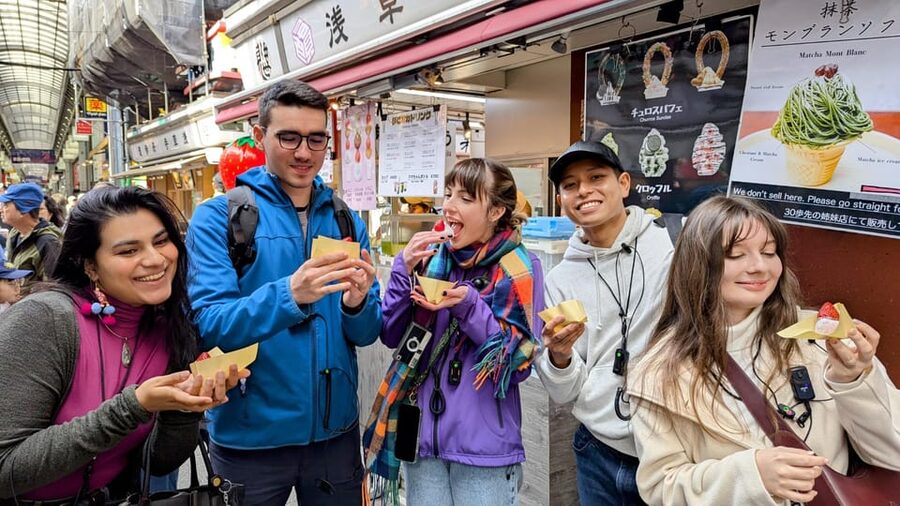
This is one of the places where the included snacks add value. You receive a selection of freshly made Japanese traditional treats, giving you a direct taste of the food culture connected with temple districts and old shopping streets.
Do not expect a long shopping break. The guide may explain what you are seeing and keep the group moving. If you want serious browsing, return later on your own. That is a sensible plan, especially since one past guide adjusted the pace for people more interested in architecture, gardens, and history than buying souvenirs.
Other walking tours we've reviewed in Tokyo



Hōzōmon Gate and Sensō-ji’s Buddhist world
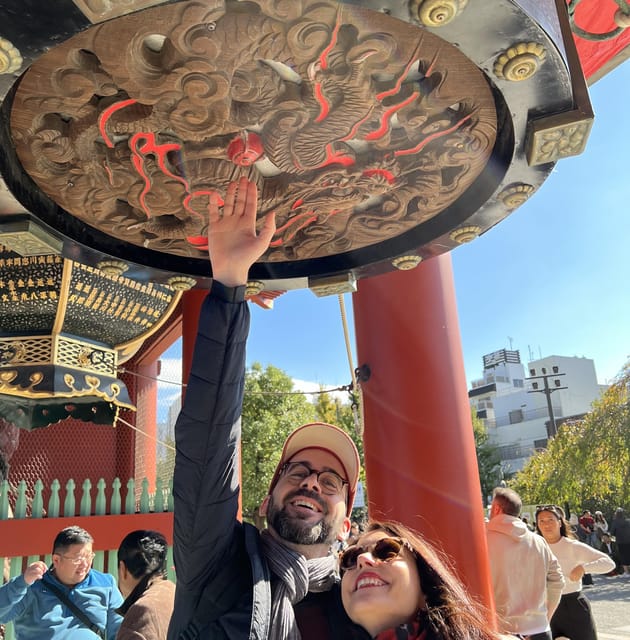
Hōzōmon Gate receives about 15 minutes, followed by roughly 45 minutes at Sensō-ji Temple. This is the longest stop, and rightly so. Sensō-ji is the spiritual center of the walk and the clearest place to explore Buddhism’s role in Japanese life.
Your guide explains what the major structures and practices mean, not just where to stand for a photograph. You can expect discussion of the temple’s place in the community and its connection with the surrounding approach streets.
The larger lesson concerns the two major religions of Japan. Buddhism and Shinto have often shared worshipers and locations, with each serving different needs in daily life. The tour explains how they have coexisted and complemented one another instead of forcing you to treat them as competing systems.
You will likely see familiar acts of worship, but the historical context makes them easier to understand. The point is not to turn you into a religious scholar. It is to help you recognize why a Japanese person might visit a Buddhist temple for one purpose and a Shinto shrine for another, without seeing a conflict.
The temple stop can be crowded and active. If you want silent contemplation, arrive early on another day. During the tour, the guide’s explanations are the main attraction, and the group may pause in busy areas.
Asakusa Shrine and Yōgō-dō Pavilion
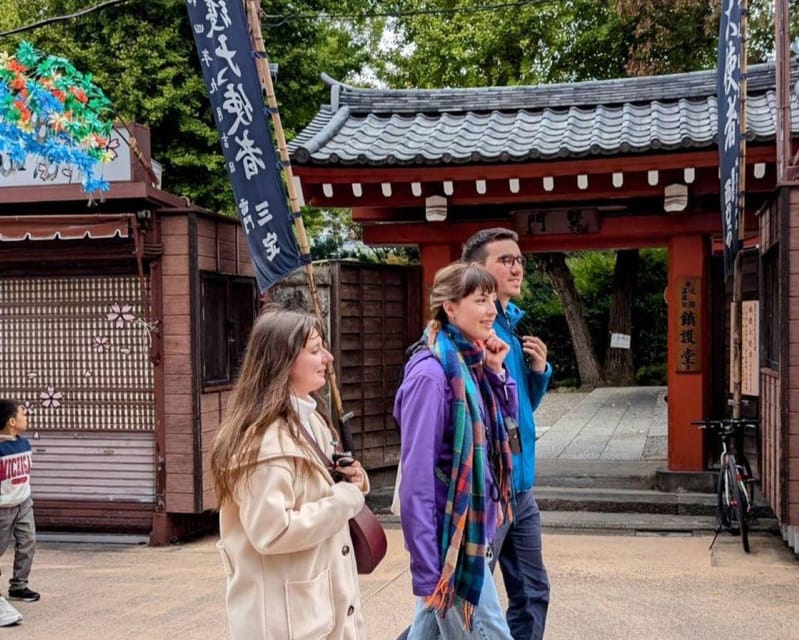
The walk continues to Asakusa Shrine for about 15 minutes. This gives you a direct comparison between Buddhist and Shinto spaces, often within the same broader temple precinct.
That comparison is one of the strongest parts of the experience. You do not need to visit separate parts of Tokyo to notice differences in architecture, ritual, and atmosphere. The guide uses nearby sites to show how the two faiths fit into ordinary Japanese practice.
Yōgō-dō Pavilion receives another 15 minutes. This shorter visit keeps the religious section from becoming a lecture inside one large temple. Instead, you move among several places and see how sacred buildings relate to paths, gates, courtyards, and the surrounding neighborhood.
The historical material also reaches beyond Japan. The guide discusses cultural parallels between Japan and the West, including the very different roles dragons can play in Eastern and Western traditions. You also consider similarities in how people thought about the world a thousand years ago. These comparisons help prevent Japanese history from becoming a sealed-off subject with no connection to Europe or North America.
Nishi-sandō and the Edo-period mood
Asakusa Nishi-sandō Shopping Street receives about 15 minutes. Compared with Nakamise, it offers a smaller and quieter setting, with a more nostalgic feel.
This is where the tour shifts from major sights to atmosphere. You can picture an older Asakusa without needing a museum reconstruction. The guide ties the street to Edo-period Japan and encourages you to notice how a modest shopping lane can preserve a sense of the past.
The phrase Edo period covers a long era, so do not expect every building to be an untouched relic. The value comes from the setting and the explanation. You are being shown how the old city is remembered and presented in modern Tokyo.
This stop may appeal to you if you like atmosphere, old-style streets, and local details more than grand monuments. It is also a useful pause after the crowds near Sensō-ji.
Mokubakan and Asakusa’s entertainment past
Asakusa Mokubakan receives about 15 minutes. The stop introduces the district’s history as an entertainment center before Shinjuku and Shibuya became Tokyo’s best-known night-life areas.
Asakusa once drew people for cinemas, vaudeville theaters, performance halls, and other public amusements. The area beside the temple was not simply a religious zone. It was also a place where people came to spend money, meet friends, watch shows, and enjoy a break from work.
That dual nature is one of the tour’s best ideas. Sacred and secular life sit side by side, and the shift from temple grounds to entertainment streets happens in only a few minutes.
Mokubakan helps you imagine the early twentieth-century atmosphere, while also showing how districts change. Popular culture moves. One neighborhood loses its central role as another takes over. Asakusa still carries the memory of that earlier fame in its streets and venues.
Hoppy Street and the working-class spirit of old Tokyo
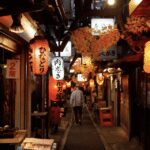
The final 15-minute stop is Hoppy Street, a narrow lane known for old-style Japanese pubs. It offers a look at postwar working-class energy and resilience, far from the polished image many people carry of Tokyo.
You are not simply being sent to a drinking street for a quick photograph. The guide connects the lane to the way people relaxed, socialized, and rebuilt ordinary life after the war. The pubs give the route a human ending after the larger discussions of religion, foreign policy, and cultural change.
The stop is brief, so it is best viewed as an introduction. You might want to return later for a meal or drink, but no food or drink purchase is listed as part of the tour. The traditional snacks are included earlier, while additional spending is your choice.
Finishing here works well. You begin with temples and historical symbols, then end among casual neighborhood life. Japan’s old and new sides are not placed in separate boxes. They overlap.
Japan’s isolation, the Netherlands, and the opening of the country
One of the tour’s most useful themes is Japan’s period of restricted foreign contact. You learn why Japan closed itself, why the Netherlands remained its only trading partner during that era, and what changed when Japan reopened in the nineteenth century.
The route includes a sign that symbolizes the transition from isolation to opening. Details like this make a broad political story easier to remember because you attach it to something you actually saw.
The guide also discusses how Japanese art affected the wider world, especially French Impressionist painters. This gives you a two-way view of cultural exchange. Japan was not only receiving Western ideas. Its art also altered how artists abroad thought about composition, pattern, and everyday scenes.
That context adds value to a temple-area walk. You begin to see Japan’s history as a series of exchanges, choices, and adaptations rather than a simple story of old traditions followed by sudden modernization.
Is $88 a fair price?
At $88 per person, this is not the cheapest way to see Sensō-ji. You can enter the temple grounds and walk Nakamise without paying for a tour.
The value comes from the structure and explanation. You receive 210 minutes with an English-speaking certified guide, a small group capped at eight, headsets for groups of three or more, and traditional snacks. You also cover several different sides of Asakusa rather than stopping at the main gate and leaving.
I consider the price fair if you want historical context and personal guidance. It is less useful if you mainly want photographs, shopping time, or a flexible schedule. A guide can also point out restrooms before you need one, as Taka was praised for doing, which matters during a long walk.
Free cancellation up to 24 hours ahead and the option to reserve now and pay later reduce the risk if your Tokyo plans are still shifting.
Who should book this Asakusa walk?
I would choose this for a first or second visit to Tokyo when you want to understand Asakusa rather than simply see it. It suits adults, history fans, architecture lovers, and people curious about how religion functions in everyday Japan.
Families are welcome, and children under six may join without charge. Still, the historical focus and 210-minute duration may test very young children.
You should be comfortable with a moderate amount of walking, standing, crowds, and outdoor conditions. Wear comfortable shoes and bring water. Vending machines are available, and the tour operates in all weather, so rain protection and suitable clothing matter.
The activity is not designed for people with mobility impairments, though anyone with mobility concerns is encouraged to contact the provider first. The group may do its best to accommodate you, but you should ask before booking rather than assume the route is fully accessible.
Should you book it?
Book this tour if you want the story behind Asakusa, not just its famous gates. The strongest features are the clear explanation of Buddhism and Shinto, the link between Japan’s isolation and global influence, and the move from temple grounds into old entertainment streets.
Skip it if you want a slow private visit, extensive shopping time, or a short photo stop. For most curious adults, $88 buys a useful half-day orientation to one of Tokyo’s most layered districts, with enough local detail to make a return visit more rewarding.
FAQ
How long does the Asakusa history walk last?
The tour lasts 210 minutes, or three and a half hours.
How much does the tour cost?
The listed price is $88 per person.
Where is the meeting point?
Meet in front of the Burger King restaurant beside Exit 4 of Asakusa subway station on the Ginza Line, station code G19. Step outside at Exit 4.
Is hotel pickup included?
No. Hotel pickup and drop-off are not included.
What language is the tour conducted in?
The live tour guide speaks English, and an English audio guide is included.
How large is the group?
The maximum group size is eight people.
Are headsets provided?
Headsets are provided for groups of three or more so you can hear the guide clearly.
Are snacks included?
Yes. The tour includes a selection of freshly made Japanese traditional snacks and sweets.
What should I bring?
Wear comfortable shoes and bring water. Vending machines are available, but bottled water is recommended.
Does the tour operate in bad weather?
Yes. The walk operates in all weather conditions, so dress appropriately.
Can children join the tour?
Families are welcome, and children younger than six may join without charge. Because of the historical focus, the tour is recommended mainly for adults.
Can I cancel my booking?
You can cancel up to 24 hours in advance for a full refund. Reserve now and pay later is also available.
More Historical Tours in Tokyo
More Walking Tours in Tokyo
More Asakusa Tours in Tokyo
More tours in Tokyo we've reviewed


Asakusa Tours, compared.
 ★ 4.8Tokyo: Japanese Dance Cabaret Theater Asakusa-Kaguwa TicketFrom $492 hours
 ★ 4.7Tokyo: Meiji Shrine, Asakusa, Skytree Bus Tour and CruiseFrom $12210 hours
 ★ 4.9Tokyo: Roll and Authentic Sushi Making Class in AsakusaFrom $581h 40m
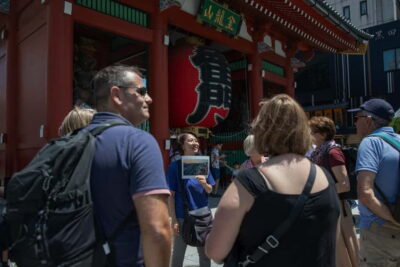 ★ 4.8Tokyo: Asakusa Walking Tour with Sensoji Temple VisitFrom $222 hours
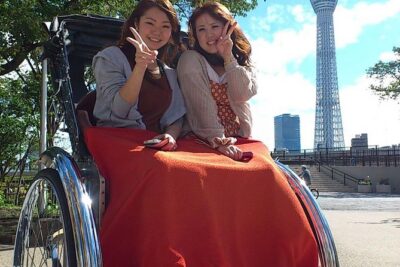 ★ 5.0Tokyo Asakusa Rickshaw TourFrom $42
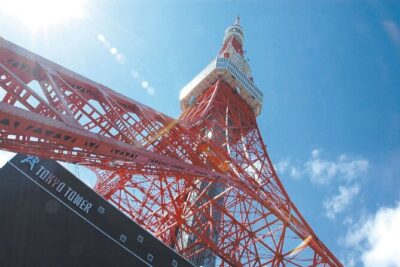 ★ 4.5Tokyo Panoramic 1 Day: Meiji Shrine, Asakusa, Odaiba and SKYTREE®From $85