
Reviewed · VEGAN & VEGETARIAN
Ramen Making from Scratch with Tokyo Mom(Vegan Option Available)
Making ramen from a packet is easy. Making the noodles, broth, and gyoza yourself is a different kind of Tokyo memory. In Aki’s small kitchen near Shinjuku Gyoenmae, you knead dough, cut the noodles by hand, season broth with Japanese umami ingredients, and sit down to eat what you made.
I like the hands-on pace and the warm teaching style. Aki welcomes you like family, explains each step in clear English, and has the patience to keep children involved. I also like the honest cooking: fresh ingredients, no MSG, no artificial flavorings, and recipes simple enough to try at home.
The main consideration is price. At $120 per person, this is not a cheap meal. You are paying for instruction, ingredients, kitchen use, and a small group of no more than six people, so it makes the most sense if you want a cooking lesson rather than just a bowl of ramen. Dietary changes are possible, including a vegan option, but you need to mention them when booking and they cannot always be guaranteed.
In This Review
- Key points to know before booking
- Why this ramen class feels different from a restaurant meal
- Arriving near Shinjuku Gyoenmae Station
- Kneading and cutting the ramen noodles
- Building broth with Japanese umami
- Folding gyoza and turning the work into lunch
- Aki’s teaching style and the small-group advantage
- Is $120 a fair price?
- Who should book this experience?
- Useful booking details for your Tokyo schedule
- Should you book Tokyo Mom’s Kitchen?
- FAQ
- How long does the ramen and gyoza class last?
- Where does the activity take place?
- What food will I make?
- Is a vegan option available?
- Is the class taught in English?
- What is included in the price?
Key points to know before booking
- Hand-cut ramen noodles: You knead the dough and cut your own noodles with a knife, so texture and thickness become part of the lesson.
- Gyoza made in the same session: The class gives you a second Japanese dish, not just ramen.
- Natural umami: Kombu, katsuobushi, and shiitake mushrooms show you how Japanese flavor is built without MSG or artificial flavoring.
- Small six-person maximum: You get close instruction and more room to work than in a large demonstration class.
- Five minutes from Shinjuku Gyoenmae Station: The location pairs easily with a visit to Shinjuku Gyoen Park or central Shinjuku.
- Dietary requests need advance notice: Vegan, vegetarian, halal, and allergy needs may be adjusted, but the kitchen cannot promise every request.
Why this ramen class feels different from a restaurant meal
Tokyo has no shortage of excellent ramen shops. For a quick and affordable bowl, a restaurant will win on price and speed. This class offers something else: you learn how the bowl comes together, then eat the result while the work is still fresh in your mind.
That difference matters. You begin to notice how noodle thickness affects the bite, why broth needs balance, and how Japanese cooks use umami to give food depth without relying on heavy seasoning. You are not just watching Aki cook. You handle the ingredients and make decisions along the way.
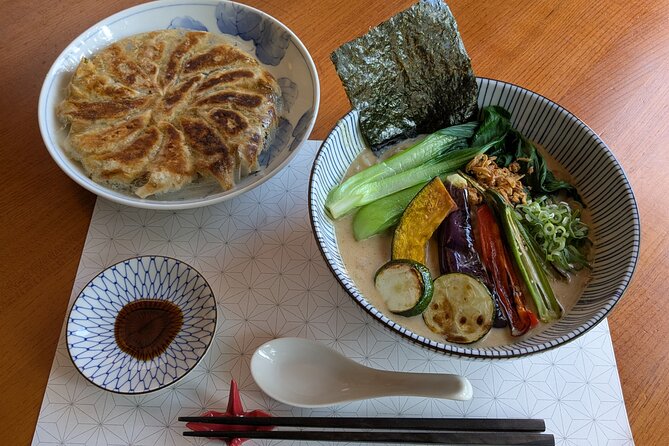
The class also includes gyoza, which helps justify the time and cost. You prepare dumplings alongside the ramen, then enjoy a full meal rather than a single dish. For many people, the most useful souvenir will be the digital recipe sheet and the confidence to repeat the dishes at home.
Aki’s background adds a personal touch. She is a Japanese mother of three and a former backpacker, so her approach is geared toward people who may not know Japanese cooking techniques. She wants you to feel comfortable in her kitchen, not worried about making a perfect restaurant dish.
A few more Tokyo tours and experiences worth a look

Arriving near Shinjuku Gyoenmae Station
You come directly to the kitchen at Bridal Unison, 1-chome-24-7 Shinjuku, Shinjuku City, Tokyo 160-0022. The kitchen is about a five-minute walk from Shinjuku Gyoenmae Station, and private transportation is not included.
That location is useful for planning your day. Shinjuku Gyoen Park is close by, so you can visit the gardens before class or take a quiet walk afterward. You can also combine the lesson with shopping and entertainment around Shinjuku, though I would avoid scheduling anything too rushed immediately afterward. Cooking sessions can run for about two to two and a half hours, and you will want time to eat.
The kitchen is on the top floor, with natural light, a gentle breeze, and a spacious, relaxed feel. That setting sounds simple, but it affects the mood. You are not in a busy restaurant or a large cooking studio. You have a more personal place to work, talk, and ask questions.
Be sure to check the exact meeting instructions before leaving your hotel. Since you are responsible for reaching the venue, allow time to navigate Tokyo’s station exits and local streets.
Kneading and cutting the ramen noodles
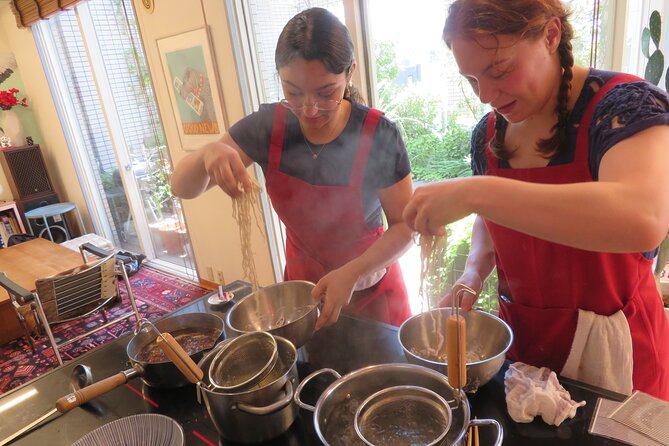
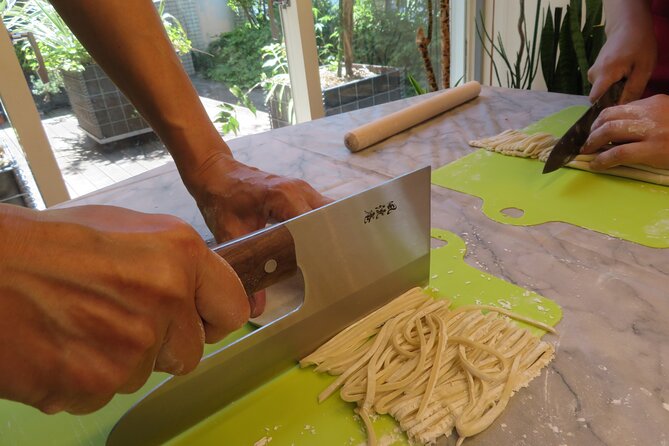
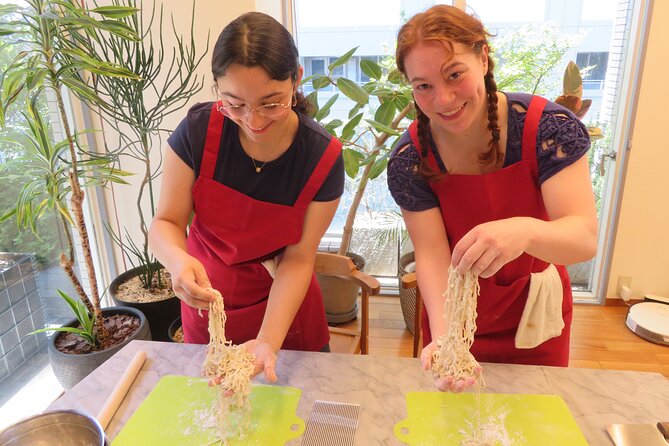
The noodle portion is one of the most distinctive parts of the class. You knead the dough, learn about noodle texture, and cut the noodles by hand with a knife. This turns a familiar food into a practical lesson in proportion and technique.
Hand-cut noodles will not necessarily come out looking identical. That is part of the fun, especially for families and first-time cooks. One family member even earned special praise for cutting exceptionally thin noodles, which shows how much the process can become a small skill challenge.
Aki guides you through the work rather than leaving you to guess. That matters because noodle dough can feel unfamiliar, and the final texture depends on how you work it and how thickly you cut it. You will leave with a better sense of why ramen noodles have different shapes and bites.
The class is also suitable for children when they have an adult with them. Aki has been praised for making children feel comfortable and for explaining patiently when a family group makes the process more complicated. Still, remember that this is a real cooking class. Young children may need help with knives, dough, and hot food.
Building broth with Japanese umami
The broth lesson gives the class its strongest cultural value. Rather than relying on MSG or artificial flavorings, Aki uses natural ingredients and explains how to balance flavor with kombu, katsuobushi, and shiitake mushrooms.
Kombu is kelp, while katsuobushi is dried bonito. Together with shiitake, these ingredients bring different kinds of savory flavor. You learn that umami is not one magic powder. It comes from combining ingredients carefully and tasting as you go.
The standard preparation uses chicken and pork to create a satisfying broth. That makes the class a good fit for anyone who wants to understand a traditional meat-based ramen style. It also creates an important limitation for people with strict dietary needs.
A vegan or vegetarian version may be possible, and one family group received a meat ramen and a vegetarian ramen to suit different preferences. But the description also makes clear that every request cannot be accommodated. If you need vegan, vegetarian, halal, or allergy-friendly food, write to Aki when you book and wait for confirmation rather than assuming the standard broth can be changed.
This is a useful distinction. A vegan option may be available, but the class is not presented as exclusively vegan or as a certified halal activity. People with serious allergies should give precise information before arrival.
Folding gyoza and turning the work into lunch
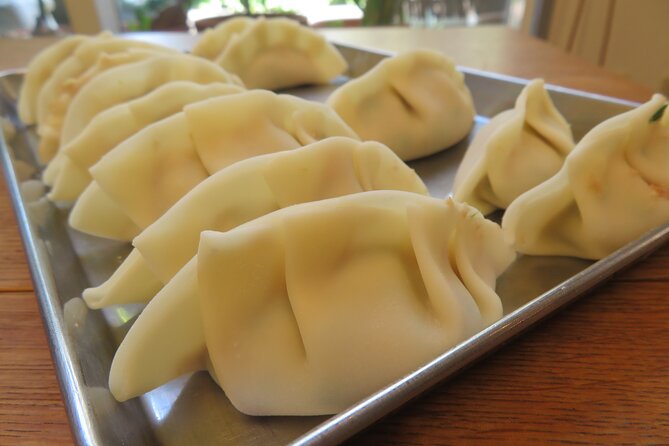
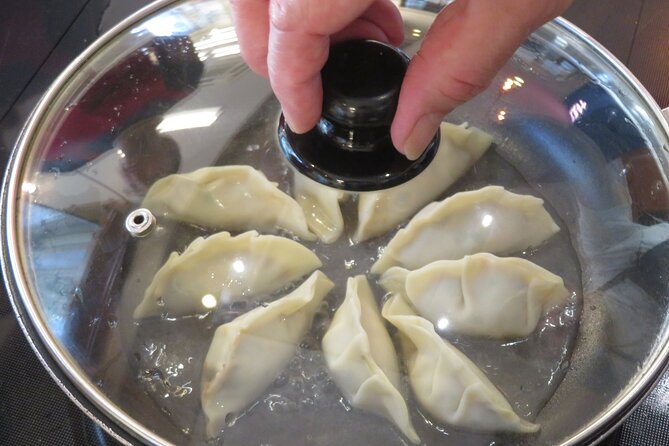
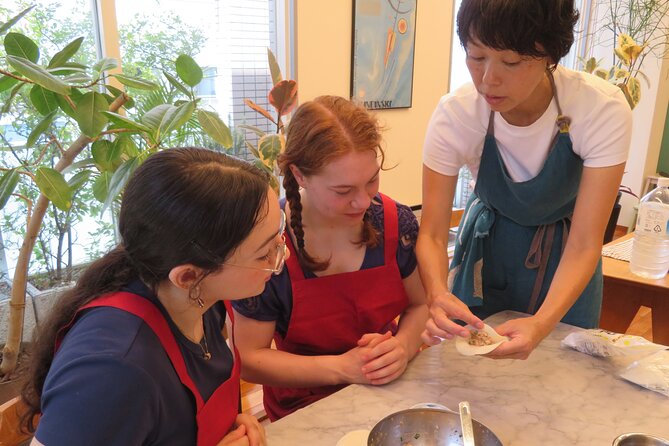
Ramen receives most of the attention, but the gyoza portion makes the session feel complete. You prepare the dumplings from scratch and learn the basic process of filling and shaping them before cooking and eating them.
Gyoza are a good companion to ramen because they introduce a different kind of kitchen skill. Noodles require dough handling and cutting. Dumplings require portioning, folding, and keeping the filling inside the wrapper. You get two compact lessons in Japanese home cooking within one visit.
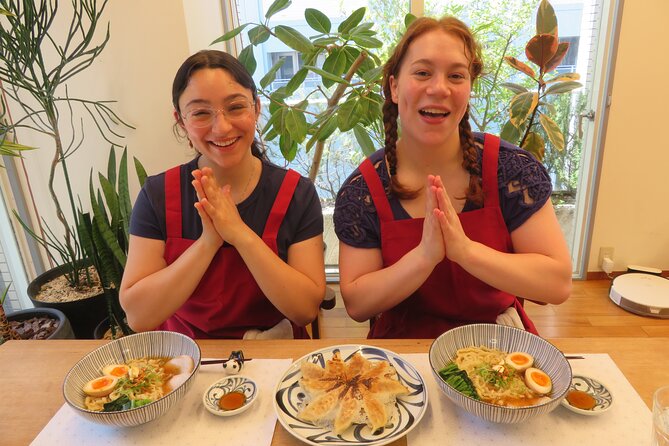
The finished food is your meal at the end of the session. That timing is important. You do not rush through a demonstration and leave hungry. You work, cook, and then taste the results in the same room.
I would plan this as a main meal rather than booking it just before lunch or dinner. The class lasts roughly two to two and a half hours, and the food is meant to be eaten as part of the activity. It is also a smart rainy-day plan, since the work takes place indoors and still gives you a strong sense of place.





Aki’s teaching style and the small-group advantage
Aki is the heart of the class. She speaks English, teaches step by step, and creates the kind of relaxed atmosphere that helps beginners keep going when their noodles look uneven or their dumplings fold imperfectly.
Her patience is especially useful for families. Children can take part, and adults do not need previous cooking experience. You should expect guidance rather than a formal lecture, with time to ask questions and work at a comfortable pace.
The maximum group size is six people. That is small enough for Aki to see what you are doing and help with individual tasks. It also means the class may feel more like a shared meal with a local host than a commercial cooking event.
The tradeoff is that this format is not designed for people who want a fast, polished performance. You will spend time kneading, cutting, preparing, and folding. If you prefer to watch a chef do everything while you take photos, a restaurant or demonstration may suit you better.
The personal tone is also part of the value. Aki presents herself as a Tokyo mom, and the class is built around hospitality as much as technique. You are invited into a working kitchen and encouraged to leave with skills, not just a food souvenir.
Is $120 a fair price?
At $120 per person, the class costs far more than eating ramen and gyoza at a casual restaurant. The comparison is fair, but incomplete. The fee includes all food ingredients, kitchen tools, an apron, the cooking instruction, the meal, and a digital recipe sheet.
The group limit also matters. You are paying for a small class rather than a crowded event, with direct help from an English-speaking host. If you value personal instruction and want to repeat the recipes later, the price becomes easier to justify.
The digital recipe sheet adds practical value. You may forget exact proportions or steps after returning home, but a written guide gives you something to consult when you try the dishes again. Several people have specifically wanted to recreate the ramen and gyoza at home, which is a good sign for anyone seeking a lasting skill.
Still, I would not call this a bargain activity. Solo visitors on a tight budget may prefer eating at a ramen shop and taking a less expensive cultural class. Families and food-focused visitors are more likely to see the value, especially when several people want to cook together.
Who should book this experience?
This class suits you best if you like doing rather than simply observing. It works particularly well for:
- Families with children who can take part with adult help
- Couples seeking a personal indoor activity
- First-time visitors interested in Japanese home cooking
- Food lovers who want to understand ramen beyond the restaurant counter
- People who enjoy taking recipes and techniques home
- Visitors staying near Shinjuku who want a two-hour activity close to the park
It may be less suitable if you need a fully guaranteed special diet, dislike hands-on kitchen work, or want a quick meal for less money. You should also consider the knife work and hot cooking areas when deciding if the class fits very young children.
The experience is not a broad Tokyo sightseeing tour. You will not spend the afternoon visiting several landmarks. Its appeal is narrower and more personal: you spend a few focused hours with a local cook, prepare familiar Japanese food, and learn enough to make it again.
Useful booking details for your Tokyo schedule
Confirmation is normally sent at booking. If you book within two days of the activity, confirmation can take up to 48 hours and depends on availability, so do not leave this until the last minute if your schedule is tight.
You can cancel for a full refund up to 24 hours before the start time. Changes or cancellations made less than 24 hours ahead are not accepted for a refund, and the cut-off follows Tokyo local time.
The activity ends back at the meeting point. Since you arrange your own transport, this is easy to pair with Shinjuku Gyoen Park, but allow enough time to find the building and arrive ready to cook.
The class has a 100 percent recommendation rate from 39 ratings, with repeated praise for Aki’s warmth, patience, clear English, and ability to involve children. Those strengths are most important for this kind of activity because the atmosphere can matter as much as the recipe.
Should you book Tokyo Mom’s Kitchen?
Book it if you want more than a restaurant meal and like the idea of learning by hand. The strongest reasons are the small group, the full ramen and gyoza menu, the natural umami lesson, and Aki’s welcoming approach.
Think carefully if $120 feels high for a meal, or if your dietary needs are strict. Ask about vegan, vegetarian, halal, or allergy adjustments before booking, and do not assume the standard chicken and pork broth will suit you.
For families, couples, and food-minded visitors based near Shinjuku, this is a warm and useful way to spend a rainy morning or afternoon. You leave with a full meal, a recipe sheet, and a better understanding of why good ramen depends on more than noodles and soup.
FAQ
How long does the ramen and gyoza class last?
The session lasts approximately two to two and a half hours.
Where does the activity take place?
It takes place at Bridal Unison, 1-chome-24-7 Shinjuku, Shinjuku City, Tokyo 160-0022, Japan. The kitchen is about a five-minute walk from Shinjuku Gyoenmae Station.
What food will I make?
You will make ramen and gyoza from scratch. The class includes handmade noodles, broth, and dumplings.
Is a vegan option available?
A vegan option may be available, but you must mention vegan, vegetarian, halal, or allergy needs when booking. The host will try to adjust the ingredients, but every request may not be possible.
Is the class taught in English?
Yes. The experience includes an English-speaking Japanese host, Aki.
What is included in the price?
The price includes all ingredients, use of kitchen tools, an apron rental, the cooking session, the meal you prepare, and a digital recipe sheet in PDF format. Private transportation is not included.
More Food Experiences in Tokyo

More tours in Tokyo we've reviewed






Vegan & Vegetarian, compared.
 ★ 5.0Vegan Friendly Sushi & Okonomiyaki Shibuya Night Foodie TourFrom $110
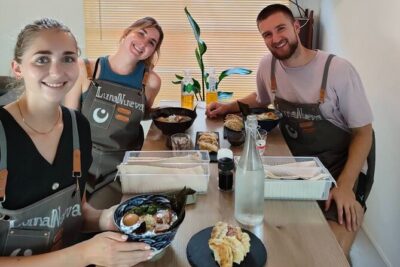 ★ 5.0Ramen & Dumpling Cooking in Tokyo with Chef/Vegan possibleFrom $102
 ★ 4.8Tokyo: 2-Hour Vegan and Vegetarian Ramen Guided Walking TourFrom $962 hours
 ★ 4.7Shibuya Tokyo: Sushi Making Class (Vegan/Vegetarian/Halal)From $581h 30m
 ★ 5.0Tokyo Vegan Food TourFrom $101
 ★ 5.0Zen Buddhist Vegetarian(Shojin Ryori): Cooking ExperienceFrom $114