
Reviewed · ASAKUSA TOURS
Tokyo: Winter Kimono Experience in Asakusa
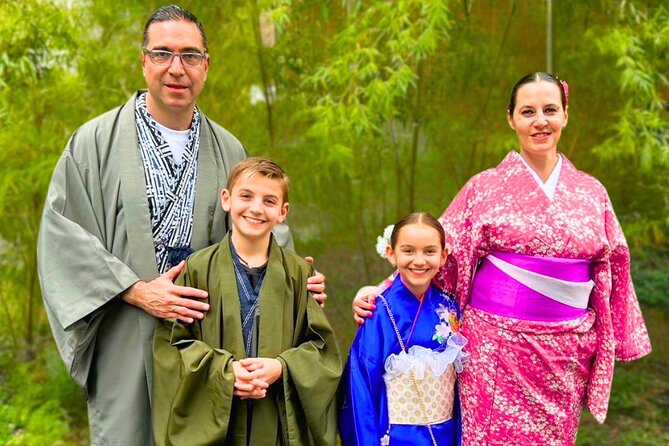
The best part of this Asakusa experience is simple: you get properly dressed in an authentic kimono, then step straight into one of Tokyo’s most photogenic historic districts. Kazune, who grew up in Asakusa, helps with the dressing, and a Japanese National Certified Kimono Dresser is also on staff.
I like the wide choice of kimono colors, belts, and patterns, and I like that you get several hours to explore rather than being rushed through a short photo session. The small group limit of five also gives the dressing process a personal feel.
The main drawback is finding the shop. One booking party spent a long time looking for it, so arrive at least 10 minutes early and use the mobile ticket and meeting-point details carefully. The kimono must return by 5:30 p.m. unless you pay a small extra fee to keep it overnight.
In This Review
- Key points before you book
- Why this works well in Asakusa
- At the shop with Kazune
- Styling, hair, and the small-group advantage
- Kaminarimon Gate and Nakamise Street
- Senso-ji and the Hozomon Gate
- Asakusa Shrine and the quieter temple corners
- Azumabashi Bridge and the Tokyo skyline
- The Asakusa Culture Tourist Information Center
- How much time you really get
- The photo value
- The drawbacks to keep in mind
- Who should book this experience?
- Should you book the Asakusa kimono experience?
- FAQ
- Where does the kimono experience begin?
- How early should I arrive?
- When must the kimono be returned?
- Is the experience suitable for everyone?
- Is a tea ceremony included?
- How many people can join?
- Can I cancel for a full refund?
Key points before you book
- Three-minute walk from Senso-ji: The shop is at 2-chōme-8-10 Kaminarimon, close to the temple and Kaminarimon Gate.
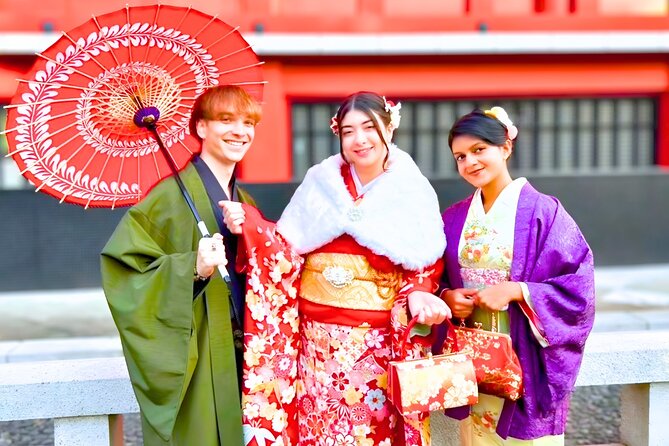
- Choose your own look: You can select from different kimono styles, colors, and belts.
- Professional dressing help: Kazune assists with the fitting, and a certified kimono dresser works at the shop.
- Free time in Asakusa: Once dressed, you explore independently and visit major sights at your own pace.
- Photo help is part of the experience: Staff can suggest locations and may take pictures and videos for you.
- Return by 5:30 p.m.: Keeping the kimono until the next day is possible for an extra charge arranged at the shop.
Why this works well in Asakusa
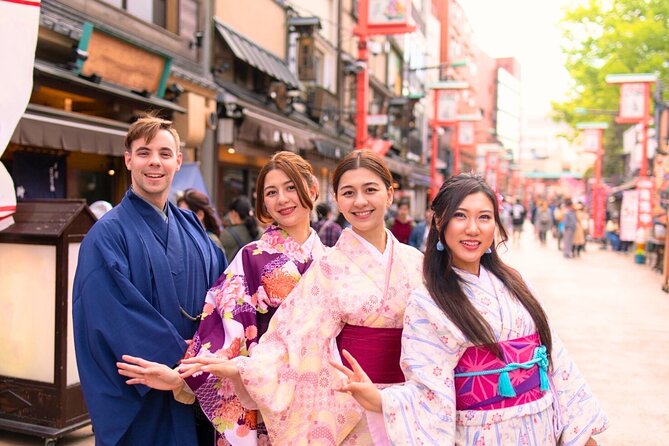
Asakusa is one of the easiest places in Tokyo to connect a traditional Japanese outfit with memorable surroundings. The red Kaminarimon Gate, the long Nakamise shopping street, Senso-ji’s temple buildings, and the Sumida River area all sit close together.
That matters because you spend less time commuting in a kimono. You can leave the shop and reach the main sights within minutes. The experience is not a guided history tour, so you are free to stop for pictures, browse the shopping street, visit the temple, or cross toward Azumabashi Bridge.
I also like the balance between structure and freedom. The staff handles the difficult part, including the layers, belts, and fit. After that, you set the pace. You are not tied to a group route or a fixed series of commentary stops.
The price is $31.63 per person. That is a reasonable cost if you want more than a quick costume photo. You receive the outfit, professional dressing help, several hours to walk around Asakusa, photo suggestions, and a souvenir photo. The value is weaker if you only want to put on a kimono for a few minutes, since the real benefit comes from using the rest of the day to explore.
A few more Tokyo tours and experiences worth a look


At the shop with Kazune
The experience begins at the kimono shop on Kaminarimon Street. The location is close to Senso-ji, but give yourself extra time to find the entrance. One person had trouble locating the shop and needed additional directions, so this is not the place to arrive at the exact booking time and hope for the best.
Kazune grew up in Asakusa and helps you choose and put on the kimono. Her local connection is useful in a practical way, since she can also suggest places for pictures after you leave the shop.
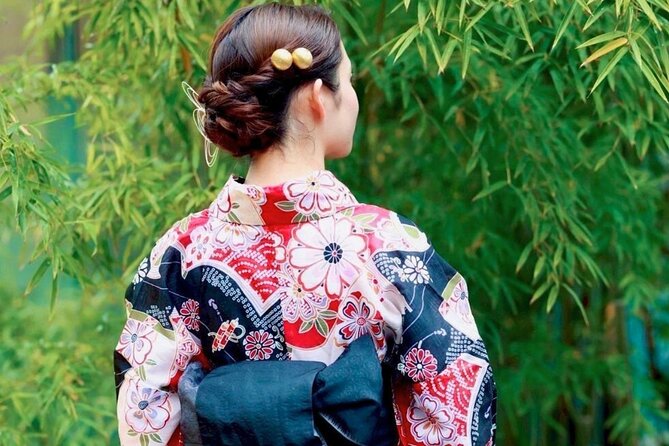
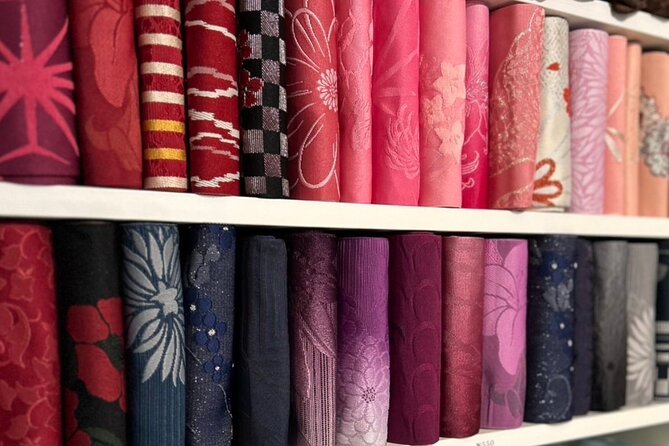
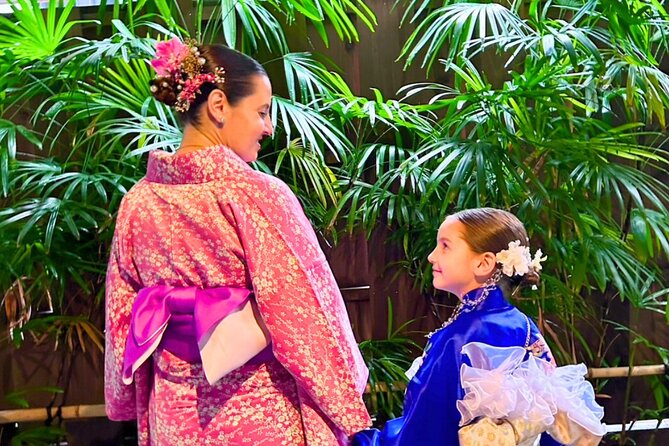
You can select from a range of genuine kimono styles. The available colors and belts give you room to create a look that feels personal rather than accepting a single standard outfit. If you are visiting with a daughter or friend, choosing colors together can become part of the fun.
The dressing process is the heart of the experience. A kimono is not simply a robe that you tie around yourself. The correct fit, layering, and belt placement make a major difference in how it looks and how comfortable you feel walking around. Professional assistance saves you from guessing, and the shop’s certified dresser adds another level of care.
Some people worry about wearing traditional clothing as a foreign visitor. The shop explicitly welcomes visitors taking part in Japanese culture, and the experience is presented as a respectful way to enjoy the clothing and setting. You are not claiming to be Japanese. You are taking part in a cultural activity with help from people who know how the clothing should be worn.
Styling, hair, and the small-group advantage
The supplied details specifically promise kimono dressing assistance, while one experience included hair styling as well. That means you might receive help creating a complete look, but hair styling should not be treated as a guaranteed separate service unless it is confirmed when you book.
The maximum group size is five people. That is small enough to make the fitting more personal than a large group session. It also helps if several people in your party need to choose outfits and get dressed around the same time.
The pace can vary. Most feedback is strongly positive about the staff’s kindness, styling, and attention, but one person felt rushed. I would protect against that by arriving early, having your preferred colors in mind, and asking questions during the fitting. If you want extra pictures or need more time choosing, say so at the start.
Once you are dressed, you can ask for photo-location advice. Staff have also taken pictures and videos for some people, although the included promise is a souvenir photo rather than a full photography session. If a professional photographer is mentioned separately, clarify where and when to meet. One person had difficulty finding a photographer at the temple, so do not assume a temple photo appointment is automatic.
Kaminarimon Gate and Nakamise Street
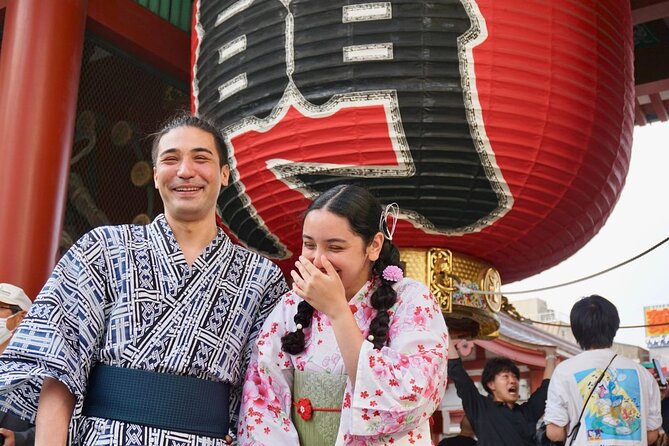
Your first major stop is Kaminarimon Gate, the grand entrance to Asakusa’s temple district. Its enormous lantern makes an immediate backdrop for a kimono photo, and it is close enough to the shop that you can begin here before the area becomes tiring.
From the gate, Nakamise Shopping Street leads toward Senso-ji. The street is lined with small shops and snack stalls, making it a good place to browse while dressed up. It can also be crowded, so watch your sleeves and move at a comfortable pace.
Nakamise is more than a route to the temple. It gives you a sense of how Asakusa presents traditional Tokyo to the public, with souvenirs, sweets, and a direct view toward the temple buildings. You may want to save shopping for later, since carrying bags can become awkward with a kimono.
Senso-ji and the Hozomon Gate
Senso-ji is the main draw. It is Tokyo’s famous Buddhist temple complex and the reason this clothing experience works so well in Asakusa. You can photograph the outfit against the temple’s strong red-and-black architecture, then spend time looking around without a guide hurrying you onward.
The Hozomon Gate is another major photo point. It creates a formal entrance and gives you a second backdrop after Kaminarimon. Rather than taking only one picture at the first gate, use the nearby temple buildings to create a set of images with different backgrounds.
The temple area can be busy, especially around the central approach. A kimono looks elegant, but it also encourages slower walking. Plan a relaxed route, leave room for other people, and avoid treating every stop as a fast photo checklist.
A few more Tokyo tours and experiences worth a look





Asakusa Shrine and the quieter temple corners
Asakusa Shrine is included among the suggested stops. It sits near Senso-ji but has a different atmosphere and gives you another setting for photographs. It is a useful place to pause after the main temple approach.
The route also names Senso-ji Temple Yogodo and Senso-ji Temple Shinokuyama. These locations may appeal if you want more than the most familiar postcard views. The available information does not describe guided explanations at each point, so treat them as places to explore independently rather than formal tour stops.
Senso-ji Temple Nitemmon Gate is another listed location. With several gates and temple structures close together, you can vary your pictures without making a long journey. Ask Kazune for the best order and photo angles before leaving the shop.
Azumabashi Bridge and the Tokyo skyline
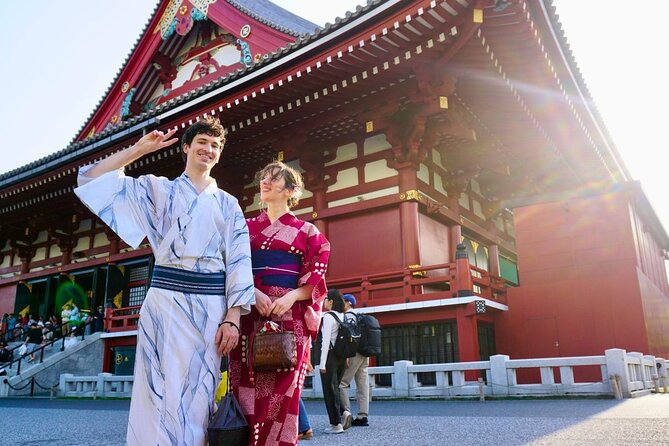
Azumabashi Bridge shifts the setting from temple streets to the Sumida River. It offers a change of pace and a broader view than the gates and lanes around Senso-ji.
This is a good choice if you want photos that show the kimono against open space rather than only red temple architecture. The walk also gives you a reason to extend the outing beyond the temple grounds.
The route includes Tokyo and Taito as itinerary labels, but these are broad location references rather than separate attractions. The practical core of the experience remains the Asakusa area around Senso-ji, with the bridge and nearby streets adding variety.
The Asakusa Culture Tourist Information Center
The Asakusa Culture Tourist Information Center is listed as another stop. It is near Kaminarimon and is useful as a recognizable point in the district.
For your purposes, it can help you keep your bearings while moving between the gate, Nakamise, and the temple. The supplied details do not promise entry to a special exhibit or a guided visit inside, so consider it a navigation landmark and possible photo setting rather than a separately included attraction.
How much time you really get
The experience is described as lasting one day, approximately, but the clear time limit is the 5:30 p.m. return. After dressing, you have several hours to explore Asakusa. The exact amount depends on your booking time and how long the fitting takes.
This arrangement is best for a morning or early afternoon start. You will have enough time to visit the temple area, stop for pictures, browse Nakamise, and walk toward the bridge before returning the outfit.
Do not plan a distant Tokyo attraction in the middle of the outing. The kimono return rule makes the day easier if you stay in or near Asakusa. If you want to keep exploring after 5:30 p.m., arrange the next-day return at the shop and pay the additional fee.
The activity ends at the same meeting point where it begins. Public transportation is nearby, which makes the shop practical to reach from other parts of Tokyo, though you should still allow time to identify the exact location.
The photo value
Photography is a major reason to book. You receive a souvenir photo, and the staff can recommend attractive spots around Asakusa. Some people also received help with pictures and videos directly from the staff.
That personal assistance can be more useful than it sounds. A staff member knows how the kimono should sit, which details to show, and where the background is likely to work. You can still take your own pictures, but asking for advice may save you from repeating the same pose in the same place.
Keep your expectations clear. This is not presented as a full professional photography package. The included benefit is a souvenir photo, with staff assistance and recommendations. If you want a formal photo shoot, ask about the separate photographer arrangement before you arrive.
The drawbacks to keep in mind
The location is the biggest practical concern. The shop is only about three minutes from Senso-ji, but a short walking distance does not always mean an easy entrance to find. Use the provided address, arrive early, and keep your phone available for directions.
Pricing also deserves a quick check. The base cost is $31.63 per person, while keeping the kimono until the next day costs extra. A tea ceremony is not part of this booking and requires a different reservation, so do not assume it is included.
The kimono is attractive but not designed for unlimited freedom of movement. You will want to walk at a measured pace and allow time to sit or pause. Pregnant people cannot participate, and the experience is not suitable for anyone over 210 centimeters or over 160 kilograms, listed as 264 pounds.
The 97 percent recommendation rate and 4.9 rating from 29 reviews point to a very strong experience overall, but the occasional logistical problem is worth taking seriously. Arriving early solves the most avoidable issue.
Who should book this experience?
I would choose this for a first visit to Tokyo if you want a classic Asakusa memory without spending a full day on a guided tour. It is especially suitable for couples, parents with a daughter, friends, and solo visitors who want help creating a polished look.
It also suits you if you care about photographs but do not want to arrange a separate outfit rental, dresser, and location plan. The shop brings those pieces together, then lets you explore on your own.
I would be more cautious if you dislike attention, have limited mobility, need a completely flexible schedule, or want a quiet cultural lesson with detailed commentary. This is primarily a dress-up and independent sightseeing experience, not a temple lecture or tea ceremony.
Free cancellation is available if you cancel at least 24 hours before the start time. Changes or cancellations made inside that window are not accepted for a refund.
Should you book the Asakusa kimono experience?
Book it if you want the fun of choosing a real kimono, professional help with the dressing, and several hours to photograph yourself around Senso-ji. The combination of Kazune’s local Asakusa knowledge, a certified dresser, a small group limit, and a souvenir photo gives the experience more substance than a quick costume rental.
Before paying, make three checks: confirm the shop address, note the 5:30 p.m. return time, and ask about any separate hair styling or photographer arrangements you want. If you handle those details, this is a well-priced way to turn an ordinary temple visit into a personal Tokyo memory.
FAQ
Where does the kimono experience begin?
It begins at the kimono shop at 2-chōme-8-10 Kaminarimon, Taito City, Tokyo 111-0034, Japan. The shop is about a three-minute walk from Senso-ji Temple.
How early should I arrive?
You should arrive at least 10 minutes before your booking time so the staff can prepare the kimono and dressing process.
When must the kimono be returned?
The kimono must be returned to the shop by 5:30 p.m. on the same day. You can arrange next-day return for a small extra fee directly at the shop.
Is the experience suitable for everyone?
Most people can participate, but it is not suitable for anyone over 210 centimeters, anyone over 160 kilograms or 264 pounds, or pregnant women.
Is a tea ceremony included?
No. The tea ceremony requires a different reservation and is not part of this kimono experience.
How many people can join?
The activity has a maximum of five travelers.
Can I cancel for a full refund?
Yes. You can cancel for a full refund up to 24 hours before the experience start time. Cancellations and changes made less than 24 hours before the start time are not accepted.
More Winter Activities in Tokyo
More Asakusa Tours in Tokyo
More tours in Tokyo we've reviewed


Asakusa Tours, compared.
 ★ 4.8Tokyo: Japanese Dance Cabaret Theater Asakusa-Kaguwa TicketFrom $492 hours
 ★ 4.7Tokyo: Meiji Shrine, Asakusa, Skytree Bus Tour and CruiseFrom $12210 hours
 ★ 4.9Tokyo: Roll and Authentic Sushi Making Class in AsakusaFrom $581h 40m
 ★ 4.8Tokyo: Asakusa Walking Tour with Sensoji Temple VisitFrom $222 hours
 ★ 5.0Tokyo Asakusa Rickshaw TourFrom $42
 ★ 4.5Tokyo Panoramic 1 Day: Meiji Shrine, Asakusa, Odaiba and SKYTREE®From $85