
Reviewed · ASAKUSA TOURS
Tokyo Morning Tour : Meiji Shrine, Asakusa and Fish Market
Tokyo mornings do not waste time. This four-hour walk links a quiet Shinto shrine, a working food market, and old Asakusa, giving you three very different views of the city before the day gets hot and crowded. The best surprise is the food: fresh sushi and sashimi at Tsukiji, followed by mochi, sweet potato, and a savory cutlet.
I like the small group size, capped at eight, because it gives guides such as Shoma Sato and Yosuke room to answer questions and adjust the pace. I also like the route itself: Meiji Shrine and Senso-ji show two major Japanese religious traditions, while Tsukiji adds a tasty, everyday side of Tokyo.
The main catch is the schedule. You have about one hour at each major stop, and public transport costs about 550 yen extra. This is a smart introduction, not a slow, detailed study of every district.
In This Review
- Key points to know before booking
- Why this route works for a first Tokyo morning
- Starting beneath the trees at Meiji Jingu
- Eating your way through Tsukiji Jogai Market
- Reaching Asakusa and Senso-ji Temple
- What the small group changes
- What $72.67 buys you
- Timing, transport, and practical preparation
- Who should book this morning tour
- Should you book it?
- FAQ
- How long does the Tokyo Morning Tour last?
- Where does the tour begin?
- Where does the tour finish?
- What places are included?
- Is food included?
- Is public transportation included?
- How large is the group?
- Is the tour offered in English?
- Can I cancel for a full refund?
Key points to know before booking
- Three sides of Tokyo in four hours: Move from forested Meiji Shrine to food-focused Tsukiji and historic Asakusa.
- Food is part of the tour: Expect sushi and sashimi, plus mochi, sweet potato, and a savory cutlet.
- Small group format: The maximum is eight people, a useful size for questions and photos.
- Strong guide focus: Shoma Sato and Yosuke are named guides associated with the experience, with history, customs, and philosophy woven into the walks.
- Ends at Asakusa Station: You finish near Senso-ji and Asakusa Station, with the rest of the district easy to explore on your own.
- Plan for extra transport cost: The tour price is $72.67 per person, while local transportation is not included and runs about 550 yen.
Why this route works for a first Tokyo morning
Tokyo can feel scattered at first. Its major sights are spread across a huge city, and choosing between shrines, temples, markets, and food can eat up half a morning. This route solves that problem by connecting three places with different moods and purposes.
You begin in Harajuku, visit Meiji Jingu Shrine, continue to Tsukiji Jogai Market, and finish in Asakusa. The order is sensible. The shrine gives you a calm start, the market supplies the morning meal, and Asakusa provides a lively finish with shops, street food, and Senso-ji Temple.
At roughly four hours, the outing fits neatly into a first day in Tokyo. You can still use the afternoon for another neighborhood, a museum, shopping, or a rest at your hotel. I would especially consider it if you have only a short stay and want a guide to handle the city’s cultural background and movement between districts.
This is a walking and public-transport experience rather than a bus tour. That matters. You will get a closer look at streets, gates, food stalls, and small details, but you should wear comfortable shoes and be ready to move between areas.
A few more Tokyo tours and experiences worth a look
Starting beneath the trees at Meiji Jingu
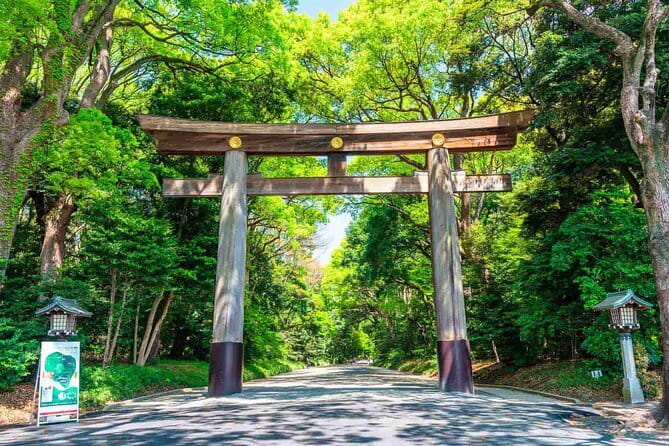
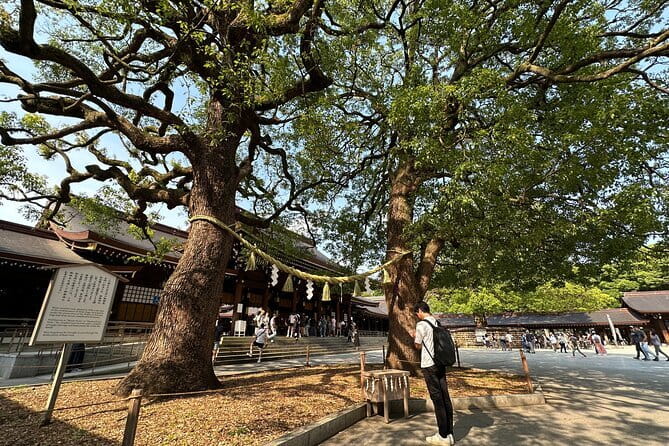
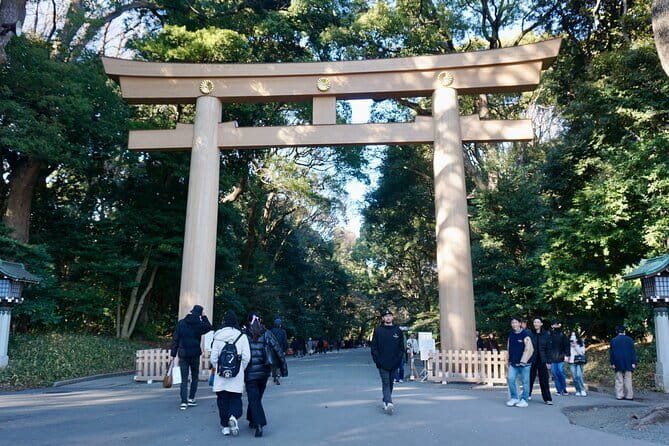
Meiji Jingu is dedicated to Emperor Meiji and Empress Shoken. The approach leads through a large wooded area, with towering torii gates marking the transition from city streets to the shrine grounds.
The contrast is immediate. Harajuku is known for youthful shopping and dense city energy, but the shrine begins with quiet paths and tall trees. I like this as an opening stop because it gives you a short break from Tokyo’s visual noise before the food and shopping districts later in the morning.
You have about one hour here. That is enough to walk the main approach, pass through the gates, see the shrine precinct, and hear an explanation of Shinto customs. The guide can also add context about the emperor and empress honored here, along with the role of the shrine in Japanese religious life.
Admission is free, and entry is included in the tour arrangements. Still, the value is not simply getting through a gate. A guide helps you understand what you are seeing, how to behave at a shrine, and why the setting feels deliberately separate from the surrounding city.
Keep your expectations realistic. One hour will not cover every path or corner of the grounds. It is a focused introduction, with enough time to appreciate the setting without turning the morning into a long shrine visit.
The meeting point is at the IKEA Swedish Cafe in Harajuku, at the listed address in Jingumae. Since the starting point is quite specific, check your confirmation carefully and allow time to find the cafe before the start. The guide will be easier to spot if you arrive early and keep your phone available.
Eating your way through Tsukiji Jogai Market
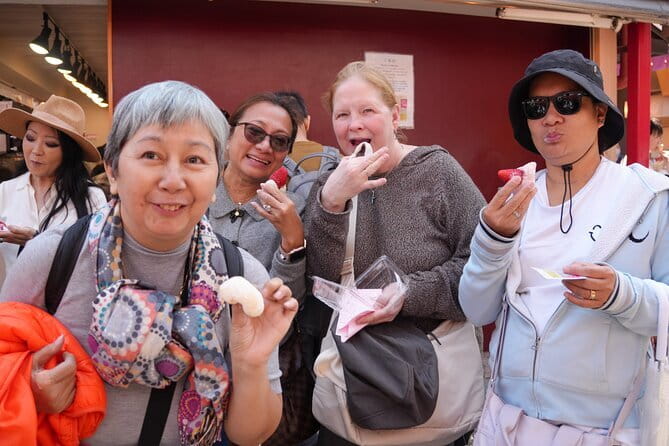
Tsukiji Jogai Market is the food center of the morning. The former wholesale fish market moved to Toyosu, but the outer market remains a major stop for seafood, small food shops, and quick bites.
This distinction is important. You are not visiting the old inner auction area. You are visiting the outer market, where the focus is on food stalls and shops open to the public. The atmosphere is direct and practical: look, choose, taste, and keep moving.
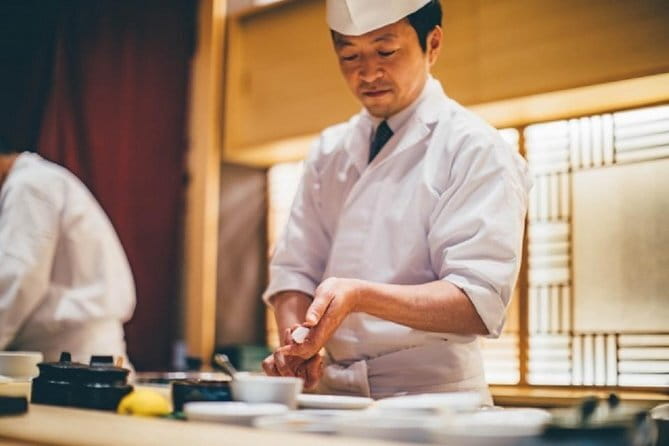
The tour includes fresh sushi and sashimi, giving you a chance to sample seafood close to the market source. Exact food portions and shop choices are not specified, so think of this as a guided tasting rather than a full meal with a fixed menu. If you have allergies, dietary restrictions, or strong dislikes, tell the guide at the start.
The food continues beyond seafood. You will try sweet mochi, a soft rice cake, sweet potato, and a savory cutlet. That mix is one of the strongest parts of the experience because it shows how Japanese street food can move from delicate to filling to sweet within a few steps.
You have about an hour at Tsukiji. It is enough for a first taste and an explanation of the market, but not enough to inspect every stall or shop. If you find a food you love, note where it came from and return later with more time. The tour gives you an introduction and a useful sense of direction, rather than a complete market crawl.
Food markets can be crowded, and the walk may involve stopping in narrow areas. Stay close to the group, especially while eating or taking photos. The small group limit helps, but Tsukiji itself is still a working public market, not a private tasting room.
I also appreciate that the guide provides historical insight into the districts, not just a list of dishes. A good explanation of Tsukiji’s role helps you understand why the area remains important after the wholesale auction moved away.
Reaching Asakusa and Senso-ji Temple
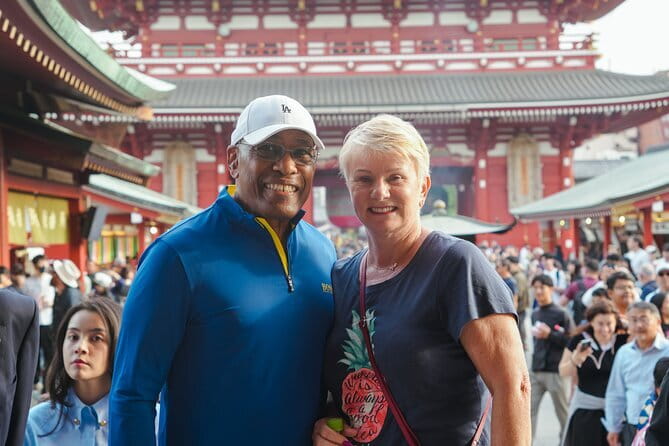
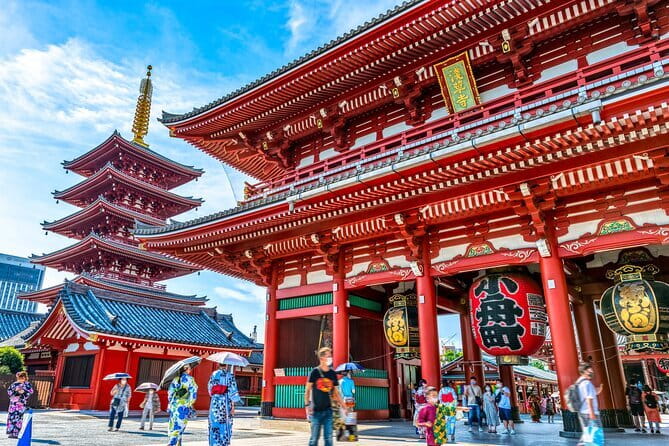
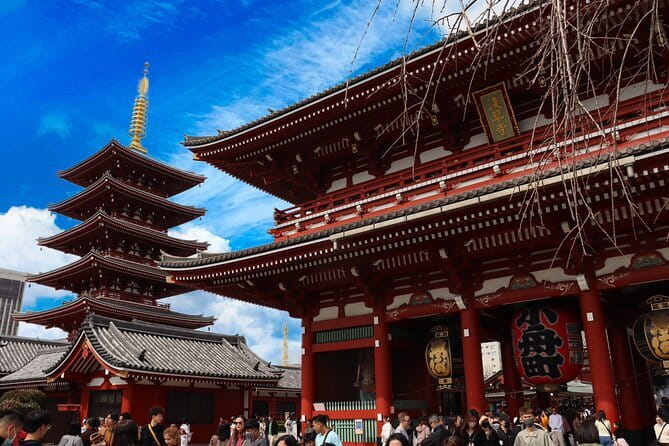
The final major stop is Senso-ji, Tokyo’s oldest Buddhist temple. You enter through Kaminarimon, or Thunder Gate, one of the city’s most recognizable entrances.
From there, Nakamise-dori leads toward the temple. The shopping street is lined with stores selling souvenirs, snacks, and traditional goods. It is a tourist area, but it also serves as the natural approach to Senso-ji, and the route gives you a clear sense of how religious sites and commercial streets fit together in old Tokyo.
The contrast with Meiji Shrine is useful. Meiji Jingu is forested, restrained, and tied to Shinto practice. Senso-ji is more urban, more openly commercial, and connected to Buddhist tradition. Seeing both in one morning gives you a stronger grasp of Tokyo than visiting two similar temples would.
You have about an hour here. The guide can explain the temple’s background, point out key features, and help you understand the customs and symbolism around the site. Photos are taken during the tour, which is useful if you want a few group or location shots without constantly managing your phone.
The experience finishes at Asakusa Station. This is a practical endpoint. You can continue shopping, eat lunch in the area, visit more of Asakusa, or take the train to another part of Tokyo. It also means you should not expect a return to Harajuku. If you need to collect luggage or return to a hotel near the starting point, allow extra time after the tour.
What the small group changes
A maximum of eight people is a real advantage on a route with shrines, food stalls, and narrow market streets. You can hear the guide more easily, ask questions, and keep the group together without the feel of a large coach excursion.
The guide is central to the experience. Shoma Sato is praised for clear explanations and patience, while Yosuke is noted for connecting history, philosophy, and customs to the places you visit. Those qualities matter here because none of the three stops needs a guide simply to point out a famous building. The useful part is learning how to read the place.
Guide assignments can change, so do not book on the assumption that you will definitely receive one particular person. Still, the experience is built around personal explanation rather than a recorded audio route. If you want to ask why a shrine ritual works a certain way or what a food means, this format is much better than wandering alone with a map.
The flexible pace is another plus. The tour is planned around roughly one hour at each major location, with food and breaks along the way. It is not completely open-ended, though. Three districts in four hours require reasonable punctuality.
A few more Tokyo tours and experiences worth a look
What $72.67 buys you
At $72.67 per person, this is not the cheapest way to visit Meiji Shrine, Tsukiji, and Senso-ji. All three sites can be visited independently, and admission to the main attractions is free. You also pay about 550 yen for public transportation because that cost is not included.
The value comes from the service around the sights. You receive an English-speaking guide, historical explanations, photos, food tastings, and a small group route that removes much of the planning. For a first morning in Tokyo, that can be worth more than the admission fees themselves.
The food also changes the calculation. Sushi, sashimi, mochi, sweet potato, and a cutlet are part of the experience, though the exact amount is not stated. If you would already spend money sampling these foods at Tsukiji and Asakusa, the price gap becomes smaller.
I would call the tour good value for three types of people: first-time visitors, people with only a day or two in Tokyo, and anyone who wants cultural context with their food. It is less compelling for independent visitors who already know Tokyo well, speak Japanese, or prefer to spend a whole morning at one market or temple.
The group cap is especially useful for solo visitors and couples who want company without joining a large crowd. Families may also appreciate the food stops and clear structure, though young children need to manage a four-hour route with walking and public transport.
Timing, transport, and practical preparation
The tour lasts about four hours and begins in Harajuku. Public transportation is used between areas, and the fare is approximately 550 yen per person. Bring a transit card or enough yen for the ride, since transportation is separate from the tour price.
The start point is IKEA Swedish Cafe, Harajuku, at the listed Jingumae address. It is worth confirming the exact meeting instructions before leaving your hotel. Tokyo addresses can be difficult to read quickly, and a few extra minutes at the start can prevent a rushed beginning.
The tour ends at Asakusa Station. That is not just a drop-off point. It gives you a useful base for continuing your day, but it also means your morning plan should account for one-way movement across Tokyo.
Admission is free at Meiji Jingu and Senso-ji, and the food market itself does not require a separate entry ticket. Wear shoes suitable for walking, keep your hands free for food and photos, and carry a small amount of cash in case you want to buy something beyond the included tastings.
Confirmation arrives when you book. Most people can participate, and the group is limited to eight. Free cancellation is available if you cancel at least 24 hours before the start time. A cancellation inside that window is not refundable, and the operator may offer another date or a full refund if the minimum number needed for the tour is not reached.
Who should book this morning tour
I would choose this tour if you want a strong first look at Tokyo without spending hours researching train routes, shrine customs, and food stops. The route gives you a clear progression from sacred grounds to market eating to old-town sightseeing.
It suits people who value explanation. You will learn more than the names of the places, especially if your guide follows the approach associated with Shoma Sato and Yosuke: patient answers, local customs, history, and philosophy tied to what is in front of you.
It also suits short stays. With only 48 hours in Tokyo, a planned morning can save time and reduce decision fatigue. You will not see everything, but you will cover three major settings and finish in a district worth more exploration.
I would skip it if you want a long, unhurried market breakfast, a full tour of Meiji Shrine’s grounds, or several hours shopping in Asakusa. The schedule is efficient by design. You are sampling Tokyo, not settling into one neighborhood.
Should you book it?
Book this tour if you want food, culture, and famous Tokyo sights in one compact morning. The small group, included tastings, guide explanations, and Asakusa finish give it a clear purpose, especially for first-time visitors.
Think twice if $72.67 feels high for free-entry sights and you are comfortable arranging public transport yourself. Independent visitors can recreate parts of the route, but they will need to provide their own historical context and food plan.
For most people with limited time, I see the price as a reasonable charge for structure and guidance. Arrive ready to walk, budget the extra 550 yen for transport, and treat the food as a tasting rather than a large breakfast. That is the best way to enjoy what this morning does well.
FAQ
How long does the Tokyo Morning Tour last?
The tour lasts approximately four hours.
Where does the tour begin?
It begins at the IKEA Swedish Cafe in Harajuku, at the listed address in Jingumae, Shibuya, Tokyo.
Where does the tour finish?
The tour finishes in Asakusa, near Asakusa Station.
What places are included?
The route includes Meiji Jingu Shrine, Tsukiji Jogai Market, street food stops, and Senso-ji Temple.
Is food included?
Yes. The experience includes fresh sushi and sashimi, sweet mochi, sweet potato, and a savory cutlet.
Is public transportation included?
No. Public transportation costs about 550 yen and is paid separately.
How large is the group?
The tour has a maximum of eight participants.
Is the tour offered in English?
Yes. An English-speaking guide is included.
Can I cancel for a full refund?
Yes, if you cancel at least 24 hours before the experience start time. Cancellations made less than 24 hours in advance are not refunded.
More Shopping Tours in Tokyo

More Temples & Meditation in Tokyo
More Asakusa Tours in Tokyo
More tours in Tokyo we've reviewed











Asakusa Tours, compared.
 ★ 4.8Tokyo: Japanese Dance Cabaret Theater Asakusa-Kaguwa TicketFrom $492 hours
 ★ 4.7Tokyo: Meiji Shrine, Asakusa, Skytree Bus Tour and CruiseFrom $12210 hours
 ★ 4.9Tokyo: Roll and Authentic Sushi Making Class in AsakusaFrom $581h 40m
 ★ 4.8Tokyo: Asakusa Walking Tour with Sensoji Temple VisitFrom $222 hours
 ★ 5.0Tokyo Asakusa Rickshaw TourFrom $42
 ★ 4.5Tokyo Panoramic 1 Day: Meiji Shrine, Asakusa, Odaiba and SKYTREE®From $85