
Reviewed · SAMURAI & NINJA EXPERIENCES
Tokyo:Samurai sword and archery class from a samurai descendant
The most striking part of this Tokyo experience is that it treats samurai training as a discipline, not a costume photo stop. At a dojo in Machida, samurai descendant and sword master Yoshioki Sumida leads you through sword history, forms, sparring, target cutting, and archery. You work hard, listen closely, and leave with a better sense of how difficult these skills are.
I like the clear mix of cultural teaching and physical practice, and I like the small-group format, which gives Sumida Sensei and his staff time to correct your stance and keep the class safe. The main drawback is the location: the dojo is outside central Tokyo, and the trip can take about 90 minutes from areas such as Daiba. The studio can also be tricky to find, so plan extra time.
In This Review
- Key points before you book
- A real dojo lesson, not a samurai photo stop
- What happens during the 2.5-hour class
- 1. Arrival, clothing, and a sword lecture
- 2. Iai and the basic sword forms
- 3. Gekken sparring with practice swords
- 4. Test cutting and target work
- 5. Bow and arrow practice
- The live Toyama-ryu demonstration
- What the small-group format changes
- The setting in Machida and the time cost
- Is the $198.20 price good value?
- Who will enjoy this most?
- Useful planning advice
- Should you book this samurai class?
- FAQ
- Where does the samurai class take place?
- How long does the experience last?
- How much does the experience cost?
- Who teaches the class?
- What activities are included?
- Is equipment provided?
- How many people can join?
- Do I need previous martial arts experience?
- Is there a live demonstration?
- Can I cancel for a refund?
Key points before you book
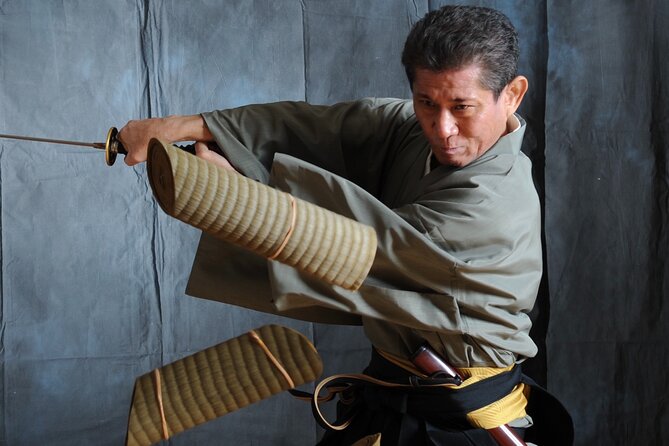
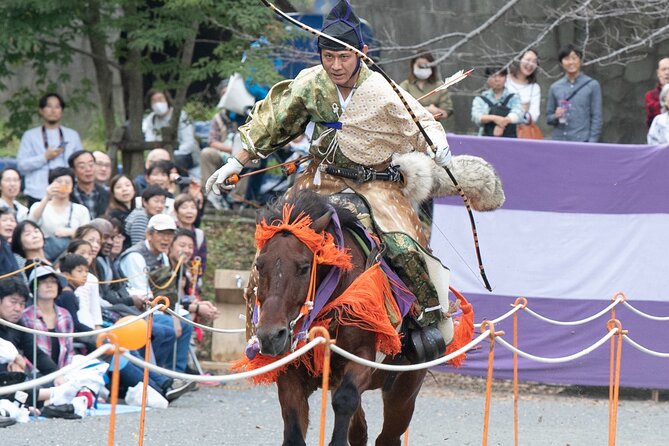
- Learn from Yoshioki Sumida: A samurai descendant and master of swordsmanship and horseback archery leads the class.
- Four different training sections: Expect a sword lecture, iai forms, gekken sparring, target cutting, and bow-and-arrow practice.
- Real effort, not stage combat: The class includes demanding movements, careful instruction, and practice against targets.
- Traditional equipment is supplied: Training clothes, practice swords, bokken, and bow-and-arrow equipment are provided.
- Small class, up to 15 people: You get more direct guidance than in a large theatrical group.
- Plan for a suburban Tokyo outing: The meeting point is in Haramachida, Machida, not in central Tokyo.
A real dojo lesson, not a samurai photo stop
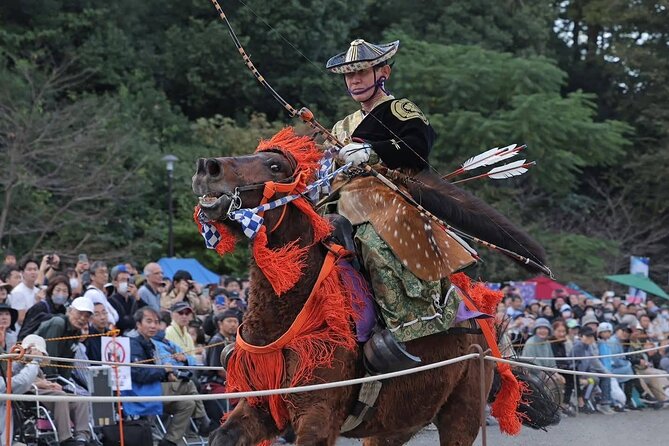
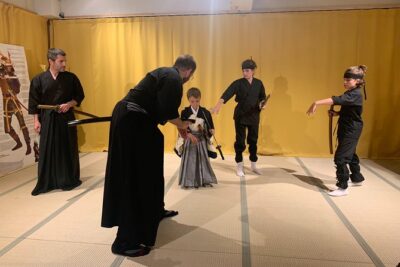
Many samurai-themed activities in Japan are built around costumes, staged demonstrations, and a quick pose with a sword. This one takes a different path. You change into practice clothing, stand in a working dojo, and learn why a sword cut depends on footwork, body position, timing, and the path of the blade.
That difference matters. You are not simply handed a katana and told to swing. The class begins with instruction on Japanese swords and samurai culture, including the parts of the blade and how swords were made and used. The history gives purpose to the physical work that follows.
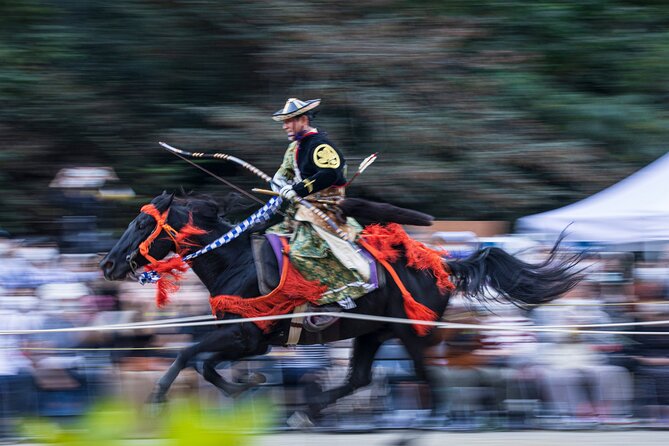
Master Yoshioki Sumida is the central figure. He teaches swordsmanship and horseback archery, and a live demonstration of Toyama-ryu technique is part of the session. The demonstration is presented as serious martial training, not a comedy routine or theatrical fight. That makes it especially useful for anyone who wants to understand the discipline behind the popular image of the samurai.
The class is available to beginners. You do not need a background in martial arts to take part, but you do need to pay attention. The sword work looks simple when performed by an expert. It feels much harder once you try to keep your feet, hands, posture, and blade line working together.
A few more Tokyo tours and experiences worth a look
What happens during the 2.5-hour class
The experience lasts about two hours and 30 minutes. The exact balance of time can vary with the group, but the lesson follows a clear progression from explanation to practice.
1. Arrival, clothing, and a sword lecture
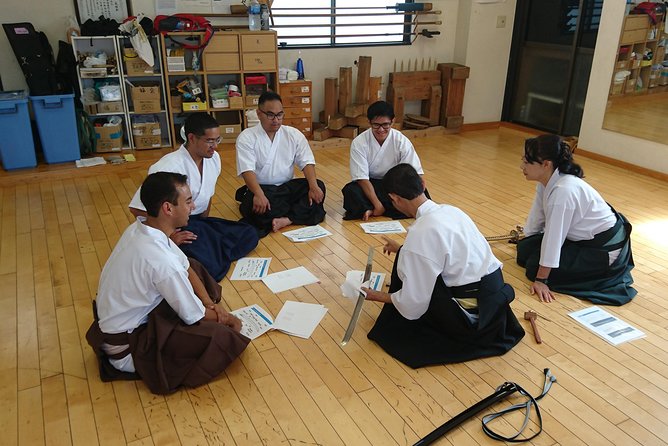
At the dojo, you receive training wear and change before the physical lesson begins. The operator asks for your height and weight in advance so clothing can be prepared. Practice equipment is included, so you do not need to bring a sword, bokken, or bow.
The opening talk covers Japanese swords and samurai culture. You learn about the construction and parts of a katana, and the role of the sword in samurai warfare and training. Some sessions also include demonstrations of how a sword is assembled and disassembled.
This first section is more than background information. It helps you understand why the instructor insists on control and precision. A sword is not a club, and a hard swing is not automatically a good cut. The lesson keeps returning to that idea.
2. Iai and the basic sword forms
The iai section introduces the handling and swinging of a practice sword. You work through kata, or set forms, that teach the movement of drawing, positioning, and cutting. The emphasis is on the correct line of the blade and the coordination of your whole body.
You may also check the blade line with a mock sword. This sounds technical, but it is one of the most useful parts for a first-time student. It shows how easily a blade can tilt or travel off course when your wrists or shoulders are tense.
The class is active, but it is not a free-for-all. Sumida Sensei and the assisting staff demonstrate each move, then watch as you repeat it. Safety is treated as part of the lesson, not as a quick warning at the start.
3. Gekken sparring with practice swords
Next comes gekken, the sparring section. You learn the timing of attack and defense, then face another participant with a mock or foam sword. The exercise gives you a feel for distance and reaction without turning the class into a dangerous contest.
This tends to be one of the most enjoyable sections, especially for families and friends. It is also more tiring than it looks. You must keep your guard up, watch your partner, and respond at the right moment. The instructor may join the sparring, which gives you a close look at how much control an experienced practitioner has.
The goal is not to win. It is to understand how attack and defense connect, and how quickly poor balance affects your next move. If you arrive expecting an action-movie duel, adjust that expectation. The fun comes from trying to apply the lesson under pressure.
A few more Tokyo tours and experiences worth a look




4. Test cutting and target work
The target-cutting section lets you test what you have learned. You use a mock or practice sword to work on cutting targets, with the aim of slashing while moving. The class description specifically warns that cutting several targets in motion is difficult, and that is useful advice: do not expect a perfect first attempt.
Several people describe the satisfaction of cutting through the tatami targets after applying the instructor’s technique. The moment is rewarding because the class has shown you the mechanics first. Your success depends on the angle and path of the blade, not brute force.
This is also where you feel the difference between watching a master and copying one. Sumida Sensei can make the movement look effortless. You may find that your shoulders tighten, your feet stop moving, or your sword travels at the wrong angle. That gap between appearance and reality is one of the best lessons in the class.
5. Bow and arrow practice
The final major activity introduces the bow, described as the main samurai weapon 1,000 years ago. You get to try a real bow and arrow under instruction, adding a second skill to the sword work.
Archery changes the pace of the class. Sword practice asks for close control, quick movement, and body coordination. The bow asks for posture, focus, and a steady release. It gives you another way to think about samurai warfare beyond the katana.
The available details do not specify the number of arrows or the exact target setup, so do not book this expecting a full archery course. Think of it as a guided introduction within a wider martial arts lesson.
The live Toyama-ryu demonstration
A live demonstration by a Toyama-ryu practitioner with a seventh-grade rank is included. The technique is described as difficult and serious rather than entertainment for its own sake.
That distinction is worth understanding. You may see movements that are too advanced for a short visitor class, including sword handling and cutting forms that require long practice. The demonstration gives you a standard to aim toward, but it is not presented as something you will master in one afternoon.
I find this kind of demonstration more useful than a staged fight because it lets you see the discipline at full speed. It also explains why the class asks for concentration. The movements are precise, and a careless approach would be unsafe.
What the small-group format changes
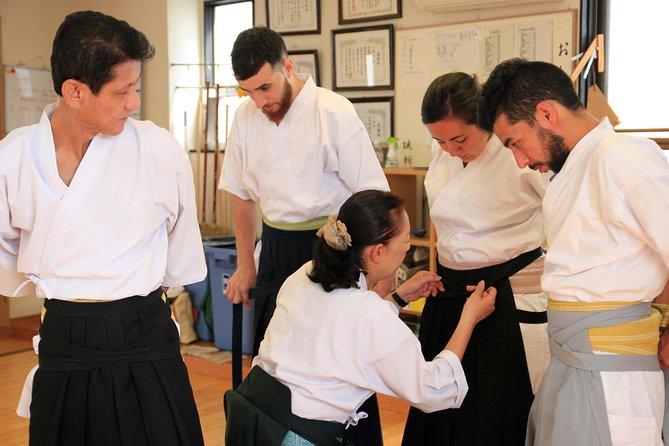
The class accepts a maximum of 15 people. That is not the same as a private lesson, but it is small enough for direct correction compared with a large tourist show.
You can expect the instructor to check that you understand each movement before moving on. The teaching style is patient and encouraging, with safety emphasized throughout. The class also has a playful side, which helps when the technical drills become demanding.
That personal attention is particularly helpful for beginners. You may need several attempts to get the blade line right or to coordinate your feet during a cut. A large group would make it easy to repeat a mistake unnoticed. Here, the instructor can stop and correct you.
The class works for couples, friends, parents with older children, and solo visitors. One family used it as a shared activity for a son and his friend, while older participants appreciated that the instructor remained patient with beginners who were not regular athletes.
Still, this is a physical class. You may be sore for a day or two afterward, especially if you try to force the movements. Listen to the instructor and do not treat the session as a test of toughness.
The setting in Machida and the time cost
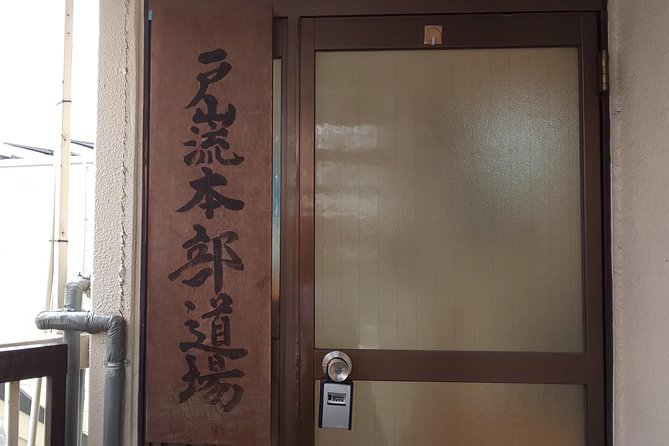
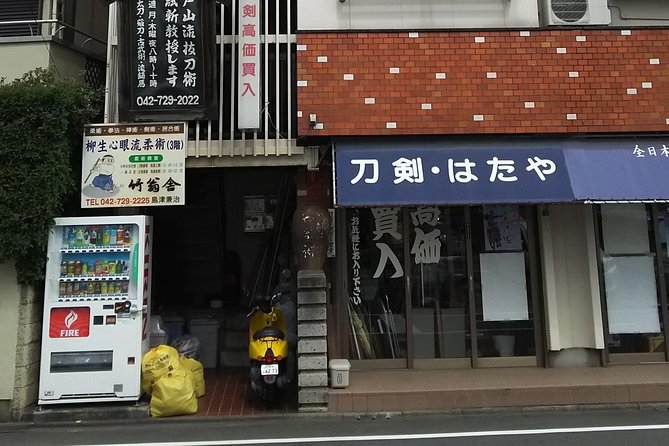
The meeting point is at 3-chōme-14-14 Haramachida, Machida, Tokyo 194-0013. It is near public transportation, but it is not in the main sightseeing core of Tokyo.
That location is the largest practical consideration. One participant traveling from Tokyo Daiba needed about 90 minutes to reach the dojo. Another noted that the studio was somewhat difficult to find and advised allowing plenty of time.
I would not schedule this tightly between two central Tokyo attractions. Give yourself a generous buffer, particularly for your first visit. Arriving early can work in your favor, since one participant had time to watch a student practice before the lesson began.
The activity ends back at the meeting point. Machida can also work as a quieter change of pace from central Tokyo, though the class itself takes most of the available time. If you want a quick activity near Asakusa, Shibuya, or Shinjuku, this is not the convenient choice.
Is the $198.20 price good value?
At $198.20 per person, this is not a budget activity. You are paying more than you would for a basic cultural demonstration or a short lesson in a popular central district.
The value comes from the amount packed into the 2.5-hour session. Your fee covers the lecture, training clothes, practice sword, bokken, bow and arrow, instruction in several forms of sword work, sparring, target cutting, and the live demonstration. You are also paying for a small-group setting and a specialist instructor rather than a general tour guide.
For someone who only wants a souvenir photograph, the price is hard to justify. A cheaper stage show or costume activity would meet that goal.
For a person genuinely interested in samurai culture, Japanese martial arts, or hands-on training, the calculation is better. You get several distinct activities in one class, and the instruction aims to explain the reasons behind each movement. The strong recommendation rate and 5.0 rating suggest that the experience consistently meets its advertised purpose, but you should still match the activity to your interests.
There may also be a facility charter fee if you want to rent the dojo exclusively. The standard experience is not described as a private booking, so ask the operator about that extra charge before arranging exclusive use.
Who will enjoy this most?
I would recommend the class to you if you meet several of these conditions:
- You want practical training rather than a staged samurai show.
- You enjoy learning through physical practice.
- You are willing to concentrate and follow safety instructions.
- You have enough time to travel to Machida and find the dojo.
- You are curious about both swords and archery.
- You accept that the class may leave your muscles sore.
It is a particularly good choice for martial arts fans, history-minded visitors, families with older children, and couples seeking a shared activity. You do not need to be fit or experienced, but you should be comfortable standing, moving, swinging a practice sword, sparring, and trying archery.
This may not suit you if you want a relaxed cultural lecture, have very limited mobility, or need an activity close to central Tokyo. The available information says most people can participate, but it does not provide detailed accessibility information. Contact the operator if you have specific physical needs.
Useful planning advice
Give yourself extra travel time. The address is in Machida, and the dojo may not be immediately obvious when you arrive.
Wear or bring comfortable clothing underneath the provided training wear. The class supplies the uniform and equipment, but you still need to be ready for movement.
Send your height and weight when requested. The operator uses those details to prepare the practice clothes.
Do not plan a demanding evening after class. Several activities involve repeated sword movements, and the instructor warns that your body may ache afterward. Treat the session as a workout as well as a cultural lesson.
Keep your expectations realistic. You will learn basic forms, timing, cutting principles, and introductory archery in one class. You will not become a samurai in 150 minutes, but you will understand why the craft takes years.
The experience requires good weather. If poor weather causes cancellation, you are offered another date or a full refund. You can cancel for a full refund up to 24 hours before the start time, but changes or cancellations inside that window are not accepted.
Should you book this samurai class?
Book it if you want a serious, hands-on lesson led by Yoshioki Sumida, and if traveling to Machida fits your Tokyo schedule. The strongest reasons to choose it are the mix of sword history, iai forms, sparring, target cutting, and archery, plus the chance to see advanced Toyama-ryu technique in a real dojo setting.
Skip it if your priority is convenience, a short photo opportunity, or a gentle activity with little exertion. The class costs $198.20, requires travel beyond central Tokyo, and asks you to work.
For the right person, that effort is the point. You leave with more than a costume photograph. You gain a firsthand sense of the control, timing, and discipline that samurai swordsmanship demands.
FAQ
Where does the samurai class take place?
The meeting point is 3-chōme-14-14 Haramachida, Machida, Tokyo 194-0013, Japan. The class ends at the same location.
How long does the experience last?
The class lasts approximately two hours and 30 minutes.
How much does the experience cost?
The listed price is $198.20 per person.
Who teaches the class?
The instructor is Yoshioki Sumida, a samurai descendant and master of swordsmanship and horseback archery. Harry is also identified as a member of the instructional staff in the provided information.
What activities are included?
The class includes a lecture on Japanese swords, iai forms, gekken sparring, mock-sword practice, target cutting, and bow-and-arrow practice.
Is equipment provided?
Yes. Training clothing, a practice sword, bokken, and a real bow and arrow are provided.
How many people can join?
The maximum group size is 15 participants.
Do I need previous martial arts experience?
The provided information says most people can participate and does not list previous experience as a requirement. You should be prepared to listen carefully and take part in physical training.
Is there a live demonstration?
Yes. You have the opportunity to see a live Toyama-ryu demonstration by a practitioner with a seventh-grade rank.
Can I cancel for a refund?
Yes. You can cancel at least 24 hours before the start time for a full refund. Cancellations or changes made less than 24 hours before the start time are not accepted, and poor-weather cancellations offer a different date or full refund.
More Workshops & Classes in Tokyo
More Samurai & Ninja Experiences in Tokyo
More tours in Tokyo we've reviewed











Samurai & Ninja Experiences, compared.
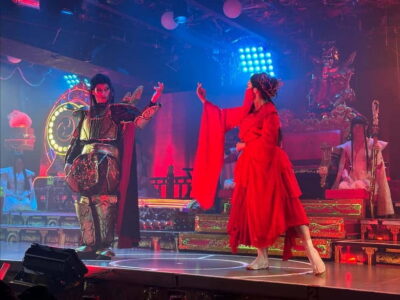 ★ 4.5Tokyo: Samurai Restaurant Show Ticket with 2 DrinksFrom $551h 30m
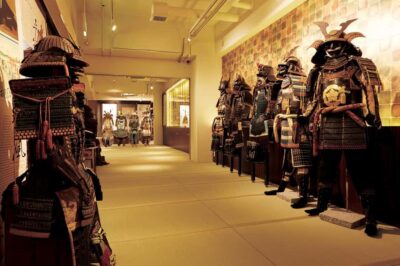 ★ 4.6Tokyo: Samurai Ninja Museum Guided tour and ExperienceFrom $27
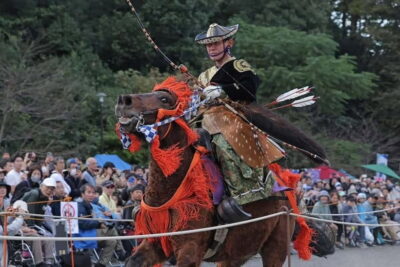 ★ 5.0Tokyo: Samurai Sword & Archery Class from Samurai DescendantFrom $1933 hours
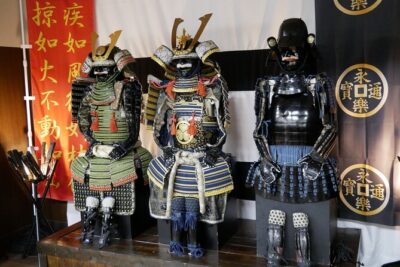 ★ 5.0Best Samurai Experience in TokyoFrom $65
 ★ 5.0Ninja Experience (Family Friendly) at Samurai Ninja Museum TOKYOFrom $47
 ★ 4.6Tokyo: Samurai Entertainment Night Show in Kanda ShrineFrom $412 - 3 hours