
Reviewed · GUIDED
Tokyo 8hr Private Tour with Government-Licensed Guide
Tokyo becomes much easier to grasp when a licensed local guide turns its enormous subway map into a sensible day out. You can choose four to six sights, meet at your hotel on foot, and shape the day around temples, gardens, markets, museums, or modern Tokyo. Guides such as Koba, Taka, An, Yuri, and Kenji have adapted routes to weather, family interests, mobility needs, and even last-minute food or shopping requests.
I like two things right away: the private format, which lets you ask questions and change direction, and the practical help with trains, stations, transit cards, restaurants, and photographs. The main caution is physical. This is a walking tour using public transportation, not a chauffeured sightseeing ride, and a full day can mean many steps, crowded stations, and a brisk pace.
In This Review
- Key points before you book
- Why a private day helps in a city this large
- Asakusa and Senso-ji, the best traditional starting point
- Imperial Palace gardens and Tokyo’s Edo foundations
- Shinjuku Gyoen, Koishikawa Korakuen, Rikugien, and Hama Rikyu
- Meiji Jingu, Yoyogi Park, and Takeshita Street
- Shibuya Crossing and Tokyo Tower
- Tsukiji, Akihabara, and Shinjuku Golden Gai
- Tokyo National Museum and the quieter eastern districts
- Odaiba and Shibamata for a different Tokyo
- Walking, trains, weather, and the real pace
- What the $201.51 price means
- Who will get the most from this Tokyo day
- Should you book the Tokyo private tour?
- FAQ
- Is hotel pickup included?
- How many sights can I visit?
- Are train and subway fares included?
- Are entrance fees included?
- Can I visit the inside of the Imperial Palace?
- Is this a private group experience?
- What is the cancellation policy?
Key points before you book
- Choose four to six sights: Build your day from places such as Asakusa, Meiji Jingu, Shibuya, Tsukiji, gardens, museums, or Akihabara.
- Meet your guide at your hotel: Pickup is on foot within the designated Tokyo area, with no private vehicle included.
- Learn Tokyo’s transit system: Guides can show you how to use subway and train stations, a useful skill for the rest of your trip.
- Mix old and new Tokyo: Pair Senso-ji or an Edo garden with Shibuya Crossing, Harajuku, or Akihabara.
- Plan for a long day outdoors: Walking, station transfers, weather, and crowds shape how much you can comfortably see.
- Expect extra costs: Transportation, lunch, entrance fees, and personal purchases are not included.
Why a private day helps in a city this large
Tokyo is not difficult because it lacks good transportation. It is difficult because its attractions are spread across a huge urban area, and each district has its own mood. Asakusa feels worlds apart from Shibuya, while the quiet paths of a Japanese garden can sit only a short train ride from the noise of Shinjuku.
A private guide gives you a human plan instead of a checklist. You can say that you care most about Edo-period culture, gardens, food, anime, shopping, photography, or family activities. The guide can then arrange a workable route and explain what you are seeing along the way.
That flexibility has real value on a first visit. One guide added Harajuku after learning that a family had already covered part of the Imperial Palace gardens. Another changed the order of stops during heavy rain. A different guide replaced a crowded Asakusa visit with Yanaka for someone seeking older neighborhood streets.
The tour is also useful as an orientation day. Guides have helped people understand subway stations, public buses, Suica card use, restaurant choices, bullet train tickets, and local shopping. I would consider booking it early in your Tokyo stay, then using what you learn to explore independently afterward.
Other guided tours in Tokyo

Asakusa and Senso-ji, the best traditional starting point
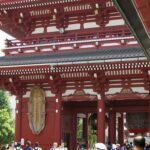
Asakusa is often the natural first chapter of a Tokyo introduction. Senso-ji, one of the city’s best-known Buddhist temples, brings together a striking gate, a busy approach, traditional shops, and a strong sense of place. The temple visit itself is listed as free, so you can focus on the setting and the guide’s explanation rather than an admission queue.
This area works well for first-time visitors because it offers clear cultural details. Your guide can explain purification customs, temple etiquette, and the difference between Buddhist and Shinto sites. One family also used the neighborhood for lunch and shopping, with the guide helping locate a small Buddha figure for a child.
Allow more than the listed short stop if Asakusa is a priority. The suggested timing is only a rough guide, and the district can easily absorb an hour or more once you add Senso-ji, nearby streets, photographs, and food. The tradeoff is that it can feel crowded, especially around the temple’s main approach.
Imperial Palace gardens and Tokyo’s Edo foundations
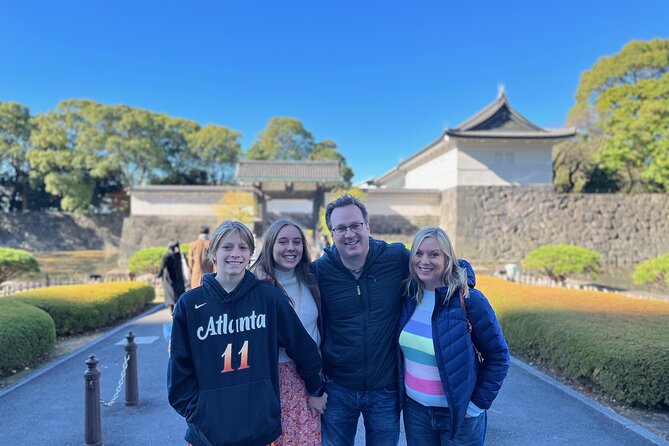
The Imperial Palace occupies the former site of Edo Castle, with moats, broad stone walls, and parkland in central Tokyo. The tour can include views of the grounds and the East Gardens, but inside access to the Imperial Palace is not included.
This is a good stop if you want a sense of Tokyo’s political and feudal past without committing to a full museum visit. The gardens offer a quieter break from traffic, and guides can connect the castle site with the Tokugawa shogunate and the growth of Edo into modern Tokyo.
The suggested visit is about 30 minutes, though that can change with your interests. If you have already visited part of the grounds, tell your guide before the day begins. The route can then use that time for another district instead of repeating familiar paths.
Shinjuku Gyoen, Koishikawa Korakuen, Rikugien, and Hama Rikyu
Tokyo’s gardens are among the strongest choices on this tour, especially when you need a pause from stations and concrete. Shinjuku Gyoen has broad lawns, winding paths, and a calm setting close to Shinjuku Station. Its entrance fee is not included, so budget separately.
Koishikawa Korakuen and Rikugien offer a more formal Japanese garden experience. Koishikawa Korakuen dates from the early Edo period and is known as one of Tokyo’s oldest gardens. Rikugien was created around 1700 for the fifth Tokugawa shogun and takes its name from the six principles of poetry.
Hama Rikyu gives you a different view, with seawater ponds affected by the tides and a teahouse near Tokyo Bay. These gardens also carry separate admission charges. At 30 to 35 minutes each, the suggested stops are brief, so you will get an overview rather than a slow, complete visit.
Season matters. A guide helped one visitor find winter cherry blossoms at Shinjuku Gyoen and the Imperial Palace East Gardens. If flowers or autumn color are central to your plans, mention that when arranging the route, but do not expect every garden to fit into one day.
Meiji Jingu, Yoyogi Park, and Takeshita Street
The Meiji Jingu Shrine sits beside Harajuku Station but feels removed from the city once you enter its wooded approach. It honors Emperor Meiji and Empress Shoken. The official stop time is listed as only five minutes, which is enough for a quick look but not enough for a thoughtful visit.
I would ask for extra time here if shrine customs interest you. This is another place where a guide can explain purification and respectful behavior, making the visit more meaningful than a quick photograph at the entrance.
Nearby Yoyogi Park offers open lawns, ponds, and wooded areas. It is free and can make a pleasant breathing space in the middle of a packed day. Takeshita Street then shifts the tone completely, with youth fashion, specialty shops, snacks, and the unusual energy of Harajuku.
The three stops work well together, but you may need to choose between a relaxed shrine visit and extensive shopping. A guide can also point you toward souvenir shops or food stops that match your interests. One family combined Takeshita Street with a Japanese restaurant and later visited a Pokémon Center.
Other private tours in Tokyo

Shibuya Crossing and Tokyo Tower
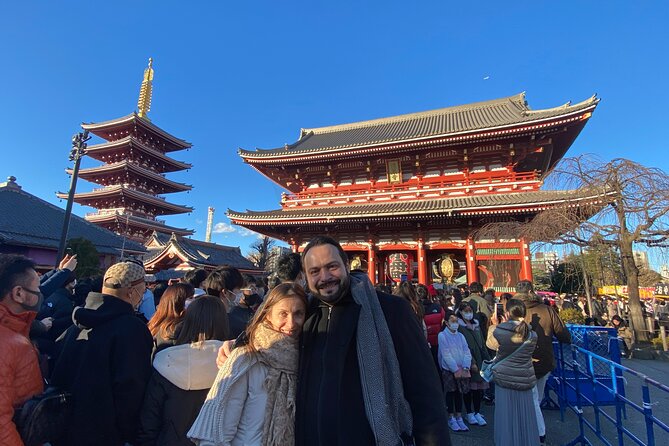
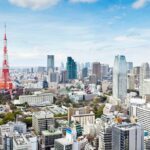
Shibuya Crossing gives you Tokyo at its most cinematic. From ground level, you see streams of people cross from every direction. From an upper viewpoint, you can better appreciate the scale and choreography of the intersection.
The crossing itself is free, so it is an efficient stop. Your guide can help you find a good viewing position, manage the station area, and take family photographs. One visitor particularly valued having a guide take pictures throughout the day, removing the need to ask strangers at every stop.
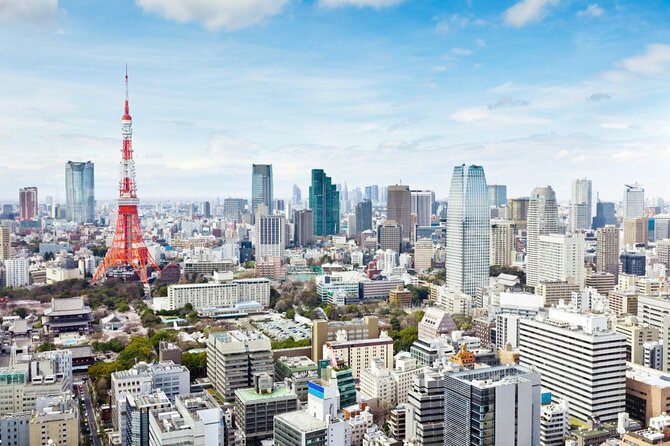
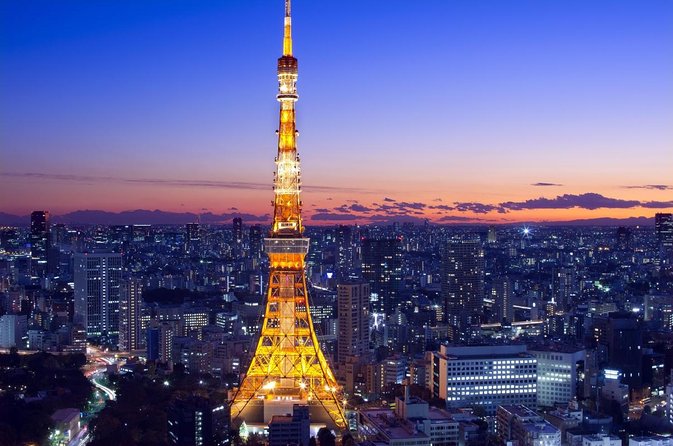
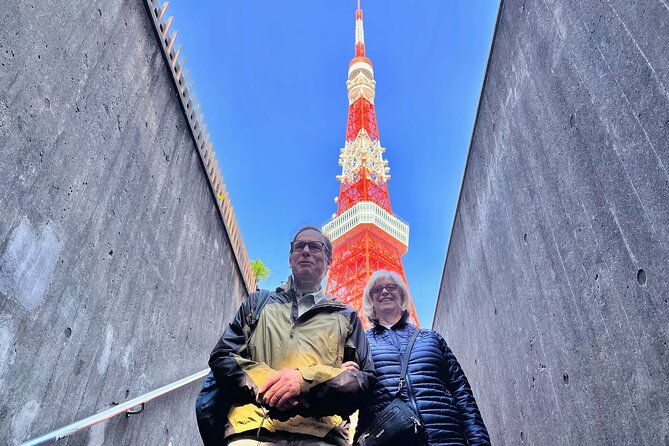
Tokyo Tower offers another classic image of the city. The tour includes access only up to the main deck, and the observation ticket is not included. The listed stop time is just one minute, so you will need to request more time if you want to go up rather than simply see the tower from outside.
Shibuya and Tokyo Tower are not close enough to treat as neighboring sights. Public transit and station transfers take time, so adding both may force you to shorten another stop. Ask your guide to explain the travel time before locking in a long list.
Tsukiji, Akihabara, and Shinjuku Golden Gai
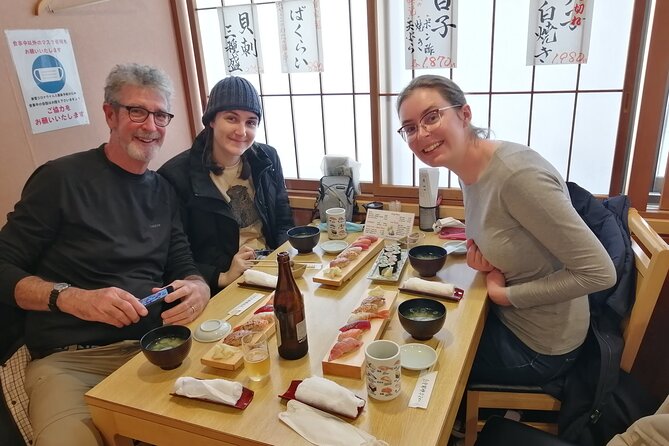
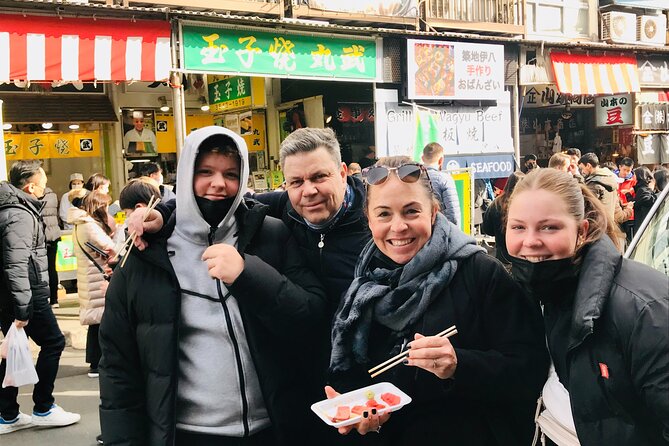
Tsukiji is the place to choose if food interests you. It is the old fish market area, with shops and places to eat. The stop is listed at about 30 minutes, but lunch can stretch the schedule. Meals are not included, and you should tell the guide if you want time for sushi or another local specialty.
Akihabara serves a different purpose. The district is known for electronics shops and has become a center for anime, manga, and related pop culture. The official timing is only five minutes, which is enough to identify the area but not enough for serious shopping.
Shinjuku Golden Gai is a compact district of tiny eating and drinking establishments with roots going back to the postwar black-market era. It is best treated as a short atmospheric walk unless you specifically want an evening meal or drink. The five-minute suggested duration is not a full exploration.
These three choices show why the tour needs honest prioritizing. Food, shopping, and nightlife can each consume time. If Tsukiji lunch matters more than a quick stop in Akihabara, say so clearly.
Tokyo National Museum and the quieter eastern districts
The Tokyo National Museum in Ueno is Japan’s oldest and largest national museum. Its collections make it a strong pick for anyone interested in Japanese art, archaeology, and history, but the suggested 35 minutes is a preview rather than a complete museum visit. Admission is not included.
Ueno can also be paired with nearby historical sites, including Ueno Toshogu, as one guide did for a family interested in Japan’s past. Nezu and Yanaka offer another useful contrast to central Tokyo. These old downtown neighborhoods escaped major damage from wars and disasters and retain older streets, shrines, and a slower pace.
I especially like the choice of Yanaka or Nezu for a second visit to Tokyo, or for anyone who finds the most famous sights too crowded. One guide substituted Yanaka for Asakusa to give a visitor a less familiar side of the city.
The drawback is geography. Eastern Tokyo, Ueno, Asakusa, and western districts such as Shibuya and Shinjuku can make a demanding combination. A private guide can improve the order, but no guide can remove Tokyo’s travel time.
Odaiba and Shibamata for a different Tokyo
Odaiba sits on a man-made island in Tokyo Bay and is built around shopping and entertainment. The stop is listed at five minutes and is free, so it is most useful if your group has a specific reason to go there. It is not an efficient add-on to a central Tokyo route unless the district itself is a priority.
Shibamata, at Tokyo’s eastern edge near the Edogawa River, has an old-fashioned neighborhood character. It can appeal to you if you want something outside the standard first-day circuit. Again, the five-minute estimate signals a quick orientation rather than a full local visit.
These are specialty choices. I would not add them simply to collect more names. Use them when your interests, hotel location, or previous Tokyo visits make the famous central districts less important.
Walking, trains, weather, and the real pace
This is an eight-hour walking tour, but the day is not eight hours of continuous walking. You will also spend time on trains, in stations, at entrances, and at each sight. Even so, expect a substantial amount of movement.
One family covered about 22,000 steps, and other outings included many train and subway transfers. Guides have helped people with injured feet, elderly relatives, bad knees, hot weather, and sudden rain, but you need to discuss limits in advance. Comfortable shoes are essential, and a slower route may mean fewer stops.
The hotel pickup is a meeting at your hotel, followed by movement on foot and public transportation. There is no private vehicle, and transportation fees are not included. The group remains private, which means you are not combining with another tour party, but it does not turn the day into a car tour.
Weather can change the plan. Rain led one guide to rearrange stops, while a cool winter day made the long schedule more comfortable for another visitor. In summer, I would be cautious about trying to fit six distant places into one day.
What the $201.51 price means
At $201.51 per person, the value depends heavily on your group size and how much help you need. You are paying for a full day with a licensed English-speaking guide and a route built around your interests, not for admission tickets, meals, or a vehicle.
For a family or small group, the private arrangement can make sense because the guide’s attention stays with you. You can ask questions at the moment they arise, stop for photographs, adjust the pace, and get help with transit or restaurant choices. A group discount may also be available, so check the final price for your party.
The cost is harder to justify if you already know Tokyo’s trains, have a firm independent plan, and mainly want transportation. Add the likely cost of train fares, gardens or museum admissions, lunch, and shopping when comparing options.
Who will get the most from this Tokyo day
I would recommend this tour most strongly for first-time visitors who want orientation without surrendering control. It also suits families, people who want a guide to handle train transfers, and anyone with a specific interest in Japanese history, gardens, food, photography, or popular culture.
It can work well for repeat visitors too, especially if you ask for Yanaka, Nezu, Shibamata, or another less familiar district. Guides have also adapted days for children, added Pokémon shopping, helped with souvenir purchases, and adjusted routes around health concerns.
You should think twice if your group dislikes walking, wants a private car, or prefers to spend several hours inside one museum. The structure favors variety and movement. You can slow it down, but you cannot see every corner of Tokyo in eight hours.
Should you book the Tokyo private tour?
Book it if you want a personal introduction to Tokyo and value practical help over a fixed sightseeing script. Ask for a guide who fits your interests, explain mobility limits, and choose four to six places that sit in sensible clusters.
I would start with two or three anchor sights, such as Senso-ji, Meiji Jingu, Shibuya Crossing, or the Imperial Palace East Gardens, then add nearby choices. Be clear about lunch, shopping, museum time, and photographs. If you plan carefully, guides such as Koba, Taka, An, Yuri, Kenji, Nori, and Izumi have shown the kind of flexibility this format requires.
If you want a relaxed day with plenty of time at each place, book two shorter tours instead, especially in hot weather. For a first full day in cool conditions, though, this is a useful and personal way to get your bearings fast.
FAQ
Is hotel pickup included?
Yes, but pickup is on foot. You meet the licensed guide at your hotel within the designated area of Tokyo, and there is no private vehicle.
How many sights can I visit?
The tour is designed around four to six selected sites. The practical number depends on distance, transit time, weather, walking speed, and how long you spend at each place.
Are train and subway fares included?
No. Transportation fees are not included, so you pay your own fares during the day.
Are entrance fees included?
Only guide entry fees are covered for sights listed in the tour details. Your own entrance fees for places such as Shinjuku Gyoen, Koishikawa Korakuen, Hama Rikyu, Rikugien, Tokyo National Museum, or Tokyo Tower are not included.
Can I visit the inside of the Imperial Palace?
No. This experience does not include access inside the Imperial Palace. You can visit or view the surrounding palace grounds and gardens, depending on the route arranged with your guide.
Is this a private group experience?
Yes. Only your group participates, and you cannot combine multiple tour groups.
What is the cancellation policy?
You can cancel up to 24 hours before the start time for a full refund. Cancellations or changes made less than 24 hours before the start time are not accepted for a refund, and date changes may result in a different guide or no availability.
More Private Tours in Tokyo
More Guided Tours in Tokyo

More tours in Tokyo we've reviewed





Guided, compared.
 ★ 5.0Tokyo 6hr Private Tour with Government-Licensed GuideFrom $155
 ★ 4.9Tokyo: Shinjuku Local Bar and Izakaya Guided Walking TourFrom $343 hours
 ★ 4.8Tokyo: Private City Highlights Tour with Local GuideFrom $1064 - 8 hours
 ★ 4.9Tokyo: Tsukiji Fish Market Guided Walking TourFrom $222 hours
 ★ 5.0Tokyo 4hr Private Tour with Government-Licensed GuideFrom $109
 ★ 5.0Tokyo Guided Small-Group Biking TourFrom $106