
Reviewed · SAMURAI & NINJA EXPERIENCES
Tokyo: Samurai Sword Academy in the Hometown of the Last Samurai
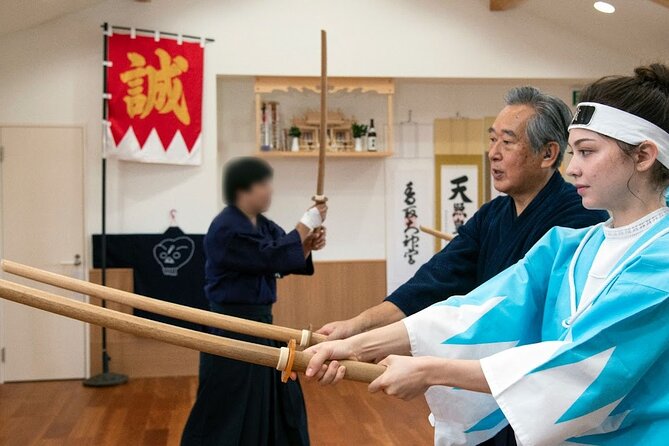
The most unusual part of this Tokyo experience is simple: you practice Tennen Rishin-ryu swordsmanship inside a working dojo, in Hino City, the hometown of the Shinsengumi. This is not a costumed photo stop. You learn basic forms, handle a Japanese sword, and take part in a tradition linked to the samurai of the late Edo period.
I like the small group size, capped at four people, because sword instruction needs close attention. I also like the direct connection to Genzaburo Inoue, a Shinsengumi executive whose descendant, Masao Inoue, leads the program. The main consideration is that this is a serious martial-arts lesson, not a relaxed sightseeing activity. You need moderate physical fitness and a willingness to follow dojo etiquette.
In This Review
- Key details before you book
- Why Hino is the right place for a samurai lesson
- Entering the Genzaburo Inoue Shiryokan
- Learning the basics of Tennen Rishin-ryu
- Handling a Japanese sword
- What Masao Inoue adds to the experience
- The two-hour schedule and group size
- Is $118.60 a fair price?
- Who will enjoy this, and who may not
- Booking, meeting, and cancellation tips
- My call: book it for the tradition, not the theatrics
- FAQ
- Where does the samurai sword experience take place?
- What time does the activity start?
- How long does the experience last?
- How many people can join the class?
- Do I need a certain level of fitness?
- Can I cancel for a full refund?
Key details before you book
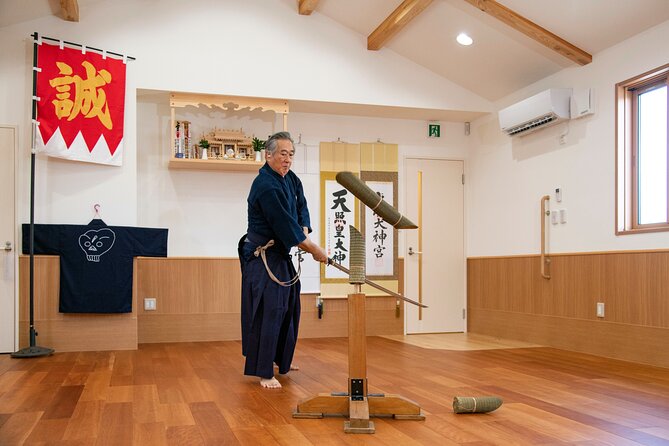
- Train in Hino City: The setting connects the lesson to the home of the Shinsengumi, often called the Shogun’s Last Samurai.
- Learn a real sword tradition: The class introduces Tennen Rishin-ryu, a style that began in the Edo period.
- Meet Masao Inoue: The dojo chairman and descendant of Shinsengumi executive Genzaburo Inoue leads the experience.
- Expect a tiny class: A maximum of four people allows for close instruction and plenty of correction.
- Plan for two focused hours: The program covers etiquette, sword posture, basic forms, and Japanese sword handling.
- Know the tone: This is a disciplined dojo experience, not a theatrical samurai show.
Why Hino is the right place for a samurai lesson
Many Tokyo samurai activities are built around costumes, staged demonstrations, or quick photographs. This one takes you west of central Tokyo to Hino City, where the local story is tied directly to the Shinsengumi.
The Shinsengumi formed at the end of the Edo period from swordsmen connected with Tennen Rishin-ryu. They served the Tokugawa shogunate during a turbulent final chapter before modern Japan took shape. Their reputation as exceptionally strong swordsmen helped give them their lasting image as the Last Samurai.
That setting changes the tone of the class. You are not simply learning how to swing a sword. You are learning a martial art in the place associated with the people who practiced it. I find that kind of connection far more meaningful than a generic samurai-themed attraction.
The meeting point is Genzaburo Inoue Shiryokan at 4-chome 1112 Hinohonmachi, Hino, Tokyo 191-0011. The activity begins at 1:00 pm and ends back at the meeting point. Since the experience is near public transportation, you can reach it without arranging a private transfer, though you should allow time to find the exact meeting location.
If you're still narrowing it down, here are other tours in Tokyo Prefecture we've reviewed.


Entering the Genzaburo Inoue Shiryokan
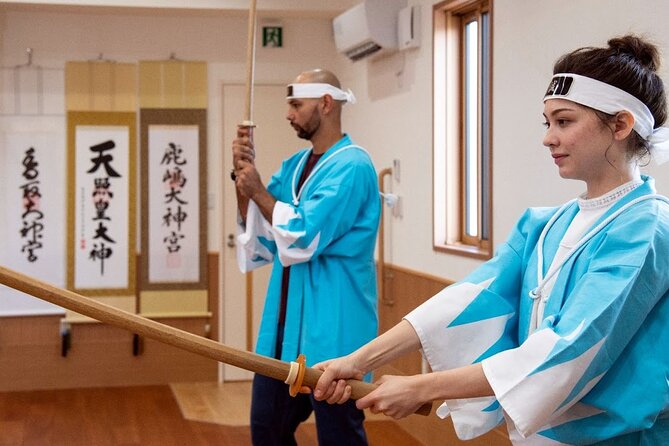
The program begins at the Genzaburo Inoue Shiryokan, the place tied to Genzaburo Inoue and the local Shinsengumi story. Starting here gives the lesson a sense of place before you begin physical practice.
You should expect the first part to set the rules and mood of the dojo. The supplied details specifically mention etiquette, how to hold yourself, how to take a sword stance, and the basic forms of Tennen Rishin-ryu. These details matter. Japanese swordsmanship is not presented as casual weapon handling. The bow, posture, control, and sequence are part of the art.
I like that the class begins with this foundation. A visitor who has never touched a sword might expect the lesson to start with dramatic movements. Instead, the value comes from learning why the body must be placed in a precise way before any technique can work.
The small class limit is important here. With no more than four people, the instructor can watch each person’s stance and correct mistakes. That is a much better setup than a large group rotating through a brief demonstration.
Learning the basics of Tennen Rishin-ryu
Tennen Rishin-ryu began in the Edo period and has continued into the present. The class introduces its basic forms, giving you a short but focused look at how this traditional school trains.
You should not expect to master the style in two hours. The reasonable goal is to understand the structure of a sword lesson, learn a few fundamental movements, and gain respect for the discipline behind them. I would treat this as an introduction rather than a complete martial-arts course.
The instruction includes basic sword posture and forms. That can be physically demanding in a quiet way. Holding a position correctly, moving with control, and repeating a sequence require concentration. The moderate fitness requirement is worth taking seriously, even though this is not described as an athletic competition.
An English-guided element is available, and one review identifies Yu Ma as the English guide. That is useful for visitors who want more than a visual demonstration. Martial-arts instructions can be hard to follow when translated poorly, so clear guidance should make the lesson easier to understand.
The experience also has a strong mental side. You need to listen, watch, remember the order of movements, and avoid rushing. I like this because it gives you a clearer idea of what traditional swordsmanship demands than a fast demonstration ever could.
Handling a Japanese sword
The chance to handle a Japanese sword is the central draw. The program describes the sword as the soul of the samurai, and the lesson treats it as an object requiring care and control.
This is where the experience becomes more serious than a themed activity. You are expected to follow instruction and respect the equipment. The exact sword used and the level of contact are not specified in the available information, so you should not assume you will freely practice with a sharp blade throughout the session.
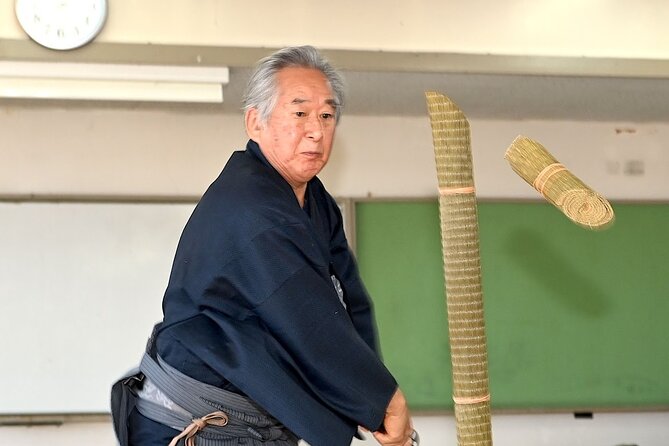
One detailed account describes etiquette, sword handling, forms, and a live-sword test cutting demonstration or practice. That is a striking feature, but the wording does not establish that every session includes the same format. If test cutting is especially important to you, confirm the current procedure with the provider before booking.
The practical lesson is clear: do not treat the sword as a prop. Listen closely, follow every instruction, and keep your attention on the teacher. You will get more from the experience if you approach the sword with patience rather than hunting for a dramatic moment.
What Masao Inoue adds to the experience
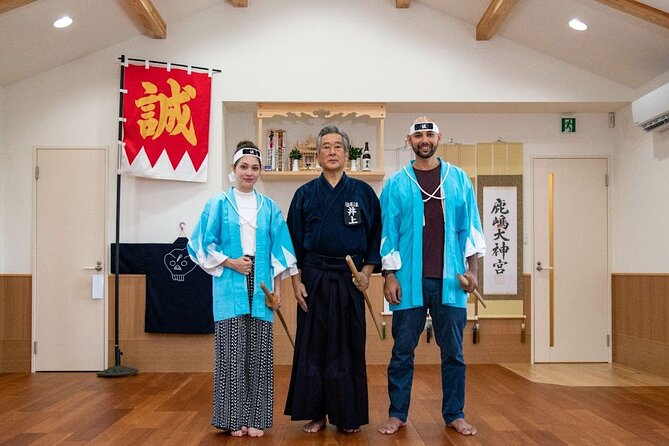
Masao Inoue, chairman of the Tennen Rishin-ryu Hino Dojo, leads the program. He is a descendant of Genzaburo Inoue, a Shinsengumi executive, giving the class a direct family link to the tradition it presents.
That connection is one of the strongest reasons to choose this activity. A sword lesson led by a modern instructor can be worthwhile on its own, but the family history gives the setting an extra layer. You are learning in Hino, hearing about the local Shinsengumi connection, and practicing a style associated with that group.
The experience does not promise a long historical lecture, so you should not book it expecting a full museum tour or a broad survey of Japanese military history. Its focus is practical training. The historical context works best as a frame around the lesson.
I also appreciate the involvement of two teachers in at least one session. One participant described receiving instruction from two excellent teachers, which suggests that the small group may receive close help during practice. The exact staffing can vary, so consider this a useful possibility rather than a guaranteed feature.
The two-hour schedule and group size
At roughly two hours, the activity fits neatly into an afternoon in Tokyo. The 1:00 pm start leaves room for a morning visit elsewhere, but the trip to Hino still needs planning. The experience ends where it begins, which keeps the day simple once you arrive.
The four-person maximum is a real advantage. Sword forms depend on details such as hand placement, stance, timing, and direction. A crowded class would make individual instruction difficult. Here, you have a better chance of being corrected before a small mistake becomes a bad habit.
The intimate format also means the class may feel more intense. You will not be able to drift through the activity unnoticed, and that is part of its value. If you want a low-pressure attraction where you can watch from the side, choose something else.
I would wear comfortable clothing that allows movement and arrive ready to concentrate. The supplied information does not specify a dress code, equipment list, or age requirement, so contact the provider if you need exact preparation advice.
Is $118.60 a fair price?
At $118.60 per person, this costs far more than a casual museum visit or a short cultural demonstration. The value depends on what you want from your Tokyo afternoon.
You are paying for a small-group lesson, access to an actual dojo, instruction in a traditional sword school, and a direct link to the Shinsengumi through Masao Inoue. Those elements make the price easier to justify for anyone who has a real interest in Japanese martial arts or samurai history.
The price is less compelling if you mainly want a quick photograph with a sword. You could find cheaper activities built around costumes and staged entertainment. This program asks you to spend two hours learning, repeating, and following formal instruction.
I see it as a specialist experience rather than a general sightseeing bargain. For a couple or small group that has already seen Tokyo’s major temples and neighborhoods, it offers a very different afternoon. For someone with no interest in martial arts, the cost may feel high because the class is narrow and disciplined.
The average booking lead time is 31 days. That suggests you should plan ahead, especially if you want a particular date. The maximum of four people also means spaces can disappear quickly.
Who will enjoy this, and who may not
I would recommend this activity to you if you have a strong interest in samurai culture, traditional Japanese martial arts, or hands-on cultural experiences. It is also a good fit if you prefer meeting a specialist in a real setting instead of watching a polished tourist performance.
The experience may suit first-time sword students because the class teaches basic forms and posture. You do not need to arrive as an expert. You do need to listen carefully and accept that the lesson may feel formal.
It is less suitable if you want a purely passive activity, have limited physical ability, or dislike structured instruction. The moderate fitness requirement is the only physical guidance provided, so anyone with concerns should ask the provider before booking.
Families should also confirm suitability directly, since no age information is provided. The four-person limit may work well for a small family group, but the lesson’s seriousness means it may not be ideal for young children looking for playful entertainment.
Booking, meeting, and cancellation tips
Your mobile ticket is convenient, but you still need to reach the meeting point at the stated start time. The activity begins at 1:00 pm at Genzaburo Inoue Shiryokan and returns there at the end.
Because the exact venue is in Hinohonmachi, check the route before leaving central Tokyo. The experience is near public transportation, but no station or travel time is specified. Give yourself a buffer so you arrive calm and ready for the formal opening of the class.
Free cancellation is available up to 24 hours before the local start time for a full refund. Cancellations or changes made less than 24 hours before the start are not accepted for a refund. That policy is fairly flexible, but it rewards early decisions.
My call: book it for the tradition, not the theatrics
I would book this experience if I wanted a serious introduction to Japanese swordsmanship in a setting tied to the Shinsengumi. The strongest features are the four-person limit, the Tennen Rishin-ryu instruction, the Hino location, and Masao Inoue’s family connection to Genzaburo Inoue.
I would skip it if I wanted a simple samurai show, a broad historical tour, or an inexpensive activity that requires little effort. The price makes sense only when you value direct instruction and a genuine dojo setting.
For the right person, this is a memorable way to connect Tokyo’s past with a physical skill. Go ready to bow, listen, repeat the basics, and handle the sword with care. That approach will give you far more than a souvenir photograph.
FAQ
Where does the samurai sword experience take place?
The experience begins and ends at Genzaburo Inoue Shiryokan, located at 4-chome 1112 Hinohonmachi, Hino, Tokyo 191-0011.
What time does the activity start?
The listed start time is 1:00 pm.
How long does the experience last?
The activity lasts approximately two hours.
How many people can join the class?
The maximum group size is four people.
Do I need a certain level of fitness?
Participants should have a moderate level of physical fitness. The class includes sword posture and basic forms, so you should be prepared for focused physical practice.
Can I cancel for a full refund?
Yes. You can cancel at least 24 hours before the local start time for a full refund. Cancellations or changes made less than 24 hours before the start are not accepted for a refund.
More tours in Tokyo Prefecture we've reviewed
Samurai & Ninja Experiences, compared.
 ★ 4.5Tokyo: Samurai Restaurant Show Ticket with 2 DrinksFrom $551h 30m
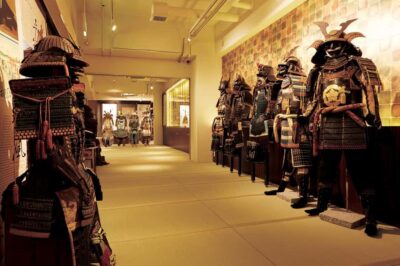 ★ 4.6Tokyo: Samurai Ninja Museum Guided tour and ExperienceFrom $27
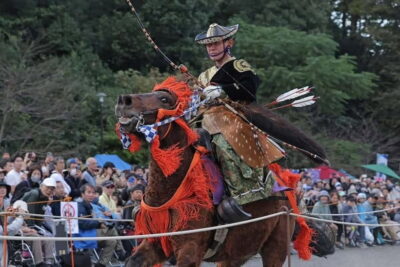 ★ 5.0Tokyo: Samurai Sword & Archery Class from Samurai DescendantFrom $1933 hours
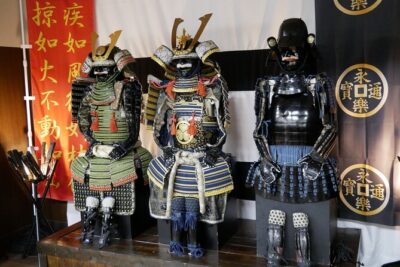 ★ 5.0Best Samurai Experience in TokyoFrom $65
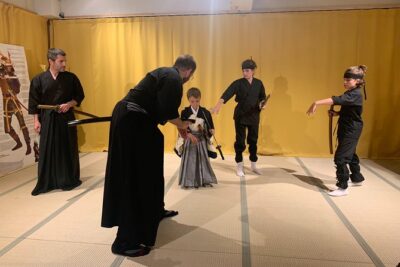 ★ 5.0Ninja Experience (Family Friendly) at Samurai Ninja Museum TOKYOFrom $47
 ★ 4.6Tokyo: Samurai Entertainment Night Show in Kanda ShrineFrom $412 - 3 hours