
Reviewed · SAMURAI & NINJA EXPERIENCES
Tokyo: Samurai Adventure! Authentic Sword Action Experience
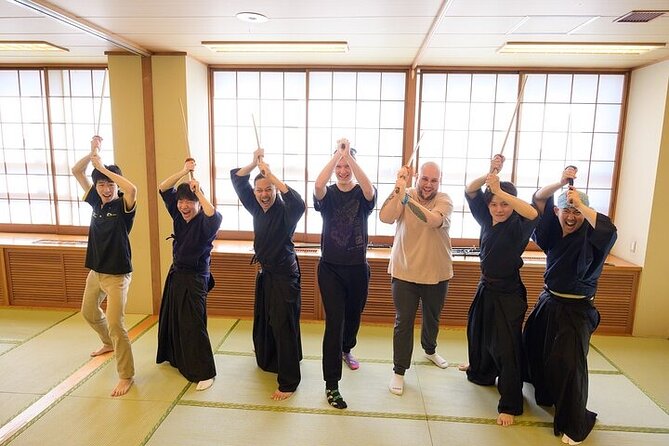
The most exciting part of this Tokyo samurai workshop comes after the basic drills: you pair with a professional samurai for a staged action scene. Dai and Kume, both professional action performers, guide you through safe sword movements with wooden training swords, not real combat.
I like the mix of watching and doing, especially the close-up demonstration and the chance to practice beside Japanese students. I also like the small maximum group of 15 and the reasonable $32.84 price, which makes this an easy add-on near Tsukishima, Tokyo Station, Ginza, or Tsukiji.
The main limitation is time. One hour is enough for an entertaining introduction, but not for serious sword training or a full cultural lesson. Kimono dressing, food, drinks, and transportation are not included, so you should treat this as a focused action workshop rather than a full-day samurai program.
In This Review
- Key Points at a Glance
- What This Tokyo Samurai Experience Really Is
- From Warm-Up to Wooden Sword Practice
- The Live Demonstration Comes Before Your Turn
- Your Samurai Action Scene
- Group Class or Private Lesson
- Dai and Kume Set the Tone
- Why the $32.84 Price Makes Sense
- Finding the Workshop in Tsukuda
- Who Will Enjoy This Most
- Photos and the Final Memory
- Timing, Booking, and Cancellation
- My Verdict: Book It for Action, Not Formal Training
- FAQ
- How long does the samurai experience last?
- Where does the experience meet?
- Where does the activity end?
- Are beginners allowed to participate?
- Do I use a real sword?
- Is a private lesson available?
- Is kimono dressing included?
- Can I cancel for a full refund?
Key Points at a Glance
- Learn the basics before the action scene: Warm-ups lead into sword grip, stance, holding, drawing, and swinging practice.
- Watch professional performers up close: A live samurai training demonstration gives you the visual side before you take part.
- Train with Dai and Kume: Their friendly, hands-on teaching style suits first-time participants and families.
- Choose group or private instruction: The group class may include Japanese actors in training, while a private lesson offers a more personal format.
- Use safe wooden swords: This is staged action practice, not real sword fighting.
- Finish with samurai photos: The closing photo session gives you a clear keepsake from the hour.
What This Tokyo Samurai Experience Really Is
I would think of this as a practical introduction to samurai stage combat, not a museum lecture or a martial arts course. You learn how samurai movements look and feel in performance, then use those movements in a short scene.
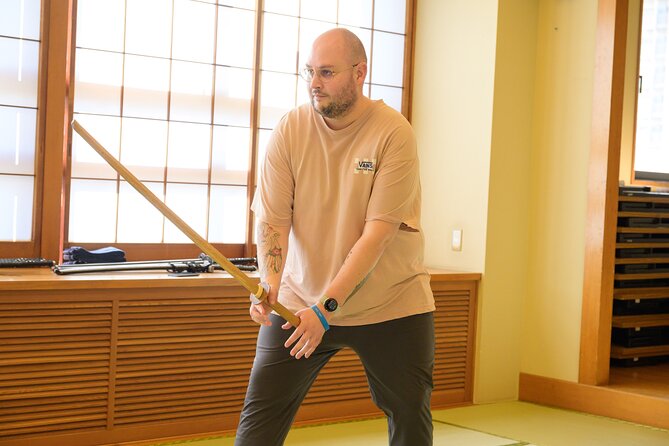
The experience begins with an introduction to samurai history. This sets the cultural frame, but the workshop quickly becomes physical. You warm up, learn how to grip and hold the sword, and practice controlled swings with wooden swords provided by the instructors.
That distinction matters. You are not handling a sharp blade, and you are not being asked to fight. The aim is clean movement, good timing, and the dramatic posture that makes a samurai scene work.
The instructors are professional action actors. That gives the class a different feel from a standard history talk. They can show you how to make a movement look strong on camera or on stage while keeping it safe for a beginner.
A few more Tokyo tours and experiences worth a look
From Warm-Up to Wooden Sword Practice
The warm-up is an important part of the hour, even if it sounds simple. It prepares you for the stances and arm movements ahead, and it gives the instructors a quick way to see how comfortable you are with physical activity.
You then move into the mechanics of the sword. Expect instruction on gripping, holding, and swinging. These fundamentals may seem basic, but they are what keep the movements controlled and readable.
I like this order because it prevents the class from becoming a quick costume photo with a sword in hand. You first learn a few actions, then use them in a more dramatic setting. The result should feel more satisfying than simply posing with a prop.
The wooden swords are supplied, so you do not need to bring equipment. The provided details do not mention special clothing requirements, but they do make clear that kimono dressing is not part of the booking. Wear something that lets you move comfortably.
The Live Demonstration Comes Before Your Turn
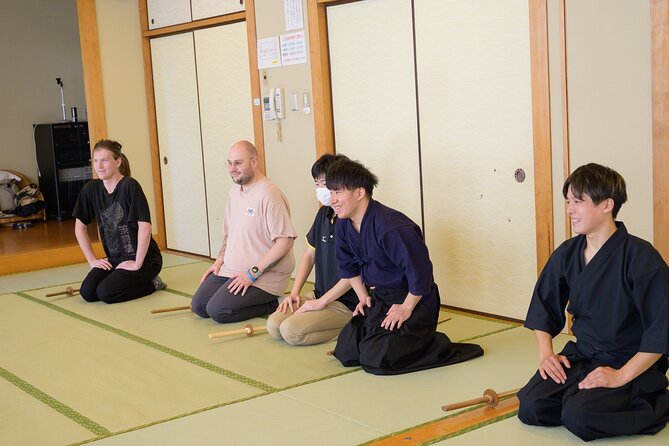
A live samurai training demonstration is included. You watch the instructors perform the movements at close range, which helps you understand the speed, posture, and rhythm before trying them yourself.
This is one of the strongest parts for people who prefer watching as much as participating. You do not have to be an eager martial artist to enjoy the class. The demonstration gives the session a performance element, while the lesson lets you test the basics with guidance.
The demonstration also helps explain why stage sword work is different from actual combat. A movement can be broad and dramatic for an audience while still being carefully controlled. The class gives you a small taste of that discipline without presenting the activity as real sword fighting.
Your Samurai Action Scene
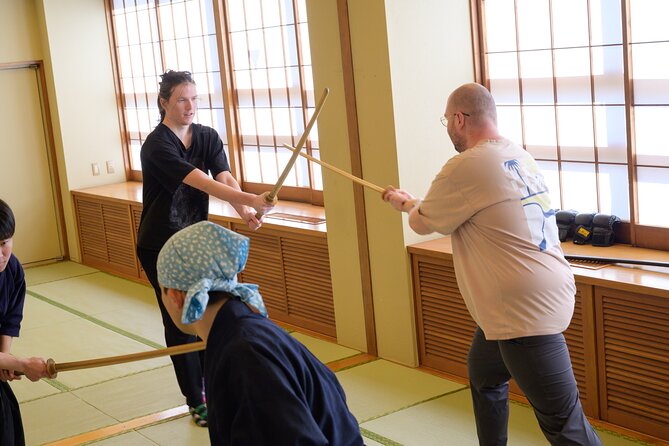
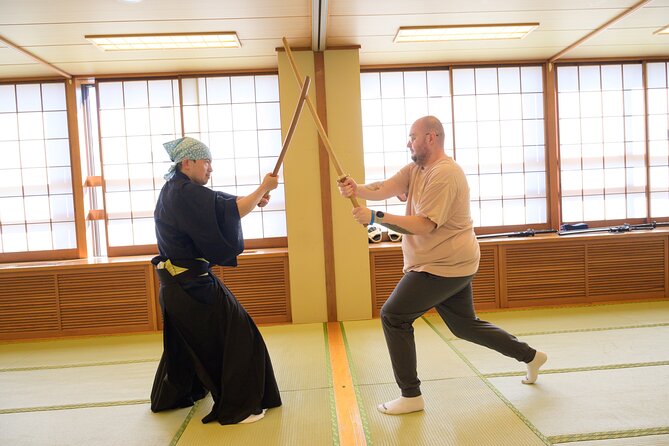
Once you have practiced the basic forms, you pair with a professional samurai for an action scene. This is the point where the individual exercises come together.
You are not expected to arrive with acting or martial arts experience. Beginners are welcome, and the instructors guide you through the sequence. That makes the scene accessible even if your sword grip is still a little uncertain.
The action scene is staged, so timing matters more than strength. Listen closely to the instructor, keep your movements controlled, and focus on the form you have just learned. Trying to swing harder will not improve the experience.
This section gives the hour its sense of occasion. You are no longer only copying a movement. You are using it in a short piece of samurai action, with a professional partner helping you through the performance.
Group Class or Private Lesson
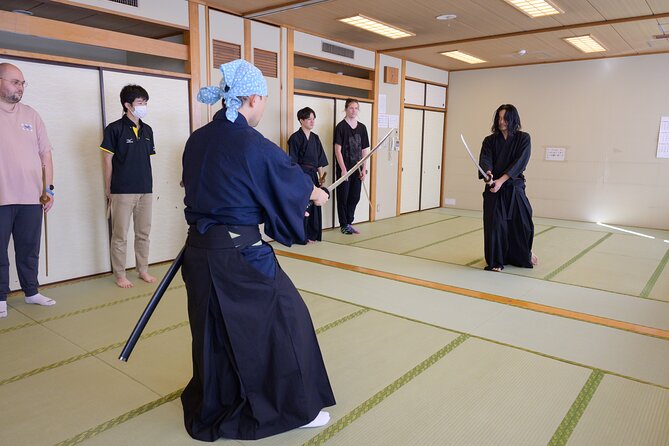
You can choose between a group class and a private lesson. The supplied details do not spell out the exact difference in price or duration, so check the option shown at booking before you pay.
The group format has a useful cultural angle. You may practice alongside Japanese students who are training as actors, which can make the session feel like a working class rather than a performance made only for tourists. You also get a chance to interact with local participants through the shared exercises.
The group maximum is 15 people. That is not a one-on-one lesson, but it is still a manageable size for a short workshop. The instructors can demonstrate to the room and then help people through the key movements.
A private session may suit you if you want more individual attention or prefer not to perform in front of a group. It could also be a better fit for a special family outing or a small private booking. Since the specific private format is not provided, confirm exactly what is included in that option.





Dai and Kume Set the Tone
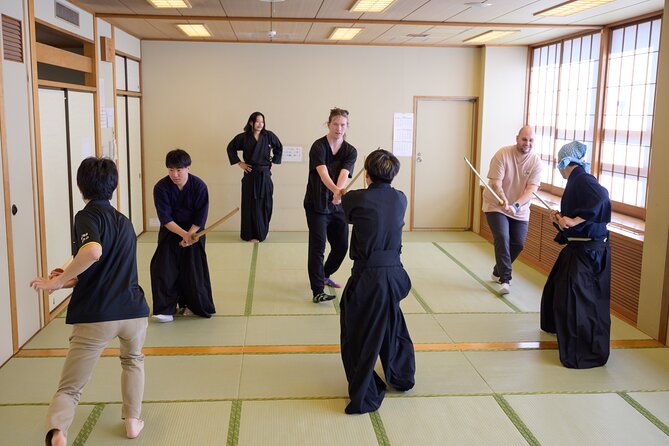
The instructors named in the experience are Dai and Kume. Their role is more than showing sword technique. They also shape the mood of the session, which matters when you are learning a choreographed scene in a short period.
The personal responses connected with the activity describe Dai as especially polite, friendly, and pleasant. That fits the needs of this kind of class. A firm instructor can keep movements safe, while a warm instructor helps beginners relax enough to look natural.
The teaching also appears to leave room for cultural exchange. Japanese language was used during at least one lesson when a participant showed interest, and Dai and Kume have sometimes offered suggestions about traditional places to eat around Tsukishima after class. Those extra interactions are not guaranteed parts of the official hour, so do not book the class expecting a food walk. Still, they show the kind of welcoming local contact you might find.
Why the $32.84 Price Makes Sense
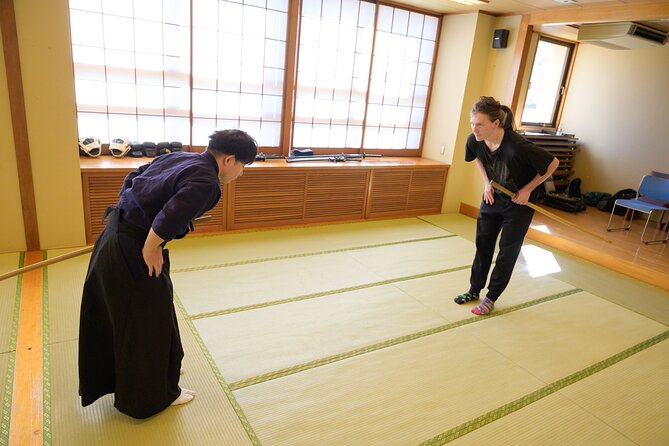
At $32.84 per person, this is priced as an affordable short activity rather than a major Tokyo attraction. For one hour, you receive a history introduction, a live demonstration, wooden sword use, guided practice, an action scene, and photos.
I see the value in the fact that the session is hands-on. You are not paying only to watch a show. You get equipment, instruction, and a chance to perform a short sequence with a professional.
The price is especially easy to justify if you want a break from temples, shopping, and train rides. It fits neatly into a morning or afternoon plan. You can add it to a day around Tsukishima, Ginza, Tsukiji, or the Tokyo Station area without giving up a whole day.
The value is weaker if you expect a long lesson in swordsmanship, formal kimono wear, or an extended samurai history presentation. None of those are included. At this price and duration, the sensible expectation is a lively introduction with a strong photo and performance element.
Finding the Workshop in Tsukuda
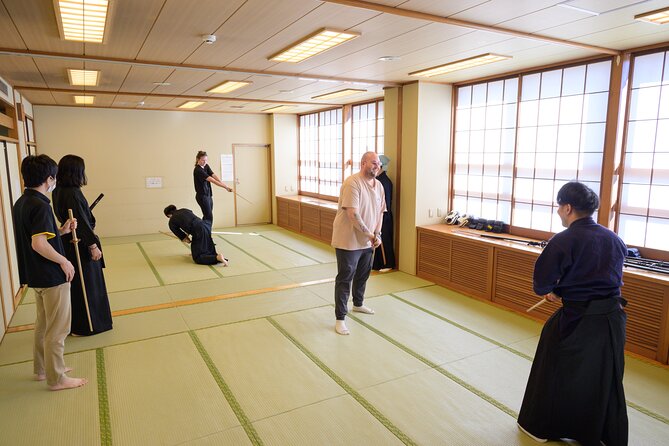
The meeting point is 2-chōme-15-3 Tsukuda, Chuo City, Tokyo 104-0051. The activity begins and ends at the same location.
The area is convenient for a central Tokyo itinerary. The experience is described as easily accessible from Tokyo Station, Ginza, and Tsukiji, and it is near public transportation. You still need to arrange your own route and allow time to find the exact address.
Transportation to and from the workshop is not included. Meals and drinks are also excluded, so plan those separately. This is useful to know because the class is short enough to combine with another stop, but the timing of your trains and meals remains your responsibility.
I would arrive with enough time to locate the meeting point without rushing. A late arrival could cost you part of the warm-up or sword instruction, and those early steps prepare you for the final scene.
Who Will Enjoy This Most
I would recommend the class to you if you want an activity that is active, social, and easy to understand without prior training. Beginners are welcome, and the format does not require you to know Japanese swordsmanship.
It also suits families, couples, and small groups looking for something different from standard sightseeing. One booking included a father-in-law and family member, and the class became a shared highlight of their trip. The group format can work well when everyone wants to take part together.
People interested in acting may get extra value from the workshop. You are learning how to present movement, not just how to move a sword. The chance to work with professional action performers gives the final scene a clear stagecraft element.
I would be more cautious if you dislike demonstrations, physical participation, or being seen by other people. Even though beginners are welcome, the central point is to practice and perform, not simply sit back.
Photos and the Final Memory
The session ends with a photo opportunity alongside the samurai. This is included, so you do not need to arrange a separate photographer or pay an extra fee for the basic photo session.
The photos are more meaningful because you have already learned the movements. You can pose with the sword after practicing the grip and stance, rather than simply holding a prop with no sense of its use.
Do not expect kimono photos, since kimono dressing is specifically excluded. The experience is built around sword action and the instructors themselves. If traditional clothing is essential to your plan, you will need a separate activity.
Timing, Booking, and Cancellation
The experience lasts about one hour, and the maximum group size is 15. Confirmation is provided when you book, and a mobile ticket is available, which keeps the arrival process simple.
It is commonly booked well ahead, with an average booking lead time of 39 days. That does not guarantee every time slot will sell out, but it is a good reason to reserve early if your Tokyo dates are fixed.
Free cancellation is available up to 24 hours before the local start time for a full refund. Cancellations or changes made within 24 hours are not refunded or accepted. Keep that cutoff in mind when planning around flights, long train trips, or uncertain weather plans.
My Verdict: Book It for Action, Not Formal Training
I would book this experience if you want a compact, friendly way to take part in Japanese samurai culture. The best elements are the live demonstration, the clear beginner instruction, the staged scene with a professional samurai, and the chance to train beside Japanese acting students in the group format.
The price is fair for the amount of participation included. Just keep your expectations in the right place: this is a one-hour action workshop, not a full martial arts course, a museum visit, or a kimono photography session.
Choose the group option for social energy and local interaction. Choose private instruction if individual attention matters most, then confirm the exact inclusions before booking. If you are near central Tokyo and want an activity that gives you something to do, not just something to see, this is a strong choice.
FAQ
How long does the samurai experience last?
The activity lasts approximately one hour.
Where does the experience meet?
It begins at 2-chōme-15-3 Tsukuda, Chuo City, Tokyo 104-0051, Japan.
Where does the activity end?
It ends back at the meeting point.
Are beginners allowed to participate?
Yes. Beginners are welcome, and professional instructors guide you through the movements.
Do I use a real sword?
No. You practice with wooden training swords. The activity is staged action practice, not real sword fighting.
Is a private lesson available?
Yes. You can choose between a group class and a private lesson. The exact details of each option should be checked at booking.
Is kimono dressing included?
No. Kimono dressing is not included.
Can I cancel for a full refund?
Yes, if you cancel at least 24 hours before the experience start time. Cancellations or changes made less than 24 hours before the start time are not refunded or accepted.
More Samurai & Ninja Experiences in Tokyo
More tours in Tokyo we've reviewed









Samurai & Ninja Experiences, compared.
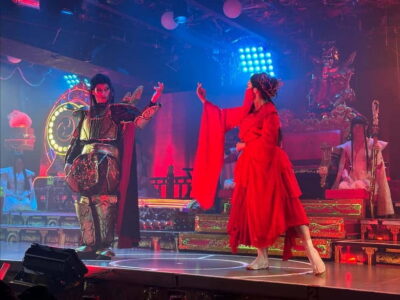 ★ 4.5Tokyo: Samurai Restaurant Show Ticket with 2 DrinksFrom $551h 30m
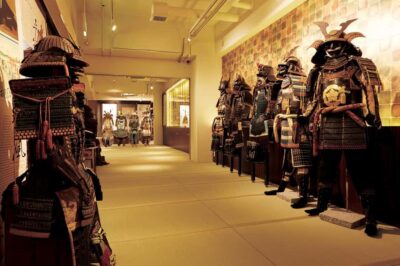 ★ 4.6Tokyo: Samurai Ninja Museum Guided tour and ExperienceFrom $27
 ★ 5.0Tokyo: Samurai Sword & Archery Class from Samurai DescendantFrom $1933 hours
 ★ 5.0Best Samurai Experience in TokyoFrom $65
 ★ 5.0Ninja Experience (Family Friendly) at Samurai Ninja Museum TOKYOFrom $47
 ★ 4.6Tokyo: Samurai Entertainment Night Show in Kanda ShrineFrom $412 - 3 hours