
Reviewed · ASAKUSA TOURS
Asakusa Classic Ramen & Crispy Gyoza Cooking Class
The best part of this Asakusa class is that you learn two Japanese staples in one sitting: shoyu ramen and crisp-bottomed gyoza. Masa leads the cooking and food background, while Junko helps with the preparation and takes photos, creating a friendly lesson that feels organized rather than rushed. You assemble a full bowl of ramen and make roughly eight gyoza to eat at the end.
I like the small maximum of eight people, which gives you room to ask questions and get help with knife work and dumpling folding. I also like that you leave with recipes, not just a full stomach. The main consideration is the price, $167.81 per person, and the fact that the ramen broth involves many steps, so you do not personally execute every part from start to finish.
In This Review
- Key points
- Making Ramen and Gyoza in Asakusa
- Starting With Japanese Ramen Basics
- Folding Gyoza by Hand
- Assembling a Bowl of Shoyu Ramen
- Why the Small Group Matters
- The Hosts Make the Difference
- Is $167.81 a Fair Price?
- Who Should Book This Class?
- Practical Details Before You Go
- Should You Book the Asakusa Ramen and Gyoza Class?
- FAQ
- Where does the ramen and gyoza class take place?
- How long does the class last?
- What dishes will I make?
- Is the class suitable for vegetarians and vegans?
- What is the maximum group size?
- Are cooking equipment and ingredients provided?
- Do I receive the recipes after class?
- What happens if the class is canceled?
Key points
- Two dishes in three hours: Make ramen and gyoza during one focused class instead of booking separate food activities.
- Masa and Junko lead the lesson: Masa explains the cooking and cultural background, while Junko helps with the class and photographs the experience.
- Hands-on gyoza work: Chop vegetables, prepare the filling, fold the dumplings, and learn how to create a crisp base.
- Ramen is partly demonstration-based: You learn the broth and base, but the chef handles some of the longer cooking steps before you assemble the bowl.
- Small-group setting: The class takes no more than eight people and suits couples, families, friends, and team groups.
- Useful take-home material: Aprons, utensils, natural ingredients, photos, and detailed recipes are provided.
Making Ramen and Gyoza in Asakusa
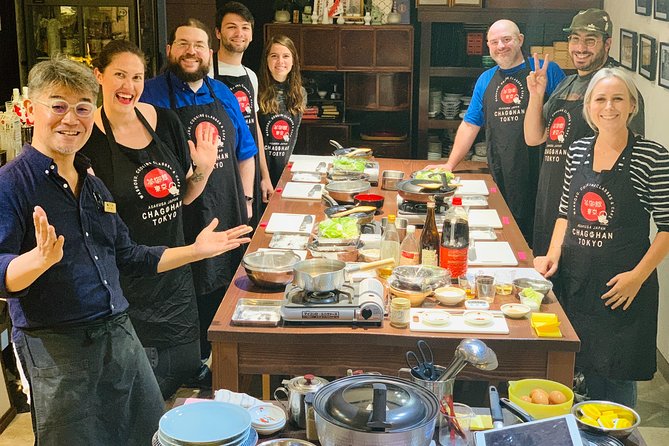
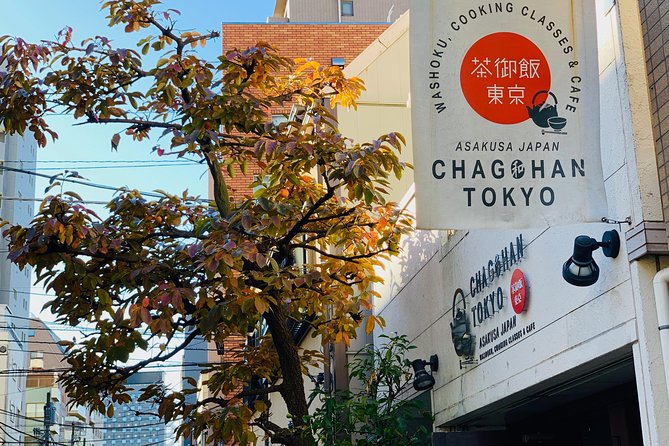
This is a practical cooking class held at Chagohan Tokyo, at 2-chome 17-13 Nishiasakusa in Tokyo’s Taito City. The meeting point is near public transportation, and the class returns to the same location when the three hours are over.
The setting is a real cooking school kitchen rather than a meal served in a private home. That matters if you want a clear work area, prepared ingredients, and enough room for several people to cook together. The kitchen is described as clean and well organized, with a layout suited to demonstrations and hands-on preparation.
You can choose a morning session from 10 a.m. to 1 p.m. or an afternoon session from 3 p.m. to 6 p.m. The stated length is approximate, so keep a little flexibility around the start and finish. If you have a busy sightseeing schedule, the morning class leaves the afternoon open for Asakusa sights, while the afternoon class works well after a morning of exploring.
This class is in the Kappabashi area, Tokyo’s well-known district for kitchen shops and restaurant supplies. The location gives the experience a useful food connection. You can pair the class with a walk through nearby shops, but the cooking itself is the main event, not a guided neighborhood tour.
A few more Tokyo tours and experiences worth a look

Starting With Japanese Ramen Basics
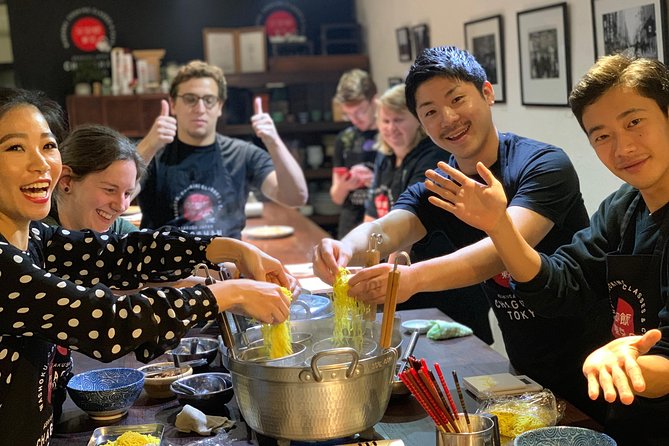
The first part of the class introduces ramen as more than noodles in soup. Masa explains the ingredients, the role of the broth and base, and the steps needed to build a flavorful shoyu ramen bowl. You learn about the toppings as well, so the final dish has balance, texture, and visual appeal.
The class uses natural ingredients and does not use MSG or artificial additives. That is helpful if you want to understand how flavor is built rather than simply relying on a packaged seasoning mix. You receive explanations about Japanese cooking methods and the background of ramen, which gives the recipe more context than a standard cooking demonstration.
The important thing to understand is the division between learning and doing. You gain a clear look at the full process, but the longer broth preparation cannot be treated exactly like a quick group activity. Some of the cooking is carried out by the chef while he explains the method. Your most active ramen role comes later, when you prepare toppings and assemble the finished bowl.
That is not a flaw, but it affects expectations. If you want to make every part of a long stock from raw ingredients yourself, this class may feel partly demonstrational. If you want a realistic introduction to the method, plus a recipe you can attempt at home, the balance makes sense within a three-hour session.
Folding Gyoza by Hand
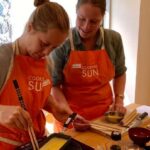
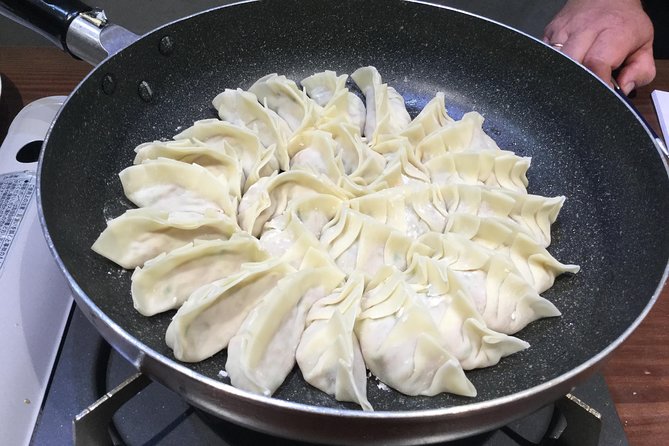
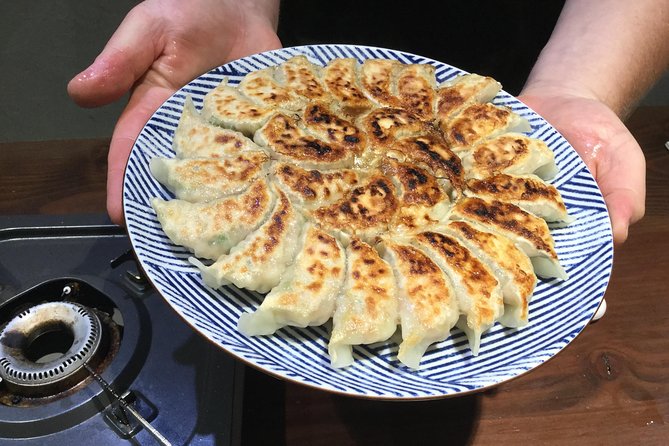
The gyoza portion offers more direct work. You prepare the filling, use hand-cutting techniques for the vegetables, and fold the dumplings yourself. The instructors guide you through the process, so you do not need prior cooking experience or professional knife skills.
Gyoza can look simple until you try to seal a neat row of dumplings. The class gives you repeated practice, and the result is meant to be juicy inside with a crisp, crunchy exterior. You then cook and eat the dumplings as part of the meal.
The hands-on format is especially useful here because folding is a skill you can repeat at home. One class cannot make every dumpling perfect, but it can show you how the filling should be handled and how the folds should close. The preparation also gives you a better sense of how much work goes into a dish that is easy to order in a restaurant.
The usual serving is around eight gyoza per person, along with a full bowl of chicken ramen. That is a substantial lunch or dinner, not a token tasting. Plan your appetite accordingly, especially if you schedule the class near another food stop.
Assembling a Bowl of Shoyu Ramen
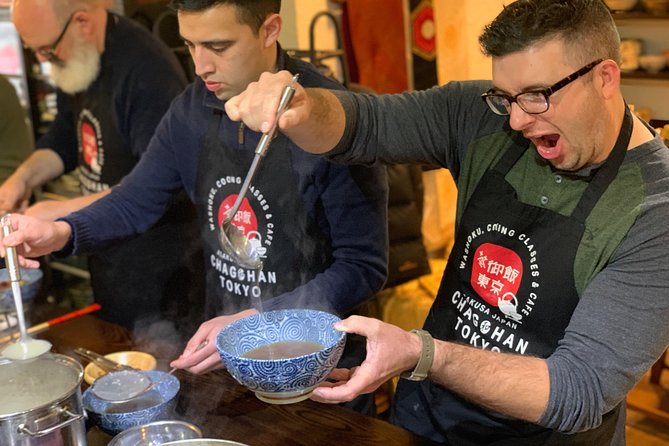
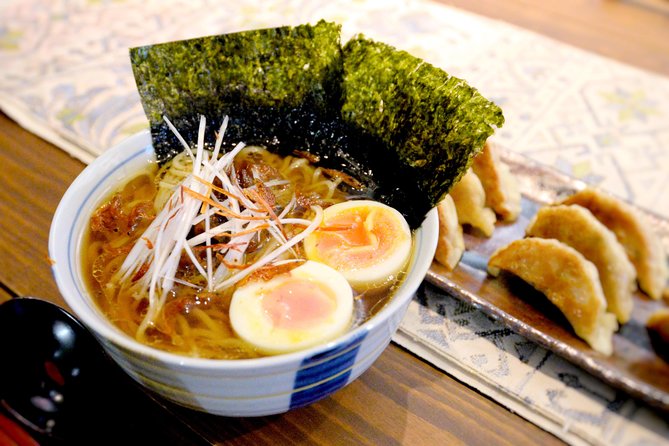
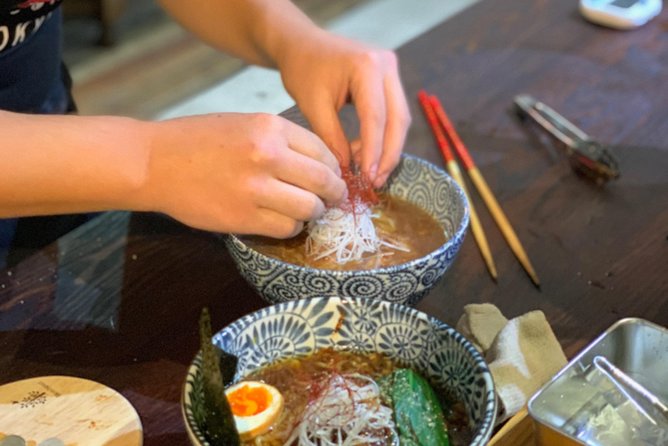
At the end, you assemble a photogenic bowl of ramen with the broth, noodles, and toppings. This final stage brings together the earlier explanations and gives you something satisfying to photograph before eating.
The meal is also the reward for the work. You are not preparing food only to watch someone else serve it. You sit down and eat the ramen and gyoza you helped make, which makes the class feel more like a meal with instruction than a lecture beside a stove.
The ramen process is more involved than the gyoza process. You may leave feeling confident about making dumplings but less certain about reproducing the broth. That distinction is worth keeping in mind. The recipe gives you a path to try at home, but the broth is the part most likely to require patience, ingredients, and several attempts.
The class is still useful for beginners because the instructions are broken into clear steps. Masa speaks excellent English, and the teaching style is described as relaxed, funny, and easy to follow. That is a real advantage in a food class, where small errors in timing or technique can otherwise leave you lost.
Why the Small Group Matters
The maximum group size is eight. For a class involving chopping, filling, folding, and assembling, that is a sensible limit. You are more likely to get attention when you need help, especially during knife work or when shaping the gyoza.
The format suits couples and friends who want to cook together, but it also works for families. Families with teenagers should note that the preparation includes a fair amount of knife work. The activity is not simply a child-friendly craft session, so younger children may need close supervision and older children may get more from it.
It can also work for a company team activity because everyone has a clear task and the meal gives the group a natural finish. The provider asks larger groups of eight or more to make contact directly, so do not assume a larger party can be added through a standard booking.
The intimate setting has one trade-off: the class depends on getting along with the other people at the counter or worktables. With a group of eight or fewer, the social side is part of the experience. That is usually a plus for people who enjoy meeting others, but it may not suit someone seeking a private lesson.
Other cooking classes in Tokyo
The Hosts Make the Difference
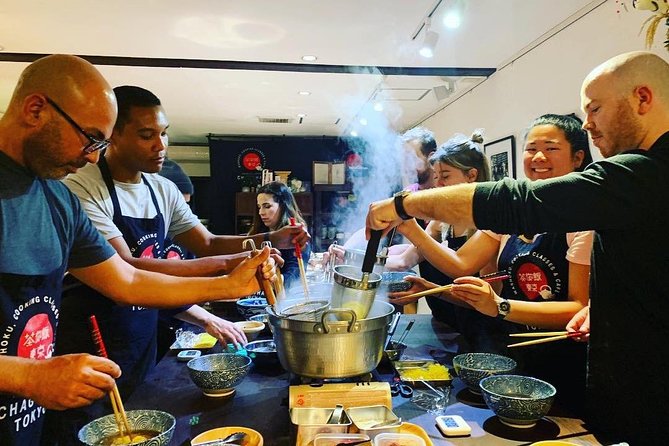
Masa and Junko are central to the experience. Masa leads the class, explains the food and its background, and demonstrates the techniques. Junko supports the session and takes photos and videos, a thoughtful touch if you want pictures of the cooking without stopping to manage your own phone.
Their approach is warm and informal. The class includes humor, clear demonstrations, and time for questions. You get a sense of how Japanese food is prepared, but the lesson stays focused on cooking rather than becoming a long cultural talk.
The English instruction is another practical strength. You can ask about ingredients, methods, and the reasons behind each step without relying only on gestures. That makes the class a good choice for first-time visitors who want more than a recipe card but do not speak Japanese.
The hosts also provide digital recipes after class. This is important because ramen is not a dish most people can memorize after one lesson. The recipe gives you a chance to revisit the process when you are home and have time to work through the broth at your own pace.
Is $167.81 a Fair Price?
At $167.81 per person, this is not a budget meal. You are paying for a three-hour lesson, ingredients, instruction, kitchen use, the meal itself, an apron, utensils, recipes, and the small-group format.
The value depends on what you want from a food activity. If you only want to eat ramen and gyoza, you can do that for far less in Tokyo. If you want a guided lesson that teaches techniques and gives you a meal afterward, the price becomes easier to justify.
I see the strongest value in the combination of dishes. You learn gyoza, which is fairly practical to repeat at home, and ramen, which is more complex and gives you a better look at the work behind a restaurant-style bowl. Booking two separate classes would take more time and may cost more.
The digital recipes and class photos add lasting value, but they do not turn the experience into a full chef-training course. You should book it for the instruction, the meal, and the chance to understand the process, not because you expect to master ramen broth in one afternoon.
The activity is often booked about 27 days ahead, so reserve early if your Tokyo dates are fixed. Confirmation is sent within 48 hours, subject to availability. The booking is non-refundable and cannot be changed for personal reasons, so check your schedule carefully before paying.
Who Should Book This Class?
I would recommend it most strongly to people who already love ramen and gyoza and want to know how they are made. It is also a good choice for first-time cooks because the instructors guide you step by step and provide the equipment.
Families with teens, couples, food-focused friends, and small work groups are a natural fit. The class gives everyone something to do, and the final meal keeps the activity from feeling like a passive demonstration.
You should think twice if you dislike knife work, want a private class, or expect to prepare every part of the broth personally. The ramen section includes chef-led preparation, while the gyoza section gives you more direct control.
Vegetarian and vegan options are available with advance notice. If you need one, arrange it before the class rather than assuming it can be handled on arrival.
Practical Details Before You Go
You do not need to bring an apron or cooking utensils. Both are supplied, along with the ingredients, so you can arrive ready to work and eat.
Wear something comfortable for a three-hour kitchen session. The provided information does not specify a dress code, but cooking involves chopping and preparation, so practical clothing makes sense.
Allow extra time to find the meeting point in Nishiasakusa. The address is Chagohan Tokyo, 1F, 2-chome 17-13 Nishiasakusa, Taito City, Tokyo 111-0035. The activity ends back there, with no separate drop-off.
The class requires a minimum number of participants and may be canceled if that number is not reached. Poor weather can also lead to cancellation. In either case, you are offered a different date or experience, or a full refund. That protection does not apply to a personal cancellation, which is why early planning and careful date checking matter.
Should You Book the Asakusa Ramen and Gyoza Class?
Book it if you want a focused food lesson with a real meal at the end, especially if you value clear English instruction, a small group, and recipes you can use later. Masa and Junko provide the kind of personal guidance that turns folding dumplings and assembling ramen into a memorable part of a Tokyo visit.
The class is not the cheapest way to eat, and it does not let you independently cook every stage of the broth. Still, the mix of practical gyoza work, ramen instruction, cultural background, photos, and a generous final meal makes the cost reasonable for a serious food lover.
If your schedule allows only one cooking class in Tokyo, this is a strong pick for ramen fans. Book ahead, request vegetarian or vegan adaptations in advance, and arrive ready to chop, fold, learn, and eat.
FAQ
Where does the ramen and gyoza class take place?
The class meets at Chagohan Tokyo, Japan, 111-0035 Tokyo, Taito City, Nishiasakusa, 2-chome 17-13, 1F. It ends at the same location.
How long does the class last?
The class lasts approximately three hours. The morning session runs from 10 a.m. to 1 p.m., and the afternoon session runs from 3 p.m. to 6 p.m.
What dishes will I make?
You will learn to prepare shoyu ramen and crispy gyoza. The class covers ramen broth and base, toppings, gyoza filling, vegetable preparation, folding, cooking, and final ramen assembly.
Is the class suitable for vegetarians and vegans?
Vegetarian and vegan options are available with advance notice. Make the request before attending.
What is the maximum group size?
The class accepts a maximum of eight people. Groups of eight or more should contact the provider through the contact form.
Are cooking equipment and ingredients provided?
Yes. An apron, utensils, and the ingredients are provided. You do not need to bring cooking equipment.
Do I receive the recipes after class?
Yes. Recipes are provided so you can try to recreate the ramen and gyoza at home.
What happens if the class is canceled?
If the class is canceled because of poor weather or because the minimum number of participants is not reached, you are offered another date or experience, or a full refund. Personal cancellations and requested changes are non-refundable.
More Cooking Classes in Tokyo
More Cooking Classes in Tokyo
More Asakusa Tours in Tokyo


More tours in Tokyo we've reviewed





Asakusa Tours, compared.
 ★ 4.8Tokyo: Japanese Dance Cabaret Theater Asakusa-Kaguwa TicketFrom $492 hours
 ★ 4.7Tokyo: Meiji Shrine, Asakusa, Skytree Bus Tour and CruiseFrom $12210 hours
 ★ 4.9Tokyo: Roll and Authentic Sushi Making Class in AsakusaFrom $581h 40m
 ★ 4.8Tokyo: Asakusa Walking Tour with Sensoji Temple VisitFrom $222 hours
 ★ 5.0Tokyo Asakusa Rickshaw TourFrom $42
 ★ 4.5Tokyo Panoramic 1 Day: Meiji Shrine, Asakusa, Odaiba and SKYTREE®From $85