
Reviewed · TSUKIJI MARKET TOURS
Tokyo: Tsukiji Market Guided Tour & Sushi-Making Experience
Tsukiji is best understood on foot, one narrow lane at a time. This 225-minute experience pairs that market walk with a hands-on sushi class, so you see ingredients in their working setting before handling them yourself. I like the small group of up to 10 and the chance to make three distinct sushi styles, not just one simple roll.
I also like the practical route from Tsukiji Hongwanji Temple to the market, followed by public transportation to a kitchen near Tokyo Tower. The main caution is value: at $177 per person, this is not a cheap way to eat sushi, and one past participant found the fish quality disappointing and expected a more active tuna-buying experience than the tour delivered.
In This Review
- Key points
- Starting at Tsukiji Hongwanji Temple
- Reading Tsukiji’s Seafood Streets
- What Makes the Small Group Useful
- The Trip to the Sushi Kitchen
- Making Nigiri, Hosomaki, and Gunkanmaki
- How Good Is the Sushi?
- Food Safety, Technique, and Japanese Table Manners
- Is $177 a Fair Price?
- Timing, Weather, and Practical Planning
- Who Will Enjoy This Experience Most?
- Should You Book the Tsukiji and Sushi Class?
- FAQ
- Where does the tour meet?
- How long does the experience last?
- What types of sushi will I make?
- Is transportation included?
- Is the activity offered in English?
- Can dietary restrictions be accommodated?
Key points
- Three sushi styles in one class: Make nigiri, thin hosomaki rolls, and soft-topped gunkanmaki.
- Tsukiji from the inside: Walk through seafood, produce, seaweed, and dried-goods stalls where professional chefs shop.
- A compact English-speaking group: The tour is limited to 10 participants, which should leave room for hands-on instruction.
- Public transit is part of the route: You travel from Tsukiji to a modern sushi kitchen near Tokyo Tower.
- A useful Tokyo food lesson: The class covers sushi history, hygiene, preparation, and dining manners.
- A costly choice for serious sushi eaters: The $177 price makes the instruction and market access central to the value, not the meal alone.
Starting at Tsukiji Hongwanji Temple
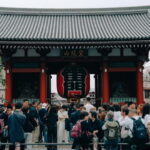
Your meeting point is the entrance to Tsukiji Hongwanji Temple, only about 30 seconds from Exit 1 of Tsukiji Station on the Hibiya Line. That is a sensible place to begin. You are not asked to search for a hidden storefront inside the market, and the temple gives you a clear landmark before the streets become crowded with stalls and shoppers.
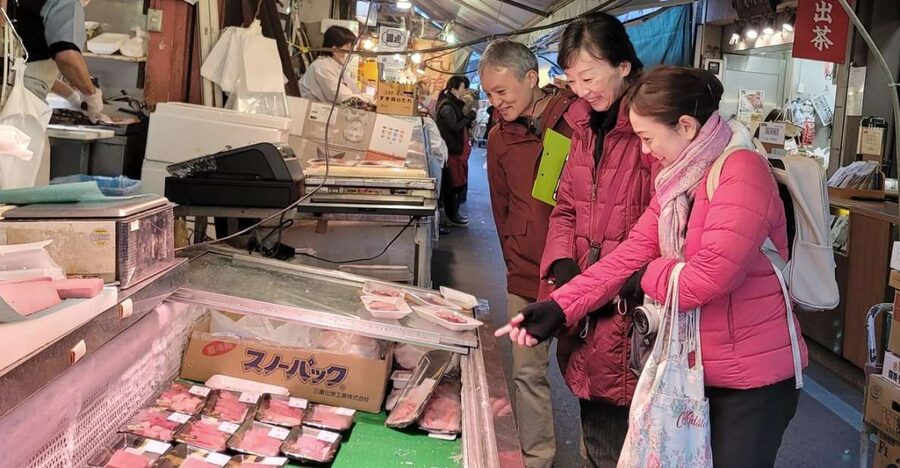
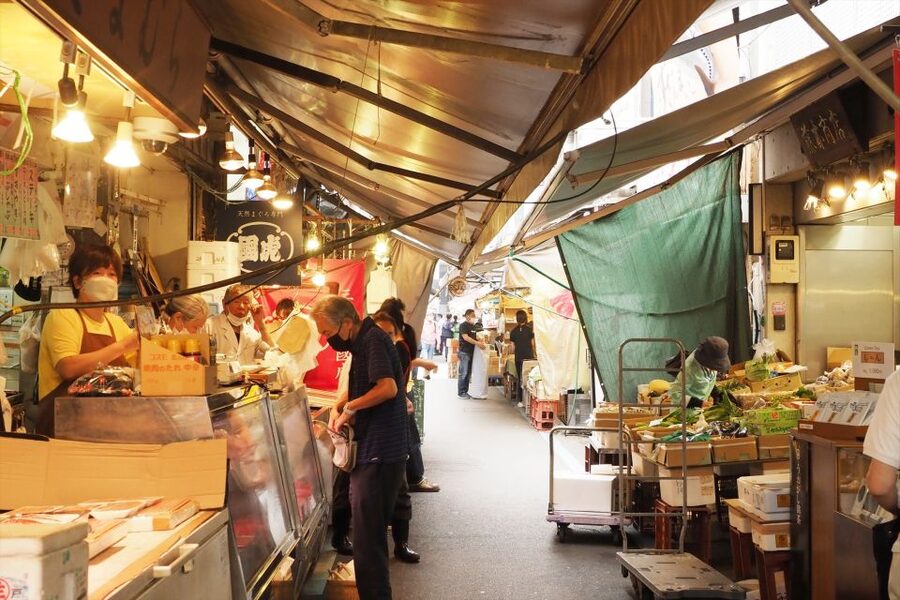
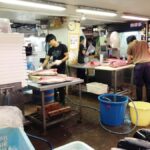
The experience begins in Tsukiji Outer Market, the part of the old seafood district that remains active after the wholesale market moved to Toyosu. It is a retail market rather than a single enclosed hall. You move between shops selling fish, sashimi, seaweed, fruits, vegetables, and other cooking supplies.
I would arrive with comfortable shoes and a light appetite. The tour lasts nearly four hours, and the market portion involves walking through narrow lanes. The supplied information describes the activity as wheelchair accessible, but it also says it is not suitable for people with mobility impairments. Those statements do not sit neatly together, so anyone who needs step-free access or has difficulty walking should confirm the route before booking.
A few more Tokyo tours and experiences worth a look


Reading Tsukiji’s Seafood Streets
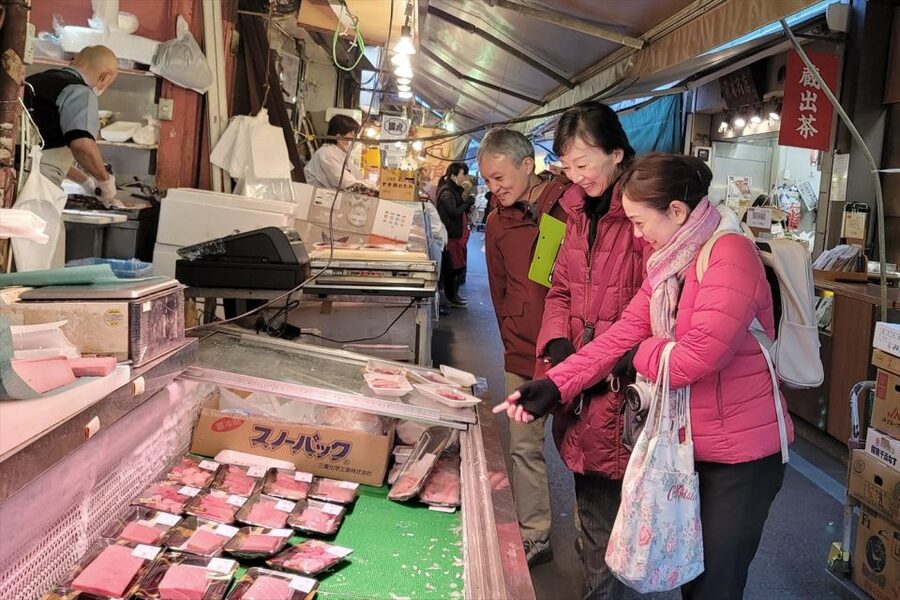
The market walk is not simply a stop for photographs. Your guide explains how Tsukiji developed into one of Tokyo’s best-known food districts and once served as the world’s largest seafood market. That context helps you understand why the area still attracts professional cooks as well as shoppers.
You pass expert merchants handling their goods and see the ingredients that shape Japanese home cooking and restaurant menus. Freshly sliced sashimi, tuna, dried seaweed, produce, and cooking items all appear along the route. The appeal is in the detail: the market lets you compare the polished sushi you know at a restaurant with the raw materials and specialist shops behind it.
The tuna element needs careful interpretation. The experience description says you will follow your guide through the alleys and hunt for freshly caught tuna, and it explains that Michelin-star chefs shop in the area. However, a participant who booked expecting to learn how to select tuna said the group only walked through the market and did not purchase fish for the class.
I would treat the market portion as an introduction to Tsukiji’s food culture, not as a personal seafood-buying lesson. You may see tuna and learn how the shops operate, but do not assume you will choose the fish that later appears on your plate.
What Makes the Small Group Useful
A group capped at 10 people is a real advantage during the cooking class. Sushi-making depends on watching hand movements closely, and a large crowd can turn a practical lesson into a demonstration viewed from the back of the room.
Here, you have a better chance to ask about rice, nori, shaping, and the differences between the three forms. The exact guide and instructor names are not provided, but the tour includes a nationally licensed English-speaking guide for the market and a licensed instructor for the cooking session.
The small-group format also suits first-time visitors who want someone to explain what they are seeing without having to stop at every stall alone. It is less appealing if you prefer to browse at your own pace, shop for ingredients, or sit quietly at a restaurant. A guided route gives you structure, but it also means the market visit follows the group’s timing.
The Trip to the Sushi Kitchen
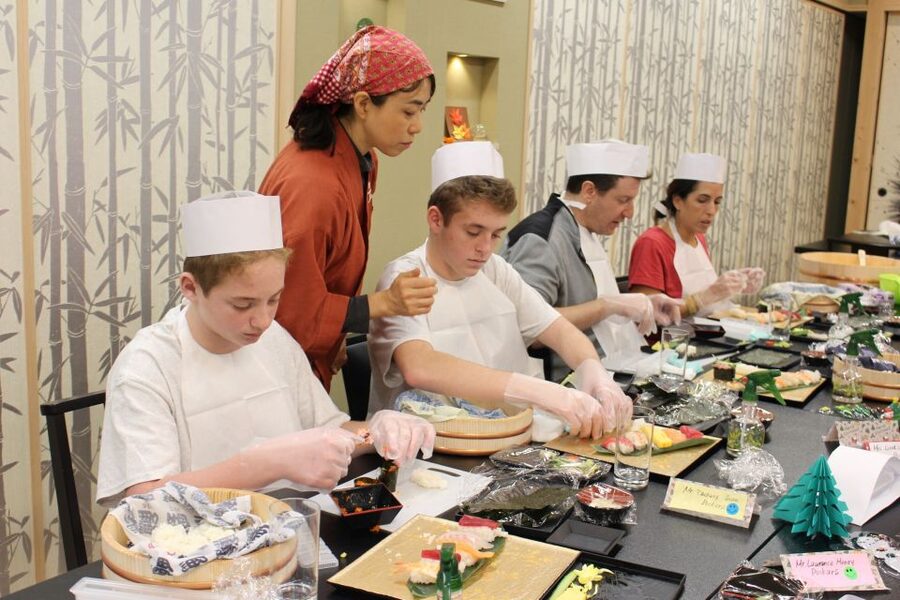
After Tsukiji, you use public transportation to reach a state-of-the-art kitchen near Tokyo Tower. The fare is included, which keeps the transition simple, but remember that this is not a private transfer or hotel pickup. You meet at the temple and make your own way there, then travel with the group to the class location.
The change of setting is part of the experience’s design. Tsukiji gives you the working market, with its tight lanes and active merchants. The kitchen gives you a controlled place to learn technique, hygiene, and presentation. Those two halves answer different questions: where Japanese ingredients are sold, and how they become sushi.
The kitchen is described as modern and purpose-built, though no further details are provided. You should expect an instructional room rather than a restaurant dining room. The goal is to learn by doing, so the polished setting is useful because you can focus on the food instead of navigating a crowded market counter.
Making Nigiri, Hosomaki, and Gunkanmaki
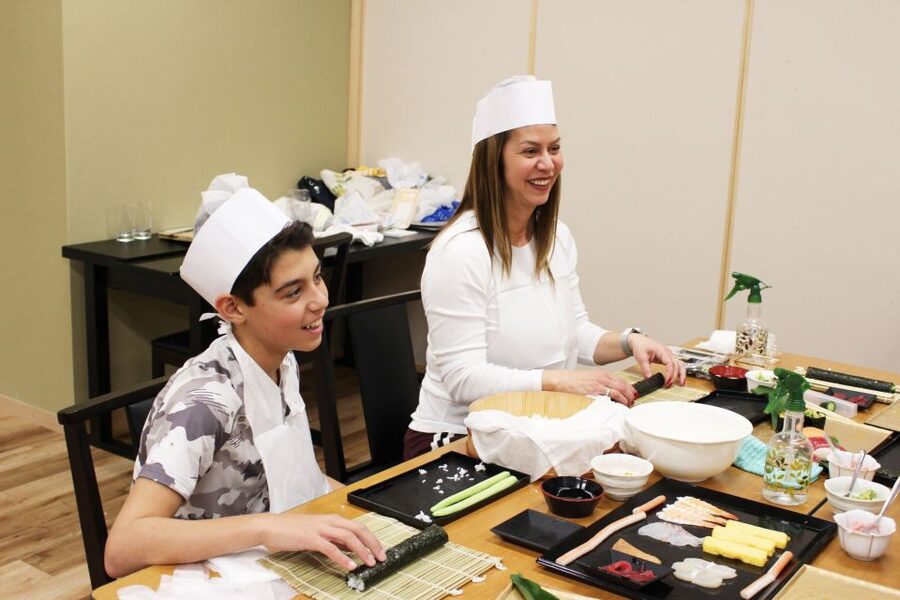
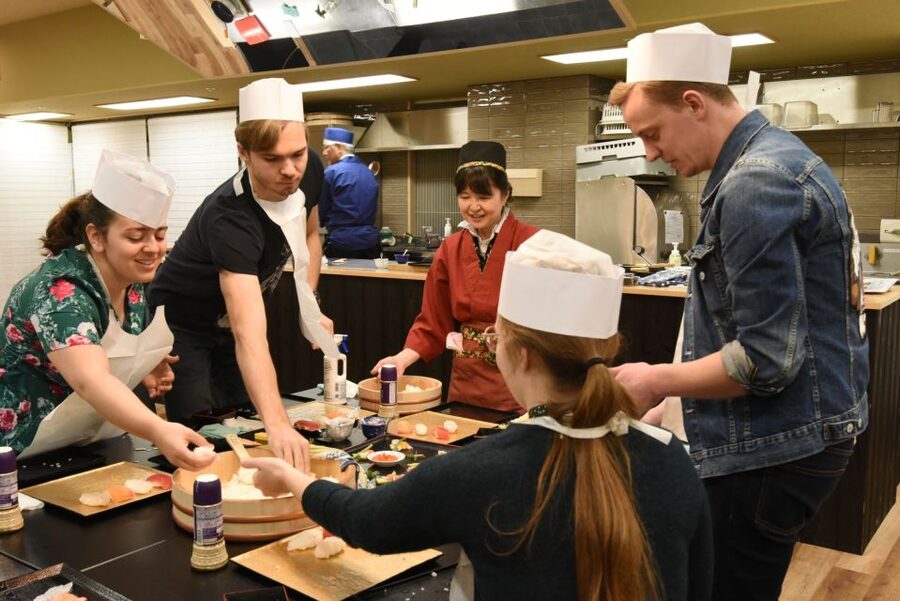
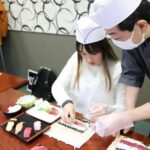
The class covers three types of sushi, each requiring a different approach.
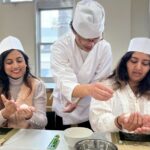
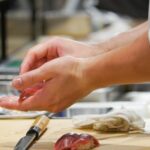
Nigiri is the familiar hand-formed piece of rice topped with fish or another ingredient. The lesson gives you a chance to work on the basic relationship between rice, topping, and shape. It is simple to describe, but the small size makes technique matter.
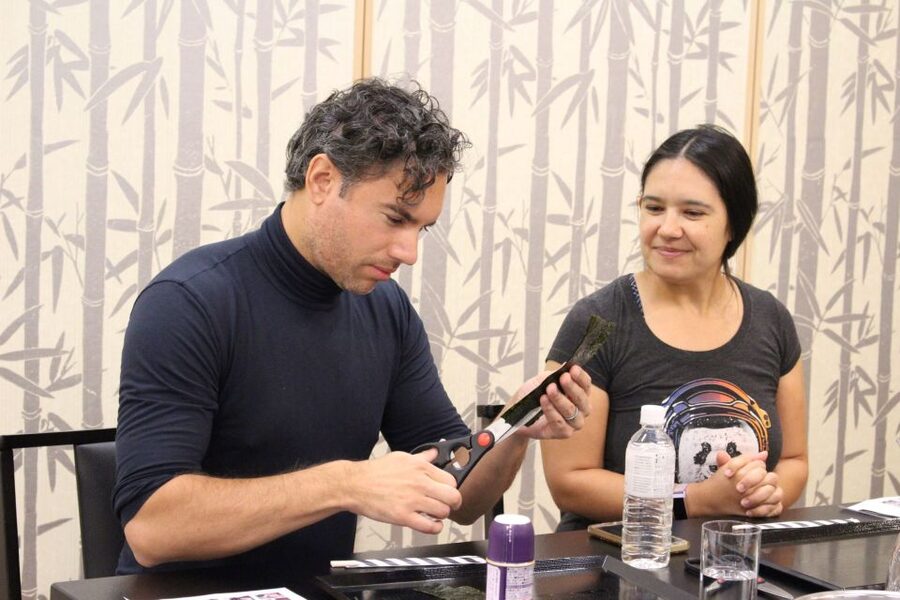
Hosomaki is a thin sushi roll. You work with nori and rice in a tighter format, learning how to place the filling and roll it neatly. It is a useful contrast to nigiri because the seaweed becomes part of the structure rather than a wrapper around a loose collection of ingredients.
Gunkanmaki uses nori wrapped around the rice, creating a small vessel for a soft topping of your choice. This form looks different from a thin roll and calls for another kind of control. Making all three gives you a wider sense of sushi construction than a class devoted only to rolling.
The ingredients are included, as is a sushi souvenir kit. That makes the class more convenient and gives you something practical to take home. Still, the included ingredients are not necessarily the same as the top-grade fish you would find at a highly priced sushi counter.
A few more Tokyo tours and experiences worth a look

How Good Is the Sushi?
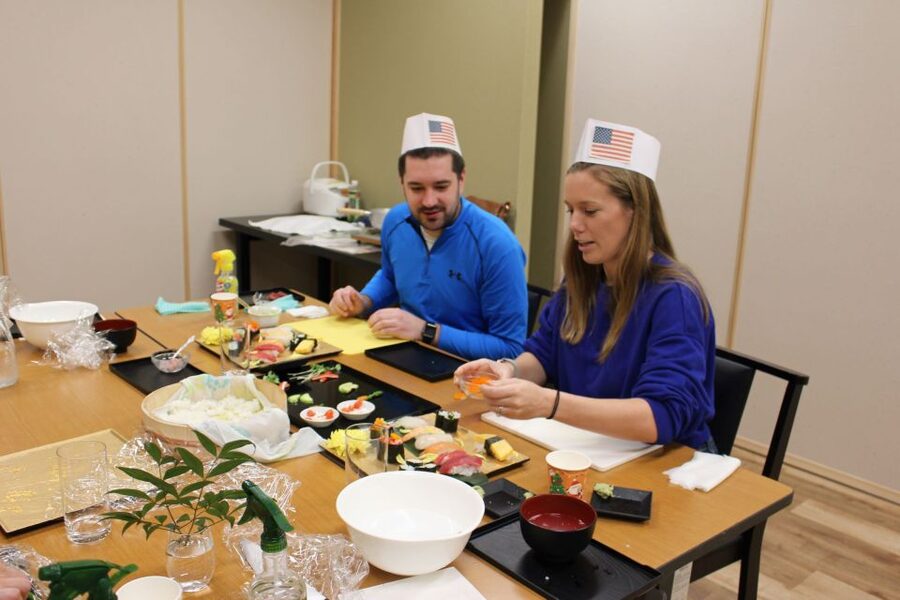
This is the point where expectations matter most. The strongest case for the experience is not that it delivers Tokyo’s finest sushi meal. The case is that you receive instruction, a market visit, public transportation, ingredients, and a souvenir kit in one package.
One participant who had eaten sushi at a wide range of prices, including very expensive meals, considered the fish used in the class poor and said the finished sushi was the weakest part of the experience. That criticism matters because food quality is central to a $177 booking. You may enjoy the satisfaction of preparing your own pieces, but handmade does not automatically mean restaurant-level fish.
At the same time, another participant described the experience as fun and insightful, with excellent guides and a very entertaining master sushi chef. That gives you a fairer picture of the tradeoff. The instruction and personality of the staff can make the class enjoyable even if the ingredients do not match an omakase meal.
If your priority is the best possible sushi for your money, I would compare this tour with a respected sushi restaurant before booking. If your priority is learning the forms, understanding the market, and eating what you prepare, the cost has a different logic.
Food Safety, Technique, and Japanese Table Manners
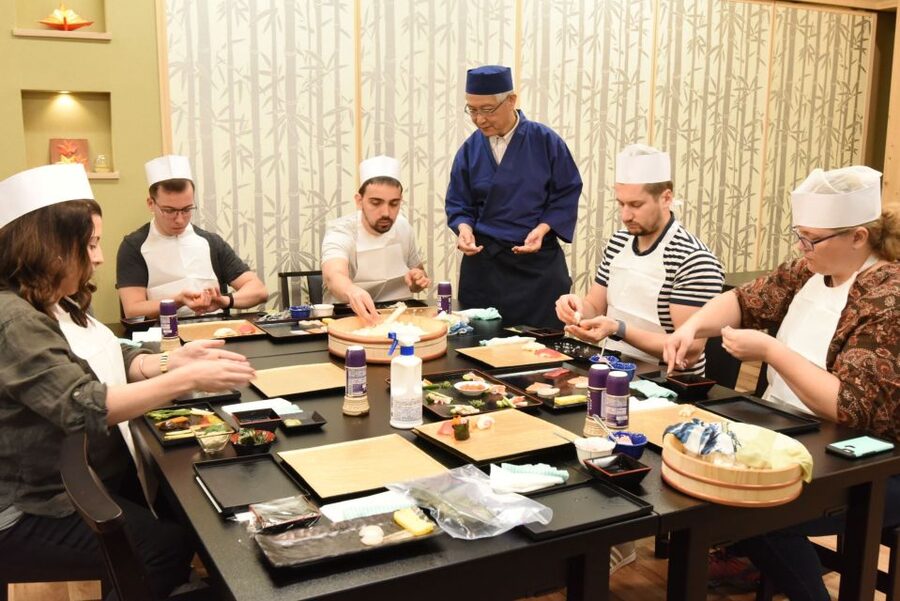
Before you start making sushi, the instructor explains the history of the cuisine and basic hygiene techniques. This is important for beginners. Raw fish preparation has rules, and learning how to handle ingredients properly is more useful than simply copying the shape of a finished piece.
The class also introduces Japanese dining etiquette. You then sit down to eat the sushi you made. That final step gives the lesson a clear payoff, though you should remember that the meal is part of the class rather than a separate dining experience.
I like this structure because it links skill with context. You learn what you are making, how to handle it, and how it fits into Japanese dining. The instruction may be especially useful for families with older children, couples, or first-time sushi makers who want more than a market stroll.
The activity is not suitable for babies under one year. Most dietary restrictions and requirements can be accommodated, but you should provide those details when booking rather than assuming every request can be handled on the day.
Is $177 a Fair Price?
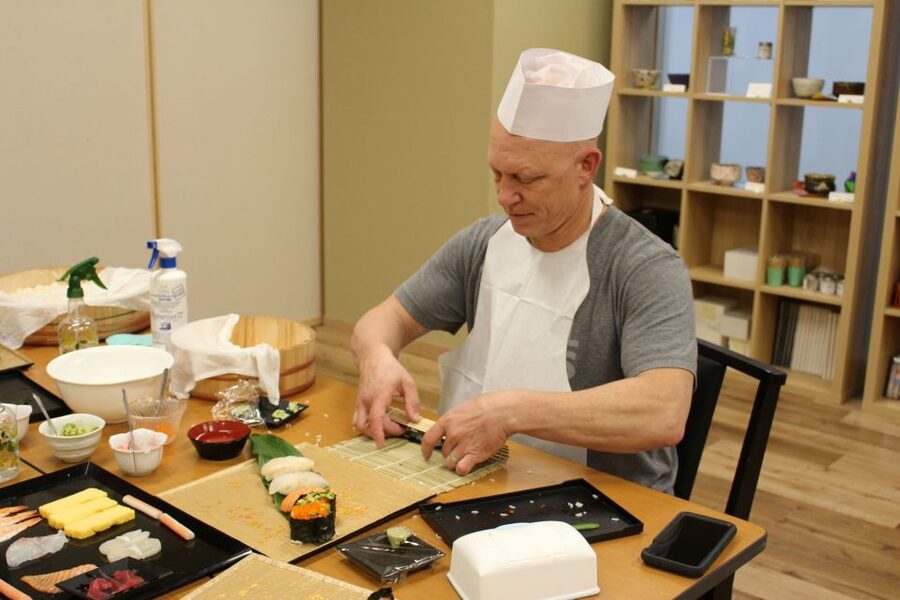
At $177 per person, this sits firmly in the premium activity category. You are paying for a 225-minute program, a guided market visit, an English-speaking nationally licensed guide, public transportation to the kitchen, a licensed instructor, sushi ingredients, and a souvenir kit.
That sounds like a lot on paper, but the value depends on how you use each part. A person who would otherwise book a separate market tour and cooking class may find the combined format practical. The small group also carries value because hands-on lessons work better when the instructor can see what you are doing.
The price is harder to justify if you mainly want to eat excellent sushi. The meal is self-made, and the available feedback includes a strong complaint about fish quality. You can explore Tsukiji without paying for a tour, and a high-quality sushi meal may offer a more memorable taste for the same money.
I would book this for the activity, not the bargain. Go because you want a guided explanation of Tsukiji followed by a structured lesson. Do not book it expecting a professional tuna-purchasing workshop or a $177 omakase dinner.
Timing, Weather, and Practical Planning
The stated duration is 225 minutes, but it is an approximation. The timing can change with the number of participants, so avoid scheduling a tight appointment immediately afterward. The route includes a market walk, public transportation, and a class, all of which need some flexibility.
Bad weather can cancel the activity. Tokyo’s market lanes are outdoor and narrow, and wet conditions may affect both safety and comfort. Check the forecast and keep your wider day flexible.
Free cancellation is available up to 24 hours before the start time, and you can reserve now and pay later. Those terms help if your Tokyo schedule is still changing. Hotel pickup and drop-off are not included, and no other food or drinks are included beyond the sushi ingredients for the class.
Wear shoes suited to walking and standing. The tour does not call for formal clothing or special equipment, but comfortable footwear will make the market section easier.
Who Will Enjoy This Experience Most?
I would recommend it most strongly to visitors who meet several of these points:
- You want a guided first look at Tsukiji rather than an unplanned wander.
- You enjoy cooking and want to make more than one type of sushi.
- You prefer a small English-speaking group.
- You value cultural background, hygiene, and dining etiquette along with the meal.
- You are willing to pay for instruction and convenience.
- You have no problem walking through narrow market lanes and using public transit.
It is less suited to someone who already knows sushi technique, wants free time to shop, or judges a food activity mainly by the quality of its fish. Serious sushi fans may find the price better spent at a carefully chosen restaurant.
Should You Book the Tsukiji and Sushi Class?
Book it if you want a tidy half-day introduction to two sides of Tokyo food culture: the market where ingredients are sold and the kitchen where sushi is assembled. The small group, three sushi styles, licensed staff, and included materials make it more than a simple tasting.
Skip it if your main goal is the finest sushi meal or a hands-on lesson in selecting tuna at the market. The $177 price demands clear expectations, and the market visit may be more observational than the wording suggests.
For the right person, this is a friendly, structured introduction with plenty to do. For a dedicated sushi eater, it may be wiser to spend that money on a meal and explore Tsukiji independently.
FAQ
Where does the tour meet?
Meet your guide at the entrance of Tsukiji Hongwanji Temple. The temple is about a 30-second walk from Exit 1 of Tsukiji Metro Station on the Hibiya Line.
How long does the experience last?
The listed duration is 225 minutes. The timing is approximate and may change depending on the number of participants.
What types of sushi will I make?
You will learn to make nigiri sushi, hosomaki sushi, and gunkanmaki sushi. The class includes the ingredients needed for the activity.
Is transportation included?
Public transportation from Tsukiji to the sushi kitchen is included. Hotel pickup and drop-off are not included.
Is the activity offered in English?
Yes. The experience includes a live English-speaking guide, along with a licensed sushi instructor.
Can dietary restrictions be accommodated?
Most dietary restrictions and requirements can be accommodated. Share your needs when booking so the provider can prepare appropriately.
More Guided Tours in Tokyo

More Sushi Making Classes in Tokyo
More Tsukiji Market Tours in Tokyo
More tours in Tokyo we've reviewed


Tsukiji Market Tours, compared.
 ★ 5.0Tokyo Tsukiji Fish Market Food and Culture Walking TourFrom $99
 ★ 5.0Tokyo: Tsukiji Fish Market Food and Walking tourFrom $30
 ★ 4.9Tokyo: Tsukiji Fish Market Guided Walking TourFrom $222 hours
 ★ 5.0Tokyo Sushi Making Class in Tsukiji with Professional ChefFrom $49
 ★ 5.0Tsukiji Fish Market Guided Tour and Sushi Making with Pro ChefFrom $104
★ 4.7Tokyo: Tsukiji Fish Market Food and Culture Walking TourFrom $963 hours
★ 5.0Tsukiji Fish Market Guided Tour and Sushi Making with Pro ChefFrom $104
★ 4.7Tokyo: Tsukiji Fish Market Food and Culture Walking TourFrom $963 hours