
Reviewed · E-BIKES
Tokyo Deep Inside Cycle Tour~3 Hours E Bike Tour around Tokyo
Tokyo’s old Samurai capital and its modern city center come into focus on this compact e-bike route. In three hours, you pedal from Tokyo Station through Kanda, Akihabara, historic shrines, an old book district, and the former grounds of Edo Castle.
I like the way the electric bicycles let you cover about 6.8 miles, or more than 10 kilometers, without turning sightseeing into an endurance test. I also like the small group size, capped at four people, and the simple taiyaki snack stop in Kanda. The main catch is the weather: rain can cancel the ride, and you need to be at the meeting point on time.
In This Review
- Key points at a glance
- Why an e-bike is a smart way to see central Tokyo
- Tokyo Station begins the story at 1 p.m.
- Kanda Bridge and the remains of Edo
- Kanda Matsuya and Akihabara’s changing identity
- Kanda Shrine offers the tour’s longest cultural stop
- Hijiribashi Bridge and the taiyaki pause
- Jimbocho and Yasukuni Shrine
- Kitanomaru Park and the Imperial Palace
- Finishing with art in the Marunouchi Building
- Price, group size, and practical value
- Weather, timing, and the rainy-day option
- Who should book this Tokyo e-bike tour?
- Should you book it?
- FAQ
- How long is the Tokyo Deep Inside Cycle Tour?
- What time does the tour begin?
- Where does the tour begin?
- Where does the tour end?
- How many people can join the tour?
- Can I book a private tour?
- Are e-bikes and helmets included?
- Is food included?
- Is bottled water included?
- What happens if it rains?
Key points at a glance
- Tokyo’s old and new in one ride: Move from Marunouchi skyscrapers to Kanda’s traditional streets, Akihabara’s electronics culture, and the grounds of the former Edo Castle.
- A genuine small-group experience: The mixed tour accepts up to four riders, or you can reserve four places to make it private.
- Easy cycling with useful reach: E-bikes help you cover more ground than walking while keeping physical effort modest.
- Taiyaki break included: Stop at Kanda Daruma for a traditional fish-shaped cake filled with red bean paste or cream.
- History with local context: Guides including Micky, Kumiko, and Tussie explain how Edo developed into modern Tokyo.
- Good for active sightseeing: You get fresh air, short rides, photo stops, and a change from long days on foot or packed trains.
Why an e-bike is a smart way to see central Tokyo
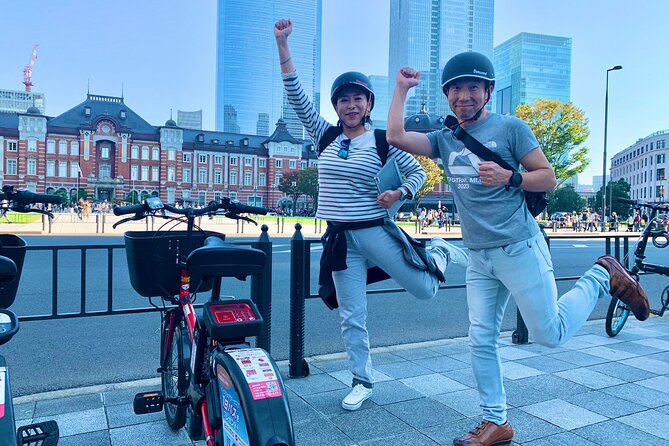
Tokyo can wear out your feet. A day spent walking between stations, shrines, shopping streets, and museums can easily become a march measured in thousands of steps. This ride offers a useful middle ground: you stay active, but the electric motor takes much of the strain.
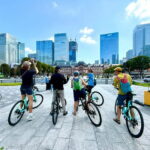
The route is not designed as a speed run. You stop often, listen to explanations, take photos, and move through several districts at a manageable pace. One rider covered more than 10 kilometers and described the ride as a welcome break after walking roughly 15,000 steps a day.
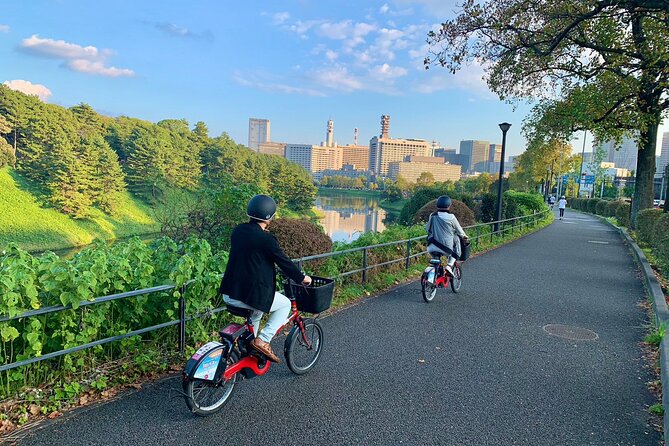
That distance matters. On foot, you would spend much of your three hours simply getting from one area to the next. By bicycle, you can connect Tokyo Station, Kanda, Akihabara, Jimbocho, Yasukuni Shrine, Kitanomaru Park, and the Imperial Palace without relying on train transfers.
You still need to be comfortable on a bicycle. The electric assistance reduces exertion, but it does not remove the need to steer, watch the road, and follow the guide. The pace may also slow if someone in the shared group is new to cycling, particularly if a child is present.
Other cycling tours in Tokyo
Tokyo Station begins the story at 1 p.m.
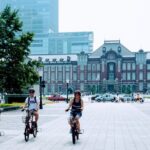
Meet at the JTB Marunouchi Store in the Marunouchi Eiraku Building, near Tokyo Station. The ride begins at 1 p.m., so allow enough time to find the exact shop and arrive early. Tokyo Station is enormous, and being in the correct general area is not the same as being at the meeting point.
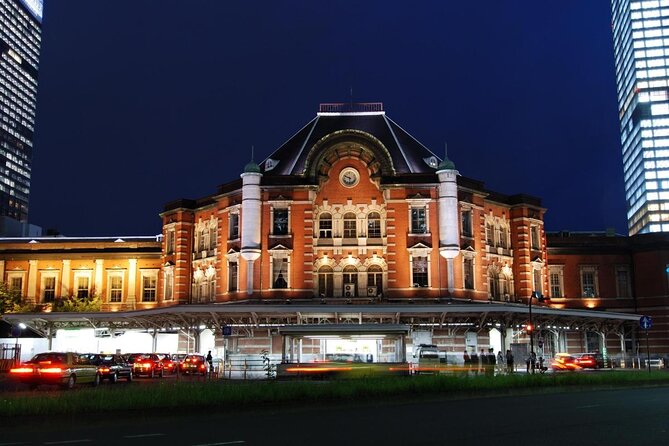
The opening stop takes place in front of Tokyo Central Railway Station. Here, the guide uses the present-day city center to explain how land that was once open fields became modern Tokyo. It is a useful introduction because the tour keeps returning to the idea of change: what Tokyo kept, what it replaced, and what it adapted.
The start is also convenient for anyone staying near Tokyo Station or arriving by rail. The end point is only about a minute from the Marunouchi South Exit of JR Tokyo Station, with direct connections to Tokyo Station on the Marunouchi Line and Nijubashimae Station on the Chiyoda Line.
Kanda Bridge and the remains of Edo
From Tokyo Station, the route reaches the stone remains of the Kanda Bridge Gate. This is where the ride begins to feel less like a standard central Tokyo orientation and more like a guided look at the city beneath the modern surface.
The guide explains the Edo town that grew around the Nihonbashi River, along with traditional festivals and the origin of the local name. You get about 15 minutes here, enough for a focused explanation without turning the tour into a long lecture.
I appreciate this type of stop because the physical remains are modest. The value comes from learning how to read them. Tokyo does not always present its past in grand, untouched monuments. Often, a wall, bridge, street name, or shrine provides the clue.
Kanda Matsuya and Akihabara’s changing identity
Kanda Matsuya brings you into a district where older common-town culture remains visible among the office buildings. The route uses narrow alleys and smaller streets, offering a sharper contrast with the broad avenues around Tokyo Station.
The stop lasts about 10 minutes, but the ride through the area is part of the appeal. You are not only checking off a sight. You are seeing the texture of a neighborhood that chose to preserve older elements while the city around it changed.
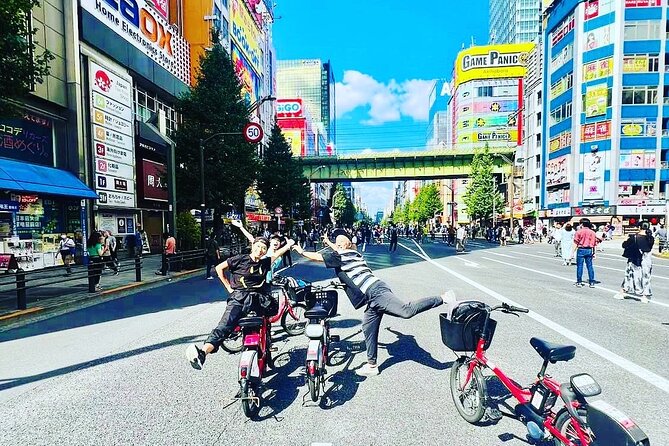
Next comes Akihabara, one of Tokyo’s clearest examples of reinvention. The guide traces its development from a postwar black market in burned-out ruins to the modern district associated with electronics and changing popular culture.
You get about 15 minutes here. That is enough for context and pictures, but not enough for a full shopping visit, so do not book this tour expecting time to browse stores. The point is to understand Akihabara as a place shaped by flexibility and commercial change.
Kanda Shrine offers the tour’s longest cultural stop
Kanda Shrine, also known as Kanda Myojin, receives roughly 35 minutes, making it the longest stop on the route. The shrine is presented as an important Shinto site for Edo, with attention to the Kanda Festival and the customs tied to the district.
This is a good place to slow down. After riding through city streets, you have time to look around the shrine grounds, hear the local story, and visit a souvenir shop nearby. The stop adds cultural depth without requiring a separate shrine excursion elsewhere in Tokyo.
The guide may also help you connect the shrine to the surrounding neighborhoods. Kanda is not treated as an isolated monument. It is part of the old city that grew along the river and preserved local festivals, religious customs, and everyday traditions.
The quality of the guide matters here. Micky, also identified as Kumiko in the guide responses, receives repeated praise for friendly explanations and a careful approach to safety. Tussie is also noted for sharing history and entertaining facts while managing the ride. Guide assignments can vary, but the experience is clearly built around personal interpretation rather than an audio recording.
A few more Tokyo tours and experiences worth a look
Hijiribashi Bridge and the taiyaki pause
At Hijiribashi Bridge, you look down toward Ochanomizu Station and hear about the area’s connection to student life. The stop takes about 10 minutes. It is brief, but the elevated view helps you understand how rail lines, bridges, and neighborhoods fit together.
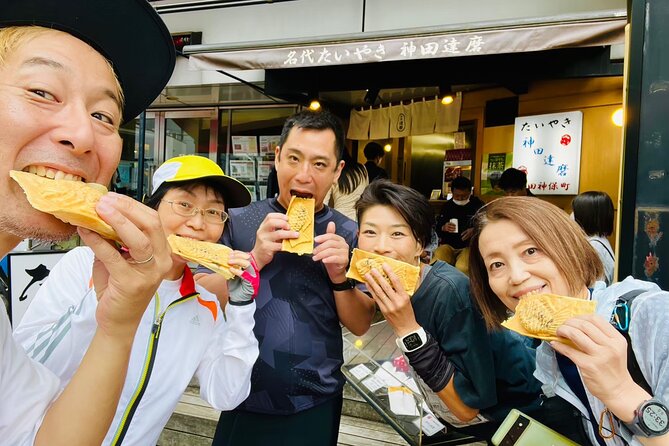
Then comes Kanda Daruma, where you take a snack break with taiyaki. You choose either anko, a red bean paste filling, or cream. This is a small detail, but it improves the rhythm of the tour. Three hours on a bicycle is easier when you have a planned pause, and a traditional snack gives the ride a local flavor without adding another large meal.
Taiyaki is shaped like a fish and served warm. The included snack is not meant to replace lunch, so eat beforehand if you tend to get hungry in the afternoon. Bottled water is not included, and you should bring your own drink.
Jimbocho and Yasukuni Shrine
The bicycle then passes through Kanda Jimbocho, an antiquarian book district described as one of the largest of its kind in the world. There is no extended stop here, but the route gives you about 10 minutes to travel through the area.
This is one of the tour’s best examples of seeing a side of Tokyo you might miss by following the standard first-time route. You may not have time to browse the bookshops, but you can note the district and return later if its old-school atmosphere catches your interest.
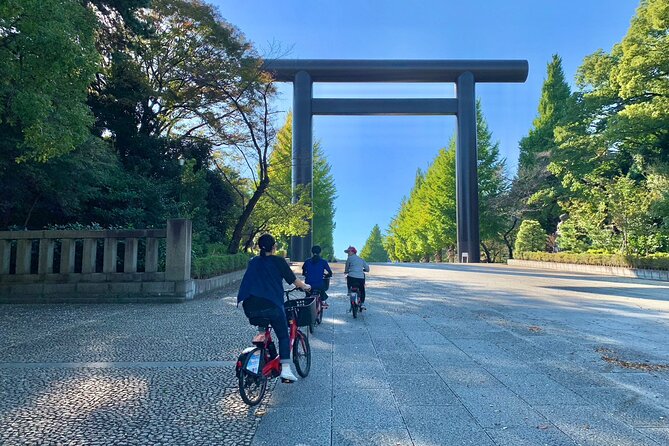
At Yasukuni Shrine, the bicycle passes beneath a very large torii gate and into the shrine grounds. The stop includes a restroom break, with about 10 minutes allotted in total.
The shrine can carry difficult political associations, so the limited time here may suit riders who want geographic and cultural context without making the entire afternoon about political history. The tour focuses on the shrine grounds, Edo culture, and the local setting.
Kitanomaru Park and the Imperial Palace
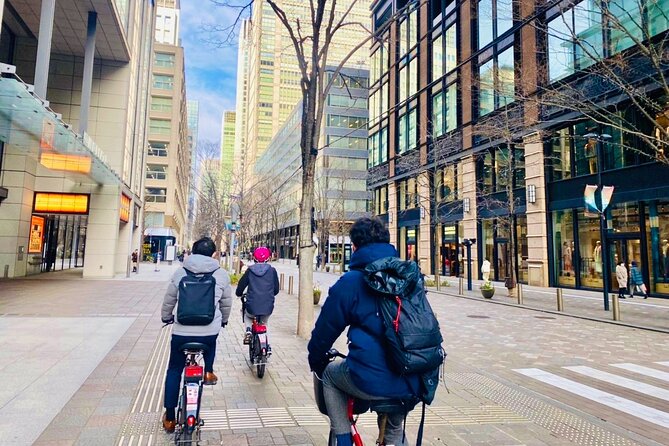
The route continues through Kitanomaru Park, once the northern section of Edo Castle. You pass the Nippon Budokan and other buildings, with about five minutes of riding time listed for this part.
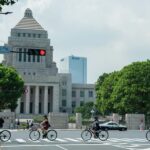
The Imperial Palace area follows. The palace occupies the former site of Edo Castle, and the guide uses it to explain the change from the Tokugawa shogunate to imperial Tokyo. Topics include why this location became the Imperial Palace and how Japan changed from the era of the chonmage samurai to the modern state.
This is where the tour’s central theme comes together. You have already seen old-town Kanda, adaptable Akihabara, and religious sites linked to Edo. At the palace, the guide explains the larger political shift that changed the city and the country.
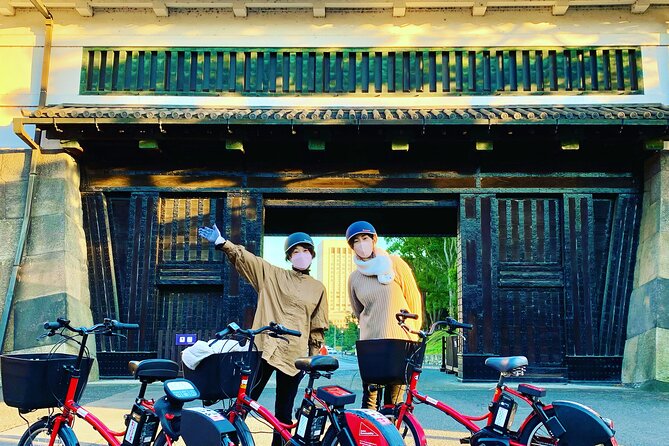
You do not enter palace buildings on this route. Instead, you see the grounds and surrounding areas from the bicycle, including Sakuradamon Gate. The gate is described as the largest gate of the Imperial Palace, and the ride around the outer perimeter provides a broad final view of the palace district.
Finishing with art in the Marunouchi Building
The bicycles are returned at the Marunouchi Building. Rather than ending immediately, the experience continues on foot to an art display in the building, centered on the theme of Time and Memory.
This closing visit gives the tour a thoughtful finish. You begin with Tokyo’s present-day business center, travel through layers of Edo and postwar history, then return to Marunouchi and consider how cities preserve memory through art as well as monuments.
The exact timetable can change during the day. The listed stops add up to a tightly managed schedule, and traffic, group pace, weather, or local conditions may alter the order or time spent at each place.
Price, group size, and practical value
The price is $83.23 per person. That includes the e-bike, helmet, bicycle accident insurance, guide service, and taiyaki snack. You are paying less for entry tickets, since the stops are viewed from public areas, and more for the route design, local explanation, bicycle use, and the ability to connect distant neighborhoods efficiently.
I consider the price reasonable if you value guided context and want to reduce walking. A private taxi tour could cover similar ground, but it would not provide the same open-air feel or the small-scale view of side streets. A self-guided bicycle rental could cost less, but you would need to plan the route, navigate, manage traffic, and supply your own historical background.
The group maximum is four people. A shared booking may include other riders, and the guide adjusts the pace to the least experienced cyclist. If you reserve four places, the booking automatically becomes private, which is useful for a family or a group of friends.
Riders must be at least 145 centimeters tall. Most people can participate, and bicycle insurance is included. One rider who was 60 and had undergone a total knee replacement five months earlier reported feeling safe and capable, but that should not be treated as medical clearance for everyone. Consider your own mobility and cycling comfort before booking.
Weather, timing, and the rainy-day option
This is a weather-dependent activity. If rain makes cycling unsafe, you can choose a rainy-day walking route or request a refund. The walking alternative uses the subway while visiting places such as Tokyo Station, an old shrine, the Jimbocho book district, and a large park on the former Edo Castle site.
That option protects the sightseeing plan, but it changes the experience. You will not get the same range or open-air movement, so check the forecast and dress for the possibility of a cooler or wetter afternoon.
Arrive early. If you are late without advance notice, the tour can be canceled with a full same-day charge. Standard cancellation is free if you cancel at least 24 hours before the start time. Changes or cancellations inside that window are not accepted for a refund.
Who should book this Tokyo e-bike tour?
I would choose this tour if you want a fast introduction to central Tokyo with real neighborhood variety. It fits especially well on an early trip, when you want a map in your head before exploring alone.
It is also a good choice if your feet are tired from long sightseeing days but you still want to be outside. The electric assistance helps, while the stops keep the ride from feeling like exercise for its own sake.
History-minded riders will get the most from the route. You will hear about Edo, shrines, festivals, postwar Akihabara, the Imperial Palace, and the move into modern Japan. You should not expect long museum visits, extensive shopping time, or a detailed treatment of every site.
Families and mixed-age groups may appreciate the small size and patient pace, but everyone should be able to ride independently and meet the 145-centimeter height rule. If you want a private outing, reserve all four places.
Should you book it?
Book this tour if you want to see a large slice of central Tokyo in three hours, prefer a small group, and like history delivered at the places where it happened. The included taiyaki, bicycle insurance, and helmet add practical value, while the route gives you more range than walking.
Skip it if you dislike cycling in city conditions, need a completely fixed schedule, or want long visits inside individual attractions. For most reasonably confident riders, though, this is an efficient and enjoyable way to connect Tokyo’s old streets, modern districts, shrines, parks, and palace surroundings in one afternoon.
FAQ
How long is the Tokyo Deep Inside Cycle Tour?
The tour lasts approximately three hours.
What time does the tour begin?
The scheduled start time is 1 p.m.
Where does the tour begin?
It begins at the JTB Marunouchi Store in the Marunouchi Eiraku Building, near Tokyo Station.
Where does the tour end?
The bicycles are returned at the Marunouchi Building in Marunouchi.
How many people can join the tour?
The tour has a maximum of four people.
Can I book a private tour?
Yes. Reserving four places automatically changes the booking to a private tour.
Are e-bikes and helmets included?
Yes. Bicycle use and a bicycle helmet are included in the price.
Is food included?
Yes. The tour includes taiyaki, with a choice of red bean paste or cream filling.
Is bottled water included?
No. Bring your own beverages if you need them.
What happens if it rains?
If rain prevents the bicycle route from operating, you can choose a rainy-day walking route or receive a full refund.
More 3-Hour Experiences in Tokyo
More E-Bikes in Tokyo
More Cycling Tours in Tokyo
More tours in Tokyo we've reviewed


E-Bikes, compared.
 ★ 5.0Tokyo Top Highlights 3h Guided E-bike TourFrom $63
 ★ 5.03h Tokyo E-Bike Tour: Hidden Gems, and Local Life with guideFrom $63
 ★ 4.8Tokyo: 3-Hour Bike or E-Bike City Highlights TourFrom $453 hours
 ★ 4.8Tokyo: 3-hour Guided E-Bike Tour of the City’s Hidden GemsFrom $65
 ★ 5.0Tokyo: 3-Hour Bike/E-Bike Tour of the City’s HighlightsFrom $63
 ★ 5.03-Hour Tokyo Private E-Bike Tour Starting from Your HotelFrom $145