
Reviewed · GO-KARTS
East Tokyo Go-Kart Tour
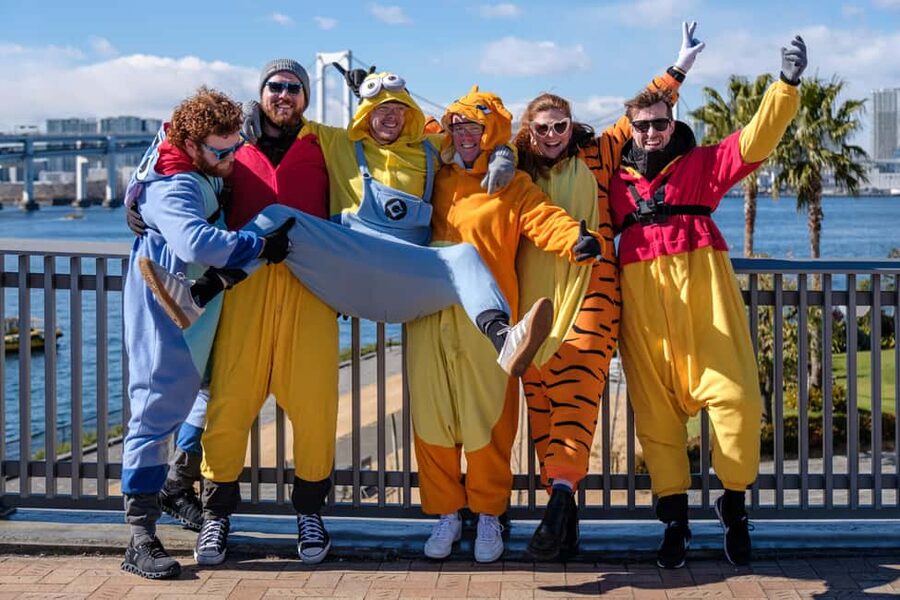
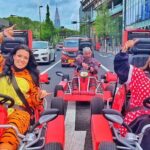
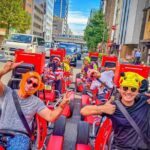
Tokyo is usually experienced from a train window or a crowded sidewalk. This tour gives you a much stranger, livelier view: you sit low in a go-kart and drive through the city streets, following a guide past Tokyo Bay, Ginza, Akihabara, Ueno, and Asakusa. The Rainbow Bridge views are the big visual reward, while the costumes and passing waves from pedestrians add a playful touch.
I like two things here. First, the route covers a surprising amount of East Tokyo in about two hours, giving your feet a rest while still putting you close to the city. Second, the staff take the road rules seriously, with a safety briefing, a lead guide, and a tail vehicle to keep the group together. The main drawback is simple: you must concentrate on traffic, so this is not the best way to learn detailed facts about every landmark you pass.
In This Review
- Key points at a glance
- What driving a go-kart through Tokyo is really like
- The two-hour East Tokyo route
- Tokyo Bay and Rainbow Bridge
- Ginza and Nihonbashi
- Kanda and Akihabara
- Ueno and Asakusa
- The one-hour SkyTree branch
- Safety, traffic, and the level of effort
- The paperwork that can make or break your booking
- Cost, photos, costumes, and overall value
- How to plan the rest of your day
- Who should book this experience
- Should you book the East Tokyo Go-Kart Tour?
- FAQ
- How long is the East Tokyo Go-Kart Tour?
- How much does the tour cost?
- Where does the tour meet?
- What areas does the two-hour route visit?
- What areas does the one-hour route visit?
- What driving documents do I need?
- Are Vienna Convention 1968 permits accepted?
- Can I show a digital copy of my International Driving Permit?
- Are costumes and photos included?
- What happens if bad weather cancels the tour?
Key points at a glance
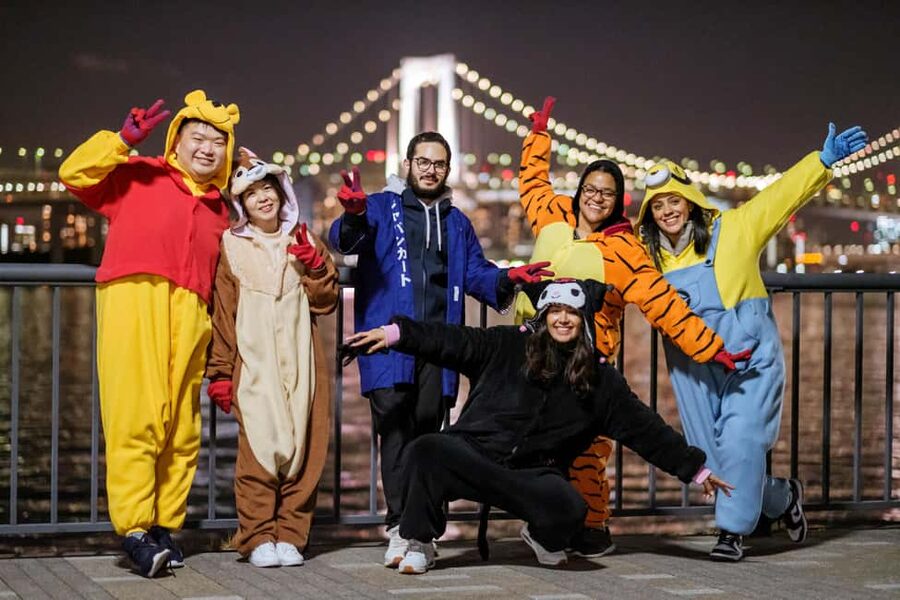
- Rainbow Bridge and Tokyo Bay: The open views and photo stop are the scenic high point of the longer route.
- A real public-road drive: You are operating a road-legal go-kart in Tokyo traffic, not riding around a closed amusement-park track.
- Two route choices: The East Tokyo tour takes about two hours, while the SkyTree branch offers a shorter one-hour route.
- Strict driving paperwork: You need your passport, home-country license, and a hard-copy Geneva Convention 1949 International Driving Permit, unless special translation rules apply.
- Small groups: The tour is limited to 10 people, with an English-speaking instructor and safety guidance before departure.
- Photos and costumes included: You can choose a costume, and the staff take photos during the route at no extra charge.
What driving a go-kart through Tokyo is really like
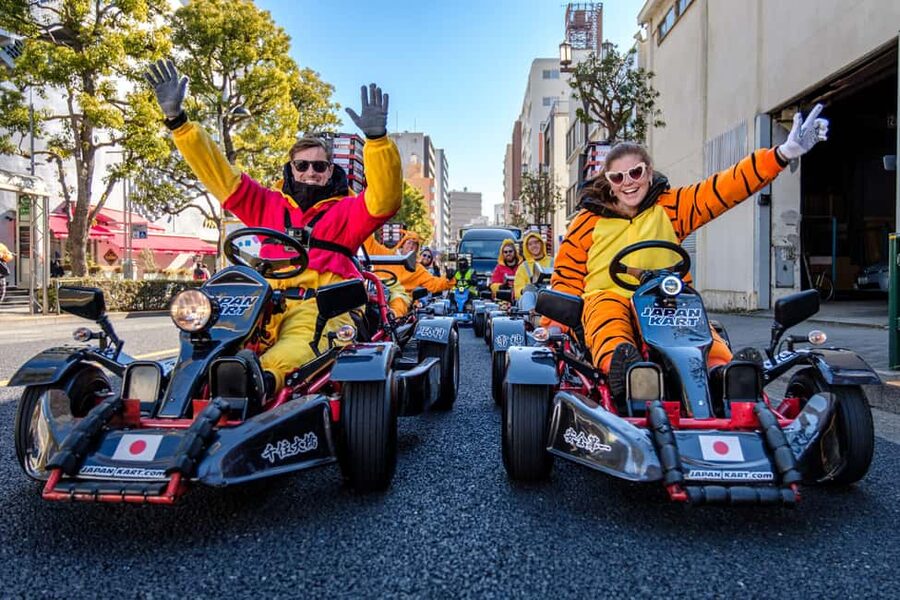
This is sightseeing with a steering wheel. You are not being driven around in a sightseeing bus, and you are not following a private circuit. You drive on public roads, obey traffic rules, and stay with the guide.
That makes the first few minutes the most demanding part. The kart is small, the traffic is real, and you need to watch the road rather than stare at every passing sign. The safety demonstration is important, not a formality. Staff explain how to operate the kart and how to handle city traffic before you leave the shop.
Once you get used to the kart, the experience becomes much more relaxed. The group normally follows a lead driver, with staff watching from behind as well. This arrangement helps when traffic lights split the group or a driver needs a moment to catch up. The guides are also reported to stop when the group separates, which is exactly what you want on a road-based activity.
The speed can feel quicker than expected. One useful warning is to take care on road surfaces, especially if rain makes them slippery. You will have more fun if you treat the tour as a careful city drive with a bit of theater, not as a race.
A few more Tokyo tours and experiences worth a look
The two-hour East Tokyo route
The longer tour is the better choice if you want the full experience. Allow around 90 minutes to 150 minutes from start to finish, depending on the scheduled route and operating conditions. The driving portion has been described as roughly 1 hour and 10 minutes by one participant, while others spent close to two hours on the road, so leave room in your schedule.
The route begins near the JapanKart shop and heads toward Tokyo Bay and Toyosu. Toyosu gives the ride a modern waterfront feel, with broad roads and large-scale city views. The tour is not a traditional walking tour, so your view comes in quick pieces as you drive. You may notice architecture, elevated roads, bridges, and the changing feel of the city more than you absorb individual facts.
Tokyo Bay and Rainbow Bridge
Tokyo Bay is the scenic center of the longer route. The wide water views offer a welcome break from dense city streets, and the Rainbow Bridge is one of the most memorable sights on the drive.
The tour includes a break, with time for a group photo and an optional toilet stop. Some routes also pause at a bridge overlooking the river. These stops matter because go-kart driving leaves little time for leisurely picture taking while you are moving.
Try to enjoy the view during the stop rather than trying to photograph everything from the kart. The staff take photos along the route, and the supplied reviews describe the guides making a real effort to capture the group at scenic points. Photos are included, which improves the value of the $64 price.
Ginza and Nihonbashi
From the bay area, the route passes through Ginza, one of Tokyo’s best-known shopping districts. Ginza is polished and highly urban, with major stores, wide streets, and plenty of traffic. Sitting in a tiny kart here gives the district a comic contrast: you are surrounded by serious city business while dressed for fun.
The drive then continues through Nihonbashi, an older commercial area with an important place in Tokyo’s road and trading history. You should not expect a stop for a formal explanation, but passing through lets you see how quickly Tokyo shifts from waterfront development to established central neighborhoods.
This part of the route is good for city texture. You get a sense of the distances between districts and the way Tokyo changes block by block. It is less useful if you want uninterrupted views of one landmark.
Kanda and Akihabara
Kanda brings another change of mood. The streets here feel more local and practical than Ginza’s grand shopping avenues. Soon after, Akihabara adds its familiar electronics, game, and anime associations.
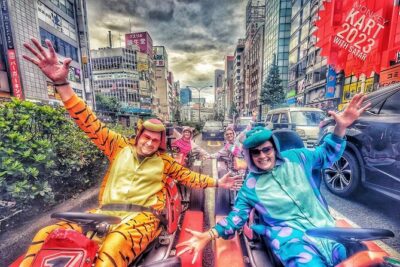
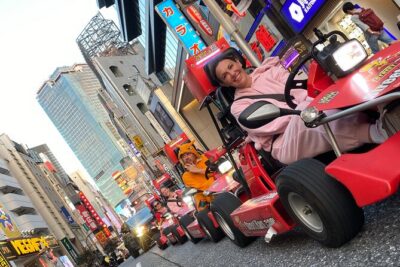
The kart makes you visible. People may wave or take photos as the group passes, especially when participants wear costumes. That attention is part of the fun, but it also means you need to be comfortable being noticed. If you prefer quiet sightseeing and anonymity, this may feel silly rather than charming.
Akihabara is best treated as a quick moving glimpse. You will not have time to shop or visit arcades during the drive. Plan a separate visit if you want to explore the district properly.
Ueno and Asakusa
The route continues to Ueno and then Asakusa, where Tokyo’s older side becomes more apparent. Ueno is a useful contrast to the modern bay and commercial districts, with parks, museums, and long-standing cultural attractions nearby.
Asakusa brings a more traditional atmosphere, centered around its famous temple district and older streets. Again, you pass through rather than tour on foot. That limitation is worth keeping in mind. The go-kart route shows you the position and feel of these areas, but it does not replace a walk through Ueno Park or an Asakusa visit.
For many people, this final section is the most satisfying because it links several versions of Tokyo in one ride: futuristic waterfront, luxury shopping, electric pop culture, green public space, and historic neighborhoods.
The one-hour SkyTree branch
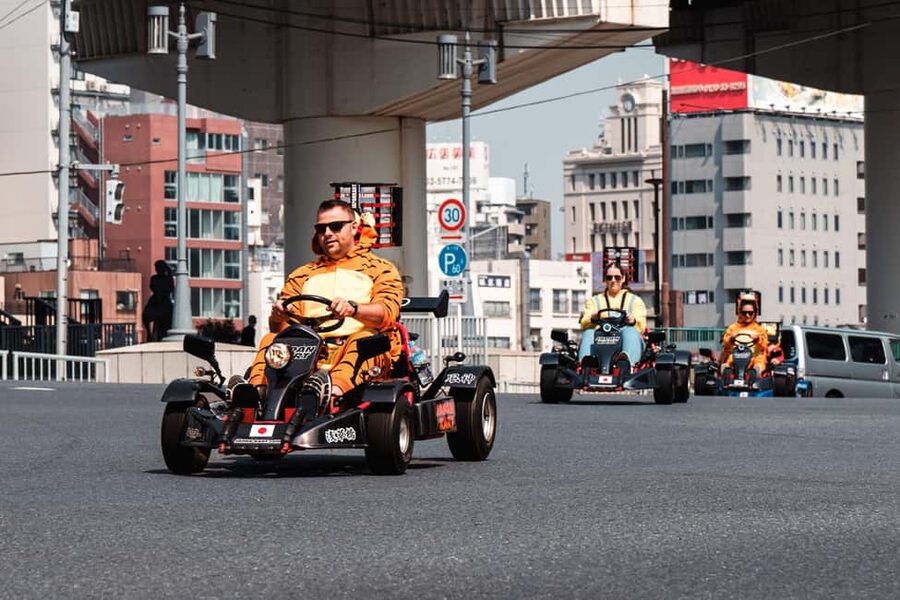
The shorter option starts at a different meeting point near Tokyo Skytree. Confirm the exact branch when booking, since the one-hour route is not the same departure as the longer East Tokyo tour.
This route focuses on Asakusa, Ueno, Akihabara, Ueno Park, Kappabashi Kitchen Tools Street, and Tokyo Skytree. It skips the longer bay and Ginza circuit, so you lose the Rainbow Bridge section but gain a tighter look at northeast Tokyo.
Kappabashi is a fun inclusion. The street is known for kitchen equipment and restaurant supplies, giving you a view of a working retail district that is different from Tokyo’s famous department-store areas. Skytree provides the route’s major modern landmark, while Asakusa supplies the older cultural setting.
Choose this branch if you have limited time, are already staying near Skytree, or want to combine the activity with Asakusa. Choose the longer route if this is your main go-kart outing and you want the most varied ride.
Safety, traffic, and the level of effort
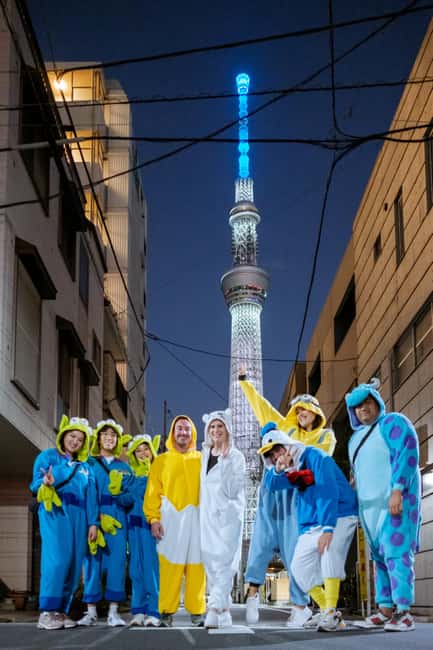
The operator limits groups to 10 participants and provides an English-language safety briefing and demonstration before each tour. Staff explain the controls and traffic rules, and the route uses a guide system intended to keep the group together.
That does not remove the need for care. You are still driving in Tokyo, and the activity is not passive. You need to follow directions, watch vehicles, maintain your position, and stay alert at intersections. Several people found the first moments daunting, then settled into the rhythm quickly.
Rain can change the experience considerably. One participant completed the tour in heavy rain and still enjoyed it, while another group was offered a new date during very wet weather and was glad to reschedule. If the forecast looks poor, ask about changing your booking rather than assuming the ride will feel the same in dry conditions.
You cannot join if you are under 18. High heels, sandals, flip-flops, bare feet, alcohol, and drugs are not allowed. Alcoholic drinks cannot be taken in the vehicle. Wear secure, closed shoes and practical clothing.
The paperwork that can make or break your booking
This is the most important practical point. Bring all required documents in physical form. You need:
- Your driving license from your country of origin
- A Geneva Convention 1949 International Driving Permit issued by an approved authority in your own country
- Your passport
Japan does not accept an International Driving Permit issued under the Vienna Convention 1968. The permit must be a booklet, not a loose paper document, and it must come from your country’s approved issuer. Examples provided include AAA or AATA in the United States, CAA in Canada, AAA in Australia, and AA or RAC in the United Kingdom.
Drivers from Switzerland, Germany, France, Taiwan, Belgium, Estonia, and Monaco follow a different process. You need your original driving license, an official Japanese translation from the authorized organization, and your passport.
US military participants need a combination of an active military ID and a stateside driver’s license under the SOFA arrangement.
Do not rely on a phone image or an online permit. If you cannot show the required hard-copy documents at check-in, you can be denied participation without a refund. Check this well before booking, since it is your responsibility to arrive with valid paperwork.
Cost, photos, costumes, and overall value
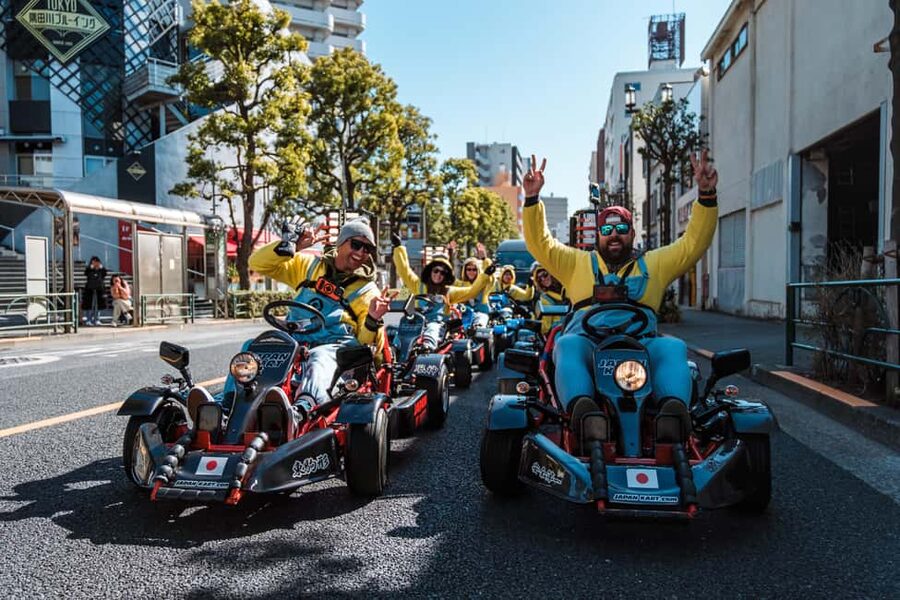
At $64 per person, this is not the cheapest way to see Tokyo. Public transit will take you between the same districts for far less, and a walking tour can provide more landmark information.
The value comes from the activity itself. You are paying for the kart, fuel, taxes, costume use, instruction, guide support, and photos. The longer route also covers several distinct parts of Tokyo in one outing. If you want a memorable holiday story and enjoy driving, the cost is reasonable.
The included photos help. Staff take pictures during the ride, including at scenic stops, and participants have described receiving photos and videos without an extra charge. You can also use a phone or GoPro, with harnesses available for carrying a device safely.
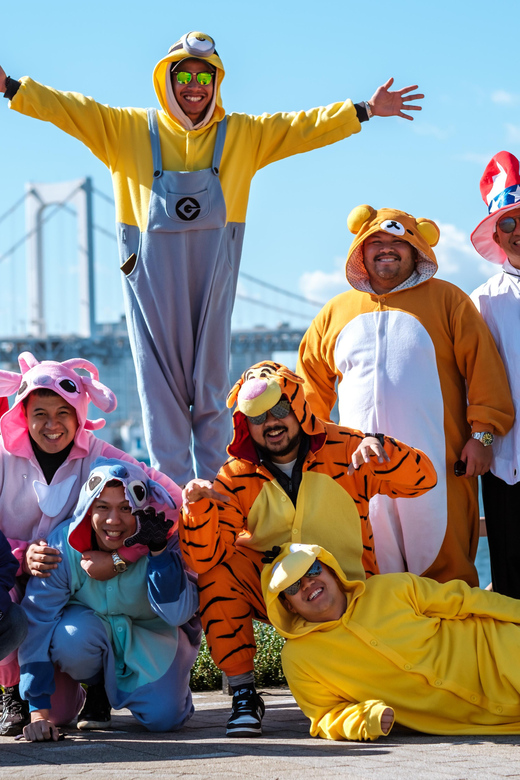
Costumes are optional, but they are part of the atmosphere. The selection is described as wide, and the staff have even provided shoes to participants who arrived in sandals. I would still arrive properly dressed rather than count on that courtesy.
The best value comes from choosing the two-hour route if you have the time. The one-hour option is fine for a quick activity, but the longer ride gives you more districts, more waterfront scenery, and more time to settle into driving.
How to plan the rest of your day

The Skytree-area meeting point makes pairing the tour with nearby sightseeing easy. You can visit Tokyo Skytree before or after the ride, and Asakusa is also close enough to make a natural half-day plan.
Do not schedule a major timed attraction immediately after the tour. Traffic, weather, group pacing, and mechanical issues can affect the finish time. I would leave a comfortable buffer, especially if you have a restaurant reservation or train to catch.
Evening tours have a different mood from daytime departures. At sunset or after dark, Tokyo’s lights and signs make the ride feel more theatrical. Daytime gives you clearer views of buildings and neighborhoods. Neither is automatically better, so choose based on the kind of city scene you want.
A quieter departure can make the driving easier. One participant suggested Thursday at 7 p.m. as a less crowded time, but traffic conditions can change. The useful lesson is to consider the time of day if you are nervous about busy roads.
Who should book this experience
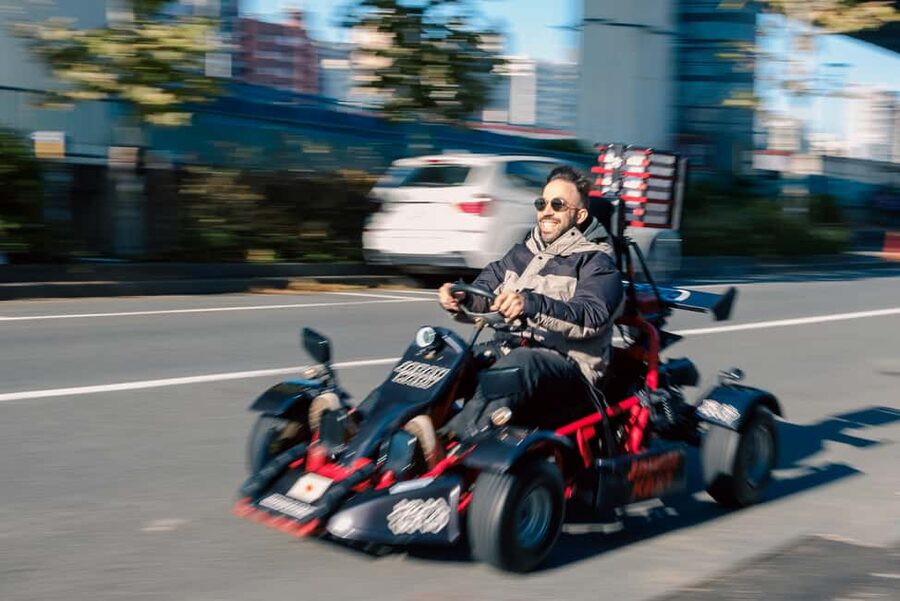
I would recommend it to adults who enjoy driving, novelty, and a little public attention. It suits couples, friends, and families with adult children who want a shared activity rather than another museum or observation deck.
It is also a good choice if your feet are tired. You still see a broad slice of Tokyo, but you do not spend the entire afternoon walking between districts.
I would hesitate if you want detailed cultural commentary, quiet photography, or a slow look at historic sites. The guide’s main job is to lead the group safely, not deliver a long lecture while you drive. Plan separate visits to Asakusa, Ueno, Ginza, and Akihabara if you want to explore them properly.
The activity also demands confidence with basic driving. You do not need to be a professional driver, but you should be comfortable following road rules and staying alert around traffic.
Should you book the East Tokyo Go-Kart Tour?
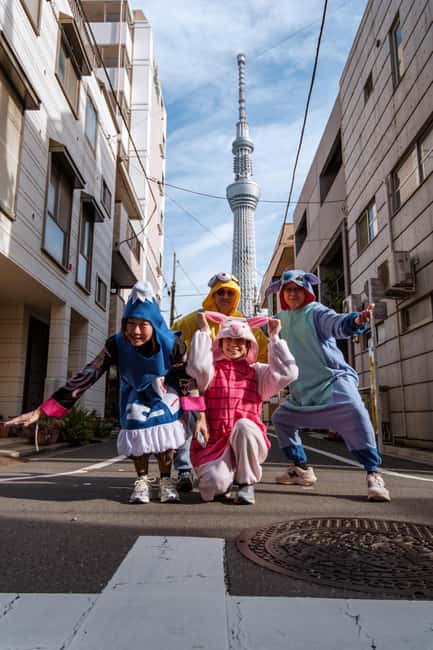
Book it if you want an unusual way to connect Tokyo’s waterfront, shopping streets, pop-culture districts, and older neighborhoods. The strong points are the careful briefing, small groups, clean karts, included photos, friendly staff, and the chance to see Tokyo from street level at a very different pace.
Pick the two-hour East Tokyo route for the best overall value and the Rainbow Bridge views. Pick the one-hour SkyTree branch if your schedule centers on Asakusa and Skytree. Before paying, secure the correct IDP and confirm the meeting point for your chosen route.
This is not a substitute for a proper Tokyo sightseeing tour. It is something more playful: a guided road adventure that happens to pass some of the city’s biggest sights.
FAQ
How long is the East Tokyo Go-Kart Tour?
The available experience lasts about 90 to 150 minutes. The main East Tokyo route is described as a two-hour tour, while the SkyTree branch takes about one hour.
How much does the tour cost?
The listed price is $64 per person.
Where does the tour meet?
Check-in is at the activity provider’s shop near Tokyo Skytree Tower. The one-hour SkyTree branch has a different meeting point from the main JapanKart route, so confirm your selected departure location.
What areas does the two-hour route visit?
The longer route passes through Toyosu, Tokyo Bay, Ginza, Nihonbashi, Kanda, Akihabara, Ueno, and Asakusa.
What areas does the one-hour route visit?
The one-hour SkyTree route includes Asakusa, Ueno, Ueno Park, Akihabara, Kappabashi Kitchen Tools Street, and Tokyo Skytree.
What driving documents do I need?
You need your home-country driving license, a Geneva Convention 1949 International Driving Permit issued in your own country, and your passport.
Are Vienna Convention 1968 permits accepted?
No. International Driving Permits issued under the Vienna Convention 1968 are not accepted in Japan for this activity.
Can I show a digital copy of my International Driving Permit?
No. You must bring a hard-copy booklet permit. A loose paper form or failure to show the document can result in denial of participation without reimbursement.
Are costumes and photos included?
Yes. The go-kart, fees and taxes, fuel, costumes, and photos are included.
What happens if bad weather cancels the tour?
If the operator cancels because of bad weather, you can receive a full refund or reschedule subject to availability. You can also cancel up to 24 hours before the tour begins for a full refund, but forgetting the required driving documents is not covered by the refund policy.
More Go-Kart Tours in Tokyo
More tours in Tokyo we've reviewed











Go-Karts, compared.
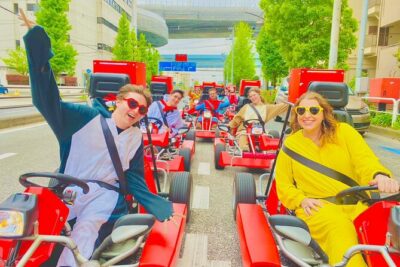 ★ 5.0Flagship 2-Hours Official Street Go-Kart Tour – Tokyo Bay ShopFrom $642 hours to 2 hours 30 minutes (approx.)
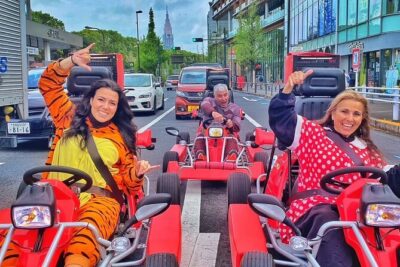 ★ 5.0Official Street Go-Kart in ShibuyaFrom $76
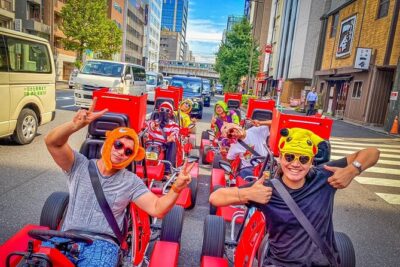 ★ 5.0Official Street Go-Kart Tour – AkihabaraFrom $61
 ★ 5.0Tokyo Go Kart: Asakusa, Skytree, and Akihabara **IDP MUST**From $99
 ★ 5.0Shibuya Official Street Go-Kart in Shibuya AnnexFrom $69
 ★ 4.7Tokyo: Asakusa, Skytree & Akhihabara Go-Kart City ExperienceFrom $961h 10m