
Reviewed · MT FUJI DAY TRIPS
Mt. Fuji and Hakone Day Trip From Tokyo with Bullet Train Option
Mt. Fuji and Hakone in one day is a big bite of Japan. This 11-hour outing links Fuji’s 5th Station, Owakudani’s steaming volcanic vents, the Hakone Ropeway, and a pirate-themed cruise on Lake Ashi without asking you to puzzle over several train lines.
I like the wide range of sights packed into one day, and I like having the choice of a coach return or a faster bullet train from Odawara. Guides such as Happy, Ai, Yuka, Rino, and Kenji have been praised for keeping groups informed and on time.
The trade-off is time. You may spend long stretches on the road, and key stops can feel short, especially when traffic or queues interfere. Fuji is also weather-dependent, and no clear view is guaranteed.
In This Review
- Key points to know before booking
- Why this day trip works for first-time visitors
- Mt. Fuji’s 5th Station and the view from the mountain
- Owakudani Valley and its sulfur vents
- Riding the Hakone Ropeway above the valley
- Lake Ashi and the pirate-themed cruise
- Lunch: convenient, but choose the option carefully
- Returning to Tokyo by coach or Shinkansen
- Guides can shape the whole day
- Is the $97.52 price good value?
- Who should book this Fuji and Hakone outing?
- FAQ
- Where does the tour start?
- How long does the experience last?
- Is lunch included?
- Can I take the bullet train back to Tokyo?
- Is Mt. Fuji guaranteed to be visible?
- What happens if the road to the 5th Station is closed?
- Can I cancel for free?
- Should you book it?
Key points to know before booking
- Mt. Fuji’s 5th Station: You get a close mountain viewpoint, but normally only about 30 minutes there.
- Three different Hakone experiences: The ropeway, volcanic Owakudani Valley, and Lake Ashi cruise each show the area from a different angle.
- Bullet train option: The Shinkansen return saves road time, but the non-reserved ticket and Odawara transfer require care.
- Lunch is optional: Add the Japanese-style meal for convenience, or bring food if you skip it.
- Weather can reshape the day: Fuji’s upper road, ropeway, and pirate ship may be replaced by other Hakone or Fuji-area stops.
- A full 45-person group is possible: The day runs best when everyone returns to the coach promptly.
Why this day trip works for first-time visitors
The great strength here is simple: you see two major day-trip regions from Tokyo in one outing. Mt. Fuji gives you the iconic peak, while Hakone adds hot springs, volcanic activity, mountain transport, and a lake cruise.
Doing this independently is possible, but the route takes planning. Fuji’s 5th Station is reached by road, then Hakone requires another set of connections. The tour handles the coach, ropeway tickets, cruise ticket, and return arrangements, so you can focus on the views instead of checking departure boards.
The day begins at 8:30 a.m. beside the Robert Indiana LOVE sculpture in Shinjuku. Look for staff carrying a blue flag with the HIS logo. This is a busy part of Tokyo, so I would arrive early, not at the scheduled minute. Latecomers cannot join partway through the route, and there is no refund for missing departure.
The coach has air-conditioning and Wi-Fi, but there is no restroom on board. The road journey can be lengthy, particularly in heavy traffic. One low-rated account described the morning as mostly bus time before lunch, while several stronger accounts praised the guide’s commentary and the efficient schedule. Your experience will depend heavily on traffic, group pace, and your guide.
A few more Tokyo tours and experiences worth a look
Mt. Fuji’s 5th Station and the view from the mountain
The first main stop is Mt. Fuji’s 5th Station, reached by the Subaru Line when road and weather conditions allow. At roughly the upper part of the mountain road, it gives you a close look at Fuji and a chance to take photographs without attempting a climb.
The stop is scheduled for about 30 minutes. That is enough to stretch your legs, visit the viewpoint, and look around, but it is not enough for a slow visit. Some experiences have included only 20 minutes here after delays, so keep your camera ready and listen carefully for the meeting time.
On a clear day, this can be the emotional high point of the outing. You get the famous symmetrical volcano at relatively close range, along with broad views over the surrounding countryside. Several positive accounts describe Fuji as breathtaking, but that depends entirely on visibility.
Cloud, fog, humidity, and rain can hide the mountain. The tour does not cancel or refund simply because Fuji is invisible. If the road to the 5th Station closes, the itinerary may shift to the highest open station, the Fujisan World Heritage Center, Oshino Hakkai, Oishi Park at Lake Kawaguchi, Lake Yamanakako Hana no Miyako Park, or another Fuji-area stop.
That flexibility is useful, but it changes the nature of the day. If seeing Fuji is your only reason for booking, choose a date with the best forecast you can find and accept that even a promising morning can cloud over later.
Owakudani Valley and its sulfur vents
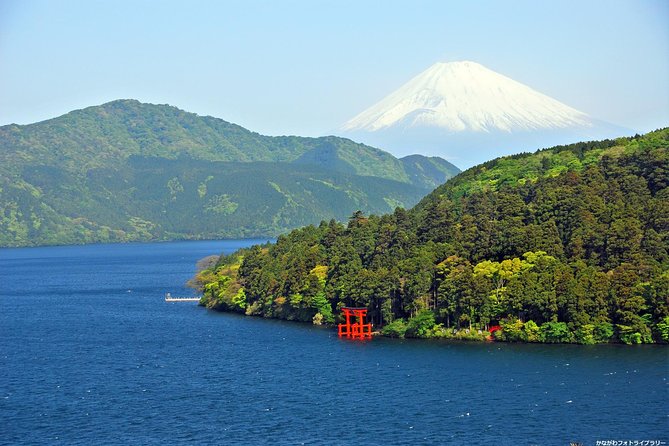
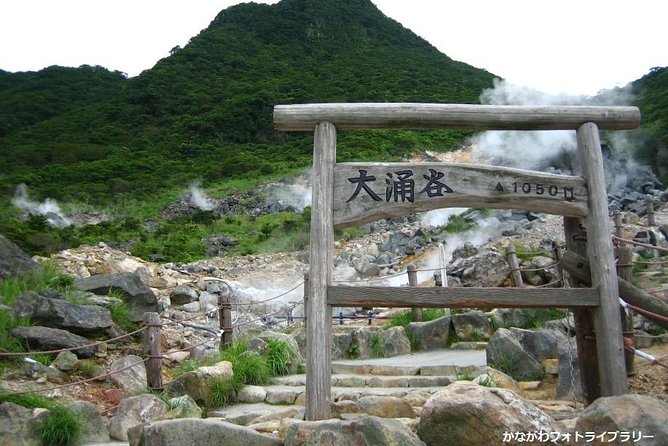
The tour then moves toward Owakudani, a volcanic valley in the Hakone area. Here, the earth is still active in visible ways. Steam rises from vents, sulfur hangs in the air, and hot spring activity gives the area a raw, unusual feel.
The scheduled visit lasts about 30 minutes. You will have time to see the main geothermal features, take photographs, and hear an explanation from the tour conductor. This is not a long walking excursion, so do not expect to explore every path or linger over the scenery.
Owakudani adds something important to the day. Fuji is Japan’s iconic mountain, but Owakudani shows the forces beneath it. The contrast between a snow-capped peak and a steaming volcanic valley gives the trip more variety than a simple Fuji viewpoint tour.
Conditions can affect this section. Strong winds, poor visibility, or operational limits may close access to parts of the route. If the Hakone Ropeway cannot run, the operator may substitute another ropeway, a boat ride, Odawara Castle, Hakone Shrine, Hakone Checkpoint, the Venetian Glass Museum, the Narukawa Art Museum, Hakone-en Aquarium, or another listed stop.
Those alternatives may be worthwhile, but they will not feel identical. The ropeway and Owakudani combination is one of the day’s most distinctive parts, so check the forecast and keep an open mind.
Riding the Hakone Ropeway above the valley
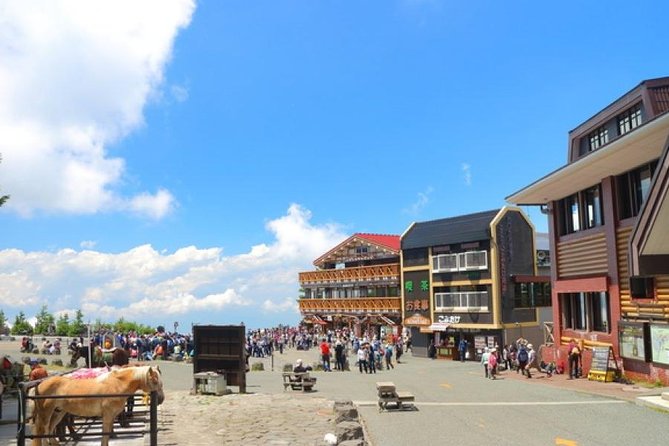
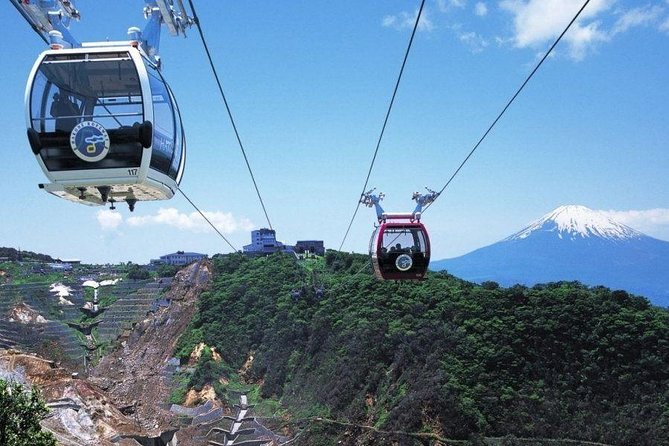
The Hakone Ropeway is included, and the scheduled ride takes about 25 minutes. The route described for this trip runs from Owakudani toward Sounzan Station, carrying you above the volcanic area and its steaming vents.
This is not just transport. From the cabin, you get a different view of Owakudani than you had from the ground. The ride is also a welcome change after the long coach sections. Several strong accounts identify the ropeway as a highlight, though long queues have caused problems on some departures.
That point matters. A delay of an hour or more can squeeze the later Lake Ashi cruise or force the schedule to change. Traffic may also require the group to use a different starting point. The itinerary is ambitious, and a queue at one attraction can affect everything after it.
Wear shoes that make walking and standing easy. You may need to walk between transport points or wait in line. The tour suits most people, but it is not a relaxed, slow-paced Hakone visit.
Lake Ashi and the pirate-themed cruise
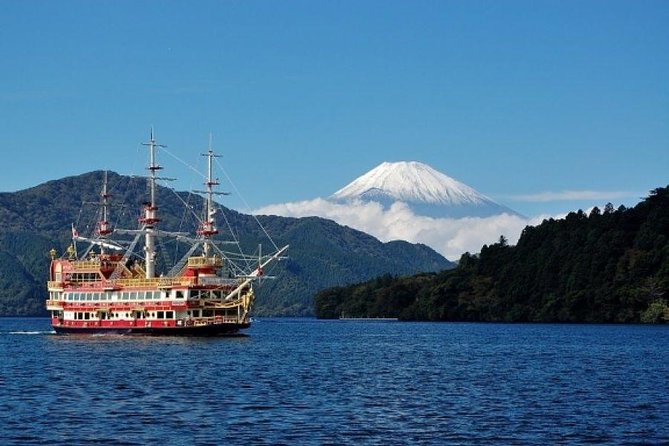
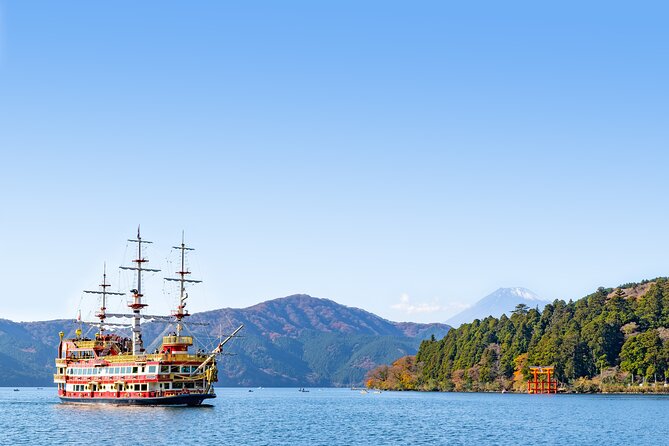
After the ropeway, you board a pirate-themed pleasure boat on Lake Ashi for about 30 minutes. It is a playful tourist touch, but the ride also gives you a pleasant break and a chance to see Hakone’s mountains from the water.
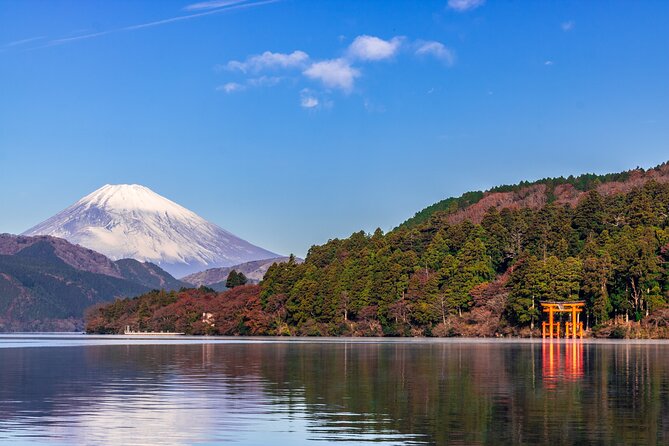
On a clear day, Mt. Fuji may appear beyond the hills. The view is not guaranteed, and fog or cloud can make the cruise more about the lake than the mountain. One account described an overcrowded boat, while others enjoyed the photo opportunities and gentle ride.
The cruise can also be affected by wind and operating conditions. If the pirate ship is canceled, the group may visit Hakone Machi instead. Other possible substitutions include a Lake Ashi boat cruise, the Komagatake Ropeway, a Lake Kawaguchi cruise, Mishima Skywalk, or several museums and cultural sites.
Try to treat the ship as one part of a varied day, not as a guaranteed Fuji-viewing platform. If you get a clear afternoon, the combination of water, hills, and Fuji can be excellent. If clouds arrive, the ride still offers a rest after the ropeway, but it may feel less special.
A few more Tokyo tours and experiences worth a look

Lunch: convenient, but choose the option carefully
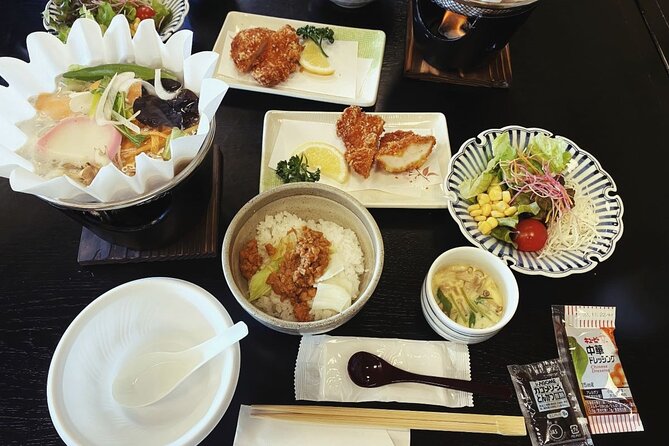
Lunch is included only when you select the option marked with lunch. The meal is Japanese-style, and some packages use a buffet or hotpot-style meal. Positive accounts describe the food as good, with a range of choices, while one unhappy account found the meal poor and the room hot and stuffy.
That mixed experience is worth noting. The lunch option removes the stress of finding food during a tightly timed day, which has real value. On the other hand, a group meal can be rushed, and the venue may not match your expectations of a memorable Japanese dining experience.
If you skip lunch, prepare food before departure. The schedule may not leave enough time to find a suitable meal near the stops. The operator can handle most allergy requests, but gluten-free meals are not provided. Alcohol is not included.
For a family or anyone who dislikes making decisions while on a packed tour, I would lean toward adding lunch. If you have strict dietary needs or care deeply about food, bringing your own backup is sensible.
Returning to Tokyo by coach or Shinkansen
You choose the return method when booking, and you cannot change the scheduled return location later. The motorcoach returns to Shinjuku West Exit, near the Mode Gakuen Cocoon Tower, around 7:30 p.m. Traffic can make the arrival later.
The coach return is the simpler choice. You stay with the group and avoid navigating a major station after a long day. The downside is that the final drive may be slow, especially after an already lengthy itinerary.
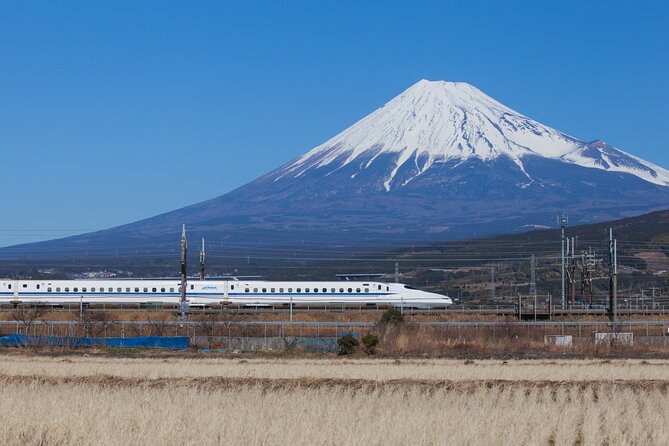
The bullet train option splits the group at Odawara Station. You receive a non-reserved Shinkansen ticket from Odawara to Tokyo, with about two trains per hour on average. The ride is faster and can be a pleasant finish, especially when you are tired of sitting in road traffic.
It is not completely door-to-door. The guide does not board the Shinkansen, so you receive instructions before departure on how to continue from Tokyo Station. One important warning: if you miss the assigned train because of a delay, no refund is issued. You must use the next train in the non-reserved section.
There has also been confusion around onward connections and reaching Shinjuku. The bullet train itself takes you to Tokyo Station, not directly to Shinjuku, and Tokyo’s station network can feel bewildering after dark. If you choose this option, allow extra time, read the instructions closely, and be prepared to ask station staff for help.
The bullet train is best for someone comfortable with Japanese rail stations. The coach is better if you want the tour to end with minimal decision-making.
Guides can shape the whole day
The tour includes an English-speaking conductor, and guide quality matters greatly here. Strong accounts praise guides including Happy, Ai, Yuka, Rino, Kenji, Shun, Sunny, Hit Suzuki, and Tiako for clear English, humor, historical details, origami lessons, and good group care.
A good guide helps in practical ways. You need reminders about meeting times, clear directions at busy stops, and honest updates when traffic or weather forces changes. Commentary also makes the long coach rides more useful.
The less positive experiences point to the risk of an inexperienced guide or limited explanation. On a route with several transfers and a strict timetable, weak communication can make a tiring day feel much harder. This is one reason to stay close to the group and treat every return time as firm.
Is the $97.52 price good value?
At $97.52 per person, the price is fair for the amount of transport and included admission. You are covering a long coach route from Tokyo, the Hakone Ropeway, the Lake Ashi cruise, a tour conductor, taxes, and Wi-Fi on the coach. The bullet train option adds convenience, though the exact value depends on the selected package.
You are not paying for a private tour. Up to 45 people may be on the coach, and the day follows a shared timetable. The price works best when you value convenience and want to see several headline sights in one day.
The value weakens if you want long visits, quiet viewpoints, flexible meals, or detailed exploration of Hakone. You could arrange parts of the route independently, particularly the ropeway and lake cruise, but that requires more planning and may not reproduce the same Fuji stop.
Children up to age five may join free without a bus seat or lunch. If you need a seat or meal for a child, book the child rate. Everyone should wear a seat belt, as required by Japanese law.
Who should book this Fuji and Hakone outing?
I would recommend it to first-time visitors who have only one spare day and want a broad taste of the Fuji and Hakone area. It also suits families and mixed-age groups because the coach removes much of the rail planning, while the ropeway and boat add variety.
It is a good choice if you want a guide, dislike changing trains, or prefer seeing several famous places rather than spending a full day in one town. The range of transport keeps the day moving, even if the pace is sometimes too fast.
I would think twice if you are mainly interested in hiking, photography, or a quiet view of Fuji. Thirty minutes at the 5th Station and thirty minutes at Owakudani leave little room for a slow eye or a long walk.
FAQ
Where does the tour start?
The meeting point is beside the Robert Indiana LOVE sculpture at 6-chōme-5-1 Nishishinjuku, Shinjuku City, Tokyo. The start time is 8:30 a.m., and staff carry a blue flag with the HIS logo.
How long does the experience last?
The tour lasts about 11 hours. The coach usually returns to Shinjuku around 7:30 p.m., though traffic can make the arrival later.
Is lunch included?
Lunch is included only if you select the option marked with lunch. If you choose the option without lunch, prepare food before departure because suitable meal stops may not be available.
Can I take the bullet train back to Tokyo?
Yes. Select the bullet train return option when booking. You will leave the group at Odawara Station and use a non-reserved Shinkansen seat to Tokyo Station.
Is Mt. Fuji guaranteed to be visible?
No. Fog, rain, cloud, humidity, and other weather conditions can hide the mountain. The tour does not provide a refund when Fuji is not visible because of weather.
What happens if the road to the 5th Station is closed?
The route may visit the highest accessible station or substitute sites such as the Fujisan World Heritage Center, Oshino Hakkai, Oishi Park, Lake Yamanakako Hana no Miyako Park, or another Fuji-area stop.
Can I cancel for free?
You can cancel at least 24 hours before the start time for a full refund. Changes or cancellations made less than 24 hours before departure are not accepted for a refund. If the operator cancels because of severe weather, you will be offered another date or a full refund.
Should you book it?
Book this tour if you want maximum sightseeing with minimum route planning and accept a long, tightly managed day. The best version includes clear skies, a strong English-speaking guide, a smooth ropeway queue, and a clean view of Fuji from the 5th Station or Lake Ashi.
Skip it if you want a leisurely Hakone visit or cannot tolerate uncertain weather and traffic. My practical choice would be the lunch option for convenience, plus the bullet train return if you are comfortable navigating Tokyo Station. Just remember: this is a highlights tour, not a slow exploration.
More 1-Day Tours in Tokyo


More Hakone Day Trips in Tokyo
More Mt Fuji Day Trips in Tokyo
More tours in Tokyo we've reviewed





Mt Fuji Day Trips, compared.
 ★ 5.0Mt Fuji and Hakone 1-Day Bus Tour Return by Bullet TrainFrom $163
 ★ 4.0Mt Fuji & Hakone Cruise, Drum Show Bullet Train 1 Day from TokyoFrom $149
 ★ 4.4Tokyo Mt Fuji 5th St & Hakone Cruise Bus Tour w/Bullet TrainFrom $15410 hours
 ★ 4.5From Tokyo: Mount Fuji Full-Day Sightseeing TripFrom $6810 hours
 ★ 4.7Tokyo: Mt. Fuji Tour, Hakone Ropeway, Owakudani, Lake AshiFrom $5410 hours
 ★ 4.4Tokyo:Mt.Fuji,Kawaguchiko Oishi Park,Arakurayama Sengen ParkFrom $5410 hours