
Reviewed · SUMO EXPERIENCES
Tokyo Sumo Morning Practice: Viewing & Exclusive Interaction
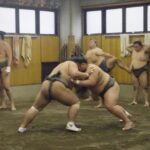
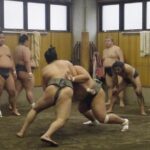
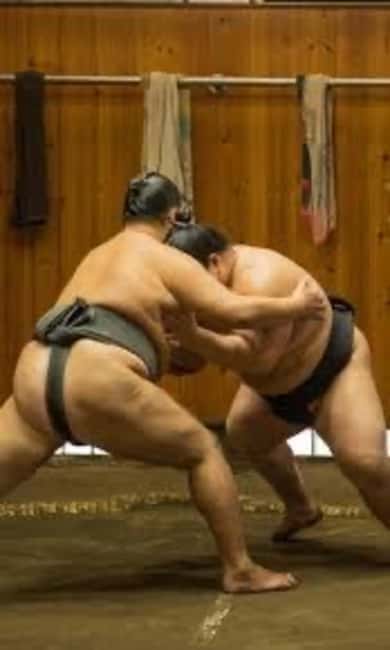
Tokyo’s sumo wrestlers do not perform a tourist show. They train. From only a few meters away, you can hear the slap of bodies, the stamp of feet, and the sharp commands of the stable. That close view is the heart of this Tokyo sumo morning practice experience.
I like the honest setting and the chance to see rituals, exercises, and practice bouts before the crowds arrive. I also like the personal finish, with questions, photos, and an official Banzuke ranking sheet in a souvenir folder.
The main caution is value. At $95.77 per person, the price is fair only if close access and cultural explanation matter to you. The actual stable visit can sometimes be shorter than the advertised two and a half to three hours, and much of the practice requires quiet sitting.
In This Review
- Key points before you book
- Why a morning at a sumo stable feels different
- Meeting at Narihira Park in Sumida
- Watching 90 minutes of real practice
- The interaction, questions, and photo session
- Who gets to enter the ring
- Returning to the park with a Banzuke souvenir
- Adding the optional Japanese brunch
- What the $95.77 price really buys
- Getting the most from the morning
- Who will enjoy this most
- Should you book the Tokyo sumo morning practice?
- FAQ
- Where does the sumo morning practice begin?
- Where does the experience end?
- How long does the sumo experience last?
- Is the tour conducted in English?
- What is included in the price?
- Is brunch included?
- Can I take photos with the wrestlers?
- Can visitors enter the sumo ring?
- Is the practice a real competition?
- What happens if I need to cancel?
Key points before you book
- Real morning training: Watch professional wrestlers follow their normal practice, not a staged demonstration.
- Close-range viewing: The stable setting puts you near the action, much closer than a tournament seat.
- Personal interaction: Ask questions, take photos, and, in some cases, watch male participants enter the ring for a brief push or practice exchange.
- Guides set the context: Haru, Momo, Sarah, Peach, Moana, and Taka have been praised for explaining customs, rules, and proper behavior.
- Optional Japanese meal: Brunch afterward costs extra and has been described as more like a traditional lunch, with dishes generally costing about ¥1,000 to ¥2,000.
- Morning timing: The activity leaves most of the day free for Asakusa, Tokyo Skytree, museums, or other Tokyo plans.
Why a morning at a sumo stable feels different
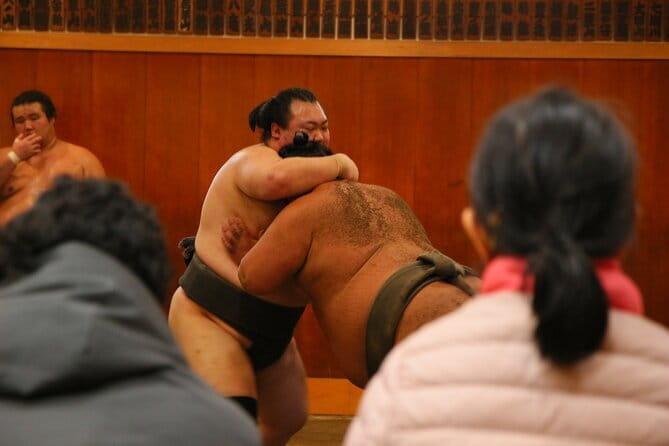
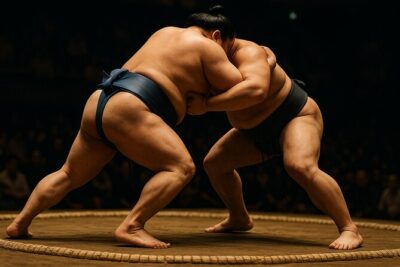
A tournament gives you the polished public face of sumo. This visit shows the work behind it. You watch wrestlers repeat exercises, practice techniques, and face one another in bouts that are part of their training rather than a formal competition.
That distinction matters. You will not get the full ceremony, packed arena, or tournament drama. You will get something quieter and more revealing: athletes preparing for the demanding world of professional sumo.
The stable is a working place, so the mood depends on that morning’s schedule. Some sessions may include several energetic practice matches. Other mornings may focus more on exercises and technique. The experience does not promise a fixed show, and that is part of its appeal, though it also means the pace and length can vary.
I would choose this experience if you cannot visit Tokyo during one of the city’s limited annual sumo tournaments. It solves a common problem for visitors who want to see sumo but have dates that do not match tournament dates.
A few more Tokyo tours and experiences worth a look
Meeting at Narihira Park in Sumida
The meeting point is Narihira Park, near the multipurpose restroom, at 2-chōme-3-番 Narihira, Sumida City, Tokyo 130-0002. Your guide welcomes you there and gives an orientation before the group heads to the stable.
Allow time to find the exact location. One booking note warns that the location printed on some tickets may be incorrect, so check the current meeting instructions sent by the operator. Guides have contacted participants the day before with directions and reading material, which is useful for an early start.
The first orientation lasts about 20 minutes. This is more important than it may sound. Without some explanation, the practice can look like a series of powerful collisions and repeated movements. With context, you can recognize the purpose of the exercises, the role of ritual, and the discipline expected inside a stable.
Guides have included Haru, Momo, Sarah, Peach, Moana, and Taka. The strongest reports praise their clear explanations and their willingness to answer questions. One less enthusiastic assessment felt that the guide mainly translated questions and added little beyond the supplied information, so the quality of the introduction may depend on who leads your group.
If you have time before the meeting, read the pre-tour sumo material. You will get more from the practice if you already know a little about the sport’s ranks, rules, and customs.
Watching 90 minutes of real practice
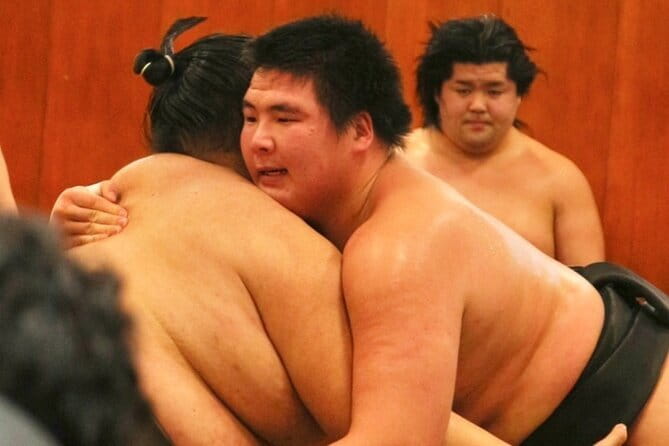
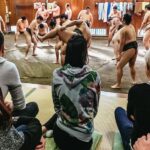
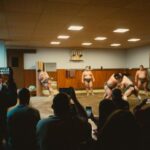
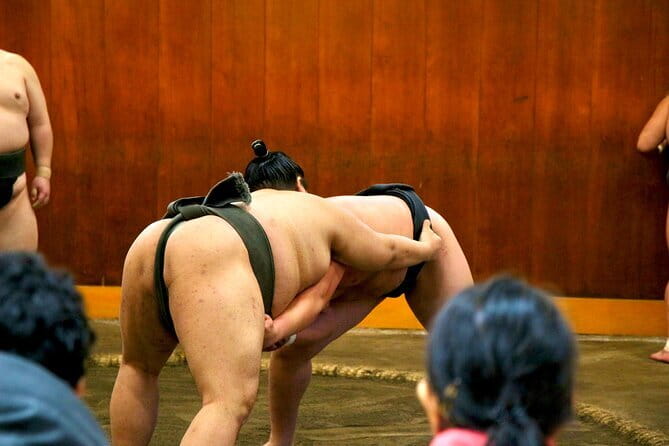
The central portion lasts about 1 hour and 30 minutes. You sit close to the wrestlers and observe their routine. There is no promise that every morning will look the same, but the session can include warmups, strength work, technique practice, and bouts between the wrestlers.
The physical force is easy to understand at this distance. You can see how much effort goes into every movement, even when a bout lasts only a few seconds. The practice also reveals individual styles and personalities. Some wrestlers are forceful and direct. Others rely on timing, balance, or a particular technique.
This is where the experience earns its cultural value. Sumo is not only about size. The repetition, self-control, respect for the stable, and strict attention to custom become visible as the morning continues. You gain a clearer sense of why professional sumo demands so much from its athletes.
You must remain quiet and respectful during training. One useful warning is that children may find the long seated viewing period difficult. Families have enjoyed the experience, including children who later took part in the interaction, but this is not an active attraction for the first part of the morning.
The group maximum is listed as 45 people. That is a fairly large possible group for a small indoor stable. At other times, the practical group inside the stable may be much smaller. One especially intimate visit involved eight participants and seven wrestlers, but you should not assume every departure will have that ratio.
The interaction, questions, and photo session
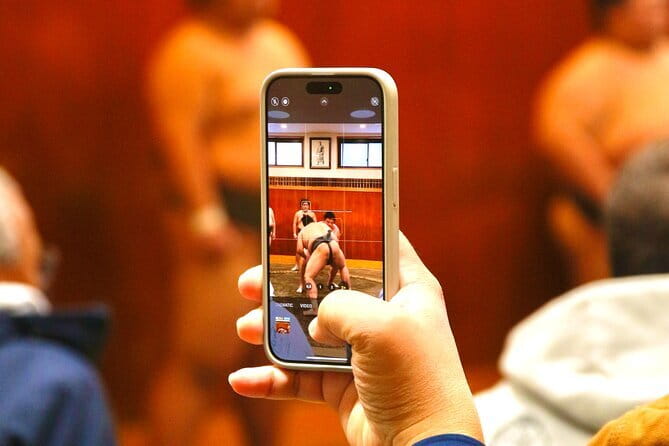
After practice, the tone changes. You have about 30 minutes to ask questions and take personal photos with the wrestlers. This is one of the most praised parts of the experience because it gives you a chance to connect with the athletes after watching them work.
The question session can cover daily life, training, rules, and the wrestlers’ experiences. Guides translate between English and Japanese when needed. You should prepare a few questions in advance, since the time is limited and the format may vary.
The interaction is friendly but still shaped by the stable’s schedule and traditions. One experience allowed only a small number of questions, so do not expect a long private conversation with every wrestler. Also, the stable master, or Oyakata, may not be available to answer questions directly. Training duties can take priority.
Photos are a strong reason to book this rather than simply watching sumo on television. You can take pictures with the wrestlers after practice, subject to the stable’s rules and available time. The athletes have been described as open and willing to share, but remember that they are finishing a serious work session, not attending a fan meet-and-greet.
Who gets to enter the ring
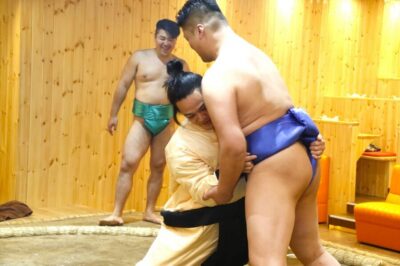
Some departures include a playful chance for male participants to enter the ring and push against a wrestler. This is not a guaranteed wrestling lesson or a formal bout. It is a short, lighthearted demonstration of the size and strength difference between a professional and an ordinary visitor.
Several families especially enjoyed this part, including groups where sons or grandsons tried the ring. One participant was allowed to push a wrestler, who held firm and then let him move slightly. These moments can make the morning memorable, particularly for older children and adults.
There is an important cultural restriction. Women are not allowed to enter the ring because of long-standing sumo traditions. Women can still watch the practice, join the questions, and take photos, but you should not book this expecting every participant to have the same physical interaction.
The rules may also vary depending on the stable and the people present. Treat the ring opportunity as a possible extra, not the main product.
A few more Tokyo tours and experiences worth a look
Returning to the park with a Banzuke souvenir
The closing session takes about 30 minutes and returns to the park. Your guide gives you an official Banzuke, the ranking sheet used in the sumo world, inside an original souvenir folder.
It is a small inclusion, but a useful one. The Banzuke gives you a tangible reminder of the sport’s ranking system and is more meaningful than a generic tour souvenir. The final time also leaves room for extra questions and a short wrap-up.
The advertised total duration is approximately two hours and 30 minutes to three hours. Keep your schedule flexible. One unhappy participant reported a total experience of about one hour, while other descriptions clearly include orientation, viewing, interaction, and closing time. The length may depend on the day’s training schedule, group movement, and what happens at the stable.
That variation is worth considering when planning a morning museum booking or a timed attraction afterward. The activity normally finishes back at the starting point, so you are not left at a distant neighborhood.
Adding the optional Japanese brunch
You can add a Japanese meal after the stable visit. It is not part of the listed base price, and the cost depends on what you order. A practical estimate given for the food is about ¥1,000 to ¥2,000.
I like this add-on for visitors who want help with a traditional Japanese meal. Guides can explain the dishes and help you choose, which removes some of the guesswork if you are unfamiliar with the food.
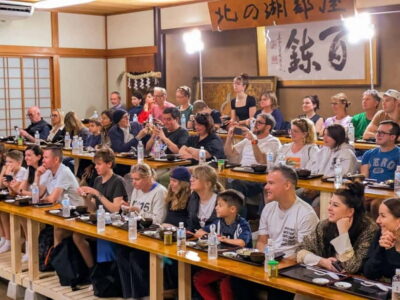
Do not picture a European-style late breakfast. The meal has been described as closer to lunch, with several traditional dishes. Set aside extra time if you choose it, since the morning practice itself may not finish at exactly the advertised time.
Brunch also works well as a cultural second act. You first see the wrestlers’ discipline and physical work, then sit down to eat in a more ordinary local setting. If your Tokyo itinerary is packed, you can skip it and continue sightseeing.
What the $95.77 price really buys
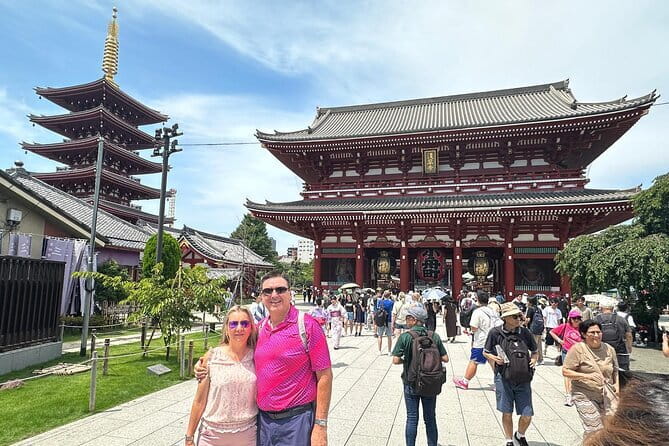
At $95.77, this is not a cheap two-hour activity. You are paying for access to a working sumo stable, an English-speaking guide, the practice viewing fee, the interaction, photos, and the Banzuke souvenir set.
The value is strongest if you care about access rather than spectacle. A tournament ticket gives you a bigger public event, but it may place you far from the ring and offers little help understanding what you are seeing. This experience brings you close and explains the rituals around the training.
The value is weaker if you only want a quick photo or a short performance. The practice can require a long quiet wait, the stable visit may run shorter than expected, and the guide’s role can feel limited on some departures.
A 95 percent recommendation rate and a 4.7 rating from 59 reviews suggest that most bookings have met expectations. Still, the lower scores point to two real concerns: price and duration. Read the terms as a cultural access experience, not as a three-hour stage show with nonstop action.
Getting the most from the morning
I would take these simple steps:
- Arrive early at Narihira Park and confirm the meeting point before leaving your hotel.
- Read the sumo guide or pre-reading material in advance.
- Wear clothing that allows you to sit quietly for an extended period.
- Bring a few thoughtful questions for the Q&A.
- Keep the rest of the morning open in case the practice runs long.
- Decide ahead of time if you want the optional brunch.
- If you are traveling with children, explain that the first part requires silence and patience.
The location in Sumida also makes it practical to pair the activity with nearby Tokyo sightseeing later in the day. The experience finishes at its starting point, and the morning schedule generally leaves time for other plans.
Who will enjoy this most
This is a strong choice for first-time visitors who want a closer look at a famous Japanese tradition without waiting for tournament dates. It suits adults, families with patient children, sports fans, photographers, and anyone interested in how professional athletes train.
It is also a good fit if you prefer a small cultural encounter to a polished attraction. You see real people doing difficult work in a place that serves a serious purpose.
I would hesitate if you dislike sitting quietly, need a guaranteed timetable, or expect a full match with tournament rules and ceremony. The practice is not competition, and the interaction is not identical for every person. Women should also know in advance that entering the ring is not permitted.
Should you book the Tokyo sumo morning practice?
Book it if you want to see real training at close range, learn the customs from a guide, and have a chance to speak with the wrestlers afterward. The combination of practice, Q&A, photos, and the Banzuke souvenir gives you much more than a distant glimpse at a tournament.
Skip it if $95.77 feels high for a variable-length morning or if you mainly want an active, family entertainment show. For the right visitor, this is one of Tokyo’s most unusual cultural experiences. Go prepared for quiet observation, flexible timing, and tradition on its own terms.
Free cancellation is available up to 24 hours before the start time for a full refund. Changes or cancellations made within 24 hours are not accepted for a refund.
FAQ
Where does the sumo morning practice begin?
The meeting point is Narihira Park near the multipurpose restroom, at 2-chōme-3-番 Narihira, Sumida City, Tokyo 130-0002, Japan.
Where does the experience end?
The activity ends back at the meeting point in Narihira.
How long does the sumo experience last?
The stated duration is approximately two hours and 30 minutes to three hours. The exact length can vary with the morning training schedule.
Is the tour conducted in English?
Yes. An English-speaking guide is included. Guides help explain sumo customs and translate questions during the interaction.
What is included in the price?
The price includes the English-speaking guide, the sumo morning practice viewing fee, and an official sumo souvenir set with a Banzuke and original folder.
Is brunch included?
No. Japanese brunch is optional and costs extra. A typical food cost mentioned for the meal is approximately ¥1,000 to ¥2,000, depending on what you order.
Can I take photos with the wrestlers?
Yes. The experience includes time for personal photos with the wrestlers after practice, subject to the stable’s rules and available time.
Can visitors enter the sumo ring?
Some male participants may be invited to enter the ring for a brief push or playful exchange. Women are not allowed into the ring because of long-standing sumo traditions.
Is the practice a real competition?
No. You watch a genuine morning training session. Practice bouts may take place, but this is not a formal tournament match.
What happens if I need to cancel?
You can cancel up to 24 hours before the experience start time for a full refund. Cancellations or changes made less than 24 hours before the start time are not accepted for a refund.
More Morning in Tokyo
More Sumo Experiences in Tokyo

More tours in Tokyo we've reviewed




Sumo Experiences, compared.
 ★ 4.8Tokyo: Sumo Show Experience with Chicken Hot Pot and a PhotoFrom $1032 hours
 ★ 4.8Tokyo: Sumo Show and Dining ExperienceFrom $7990 minutes - 2 hours
 ★ 5.0the SUMO showFrom $89
 ★ 5.0Tokyo Shinjuku Sumo Show & Experience with PhotoFrom $79
 ★ 4.8Tokyo: Sumo Show and Experience in ShinjukuFrom $691h 30m
 ★ 4.6Tokyo: Sumo Tournament Tour with Chair Seat TicketsFrom $141