
Reviewed · TSUKIJI MARKET TOURS
Tuna auction at Toyosu Market with qualified guide and early morning tour of Tsukiji Outer Market
Tokyo’s tuna auction is the star here. At Toyosu Market, you watch the action from the second-floor visitor aisle, safely above the wholesale floor, while a guide explains the people, prices, and process below. The early start is serious, but the auction gives you a rare look at the working side of Tokyo’s food culture.
I like having one private guide for your group, especially when the market layout and sales chain seem confusing. I also like the move from modern Toyosu to Tsukiji Outer Market, where you can taste ingredients, browse utensils, and ask for help choosing food souvenirs. The drawback is plain: $216.77 per person is a lot, particularly if you are comfortable navigating Tokyo on your own.
In This Review
- Key points
- Why the 5:30 am start can be worth it
- Toyosu Market: a working operation seen from above
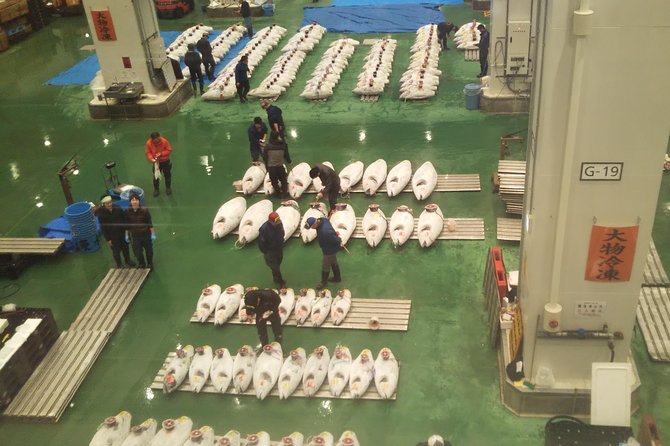
- What you actually see at the tuna auction
- The ride to Tsukiji changes the mood
- Tastings, tools, and food souvenirs
- A private guide, and what that really buys you
- Is $216.77 good value?
- Who should book this early market tour?
- Timing, meeting details, and practical advice
- My call: book it for the access, not the bargain
- FAQ
- What time does the tour start?
- Where does the tour meet?
- Where do I watch the tuna auction?
- Is transportation between Toyosu and Tsukiji included?
- Is breakfast included?
- Is this a private tour?
Key points
- The tuna auction begins your day at 5:30 am, with viewing from the second-floor visitor aisle.
- Guide Nobu is especially strong at explaining context, including how seafood moves through Japan’s sales chain.
- Toyosu and Tsukiji show two different sides of Tokyo’s food trade, one modern and wholesale-focused, the other built around small shops and prepared food.
- Free tastings at Tsukiji help offset the cost, but breakfast, sushi, and shopping are extra.
- Private touring keeps the pace focused, useful when you have only three hours and do not want to get lost.
- The upper platform is not the auction floor, so expect a clear view from above rather than a close-up encounter.
Why the 5:30 am start can be worth it
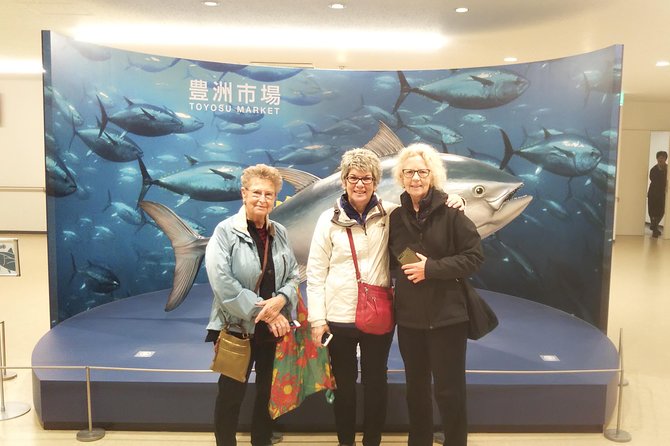
This tour is built around a simple trade: sleep less, see more. You meet at or around Shijo-mae Station beside Toyosu Market at 5:30 am, then head straight toward the auction viewing area. The timing matters because the tuna sale is an active working operation, not a staged show waiting for sightseeing groups.
If you care about seafood, markets, or the practical side of Japanese food, this is a fine way to begin a Tokyo day. You see enormous frozen tuna laid out for inspection, buyers assessing quality, and a tightly managed wholesale system that most people only encounter after the fish has reached a restaurant counter.
The auction viewing itself takes place from the second floor of the Fisheries Wholesale Building. You get a good view from the visitor aisle, but you are not standing beside the buyers on the ground. That distinction is important. The experience is more about watching and understanding than taking part.
The auction portion can occupy about an hour when you arrive during the active sale. That is a useful change from the old Tsukiji setup, where people could wait a long time for a much shorter viewing window. Here, the upper platform gives you time to watch the process without being in the way.
A few more Tokyo tours and experiences worth a look

Toyosu Market: a working operation seen from above
Toyosu is Tokyo’s newer wholesale market, and it feels purpose-built for large-scale trade. Your guide takes you to the Fisheries Wholesale Building, where the tuna auction is held, and can also point you toward the Fruit and Vegetables Building if you want to see more of the complex.
The market is not designed as a casual food hall. You should not expect to wander freely through every working area or sample your way through the wholesale floor. Instead, you follow the public route and use the viewing aisle to observe the action. That arrangement may feel less intimate than the old market, but it is safer and more orderly.
This is where a guide earns part of the fee. The auction has its own vocabulary, routines, and chain of sales. Without explanation, you may see men moving around large fish and wonder what is happening. With Nobu, who is repeatedly praised for his clear English and historical context, the scene becomes easier to follow.
He can explain how the fish moves through the Japanese seafood trade and why so many professional people are involved before tuna reaches a sushi restaurant. That background turns a short viewing stop into something more useful than a quick photo opportunity.
You also get help with the practical questions that arise in a market. Why are some tuna larger than others? Who is buying? What happens after the bidding? The supplied information does not promise a fixed script, so the conversation will depend on your interests and what is happening that morning. Still, the guide’s role is to make sense of the system around you.
What you actually see at the tuna auction
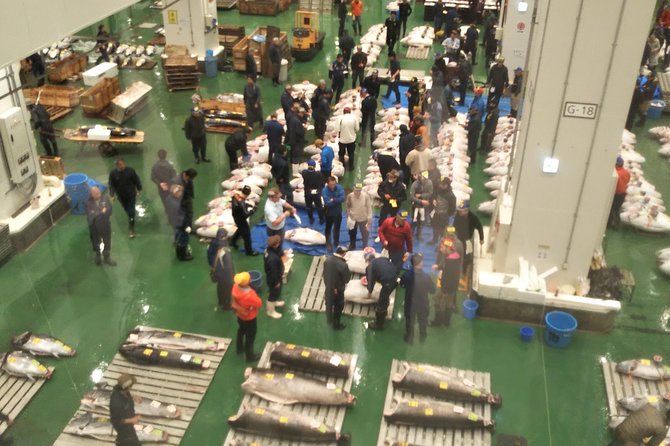
You will watch from above, through the designated visitor area. The viewpoint provides a broad look at the auction space and the tuna being handled below. It is a good angle for seeing the scale of the operation, though it does not give you the feeling of being on the trading floor.
That upper-level position is one of the tour’s strengths and one of its limitations. You have a safer, calmer place to observe, and you can stay focused for longer. On the other hand, anyone expecting to stand close to the auctioneers may find the experience more distant than imagined.
The auction is especially worthwhile for people who already like fish, sushi, or food production. If you are simply collecting famous Tokyo sights, the value is less certain. You will not be sampling tuna during the auction, and breakfast is not included.
Bring your attention rather than expecting entertainment every second. The pleasure is in noticing the size of the fish, the speed of the work, and the difference between a raw ingredient and the polished sushi meal it will later become.
The ride to Tsukiji changes the mood
After Toyosu, private transportation by bus takes you to Tsukiji Outer Market. This transfer is included, and it saves you from figuring out the route while you are tired from the early start. The ride also creates a useful contrast between Tokyo’s modern wholesale center and the older market district.
Tsukiji Jogai, or Tsukiji Outer Market, is not the same thing as the former inner wholesale market. The outer area is made up of shops selling ingredients, seafood, kitchen tools, and other food-related goods. It is also home to popular sushi restaurants and small places where you can continue eating after the tour.
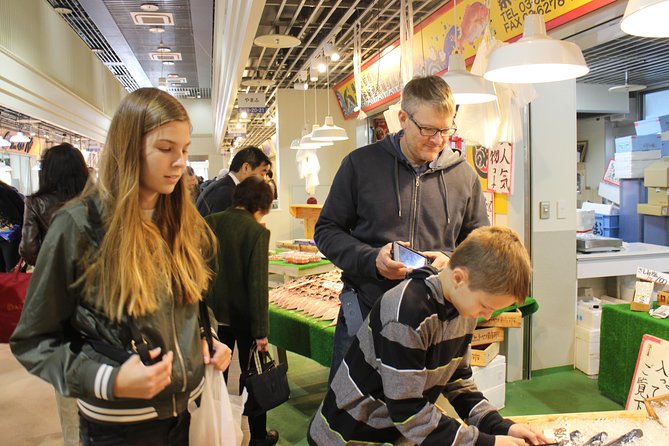
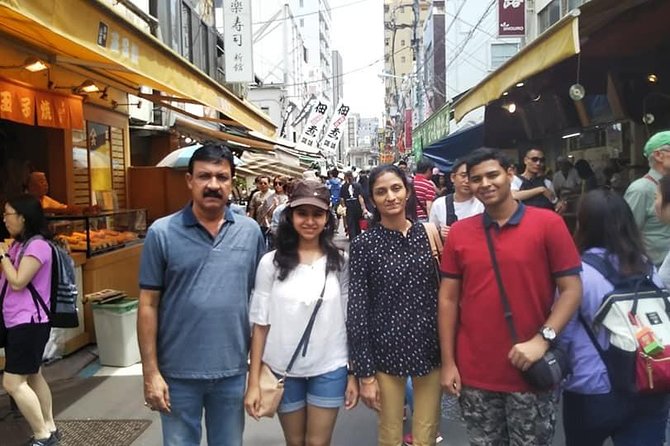
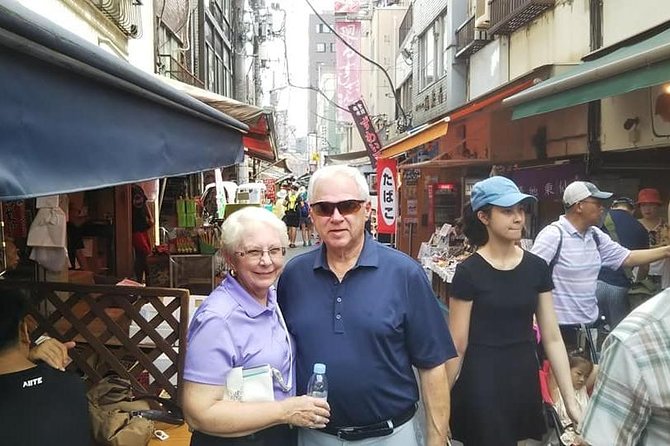
This stop is less structured than Toyosu. At Toyosu, you watch a specific event. At Tsukiji, you stroll, taste, compare, and decide what interests you. That freedom is enjoyable, but the narrow streets and many choices can also feel confusing, especially first thing in the morning.
Going early is a real advantage. The market is easier to enjoy before the crowds build, and you have a better chance of looking at shop displays without being pushed along. The tour gives you a guide at the point when you most need one: when you are trying to understand unfamiliar labels, choose between similar products, or decide which shops deserve your limited time.
Tastings, tools, and food souvenirs
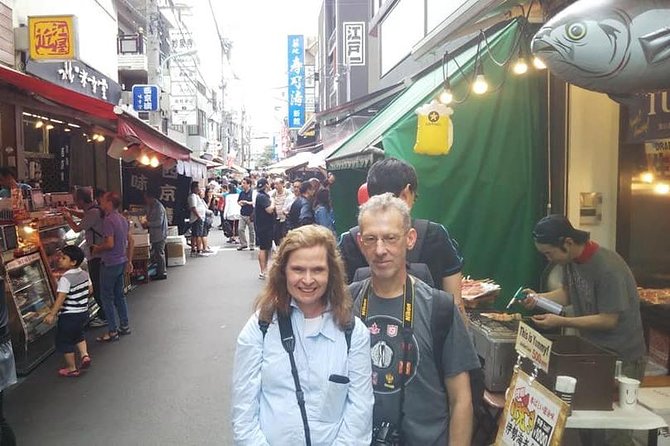
Free tastings are available at Tsukiji Outer Market, although the exact items can vary. Think of these as small samples while you browse, not a complete breakfast. If you want a proper meal, you pay separately.
The market is a good place to look for first-class ingredients from different parts of Japan. You might find seasonings, preserved foods, seafood products, or other items that travel well, but the supplied details do not guarantee particular products on a specific day. Your guide can help translate and suggest options suited to your tastes.
Kitchen utensils are another reason to linger. Tsukiji is not only about eating on the spot. You can browse tools and cooking goods that make useful souvenirs for anyone who cooks. A guide can explain what an item is used for and help you handle basic language questions.
I would plan your spending before you arrive. Shopping fees are not included, and a market like this makes it easy to buy several small items. The tour price covers the guide and the bus transfer, not your food or purchases.
A guide’s recommendations can also matter at breakfast. Nobu has directed people toward sushi restaurants that open early, and that advice can be especially handy after the formal tour ends. It is not a meal included in the package, so treat any restaurant suggestion as a helpful next step rather than part of the booked experience.
Other guided tours in Tokyo

A private guide, and what that really buys you
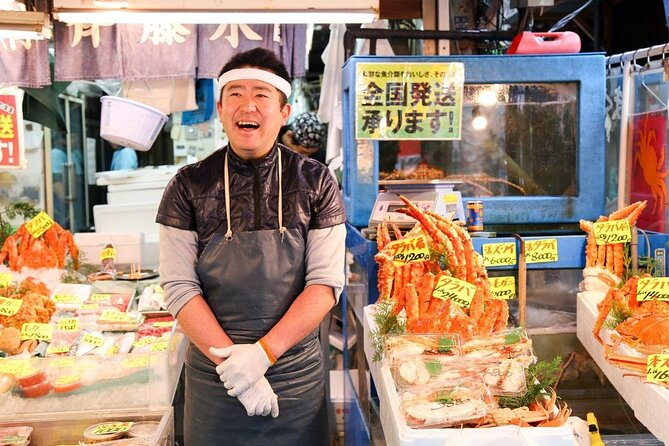
The tour is private, meaning only your group participates. That gives you more control than a large group outing. You can ask questions without waiting for ten other people, and the guide can spend more time on tuna, market history, translation, or shopping depending on your interests.
Nobu is the guide name most closely associated with this experience. His strengths are clear English, market knowledge, historical context, and practical help. He has also helped arrange a taxi when bad weather made the trip back difficult, showing that the guide’s value can extend beyond a prepared explanation.
Still, you should not confuse private with fully customized. The schedule remains short, and the main route is fixed: Toyosu first, then Tsukiji. You get personal attention within those stops, but you are not hiring a guide for a full day of Tokyo sightseeing.
The guide fee is the main reason the price reaches $216.77 per person. For a solo visitor, couple, or small group, that cost may feel high. For a group that wants an efficient morning and does not want to risk missing the auction, the calculation is different.
The tour provider itself acknowledges that confident visitors can see the market without a guide. That is fair. Toyosu has a public viewing route, and Tsukiji can be explored independently. The price pays for certainty, translation, context, and transport, not for exclusive access to the auction floor.
Is $216.77 good value?
I would judge the price by your priorities. If you want the cheapest way to see the tuna auction, this is not it. Admission to the market viewing areas is free, and you can save money by arranging your own transport and exploring Tsukiji alone.
If you value a smooth plan at an awkward hour, the price becomes easier to defend. The guide meets you early, leads you through Toyosu, explains the auction, transfers you to Tsukiji, and helps you use the remaining hour well. That is a meaningful service when Tokyo’s rail system, market buildings, and opening times are all part of the puzzle.
The private format improves the value for a family or group that can share the guide’s attention. It is harder to justify for someone who is already familiar with Tokyo, speaks Japanese, and enjoys independent market visits.
You should also remember what is not included. Breakfast, tastings beyond any free samples, and shopping come out of your pocket. There is no promise of a sushi meal as part of the tour, though you may receive a restaurant recommendation for after the official route.
Who should book this early market tour?
I would point this tour toward several kinds of people:
- You care about tuna, sushi, seafood, or Japanese food production.
- You want a guide to explain what you are seeing rather than simply point out the auction.
- You are uneasy about navigating a major market before sunrise.
- You want to combine Toyosu and Tsukiji in one organized morning.
- You prefer a private outing with your own group.
- You have limited Tokyo time and want a focused three-hour plan.
I would be more cautious if you dislike early mornings, want a relaxed breakfast tour, or expect to stand on the auction floor. The 5:30 am start is not a minor detail. You need enough energy to pay attention at Toyosu and still enjoy Tsukiji afterward.
The experience also suits repeat visitors who want a different side of Tokyo. One person who had not returned to the market in 15 years noted how much the auction has changed since the Tsukiji days. That comparison is useful: this is the modern version, not a recreation of the old market.
Timing, meeting details, and practical advice
The listed meeting point is Shijo-mae Station, at 6 Chome-3 Toyosu, Koto City. The start time is 5:30 am, so check your route carefully and allow enough time to arrive without rushing. The tour ends inside Tsukiji Outer Market, around Tsukiji 4-chome and part of 6-chome.
The total duration is about three hours. The market visits are roughly one hour each, with the bus ride between Toyosu and Tsukiji included. The remaining time is used for movement, orientation, and questions.
Wear shoes you can walk in and bring a layer suitable for a chilly early morning. The supplied details do not set a dress code or list special equipment, but the hour and the market setting make comfort more useful than style.
You receive booking confirmation at the time of reservation, and mobile tickets are supported. The activity is near public transportation, and most people can participate. It requires good weather, and a cancellation caused by poor weather offers either another date or a full refund.
For a normal cancellation, you can receive a full refund if you cancel at least 24 hours before the start time. Changes or cancellations inside that window are not accepted for a refund, so do not leave the decision until the night before.
My call: book it for the access, not the bargain
I would book this tour if the tuna auction is a top Tokyo goal and you want to understand the scene instead of simply locating the viewing platform. Nobu’s explanations, the private format, and the transfer to Tsukiji give the morning a clear shape.
I would skip it if you are a confident independent visitor who already knows Tokyo’s markets. The public viewing is free, and you can spend the savings on an excellent sushi breakfast or market shopping.
For most people, the decision comes down to one question: are you paying for admission, or are you paying to get there early, see the auction without confusion, and make sense of what is happening? If the second description fits you, this is a strong, specialized morning tour. If not, make your own way to Toyosu and save the money.
FAQ
What time does the tour start?
The tour starts at 5:30 am.
Where does the tour meet?
The listed starting point is Shijo-mae Station near Toyosu Market, at 6 Chome-3 Toyosu, Koto City, Tokyo.
Where do I watch the tuna auction?
You watch from the visitor aisle on the second floor of the Fisheries Wholesale Building at Toyosu Market.
Is transportation between Toyosu and Tsukiji included?
Yes. Private transportation by bus from Toyosu Market to Tsukiji Market is included.
Is breakfast included?
No. Breakfast and other meals are not included. You can buy food separately at Tsukiji, including sushi at restaurants that open early.
Is this a private tour?
Yes. Only your group participates in the private activity.
More Shopping Tours in Tokyo
More Guided Tours in Tokyo
More Tsukiji Market Tours in Tokyo
More tours in Tokyo we've reviewed


Tsukiji Market Tours, compared.
 ★ 5.0Tokyo Tsukiji Fish Market Food and Culture Walking TourFrom $99
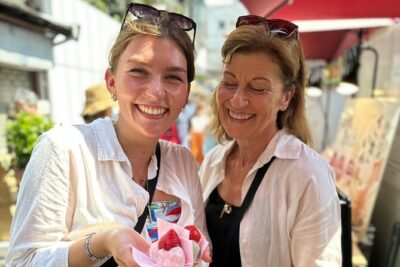 ★ 5.0Tokyo: Tsukiji Fish Market Food and Walking tourFrom $30
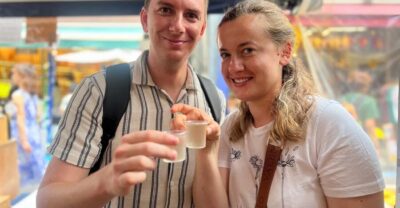 ★ 4.9Tokyo: Tsukiji Fish Market Guided Walking TourFrom $222 hours
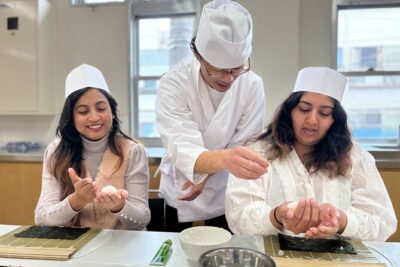 ★ 5.0Tokyo Sushi Making Class in Tsukiji with Professional ChefFrom $49
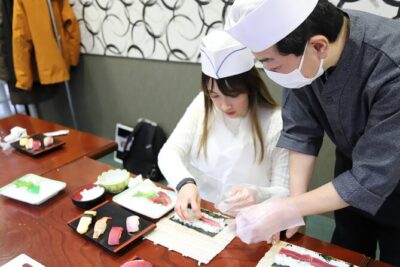 ★ 5.0Tsukiji Fish Market Guided Tour and Sushi Making with Pro ChefFrom $104
★ 4.7Tokyo: Tsukiji Fish Market Food and Culture Walking TourFrom $963 hours
★ 5.0Tsukiji Fish Market Guided Tour and Sushi Making with Pro ChefFrom $104
★ 4.7Tokyo: Tsukiji Fish Market Food and Culture Walking TourFrom $963 hours