
Reviewed · GO-KARTS
Tokyo: Shibuya and Shinjuku Streets Guided Go-Karting Tour
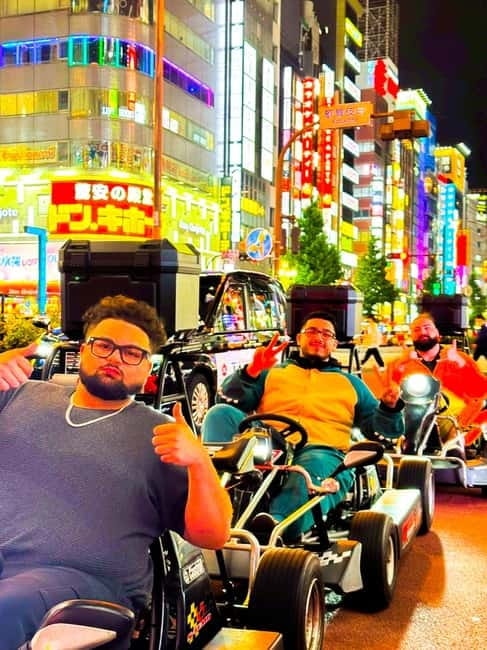
Tokyo traffic takes on a different feel from a go-kart. You roll past Shinjuku towers, Yoyogi Park, Harajuku, and Shibuya Scramble Crossing, with a guide leading the way and stopping for photos. It is less a sightseeing tour in the classic sense than a moving photo session with a real dose of city energy.
I like the small groups of up to eight and the free photos, which let you enjoy the ride instead of worrying about taking pictures. I also like the costume option. It is wonderfully silly, and driving through Tokyo dressed for the part is a big piece of the fun. The main caution is paperwork: an incorrect driving permit means no ride and no refund.
In This Review
- Key points
- Why this one-hour ride feels different from a normal Tokyo tour
- Starting near Shinjuku Central Park
- Yoyogi Park gives the route a calmer opening
- Shibuya Crossing is the main event
- Harajuku adds style and street character
- Kabukicho brings the neon back to Shinjuku
- The return through Shinjuku completes the city loop
- Costumes, photos, and the practical value of the package
- The driving license rules deserve serious attention
- Who will enjoy this, and who may not
- Timing, weather, and simple planning tips
- My verdict on this Shibuya go-kart tour
- FAQ
- How long does the Tokyo go-kart tour last?
- Where does the tour start?
- Is hotel pickup included?
- Which areas does the route visit?
- Are photos included?
- Are costumes included?
- What driving documents do I need?
- What if I hold a license from Switzerland, Germany, France, Belgium, Monaco, or Taiwan?
- Can the tour be cancelled because of weather?
Key points
- Shibuya Crossing from the driver’s seat: See one of Tokyo’s best-known intersections as part of a guided street route.
- A compact route with plenty of variety: In about an hour, you pass Shinjuku, Yoyogi Park, Harajuku, Shibuya, Kabukicho, and the Tokyo Metropolitan Government Building.
- Free photos from your guide: Guides take action shots and photos at stops, including evening images when the city lights are on.
- Costumes and headwear are included: Pick a playful outfit before setting off, if you want to make the ride more memorable.
- A proper safety briefing comes first: The Shinjuku briefing lasts 15 minutes and is designed to help nervous drivers feel ready.
- The driving permit rules are strict: Bring the correct original documents, not simply a driving license card or a digital copy.
Why this one-hour ride feels different from a normal Tokyo tour
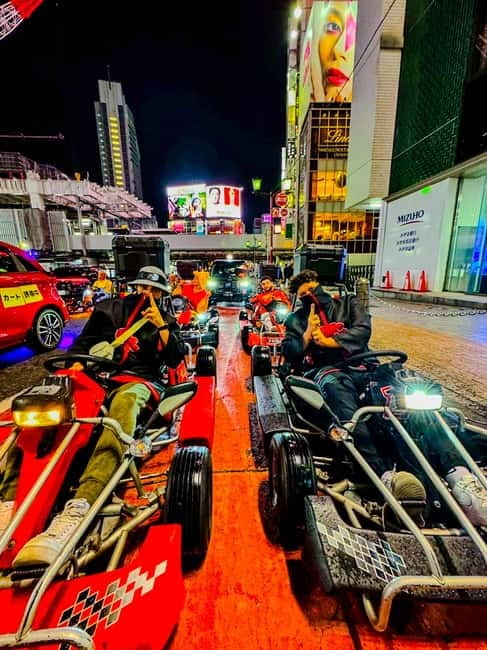
Tokyo is easy to admire from a train, observation deck, or pavement. A go-kart puts you in the middle of the street scene, where traffic lights, tall buildings, and large intersections become part of the experience.
You are not driving a private route through quiet back streets. You are moving through central Tokyo roads with a guide in front of you. That gives the outing a sense of occasion, but it also means you must follow instructions and remain comfortable in city traffic.
The activity costs about $72 per person. That is not cheap for one hour, yet the price includes the go-kart, guide, costumes, photo stops, and free photos. If you see it mainly as transportation, it is poor value. If you want a short, unusual activity that combines driving, sightseeing, and keepsake pictures, the cost makes more sense.
The small-group format matters here. With no more than eight participants, the guide can watch the group more closely than on a large coach tour. Recent departures have included guides such as Shingo, praised for taking plenty of pictures and helping nervous drivers settle in. Your guide may be different, but the role is the same: lead the route, explain what to do, and keep the group together.
A few more Tokyo tours and experiences worth a look

Starting near Shinjuku Central Park
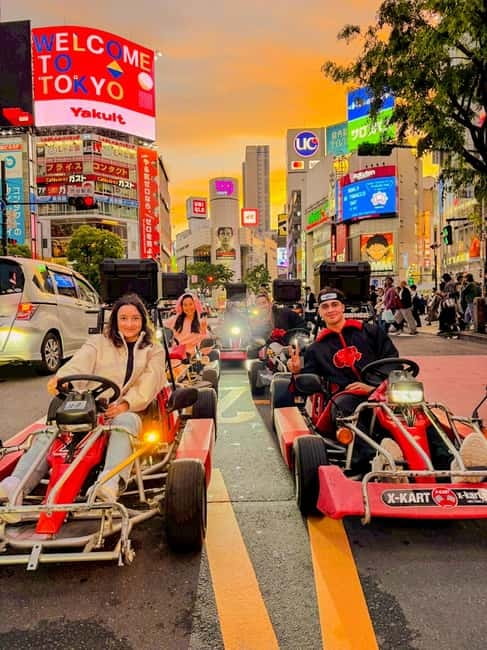
The meeting point is the provider’s store at 4-chōme-18-2 Nishishinjuku, near Shinjuku Central Park and behind The Knot Tokyo Shinjuku. It is roughly a 20-minute walk from Shinjuku Station, so allow time to find the shop and arrive without rushing.
The tour begins with a 15-minute safety briefing in Shinjuku. This is not a detail to brush aside. Some people arrive excited but unsure about driving a kart on Tokyo streets, and the briefing gives you time to understand the controls and expectations before leaving.
That extra explanation is especially useful if someone in your party is nervous. Recent departures have included first-time and hesitant drivers who became more comfortable once the guide had explained the basics. Still, this is an active driving experience, not a ride where you sit back while someone else handles the vehicle.
You must arrive sober. Anyone considered intoxicated will be refused participation without a refund. Groups may also be split into smaller units for safety, even if you booked together.
Yoyogi Park gives the route a calmer opening
After leaving the shop, the route heads toward Yoyogi Park. The park offers a change from the dense blocks around Shinjuku and gives you one of the more relaxed stretches of the drive.
You should think of this as a scenic pass and photo opportunity rather than a long park visit. The schedule is only one hour, and the route keeps moving. Your guide may stop for pictures, but you will not have time for a full walk through the park.
That mix of open greenery and city streets helps the ride feel varied. You begin with the broad contrast of parkland and high-rise Tokyo, then move toward the louder, more concentrated parts of the city.
Shibuya Crossing is the main event
The route’s headline moment is Shibuya Scramble Crossing. This is the place most people picture when they imagine central Tokyo: several streams of pedestrians crossing at once, large signs above the streets, and a constant flow of vehicles around the intersection.
Seeing it from a go-kart gives you a memorable angle. You are not simply standing behind a railing with a phone in hand. You approach as part of a guided vehicle group, then take in the crossing and surrounding streets from the road.
The crossing is also where expectations need a little adjustment. The activity does not turn the intersection into a private photo set, and you should not expect to stop wherever you like. You follow the guide and obey traffic rules. The attraction is the feeling of passing through a famous part of Tokyo, not the promise of unlimited time at the junction.
The guide takes pictures during the route and at selected stops. That is a real advantage because it is hard to pose, drive, and safely handle a phone at the same time.
Harajuku adds style and street character
From Shibuya, the route continues through Harajuku. This gives you another side of central Tokyo, with a youthful shopping district and a different visual mood from Shinjuku’s office towers or Shibuya’s giant intersection.
Harajuku is a good place for the costumes to make sense. You are already moving through a district associated with fashion and bold personal style, so a themed outfit feels less out of place than it might on a regular walking tour.
You will not get a long shopping stop here. The tour is built around a moving route, scenic driving, and short photo pauses. If you want time for Takeshita Street, cafés, or Meiji Shrine, plan those separately before or after the kart ride.
A few more Tokyo tours and experiences worth a look

Kabukicho brings the neon back to Shinjuku
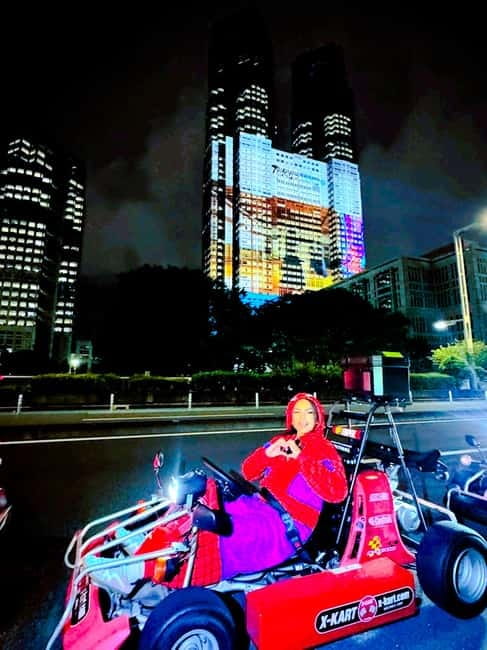
The route then turns toward Kabukicho, the entertainment district of Shinjuku. This is where the city’s signs, towers, and nighttime atmosphere can make the ride particularly photogenic.
An evening departure can be a smart choice. One participant who drove at 6 p.m. described getting both daylight and illuminated city views. Another noted that a night ride would have been even better after taking a daytime slot. Exact light levels depend on the season and your starting time, but booking around dusk gives you the best chance of seeing both versions of Tokyo.
Kabukicho also shows why this is not a gentle park ride. You are driving through a major urban district, so you need to stay alert and keep your attention on the guide and road. The colorful surroundings are part of the appeal, but safety comes first.
The return through Shinjuku completes the city loop
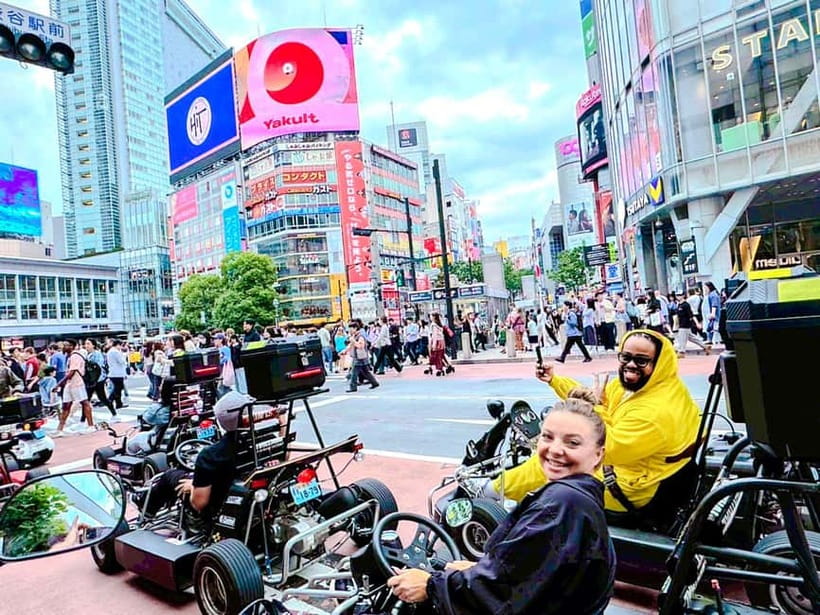
The final section passes back through Shinjuku, with scenic views along the way, and returns to the same Nishishinjuku shop. The route also includes the Tokyo Metropolitan Government Building area, adding a recognizable Shinjuku landmark to the drive.
The loop is well judged for a one-hour activity. You see several districts without spending most of the time on a transfer to a distant attraction. It also gives you a quick sense of how close, yet different, Tokyo’s major neighborhoods can feel.
Do not expect a detailed historical explanation at each stop. The guide’s main job is to manage the drive, lead the group, and take photos. You get brief sightseeing context and visual variety rather than a long lecture.
Costumes, photos, and the practical value of the package
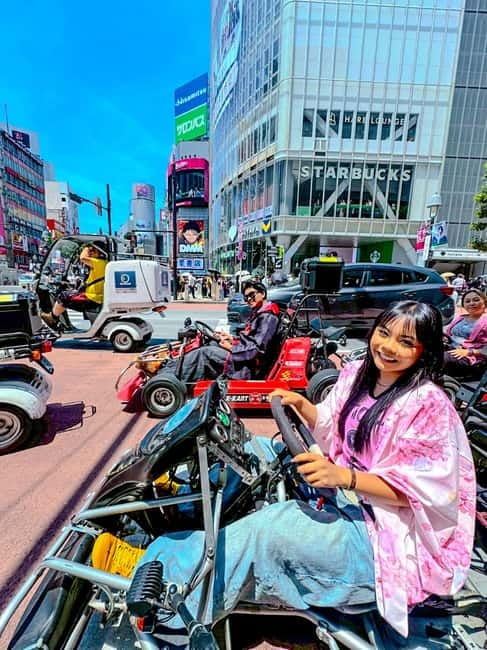
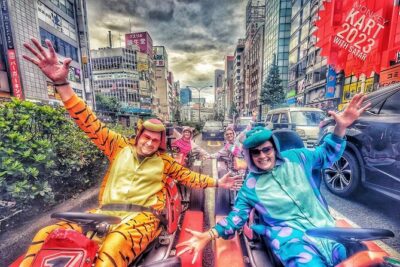
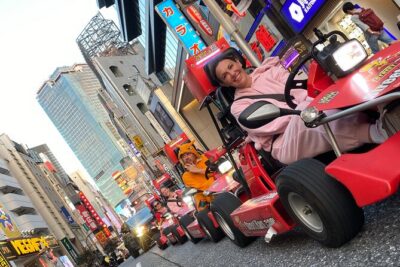
Free costumes are included, along with headwear. I would use them unless you strongly dislike dressing up. The outfits turn an ordinary photo into a clear memory of the activity, and several recent participants singled out the costume as part of the adventure.
The guide’s photography is one of the strongest parts of the package. You get photos while driving and at stops, then receive the images from the operator. Guides such as Shingo have been specifically noted for taking many pictures, while other outings have been praised for beautiful shots and careful attention to the group.
The photos also solve a practical problem. You cannot safely take your own pictures while driving, and stopping to ask strangers would break the rhythm of the tour. Having a guide handle this means you can focus on the road and still go home with images of the experience.
Gloves have also been provided on cold outings, which is a useful touch in winter. Still, dress for the weather. The tour requires suitable conditions, and the ride is outdoors.
The driving license rules deserve serious attention

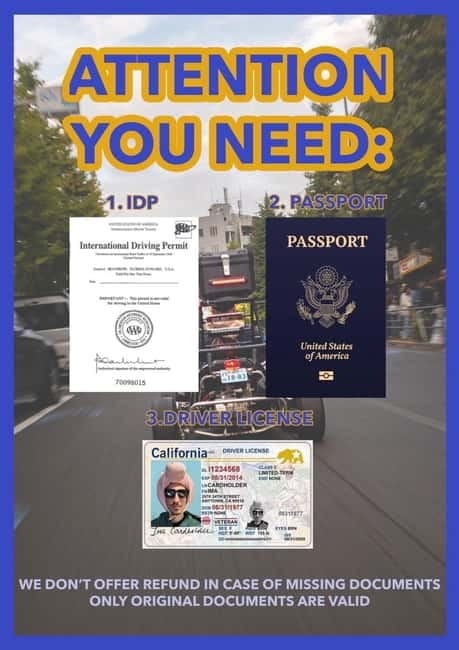
This is the most important booking issue. To drive legally in Japan, you generally need:
- Your original domestic driving license
- An International Driving Permit in booklet form, issued by your local authority under the 1949 Geneva Convention
- Your passport
All three documents are required. A phone image, photocopy, or license alone is not enough.
The offer is not available to holders of certain permits, including permits from China, Indonesia, Mexico, Brazil, Qatar, Saudi Arabia, and Bahrain. The supplied requirements also identify Pakistan and Kuwait among permits that are not valid in Japan. Check the Japan Automobile Federation guidance before paying for the activity, especially if your country’s permit system is unclear.
Drivers from Switzerland, Germany, France, Belgium, Monaco, and Taiwan need a different document set: the original domestic driving license, an official Japanese translation from an authorized organization, and a passport. You do not use the standard IDP route for these countries.
This is your responsibility to verify before arrival. If your documents are wrong, the operator can refuse the ride and does not provide a refund. It is worth checking early rather than discovering the problem at the shop.
Who will enjoy this, and who may not
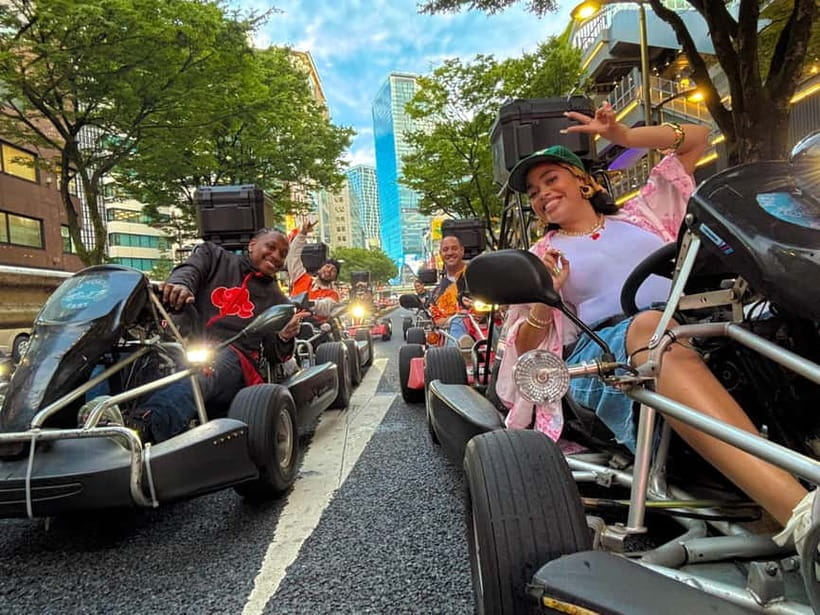
I would recommend the tour to you if you want an unusual Tokyo activity, enjoy being outdoors, and are comfortable operating a vehicle in city traffic. It works especially well for couples, friends, and small groups who want photos that feel more playful than standard sightseeing snapshots.
It also suits repeat visitors. If you have already seen Shibuya from the pavement, this gives you a new way to connect several familiar districts in one short outing.
The experience may not suit you if you want a slow cultural tour, dislike costumes, or feel uneasy driving around busy streets. The route is guided, but it is still a real driving activity. You should be ready to pay attention, follow directions, and accept that traffic conditions shape the pace.
Families and groups should also confirm that every participant meets the driving requirements. The supplied information does not give a minimum age, height, or weight rule, so ask the operator directly if those details matter for your party.
Timing, weather, and simple planning tips
The ride lasts one hour, including the 15-minute briefing. Starting times vary, so check the available slots when booking. An early evening departure can be a strong choice if you want a blend of daylight and Tokyo after dark.
The activity does not include hotel pickup or drop-off. Plan your own route to the store near Shinjuku Central Park, and allow extra time from Shinjuku Station because the walk is about 20 minutes.
Poor weather can cancel the tour. In that case, you can receive a full refund or reschedule. If the forecast looks uncertain, keep your schedule flexible and avoid placing a major reservation immediately afterward.
Cancellation is free up to 24 hours before departure. You can also reserve now and pay later, which helps if you are still arranging the rest of your Tokyo plans.
My verdict on this Shibuya go-kart tour
At $72, this is a specialty activity rather than a budget way to see Tokyo. You are paying for the novelty of driving through central districts, the small group, the guide’s support, costumes, and a set of photos you could not easily create on your own.
I think it earns its price for the right person. The route covers a lot in one hour, the photo service is useful, and the combination of Shinjuku, Harajuku, Shibuya, and Kabukicho gives you strong visual variety. The 4.5 rating from 161 bookings also points to a consistently well-liked experience, with guide friendliness, patience, safety, and photography receiving the most praise.
Book it if you want a lively memory and meet every license requirement. Choose an evening slot if city lights matter to you, arrive early for the briefing, and use the costume. Skip it if you want quiet sightseeing or cannot produce the exact Japanese driving documents.
FAQ
How long does the Tokyo go-kart tour last?
The activity lasts one hour, including a 15-minute safety briefing in Shinjuku.
Where does the tour start?
It starts at the activity provider’s store at 4-chōme-18-2 Nishishinjuku, near Shinjuku Central Park and behind The Knot Tokyo Shinjuku.
Is hotel pickup included?
No. You must make your own way to the provider’s store, which is about a 20-minute walk from Shinjuku Station.
Which areas does the route visit?
The route includes Shinjuku, Yoyogi Park, Shibuya Scramble Crossing, Harajuku, Kabukicho, and the Tokyo Metropolitan Government Building area before returning to the store.
Are photos included?
Yes. A professional tour guide takes photos during the ride and at photo stops, and the photos are included.
Are costumes included?
Yes. Free costumes and headwear are available as part of the experience.
What driving documents do I need?
You need your original domestic driving license, a booklet-type International Driving Permit issued under the 1949 Geneva Convention, and your passport. All three documents are required.
What if I hold a license from Switzerland, Germany, France, Belgium, Monaco, or Taiwan?
You must bring your original domestic driving license, an official Japanese translation from an authorized organization, and your passport. All three documents are required.
Can the tour be cancelled because of weather?
Yes. The tour requires good weather. If the operator cancels because of poor conditions, you can receive a full refund or reschedule.
More Guided Tours in Tokyo


More Shibuya Tours in Tokyo
More Shinjuku Tours in Tokyo

More tours in Tokyo we've reviewed


Go-Karts, compared.
 ★ 5.0Flagship 2-Hours Official Street Go-Kart Tour – Tokyo Bay ShopFrom $642 hours to 2 hours 30 minutes (approx.)
 ★ 5.0Official Street Go-Kart in ShibuyaFrom $76
 ★ 5.0Official Street Go-Kart Tour – AkihabaraFrom $61
 ★ 5.0Tokyo Go Kart: Asakusa, Skytree, and Akihabara **IDP MUST**From $99
 ★ 5.0Shibuya Official Street Go-Kart in Shibuya AnnexFrom $69
 ★ 4.7Tokyo: Asakusa, Skytree & Akhihabara Go-Kart City ExperienceFrom $961h 10m