
Reviewed · TSUKIJI MARKET TOURS
Inside Tokyo’s Kitchen: Tsukiji Market, Food & Culture Tour
Tokyo’s Tsukiji Outer Market is easiest to enjoy with someone who knows which narrow lane to take and what each unfamiliar food means. This three-hour morning walk mixes sushi, sashimi, tamagoyaki, sweets, and local snacks with brief visits to two shrines and Kabuki-za.
I like the six-person limit, which gives you room to ask questions and stay close to your guide. I also like the chance to taste more than raw fish, including fish cake, omelette, wagashi sweets, and unusual market snacks. The main drawback is that the food plan is not fully fixed, so the amount and freshness of each tasting can vary.
In This Review
- Key points to know before booking
- Why a guide helps at Tsukiji Outer Market
- Starting at Kabuki Inari Shrine and Kabuki-za
- Two hours among seafood, snacks, and narrow lanes
- What the food tastings are really worth
- Namiyoke Inari Shrine gives the tour a quiet finish
- Guides make the biggest difference
- What to wear, eat, and bring
- Who will get the most from this morning walk
- Booking, cancellation, and practical value
- Should you book the Tsukiji food tour?
- FAQ
- Where does the Tsukiji food tour begin?
- What time does the tour start?
- Where does the tour end?
- How long does the experience last?
- How many people can join the tour?
- What food is included?
- Are drinks and extra food included?
- Can vegetarians and vegans join?
- What happens if I need to cancel?
Key points to know before booking
- Meet beside Kabuki-za at 8:00 am: The tour begins at Kabuki Inari Shrine, not at Tsukiji Station.
- Expect a tasting walk, not a full restaurant meal: Sushi, sashimi, snacks, sweets, and other samples are included, but drinks and extra food cost more.
- Groups are capped at six: This is useful in tight market lanes and makes translation and food questions easier.
- The tasting list can change: Past food stops have included tuna in several cuts, sea eel roll, tamagoyaki, Satsumaage, wagashi, white strawberries, dried anchovies, sake, and real wasabi.
- Wear sturdy closed-toe shoes: Market floors can be wet, and sneakers are recommended.
- Vegetarians and vegans can join: Options are available, but the selection is limited.
Why a guide helps at Tsukiji Outer Market
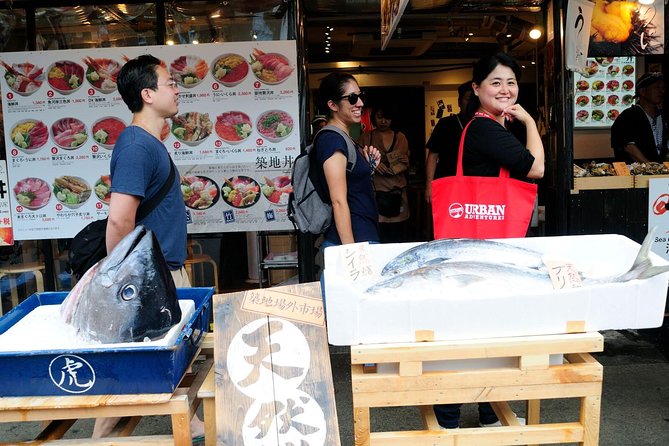
Tsukiji is famous, but fame does not make a market easy to read. Its lanes can feel crowded and confusing, with seafood counters, produce stalls, prepared foods, sweets, cooking tools, and small restaurants competing for your attention. On your own, you could easily spend an hour seeing plenty and understanding little.
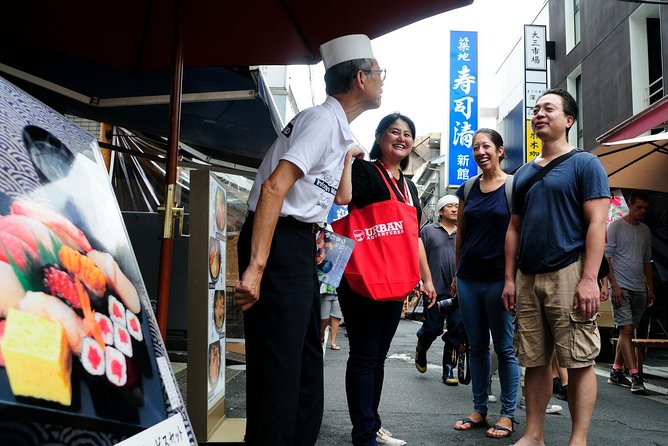
A local guide gives the market a useful frame. You can ask what kind of fish you are seeing, how it is prepared, and which foods are meant to be eaten on the spot. If a seller’s explanation is only in Japanese, your guide can help translate.
The small group matters here. Six people is still enough for a friendly shared outing, but it is far more manageable than a large food tour. You can hear explanations in a narrow lane, keep moving when the market gets tight, and ask for help choosing between unfamiliar foods.
This is also a culture tour, not simply a succession of bites. The route connects the market to Kabuki and Shinto shrines, giving you a little context for the neighborhood before and after the food stops.
A few more Tokyo tours and experiences worth a look



Starting at Kabuki Inari Shrine and Kabuki-za
The meeting point is Kabuki Inari Shrine, in front of Kabuki-za at 4 Chome-12 Ginza. The start time is 8:00 am, so allow enough time to find the correct shrine and arrive early. The market area has several stations and entrances, and one late participant missed the group after walking past the meeting point.
The first stop lasts about 10 minutes. Your guide introduces Kabuki, Japan’s distinctive combination of drama and dance, and points out the striking Kabuki-za building. Kabuki-za is a fitting starting point because it places the food market within a larger picture of Tokyo culture.
This opening is brief, so do not expect a performance or a full theater visit. Its value is orientation. You begin near Ginza, learn what the building represents, then walk toward Tsukiji with a cultural reference point already in place.
The meeting instructions identify the shrine clearly, but Tokyo’s streets can still be tricky. Save the location on your phone, check the mobile ticket before leaving your hotel, and do not assume Tsukiji Station is the meeting point. The tour ends near Tsukiji, not where it begins.
Two hours among seafood, snacks, and narrow lanes
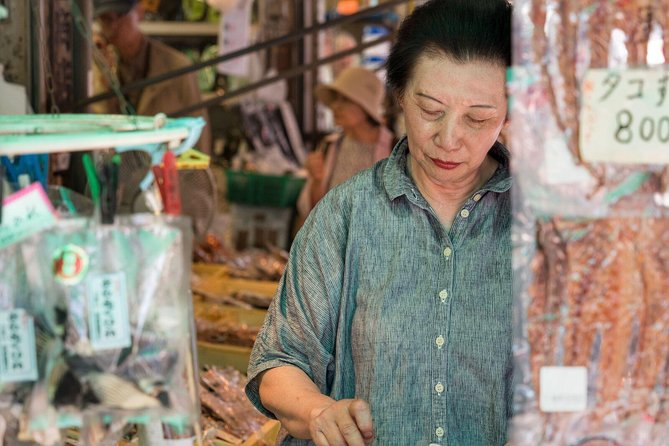
Most of the experience takes place in Tsukiji Outer Market. The walk lasts about two hours, giving your guide time to point out seafood, vegetables, prepared foods, and sweets without rushing from one formal stop to the next.
The outer market is the practical part of Tsukiji that remains open for public food shopping and dining. You are not simply looking at displays. You will learn how foods are used, what you are tasting, and how Japanese food traditions connect to ordinary market shopping.
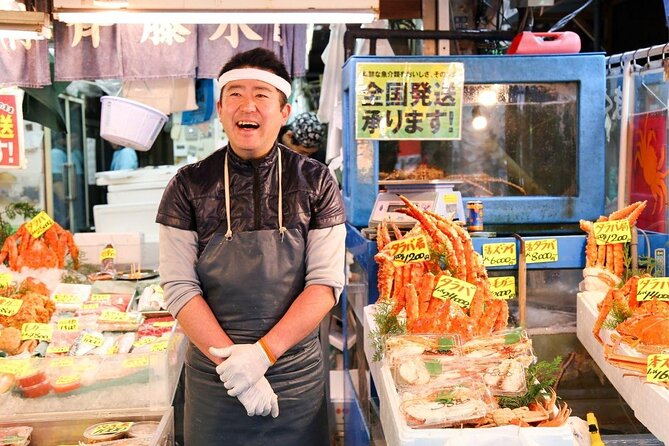
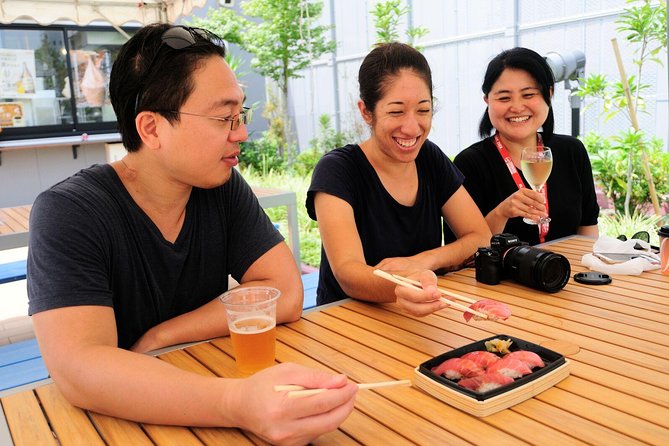
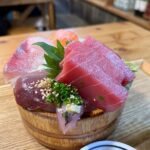
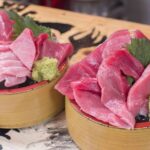
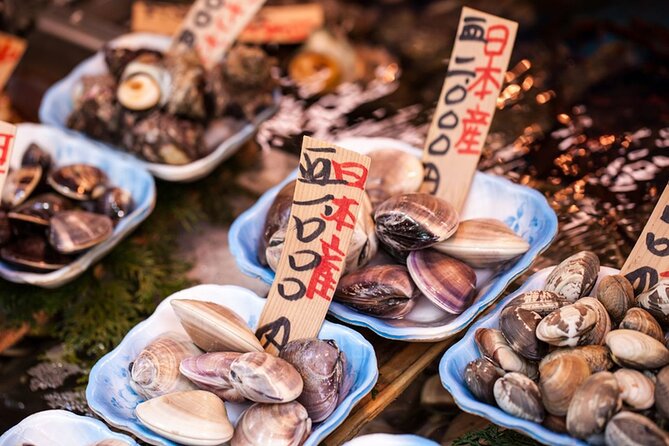
Fish lovers will have the easiest time here, but you do not need to be a seafood expert. The tasting can include several kinds of tuna, and one outing included lean, mid-fatty, and fatty cuts. Another included tuna nigiri and a sea eel roll. If you are curious about how texture and fat change from one cut to another, this is a useful chance to compare them side by side.
Some food experiences have been especially hands-on. One guide, Yuri, brought real wasabi and a tool for grinding it, allowing the group to taste freshly grated wasabi with sushi. That is a more revealing experience than simply receiving a dab of green paste beside a plate.
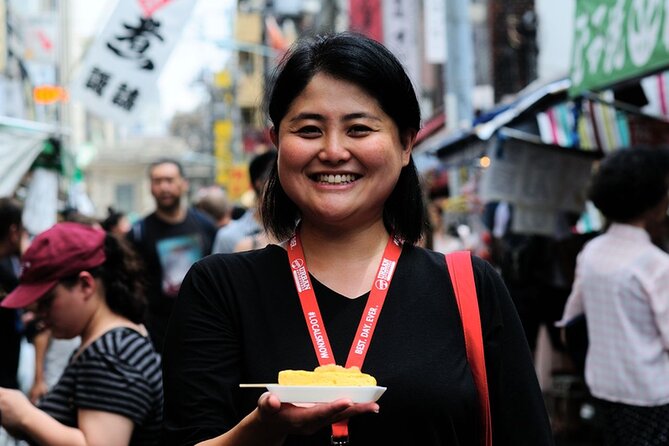
Other possible tastings include Satsumaage fish cake, tamagoyaki, tuna sashimi, fried tuna, dried anchovies, fish-broth omelette on a stick, and small rice-based sweets. You might also encounter white strawberries, sake, or a variety of wagashi, the carefully shaped Japanese sweets included in the tour description.
The exact menu is the point that needs the clearest warning. One outing included packaged tuna sushi and fried tuna from an indoor shop, while the person taking the tour had expected sushi made directly in front of them at the market. The operator responded by saying it would review the difference between packaged and freshly prepared food with the guide.
So, book this as a guided market tasting rather than a guaranteed sushi-counter meal. If freshly made sushi is your main reason for booking, ask about the current food plan before you go. The experience may include excellent fish and several interesting snacks, but the format can vary with availability and timing.
What the food tastings are really worth
At $83.35 per person, this is not the cheapest way to eat around Tsukiji. You are paying for food, translation, route planning, and three hours of a guide’s time. The value is strongest if you want help understanding what you are buying and prefer several small tastes to choosing one meal alone.
The tastings can also add up in a useful way. Instead of committing to a large serving of one dish, you may sample sushi, sashimi, omelette, fish cake, sweets, and dried seafood. That gives you a broad first look at Japanese market food.
Do not assume the price covers everything you may want. Drinks and additional food are not included, and gratuities are separate. Some past outings included a wide range of food, while another had less food than expected and served it at an awkward point in the walk.
The best approach is to eat lightly before the tour, bring an open mind, and treat each sample as part of a guided lesson. You may finish with a full belly, but the amount is not presented as a fixed breakfast menu.
Namiyoke Inari Shrine gives the tour a quiet finish
After the market walk, the route reaches Namiyoke Inari Shrine. The shrine visit takes about 10 minutes, then the guide walks with you for roughly 10 minutes toward the nearest station.
This pause changes the pace. Tsukiji is full of commerce and food, while the shrine offers a calmer place to think about the traditions tied to the neighborhood. The tour description highlights the shrine’s history and quiet atmosphere, but the visit remains short, so consider it a compact cultural stop rather than a full temple tour.
The endpoint is listed as Tsukiji Outer Market, near Tsukiji Station on the Hibiya Tokyo Metro Line. This is convenient if you want to continue exploring, eat more, or head to another part of Tokyo afterward.
The ending is less polished if you expect to return to the starting point. You begin beside Kabuki-za in Ginza and finish near Tsukiji Station. For most sightseeing plans, that is an advantage, since you do not have to retrace the route.
A few more Tokyo tours and experiences worth a look



Guides make the biggest difference
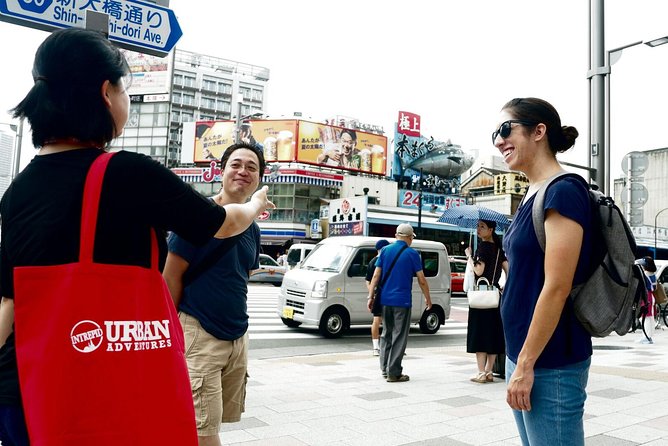
The strongest part of this experience is the guide. Aya has been praised for explaining different varieties of fish and arranging tastings such as Satsumaage, tamagoyaki, tuna sashimi, tuna nigiri, and sea eel roll. Yuri added real wasabi and a grinding tool. Shino led a food-focused walk that included market explanations and the chance to see a large tuna being prepared for sushi.
Mihari has been described as especially generous with time and questions, while Koz led a route that included white strawberries, fish-broth omelette, dried anchovies, sweet rice balls, sashimi, and sake. These examples show how much personality and food knowledge can shape the morning.
You should not assume you will have one particular guide, since the booking information does not promise a named guide. Still, the repeated praise for individual guides points to the experience’s main strength: a good guide can turn unfamiliar stalls into a clear, memorable food lesson.
The guide also helps with manners and movement. Market lanes are working spaces, not just photo backdrops. You will benefit from knowing when to stop, where to stand, and how to taste without blocking the people who shop and work there.
What to wear, eat, and bring
Wear closed-toe shoes, preferably sneakers. The information specifically warns that inner market floors can be wet. This is practical advice, not a fashion suggestion. You will be walking through food-handling areas, so sturdy shoes are the sensible choice.
Arrive hungry but not completely empty. The tour may include enough bites to make you full, especially if your group receives a wide range of tastings. At the same time, food amounts can differ, so it is hard to predict exactly how much you will eat.
Vegetarian and vegan options are available, but limited. If you avoid fish, expect fewer choices and consider contacting the provider before booking if food is the main purpose of your visit. The tour is child-friendly, and children under six can join free, but the narrow lanes and wet floors still call for close supervision.
The mobile ticket is convenient, and confirmation is sent at booking. You are near public transportation, with the tour ending close to Tsukiji Station. The experience lasts about three hours, but leave extra time afterward if you plan to shop or have a sit-down meal.
Who will get the most from this morning walk
I would recommend this tour to a first-time visitor who wants a clear introduction to Tsukiji without having to research every stall. It suits people who like to ask questions, compare unfamiliar foods, and learn why a dish matters rather than simply taking photographs.
It is also a good fit for small families and couples who prefer a personal guide. The six-person limit helps keep the outing social without turning it into a crowd.
You will get less value if you already know Tsukiji well, speak Japanese comfortably, or mainly want one large sushi breakfast. A self-guided visit may cost less if you are happy to choose and pay for each bite yourself.
Fish enthusiasts should be pleased, but the range of sweets and cooked foods makes the tour broader than a seafood crawl. The wagashi tasting, tamagoyaki, fish cake, and fruit can make the experience more accessible if raw fish is not your favorite.
Booking, cancellation, and practical value
The tour costs $83.35 per person and is commonly booked about 38 days ahead. That booking pattern suggests you should reserve early if your Tokyo dates are fixed, particularly because the group limit is six.
Free cancellation is available if you cancel at least 24 hours before the local start time. Changes or cancellations made inside that window are not accepted for a refund.
The high overall rating, 4.9 from 162 ratings, and 98 percent recommendation mark indicate strong satisfaction, but they do not remove the food variation issue. The most useful question to settle before booking is not simply how much food you receive. It is what kind of food service is planned on your date: freshly prepared sushi, purchased samples, restaurant seating, or a combination.
Should you book the Tsukiji food tour?
Book it if you want a compact, guided introduction to Tsukiji, especially if Japanese food terms and market customs are new to you. The best moments can be wonderfully specific: comparing tuna cuts, grinding real wasabi, tasting tamagoyaki, or learning about a snack you would have walked past.
Skip it if you want complete control over your menu or a guaranteed restaurant-style sushi meal. The food selection is not fully fixed, and drinks and extra purchases are separate.
For most first visits, I think the small group, guide translation, cultural stops, and broad tasting range make the $83.35 worthwhile. Just arrive at Kabuki Inari Shrine early, wear sneakers, and treat the menu as flexible rather than promised dish by dish.
FAQ
Where does the Tsukiji food tour begin?
It begins at Kabuki Inari Shrine in front of Kabuki-za, at 4 Chome-12 Ginza, Chuo City, Tokyo 104-0061.
What time does the tour start?
The tour starts at 8:00 am.
Where does the tour end?
It ends at Tsukiji Outer Market near Tsukiji Station, which is served by the Hibiya Tokyo Metro Line.
How long does the experience last?
The tour lasts approximately three hours. The Kabuki-za stop takes about 10 minutes, the Outer Market walk takes about two hours, and the Namiyoke Inari Shrine visit takes about 10 minutes, followed by a walk toward the station.
How many people can join the tour?
The maximum group size is six travelers.
What food is included?
Included tastings can feature freshly made sushi, sashimi, local snacks, and wagashi sweets. Past tastings have included tuna, tamagoyaki, Satsumaage, sea eel roll, dried anchovies, white strawberries, and other foods. The exact selection can vary.
Are drinks and extra food included?
No. Drinks and additional food are not included in the tour price.
Can vegetarians and vegans join?
Yes. Vegetarian and vegan options are available, but the selection is limited.
What happens if I need to cancel?
You can receive a full refund if you cancel at least 24 hours before the experience start time. Cancellations or changes made less than 24 hours before the start are not accepted for a refund.
More Shopping Tours in Tokyo

More Food Experiences in Tokyo
More Tsukiji Market Tours in Tokyo

More tours in Tokyo we've reviewed











Tsukiji Market Tours, compared.
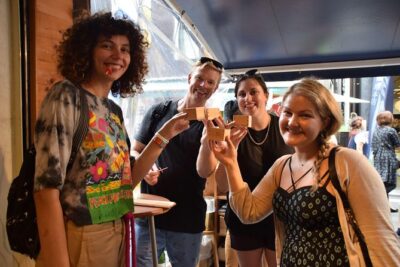 ★ 5.0Tokyo Tsukiji Fish Market Food and Culture Walking TourFrom $99
 ★ 5.0Tokyo: Tsukiji Fish Market Food and Walking tourFrom $30
 ★ 4.9Tokyo: Tsukiji Fish Market Guided Walking TourFrom $222 hours
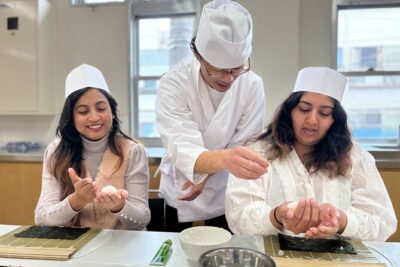 ★ 5.0Tokyo Sushi Making Class in Tsukiji with Professional ChefFrom $49
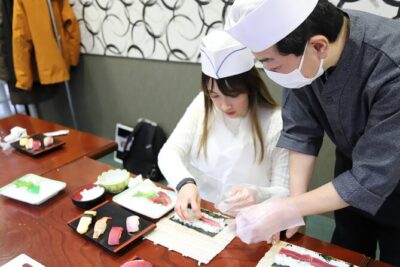 ★ 5.0Tsukiji Fish Market Guided Tour and Sushi Making with Pro ChefFrom $104
★ 4.7Tokyo: Tsukiji Fish Market Food and Culture Walking TourFrom $963 hours
★ 5.0Tsukiji Fish Market Guided Tour and Sushi Making with Pro ChefFrom $104
★ 4.7Tokyo: Tsukiji Fish Market Food and Culture Walking TourFrom $963 hours