
Reviewed · PRIVATE CAR WITH DRIVER
Tokyo Private Night Tour by Car/Van – English speaking chauffeur
Tokyo changes character as daylight fades, and this private car tour is built around that shift. You begin at 3 p.m. with Senso-ji and Tokyo’s classic sights, then move toward the neon districts, shopping streets, towers, and bay views of the evening.
I like two things right away: pickup and drop-off at your Tokyo hotel, and a private vehicle for up to five people. Chauffeurs Caffrey and Utah are praised for keeping families comfortable and adjusting the route. The main consideration is that this is not a walking tour. You receive explanations and suggestions in the car, but you should not expect a guide beside you at every stop.
In This Review
- Key points to know before booking
- Why this tour works well on your first Tokyo evening
- Senso-ji gives you the historic opening
- Tokyo Skytree adds height, at an extra cost
- Ginza shows Tokyo’s polished side
- Tokyo Station connects history and modern city life
- Tokyo Tower brings a postwar symbol into the evening
- Shibuya Crossing is the big city spectacle
- Odaiba closes the route with bay views
- What the private car adds to the price
- Timing, comfort, and flexibility
- Who will get the most from this Tokyo tour
- Should you book it?
- FAQ
- What time does the tour start?
- How long does the experience last?
- How many people can join the private tour?
- Is hotel pickup available?
- Is an English-speaking guide included?
- Are Tokyo Skytree and Tokyo Tower admissions included?
- What sights are included in the route?
- Can I cancel for a full refund?
Key points to know before booking
- A useful first-evening overview: The 3 p.m. start gives you daylight at Senso-ji and Tokyo Station, followed by city lights at Shibuya and Odaiba.
- Private transport for up to five: The $309.48 group price can be good value for a family or small group that would otherwise need several taxis.
- Seven major stops are listed: Senso-ji, Tokyo Skytree, Ginza, Tokyo Station, Tokyo Tower, Shibuya Crossing, and Odaiba.
- Caffrey and Utah receive special praise: Their friendly manner, flexibility, and attention to comfort are important parts of the experience.
- Tower admission costs extra: Tokyo Skytree is listed at 2,100 JPY and Tokyo Tower at 1,200 JPY.
- Expect car-based sightseeing: Parking, tolls, fuel, and the private air-conditioned vehicle are covered, but walking guidance is not.
Why this tour works well on your first Tokyo evening
Tokyo can feel like several cities stitched together. Ancient temple grounds, luxury shopping streets, giant railway stations, crowded crossings, and futuristic bay districts all sit within the same metropolitan area, but they do not always connect in an obvious way for a first-time visitor.
This route gives you a broad sample in one outing. You can see Senso-ji before or around sunset, pass through Ginza and Tokyo Station, and then reach the bright evening scenes at Tokyo Tower, Shibuya, and Odaiba. That makes the tour useful if you want to get your bearings before spending later days on individual neighborhoods.
The private format matters here. You can ask questions as you go, request more time at a favorite stop, and ask for suggestions for the rest of your stay. Since only your group participates, you are not tied to the pace of a large coach group.
The route is also practical for families and small groups. Tokyo involves plenty of walking and transfers, and a clean, cool vehicle gives you a place to rest between stops. Caffrey is praised for making an entire family comfortable, while Utah is noted for finding good Christmas-light locations and mixing different sides of Tokyo into one evening.
Still, keep your expectations in check. Seven listed stops in six to seven hours means you are sampling each place, not spending a full afternoon at each one. The one-hour labels appear to describe planned stop lengths, but driving and traffic will affect the actual pace.
A few more Tokyo tours and experiences worth a look



Senso-ji gives you the historic opening
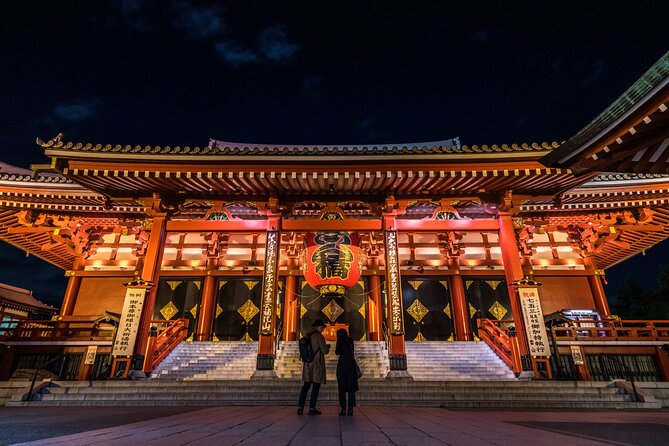
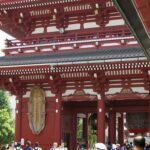
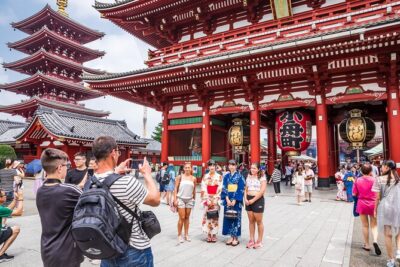
Senso-ji in Asakusa is the most traditional stop on the route. It is an ancient Buddhist temple and one of Tokyo’s best-known symbols. The large temple approach and dramatic entrance give you an immediate sense of old Tokyo, even though the surrounding city is modern and busy.
The scheduled visit is about one hour, with no admission fee. That is enough time to look around the temple grounds and take photographs without paying an entry charge. If you want a slower visit, this is one place where you may want to tell the chauffeur early in the evening.
Senso-ji is especially useful as an opening stop because it contrasts so sharply with the rest of the route. You begin with temple architecture and religious tradition, then move toward shopping districts, modern towers, and illuminated streets.
The drawback is simple: it can be crowded. The temple is described as receiving more than 20 million visits, so this is not a quiet, tucked-away shrine experience. You are coming for the famous setting and the contrast with modern Tokyo, not solitude.
Tokyo Skytree adds height, at an extra cost
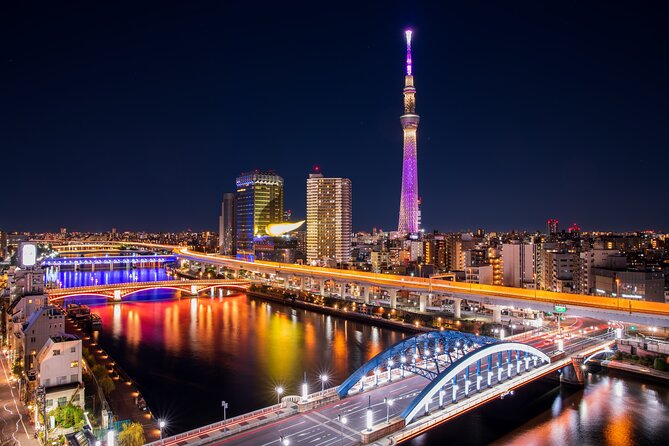
Tokyo Skytree reaches 634 meters and has enclosed observation decks at 350 and 450 meters. From the upper levels, you can look out across Tokyo from a height that makes the city’s scale easier to understand.
The tower visit is listed at about one hour, but admission is not included. The stated admission price is 2,100 JPY. If you want to go up, budget for that separately and confirm with the chauffeur how much of your stop will be used for entry, elevators, and the view.
You do not have to buy a ticket to make the stop worthwhile. The tower itself is an impressive reference point, and the surrounding area gives you a chance to photograph it from below. If you already have another high observation deck planned, you may prefer to keep this stop brief and save the extra fee.
For many people, Skytree is the clearest place to appreciate Tokyo’s size. On a clear evening, the view can be the visual high point of the tour. On poor-weather days, however, the operator may cancel the experience and offer another date or a full refund.
Ginza shows Tokyo’s polished side
Ginza is the route’s high-end shopping district. You will find internationally known luxury brands, department stores, and carefully presented streets rather than small neighborhood lanes or traditional markets.
This stop helps you see the wealthier, more polished side of the capital. It is also a good place to compare Tokyo’s style with the older atmosphere of Asakusa. The scheduled stop is about one hour and costs nothing to enter.
You may want to use Ginza as a short walk-and-photo stop unless luxury shopping is a priority. The area is easy to admire from the car, but the tour does not include a dedicated shopping guide. If you have a particular store or department store in mind, tell the chauffeur so the stop can fit your interests.
The value here is not a single attraction. It is the change in mood. Tokyo’s identity is not limited to temples or flashing signs, and Ginza gives you a look at its formal, upscale face.
Tokyo Station connects history and modern city life
Tokyo Station is more than a transport hub. Its red-brick station building gives the stop a historic visual anchor, while the surrounding district represents the capital’s modern business center.
The planned visit is about one hour, with no admission fee. You can take in the exterior, photograph the brick facade, and see how a major railway station fits into the city around it. The unusual reference to the station building shaped like a mailbox suggests that the focus is on recognizable exterior details and photographs.
This stop is useful for anyone staying near Tokyo Station or planning to use it later. Seeing it with a chauffeur can save you the effort of navigating the huge station on your first evening. It is also a good reminder that Tokyo’s public transport spaces can be major architectural sights.
Do not expect a museum visit or a long interior tour. The experience focuses on seeing the station as part of the city route.
Other private tours in Tokyo


Tokyo Tower brings a postwar symbol into the evening
Tokyo Tower is 333 meters tall and was built in 1958. It is closely tied to Tokyo’s postwar recovery and remains one of the city’s most familiar symbols.
The tower stop is listed at about one hour, with admission priced separately at 1,200 JPY. As with Skytree, you can decide at the time whether you want to pay for the observation level or simply view and photograph the tower from below.
Seeing both Skytree and Tokyo Tower gives you a useful comparison. Skytree represents Tokyo’s modern height, while Tokyo Tower carries a strong connection to the city’s rebuilding era. If you enjoy city views, you may want to choose one paid observation deck rather than paying for both.
At night, Tokyo Tower is particularly photogenic. Its location in the center of the city also helps connect the older central districts with the newer districts you visit later.
Shibuya Crossing is the big city spectacle
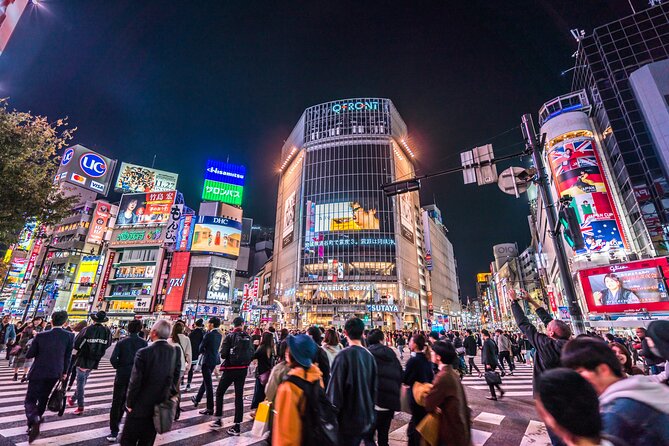
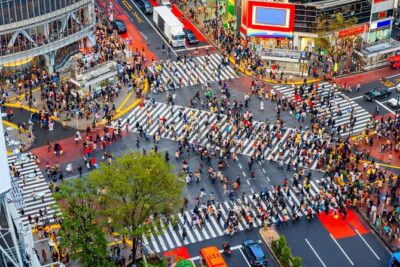
Shibuya Crossing is the most instantly recognizable modern scene on this route. Several streams of people cross at once while large signs and shopfronts frame the intersection. The surrounding district is packed with shops, restaurants, clubs, and places to browse.
The visit is listed at one hour and has no admission fee. That gives you time to experience the crossing on foot rather than only seeing it through a car window. You can also look for a higher viewpoint nearby, though no specific observation venue is included in the tour.
This is the stop where the tour’s evening timing pays off. Shibuya is far more memorable when the signs are lit and the district is active. Your chauffeur can get you close, but traffic and the exact drop-off point may affect how much time you spend walking around.
Shibuya is not a calm stop. It can feel crowded and loud, and you may need to stay alert with children or keep track of personal belongings. If that energy appeals to you, it is one of the strongest parts of the route. If you prefer quiet streets, ask for more time elsewhere.
Odaiba closes the route with bay views
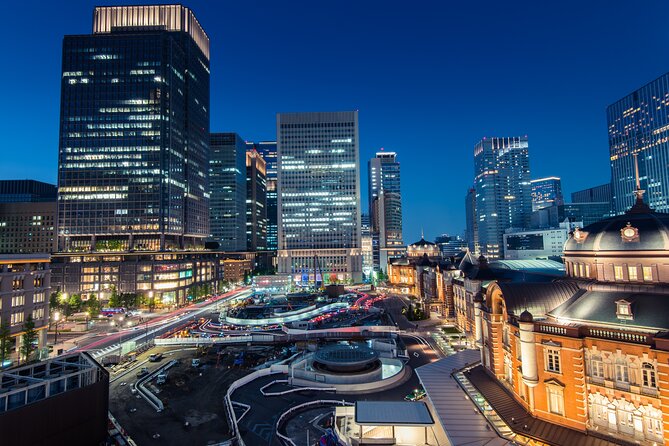
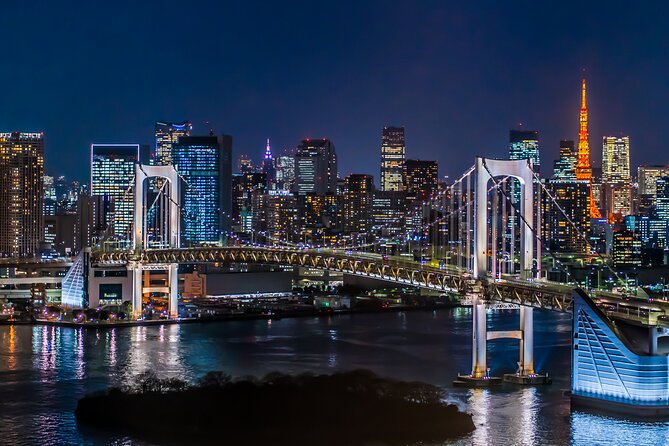
Odaiba is a man-made island in Tokyo Bay with shopping and amusement facilities. Its open setting and broad views make it a strong final stop, especially after the tight streets and crowds of central Tokyo.
The listed visit is about one hour and admission is free. The area is described as especially scenic at night, so the later timing works in its favor. You may find this the most relaxed place to finish, with room for photographs and a different view of Tokyo’s lights.
Odaiba also gives the itinerary a change of scale. Instead of looking up at signs and towers from dense streets, you get a more open bay setting. The exact experience will depend on traffic, weather, and how long you have spent at earlier stops, so it is worth telling the chauffeur if Odaiba is a priority.
What the private car adds to the price
The listed price is $309.48 per group of up to five people, not per person. For five people, that works out to roughly $62 each before any tower admissions. For two people, the per-person cost is much higher, but you are paying for privacy, hotel pickup and drop-off, and a dedicated vehicle rather than simply buying seats on a shared sightseeing bus.
The price includes an air-conditioned private vehicle, an English-speaking private driver and photographer, fuel surcharge, parking fees, and toll fees. Those included driving costs matter in Tokyo, where parking and road charges can otherwise make a private outing more expensive than expected.
The private format is most useful for families, older relatives, or small groups that want to stay together. It also helps if you have limited time and want to see several districts without learning a new train route on your first night.
The limitation is the guiding style. This is not a walking guide service. Your chauffeur provides insights while driving between destinations, answers questions, takes photographs, and offers suggestions, but the tour does not promise long explanations at every site.
Timing, comfort, and flexibility
The tour lasts about six to seven hours and begins at 3 p.m. That start time is well chosen for a day-to-night route. You get some daylight for temple and station architecture, then see the illuminated side of Tokyo later.
A private vehicle also gives you a break from Tokyo’s heat and long walks. The vehicle is air-conditioned, and specific praise for clean, cool, comfortable vans is worth noting, especially during a hot summer evening. This can make a real difference after a long flight or a full day of sightseeing.
The route is customizable, but you should discuss priorities at the start. If you want both observation decks, shopping time in Ginza, and a long visit in Shibuya, the schedule may feel tight. If your goal is a quick city overview, the listed route makes more sense.
The tour requires good weather. If conditions are poor, the operator offers a different date or a full refund. You can cancel for a full refund up to 24 hours before the start time, but cancellations or changes inside that window are not refunded or accepted.
Who will get the most from this Tokyo tour
I would consider this tour a strong fit for:
- A family arriving in Tokyo and wanting an easy first look at the city
- A group of up to five that prefers a private van to several train transfers
- People who want hotel pickup and drop-off
- First-time visitors with only one free evening
- Anyone who wants both traditional Tokyo and modern night scenes
- Visitors who value a flexible chauffeur and photo stops
I would be more cautious if you want detailed temple history, long guided walks, or a slow food-focused evening. The tour covers a lot of ground, but its strength is range and convenience, not deep time at one neighborhood.
The chauffeur names are also useful to know. Caffrey is specifically praised for being friendly, accommodating, and attentive to family comfort. Utah is praised for finding good Christmas-light locations and keeping the evening fun. Your assigned chauffeur may be different, but these names show the kind of personal service the company aims to provide.
Should you book it?
Book this tour if you want a comfortable first sweep of Tokyo and like the idea of seeing the city change from daylight to neon without managing the transport yourself. The best value comes when four or five people share the group price.
Skip it if you would rather spend a full evening walking one district, eating at local spots, or hearing detailed commentary at each attraction. For everyone else, the combination of hotel pickup, a private air-conditioned vehicle, flexible pacing, and seven major sights makes this a practical way to get oriented fast.
FAQ
What time does the tour start?
The tour starts at 3 p.m.
How long does the experience last?
The tour lasts approximately six to seven hours.
How many people can join the private tour?
The price covers one private group of up to five people.
Is hotel pickup available?
Yes. Pickup and drop-off at your Tokyo hotel are included.
Is an English-speaking guide included?
An English-speaking private driver and photographer is included. This is not a walking guide service, and explanations are provided while you are in the car between destinations.
Are Tokyo Skytree and Tokyo Tower admissions included?
No. Tokyo Skytree admission is listed at 2,100 JPY, and Tokyo Tower admission is listed at 1,200 JPY.
What sights are included in the route?
The planned stops are Senso-ji Temple, Tokyo Skytree, Ginza, Tokyo Station, Tokyo Tower, Shibuya Crossing, and Odaiba District.
Can I cancel for a full refund?
Yes, if you cancel at least 24 hours before the experience start time. If poor weather causes the operator to cancel, you are offered another date or a full refund.
More Evening Experiences in Tokyo
More Private Tours in Tokyo
More Night Tours in Tokyo
More tours in Tokyo we've reviewed











Private Car with Driver, compared.
 ★ 5.0Tokyo Private Sightseeing Tour by Car- English speaking chauffeurFrom $268
 ★ 5.0Tokyo Private Tour by Vehicle with English-Speaking ChauffeurFrom $468
Mt FUJI Day Tour with Private Car and English Speaking GuideFrom $440
★ 5.0Tokyo Private Tour by Vehicle with English-Speaking ChauffeurFrom $468
Mt FUJI Day Tour with Private Car and English Speaking GuideFrom $440
 ★ 5.0Private Car Tour to Mt. Fuji Lake Kawaguchiko or HakoneFrom $1,286
 ★ 5.0Mt Fuji Exclusive Tour with Private Car English GuideFrom $445
 ★ 5.0Tokyo Private Customizable Tour with English Speaking ChauffeurFrom $273