
Reviewed · EVENING EXPERIENCES
Tokyo: Evening Tour – Temples, Neon Streets & Culture
Tokyo changes character after sunset. Temple lanterns glow in Asakusa, Shibuya Crossing turns into a moving river of light, and Shinjuku’s signs flicker above narrow lanes. This private evening walk lets you see several sides of the city without fighting the full daytime heat.
I especially like the flexible route and the small-group format. Guides such as Deen and Sofia have adjusted the pace for a traveler recovering from knee surgery and tailored stops to shopping interests and physical ability. The main catch is cost: at $83 per person, you also pay your own train fares, food, and entrance fees.
In This Review
- Key points
- Why Tokyo after dark works so well
- Asakusa, where old Tokyo glows
- Shibuya Crossing under the billboards
- Shinjuku after sunset, from Omoide Yokocho to Kabukicho
- Akihabara’s anime, games, and electronics
- A route built around your interests
- What the private format is worth at $83
- Photos, shopping, and guide style
- Who should book this evening walk
- Simple planning tips for the three hours
- Should you book it?
- FAQ
- When does the Tokyo evening tour start?
- How long does the tour last?
- Is the tour private?
- Which languages are available?
- Are public transportation costs included?
- Can the itinerary be customized?
- Can children join the tour?
Key points
- After-dark timing: Start anytime after 4 PM and continue as late as 11 PM, depending on the plan.
- Private and adjustable: The guide can change the route, walking pace, and neighborhood choices around your interests.
- Four very different Tokyo moods: Asakusa, Shibuya, Shinjuku, and Akihabara each offer a distinct evening experience.
- Public transit is part of the tour: You move between districts by train or subway, just as residents do.
- Good for photos: Neon signs, temple lanterns, crossings, alleys, and rooftop views may all feature in the route.
- Practical comfort: Evening temperatures are cooler than midday, and children under 12 join free when included in the booking.
Why Tokyo after dark works so well
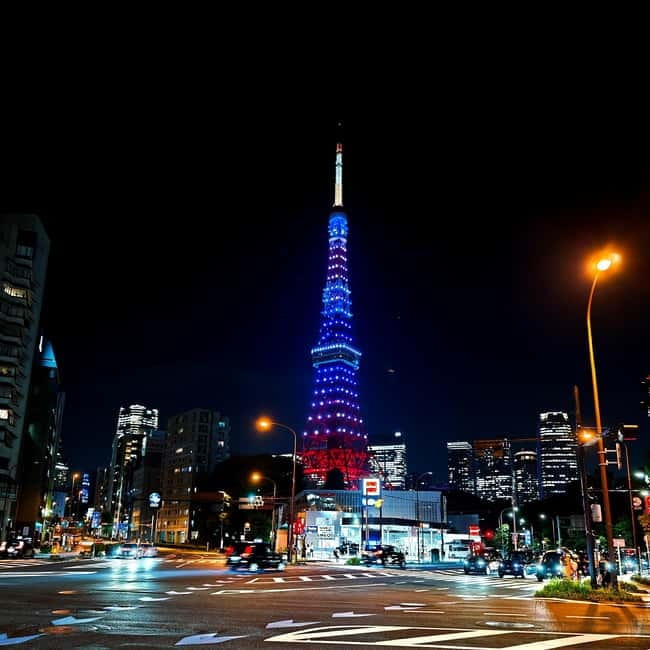
Tokyo can be tiring in the middle of the day, especially in summer. An afternoon start gives you time to rest, eat lunch, or visit a museum before meeting your guide. By the time the walk gets going, the strongest heat has eased and many famous streets have gained their best lighting.
The timing also gives you two versions of the city in one outing. You may begin while shops and temples still have some daylight around them, then continue as signs switch on and crowds head out for dinner. That gradual change is one of the most appealing parts of this experience.
You should think of this as a guided orientation to Tokyo at night, not a museum tour with a fixed list of indoor admissions. The value comes from choosing the right areas, understanding what you are seeing, and avoiding wasted time in a city that can feel confusing at first.
The tour lasts about three hours, though some outings run three to four hours and may continue until 11 PM. Your exact start time and meeting point are confirmed after booking. Pickup on foot from your hotel or another location is available as an optional add-on.
Other evening experiences in Tokyo



Asakusa, where old Tokyo glows
Asakusa gives the evening a calm opening. The area is home to Tokyo’s oldest temple, and after dark its lanterns and illuminated buildings create a softer mood than the city’s neon districts. With some daytime crowds gone, you can take in the gates, temple grounds, and nearby streets with less jostling.
This is a good place for a guide to explain the contrast between Tokyo’s modern speed and its religious traditions. You are not simply checking off a famous temple. You are seeing how a major spiritual site functions when the city around it begins its evening routine.
Asakusa is also useful for photographs. Lantern light gives you more atmosphere than a bright midday visit, though your phone camera may need a steady hand. Bring a charged smartphone or camera, and wear shoes that can handle several hours on foot.
The exact amount of time spent here depends on your route. If you want a slower cultural start, tell the guide. If you have already visited Asakusa during the day, the guide can use the evening for another neighborhood instead.
Shibuya Crossing under the billboards
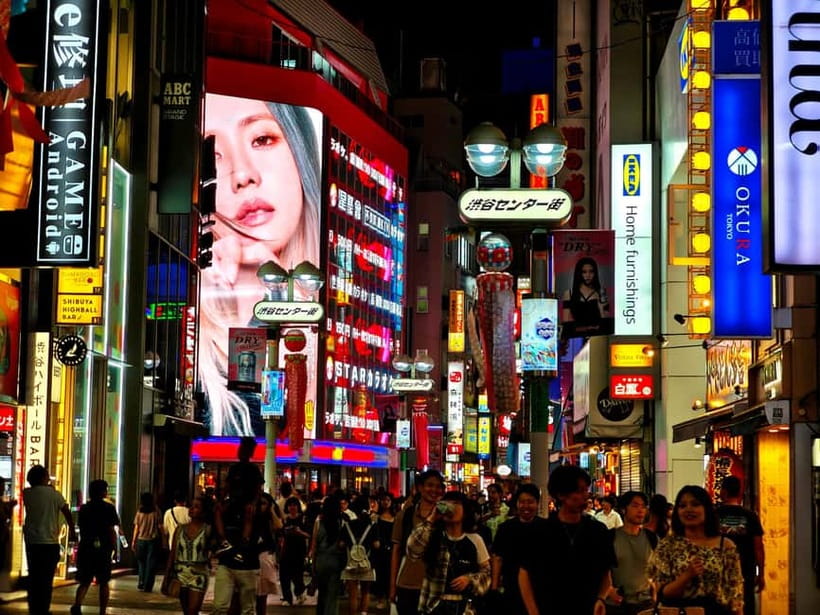
Shibuya supplies the tour’s big city moment. The famous crossing becomes a stage once the billboards and shop signs are lit. From the edges of the intersection, you can watch several streams of pedestrians cross at once, then step into the flow yourself when the signal changes.
The appeal is visual, but there is also a useful lesson here. Shibuya shows how Tokyo handles enormous movement with remarkable order. Your guide can help you find a good viewing position and suggest nearby streets that offer a different feel from the main crossing.
Do not expect a quiet stop. Shibuya is one of the busiest parts of the route, and the spectacle comes with noise, traffic, and crowds. That is why the private format matters. You can pause for photos, move on when you have had enough, or spend more time in the area if the energy suits you.
Shibuya is also a strong choice for anyone who wants the Tokyo seen in films and night photography. The lighting is dramatic, but the area is not especially intimate. For quieter streets, ask your guide to add backstreets or another neighborhood.
Shinjuku after sunset, from Omoide Yokocho to Kabukicho
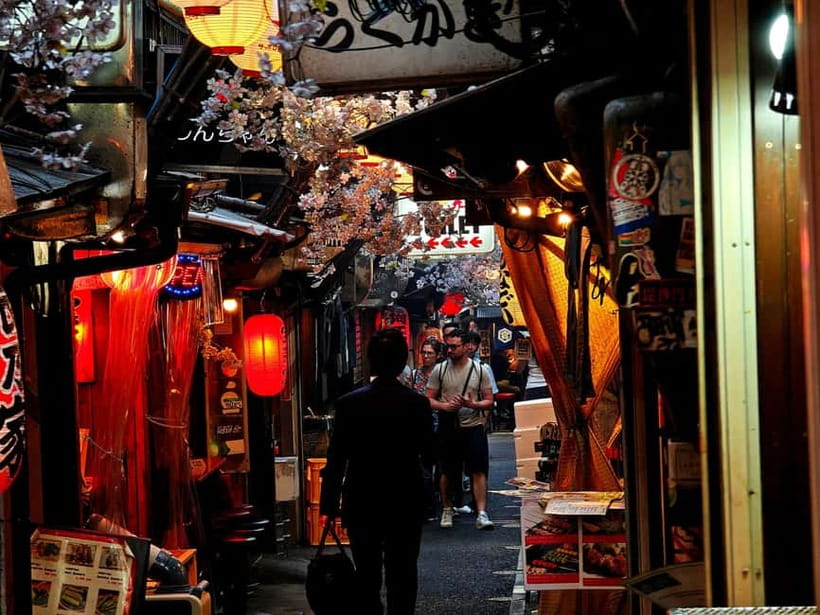
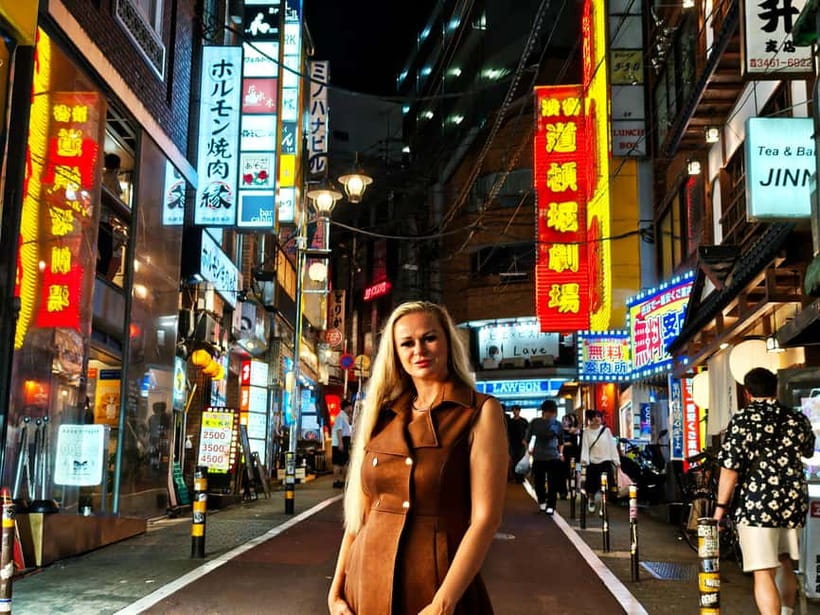
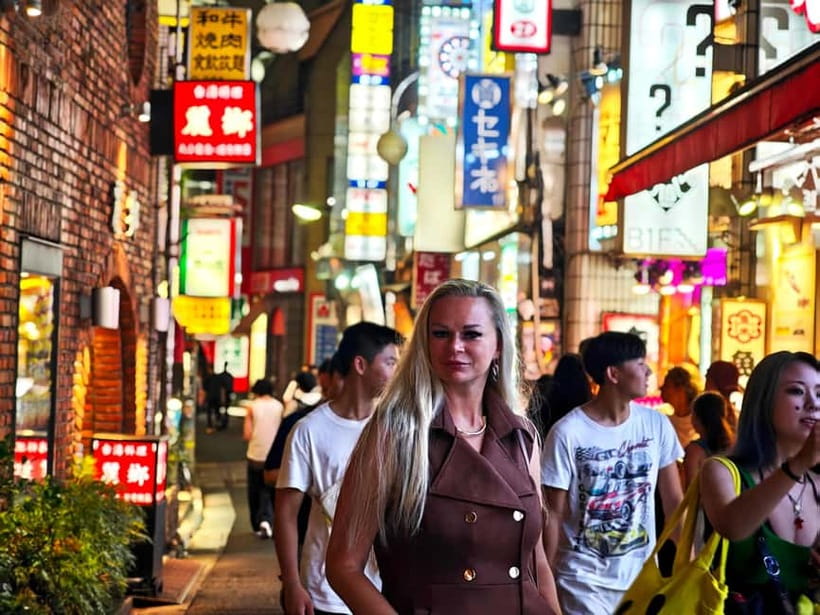
Shinjuku is the most layered evening stop. Its nightlife district combines narrow dining lanes, game arcades, karaoke bars, glowing signs, and busy pedestrian streets. Omoide Yokocho offers a more compact, old-style alley setting, while Kabukicho brings a much larger display of entertainment signs and late-night activity.
A guide is particularly useful here because Shinjuku can feel like a maze. You may see a lane that looks worth exploring but have no idea where it leads or what kind of place it contains. Your guide can help you move through the district with a clear plan and point out areas that fit your comfort level.
This portion is best for people who want to see Tokyo’s social life rather than only its postcard sights. You might stop for food or a drink, but meals and personal spending are not included. If you want to eat, tell the guide early so the route can allow time for it.
The drawback is that Shinjuku can be loud and crowded, especially later in the evening. It is not the best section for anyone seeking a slow, peaceful walk. Still, its mix of tiny alleys and giant signs makes it one of the most memorable parts of the experience.
Akihabara’s anime, games, and electronics
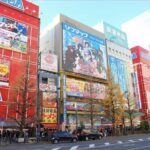
Akihabara takes Tokyo’s pop culture in a different direction. After dark, the district lights up around anime, gaming, and technology. You do not need to be an expert fan to enjoy it. A good guide can explain what you are seeing and help you approach the area with curiosity rather than feeling lost among unfamiliar signs.
This stop suits anyone interested in Japanese gaming culture, anime, arcades, or the city’s long-standing connection with electronics. It can also work for parents and children, though the tour itself is still a walking experience rather than a dedicated arcade visit.
The district is more commercial than Asakusa and less broad in its spectacle than Shibuya. Its appeal comes from details: shop fronts, displays, signs, and the density of themed businesses. If you have a particular interest, mention it when booking or at the start of the walk so the guide can shape the visit around it.
Akihabara is one of several possible evening areas, not a guaranteed stop on every customized route. That flexibility is useful, but you should discuss priorities before setting out if you want to be sure of seeing a particular district.

A route built around your interests
The strongest feature here is not the list of neighborhoods. It is the ability to adjust the list. Your guide may take you to lesser-known alleys, a rooftop viewpoint, or a photogenic backstreet, depending on the day, your interests, and the time available.
That matters because three hours is not enough to explore Tokyo fully. A fixed route that tried to cover every major district would leave you rushing from train station to train station. A private guide can instead help you choose between food, shopping, temples, nightlife, anime, photography, or a gentler pace.
The experience has worked well for different needs. Deen adjusted a route for someone recovering from knee surgery, while Sofia shaped a walk around personal interests and shopping needs. Those examples suggest that you should be direct about your walking ability, favorite subjects, and must-see areas before the tour begins.
You should also be realistic about distance. This is a walking tour, and the total amount of walking varies with your pace and preferences. Tokyo’s public transit connects the neighborhoods, but you pay the train or subway fares yourself. Comfortable shoes are essential.
What the private format is worth at $83
At $83 per person, this is not the cheapest way to see Tokyo at night. You are paying for a private group, a local guide, route planning, and the time saved by moving between districts with help. Public transit, food, shopping, and any admission tickets cost extra.
The price makes more sense for a small group that wants personal attention. If several people share the booking, you receive a tailored outing without being attached to a large coach group. You can ask questions freely, stop for photos, and change direction without waiting for strangers.
It is also useful early in a Tokyo visit. A guide can help you understand how the rail system connects major areas and show you which districts match your interests. Afterward, you may feel more confident returning to a favorite neighborhood on your own.
The value drops if you already know Tokyo well or only want one simple neighborhood. In that case, a self-guided evening walk may cost much less. The tour earns its price when you want several contrasting districts, local context, and help navigating the city at night.
Photos, shopping, and guide style
Photography is built into the plan. Your guide may take photos during the walk, and a professional photographer may be available, but you should treat this as a possible extra rather than a guaranteed professional photo session. Bring your own camera or charged phone so you are not dependent on that option.
The evening light gives you plenty to work with. Asakusa offers lanterns and temple details. Shibuya supplies large-scale city scenes. Shinjuku gives you tight alleyways and glowing signs, while Akihabara offers colorful shop fronts and themed displays.
Sofia’s shopping help is another useful detail. She helped a participant find gifts to take back to the United States, so you can ask for practical shopping guidance if souvenirs matter to you. Do not expect a shopping allowance or included purchases, but the guide can help you focus your time.
The guide’s role is conversational as well as informational. One outing was described as insightful with easy conversation, which is the right expectation for a private walk. You can ask basic questions, request more cultural background, or simply use the guide as a local sounding board.
Who should book this evening walk
I would recommend it most strongly to first-time visitors who want a fast but personal introduction to Tokyo after dark. It also suits couples, families, and small groups who do not want a large organized excursion.
It is a good match for you if:
- You want to combine temples, neon streets, and nightlife in one evening.
- You prefer a private guide to a fixed group itinerary.
- You are visiting in hot weather and want to avoid the middle of the day.
- You enjoy photography and want help finding good angles.
- You have specific shopping, anime, food, or cultural interests.
- You need the pace adjusted around your energy or mobility.
It may be less suitable if you dislike walking, want a fully seated tour, or expect transport and meals to be included. The guide can adjust the outing, but the basic format still involves walking and public transit.
The tour is wheelchair accessible, but the exact route should be discussed when arranging the meeting point and neighborhood choices. That is especially important when you want to limit stairs, long station transfers, or steep walking sections.
English and Spanish are available. The activity information also notes Italian availability, so confirm your preferred language before booking if Italian is important to you.
Simple planning tips for the three hours
Start with your top priority. Tell the guide if Asakusa, Shibuya, Shinjuku, or Akihabara matters most. That gives the route a clear center instead of trying to squeeze in everything.
Wear comfortable clothes and good walking shoes. Bring a camera, a charged smartphone, and enough battery for maps and photos. You will also need to cover your own public transit fares and personal purchases.
If you are traveling with children, include everyone under 12 in the booking even though they join free. Families may appreciate the evening schedule, especially during summer, but game arcades and neon streets can be stimulating for younger children.
Cancellation is flexible up to 24 hours before the tour for a full refund, and you can reserve now and pay later. That helps if your Tokyo schedule may change, though you should still confirm the meeting details after booking.
Should you book it?
Book this tour if you want a personal evening introduction to Tokyo and value a guide who can change the route around your interests and ability. Deen and Sofia have shown the kind of flexibility that makes a private walk worthwhile, especially for shopping help, casual conversation, or a slower pace.
Skip it if you want an inexpensive, fixed sightseeing route or a tour with transportation and meals included. For most first-time visitors, though, the combination of Asakusa’s temple light, Shibuya’s giant crossing, Shinjuku’s narrow nightlife lanes, and possible Akihabara stops offers a useful look at Tokyo’s many moods in just three hours.
FAQ
When does the Tokyo evening tour start?
You can start anytime after 4 PM. The exact meeting time is confirmed after booking.
How long does the tour last?
The stated duration is three hours. Tours typically last three to four hours and may continue until 11 PM at the latest.
Is the tour private?
Yes. It is offered as a private group experience.
Which languages are available?
English and Spanish are available. Italian is also noted in the tour information, so confirm availability when arranging your booking.
Are public transportation costs included?
No. You pay your own public transportation fees. Private bus or car transport is not included.
Can the itinerary be customized?
Yes. The guide can adjust the neighborhoods, walking distance, pace, and interests. Possible areas include Asakusa, Shibuya, Shinjuku, and Akihabara, along with backstreets or rooftop views when suitable.
Can children join the tour?
Children under 12 join free, but you must include them in the booking.
More Evening Experiences in Tokyo
More tours in Tokyo we've reviewed






Evening Experiences, compared.
 ★ 5.0Tokyo Night Foodie Tour in Shinjuku – Seasonal Sushi, Wagyu BeefFrom $111
 ★ 4.8Tokyo: Daikoku JDM Car Meet & Night Car Culture TourFrom $984 hours
 ★ 4.5Tokyo After 5: Authentic Japanese Food & Drink Night TourFrom $122
 ★ 4.6Tokyo: Samurai Entertainment Night Show in Kanda ShrineFrom $412 - 3 hours
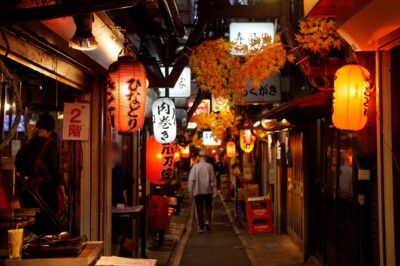 ★ 4.5The Dark Side of Tokyo – Night Walking Tour Shinjuku KabukichoFrom $25
 ★ 4.8Tokyo: Night Foodie Tour in ShinjukuFrom $1273 hours