
Reviewed · GO-KARTS
Osaka: Premium Go-Kart City Tour with Costumes and Photos
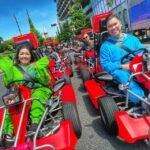
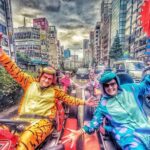
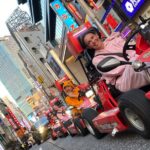
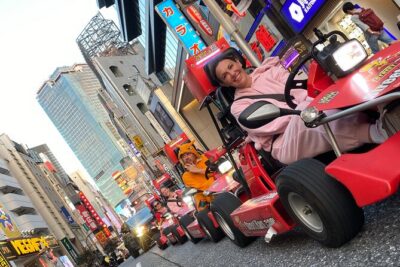
Osaka looks different from the driver’s seat of a street-legal go-kart. For 75 minutes, you follow a guide through Tennoji, Tsutenkaku, Nihonbashi, Shinsaibashi, and Dotonbori, with the city’s signs, traffic, and neon lights close at hand. The costumes add a playful twist, but this is still a real road experience that demands your full attention.
I like the small groups of up to five, which give guides such as Matt and Lucky room to help nervous drivers. I also like that photos are included, so you can enjoy the ride instead of trying to record every turn. The main catch is serious: a normal foreign driving license is not enough. You need the correct hard-copy 1949 Geneva Convention International Driving Permit, or another license accepted under Japanese law.
In This Review
- Key details before you book
- Why Osaka works so well from a go-kart
- Starting at Ebie and getting ready for the road
- Choosing a costume without losing sight of the ride
- Tennoji and Tsutenkaku: Osaka’s old-school showmanship
- Nihonbashi and Shinsaibashi: a moving look at central Osaka
- Dotonbori after dark
- What the guide service adds
- Photos are included, while camera upgrades cost extra
- Is $58 a fair price?
- The license rules are not a minor detail
- Who should book this Osaka ride?
- Should you book the Monkey Adventure Kart tour?
- FAQ
- How long does the Osaka go-kart tour last?
- What driving permit do I need?
- Do drivers from some countries need a Japanese translation?
- What is included in the price?
- Can I rent a GoPro or Insta360 camera?
- Can the tour be canceled or rescheduled?
Key details before you book
- Drive through central Osaka: The route links Tennoji, Tsutenkaku, Nihonbashi, Shinsaibashi, and Dotonbori.
- Costumes are included: Pick a costume before departure for photos and a more playful city ride.
- Photos come with the tour: Your guide takes pictures during the experience.
- The group is limited to five: That keeps the ride more personal and makes help easier to get.
- The permit rule is strict: Soft copies, 1968 Vienna Convention permits, FIA permits, IDA permits, and IAA permits are not recognized by Japan.
- The price is $58: Fuel, kart rental, guide service, lockers, costumes, and photos are included.
Why Osaka works so well from a go-kart
Osaka is a city of strong visual contrasts. One moment you are near the broad roads and large commercial blocks of the center. Soon after, you are passing the bright signs and food-focused streets around Dotonbori. From a standard bus or taxi, you watch this change through glass. In a go-kart, you are part of the street scene, with the air, traffic sounds, and changing views right around you.
That closeness is the real reason to book. This is not the best way to study a temple, read museum labels, or stop for a long meal. It is a moving city sampler. You cover several well-known districts in one outing and get a sense of how Osaka fits together.
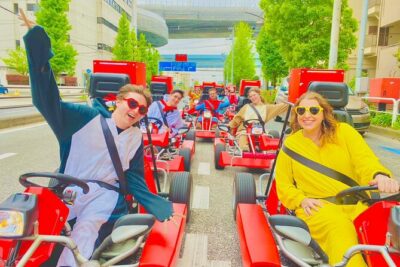
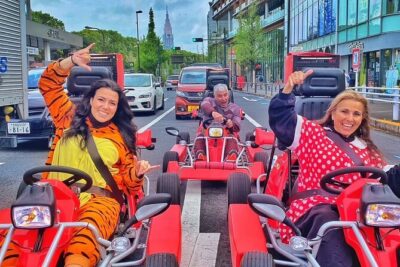
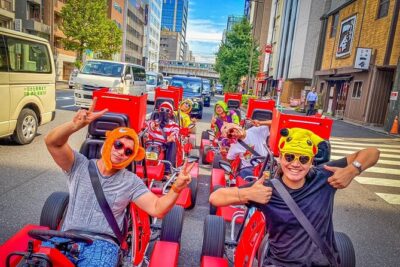
The costume choice gives the experience a light, comic feel. It also helps explain why this tour appeals to couples, friends, first-time visitors, and anyone who wants photos that are more distinctive than the usual street snapshot. You should expect a fun public ride, not a quiet sightseeing circuit.
A few more Tokyo tours and experiences worth a look
Starting at Ebie and getting ready for the road
The tour begins at 6-chōme-2-13 Ebie and returns there. The starting point is important because the ride does not begin beside Dotonbori or Tsutenkaku. Give yourself enough time to reach Ebie before the scheduled start, especially if you are coming from another part of Osaka.
Before departure, you receive a safety briefing and prepare for the ride. The guide leads the group, explains the route, and keeps the pace together. Since the karts use public roads, you must follow Japanese traffic rules. This is not a closed course where you can race or make sudden moves for a better photo.
The small group size helps here. With no more than five participants, the guide can keep an eye on the group and offer practical help. Alison’s mother had never driven a go-kart on an open road and needed extra reassurance. Guide Matt took time to help her feel comfortable, while Lucky handled photos and helped capture the city views. That detail matters if someone in your group is excited but uneasy about driving in traffic.
You also get access to a locker. The supplied information does not specify its size, so bring only what you need for the ride and keep your passport or identification available for the check-in process.
Choosing a costume without losing sight of the ride
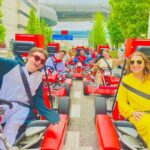
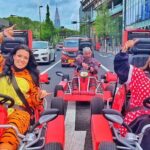
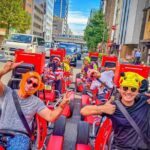
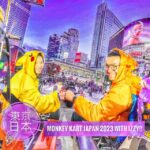
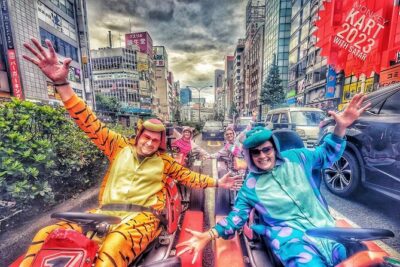
Costumes are provided at no extra charge. You can choose from a range of playful outfits before setting off. This is a simple feature, but it changes the mood of the whole experience. A short city drive becomes a shared photo occasion, especially if friends choose different costumes.
The costume is not the main reason to book, though. The best part is still the route and the chance to drive a road-legal kart through Osaka. Think of the outfit as a bonus that makes the pictures more memorable.
Wear something that lets you sit comfortably and control the kart. The supplied information does not give a detailed clothing policy, so use common sense. Avoid bringing items that could interfere with driving, and remember that you will be in public view for much of the tour.
Tennoji and Tsutenkaku: Osaka’s old-school showmanship
The route includes Tennoji and Tsutenkaku, two areas that help you see Osaka’s more theatrical side. Tsutenkaku is especially tied to the Shinsekai district, known for its retro signs, casual food culture, and bold visual style. The tower gives this part of the city an easy landmark to recognize as you pass through.
You should not expect a long stop for a tower visit. The experience is built around guided driving, sightseeing, and photo stops rather than extended exploration on foot. That limitation is also the point. You get a quick, lively look at the district before continuing through the city.
The tour can be especially attractive around sunset or after dark, when signs begin to glow. One ride in mid-November passed through Namba, Shinsekai, and Dotonbori while seasonal lights were starting to appear. Timing can shape the mood, so check the available start times if you want a dusk or evening setting.
Nihonbashi and Shinsaibashi: a moving look at central Osaka
Nihonbashi brings you closer to Osaka’s shopping and entertainment core. Shinsaibashi is another major central district, with busy commercial streets and a strong connection to the city’s modern identity. From a go-kart, you will see these areas as connected parts of one large urban center rather than isolated sightseeing stops.
This section is useful for first-time visitors trying to get their bearings. You will not have time to browse every shop, and the guide cannot turn the ride into a shopping break. Still, the route gives you a quick sense of where central Osaka’s main districts sit in relation to one another.
An English-speaking guide leads the way and explains the areas you pass. The amount of commentary may vary with traffic and road conditions, but the guide’s role is more than pointing out sights. The guide also manages the group, keeps the route orderly, and helps you enjoy the road without losing track of the other karts.
Other city tours we've reviewed in Tokyo


Dotonbori after dark
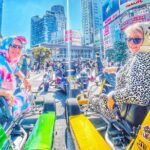
Dotonbori is the visual payoff for many people. Its neon signs, bright storefronts, canal-side setting, and crowded entertainment streets create the kind of scene that works well from a moving kart. The famous district feels immediate when you pass through rather than simply arriving at a pedestrian viewpoint.
This is also where expectations need a little care. Dotonbori can be crowded, and a go-kart is not a shortcut through foot traffic. You will follow the road and obey local rules, so the experience gives you a view of the district rather than unlimited access to it.
The guide takes photos during the ride, helping you keep your attention on driving. Included photos add real value here because Dotonbori is one of those places where people often stop every few steps to take pictures. You get a chance to enjoy the movement and still leave with images of the experience.
What the guide service adds
The guide service is one of the strongest parts of this activity. Matt and Lucky have been singled out for being friendly, helpful, and patient. Lucky also took many photos, with one participant receiving a printed photo and a keyring as an extra personal touch. Airene has also led the tour, and the experience was described as both fun and memorable.
Those details suggest a service style that is warm and hands-on, rather than purely functional. That matters because driving a kart through Osaka for the first time can feel exciting and slightly intimidating. A guide who explains the route, watches the group, and helps with confidence can make a major difference.
Still, you should not treat the guide as a private chauffeur. The group shares one route, and road conditions can require changes. One ride included a diverted route, but the guide adjusted the experience so the less-confident driver could still enjoy it. Flexibility is useful on a public-road tour, where conditions are not fully under the operator’s control.
Photos are included, while camera upgrades cost extra
The standard package includes photos taken by the guide. That is enough for most people who want proof of the ride and a few strong shots in costume. Since your hands stay on the controls, included photography is more useful than it may sound.
You can also pay extra for action-camera equipment:
- GoPro: 3,500 JPY
- Insta360 with editing: 13,500 JPY
The Insta360 option costs far more than the GoPro, so consider what you actually want before adding it. If your priority is simple memories and social posts, the included photos may be all you need. If you want a more polished video record, the upgrades provide extra recording options, but they change the total price considerably.
Is $58 a fair price?
At $58 per person, the tour offers a good package for a short, specialized activity. The fee includes the kart, fuel, professional guide, costumes, locker access, and photos. You are paying for more than a vehicle rental. You are also paying for a guided route through several central districts and for help managing a public-road experience.
The value depends on what you want from Osaka. If you prefer museums, historic buildings, markets, or long meals, this will not replace those activities. If you want a memorable break from ordinary sightseeing, the price is easier to justify.
The group limit also supports the value. A maximum of five participants is more appealing than a large convoy where the guide has little time for individual help. The cost rises if you add a GoPro or Insta360, so I would book the base package first unless filming is central to your plans.
The license rules are not a minor detail
This is the most important practical issue. Every driver must carry a hard-copy paper booklet of a 1949 Geneva Convention International Driving Permit issued by an official agency in the driver’s country. An online document or phone image is not valid.
A domestic license alone is not sufficient for many international drivers. Permits issued under the 1968 Vienna Convention are not recognized, and the information also excludes FIA, IDA, and IAA permits. Some countries cannot use their permits in Japan, including Indonesia, Pakistan, Saudi Arabia, Mexico, Brazil, Costa Rica, Colombia, Kuwait, and Qatar. Check your exact situation before booking.
Drivers from France, Switzerland, Taiwan, Germany, Monaco, and Belgium need a Japanese translation of their local license. The translation must be obtained through the Japan Automobile Federation, known as JAF. Bring your passport or ID card as well.
Do this paperwork before leaving your home country when possible. One participant arrived with a UK license that was not enough and could not take part. That is a painful way to lose the $58 and your planned time in Osaka, so treat the permit as a booking requirement, not a last-minute formality.
Who should book this Osaka ride?
I would recommend it to adults over 18 who enjoy active sightseeing and feel comfortable driving on public roads. Couples and friends get the most from the costume and photo side, while first-time visitors benefit from seeing several districts in one compact outing.
It can also suit a cautious driver if the person is willing to listen to the guide and follow the rules. Matt’s patient help with a first-time open-road driver shows that the staff can support someone who feels nervous. But nobody should book it expecting a passive ride. You are responsible for driving the kart.
The activity is not suitable for pregnant women or drivers under 18. Rain may also cause the tour to be rescheduled. Check the weather and keep some flexibility in your Osaka plans.
Should you book the Monkey Adventure Kart tour?
Book it if you want a playful city adventure, have the correct Japanese driving documents, and like the idea of seeing Osaka from the road rather than from a lookout. The combination of costumes, included photos, a small group, and stops through Dotonbori and Tsutenkaku gives you a memorable 75-minute outing for a reasonable base price.
Skip it if you do not yet have the required permit, dislike driving in traffic, or want long stops at each sight. The tour moves at road pace, and safety rules come before photo opportunities.
For the right person, this is a clever way to connect Osaka’s major districts in one lively ride. Check your license first, choose a start time that suits the light you want, and keep the add-on camera costs in mind. If those details work for you, the tour earns its place beside Osaka’s more traditional sightseeing.
FAQ
How long does the Osaka go-kart tour last?
The tour lasts 75 minutes, including the safety briefing, guided sightseeing, photo stops, and return to 6-chōme-2-13 Ebie.
What driving permit do I need?
You need a hard-copy 1949 Geneva Convention International Driving Permit issued by an official agency in your country, or another license approved under Japanese law. Soft copies and 1968 Vienna Convention permits are not accepted.
Do drivers from some countries need a Japanese translation?
Yes. Drivers with licenses from France, Switzerland, Taiwan, Germany, Monaco, and Belgium need a Japanese translation obtained through the Japan Automobile Federation.
What is included in the price?
The price includes the go-kart, fuel, professional English-speaking guide, costumes, photos, and locker access.
Can I rent a GoPro or Insta360 camera?
Yes. A GoPro costs 3,500 JPY. An Insta360 camera with editing costs 13,500 JPY. These are not included in the base price.
Can the tour be canceled or rescheduled?
You can cancel up to 24 hours in advance for a full refund. The tour may be rescheduled because of rain, and participants must be over 18.
More Photography Tours in Tokyo

More City Tours in Tokyo
More Go-Kart Tours in Tokyo
More tours in Tokyo we've reviewed


Go-Karts, compared.
 ★ 5.0Flagship 2-Hours Official Street Go-Kart Tour – Tokyo Bay ShopFrom $642 hours to 2 hours 30 minutes (approx.)
 ★ 5.0Official Street Go-Kart in ShibuyaFrom $76
 ★ 5.0Official Street Go-Kart Tour – AkihabaraFrom $61
 ★ 5.0Tokyo Go Kart: Asakusa, Skytree, and Akihabara **IDP MUST**From $99
 ★ 5.0Shibuya Official Street Go-Kart in Shibuya AnnexFrom $69
 ★ 4.7Tokyo: Asakusa, Skytree & Akhihabara Go-Kart City ExperienceFrom $961h 10m