
Reviewed · 1-DAY TOURS
Ashikaga Flowers Park Pvt. One Day Tour with Pickup
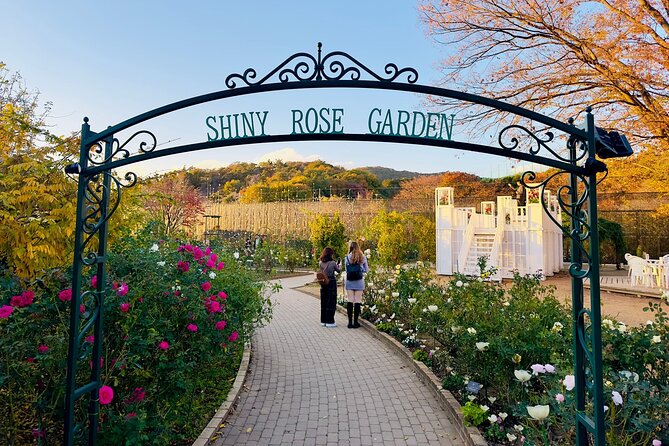
Ashikaga Flower Park is the star here, especially when its famous wisteria is in bloom and the evening lights come on. This private day trip also gives you a love shrine with hilltop views and Japan’s historic Ashikaga School, all without changing trains or managing a complicated rural route.
I like the door-to-door vehicle, which matters on a long day outside Tokyo, and I like the mix of flowers, history, art, and shopping. You also get a driver-guide, air-conditioning, onboard hotspot, and child seats. The main caution is the roughly two-hour drive each way, plus one report of rushed lane changes and limited conversation from a driver.
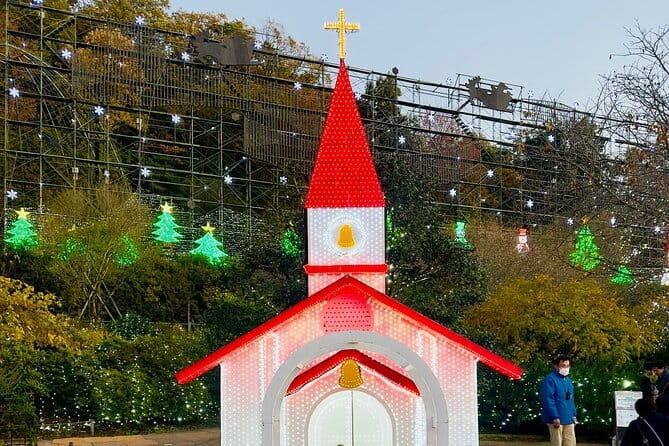
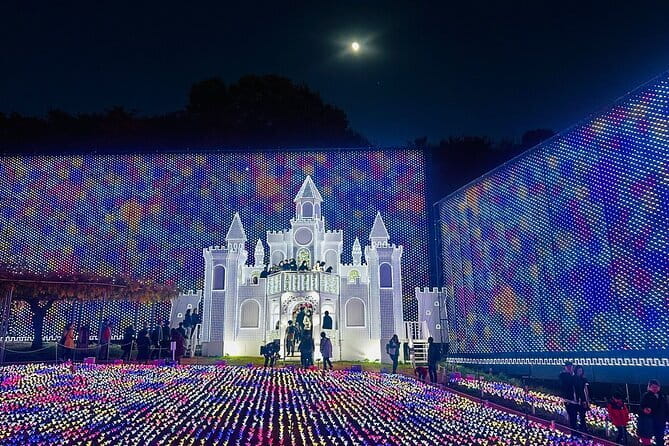
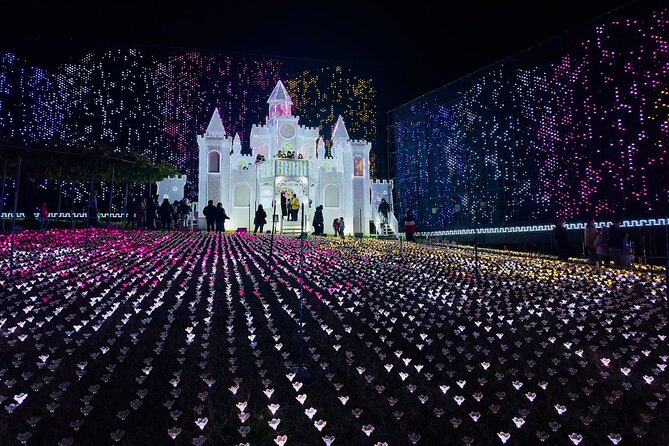
- Ashikaga Flower Park after dark: The park is known for large wisteria displays and seasonal illumination.
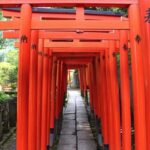
- Orihime Shrine for love and luck: Reach the hilltop through a path of about 200 steps and red torii gates.
- Ashikaga School’s old classrooms and grounds: See a site tied to Confucian learning, medicine, astronomy, and Buddhism.
- Private transport for up to five people: The $500 group price makes more sense when shared by a family or small party.
- Three hours at Sano Premium Outlets: Build in real shopping time rather than treating the mall as a quick photo stop.
- A flexible cultural day outside Tokyo: The route combines Tochigi history, art, flowers, and retail in one long outing.
In This Review
- The wisteria show that gives this day its purpose
- A private ride, with real comfort and real road time
- Orihime Shrine, red gates and a reason to make a wish
- Ashikaga School and Japan’s old center of learning
- Ashikaga Museum of Art, an optional cultural pause
- Three hours at Sano Premium Outlets
- What the $500 group price really buys you
- Who will get the most from this long day
- Practical details before you commit
- Should you book this Ashikaga day trip?
- FAQ
- How long does the tour last?
- Where does the tour begin and end?
- How many people can join the private tour?
- Is transportation included?
- Are the Ashikaga Flower Park and art museum entrance fees included?
- Are child seats available?
- Can I cancel for a full refund?
The wisteria show that gives this day its purpose
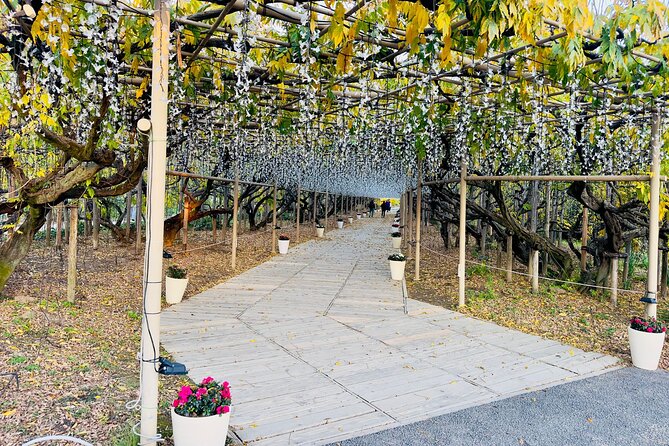
Ashikaga Flower Park covers about 94,000 square meters and is best known for its huge wisteria structures. The main spring event features purple, pink, white, and yellow flowers, with mature vines spreading across trellises and forming overhead canopies.
The park’s Miracle Great Wisteria is said to be more than 160 years old. That gives the visit a sense of age and scale that a standard city garden cannot match. Still, timing matters more than the description may suggest. One booking party reached the park before the wisteria had flowered, so you should check the seasonal bloom calendar before paying for a long day built around this stop.
The tour allows about three hours here. That is enough time to walk at an easy pace, take photographs, look for other seasonal flowers, and stay for the illumination if the schedule and opening hours line up. The exact display changes through the year, with roses, tulips, and azaleas among the other featured flowers.
The night lighting is a major reason to choose this private outing instead of a simple daytime garden visit. You can see the park in a different mood, but the late finish also makes the return to Tokyo longer and potentially tiring. Ask the provider how the day’s timing will work for your chosen date, since the illumination schedule is seasonal.
A private ride, with real comfort and real road time
The tour begins and ends at Tokyo Station, at 1 Chome-9 Marunouchi. You receive private transportation in an air-conditioned vehicle, with vehicle size matched to the party. The stated capacity is up to five people, and child seats are included.
That arrangement is useful for families and groups carrying bags from the outlet mall. It also removes the need to connect Tokyo trains with local transport in Tochigi. An onboard hotspot is included, which is handy during a full day away from the city.
The tradeoff is distance. This is not a quick garden excursion. One account describes a two-hour drive to the flower park, and the route includes five stops. Depending on traffic, the day can feel full before you even reach the final attraction.
Driver quality deserves attention. The supplied information identifies Hana Rana Nadir as one driver-guide associated with the experience, and one booking party praised Hana Rana Nadir for being courteous and a good driver. Another party reported little conversation and uncomfortable lane changes during a long ride. That does not prove every outing will be the same, but it is a fair reason to confirm your preferences before departure. If you want commentary, say so clearly. If safe, calm driving matters most, say that too.
A few more Tokyo tours and experiences worth a look
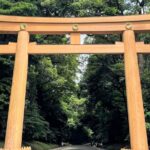
Orihime Shrine, red gates and a reason to make a wish
Ashikaga Orihime Jinja is linked with Orihime, a figure associated with weaving, prosperity, and matchmaking. The shrine also draws on the Japanese story of Orihime and Hikoboshi, lovers separated by the Milky Way.
That connection makes this a natural stop for couples, families, and anyone interested in Japanese customs around love and good fortune. The shrine is also described as a place to pray for the removal of negativity, so it has more than a romantic angle.
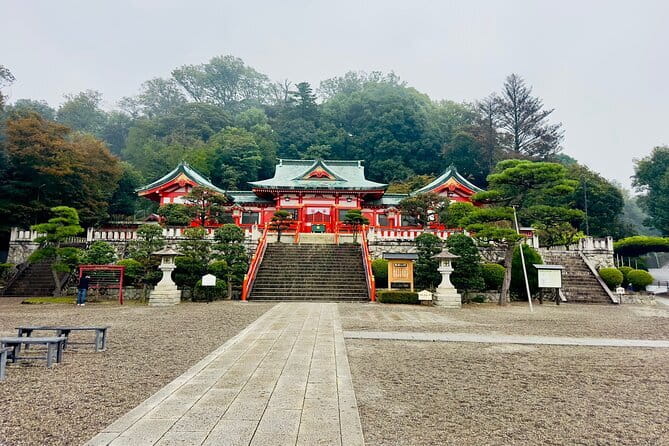
You have about one hour here, with no admission charge listed. The approach includes around 200 steps and red torii gates. The climb gives the visit a physical element, and from the hill you can look over Ashikaga City. Cherry blossoms and autumn foliage add seasonal appeal, although no particular season is guaranteed by the tour.
I would treat this as a short cultural visit rather than a major shrine complex. The free admission keeps it easy to include, but anyone with mobility concerns should ask the provider about the approach before booking. The tour data says most people can participate, but it does not promise step-free access.
Ashikaga School and Japan’s old center of learning
The ruins of Ashikaga School offer a different kind of history from Tokyo’s temples and museums. The institution is regarded as Japan’s oldest academic center, with origins believed to reach back to the ninth century. It became especially important in the fifteenth century, when students came from across Japan to study Confucian and classical Chinese subjects.
The school’s subjects were broad: medicine, military strategy, astronomy, Buddhism, and philosophy all formed part of its academic world. The samurai lord Oda Nobunaga praised it as Japan’s leading center of learning.
Your visit lasts about an hour and admission is listed as free. Reconstructed buildings and the remaining grounds help you picture how study took place in premodern Japan. This is a good stop for anyone who wants context beyond castles and scenic gardens.
The limitation is pace. You are visiting several places in one day, so an hour will give you an introduction rather than a full study of the site. If your group prefers flowers and shopping, this may feel like a quiet pause. If you enjoy old institutions and Japanese history, it gives the day useful weight.
Ashikaga Museum of Art, an optional cultural pause
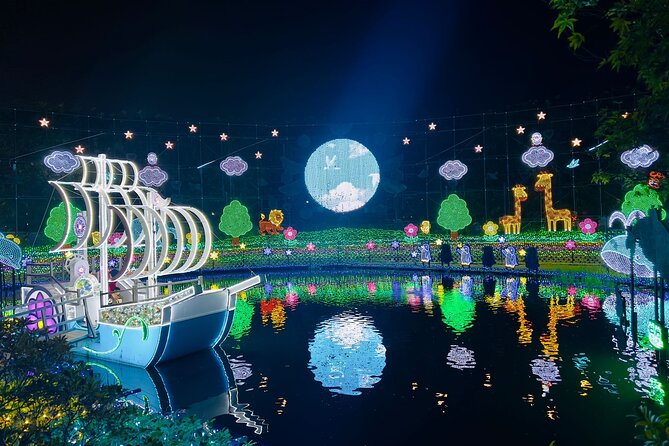
The Ashikaga Museum of Art focuses on Japanese and international contemporary art, with temporary exhibitions that may cover different eras and styles. Its building combines traditional Japanese touches with modern design, and it also hosts lectures, workshops, and other events.
The tour allows one hour here, but the admission fee is not included. The listed cost is $5 per person. That small extra charge is reasonable if the current exhibition interests you, but you should check what is showing before deciding. Museum quality depends heavily on the program running on your date.
I like having this option in the route because it breaks up the outdoor stops. It also gives you a chance to see how a regional Japanese museum presents art and local culture, rather than spending the entire day at commercial attractions.
Still, the stop is not essential for everyone. If you already plan to spend the full three hours at the flower park or need more time at the outlets, the museum may feel like an add-on. Since entry is separate, you can weigh the current exhibition against your group’s interests.
Three hours at Sano Premium Outlets
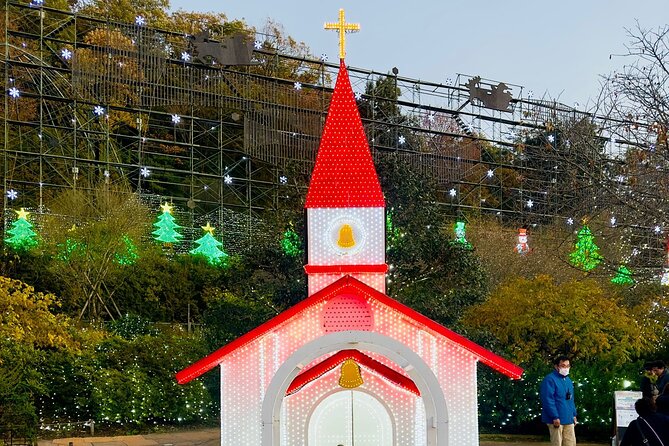
Sano Premium Outlets is not a token shopping stop. The schedule gives you about three hours, enough time to browse more than 180 Japanese and international brand stores, eat, and compare prices.
The open-air mall is modeled after American outlet centers, with a pedestrian layout and views toward the surrounding mountains, including Mount Mikamo. You can find designer and luxury labels alongside popular brands, with discounts varying by store and season.
This is where the private vehicle earns its keep. Shopping bags are awkward on trains, and a private group can return to the vehicle without coordinating with other passengers. The three-hour slot also suits families and friends with different shopping habits, since nobody needs to stay beside the same store.
The drawback is opportunity cost. Three hours is a substantial part of a 10-hour day. If you are visiting Ashikaga mainly for flowers and heritage sites, the outlet may cut into time that could be spent elsewhere. If shopping is part of your Japan trip, it makes the schedule feel more useful.
Dining choices are available at the mall, but the supplied details do not specify restaurants, meal prices, or whether lunch is arranged. Plan to buy food there or ask the provider how meal timing fits the route.


What the $500 group price really buys you
The advertised price is $500 per group of up to five, not $500 per person. At full capacity, that works out to $100 each before the separate attraction fees. For a family or small group, that can be fair for a private vehicle, driver-guide, child seats, air-conditioning, hotspot, and a full day outside Tokyo.
You also avoid paying for separate public transport between several Tochigi locations. That convenience has value, especially if you are traveling with children, older relatives, shopping bags, or a group that does not want to split up.
The price is less attractive for one or two people. The flower park fee is listed at $10 per person, and the art museum costs $5 per person. Those charges are not part of the tour price. Alcohol is also excluded, though that is unlikely to affect most people on a daytime cultural outing.
All fees and taxes for the tour service are included, but do not read that as including every site admission. Budget the two stated entrance fees separately. Since the park price and displays may vary by season, confirm the current details before departure.
Who will get the most from this long day
I would recommend this outing to a family or group of friends that wants several Tochigi sights in one private ride. Couples may especially like the Orihime Shrine, while flower lovers should make Ashikaga Flower Park the deciding factor.
It also suits visitors who have already seen much of central Tokyo and want a rural day without arranging a complicated route themselves. The mix is broad enough to keep different interests in play: history at Ashikaga School, art, shopping, and flowers.
I would hesitate if you dislike long drives, prefer a slow visit to one place, or expect a highly scripted guided tour with constant historical commentary. The route is ambitious, and the quality of the day depends on traffic, seasonal flowers, the museum program, and your driver-guide.
The private format helps. Only your group participates, so you can discuss the pace and interests directly with the provider. The tour description also notes that changes and customization may be possible, but one past booking included an altered plan involving Nikko and a birthday celebration. Confirm any additions in advance, since extra driving can change the character and cost of the day.
Practical details before you commit
Confirmation arrives at booking, and free cancellation is available until 24 hours before the start time. Changes or cancellations made inside that window are not accepted for a refund, so check your plans carefully.
Service animals are allowed, the meeting point is near public transportation, and most people can participate. The activity begins at Tokyo Station and returns there. It is not presented as a hotel pickup service, so use the stated station meeting point when planning your morning.
The overall rating supplied for the experience is 4 out of 5 from six ratings. The strongest praise centers on the private outing and the courteous service from Hana Rana Nadir. The main criticism concerns the long drive and driving style on one occasion. I would use that mixed record as a prompt for clear communication, not as an automatic reason to reject the tour.
Should you book this Ashikaga day trip?
Book it if you want a private, all-in-one day beyond Tokyo and the wisteria season or evening illumination is your main goal. The combination of Ashikaga Flower Park, Orihime Shrine, Ashikaga School, art, and outlets gives you much more variety than a simple garden visit.
I would book for four or five people, when the $500 price is shared, and I would confirm the flower timing and driver arrangements before paying. Ask how long the drive should take on your date, whether the illumination will be included, and how much commentary you can expect.
Skip it if you want a relaxed single-site visit or do not want to spend up to four hours on the road. For the right group, though, this is a practical way to reach Ashikaga’s flowers and cultural sites without wrestling with the regional transport system.
FAQ
How long does the tour last?
The tour lasts approximately 10 hours.
Where does the tour begin and end?
It begins at Tokyo Station at 1 Chome-9 Marunouchi, Chiyoda City, Tokyo, and ends back at the same meeting point.
How many people can join the private tour?
The price covers one private group of up to five people.
Is transportation included?
Yes. The tour includes private transportation in an air-conditioned vehicle, along with a driver-guide.
Are the Ashikaga Flower Park and art museum entrance fees included?
No. Ashikaga Flower Park is listed at $10 per person, and the Ashikaga Museum of Art is listed at $5 per person. These fees are separate from the tour price.
Are child seats available?
Yes. Child seats are included.
Can I cancel for a full refund?
Yes, if you cancel at least 24 hours before the experience start time. Cancellations or changes made less than 24 hours before the start time are not accepted for a refund.
More 1-Day Tours in Tokyo


More tours in Tokyo we've reviewed






1-Day Tours, compared.
 ★ 5.0Mt Fuji and Hakone 1-Day Bus Tour Return by Bullet TrainFrom $163
 ★ 5.01-Day Tokyo Bus TourFrom $129
 ★ 4.0Mt Fuji & Hakone Cruise, Drum Show Bullet Train 1 Day from TokyoFrom $149
 ★ 4.5Tokyo: DisneySea 1-Day PassportFrom $571 day
 ★ 4.6Tokyo Disneyland 1-Day PassportFrom $571 day
 ★ 4.2Tokyo: Mt. Fuji 5th Station & Hakone Cruise 1-Day Bus TourFrom $12911 hours