
Reviewed · SAMURAI & NINJA EXPERIENCES
Samurai Training Tokyo Asakusa
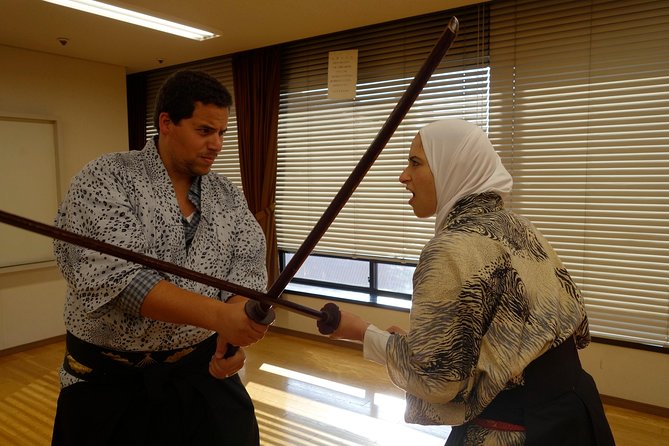
A katana lesson in full samurai clothing is the heart of this Asakusa experience. You learn how to draw and return the sword, practice formal movements, and finish with a choreographed battle and a photo session. I especially like the private format, which gives Jiro and his assistant time to work with each person, and the photo and video package, which lets parents join the action instead of standing behind a camera.
The class suits families particularly well, with a minimum age of six and a gentle approach for children. The main consideration is its scope: this is a fun introduction and staged performance, not an intense martial arts course or a long dojo training session.
In This Review
- Key points to know before booking
- What this Asakusa samurai class really offers
- Meeting in Hanakawado and getting settled
- Changing into samurai clothing
- Greetings, sword drawing, and the first movements
- The staged battle and why kids enjoy it
- Photos, video, and the certificate
- The instructors: Jiro, Aya, and personal attention
- Price and value at $85.89
- Who should book this experience
- Planning it with an Asakusa day
- Is Samurai Training Tokyo Asakusa worth booking?
- FAQ
- How long does Samurai Training Tokyo Asakusa last?
- What is included in the price?
- What age can children be?
- Is this a private activity?
- Where does the experience begin and end?
- Is hotel pickup included?
- What happens if I need to cancel?
Key points to know before booking
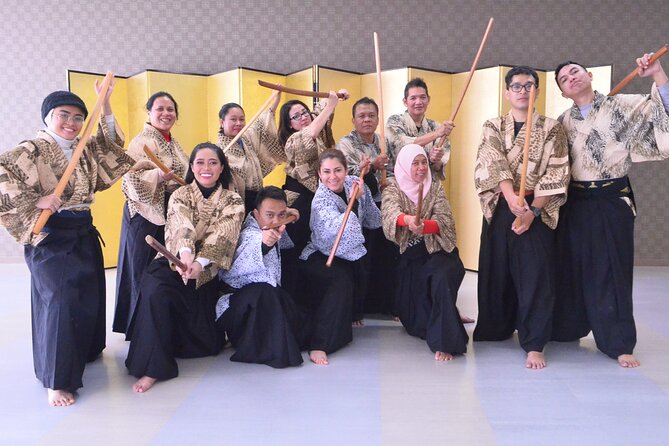
- Private instruction: Only your own group participates, with a maximum of 10 people per booking.
- Jiro’s friendly teaching: Jiro and assistants such as Aya guide beginners through the movements in English.
- Full costume and sword work: You dress as a samurai and practice drawing, sheathing, forms, and mock combat.
- Useful keepsakes: Photos, video footage, a facial photo, and a certificate are included.
- Family-friendly pace: Children from age six can join when accompanied by an adult.
- Asakusa location: The meeting point is near public transportation, but the exact training site can change with group size.
What this Asakusa samurai class really offers
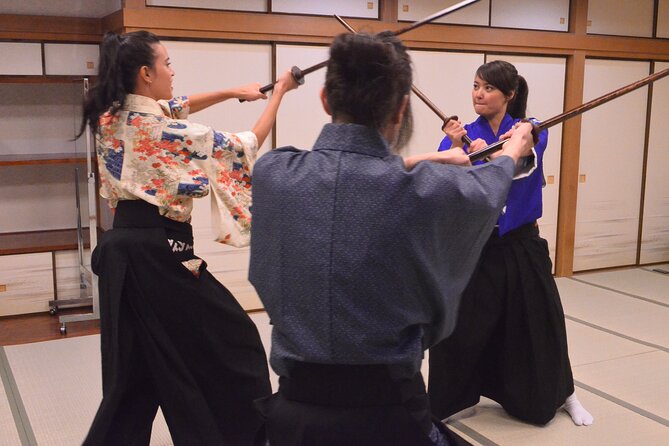
This is a short, theatrical introduction to samurai sword culture, designed for people with little or no previous training. The experience combines costume, etiquette, basic katana handling, simple choreography, and staged combat.
That combination matters. A serious sword school would require much more time and practice, while a costume photo session might give you a fine portrait but little sense of how the weapon is handled. Here, you get a small lesson wrapped inside a memorable activity.
The advertised duration is about one hour. In practice, you should allow roughly one to one and a half hours for meeting up, changing clothes, taking pictures, training, recording video, changing back, and receiving your certificate. It is easy to fit into a busy Tokyo day, especially if you are already exploring Asakusa.
The experience is private, so your group does not have to perform in front of strangers. That makes a real difference for children, shy adults, and families who want to laugh and make mistakes together without feeling watched by a larger class.
A few more Tokyo tours and experiences worth a look


Meeting in Hanakawado and getting settled
The listed starting point is 花川戸サニーマンション, 2-chōme-2-5 Hanakawado, Taito City, Tokyo 111-0033. The activity ends back at the meeting point, and hotel pickup and drop-off are not included.
There is one logistical point to take seriously. The meeting place and actual training location can vary depending on the number of participants. The operator says it will contact you at least two days before your reserved date with the final details. Read that message carefully and leave enough time to find the building.
One person had trouble with the initial meetup but found the class itself excellent once the staff arrived and led the way. I would treat that as a reason to arrive early rather than a major flaw. Asakusa is easy to reach by public transportation, but Tokyo station names and building entrances can still cause confusion when you are hurrying.
This is a mobile-ticket activity, so keep the booking information available on your phone. The meeting point is convenient for a day that may also include Senso-ji, Nakamise shopping street, the Sumida River, or Tokyo Skytree.
Changing into samurai clothing
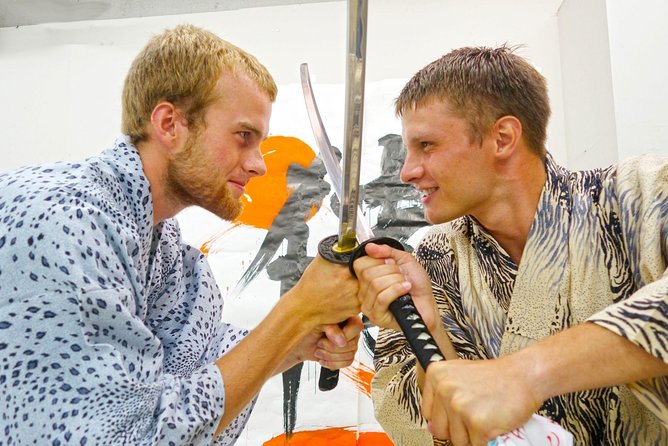
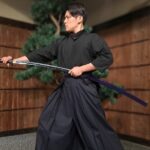
After everyone gathers, you change into the rental costume. This is not a quick hat-and-robe photo stop. The process includes putting on the clothing, belting the sword, and arranging yourself for formal pictures.
The costume is one of the strongest parts of the experience because it changes your posture and attitude. Children often respond quickly to the role, while adults tend to relax once the lesson begins. The clothing also gives the photos more character than ordinary vacation snapshots.
You then pose with the sword before formal instruction starts. This opening photo session gives the instructor a chance to check the costume and sword belt, and it gives you a record of the full outfit before the more active part begins.
The class is not described as a historically exact reconstruction of samurai dress, so you should approach the clothing as part of an educational performance rather than museum-level costuming. Still, the complete outfit makes the session feel like more than a standard tourist photo opportunity.
Greetings, sword drawing, and the first movements
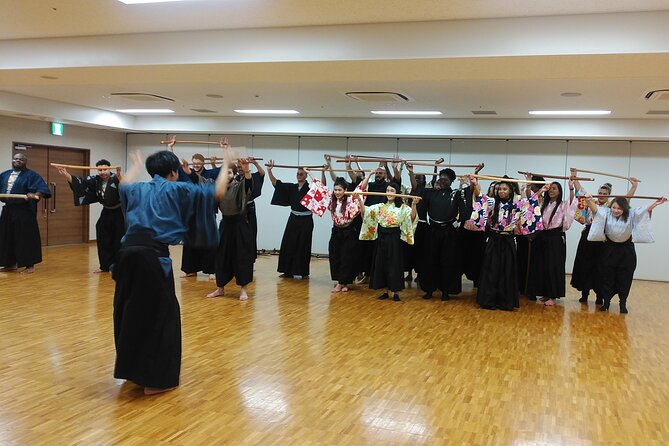
The training begins with greetings. That detail is easy to overlook, but it gives the lesson structure and introduces the idea that samurai sword work involves discipline and ceremony, not only swinging a blade.
You practice battou, drawing the katana, and nattou, returning it to its sheath. These movements require care and concentration. Even in a short session, they help you understand that sword handling is controlled and deliberate.
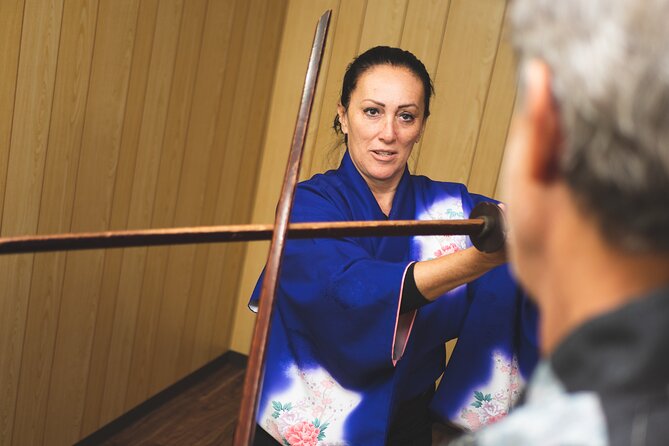
Next comes basic kata, or set movements. Jiro demonstrates the sequence, then helps each person copy it. The private setup is useful here. Someone who has never held a sword may need a slower explanation, while a teenager or adult with martial arts experience may pick up the routine more quickly.
The teaching style is a good fit for mixed-age groups. Jiro is described as patient, funny, and easy to understand, and his assistants help with clothing, positioning, photographs, and the flow of the class. English instruction is available, which makes the lesson accessible to international visitors.
You should expect a beginner-level routine rather than technical sword mastery. The value is in learning the basic vocabulary of the movements and feeling how much coordination even a simple sequence requires.
The staged battle and why kids enjoy it
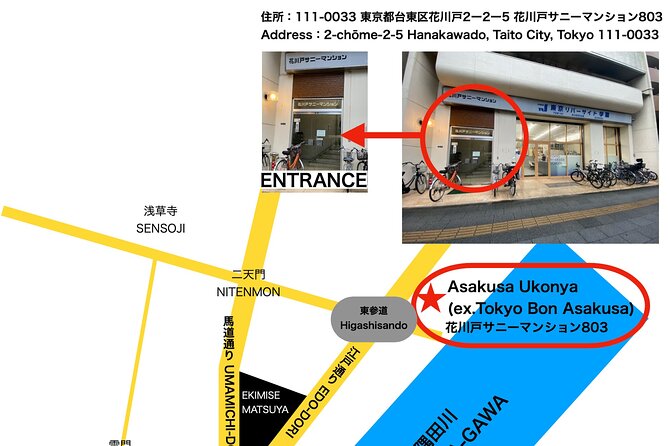
The mock combat portion is the most playful part of the class. You learn movements that resemble a samurai battle, then perform a choreographed exchange rather than engaging in unscripted contact fighting.
That distinction is important. This is not a competition, and the experience is not presented as hard physical combat. It is a controlled performance designed to be safe, understandable, and entertaining for beginners.
Children from age six can participate, provided an adult accompanies them. The instructor can pair with a child during the simulated battle, which helps younger participants feel supported. Older children and teenagers often get extra satisfaction from learning a routine they can repeat later.
The activity does involve movement and a small workout. You should have a moderate level of physical fitness, though nothing in the description suggests an advanced athletic requirement. Wear something that allows you to move comfortably underneath the costume, and remember that the class includes standing, sword motions, and staged fighting.
If someone in your group has martial arts experience, the session may feel light. That is not a criticism so much as a clear way to set expectations. The class is best understood as an entertaining samurai introduction, not a substitute for serious kenjutsu practice.
A few more Tokyo tours and experiences worth a look
Photos, video, and the certificate
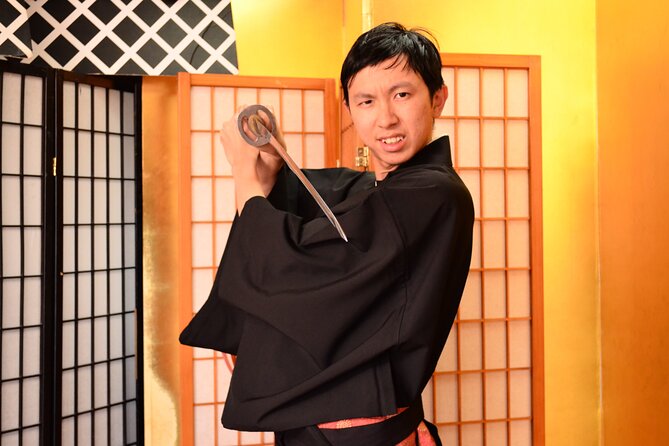
Photography is built into the experience from the beginning. The instructor and assistant take pictures during the costume portion and training, then record the final battle sequence.
This is a practical benefit for families. Parents do not have to choose between watching a child perform and filming the entire activity. Couples and groups of friends also get pictures together rather than relying on hurried phone selfies.
Video footage is included, and the staff may also use your smartphone or tablet to record the action. The materials are provided on an SD card or memory device, according to the experience details and participant accounts. Bring a way to read the card later, and make sure your device has enough storage if you want additional footage recorded on it.
The photo quality receives especially strong praise. Jiro is described as an excellent photographer, and the final battle videos can become a favorite souvenir because they show the whole sequence rather than only a posed portrait.
At the end, you receive a certificate of recognition with your photo, along with a separate photo of your face and the photo data. It is a playful souvenir, not an official martial arts qualification. For children, though, the certificate gives the experience a satisfying finish and helps turn an hour of dress-up into a story they can retell.
The instructors: Jiro, Aya, and personal attention
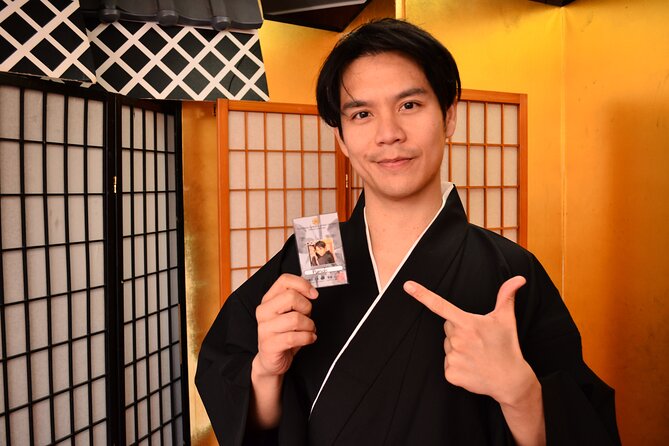
Jiro is the instructor most often named in the experience details. Aya is identified as an assistant, and another account refers to Akari, so staffing may vary by date. The important point is that the class includes an instructor and support person who handle both teaching and the practical work of costumes and recording.
The experience is supervised by Ukon Takafuji, Iemoto of Kenbu Ukon-ryu, described as a world-renowned samurai kenbu school. That gives the activity a connection to a formal performance tradition, while the class itself remains accessible to first-time participants.
The strongest teaching advantage is personal attention. With only your group present and a maximum of 10 people, the staff can adjust explanations, pair with children, and help everyone complete the routine.
This also makes the activity a good choice for a couple or solo visitor. You do not need to bring a large family group to make the booking worthwhile. A private class can feel more relaxed when the group is small, though the price is charged per person.
Price and value at $85.89
At $85.89 per person, this is not the cheapest costume activity in Tokyo. The price makes more sense when you count what is included: a private lesson, instructor, costume rental, sword training, photographs, video footage, and a certificate with your picture.
The private format is the key value point. You are paying for a scheduled experience reserved for your own group, rather than a large public demonstration. That means more direct instruction and less waiting for other participants to finish.
The photos and video also add practical value. A family of four could easily spend money on separate professional photographs, while here the images are part of the session. You also get to participate instead of serving as the family photographer.
Still, the price may feel high if you only want a quick costume portrait or if you are seeking serious sword instruction. The class is short, and its combat section is choreographed. Book it for the combination of role-play, beginner instruction, private attention, and lasting media, not for advanced martial arts training.
The experience is often booked well ahead, with an average booking lead time of 48 days. That suggests you should reserve it early if the timing matters, especially during a tightly planned Tokyo visit.
Who should book this experience
I would recommend it most strongly to families with children, couples looking for an unusual Tokyo activity, and friends who want a shared souvenir rather than another sightseeing stop.
It works particularly well for:
- Families with children age six and older
- Teenagers who enjoy performance, costumes, or action themes
- Adults who want a playful introduction to samurai traditions
- Couples who want photos and video together
- Solo visitors comfortable taking part in a private lesson
- Visitors with limited time in Asakusa
The class can also suit someone with martial arts experience, but that person should expect a light, introductory session. A second-degree black belt may enjoy the humor and choreography, but will not find a demanding dojo workout.
Children must be accompanied by an adult. The maximum booking size is 10 people, so larger families or groups may need to check how the operator will arrange the session.
Planning it with an Asakusa day
Because the class begins and ends in the Hanakawado area, it pairs naturally with other Asakusa sights. You can schedule temple visits, shopping, river walks, or a meal before or after the lesson.
Do not assume the exact training room from the address alone. Wait for the operator’s final message, since the meeting and activity locations may change with group size. Keep the morning or afternoon around the class reasonably open so you are not racing from one side of Tokyo.
The activity requires moderate physical fitness. Comfortable clothing under the rental outfit is sensible, and punctuality is still the safest plan even though the staff have shown some flexibility when participants arrived late.
Cancellation terms are strict near the date. Cancel at least six full days before the start time for a full refund. Cancellation two to six full days ahead receives a 50 percent refund, while cancellation less than two full days ahead is nonrefundable. If the operator cancels because the minimum number of participants is not met, you receive a different option or a full refund.
Is Samurai Training Tokyo Asakusa worth booking?
Book it if you want a compact, private activity that combines Japanese culture, costume, movement, humor, and professional-looking souvenirs. The personal teaching from Jiro, the child-friendly mock battles, and the included photos and video make the $85.89 price easier to justify.
Skip it if you want an intensive sword course, a long historical lecture, or a completely spontaneous stop with no fixed meeting details. For most families and first-time visitors, though, this is a well-shaped Asakusa experience: short enough for a busy itinerary, active enough to feel like an event, and memorable long after the costume comes off.
FAQ
How long does Samurai Training Tokyo Asakusa last?
The advertised duration is approximately one hour. Allow about one to one and a half hours if you include meeting up, changing clothes, photographs, training, video recording, changing back, and receiving the certificate.
What is included in the price?
The price includes a local instructor, rental costume, photographs, and video footage. You also receive a certificate with your photo, a facial photo, and photo data.
What age can children be?
The minimum age is six. Children must be accompanied by an adult.
Is this a private activity?
Yes. Only your own group participates, with a maximum of 10 people per booking.
Where does the experience begin and end?
The listed starting point is 花川戸サニーマンション, 2-chōme-2-5 Hanakawado, Taito City, Tokyo 111-0033, Japan. The activity ends back at the meeting point, but the meeting place and training location can vary depending on group size.
Is hotel pickup included?
No. Hotel pickup and drop-off are not included. The meeting point is near public transportation.
What happens if I need to cancel?
Cancel at least six full days before the start time for a full refund. Cancellation two to six full days before the start time receives a 50 percent refund. Cancellations less than two full days before the experience are nonrefundable.
More Samurai & Ninja Experiences in Tokyo
More Asakusa Tours in Tokyo
More tours in Tokyo we've reviewed




Samurai & Ninja Experiences, compared.
 ★ 4.5Tokyo: Samurai Restaurant Show Ticket with 2 DrinksFrom $551h 30m
 ★ 4.6Tokyo: Samurai Ninja Museum Guided tour and ExperienceFrom $27
 ★ 5.0Tokyo: Samurai Sword & Archery Class from Samurai DescendantFrom $1933 hours
 ★ 5.0Best Samurai Experience in TokyoFrom $65
 ★ 5.0Ninja Experience (Family Friendly) at Samurai Ninja Museum TOKYOFrom $47
 ★ 4.6Tokyo: Samurai Entertainment Night Show in Kanda ShrineFrom $412 - 3 hours