
Reviewed · ASAKUSA TOURS
Asakusa: TOKYO SKYTREE Exploration after History Tour
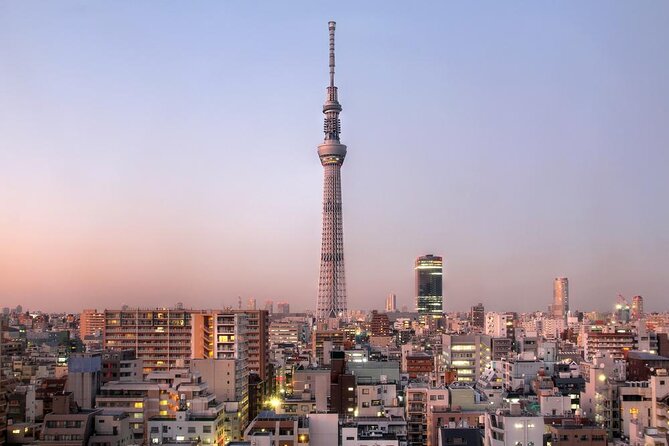
Tokyo Skytree is the flashy finish, but Asakusa’s old streets and temples give this half-day outing its meaning. You begin beside the Sumida River, follow a guide through Kaminarimon, Nakamise, Senso-ji, and Asakusa Shrine, then ride the train to Tokyo’s tallest structure.
I like the clear pairing of ground-level history and high-level views. I also like the small maximum group of eight, plus headsets for groups of three or more. The main drawback is the fixed schedule: Skytree tickets are purchased ahead of time, so the tour cannot be canceled or changed for a refund.
In This Review
- Key points to know before booking
- Why this Asakusa and Skytree combination works
- Starting beside the Sumida River at Sumida Park
- Building a religious primer at the Asakusa Culture Tourist Information Center
- Reading the dragons at Kaminarimon
- Taking your time along Nakamise Shopping Street
- Seeing Hozomon before entering Senso-ji
- Understanding prayer at Senso-ji Temple
- Finding two traditions together at Asakusa Shrine
- Riding from Asakusa to Tokyo Skytree
- Going up both Tokyo Skytree observation decks
- Is $118.24 a fair price?
- Who should book this afternoon tour?
- Should you book Asakusa and Skytree together?
- FAQ
- How long does the Asakusa and Tokyo Skytree tour last?
- What time and where does the tour start?
- Where does the tour end?
- Are Tokyo Skytree tickets included?
- Is the train fare included?
- Can I cancel or change the booking?
Key points to know before booking
- Asakusa comes first: Spend about two and a half hours exploring temples, gates, parks, and religious traditions on foot.
- Both Skytree decks are included: Your ticket covers the upper and lower observation areas, not just the basic entry.
- Guides add the meaning: Taka, Junko Yamashita, Keiko, and Sue are among the guides named for this experience, with praise for their clear explanations and patient pace.
- The group stays small: A maximum of eight people allows room for questions and more direct help from the guide.
- You pay a little extra for convenience: The listed price is $118.24 per person, including Skytree admission, but not the 160-yen train fare.
- The tour ends at Skytree: There is no return to your hotel, so plan your evening around Oshiage.
Why this Asakusa and Skytree combination works
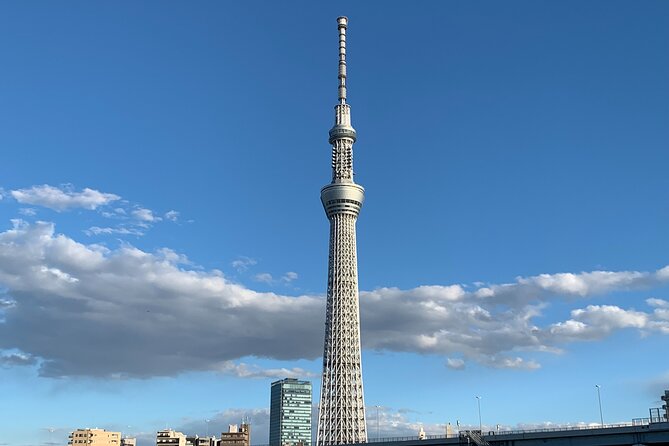
Asakusa and Tokyo Skytree show two very different sides of the city. Asakusa is centered on old religious sites, traditional shopping, and the memory of Edo-era Tokyo. Skytree is a modern tower with wide views and a large shopping and dining complex below.
You could visit both places on your own, but the order matters. A guide gives you a framework for understanding what you see in Asakusa before you look down on the city from above. The explanations cover Japan’s long period of isolation, the relationship between Buddhism and Shinto, religious symbols, and the way Japanese art influenced the wider world.
The tour lasts about three and a half hours and begins at 1:30 pm. That makes it a useful afternoon plan, especially if you want to visit Asakusa without spending a full day on a walking tour. You should expect a steady amount of walking, followed by the train ride and time at Skytree.
The experience is limited to eight people. That is small enough for a guide to answer questions without turning every stop into a crowd-control exercise. For groups of three or more, headsets are provided so you can hear the guide while standing a short distance away from the group.
A few more Tokyo tours and experiences worth a look


Starting beside the Sumida River at Sumida Park
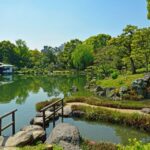
The tour begins at Sumida Park, near the Sumida River. This is more than a pleasant opening walk. Your guide uses the riverfront to explain Japan’s long period of restricted contact with foreign countries and the gradual opening of the country to the outside world.
That background helps you read Asakusa as more than a collection of attractive buildings. The area’s identity is tied to trade, religion, entertainment, and the growth of Edo, the former name for Tokyo. The guide also explains why the Netherlands retained a special place in Japan’s limited foreign contact during the isolation period.
You spend about 20 minutes here. It is a short stop, but a useful one. I like beginning with a broad historical question before moving into the smaller details of gates, statues, rituals, and streets.
Building a religious primer at the Asakusa Culture Tourist Information Center
Next, the tour pauses for about 20 minutes at the Asakusa Culture Tourist Information Center. The key purpose is to establish the difference between Japan’s two major religious traditions, Buddhism and Shinto.
This explanation is valuable because the sites ahead can confuse first-time visitors. A Buddhist temple and a Shinto shrine may sit close together, and their customs can overlap in ways that are not obvious at first glance. If you know what to look for, the incense, gates, worship practices, and symbols become easier to understand.
The center also provides a useful orientation point in the district. Since the tour is led on foot, this early explanation helps you follow the route rather than simply trail behind the guide. The walking itself is manageable for most people, but you will get more from it if you stay engaged with the details.
Reading the dragons at Kaminarimon
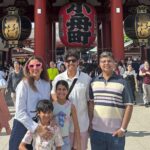
Kaminarimon is Asakusa’s famous entrance gate, marked by its large red lantern. It is one of Tokyo’s most recognizable photo stops, but the guide turns it into more than a quick picture.
Here, you learn about the difference between Japanese and Western ideas of dragons. The explanation focuses on the contrasting roles these creatures play in the two traditions. That kind of comparison is typical of the tour: the guide does not only name a symbol, but explains how its meaning fits into Japanese culture.
You spend around 15 minutes at the gate. The stop can be crowded, and the area is one of Asakusa’s busiest points, so the headset is particularly useful for a larger small group. Keep your attention on the guide as well as the camera. The point is not just to see the lantern, but to understand why the entrance feels important.
Taking your time along Nakamise Shopping Street
From Kaminarimon, you walk through Nakamise Shopping Street for about 40 minutes. This is the longest stop before Senso-ji, and it gives you a closer look at the commercial side of Asakusa.
Nakamise is one of Japan’s oldest shopping streets. Shops line the approach to the temple, selling souvenirs, snacks, crafts, and traditional items. The tour focuses less on shopping recommendations and more on the ideas represented along the route.
Your guide discusses Buddhist symbols such as the vajra, also called tokko, and explains the effect of ukiyo-e woodblock prints. Those prints did not remain a local art form. They helped shape the way Japan was viewed abroad and influenced Western artists.
You should not expect a dedicated shopping break here. The guide is moving the group toward the temple, and the purpose is cultural interpretation. Still, you may have a chance to notice items you want to revisit later. Since the tour ends at Skytree rather than returning to Nakamise, plan carefully if you hope to buy something during the walk.
A few more Tokyo tours and experiences worth a look



Seeing Hozomon before entering Senso-ji
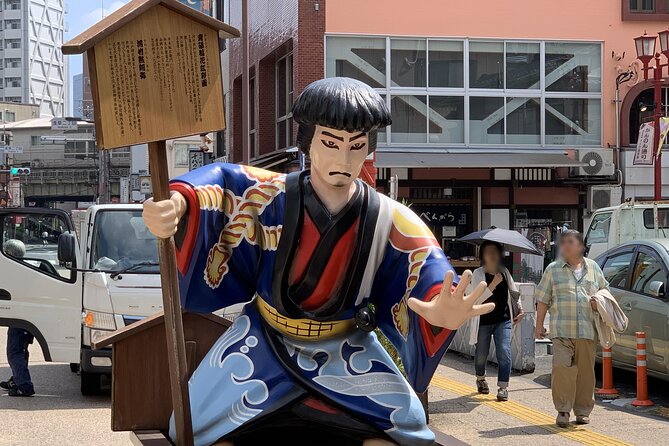
Hozomon is another major gate on the approach to Senso-ji. You spend about 15 minutes here, with the guide drawing a comparison between medieval Japanese and European ways of thinking.
The value of this stop is the change in scale. Kaminarimon introduces you to a famous public gateway, while Hozomon brings you closer to the temple complex itself. The guide helps connect architecture and belief with everyday human concerns that were not as different across cultures as you might expect.
This is a good place to slow down. You may be tempted to hurry toward the main hall, especially if you are visiting Asakusa for the first time. The tour’s structure gives you a reason to pause at the gate and consider the site before reaching the central temple.
Understanding prayer at Senso-ji Temple
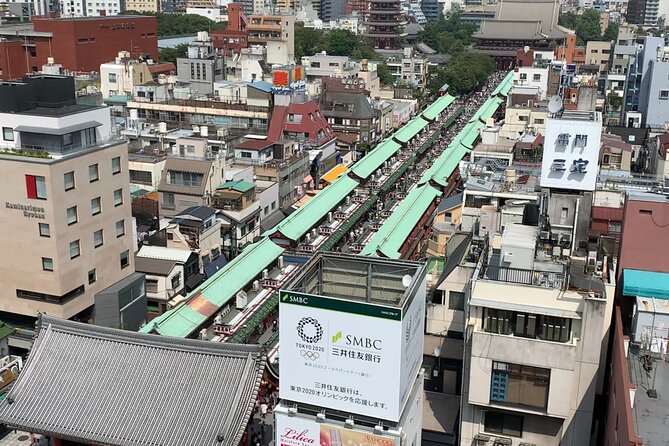
Senso-ji is Tokyo’s oldest Buddhist temple and the main religious landmark on this route. The stop lasts about 15 minutes, so this is an introduction rather than an exhaustive temple visit.
The guide compares medieval Japan with Europe and explains how prayer differs in Buddhism and Shinto. That distinction is especially useful here because the next stop, Asakusa Shrine, is on the same grounds. Without an explanation, the two traditions can appear blended together.
You should treat this portion as a guided orientation. The tour does not promise a long period for private reflection, extensive photography, or a full temple study. If Senso-ji is a top personal interest, you may want to return on another visit, when you can move at your own pace.
The guides named for this experience are a major part of its appeal. Taka is described as attentive to the meaning of each building and willing to answer questions. Junko Yamashita is noted for clear historical explanations and a thoughtful manner. Keiko is praised for having prepared carefully around both Asakusa and Skytree, while Sue is described as polite, patient, and strong in English.
Finding two traditions together at Asakusa Shrine
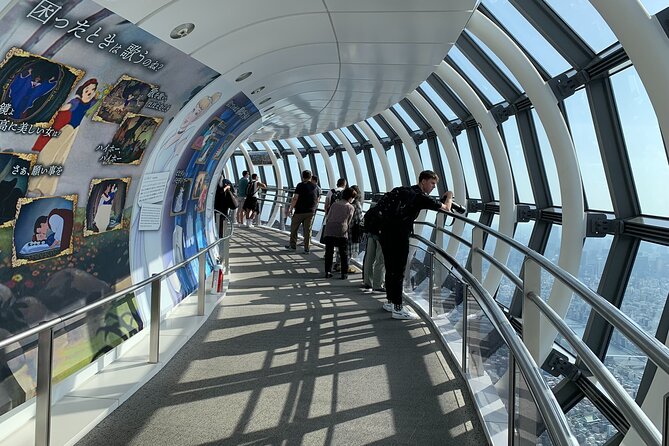
The final Asakusa stop is Asakusa Shrine, where you spend about 15 minutes. It shares the same general grounds and long history as Senso-ji, making it one of the most interesting parts of the walk.
The guide explains how a Shinto shrine and a Buddhist temple could coexist for more than a thousand years. This is a useful correction to the idea that Japan’s religions always occupied separate spaces. Here, the physical closeness of the sites makes the relationship visible.
I especially like this stop because it gives the earlier religious explanation a real setting. You are not simply memorizing two definitions. You are looking at a temple and shrine side by side, then learning how worship and history connected them.
Asakusa Shrine is also a calmer counterpoint to the larger temple approach. The tour still moves at a set pace, but this pause gives you a chance to absorb the contrast before the experience changes direction.
Riding from Asakusa to Tokyo Skytree
After the walking portion, you take the train from Asakusa Station to Tokyo Skytree Station. The train fare is not included and costs 160 yen.
This is a simple transfer, but it matters when you plan the day. The tour does not include hotel pickup or drop-off, and it ends at Tokyo Skytree. You are responsible for reaching the starting point at 2-chome-20-6 Kaminarimon, Taito City, by the 1:30 pm start time.
The short train ride also creates a clear break between old Tokyo and modern Tokyo. You finish among temples, gates, and traditional shops, then arrive at a huge complex built around one of the city’s most visible contemporary landmarks.
Going up both Tokyo Skytree observation decks
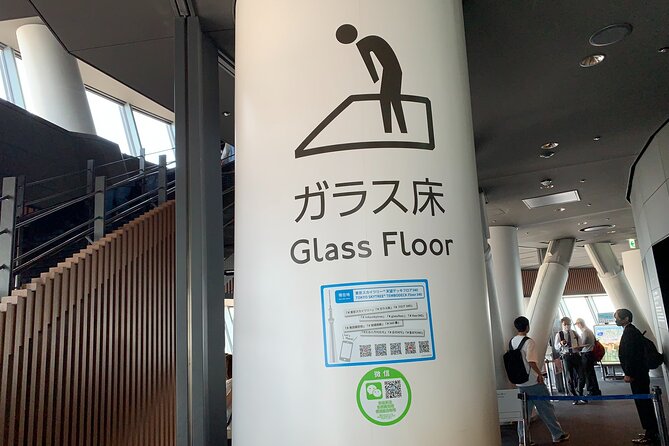
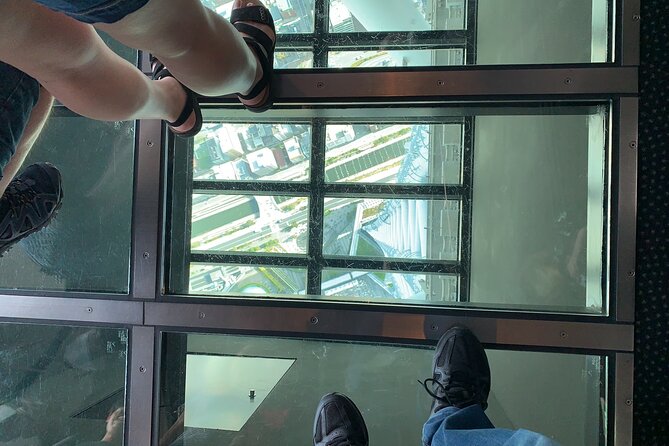
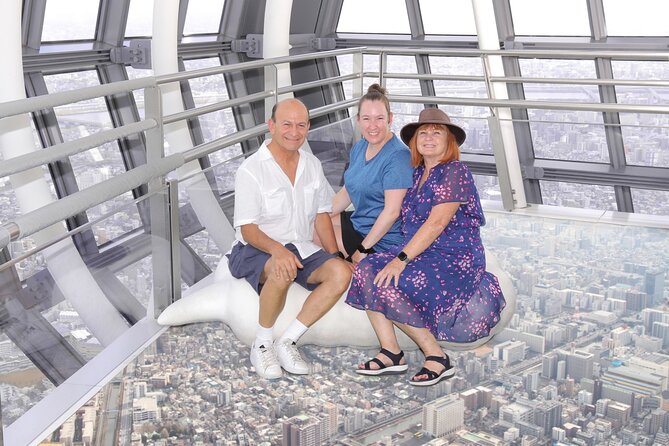
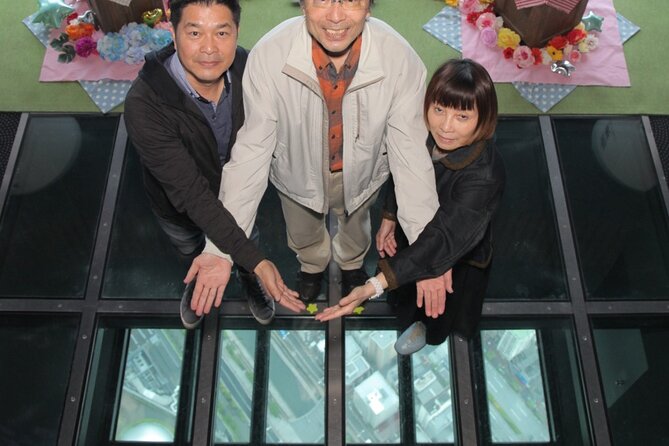
The Skytree portion lasts about one hour. Admission to both the lower and upper observation decks is included, which is important when comparing this tour with a simple Asakusa walk or a basic tower ticket.
From the decks, you get broad views across Tokyo. The main attraction is scale. After learning about the city’s older districts at street level, you can see how far Tokyo extends from above. The views also offer plenty of photo opportunities, though visibility depends on the weather.
One person specifically found the weather disappointing, a reminder that a tower visit is never fully under your control. On a clear day, the height is the point. On a hazy or rainy day, the experience may feel less impressive, even though the tower itself remains worth visiting.
You also have time below for shopping and dining at the Skytree complex. The tour does not include a meal or a dedicated shopping allowance beyond the stated time, so think of this as a useful finishing period rather than a full evening itinerary.
Is $118.24 a fair price?
At $118.24 per person, this is not the cheapest way to see Asakusa and Skytree. The price makes more sense if you value a guide who can explain the religious and historical details, a small group, and the convenience of having both observation decks arranged in advance.
The included Skytree combo ticket is a meaningful part of the cost. You are also paying for the guide’s time, the walking route, the cultural explanations, and the coordination between the two districts. The 160-yen train fare is modest, but it is still worth budgeting for.
For an independent visitor who enjoys researching temples and handling tickets, the tour may feel expensive. For a first visit to Tokyo, a family group, or anyone who wants context without sorting out the route, the price can be reasonable.
The small group is another value point. With no more than eight people, you are less likely to lose the guide in the crowd than on a large city tour. Headsets are supplied for groups of three or more, which helps during explanations at busy gates and temple grounds.
Who should book this afternoon tour?
I would choose this experience if you want a compact introduction to Asakusa and prefer a guide to explain what you are seeing. It suits families especially well, since the route combines visual landmarks, stories, shopping street scenery, and a major city view.
It is also a good fit if you want both traditional and modern Tokyo in one plan. The religious sites provide cultural context, while Skytree supplies the easy-to-grasp payoff of seeing the city from above.
You may want a different arrangement if you prefer long, quiet visits at temples, extended shopping time, or complete control over the schedule. The tour moves through seven Asakusa stops before the tower, and each stop has a set amount of time.
The nonrefundable policy deserves serious attention. Skytree tickets are bought as soon as the booking is made, so you cannot cancel or change the date for a refund. If the operator cancels because the minimum number is not reached, you will be offered another date or experience, or a full refund. That protection does not apply to a customer cancellation.
Should you book Asakusa and Skytree together?
Book it if you want clear cultural explanations, a small group, and a smooth afternoon linking Asakusa’s most important sites with both Tokyo Skytree decks. The strongest part is the way guides such as Taka, Junko, Keiko, and Sue explain the relationship between Buddhism and Shinto instead of treating the temples as scenery.
Skip it if you already know Asakusa well, want to linger at Senso-ji, or need a flexible booking. For everyone else, this is a practical introduction to one of Tokyo’s most rewarding districts, with a high viewpoint added at exactly the right moment.
FAQ
How long does the Asakusa and Tokyo Skytree tour last?
The experience lasts approximately 3 hours and 30 minutes, including the Asakusa walking route, the train ride, and time at Tokyo Skytree.
What time and where does the tour start?
The tour starts at 1:30 pm at 2-chome-20-6 Kaminarimon, Taito City, Tokyo 111-0034, Japan.
Where does the tour end?
The tour ends at Tokyo Skytree, at 1-chome-1-2 Oshiage, Sumida City, Tokyo 131-0045, Japan. Hotel pickup and drop-off are not included.
Are Tokyo Skytree tickets included?
Yes. The price includes combo tickets for both the upper and lower Tokyo Skytree observation decks.
Is the train fare included?
No. The 160-yen train fare from Asakusa Station to Tokyo Skytree Station is paid separately.
Can I cancel or change the booking?
No. The experience is nonrefundable and cannot be changed for any reason because Skytree tickets are purchased soon after booking. If the experience is canceled because the minimum number of participants is not met, you will be offered another date or experience, or a full refund.
More Historical Tours in Tokyo

More Tickets & Passes in Tokyo
More Asakusa Tours in Tokyo

More tours in Tokyo we've reviewed




Asakusa Tours, compared.
 ★ 4.8Tokyo: Japanese Dance Cabaret Theater Asakusa-Kaguwa TicketFrom $492 hours
 ★ 4.7Tokyo: Meiji Shrine, Asakusa, Skytree Bus Tour and CruiseFrom $12210 hours
 ★ 4.9Tokyo: Roll and Authentic Sushi Making Class in AsakusaFrom $581h 40m
 ★ 4.8Tokyo: Asakusa Walking Tour with Sensoji Temple VisitFrom $222 hours
 ★ 5.0Tokyo Asakusa Rickshaw TourFrom $42
 ★ 4.5Tokyo Panoramic 1 Day: Meiji Shrine, Asakusa, Odaiba and SKYTREE®From $85