
Reviewed · SUSHI MAKING CLASSES
Sushi Making Tokyo with Traditional Rickshaw Ride Tour in Asakusa
Asakusa gives you two very different ways to meet Tokyo in one outing: you make your own sushi before settling into a traditional rickshaw for a slow ride through an area shaped by Edo-era Tokyo. It is a hands-on meal followed by a street-level look at one of the city’s most atmospheric districts.
I like the mix of food and local culture, and I like that the entire experience runs in English. Staff members with overseas experience host the class and ride, with guides such as Shogo and Hero singled out for warm, entertaining service. The main drawback is the price: at $156.77 per person, this is a substantial half-day purchase, especially since hotel pickup and drop-off are not included.
In This Review
- Key points at a glance
- Sushi first, then Asakusa by rickshaw
- What the sushi class adds to your Tokyo visit
- Riding through Asakusa’s old Tokyo atmosphere
- Why the English-language hosting matters
- A close look at the $156.77 price
- Meeting point and practical planning
- Who will enjoy this combination most
- The strongest part is the human touch
- Is this an authentic Tokyo experience?
- Should you book Sushi Making Tokyo with Rickshaw Ride?
- FAQ
- How long does the tour last?
- Where does the tour start?
- Where does the tour end?
- Is the tour conducted in English?
- Is the sushi meal included?
- Is hotel pickup included?
- How many people can join the tour?
- What happens if the weather is poor?
- Can I cancel for a full refund?
Key points at a glance
- Two experiences in 3.5 hours: The tour combines a sushi class with roughly 1.5 hours in a traditional rickshaw.
- A meal you help create: Ingredients and the cooking-class meal are included, so the class is not just a demonstration.
- English throughout: An English-speaking instructor and local staff lead the experience.
- Asakusa from the street: The rickshaw ride focuses on an old-fashioned side of Tokyo, with local stories about the district.
- Small enough to feel organized, but not intimate: The maximum group size is 30 people.
- Weather matters: Poor weather can lead to a different date or a full refund.
Sushi first, then Asakusa by rickshaw
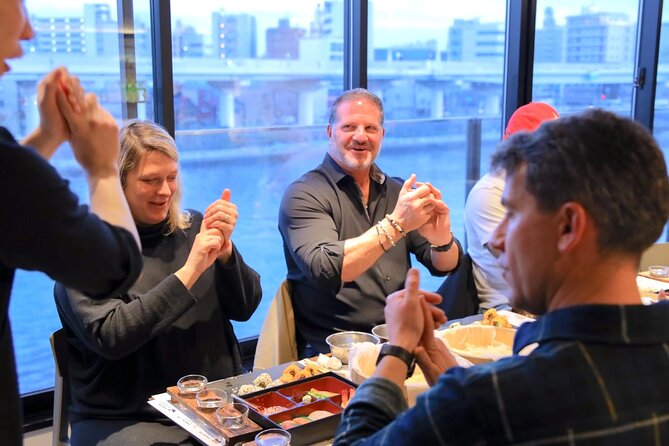
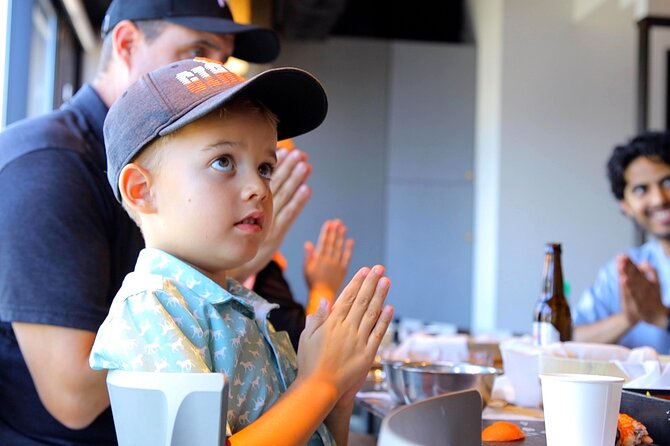
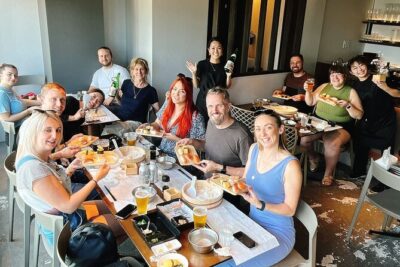
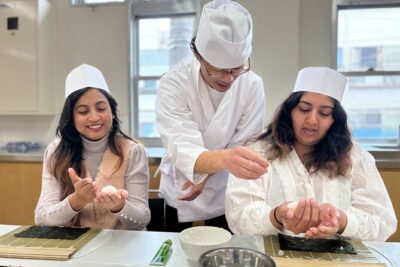
The appeal here is the contrast. You begin indoors, working with sushi ingredients and learning a food craft that many visitors only encounter at a restaurant counter. Then you move outdoors and let someone else do the work as you ride through Asakusa.
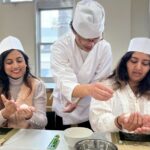
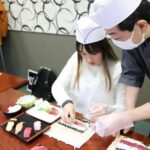
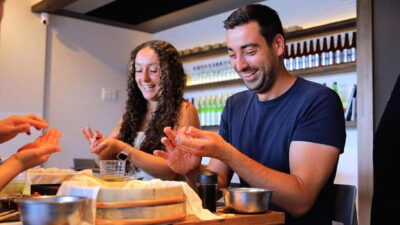
The cooking portion is listed at about 1 hour and 50 minutes. That gives you more time than a quick rolling demonstration. You can expect an English-speaking instructor to guide the process, with ingredients supplied and the resulting food forming part of your meal.
This matters because sushi can look simple until you try to shape it neatly. The class gives you a direct connection to the food, rather than asking you to sit back and watch a chef perform. You also get something useful at the end: a meal you have helped prepare.
The full activity lasts approximately 3 hours and 30 minutes. The published timing gives about 1 hour and 50 minutes for the class and 1 hour and 30 minutes for the Asakusa portion. Allow a little flexibility, since the overall duration is approximate.
A few more Tokyo tours and experiences worth a look
What the sushi class adds to your Tokyo visit
A standard sushi meal is easy to find in Tokyo. A class gives you a different kind of memory. You are not simply choosing pieces from a menu. You are learning how the food comes together, handling the ingredients, and seeing the care required to produce a clean result.
The class is also a sensible choice for people who want an activity that crosses age groups. The supplied information says most people can participate, and there is no requirement for prior sushi-making experience. That makes it a practical option for families, couples, and first-time visitors looking for an activity with a clear beginning and end.
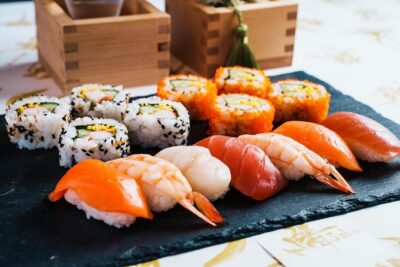
The food itself is included, which improves the value. You do not pay for the lesson and then discover that lunch costs extra. The ingredients and cooking-class meal are part of the listed price.
Still, keep your expectations measured. The information does not specify the exact sushi styles, number of pieces, menu, or classroom setup. If you are seeking a professional chef’s course with advanced knife work or a long lesson on fish preparation, this may not be that. Think of it as a friendly cultural class and meal, not vocational training.
The high rating and full recommendation rate suggest that the staff and food have made a strong impression. Positive comments repeatedly focus on the fresh food, the fun atmosphere, and the pleasure of making sushi rather than simply eating it.
Riding through Asakusa’s old Tokyo atmosphere
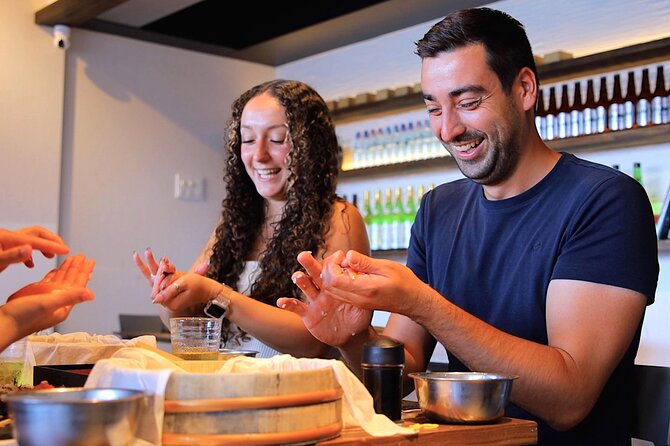
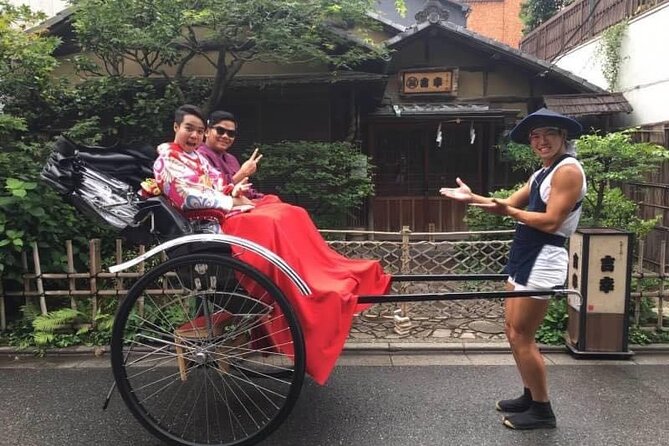
After the food experience, the rickshaw ride gives you a change of pace. The ride takes about 1 hour and 30 minutes, which is long enough to see Asakusa without feeling like a quick photo stop.
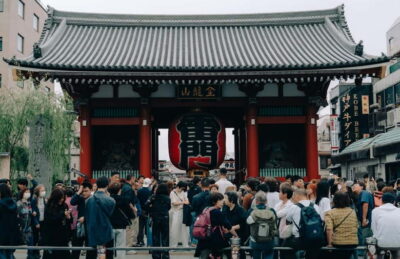
Asakusa is one of Tokyo’s best areas for a sense of the city’s older character. The tour presents it as a district that recalls the Edo period, when Tokyo was still known as Edo. From a rickshaw, you sit close to the street and move at a much slower pace than the usual train, taxi, or walking tour.
That slower pace is the point. You have time to look around, notice the streets, and listen to a local guide explain what you are seeing. The ride is not just transport between two places. It is the sightseeing portion of the experience.
The guides are part of the charm. Shogo receives specific praise for an excellent ride, while Hero is described as kind, enthusiastic, and eager to make people happy. The staff’s overseas experience is useful here because the tour is conducted in English from start to finish.
You should also understand what a rickshaw ride can and cannot do. It offers a comfortable way to see Asakusa and hear stories, but it is not a substitute for a full walking tour or a museum visit. You will be shown the district from the road, not given a long academic lecture on every landmark.
The ride works especially well if you have already spent much of your day walking Tokyo’s crowded streets. You can sit back, take photographs, and let the guide handle the route.
Why the English-language hosting matters
Food classes can become frustrating when instructions are hard to follow. Here, the entire tour is conducted in English, including the cooking class and rickshaw portion.
That does not mean the experience is formal or heavily scripted. The strongest praise focuses on the staff’s friendliness and sense of fun. The hosts are presented as local staff with overseas experience, so you can expect communication aimed at international visitors rather than a class designed only for Japanese speakers.
That is important during sushi preparation. Small steps can affect the final result, and you want to understand what you are doing instead of copying movements without context.
The rickshaw guide also adds more than directions. One account specifically highlights stories about Asakusa’s past. Another describes Hero as both kind and well informed about the area, though the tour information does not promise a specific guide on every departure.
You should treat the named guides as examples, not guarantees. Guide assignments can change, but the provider’s stated approach is clear: English service and a hospitable local host.
A close look at the $156.77 price
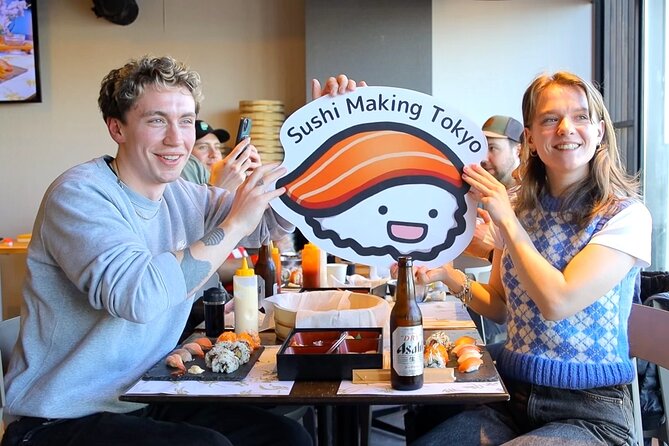
At $156.77 per person, this tour sits well above the cost of a regular Tokyo meal or a short sightseeing ride. Its value comes from combining three paid elements: instruction, food, and a lengthy rickshaw tour.
You are not paying for a restaurant dinner alone. You receive the ingredients, the cooking class, the meal you make, and about 90 minutes of guided sightseeing in Asakusa. The English support also matters if you want a smooth first experience with sushi preparation.
The price makes more sense for visitors who would otherwise book separate activities. If you already plan to take a rickshaw ride and want a sushi class, combining them saves planning time and gives the day a clear shape.
The value is weaker if you only want a cheap introduction to sushi or a short ride near Sensoji. In that case, the combined price may feel high. You are paying for convenience, a hosted experience, and the unusual pairing of food and transport.
The group maximum is 30 people. That is not a tiny class, so you should not assume one-on-one instruction or a private rickshaw itinerary. The experience can still be well organized, but the atmosphere may feel more like a shared activity than a personal lesson.
A few more Tokyo tours and experiences worth a look

Meeting point and practical planning
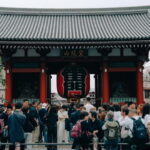
The tour starts at 2-chōme-17-9 Kaminarimon, Taito City, Tokyo 111-0034, near public transportation. It ends back at the same meeting point, which makes planning your next Tokyo stop easier.
There is no hotel pickup or drop-off. You need to reach Kaminarimon yourself and return there at the end. Build in enough time to find the exact address, especially if you are unfamiliar with Asakusa’s streets.
The mobile ticket is convenient for a phone-based booking. Confirmation is provided within 48 hours, subject to availability, so do not assume that a last-minute reservation is final until you receive confirmation.
The tour requires good weather. If poor weather forces cancellation, you are offered another date or a full refund. For your own planning, avoid placing a tightly timed reservation immediately afterward. A food class, group movement, and outdoor ride all work better with a little breathing room.
Free cancellation is available if you cancel at least 24 hours before the start time. Changes or cancellations inside that window are not accepted for a refund.
Who will enjoy this combination most
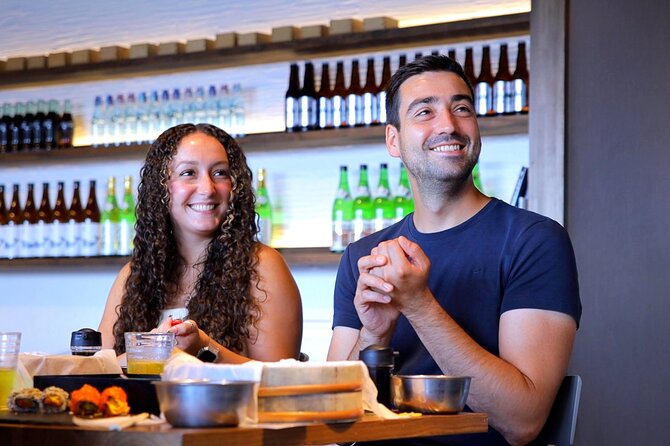
I would choose this for someone visiting Tokyo for the first time who wants a planned cultural activity without spending an entire day on a tour. It gives you food, a local host, and a well-known historic district in one booking.
It also suits:
- Couples looking for a shared activity beyond restaurant dining
- Families who want a hands-on food experience
- Visitors who prefer English instruction
- People who want to see Asakusa without walking every street
- Anyone interested in traditional Japanese transport
- Short-stay visitors trying to fit several experiences into one day
It may not suit you if you want a private tour, a very small class, or a detailed specialist lesson in sushi technique. The group can reach 30 people, and the exact menu and guide are not specified.
It is also less appealing for anyone who dislikes fixed activities. The tour has a set meeting point, set duration, and weather condition. You cannot simply wander off and change the plan halfway through.
The strongest part is the human touch
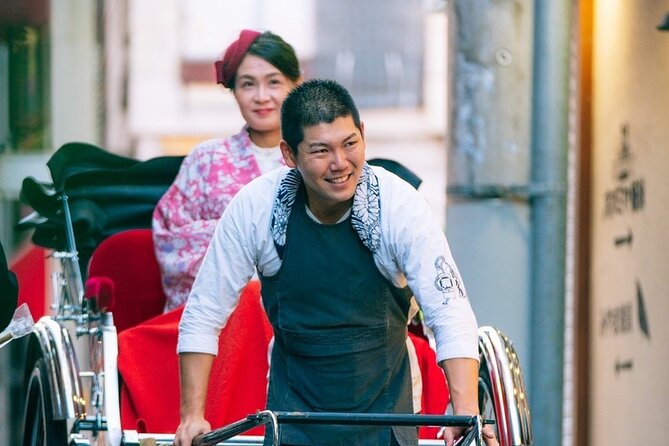
The food and rickshaw are the headline attractions, but the staff make the combination work. Friendly hosting appears again and again in the experience’s feedback, with comments describing the team as fun, welcoming, and easy to talk to.
That quality matters in a class. A stiff instructor can make a beginner feel clumsy. A relaxed host can turn imperfect sushi into part of the fun.
The same is true in the rickshaw. A ride through Asakusa is more memorable when the driver shares stories and responds to your questions. Shogo and Hero are named in especially warm feedback, but you should expect the assigned guide to vary.
The staff’s international experience is another practical advantage. You can ask questions in English and receive cultural context without needing to rely on translation apps.
Is this an authentic Tokyo experience?
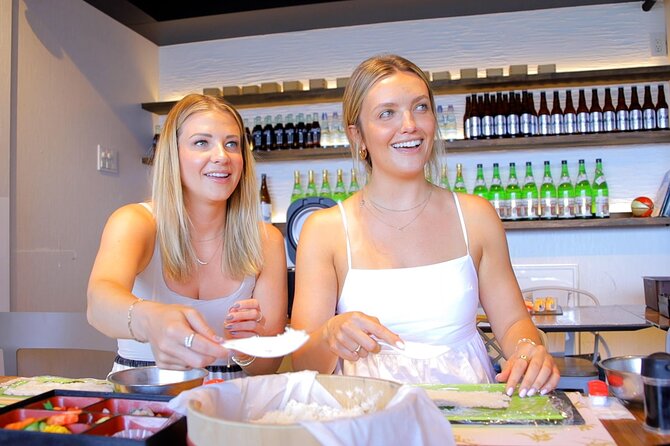
It offers a genuine connection to two parts of Japanese culture, food and traditional city life, but it is still a packaged tourist activity. That is not a criticism. The point is to give you access in a short, approachable format.
Making sushi is more personal than ordering it. Riding a rickshaw is more distinctive than taking a taxi through the same streets. At the same time, the class does not turn you into a sushi chef, and the ride does not reveal every corner of Asakusa.
I see the value in that balance. You get an accessible introduction, useful English guidance, and enough time for both activities to feel substantial. You do not need to organize several separate bookings or figure out how to combine a cooking school with a rickshaw company.
The experience carries a five-star rating from 12 submitted ratings and a 100 percent recommendation rate. That is encouraging, though the sample is small. I would use those figures as a sign of consistently positive impressions, not as proof that every person will find the price perfect.
Should you book Sushi Making Tokyo with Rickshaw Ride?
Book it if you want one organized Asakusa outing that combines a meal, a class, and a traditional ride. The English-language format, included ingredients, and long rickshaw segment give the tour more substance than a simple food demonstration or quick sightseeing loop.
I would especially recommend it for first-time visitors, families, and couples who enjoy active cultural experiences. The staff’s warm style, along with the specific praise for Shogo and Hero, is a strong reason to expect a friendly day.
Think twice if $156.77 feels high for a 3.5-hour activity, or if you prefer small private tours. Check the weather forecast, plan your own transport to Kaminarimon, and leave extra time around the booking.
For the right visitor, this is a smart way to pair sushi-making with Asakusa’s old-Tokyo atmosphere without turning the day into a complicated schedule.
FAQ
How long does the tour last?
The experience lasts approximately 3 hours and 30 minutes.
Where does the tour start?
It starts at 2-chōme-17-9 Kaminarimon, Taito City, Tokyo 111-0034, Japan.
Where does the tour end?
The activity ends back at the meeting point.
Is the tour conducted in English?
Yes. The entire tour is conducted in English, including the sushi class and rickshaw ride.
Is the sushi meal included?
Yes. The price includes the cooking-class ingredients and meal.
Is hotel pickup included?
No. Hotel pickup and drop-off are not included.
How many people can join the tour?
The maximum group size is 30 people.
What happens if the weather is poor?
If the tour is canceled because of poor weather, you can receive a different date or a full refund.
Can I cancel for a full refund?
Yes. You can cancel at least 24 hours before the experience start time for a full refund. Cancellations or changes made less than 24 hours before the start time are not accepted for a refund.
More Rickshaw Rides in Tokyo
More Sushi Making Classes in Tokyo
More Asakusa Tours in Tokyo
More tours in Tokyo we've reviewed





Sushi Making Classes, compared.
 ★ 5.0Sushi Making Tokyo Roll and Authentic Japanese Sushi ClassFrom $59
 ★ 4.9Tokyo: Roll and Authentic Sushi Making Class in AsakusaFrom $581h 40m
 ★ 5.0Make Sushi and Create Unforgettable Memories in TokyoFrom $79
 ★ 4.9Tokyo: Sushi Making Class in a Happi Coat near a Famous SpotFrom $421h 30m
 ★ 5.0Tokyo Sushi Making Class in Tsukiji with Professional ChefFrom $49
 ★ 5.0Tokyo Night Foodie Tour in Shinjuku – Seasonal Sushi, Wagyu BeefFrom $111