
Reviewed · TEMPLES & MEDITATION
Tokyo: Meiji Shrine Walking Tour — Shinto & Imperial System
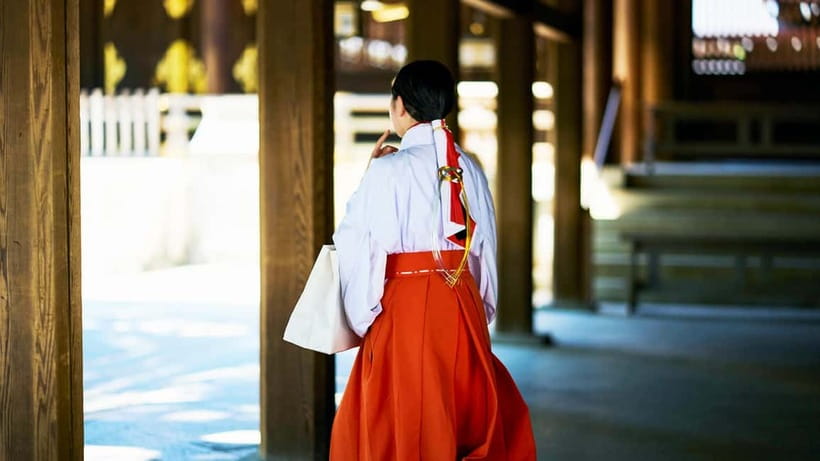
Meiji Shrine is one of Tokyo’s best escapes: a silent forest tucked beside Harajuku’s neon and shopping streets. On this small-group walk of up to 10 people, you follow shaded paths beneath roughly 100,000 trees, then enter one of Japan’s most important Shinto shrines through a huge wooden torii.
I like two things here. First, the guide gives you the customs you need to visit respectfully, from where to walk near the torii to how to cleanse and pray. Second, the tour connects the shrine to Japan’s shift from samurai rule to the modern imperial state, instead of treating it as a pretty photo stop.
The main consideration is that this is a walking tour in English only. You may spend up to two hours on foot, and the shrine grounds can be busy, especially on weekends and during important Japanese holidays.
In This Review
- Key points before you book
- Why Meiji Shrine works so well as a first Tokyo tour
- Meeting at Harajuku Station and finding the first torii
- Sake barrels, wine barrels, and the meeting of old and new Japan
- The 12-meter torii made from ancient cypress
- Emperor Meiji, Empress Shoken, and Japan’s imperial system
- Shrine etiquette made practical, not intimidating
- What the small group adds to the experience
- Forest Terrace Meiji Jingu and Café Mori no Terrace
- Is $23 a fair price for 90 to 135 minutes?
- Who should book this Meiji Shrine walk?
- Should you book the Meiji Shrine Walking Tour?
- FAQ
- How long does the Meiji Shrine walking tour last?
- How much does the tour cost?
- Where does the tour begin?
- Where does the tour finish?
- Is the tour conducted in English?
- How many people can join the group?
- What is the large torii made from?
- Can I buy charms and fortunes at Meiji Shrine?
- Can I cancel for a full refund?
Key points before you book
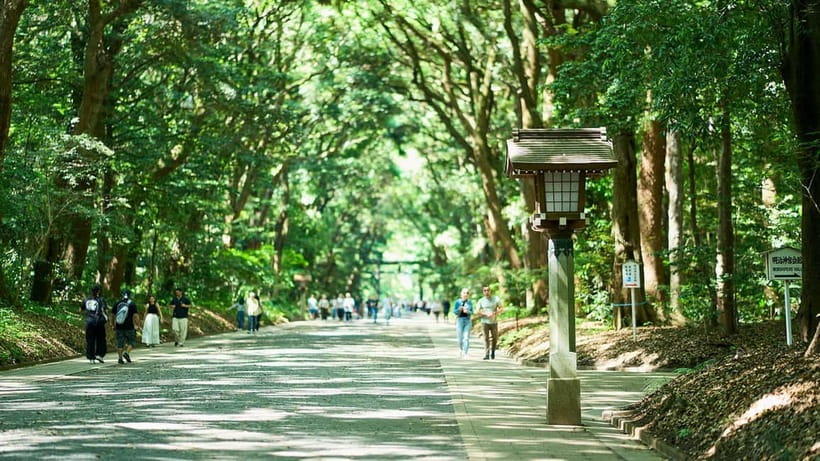
- A quiet forest beside Harajuku: The sound of Tokyo fades quickly among approximately 100,000 trees.
- A remarkable entrance gate: The largest wooden torii is about 12 meters tall and made from a 1,500-year-old Taiwanese cypress.
- Shinto made understandable: Your guide explains shrine etiquette, offerings, fortunes, amulets, and the difference between shrines and Buddhist temples.
- History with a clear storyline: The walk links Emperor Meiji, Empress Shoken, the imperial system, and Japan’s move into the modern age.
- Small groups help: With no more than 10 people, it is easier to ask questions and get help with rituals or photographs.
- A gentle finish: The final stop is Café Mori no Terrace at Forest Terrace Meiji Jingu, where you can pause for tea and light snacks.
Why Meiji Shrine works so well as a first Tokyo tour
Harajuku is usually associated with fashion, youth culture, and crowded shopping lanes. Meiji Shrine offers the opposite experience only a short walk away. The forest path is broad, shaded, and calm, with birdsong replacing much of the city noise.
That change in mood is the tour’s first great lesson. Meiji Shrine is not an isolated country temple. It is a major urban shrine used by people who live, work, shop, and celebrate in Tokyo. The setting shows how Japanese religious life can exist alongside one of the world’s busiest cities.
The guide also gives you a useful framework for understanding Japan. You learn how Shinto relates to nature and sacred presence, why a shrine is not the same as a Buddhist temple, and how to behave without treating local customs as a museum display.
Several guides receive especially warm praise for their clear English and friendly manner. Keiko, Yuuka, Ayaka, Yuki, and Nonoka are among the names associated with particularly engaging tours. The exact guide depends on the departure, but the common thread is a willingness to answer questions, adjust explanations to the group, and help with practical details such as taking pictures or handling a shrine fortune.
A few more Tokyo tours and experiences worth a look

Meeting at Harajuku Station and finding the first torii
The tour begins at Harajuku Station, though the exact meeting point can vary by booking option. The listed location is near the shrine’s entrance, at approximately 35.6700901, 139.7024662, so check your confirmation carefully before setting out.
From the station, the walk heads toward Meiji Jingu’s first torii, sometimes called the Ichino Torii. This is where the city begins to give way to the forest. Your guide sets the tone by explaining that a torii marks the boundary between ordinary space and a sacred area.
One small detail matters here. The central line of the approach, called seichu, is traditionally reserved for deities. You are encouraged to walk along the side of the path rather than straight down the middle. It is an easy custom to follow once someone explains it, and it changes the way you enter the shrine.
This is also a useful moment to ask basic questions. If you are unsure about bows, cleansing, offerings, or where to stand, ask early. Guides such as Yuuka and Keiko have helped visitors understand these steps without making them feel awkward.
Sake barrels, wine barrels, and the meeting of old and new Japan
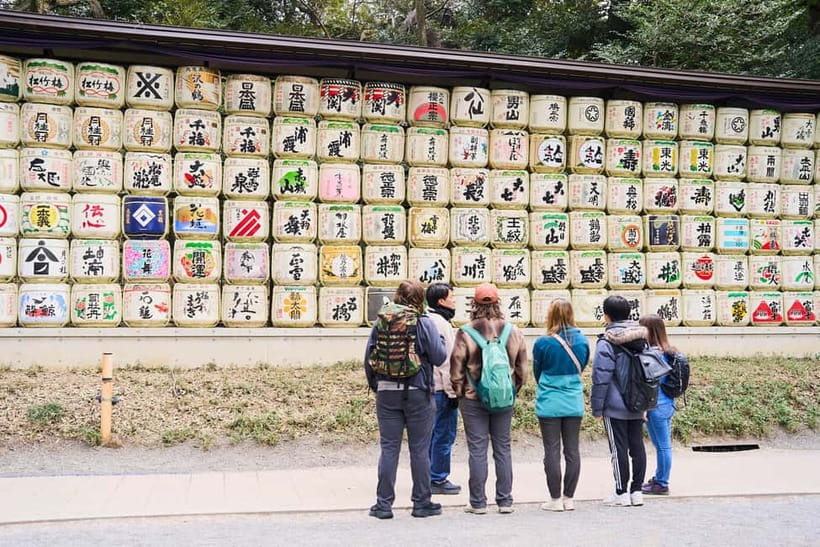
As you continue, you pass rows of consecrated sake barrels. They are a familiar image from Meiji Shrine, but a guide adds the missing context. The barrels are connected to offerings and support from sake producers, showing how religious institutions and everyday industries have long been linked in Japan.
The tour also points out consecrated wine barrels. Their presence is a good reminder that Meiji Shrine is tied to the Meiji period, when Japan was changing at remarkable speed and looking outward after centuries of restricted foreign contact.
These displays make the historical story easier to follow. Japan did not simply abandon its old customs and become modern overnight. Traditional ceremonies, sacred places, imperial symbolism, foreign influence, and new industries developed side by side.
The stop is short, around five to ten minutes, but it gives you something concrete to look at while the guide explains the period. Without that explanation, the barrels can seem like decorative objects. With it, they become clues to Japan’s changing identity.
The 12-meter torii made from ancient cypress

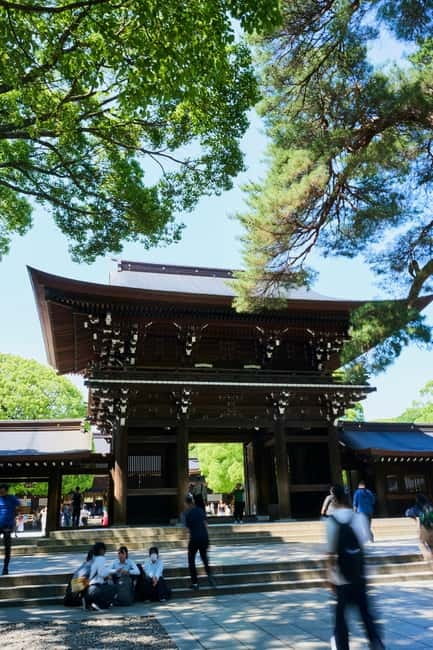
The tour then reaches the large torii, one of the most impressive sights on the approach. At about 12 meters high, it has a powerful, simple shape. The wood came from a Taiwanese cypress estimated to be 1,500 years old.
The scale is hard to judge in photographs. Standing below it gives you a better sense of its size and of the careful transition from the ordinary city into the shrine’s sacred grounds.
Your guide again explains the custom of keeping to the side as you pass through. This is one of the most useful parts of the experience because it gives you a rule you can use at other Shinto shrines during the rest of your trip.
Take photographs here, but do not rush. The torii is one of the few places where the shrine’s architecture makes a grand first impression. After it, the forest path becomes the main attraction.
Emperor Meiji, Empress Shoken, and Japan’s imperial system
The central historical theme is the imperial system and the role of Emperor Meiji. The tour presents Japan’s long imperial tradition, described here as a system with approximately 2,600 years of history, then focuses on the Meiji period and the country’s transformation from a samurai-led society into a modern state.
That period is easy to oversimplify. A good guide helps you understand the broad sequence: the end of the samurai era, the restoration of imperial rule, the rapid adoption of modern institutions, and Japan’s growing contact with the wider world.
The shrine was built to honor Emperor Meiji and Empress Shoken. Their importance is explained not only through dates and political events, but also through the way the couple is remembered and represented at the shrine.
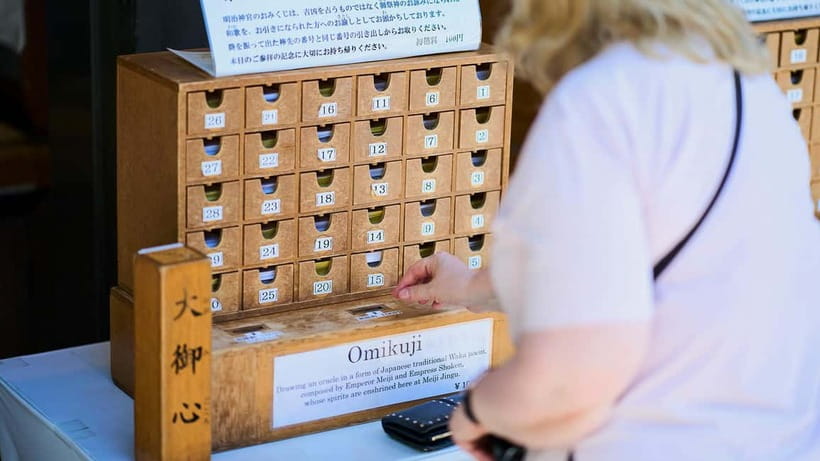
The poetry stop adds a more personal element. You can learn about waka poems written by Emperor Meiji and Empress Shoken. These poems are available with English translations through an omikuji called Omigokoro, making the material approachable even if you cannot read Japanese.
This is one of the tour’s strongest features. The imperial story can feel distant when presented only as a political timeline. The poems offer a small window into the values and concerns associated with the imperial couple.
Other walking tours we've reviewed in Tokyo



Shrine etiquette made practical, not intimidating
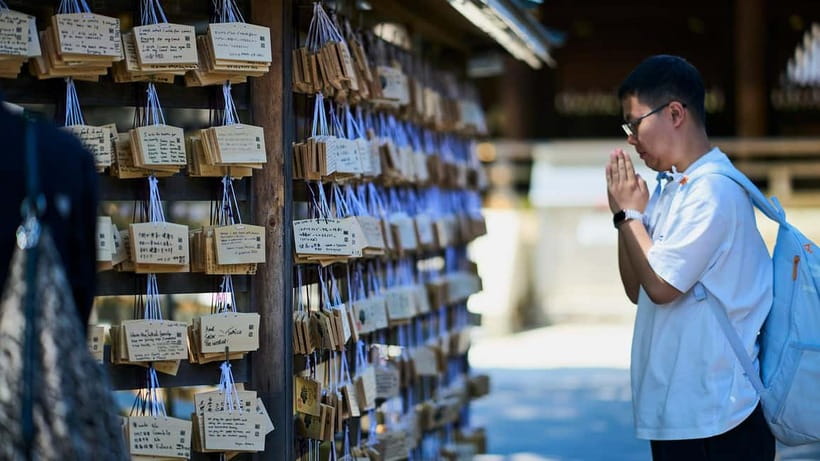
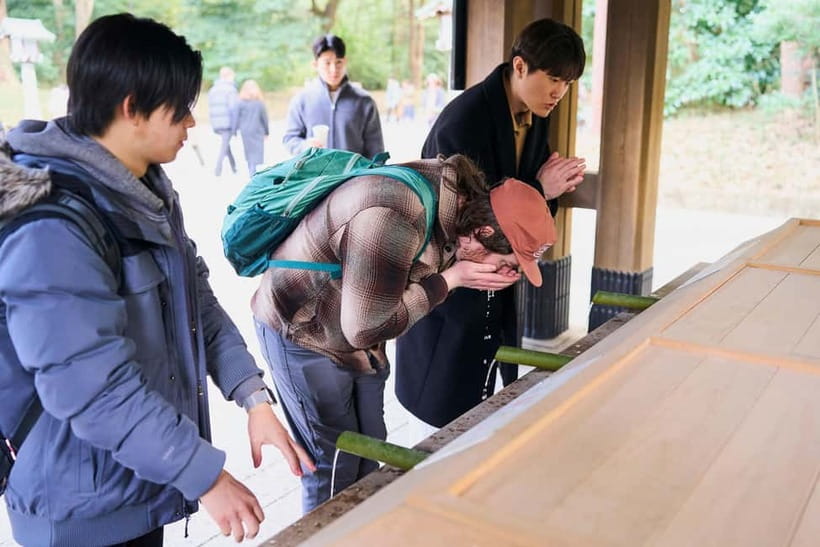
At the main shrine, the guide explains how to pay your respects. The point is not to turn the visit into a test. It is to help you understand what the actions mean and to avoid obvious mistakes.
You will learn about the proper approach, the use of the purification area, and the steps involved in offering a prayer. The exact sequence is much easier to remember when someone demonstrates it at the site.
Guides have also helped visitors choose and understand omamori, the protective charms sold at the shrine. These make meaningful souvenirs because they are tied to a specific place and purpose, rather than being generic Tokyo merchandise.
You may also choose an omikuji. At Meiji Shrine, the Omigokoro fortune is distinctive because it presents a poem connected to Emperor Meiji or Empress Shoken, along with an English translation. If the poem feels unclear, your guide can explain the basic idea.
The tour leaves around 45 minutes for the shrine itself, including free time, photographs, shopping, and sightseeing. That balance matters. A guide who talks the entire time can make a sacred place feel like a classroom, while too much unstructured time leaves you unsure what you are seeing. This format gives you both explanation and room to look around.
Meiji Shrine can also host ceremonies and weddings. You might see one during your visit, though it is not guaranteed. The guide can explain what you are seeing and help you keep an appropriate distance.
What the small group adds to the experience
The maximum group size is 10 people, which is a good fit for a shrine tour. The paths are open, but the important explanations happen outdoors and around places where many people may gather. A large group would be harder to keep together and less comfortable for questions.
A small group also lets the guide respond to the people present. If you are interested in Shinto symbolism, you can ask more about religious practice. If Japanese history interests you, you can spend more time on the Meiji period and imperial system.
Some departures may be even smaller. One person described receiving what felt like a private tour because he was the only participant. That is not something you should count on, but it shows why the group limit can matter.
The guide may also help with photographs. Several visitors appreciated having pictures taken at key points. That is a modest benefit, but useful when you are traveling as a couple or family and do not want every photograph to be a selfie.
Forest Terrace Meiji Jingu and Café Mori no Terrace
The final scheduled stop is Forest Terrace Meiji Jingu, including Café Mori no Terrace. After the shrine, this gives you a chance to sit down, enjoy Japanese tea and light snacks, and take in the scenery.
Do not expect a full meal or a long restaurant visit. The listed break is about 15 minutes, so think of it as a pause at the end of a walking tour. It is especially welcome if you have started early or have been on your feet all morning.
The adjoining gift shop sells a few distinctive items. Eco-blocks made from fragrant Japanese camphor are a practical small souvenir, while miniature barrels of sacred sake offer a more visual reminder of the shrine.
This ending is also convenient because the tour returns you to Harajuku Station. You can continue into Harajuku afterward, visit nearby shopping streets, or use the station to reach another part of Tokyo.
Is $23 a fair price for 90 to 135 minutes?
At $23 per person, this is a reasonable price for a guided introduction to Meiji Shrine. Entry to the grounds itself is not the main expense here. You are paying for explanations, cultural context, help with etiquette, and the chance to ask questions in a small English-speaking group.
The value is strongest if this is your first shrine visit in Japan. Knowing how to enter, where to walk, how to pray, and what an omamori or omikuji means can improve every later shrine visit on your trip.
The price is less compelling if you only want to walk through the forest, take photographs, and leave. You can see the shrine without a guide, and independent visitors may prefer to move at their own pace.
The tour lasts between 90 and 135 minutes, depending on the departure and pace. That is long enough to cover the main approach, shrine customs, historical background, free time, and the café stop without taking up your whole day.
You can cancel up to 24 hours before the activity for a full refund, and the reserve-now, pay-later option keeps your plans flexible. These terms are useful in Tokyo, where weather, jet lag, and changing schedules can affect your plans.
Who should book this Meiji Shrine walk?
I would recommend it to first-time visitors who want a clear introduction to Shinto and modern Japanese history. Families may also appreciate the practical guidance, especially when children want to try a fortune, make an offering, or buy a charm.
It suits people who enjoy asking questions and learning through conversation. Guides including Ayaka, Yuki, Yuuka, Keiko, and Nonoka are repeatedly described as warm, patient, and able to explain difficult ideas in clear English.
It is also a good first-day activity. The walk is gentle enough to orient you to Japanese customs, and the guide can help you understand details you will see elsewhere.
You may want to skip it if you prefer silent sightseeing, dislike scheduled walks, or already understand Shinto shrine etiquette and the Meiji period. The tour is conducted in English only, with no Japanese-language support, so it is designed for English-speaking visitors.
Should you book the Meiji Shrine Walking Tour?
Book it if you want more than a forest walk and a few large torii photographs. For $23, you get a small group, a practical introduction to shrine behavior, and a useful explanation of how Shinto, the imperial system, and the Meiji transformation fit together.
The best reason to choose it is the combination of place and context. Meiji Shrine is beautiful on its own, but the sake barrels, poetry, imperial story, and prayer customs become much more memorable when someone explains what you are seeing.
Skip it only if you prefer complete independence or have very limited time. Otherwise, this is a smart, compact way to begin understanding Japan beyond its surface.
FAQ
How long does the Meiji Shrine walking tour last?
The tour lasts between 90 and 135 minutes. The exact duration depends on the selected departure and availability.
How much does the tour cost?
The listed price is $23 per person.
Where does the tour begin?
There are starting location options at Harajuku Station, also shown as 原宿駅. The exact meeting point may vary depending on the option booked.
Where does the tour finish?
The tour has drop-off options at Harajuku Station.
Is the tour conducted in English?
Yes. The live guide language is English, and Japanese-language support is not available.
How many people can join the group?
The group is limited to 10 participants.
What is the large torii made from?
The large torii is made from a Taiwanese cypress estimated to be 1,500 years old. It is about 12 meters high.
Can I buy charms and fortunes at Meiji Shrine?
Yes. You can purchase omamori protective charms and an Omigokoro omikuji featuring poems by Emperor Meiji and Empress Shoken with English translations.
Can I cancel for a full refund?
Yes. You can cancel up to 24 hours in advance for a full refund. The activity also offers a reserve-now, pay-later option.
More Walking Tours in Tokyo
More Temples & Meditation in Tokyo

More tours in Tokyo we've reviewed








Temples & Meditation, compared.
 ★ 4.7Tokyo: Meiji Shrine, Asakusa, Skytree Bus Tour and CruiseFrom $12210 hours
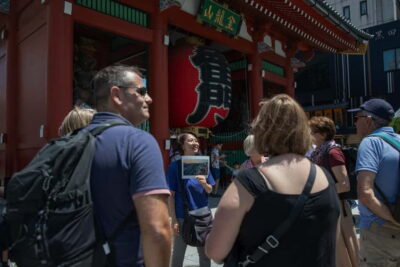 ★ 4.8Tokyo: Asakusa Walking Tour with Sensoji Temple VisitFrom $222 hours
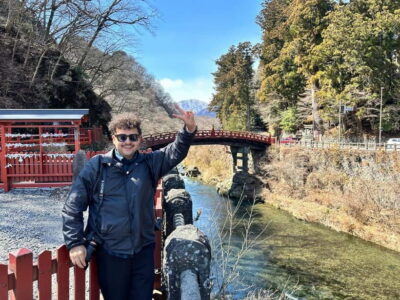 ★ 4.6Nikko: Kegon Falls, Lake Chuzenji & Toshogu TempleFrom $8911 hours
 ★ 4.5Tokyo: Kamakura & Enoshima Day Trip including Temple TicketsFrom $589 hours - 570 minutes
 ★ 4.5Tokyo: Nikko Toshogu Shrine and Kegon Waterfall TourFrom $8410h 30m
 ★ 4.5Tokyo Panoramic 1 Day: Meiji Shrine, Asakusa, Odaiba and SKYTREE®From $85