
Reviewed · PRIVATE CAR WITH DRIVER
Tokyo Made Easy | Private Chauffeur Day Adventure | Car and Guide
Tokyo is a sprawling city, and this private day tour tackles its biggest sights without making you decode train maps every hour. You move by car from the old lanes of Asakusa to the neon energy of Akihabara, then out to Odaiba and up toward Shibuya.
I like the private format, which lets your group set the pace rather than follow a fixed bus schedule. I also like the range: temples, food culture, imperial grounds, youth fashion, city views, and Tokyo’s famous crossing all fit into one long day.
The tradeoff is time. Ten stops in 9 to 10 hours means several visits are quick looks, not slow explorations. Tokyo traffic can also affect the order and length of stops, so this works best when you want a broad first look rather than a deep visit to each place.
In This Review
- Key points to know before booking
- Why a private car makes Tokyo easier
- Tsukiji begins the day with Tokyo’s food culture
- Senso-ji brings you into old Asakusa
- Tokyo Station offers a sharp change of mood
- Akihabara shows Tokyo’s pop-culture side
- Edo Castle ruins add history at the Imperial Palace East Gardens
- Odaiba looks toward Tokyo Bay
- Harajuku and Meiji Jingu show two sides of Shibuya
- Tokyo Tower is a short skyline stop
- The Tokyo Metropolitan Government Building gives you a free high view
- Shibuya Crossing finishes with Tokyo’s famous rush
- The guide can shape the day around your group
- Who gets the best value from this Tokyo day
- Should you book this private Tokyo tour?
- FAQ
- How long does the private Tokyo tour last?
- How many people can join the private tour?
- Is hotel pickup offered?
- Is the tour private?
- Is admission included at the attractions?
- Can a child seat be provided?
- Can I cancel for a full refund?
Key points to know before booking
- One car covers a huge sweep of Tokyo: You can reach central, eastern, western, and waterfront districts without changing trains.
- Daniel may be your guide: He is described as warm, punctual, flexible, and attentive to family needs.
- The route mixes old and new Japan: Senso-ji and Meiji Jingu share the day with Akihabara, Odaiba, and Shibuya Crossing.
- Up to seven people can share the $349 price: The value improves sharply with a full group.
- Tokyo Tower admission costs extra: Most other listed stops are free to enter.
- Expect a full day, not a relaxed stroll: The schedule gives you useful orientation, but some stops last only 30 to 45 minutes.
Why a private car makes Tokyo easier
Tokyo’s rail system is excellent, but a first day here can still feel like work. Stations are large, connections take time, and the city’s major sights spread across different districts. A private chauffeur removes much of that friction.
You are picked up and driven between the stops, with the car serving as your base. That matters for families, older visitors, and groups that want to stay together. A child seat can be provided if requested, and service animals are allowed.
The capacity is up to seven people per group. At $349 total, the price is not cheap for one person, but it can be a strong deal for a family or group of friends. Seven people would pay about $50 each before any extra admission costs. A couple pays much more per person, so the value depends heavily on group size.
The day runs about 9 to 10 hours. That is enough to see a wide slice of Tokyo, but it is also a demanding schedule. I would treat this as an orientation day, especially if Tokyo is new to you. You can note which districts deserve a return visit, then explore them at a slower pace later.
Other guided tours in Tokyo

Tsukiji begins the day with Tokyo’s food culture
Tsukiji Fish Market is a natural first stop for a Tokyo introduction. The original inner wholesale market moved to Toyosu in 2018, but Tsukiji remains linked to the city’s seafood tradition and food stalls.
You have about 45 minutes here, with no admission fee. That is enough for a look around and perhaps a quick snack if timing allows, but it is not a long food tour. Since the supplied details do not promise tastings or a specific food guide, you should think of Tsukiji as a brief market visit rather than a planned meal.
The value here is cultural context. Tokyo’s food identity is not limited to polished restaurants. Tsukiji helps you see the daily commerce and ingredients behind that dining culture. I would arrive ready to walk, browse, and choose any food purchases directly rather than expect them to be included.
Senso-ji brings you into old Asakusa
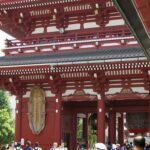
From Tsukiji, the tour moves to Asakusa and Senso-ji, Tokyo’s oldest and most important Buddhist temple. The temple traces its founding legend to a golden Kannon statue discovered in the nearby river, and it was established in 645.
You get about an hour here, which is one of the more generous stops on the route. Senso-ji is not just a single building. The approach, temple grounds, and Asakusa setting give you a clearer sense of historic Tokyo than many modern districts can provide.
This is one of the places where a guide adds real value. Daniel is described as explaining the history of the sites and pointing out important details, which can help you understand the difference between a Buddhist temple and the Shinto shrine visits later in the day.
The limitation is crowd level. Senso-ji is one of Tokyo’s best-known sights, so this will not feel like a quiet private discovery. Still, the hour gives you time to look up, take in the architecture, and move beyond a quick photograph.
Tokyo Station offers a sharp change of mood
Tokyo Station appears in the route as a photo and orientation stop rather than a timed visit. Its red-brick Marunouchi facade dates from the station’s opening in 1914, while the Yaesu side presents a newer, more modern face.
This is a useful contrast after Senso-ji. Tokyo can shift from temple grounds to corporate towers in a few blocks, and the station makes that contrast easy to see. You might get a quick look at the exterior and surrounding business district, depending on traffic and the day’s timing.
Because no exact stop length is given, do not plan on a long station visit or extensive interior exploration. Think of it as a short visual pause between major attractions.
Akihabara shows Tokyo’s pop-culture side
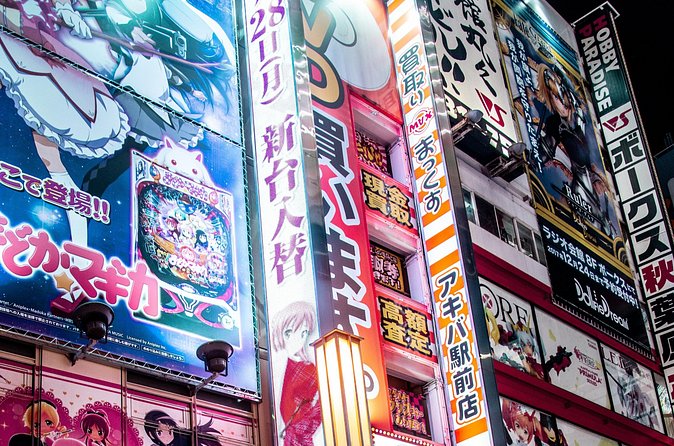
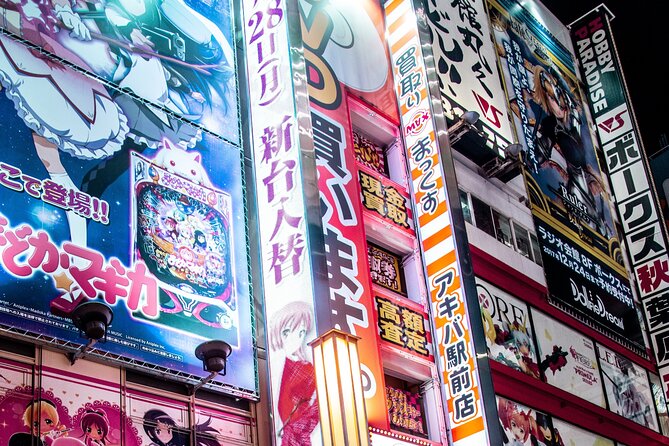
Akihabara receives about an hour, giving you time to see one of Tokyo’s most distinctive districts. It is famous for electronics, anime, manga, games, and otaku culture, meaning intense fan culture built around particular interests.
This stop helps keep the tour from becoming a parade of temples and viewpoints. You get a look at a very modern form of Japanese culture, shaped by shopping, entertainment, technology, and youth communities.
An hour is useful, but Akihabara can easily fill an entire afternoon for shoppers and fans. If you have a specific purchase in mind, tell the guide early. The tour is private, so the schedule may be adjusted, but the overall day still has many other stops to cover.
I would not choose this itinerary expecting a long electronics-shopping session. Choose it if you want a compact introduction to the district and a chance to decide if it deserves more of your time later.
Other private tours in Tokyo

Edo Castle ruins add history at the Imperial Palace East Gardens
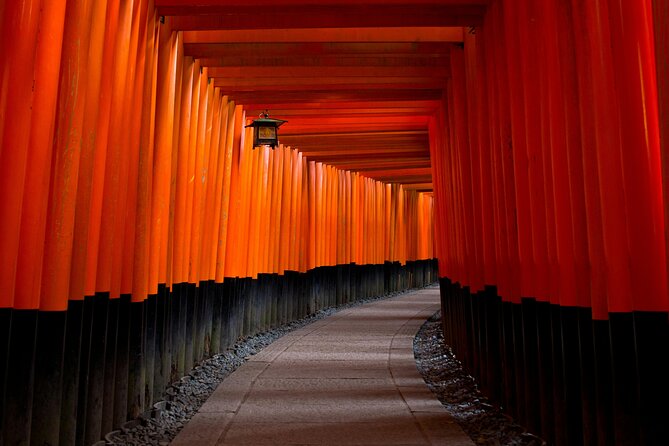
The East Gardens of the Imperial Palace occupy part of the former Edo Castle, once the seat of the Tokugawa shoguns from 1603 to 1867. You have about 45 minutes here, with free admission.
This stop gives the day political and historical weight. Edo Castle was central to the shogunate, and the gardens offer traces of that earlier power center inside modern Tokyo. It is a good counterpoint to the imperial and religious sites elsewhere on the route.
Forty-five minutes is enough for a walk through a section of the grounds, but not for a leisurely garden visit. Opening conditions and seasonal access can affect what you see, and the schedule may need to change if the gardens are unavailable. The supplied tour details do not list specific closure days, so confirm current access if this stop is especially important to you.
Odaiba looks toward Tokyo Bay
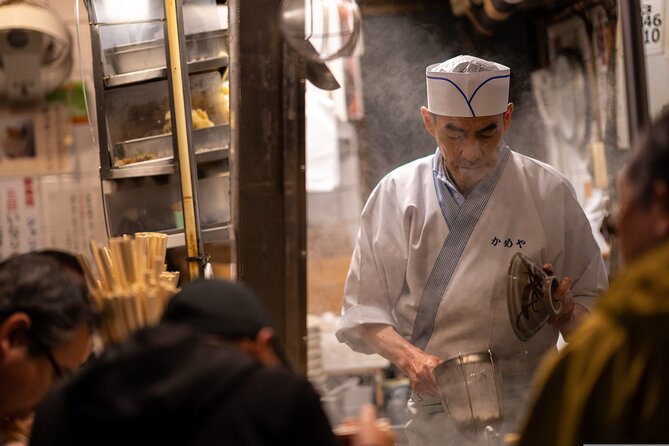
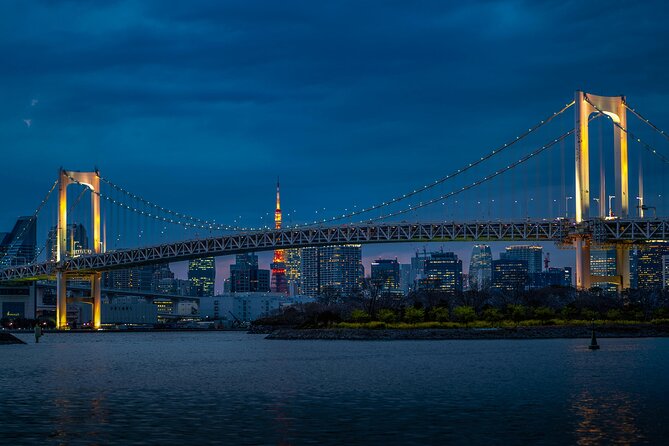
Odaiba gives you a different Tokyo altogether. Built on artificial islands in Tokyo Bay, it began as a line of defensive forts in the 1850s and was redeveloped as a modern entertainment and shopping district in the 1990s.
The scheduled hour lets you enjoy the bay setting and the city views without spending the entire day there. The Rainbow Bridge and the replica Statue of Liberty are among the sights highlighted by the guide’s route. This is a strong stop for photographs because it opens up the view after many dense city streets.
Odaiba is spread out, so a private car is particularly useful here. You avoid figuring out which station serves which attraction, although you still should not expect to cover every shopping and entertainment site on the island in one hour.
Harajuku and Meiji Jingu show two sides of Shibuya
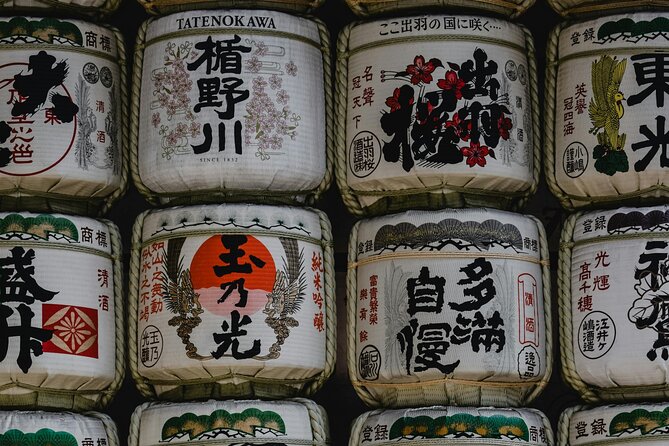
Harajuku receives about 45 minutes and introduces you to Tokyo’s youth fashion and kawaii culture. The district is known for bold clothing, pop-culture shops, and the streets around Harajuku Station.
This is a quick taste rather than a serious shopping visit. If you want to browse carefully, try on clothing, or explore every side street, you will need more time than the schedule allows. Still, the stop works well as a snapshot of the district’s style and energy.
Meiji Jingu follows with another 45 minutes. The Shinto shrine, established in 1920, honors Emperor Meiji and Empress Shoken. Its setting offers a calm change from Harajuku’s commercial streets and helps you compare two neighboring parts of Tokyo.
The paired stops are one of the smartest parts of the route. You see the public, youthful face of Harajuku, then enter a major place of Shinto worship. I would keep your movements purposeful here because shrine grounds can take time to cross, and 45 minutes passes quickly.
Tokyo Tower is a short skyline stop
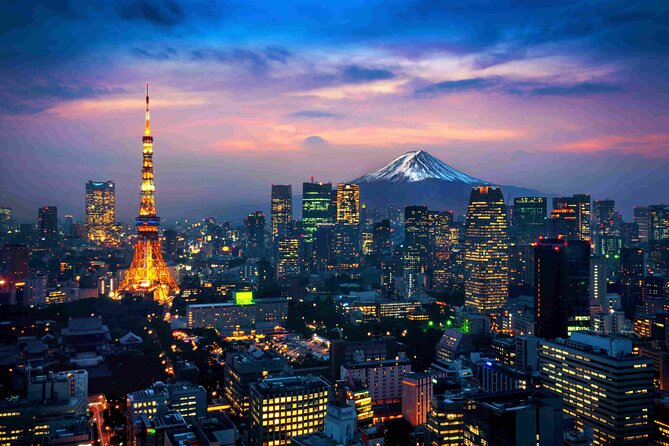
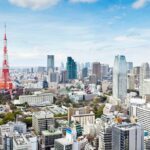
Tokyo Tower rises 333 meters and was completed in 1958 as a broadcast tower modeled after the Eiffel Tower. It remains one of the city’s most recognizable landmarks.
The schedule allows 30 minutes, and admission is not included. That timing suggests a brief stop for exterior views or a quick visit if you choose to pay for entry. If reaching an observation deck is a priority, ask about ticket costs and available time before the day begins.
I like having Tokyo Tower on the route because it gives you a classic city image. I would simply avoid assuming that the $349 price covers the tower itself. This is the one listed attraction with an extra admission charge.
The Tokyo Metropolitan Government Building gives you a free high view
The observation decks at the Tokyo Metropolitan Government Building in Shinjuku are free and rise 202 meters above the city. You have about 45 minutes here, making it one of the better chances to pause and see Tokyo from above without paying another admission fee.
Views depend on weather and visibility, so keep expectations sensible. The stop still has strong practical value because you can understand Tokyo’s scale more clearly from this height. After seeing the compact streets of Asakusa or Harajuku, the broad city view helps connect the districts you have crossed by car.
The building is also a smart value choice. Since Tokyo Tower admission is extra, a free observation deck gives the group a skyline experience without adding to the day’s cost.
Shibuya Crossing finishes with Tokyo’s famous rush
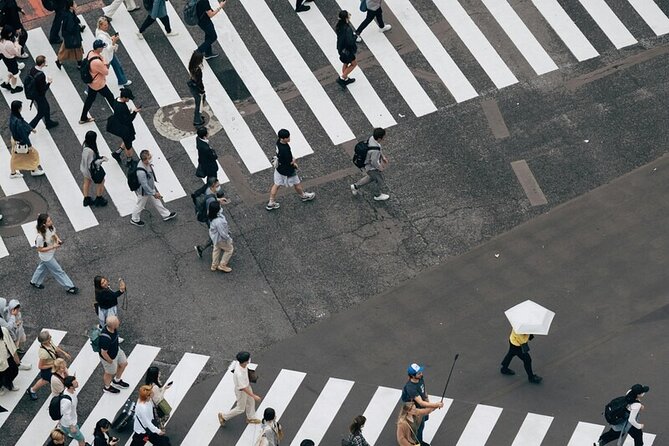
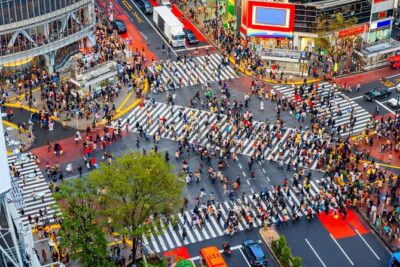
The final stop is Shibuya Crossing, the large intersection outside Shibuya Station. At busy times, thousands of people can cross together, creating one of Tokyo’s most recognizable urban scenes.
You get about 30 minutes. That is enough to watch a crossing cycle, take photographs, and absorb the surrounding signs and station traffic. It is not enough for a full Shibuya shopping session, so plan a separate visit if you want department stores, cafes, or side streets.
Ending here makes sense. The day has moved through temples, gardens, markets, and bay views, and Shibuya closes with a concentrated burst of present-day Tokyo. Traffic and crowds may affect the exact timing, but the stop is easy to understand and memorable even on a short visit.
The guide can shape the day around your group
The strongest praise centers on the guide, especially Daniel. He is described as punctual, polite, flexible, entertaining, and attentive to the needs of older family members. One full-day outing ran from 9 AM to 5 PM, showing how the 9 to 10 hour schedule can work in practice.
Those details matter more than a long list of stops. A private guide should help you balance the family member who wants history, the child who wants Akihabara, and the photographer who wants Odaiba or Shibuya. You should state your priorities at pickup, particularly if one stop matters more than the others.
The tour is not presented as a fixed audio guide or a large group excursion. Only your party participates, which makes questions and small timing changes easier. Still, flexibility has limits. Ten locations in one day means the guide cannot turn every stop into a long, detailed visit.
Who gets the best value from this Tokyo day
I would recommend this for a first Tokyo visit, a family with limited time, or a group that wants to see many districts without handling public transport. It also suits anyone who finds long train connections tiring or confusing.
The price makes the most sense for four to seven people. Solo visitors and couples should compare the per-person cost with a smaller walking tour or a self-guided rail day. The private car is the main benefit, not a promise of extended time at every attraction.
You should also be comfortable with a fast pace. The route includes several 30 and 45 minute stops, plus an hour each at Senso-ji, Akihabara, and Odaiba. Wear comfortable shoes, keep your requests clear, and leave room for the guide to adjust the order around Tokyo traffic.
Confirmation is sent within 48 hours, subject to availability. You can cancel for a full refund up to 24 hours before the start time, but changes or cancellations inside that window are not accepted. The tour is near public transportation despite using a private vehicle, and most people can take part.
Should you book this private Tokyo tour?
Book it if you want a wide first look at Tokyo with your own group, especially if you can share the $349 cost among several people. The mix of Tsukiji, Senso-ji, Akihabara, Odaiba, Meiji Jingu, Tokyo Tower, and Shibuya gives you a useful sense of the city’s many sides.
Skip it if you prefer slow travel, long meals, detailed museum visits, or hours of shopping in one district. For the right group, the private car and flexible guide make a packed Tokyo day far easier. Just treat it as a smart introduction, not the final word on any one neighborhood.
FAQ
How long does the private Tokyo tour last?
The experience lasts approximately 9 to 10 hours.
How many people can join the private tour?
The private vehicle and guide are available for groups of up to seven people.
Is hotel pickup offered?
Pickup is offered as part of the experience.
Is the tour private?
Yes. Only your group participates in the activity.
Is admission included at the attractions?
Most listed stops have free admission. Tokyo Tower admission is not included.
Can a child seat be provided?
Yes. A child seat can be provided on request.
Can I cancel for a full refund?
Yes. You must cancel at least 24 hours before the experience start time to receive a full refund.
More Private Car with Driver in Tokyo
More Private Tours in Tokyo
More Guided Tours in Tokyo

More tours in Tokyo we've reviewed











Private Car with Driver, compared.
 ★ 5.0Tokyo Private Sightseeing Tour by Car- English speaking chauffeurFrom $268
 ★ 5.0Tokyo Private Tour by Vehicle with English-Speaking ChauffeurFrom $468
Mt FUJI Day Tour with Private Car and English Speaking GuideFrom $440
★ 5.0Tokyo Private Tour by Vehicle with English-Speaking ChauffeurFrom $468
Mt FUJI Day Tour with Private Car and English Speaking GuideFrom $440
 ★ 5.0Private Car Tour to Mt. Fuji Lake Kawaguchiko or HakoneFrom $1,286
 ★ 5.0Mt Fuji Exclusive Tour with Private Car English GuideFrom $445
 ★ 5.0Tokyo Private Customizable Tour with English Speaking ChauffeurFrom $273