
Reviewed · 1-DAY TOURS
Tokyo Customized Private Tour: See Top Attractions in 1 Day
Tokyo is easier to understand when someone shows you how its pieces fit together. This private tour pairs old Tokyo, from Senso-ji and the Imperial Palace to Yanaka, with modern districts such as Harajuku, Shibuya, Ginza, and Shinjuku. You choose two or three areas for a shorter outing, or four or five for a full eight-hour day.
I like the one-on-one planning and the practical metro lesson. Guides such as Tak, Yoko, Ike, Keiko, and Fumi have helped families handle train passes, station changes, shrine etiquette, food needs, and last-minute plan changes. The main catch is that this is a walking-and-subway tour, and the loose format requires you to discuss your priorities clearly so the day does not feel under-planned.
In This Review
- Key points to know before booking
- A useful first day in Tokyo
- How the 4, 6, and 8-hour formats work
- Senso-ji and Asakusa: Tokyo’s traditional starting point
- Tsukiji Outer Market: come hungry
- Meiji Shrine and Harajuku: a sharp change of mood
- Shibuya, Shinjuku, and Ginza
- Imperial Palace, Yanaka, and Ueno
- Skytree, Odaiba, and Hama Rikyu Gardens
- What the guides add to the day
- Walking, trains, and the real cost
- Who should book this Tokyo tour
- Should you book it?
- FAQ
- How long is the Tokyo customized private tour?
- Is hotel pickup included?
- Does the tour use public transportation?
- Is a private vehicle available?
- Are entrance fees included?
- Does the tour include meals and drinks?
- Can I cancel for a full refund?
Key points to know before booking
- Choose your pace: A 4-hour tour covers about 2 to 3 spots, 6 hours covers 3 to 4, and 8 hours covers 4 to 5.
- Learn Tokyo’s metro: Your guide handles the first rides with you, which is useful when station signs and train lines feel like a puzzle.
- See contrasts in one day: Pair Senso-ji with Meiji Shrine, or old neighborhoods with Harajuku and Shibuya.
- Build around your interests: History, food, shopping, gardens, family activities, and pop culture can all shape the route.
- Expect extra costs: Transport, meals, and admission fees for you and your guide are not included.
- Private means private: Only your group takes part, with hotel pickup included and a private vehicle available for an added charge.
A useful first day in Tokyo
Tokyo is enormous, and its famous sights are scattered across the city. You can spend half a day trying to decode the subway, or you can have a local guide show you the system while taking you somewhere worth seeing.
That practical help is one of the strongest reasons to book this experience early in a Japan trip. Guides have helped first-time visitors obtain children’s passes, work through train routes, and gain enough confidence to continue on their own after the tour.
The experience is private, so the day can be shaped around your group rather than a fixed bus route. You might focus on temples and gardens, spend time at markets and food stalls, or mix major sights with local shopping streets.
The tradeoff is that customization is not the same as a carefully fixed sightseeing program. The description offers many possible stops, but the number you can actually visit depends on the length of your booking and the time spent walking, eating, shopping, and riding trains.
Other private tours in Tokyo

How the 4, 6, and 8-hour formats work
The four-hour version is best treated as a city introduction, not a full Tokyo checklist. You can normally choose two or three locations. A pairing such as Tsukiji and Asakusa gives you food, traditional streets, and a major temple without trying to cross the whole city.
A six-hour tour gives you room for three or four areas. This is a good middle choice for a family or first-time group that wants meaningful stops without committing to a full day. One successful style of route has combined Tsukiji Market, Asakusa, and Yanaka.
The eight-hour option allows about four or five locations. That sounds generous, but Tokyo’s size and the subway time matter. A day that includes Ginza, Tokyo Skytree, and dinner near the tower will feel very different from a history-focused route through the Imperial Palace, Asakusa, and Meiji Shrine.
I would resist the temptation to list every famous neighborhood. Four places with time to ask questions and look around will usually serve you better than five rushed photo stops.
Senso-ji and Asakusa: Tokyo’s traditional starting point
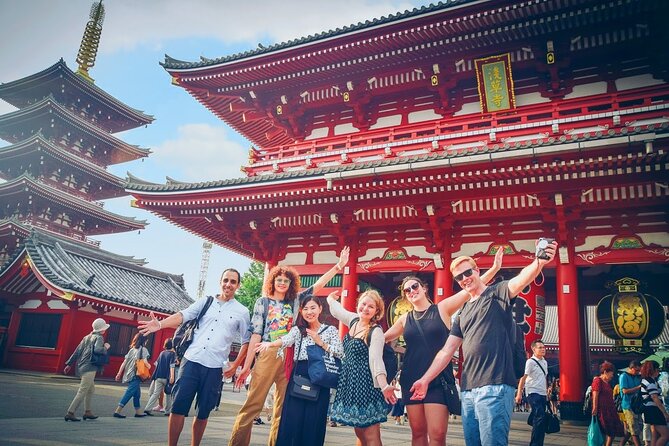
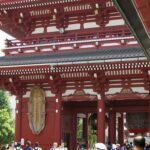
Senso-ji is one of the tour’s most useful first stops. The temple gives you a clear introduction to Japanese Buddhist customs, while the surrounding Asakusa streets offer a traditional side of Tokyo that feels distinct from the glass towers and neon districts elsewhere.
The listed stop time is short, but the area can easily deserve more attention. Ask your guide to explain how to behave at the temple, how offerings work, and what you are seeing before you hurry onward. One guide, Keiko, has even provided coins and explained the offering process to a family.
Asakusa is also a practical place for food and small purchases. Several guides have helped groups find lunch, snacks, and useful local recommendations. If you choose Tsukiji as well, you can make the day a food-centered introduction to the city.
The schedule description repeats Senso-ji in its list of possible stops, so confirm your final route before starting. You do not want to count the same temple twice when planning a short tour.
Tsukiji Outer Market: come hungry
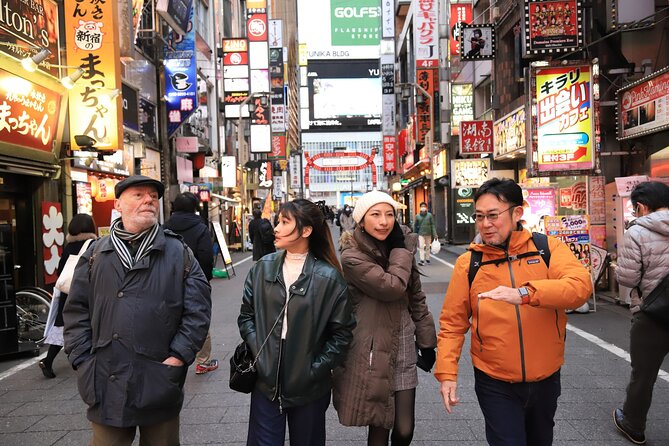
Tsukiji’s outer market is one of the most appealing choices for a four-hour tour. The market is known for food, and the best use of your time is usually to walk, look, ask questions, and sample what interests you.
One particularly practical tip comes from a family that enjoyed the market: do not eat a large breakfast beforehand. The tour does not include meals or drinks, so bring your appetite and pay for your own food as you go.
Your guide can help you make sense of the market and point out good options, but food purchases remain your responsibility. If you have allergies, state them before the tour and repeat them at lunch. Ike received special praise for checking that a restaurant could accommodate a child’s food allergy.
Tsukiji works well with Asakusa because the two stops create a balanced morning: one centered on food and one on temple culture. It is less suitable if your main goal is a slow museum visit or a garden stroll.
Meiji Shrine and Harajuku: a sharp change of mood
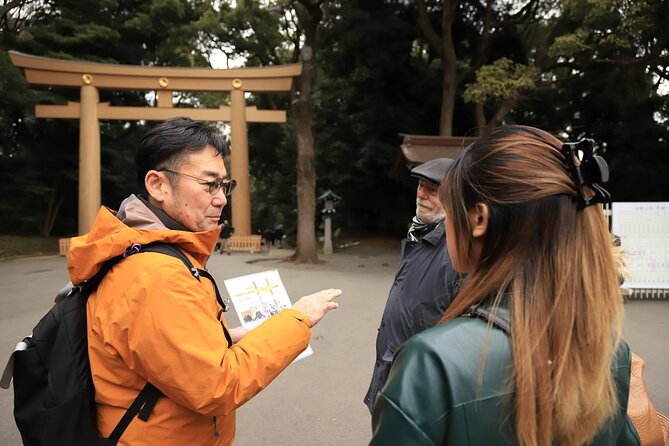
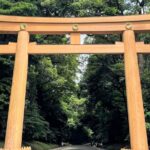
Meiji Jingu Shrine offers a calm contrast to Harajuku. Set among forested grounds in the center of the city, it gives you a chance to learn about Shinto customs and proper behavior at a major shrine.
The shrine is especially effective after time in a busy shopping district. Guides have explained how to pray and show respect at both shrines and temples, which is far more useful than simply taking a photograph at the entrance.
Then comes Takeshita Street in Harajuku, a center of youth fashion and pop culture. The area provides a look at Tokyo’s modern, creative side, with trendy shops and bold storefronts. A guide can explain how the neighborhood has changed and how fashion fits into its identity.
This combination is one of the clearest examples of what the tour does well. Senso-ji and Meiji Shrine are not interchangeable religious sights, and Harajuku is not just a shopping stop. Put together, they show how tradition and present-day city life share the same metropolis.
A few more Tokyo tours and experiences worth a look

Shibuya, Shinjuku, and Ginza
Shibuya Crossing is the obvious choice if you want a quick look at Tokyo’s urban energy. The tour can include the famous intersection, and one guide filmed a family crossing it together. The listed stop is about 20 minutes, so think of Shibuya as a compact city moment rather than a full neighborhood tour.
Shinjuku offers another modern Tokyo option. The possible itinerary includes Shinjuku Gyoen National Garden, a particularly good choice if you want greenery and a slower walk. Garden admission may cost extra, and the stop time is listed as 15 minutes, so ask your guide how much time can realistically be set aside.
Ginza is aimed at shoppers and anyone curious about Tokyo’s polished department-store and luxury-retail district. It can be added if shopping matters to your group, but it may not be the best use of time for a first visit focused on culture.
These areas are geographically and atmospherically different, but they compete for time. Trying to fit Shibuya, Shinjuku, Ginza, and a temple into four hours would produce a rushed day. Use the private format to pick the two modern areas that match your interests.
Imperial Palace, Yanaka, and Ueno
The Imperial Palace East Garden is a good choice for a history-focused route. The grounds provide a change from commercial Tokyo, and one four-hour itinerary centered on history included the palace, Asakusa Culture Tourist Information Center, and Asakusa.
The Asakusa Culture Tourist Information Center has a useful viewing point for seeing the Asakusa area from above. It can help you understand the shape of the neighborhood before you walk through it.
Yanaka Ginza Shopping Street offers a more local-feeling alternative to Ginza’s major retail streets. It is a sensible addition if you want neighborhood life, smaller shops, and a less polished side of the city. The route can include it, but the short stop time means you should say in advance if this is a priority.
Ueno Park is another optional choice, especially during cherry blossom season. Tokyo National Museum is nearby and offers one of the city’s major collections, but museum admission applies to you and your guide. A museum visit also needs more than a quick 15-minute stop if you want to see anything beyond the entrance.
Skytree, Odaiba, and Hama Rikyu Gardens
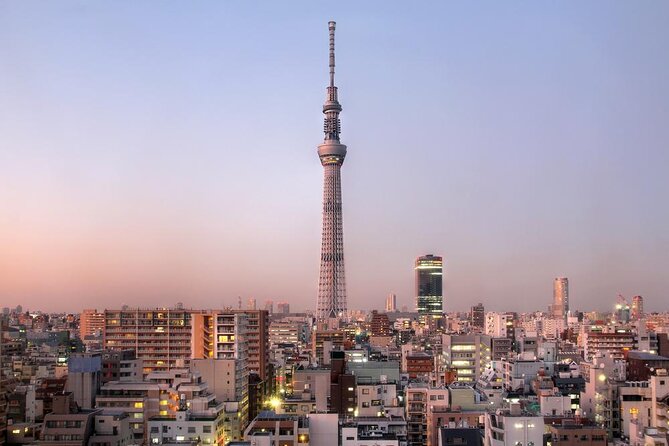
Tokyo Skytree is available for groups who want a landmark view or a meal near the tower. Admission is optional and not included, and the experience can use much of an eight-hour day once you add transport and time at the site.
Odaiba gives you a waterfront setting and a different view of Tokyo. It is a reasonable pick for families or groups wanting a change from temples, shops, and central city streets. The route still depends on the tour length, so it is better as a main destination than as a quick add-on to a crowded schedule.
Hama Rikyu Gardens is another optional stop, with an admission fee. It suits you if Japanese gardens matter more than shopping or pop culture. Like Shinjuku Gyoen, it needs enough time to be worthwhile, so include it as one of your main four or five locations rather than squeezing it between distant neighborhoods.
The private vehicle option may make these spread-out stops easier, but it costs extra. It is limited to the Tokyo metropolitan area and cannot cover destinations outside Tokyo. Hotel pickup and drop-off by vehicle are not available for hotels in the Urayasu area, including those near Tokyo Disney Resort.
What the guides add to the day
The guide is the main reason to choose this tour instead of simply buying a transit card and visiting the sights yourself. A good guide does more than point toward a station. You can ask about history, customs, food, family activities, and the best way to continue exploring after the tour.
The guide team includes people such as Tak, Hiro, Yuki, Toshi, Michi, Miki, Yoko, Ike, Fumi, Keiko, Naoko, Osamu, and Shinobu. Individual strengths differ, but the strongest experiences have involved guides who ask about your interests at the start and adjust the route as the day unfolds.
Families receive particular value here. Naoko entertained children with origami at lunch, while other guides have helped with children’s transit passes, food allergies, shopping requests, and age-appropriate stops. Fumi also brought a camera to document a family’s day.
English ability has been praised repeatedly, and Yoko in particular has been described as easy to communicate with while explaining history, language, customs, and train use. Still, you should give the operator clear interests before the tour. The one less successful experience involved a kind guide, but the group expected more direction and a fuller history-and-culture plan.
Walking, trains, and the real cost
The advertised price is $145.91 per person. For a private experience, that can be fair if your group values personal planning and hands-on help with Tokyo’s transit system. The value is strongest for first-time visitors, families, and anyone who would otherwise lose hours to navigation.
The basic price does not cover public transportation. You pay the fares for yourself and your guide. Meals and drinks are also extra, and you pay admission fees for yourself and your guide at places such as Tokyo National Museum, Ueno Park, Shinjuku Gyoen, Tokyo Skytree, and Hama Rikyu Gardens when applicable.
A private vehicle is optional and costs more. It may be useful for a group that wants less walking or needs to reach several distant areas, but the standard experience is built around walking and the metro. The train portion is not a nuisance to hide from. It is part of the lesson.
Plan for moderate physical fitness and comfortable walking shoes. The tour operates rain or shine, and rain can slow the day, make shrine grounds less pleasant, and reduce the number of areas you can reasonably visit. Guides have still managed successful rainy-day routes involving temples, shopping, arcades, and games.
Who should book this Tokyo tour
I would choose this experience for a first Tokyo visit when you want a strong orientation rather than a specialist tour of one museum or district. It is also a good fit if you feel uneasy about Japanese train stations and want someone to guide you through the system once.
Families can benefit from the private format because the route can change when children tire or lose interest. Food-focused groups should consider Tsukiji, while history fans can request the Imperial Palace, Asakusa, Yanaka, and Meiji Shrine.
I would be more cautious if you prefer a fixed, tightly scripted itinerary. You need to participate in the planning, and the provider’s many suggested stops can create unrealistic expectations if you assume you will see them all.
The tour has a 5 out of 5 rating from 1,351 reviews, with 99 percent recommending it. Those numbers support the idea that guide quality is usually the strong point, but they do not remove the need to confirm your route, timing, transport costs, and priorities before the day begins.
You can cancel for a full refund up to 24 hours before the start time. Changes or cancellations inside that window are not accepted for a refund.
Should you book it?
Book this tour if you want a friendly local guide, a private route, and a practical introduction to Tokyo’s trains. Ask for a clear plan built around two or three priorities, not every famous name on the list.
For the best balance, I would consider six hours and combine one traditional area, one modern district, and either a market or garden. Choose eight hours if you want four or five stops and can handle a full day on foot and by rail.
Skip it if you already know Tokyo’s transit system and prefer exploring independently. For everyone else, the ability to adjust the day, learn local customs, and get immediate help with food, shopping, and train routes makes this a useful first look at a very large city.
FAQ
How long is the Tokyo customized private tour?
The tour lasts approximately 4 to 8 hours. A 4-hour tour generally covers 2 to 3 spots, a 6-hour tour covers 3 to 4 spots, and an 8-hour tour covers 4 to 5 spots.
Is hotel pickup included?
Hotel pickup is included. If you select the private vehicle option, pickup and drop-off are not available for hotels in the Urayasu area, including hotels near Tokyo Disney Resort.
Does the tour use public transportation?
Yes. The standard experience includes walking and metro travel. Public transportation fares for you and your guide are not included.
Is a private vehicle available?
Yes. A private vehicle is optional and costs extra. With this option, you can explore the Tokyo metropolitan area, but you cannot visit places outside Tokyo.
Are entrance fees included?
No. Admission fees for you and your guide are not included. Extra charges may apply at places such as Shinjuku Gyoen National Garden, Tokyo National Museum, Ueno Park, Tokyo Skytree, and Hama Rikyu Gardens.
Does the tour include meals and drinks?
No. Meals and drinks for you and your guide are not included. You should budget separately for lunch, market food, and refreshments.
Can I cancel for a full refund?
Yes. You can cancel at least 24 hours before the experience start time for a full refund. Cancellations or changes made less than 24 hours before the start time are not accepted for a refund.
More 1-Day Tours in Tokyo
More Private Tours in Tokyo

More tours in Tokyo we've reviewed





1-Day Tours, compared.
 ★ 5.0Mt Fuji and Hakone 1-Day Bus Tour Return by Bullet TrainFrom $163
 ★ 5.01-Day Tokyo Bus TourFrom $129
 ★ 4.0Mt Fuji & Hakone Cruise, Drum Show Bullet Train 1 Day from TokyoFrom $149
 ★ 4.5Tokyo: DisneySea 1-Day PassportFrom $571 day
 ★ 4.6Tokyo Disneyland 1-Day PassportFrom $571 day
 ★ 4.2Tokyo: Mt. Fuji 5th Station & Hakone Cruise 1-Day Bus TourFrom $12911 hours